NASA’s X-59 research aircraft moves from its construction site to the flight line – or the space between the hangar and the runway – at Lockheed Martin Skunk Works in Palmdale, California, on June 16, 2023. This milestone kicks off a series…
Move to Run Stall 5
The newest space shuttle orbiter, Endeavour is ready to roll out of the hangar at Palmdale, Calif. OV-105 features many design enhancements, including a drag chute for safer landings and equipment to allow the orbiter to remain in space for…
KSC-91PC-0770
Chief Astronaut Daniel Brandenstein stands tall during a proud moment in the history of manned spaceflight: the debut of the newest space shuttle orbiter, Endeavour, at Palmdale, Calif. Photo credit: NASA
KSC-91PC-0765
The newest space shuttle orbiter, Endeavour is ready to roll out of the hangar at Palmdale, Calif.  OV-105 features many design enhancements, including a drag chute for safer landings and equipment to allow the orbiter to remain in space fo…
KSC-91PC-0767
NASA’s X-59 aircraft is parked in stall five near the runway at Lockheed Martin Skunk Works in Palmdale, California, on June 19, 2023. This is where the X-59 will be housed during ground and initial flight tests.  Lockheed Martin Photograph…
Move to Run Stall 5
In July 2021, NASA associate administrator Bob Cabana visits Lockheed Martin in Palmdale, California to see the assembly of the X-59 QueSST.
P21-414-36
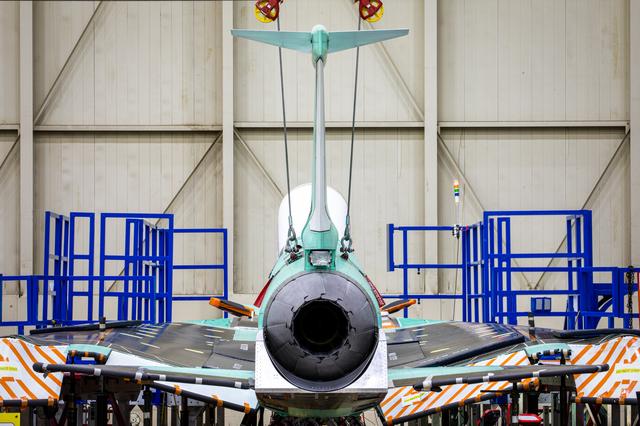
A perfectly framed up rearview shot of NASA’s X-59 tail after its recent installation of the lower empennage, or tail section, in late March at Lockheed Martin Skunk Works in Palmdale, California.
Lower Empennage Final Install
The large air intakes for its powerful engine are obvious as NASA's high-flying ER-2 #806 Earth resources aircraft taxies out for another science mission.
Lockheed ER-2 #809 cockpit
ER-2C tail number 809, was one of two Airborne Science ER-2Cs used as science platforms by Dryden. The aircraft were platforms for a variety of high-altitude science missions flown over various parts of the world. They were also used for ea…
Lockheed ER-2C #809 high altitude research aircraft in flight
ER-2 tail number 709, was one of two Airborne Science ER-2s used as science platforms by Dryden. The aircraft were platforms for a variety of high-altitude science missions flown over various parts of the world. They were also used for eart…
Lockheed ER-2 #709 high altitude research aircraft in flight
This image shows the forward view of the X-59’s cockpit with the canopy open. The aircraft will not have a forward-facing window and will use an eXternal Vision System (XVS) made up of a high definition 4K monitor (located in the center) an…
Nose Installed and Cockpit Instrumentation
Event: Forebody and Nose - Windtunnel Testing A model of the X-59 forebody is shown in the Lockheed Martin Skunk Works’ wind tunnel in Palmdale, California. These tests gave the team measurements of wind flow angle around the aircraft’s nos…
Forebody and Nose - Windtunnel Testing
Event: Manufacturing Area From Above  A overhead view of the X-59 with its nose on. The X-59’s nose is 38-feet long – approximately one third of the length of the entire aircraft. The aircraft, under construction at Lockheed Martin Skunk Wo…
Manufacturing Area From Above
Lockheed Martin technicians work to align and check the fastener holes on the X-59’s fuselage skin. The aircraft, under construction at Lockheed Martin Skunk Works in Palmdale, California, will demonstrate the ability to fly supersonic whil…
LRC-2022-H1_P_X-59-6
Chief astronaut Daniel Brandenstein second from left, and astronauts Pierre Thuot left, Kathryn Thornton, and Bruce Melnick are on hand for a proud moment in the history of manned spaceflight: the debut of the newest space shuttle orbiter,…
KSC-91PC-0771
NASA’s ER-2 takes off from its base of operations at NASA’s Armstrong Flight Research Center Building 703 in Palmdale, California to test instruments that will support upcoming science flights for the Geostationary Operational Environmental…
AFRC2016-0105-15
The newest space shuttle orbiter, Endeavour is ready to roll out of the hangar at Palmdale, Calif. OV-105 features many design enhancements, including a drag chute for safer landings and equipment to allow the orbiter to remain in space for…
KSC-91PC-0768
NASA’s X-59 sits in support framing while undergoing the installation of its lower empennage, or tail section, at Lockheed Martin Skunk Works in Palmdale, California in late March.
Lower Empennage Final Install Event
Technicians check out the X-59 aircraft as it sits near the runway at Lockheed Martin Skunk Works in Palmdale, California, on June 19, 2023.  Lockheed Martin Photography By Garry Tice 1011 Lockheed Way, Palmdale, Ca. 93599 Event: Move to Ru…
Move to Run Stall 5
In July 2021, NASA associate administrator Bob Cabana visits Lockheed Martin in Palmdale, California to see the assembly of the X-59 QueSST.
P21-142-30
The newest space shuttle orbiter, Endeavour, is ready to roll out of the hangar at Palmdale, Calif. OV-105 features many design enhancements, including a drag chute for safer landings and equipment to allow the orbiter to remain in space fo…
KSC-91PC-0766
In July 2021, NASA associate administrator Bob Cabana visits Lockheed Martin in Palmdale, California to see the assembly of the X-59 QueSST.
P21-142-11
ER-2 tail number 709, was one of two Airborne Science ER-2s used as science platforms by Dryden. The aircraft were platforms for a variety of high-altitude science missions flown over various parts of the world. They were also used for eart…
Lockheed ER-2 #709 high altitude research aircraft during take off
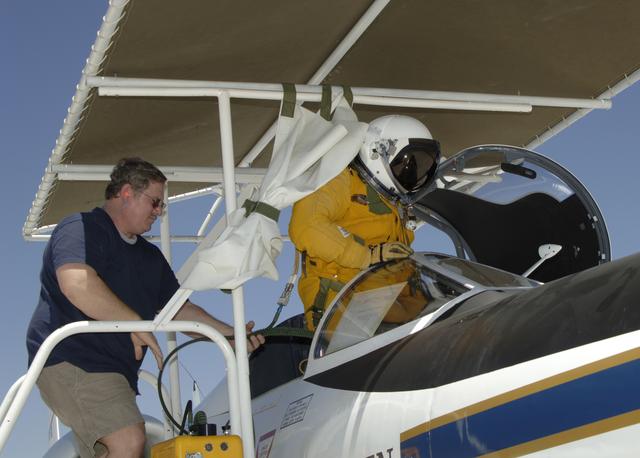
NASA Dryden life support technician Jim Sokolik assists pressure-suited pilot Dee Porter into the cockpit of NASA's ER-2 Earth resources aircraft.
In July 2021, NASA associate administrator Bob Cabana visits Lockheed Martin in Palmdale, California to see the assembly of the X-59 QueSST.
P21-142-28
ER-2 tail number 709, was one of two Airborne Science ER-2s used as science platforms by Dryden. The aircraft were platforms for a variety of high-altitude science missions flown over various parts of the world. They were also used for eart…
Lockheed ER-2 #709 high altitude research aircraft during take off
Educators shine a flashlight onto a toy bear to simulate the physics behind solar eclipses.
AFRC2017-0116-27
ER-2 tail number 709, was one of two Airborne Science ER-2s used as science platforms by Dryden. The aircraft were platforms for a variety of high-altitude science missions flown over various parts of the world. They were also used for eart…
Lockheed ER-2 #709 high altitude research aircraft during take off
A overhead view of the X-59 with its nose on. The X-59’s nose is 38-feet long – approximately one third of the length of the entire aircraft. The plane is under construction at Lockheed Martin Skunk Works in Palmdale, California, will fly t…
Manufacturing Area From Above
Event: SEG 230 Nose The X-59’s nose is wrapped up safely and rests on a dolly before the team temporarily attaches it to the aircraft for fit checks at Lockheed Martin in Palmdale, California. The full length of the X-plane’s nose is 38-fee…
SEG 230 Nose
The newest space shuttle orbiter, Endeavour is ready to roll out of the hangar at Palmdale, Calif. OV-105 features many design enhancements, including drag chute for safer landings and equipment to allow the orbiter to remain in space for u…
KSC-91PC-0769
In July 2021, NASA associate administrator Bob Cabana visits Lockheed Martin in Palmdale, California to see the assembly of the X-59 QueSST.
P21-142-21
The newest space shuttle orbiter, Endeavour, rolls out of the hangar at Palmdale, Calif. OV-105 features many design enhancements, including a drag chute for safer landings and equipment to allow the orbiter to remain in space for up to 28…
KSC-91PC-0764
In July 2021, NASA associate administrator Bob Cabana visits Lockheed Martin in Palmdale, California to see the assembly of the X-59 QueSST.
P21-142-18
Seen from behind, the orbiter Atlantis moves into the Orbiter Processing Facility 2 (OPF-2) where it will undergo preparations for its planned flight in June 1999. Atlantis spent 10 months in Palmdale, CA, undergoing extensive inspections a…
KSC-98pc1168
The tail of NASA’s X-59 aircraft is shown here in late March at Lockheed Martin Skunk Works in Palmdale, California where the plane recently underwent a final install of the lower empennage or better known as tail section of the plane.
Lower Empennage Final Install Event
Seen from behind, the orbiter Atlantis approaches the entrance of Orbiter Processing Facility 2 (OPF-2) where it will undergo preparations for its planned flight in June 1999. Atlantis spent 10 months in Palmdale, CA, undergoing extensive i…
KSC-98pc1167
NASA’s X-59 aircraft is parked near the runway at Lockheed Martin Skunk Works in Palmdale, California, on June 19, 2023. This is where the X-59 will be housed during ground and initial flight tests.  Lockheed Martin Photography By Garry Tic…
Move to Run Stall 5
ER-2 tail number 806, is one of two Airborne Science ER-2s used as science platforms by Dryden. The aircraft are platforms for a variety of high-altitude science missions flown over various parts of the world. They are also used for earth s…
Lockheed ER-2 #806 high altitude research aircraft during landing
ER-2 tail number 706, was one of two Airborne Science ER-2s used as science platforms by Dryden. The aircraft were platforms for a variety of high-altitude science missions flown over various parts of the world. They were also used for eart…
Lockheed ER-2 high altitude research aircraft
Dr. Eric Becklin spoke to educators about the airborne astronomy that was conducted using SOFIA’s scientific instruments.
AFRC2017-0116-07
ER-2 tail number 709, was one of two Airborne Science ER-2s used as science platforms by Dryden. The aircraft were platforms for a variety of high-altitude science missions flown over various parts of the world. They were also used for eart…
Lockheed ER-2 #709 high altitude research aircraft during take off
NASA'S ER-2 #806 lifts off from Edwards Air Force Base on a CALIPS/CloudSat validation instrument checkout flight.
A Lockheed Martin technician looks at the connector installation on the cad model of the X-59 airplane. The aircraft, under construction at Lockheed Martin Skunk Works in Palmdale, California, will demonstrate the ability to fly supersonic…
Aircraft Updates
 Here is an image of the X-59’s 13-foot General Electric F414 engine as the team prepares for a fit check. Making sure components, like the aircraft’s hydraulic lines, which help control functions like brakes or landing gear, and wiring of…
Engine Test Fit Install
SOFIA lifts off from Air Force Plant 42 in Palmdale, Calif., at sunset.
ED11-0211-06
Event: Horizontal Stabilator Install The Low Boom Flight Demonstrator manufacturing team installed the horizontal stabilizers to the aircraft.  These are used along with the flight control computers to keep the airplane flying safely and pr…
Horizontal Stabilator Install