On March 29, 2014 the sun released an X-class flare. It was observed by NASA's Interface Region Imaging Spectrograph, or IRIS; NASA's Solar Dynamics Observatory, or SDO; NASA's Reuven Ramaty High Energy Solar Spectroscopic Imager, or RHESSI…
NASA's Best-Observed X-Class Flare of All Time
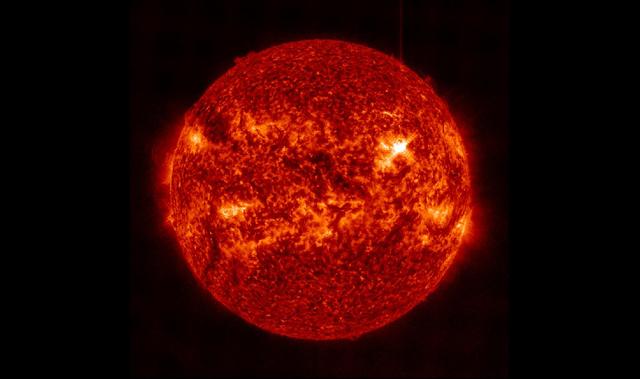
The March 29, 2014, X-class flare appears as a bright light on the upper right in this image from SDO, showing light in the 304 Angstrom wavelength. This wavelength shows material on the sun in what's called the transition region, where the…
NASA's Best-Observed X-Class Flare of All Time
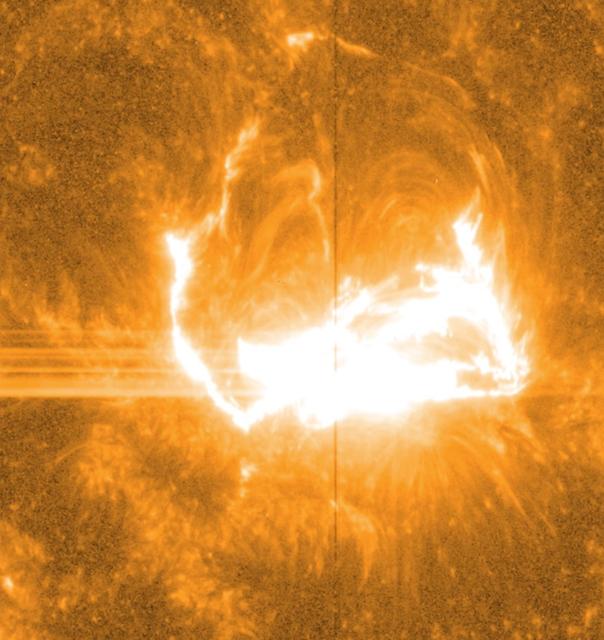
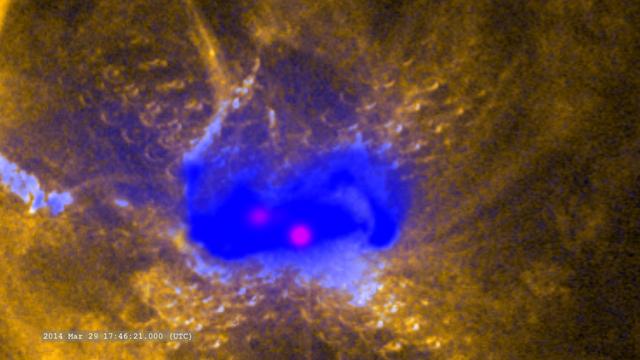
Like almost all solar observatories, NASA's IRIS can provide images of different layers of the sun's atmosphere, which together create a whole picture of what's happening. This image shows light at a wavelength of 1400 Angstrom, which highl…
NASA's Best-Observed X-Class Flare of All Time
On March 29, 2014 the sun released an X-class flare. It was observed by NASA's Interface Region Imaging Spectrograph, or IRIS; NASA's Solar Dynamics Observatory, or SDO; NASA's Reuven Ramaty High Energy Solar Spectroscopic Imager, or RHESSI…
NASA's Best-Observed X-Class Flare of All Time
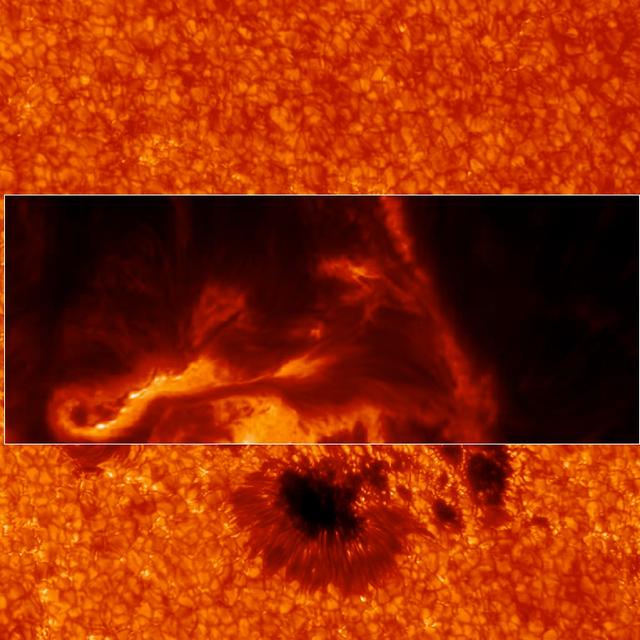
IBIS can focus in on different wavelengths of light, and so reveal different layers at different heights in the sun's lower atmosphere, the chromosphere. This image shows a region slightly higher than the former one.  Credit: Lucia Kleint (…
NASA's Best-Observed X-Class Flare of All Time
The sun emitted a significant solar flare, peaking at 1:01 a.m. EDT on Oct. 19, 2014. NASA's Solar Dynamics Observatory, which is always observing the sun, captured an image of the event. Solar flares are powerful bursts of radiation. Harmf…
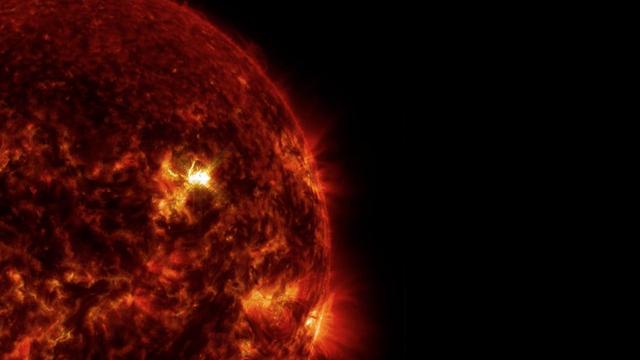
NASA's SDO Observes an X-class Solar Flare
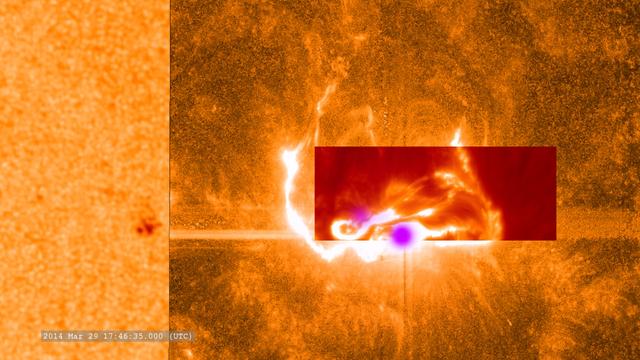
A combination of many (but not all) of the datasets which observed this flare.   --  On March 29, 2014 the sun released an X-class flare. It was observed by NASA's Interface Region Imaging Spectrograph, or IRIS; NASA's Solar Dynamics Observ…
NASA's Best-Observed X-Class Flare of All Time
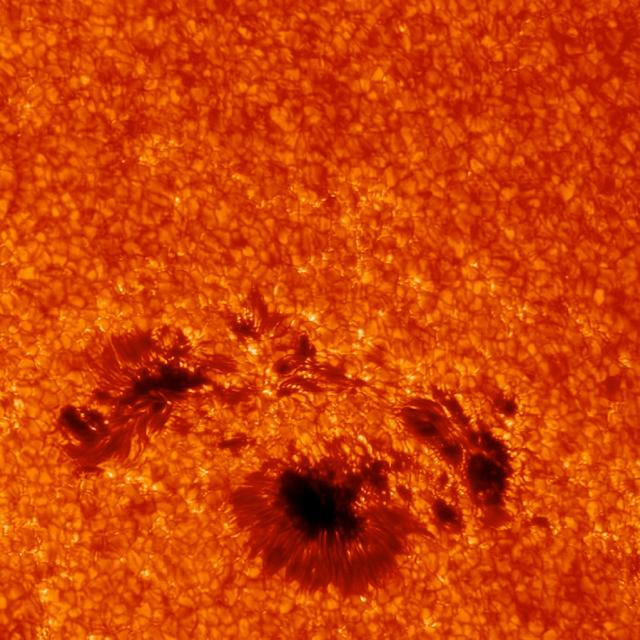
This close-up of the sunspot underneath the March 29, 2014, flare shows incredible detail. The image was captured by the G-band camera at Sacramento Peak in New Mexico. This instrument can focus on only a small area at once, but provide ver…
NASA's Best-Observed X-Class Flare of All Time
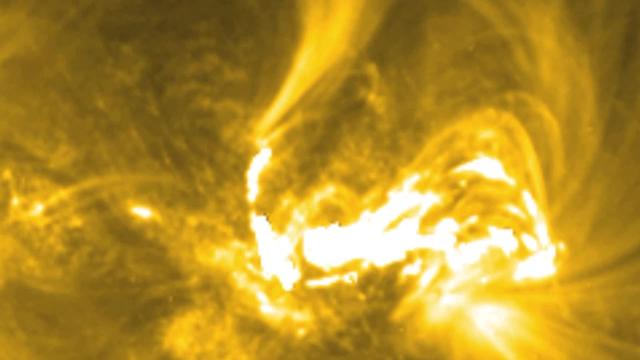
Zoom in on the flare in ultraviolet (SDO/AIA), X-rays (Hinode) and gamma-rays (RHESSI)   --  On March 29, 2014 the sun released an X-class flare. It was observed by NASA's Interface Region Imaging Spectrograph, or IRIS; NASA's Solar Dynamic…
NASA's Best-Observed X-Class Flare of All Time
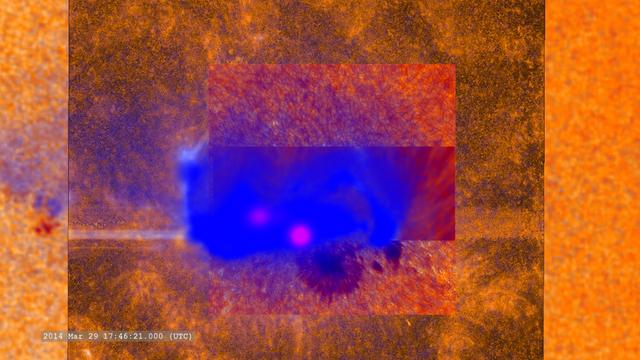
This combined image shows the March 29, 2014, X-class flare as seen through the eyes of different observatories. SDO is on the bottom/left, which helps show the position of the flare on the sun. The darker orange square is IRIS data. The re…
NASA's Best-Observed X-Class Flare of All Time
No more images