
The Direct Gain Solar Thermal Engine was designed with no moving parts. The concept of Solar Thermal Propulsion Research uses focused solar energy from an inflatable concentrator (a giant magnifying glass) to heat a propellant (hydrogen) an…

MSFC Test Engineer performing a functional test on the TES. The TES can be operated as a refrigerator, with a minimum set point temperature of 4.0 degrees C, or as an incubator, with a maximum set point temperature 40.0 degrees C of the set…

NASA Glenn engineer Monica Guzik in the Small Multi-Purpose Research Facility (SMiRF). The facility provides the ability to simulate the environmental conditions encountered in space for a variety of cryogenic applications such as thermal p…

PA084 SOLAR THERMAL PROPULSION, BLDG 4590, STROFIO THERMAL BALANCE TEST, CLOSE UP VIEW OF TEST CHAMBERVIEW
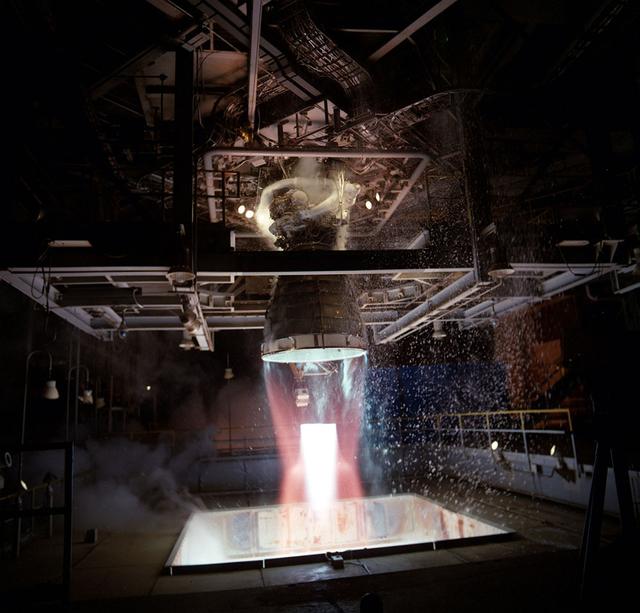
A modified Space Shuttle Main Engine is static fired at Marshall's Technology Test Bed.

PA084 SOLAR THERMAL PROPULSION. BLDG 4590 STROFIO THERMAL BALANCE TEST, MIRROR VIEW

KENNEDY SPACE CENTER, FLA. - KSC employees clean up inside the second floor of the Thermal Protection System Facility damaged by Hurricane Frances. The storm's path over Florida took it through Cape Canaveral and KSC property during Labor…

Researchers at the Marshall Space Flight Center (MSFC) have designed, fabricated and tested the first solar thermal engine, a non-chemical rocket engine that produces lower thrust but has better thrust efficiency than a chemical combustion…
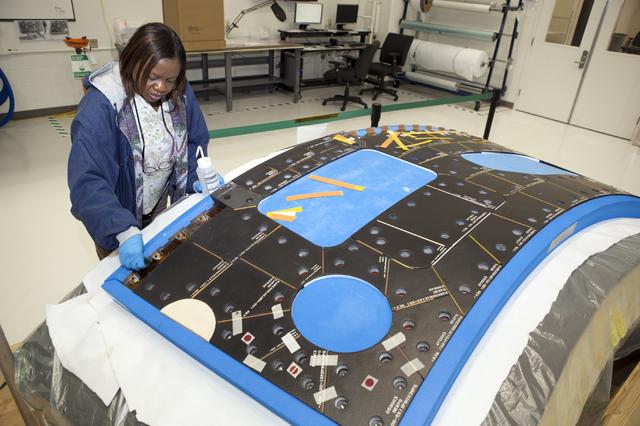
CAPE CANAVERAL, Fla. – Inside the Operations and Checkout Building high bay at NASA’s Kennedy Space Center in Florida, a tile technician works on a section of thermal protection system tiles that will be installed on the Orion crew module.…
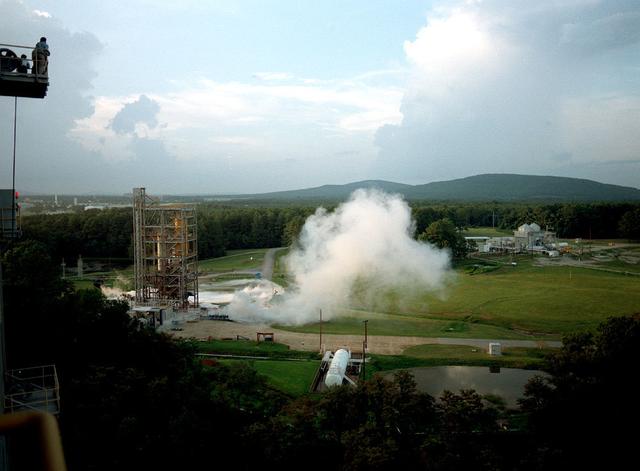
24 inch Hybrid motor test firing at Marshall's Test Stand 500. Liquid/gas are mixed with solid propellents to investigate materials, propellents, and nozzle stability characteristics.
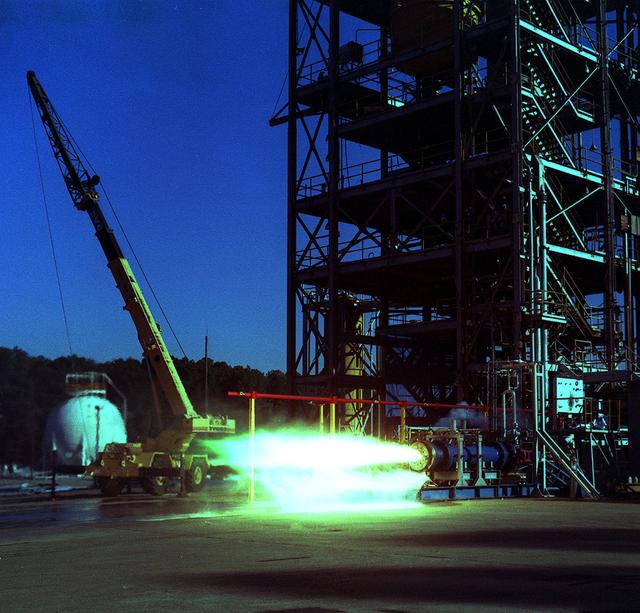
24 inch Hybrid motor test firing at Marshall's Test Stand 500. Liquid/gas are mixed with solid propellents to investigate materials, propellents, and nozzle stability characteristics.

Launched on July 26, 2005 from the Kennedy Space Center in Florida, STS-114 was classified as Logistics Flight 1. Among the Station-related activities of the mission were the delivery of new supplies and the replacement of one of the orbita…
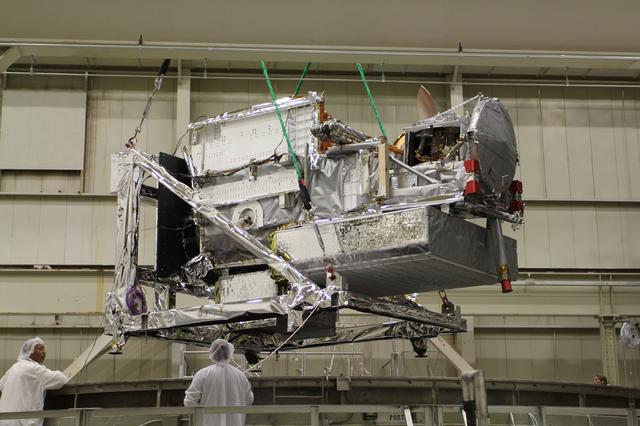
Engineers guiding the GPM Core Observatory into the thermal vacuum chamber. Credit: NASA/Goddard The Global Precipitation Measurement (GPM) mission is an international partnership co-led by NASA and the Japan Aerospace Exploration Agency…
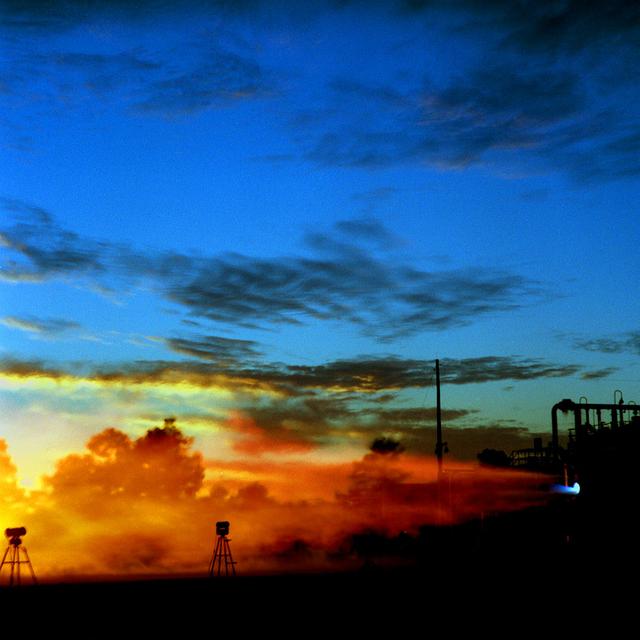
As the sun sets across the Alabama country side, engineers at Marshall's Test Stand 116 perform an endurance test on a 750K experimental engine.

Launched on July 26 2005, from the Kennedy Space Center in Florida, STS-114 was classified as Logistics Flight 1. Among the Station-related activities of the mission were the delivery of new supplies and the replacement of one of the orbita…
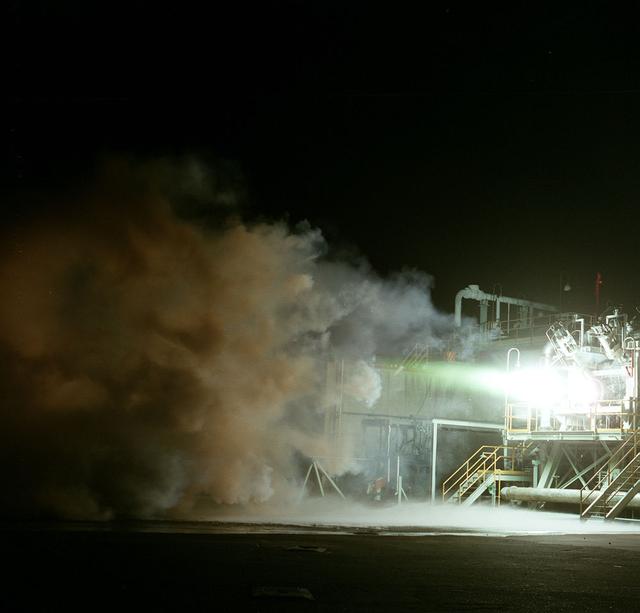
750 K motor test firing at Marshall's Test Stand 116 developing 650 pounds of thrust. The motor was tested for the Air Force Expendable Launch Vehicle (ELV) project.

Researchers at the Marshall Space Flight Center (MSFC) have designed, fabricated, and tested the first solar thermal engine, a non-chemical rocket engine that produces lower thrust but has better thrust efficiency than a chemical combustion…

This image illustrates the deployment of the Skylab parasol thermal shield. Skylab lost its thermal protection shield during its launch on May 14, 1973. The Skylab-2 crew deployed a parasol thermal shield to protect the workshop from overhe…

Researchers at the Marshall Space Flight Center (MSFC) have designed, fabricated, and tested the first solar thermal engine, a non-chemical rocket engine that produces lower thrust but has better thrust efficiency than a chemical combustion…

PA084 SOLAR THERMAL PROPULSION BLDG 4590. STROFIO THERMAL BALANCE TEST, CLOSE UP VIEW OF CHAMBER

PA084 SOLAR THERMAL PROPULSION BLDG 4590 STROFIO THERMAL BALANCE TEST. OVERALL VIEW

The Thermal Enclosure System (TES) provides thermal control for protein crystal growth experiments. The TES, housed in two middeck lockers on board the Space Shuttle, contains four Vapor Diffusion Apparatus (VDA) trays. Each can act as eith…

NASA's Cyclone Global Navigation Satellite System (CYGNSS) spacecraft undergoes a black light test in Building 1555 at Vandenberg Air Force Base in California. CYGNSS is being prepared at Vandenberg, and then will be transported to NASA's…

PA084 SOLAR THERMAL PROPULSION, BLDG 4590, STROFIO THERMAL BALANCE TEST, OVERALL VIEW
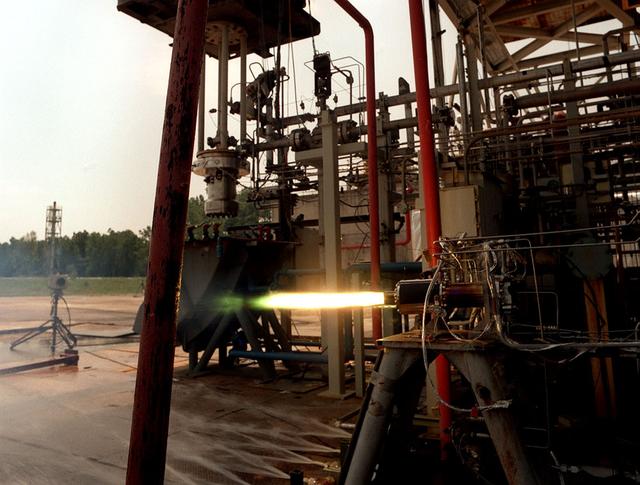
A 60 K Bantam Fastrac Gas Generator test at Marshall's Test Stand-116.
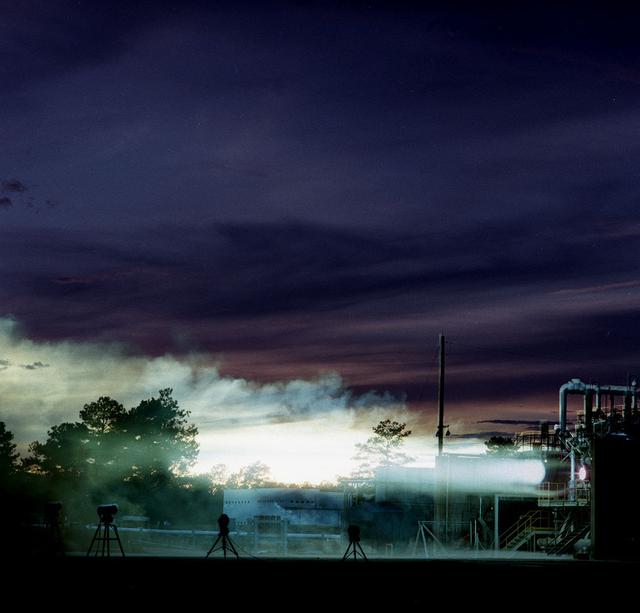
750 K motor test firing at Marshall's Test Stand 116 developing 650 pounds of thrust. The motor was tested for the Air Force Expendable Launch Vehicle (ELV) project.

CAPE CANAVERAL, Fla. – The thermal vacuum fixture is transferred to a transporter in front of the Payload Hazardous Servicing Center at NASA's Kennedy Space Center. The fixture will be used to hold the carrier and flight support system f…
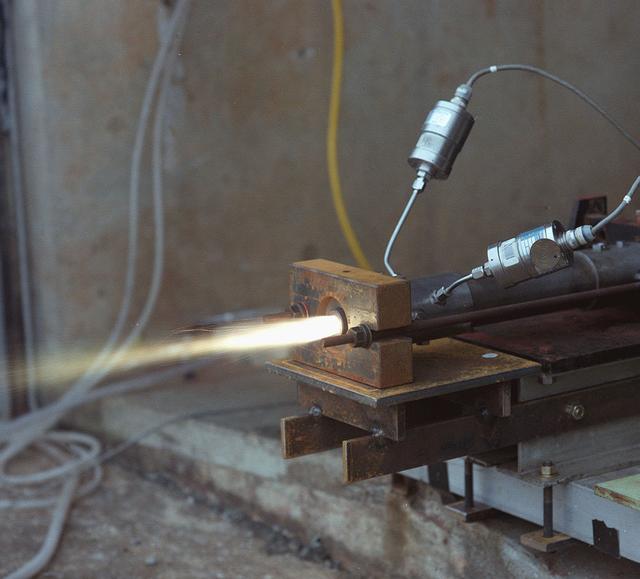
Fuels used in the 11 inch and 24 inch lab-scale hybrid motors are ignited at Marshall's test cell 104.
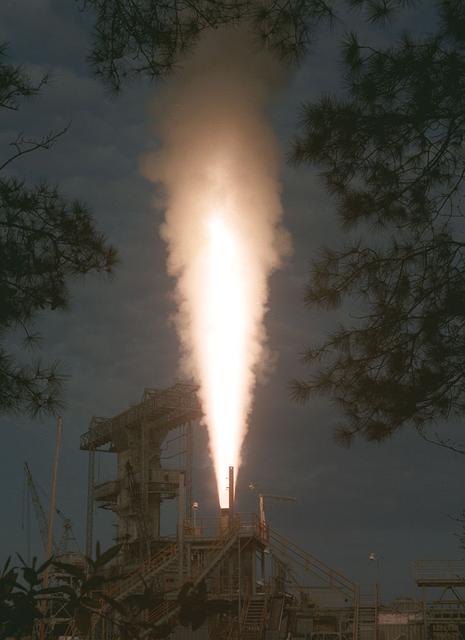
The roman candle effect as seen in this picture represents the testing of a solid rocket booster (SRB) for unexplained corrosion conditions (EUCC) which have occurred on the nozzles of redesigned solid rocket motors (RSRM). The motor being…

KENNEDY SPACE CENTER, FLA. - KSC employees clean up inside the second floor of the Thermal Protection System Facility damaged by Hurricane Frances. The storm's path over Florida took it through Cape Canaveral and KSC property during Labor…

CAPE CANAVERAL, Fla. – At NASA's Kennedy Space Center, a transporter moves the thermal vacuum fixture into the Payload Hazardous Servicing Center. Space shuttle Atlantis is targeted to launch on the STS-125 mission Oct. 8. The mission c…

KENNEDY SPACE CENTER, FLA. - KSC employees clean up inside the second floor of the Thermal Protection System Facility damaged by Hurricane Frances. The storm's path over Florida took it through Cape Canaveral and KSC property during Labor…
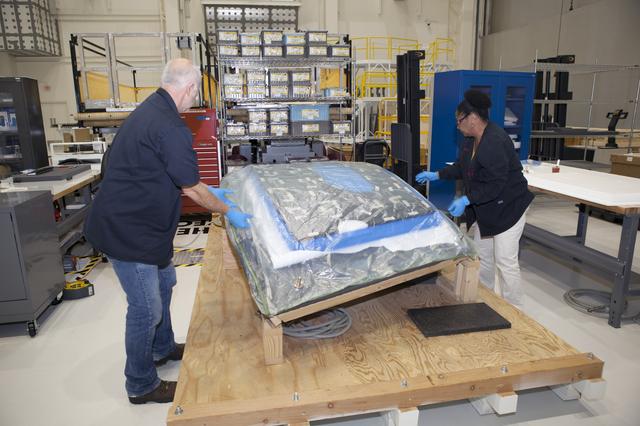
CAPE CANAVERAL, Fla. – Inside the Operations and Checkout Building high bay at NASA’s Kennedy Space Center in Florida, two tile technicians wrap a section of the thermal protection system tiles that will be installed on the Orion crew modul…

Researchers at the Marshall Space Flight Center (MSFC) have designed, fabricated, and tested the first solar thermal engine, a non-chemical rocket engine that produces lower thrust but has better thrust efficiency than a chemical combustion…

This image illustrates the deployment of the Skylab parasol thermal shield. Skylab lost its thermal protection shield during its launch on May 14, 1973. The Skylab-2 crew deployed a parasol thermal shield to protect the workshop from overhe…

The COS consists of a specially designed (VDA) Vapor Diffusion Apparatus tray with 6 chambers, a video camera for each chamber, a lighting system, and associated hardware. By observing the crystal growth in each chamber, researchers can ide…

PA084 SOLAR THERMAL PROPULSION BLDG 4590. STROFIO THERMAL BALANCE TEST, OVERALL VIEW OF TEST CHAMBER

PA084 SOLAR THERMAL PROPULSION BLDG 4590, STROFIO THERMAL BALANCE TEST, OVERALL VIEW

This photograph shows an overall view of the Solar Thermal Propulsion Test Facility at the Marshall Space Flight Center (MSFC). The 20-by 24-ft heliostat mirror, shown at the left, has dual-axis control that keeps a reflection of the sunlig…

The Apollo Telescope Mount (ATM) was designed and developed by the Marshall Space Flight Center (MSFC) and served as the primary scientific instrument unit aboard Skylab (1973-1979). The ATM consisted of eight scientific instruments as well…

CAPE CANAVERAL, Fla. – At NASA's Kennedy Space Center, workers move the thermal vacuum fixture deeper into the Payload Hazardous Servicing Center. Space shuttle Atlantis is targeted to launch on the STS-125 mission Oct. 8. The mission c…
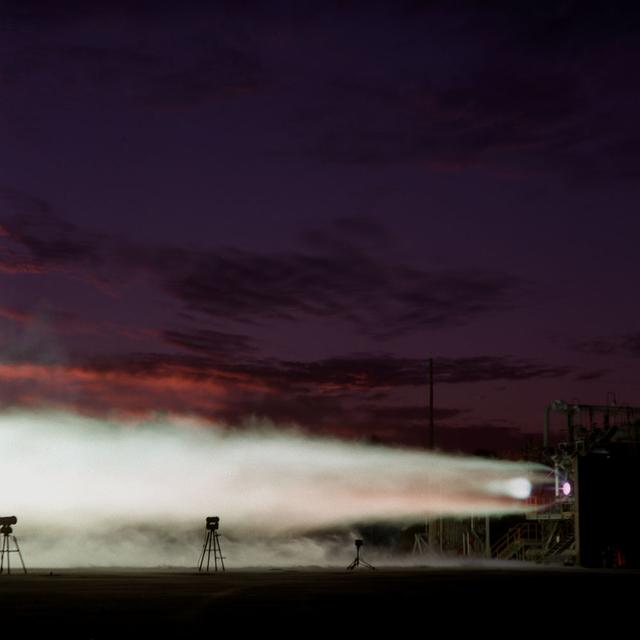
As the sun sets across the Alabama country side, engineers at Marshall's Test Stand 116 perform an endurance test on a 750K experimental engine.

CAPE CANAVERAL, Fla. – The thermal vacuum fixture arrives at NASA's Kennedy Space Center. The fixture will be used to hold the carrier and flight support system for the STS-125 Hubble Space Telescope Servicing Mission 4. Space shuttle Atl…

CAPE CANAVERAL, Fla. – The thermal vacuum fixture arrives at the Payload Hazardous Servicing Center at NASA's Kennedy Space Center. The fixture will be used to hold the carrier and flight support system for the STS-125 Hubble Space Teles…

Launched on July 26, 2005 from the Kennedy Space Center in Florida, STS-114 was classified as Logistics Flight 1. Among the Station-related activities of the mission were the delivery of new supplies and the replacement of one of the orbita…

A team of engineers at Marshall Space Flight Center (MSFC) has designed, fabricated, and tested the first solar thermal engine, a non-chemical rocket that produces lower thrust but has better thrust efficiency than the chemical combustion e…

Launched on July 26, 2005 from the Kennedy Space Center in Florida, STS-114 was classified as Logistics Flight 1. Among the Station-related activities of the mission were the delivery of new supplies and the replacement of one of the orbita…
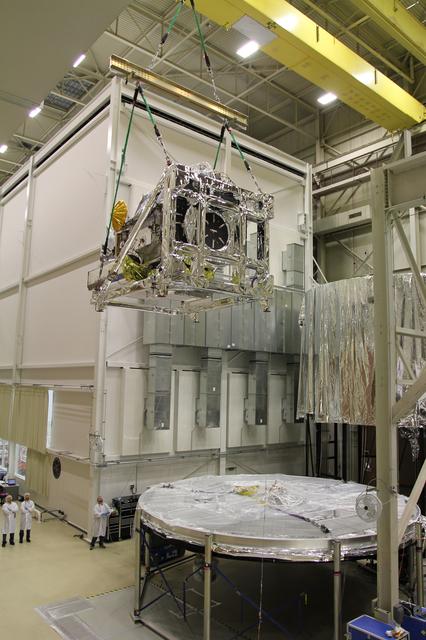
Crane lifting the GPM Core Observatory into position for TVAC testing. Credit: NASA/Goddard The Global Precipitation Measurement (GPM) mission is an international partnership co-led by NASA and the Japan Aerospace Exploration Agency (JAXA…