Shortly after liftoff on May 14, 1973, atmospheric drag tore off the thin metallic shield of Skylab that was designed to protect her from micro-meteorites and the Sun's intense heat. The Skylab-2 crew deployed a parasol sunshield to protect…
The Apollo Telescope Mount (ATM), designed and developed by the Marshall Space Flight Center, served as the primary scientific instrument unit aboard the Skylab. The ATM contained eight complex astronomical instruments designed to observe t…
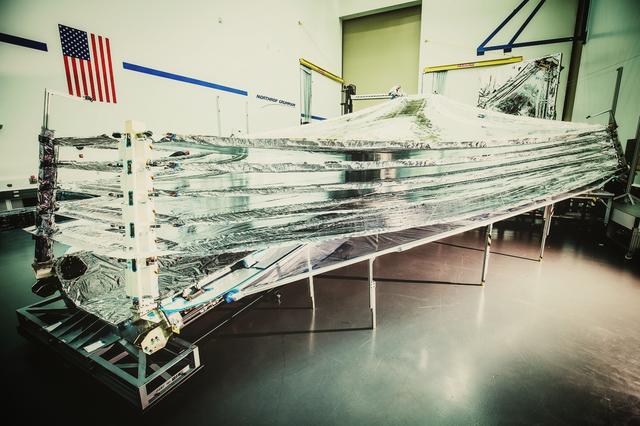
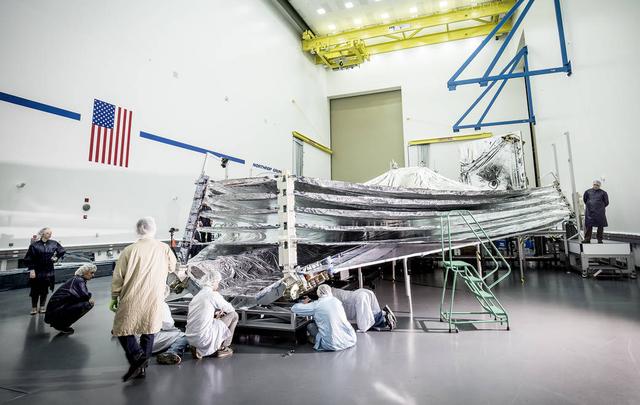
The last of the five sunshield layers responsible for protecting the optics and instruments of NASA’s James Webb Space Telescope is now complete. Read more: <a href="http://go.nasa.gov/2erZV41" rel="nofollow">go.nasa.gov/2erZV41</a> <b><a…
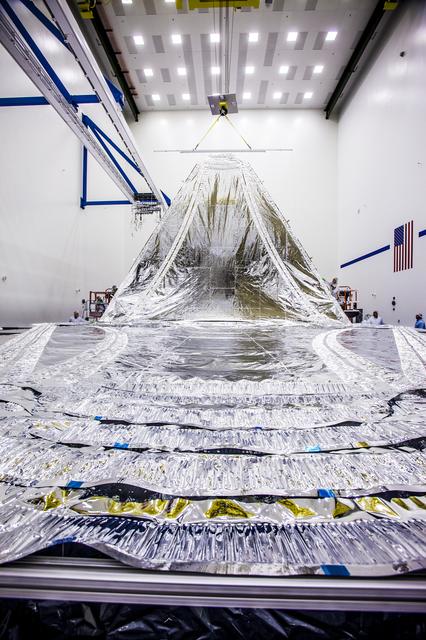
This shiny silver "waterfall" is actually the five layers of the full-scale engineering model of NASA's James Webb Space Telescope sunshield being laid out by technicians at the Northrop Grumman Aerospace Systems Space Park facili…
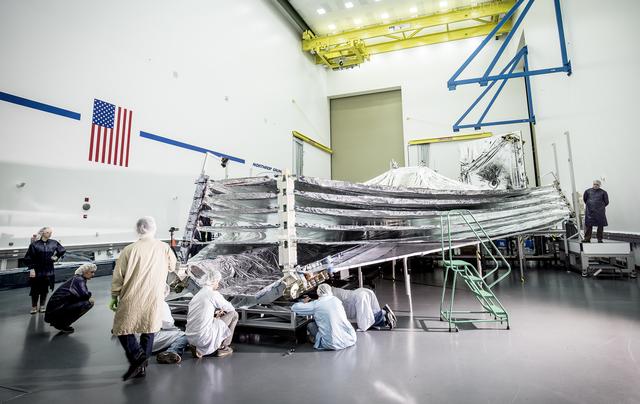
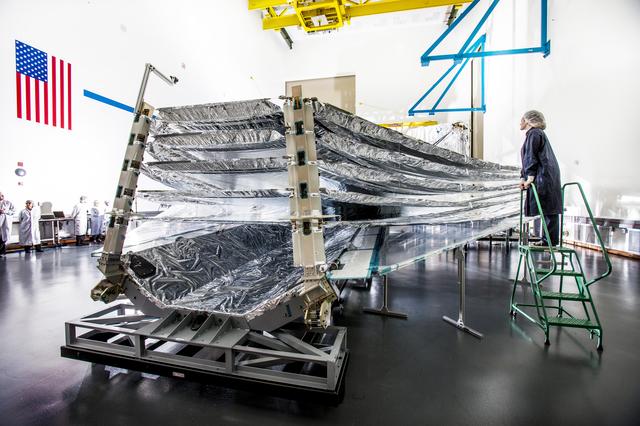
The sunshield on NASA's James Webb Space Telescope is the largest part of the observatory—five layers of thin, silvery membrane that must unfurl reliably in space. The precision in which the tennis-court sized sunshield has to open must be…
A major test of the sunshield for NASA’s James Webb Space Telescope was conducted recently by Northrop Grumman in Redondo Beach, California. For the first time, the five sunshield test layers were unfolded and separated; unveiling important…
NASA's James Webb Space Telescope has a giant custom-built, kite-shaped sunshield driven by mechanics that will fold and unfold with a harmonious synchronicity 1 million miles from Earth. Like a car, many mechanical pieces in the Webb tele…
The Sunshield on NASA's James Webb Space Telescope is the largest part of the observatory—five layers of thin membrane that must unfurl reliably in space to precise tolerances. Last week, for the first time, engineers stacked and unfurled a…