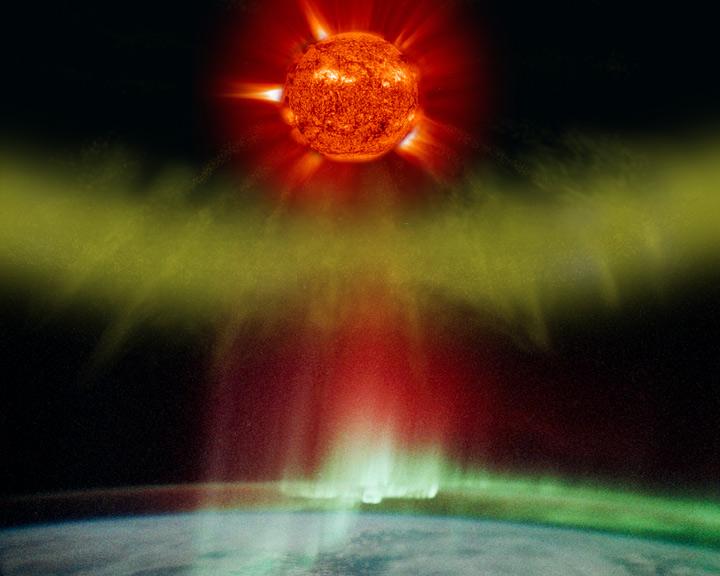
Illustration of a CME particle cloud blasted from the sun impacting Earth and creating aurora (in actual photo of aurora as taken by an astronaut on the space station). Credit: NASA/GSFC/SOHO/ESA To learn more go to the SOHO website: <a…
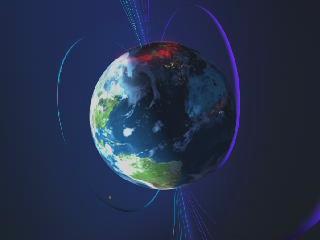
Animation of solar wind impacting the magnetosphere and creating aurora. Credit: NASA/GSFC/SOHO/ESA Sound: Juan Carlos Garcia To learn more go to the SOHO website: <a href="http://sohowww.nascom.nasa.gov/home.html" rel="nofollow">sohowww…

CME blast and subsequent impact at Earth -- This illustration shows a CME blasting off the Sun’s surface in the direction of Ea CME blast and subsequent impact at Earth -- This illustration shows a CME blasting off the Sun’s surface in the…
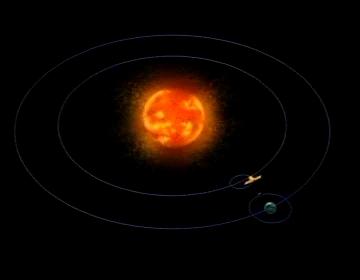
SOHO's orbit around the Lagrangian L1 point and the Sun Credit: NASA/GSFC/SOHO/ESA Sound: Juan Carlos Garcia To learn more go to the SOHO website: <a href="http://sohowww.nascom.nasa.gov/home.html" rel="nofollow">sohowww.nascom.nasa.gov/…
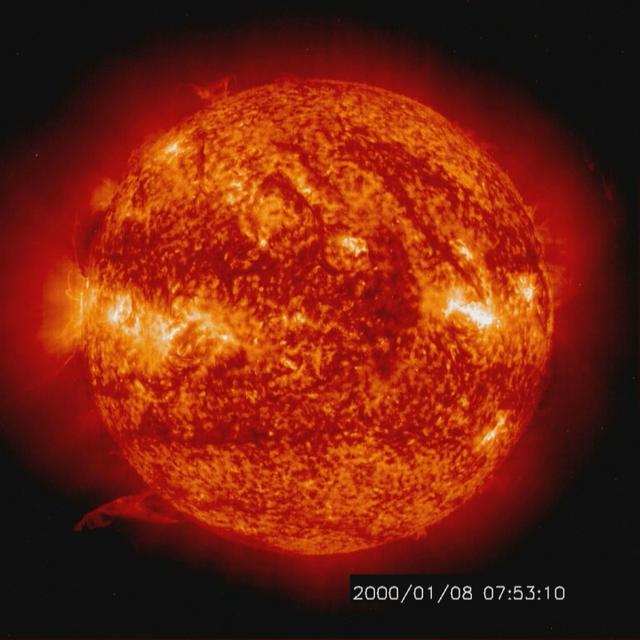
Solar activity and erupting prominences. EIT 304A (Jan. 8-10, 2000) Credit: NASA/GSFC/SOHO/ESA To learn more go to the SOHO website: <a href="http://sohowww.nascom.nasa.gov/home.html" rel="nofollow">sohowww.nascom.nasa.gov/home.html</a>…

This LASCO C2 image, taken 8 January 2002, shows a widely spreading coronal mass ejection (CME) as it blasts more than a billion tons of matter out into space at millions of kilometers per hour. The C2 image was turned 90 degrees so that t…
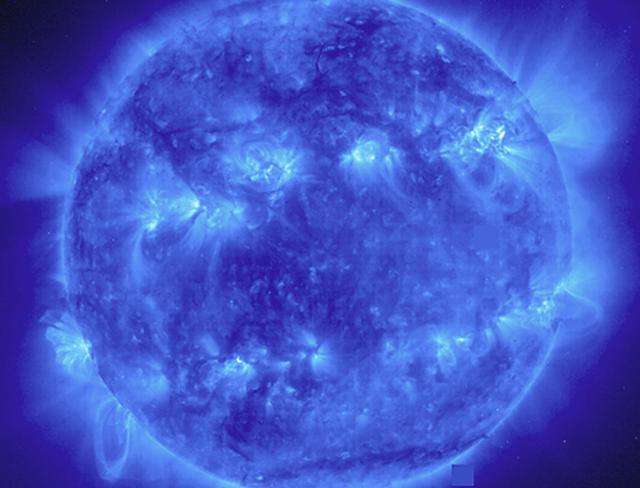
This EIT 171 image shows a wide variety of loops and active regions (lighter areas on the surface). Taken on November 9, 1998. The 171 filter shows emission from 8 and 9 times ionized iron at about 1 million degrees C. Credit: NASA/GSFC/SO…
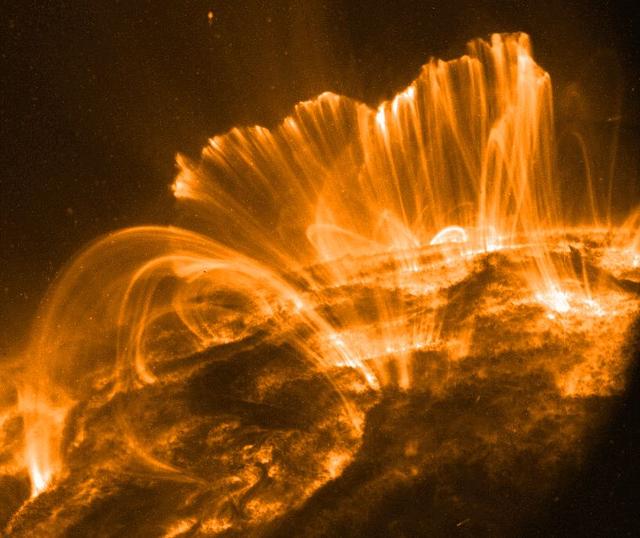
Explanation: In this picture, the Sun's surface is quite dark. A frame from a movie recorded on November 9th by the orbiting TRACE telescope, it shows coronal loops lofted over a solar active region. Glowing brightly in extreme ultraviolet…
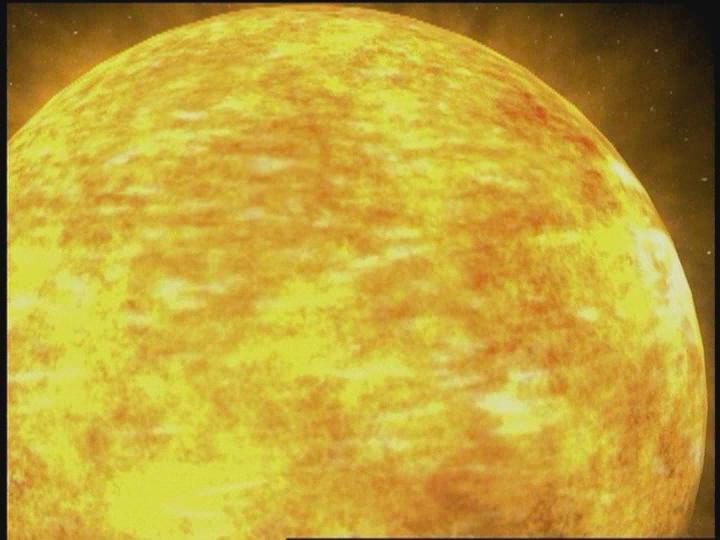
Animation of a CME leaving the Sun, slamming into our magnetosphere. Credit: NASA/GSFC/SOHO/ESA Sound: Juan Carlos Garcia To learn more go to the SOHO website: <a href="http://sohowww.nascom.nasa.gov/home.html" rel="nofollow">sohowww.nas…

This full-disk image from NOAA’s GOES-13 satellite was captured at 11:45 UTC (7:45 a.m. EDT) and shows the Americas on March 20, 2014. This date marks the start of astronomical spring in the northern hemisphere. <b><a href="http://goes.gsf…

Large, eruptive prominence in He II at 304Å, with an image of the Earth added for size comparison. This prominence from 24 July 1999 is particularly large and looping, extending over 35 Earths out from the Sun. Erupting prominences (when Ea…
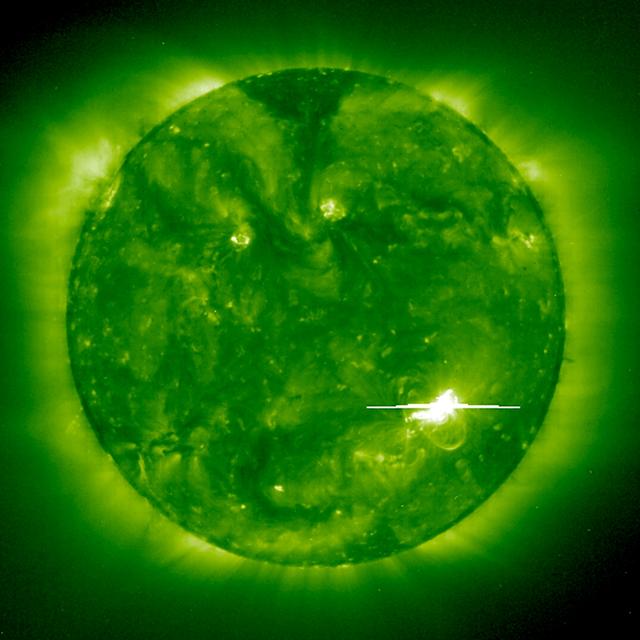
A bright solar flare is captured by the EIT 195Å instrument on 1998 May 2. A solar flare (a sudden, rapid, and intense variation in brightness) occurs when magnetic energy that has built up in the solar atmosphere is suddenly released, laun…

This composite image presents the three most visible elements of space weather: a storm from the Sun, aurora as seen from space, and aurora as seen from the Earth. The solar storm is a corona mass ejection (CME) composite from EIT 304Å sup…
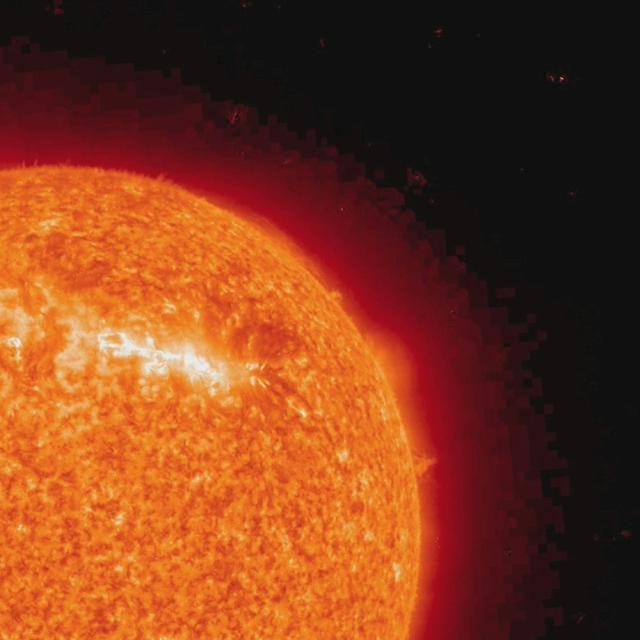
STEREO (Ahead) caught the action as one edge of a single active region spurted out more than a dozen surges of plasma in less than two days (Feb. 15-16, 2010). As seen in extreme UV light, the surges were narrow and directional outbursts dr…