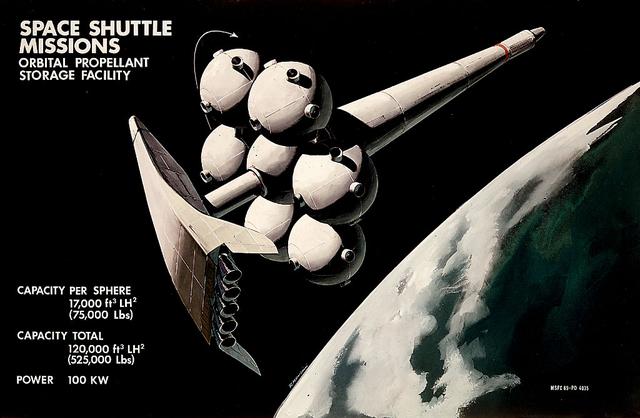
As part of the Space Task Group's recommendations for more commonality and integration in America's space program, Marshall Space Flight Center engineers proposed an orbiting propellant storage facility to augment Space Shuttle missions. In…
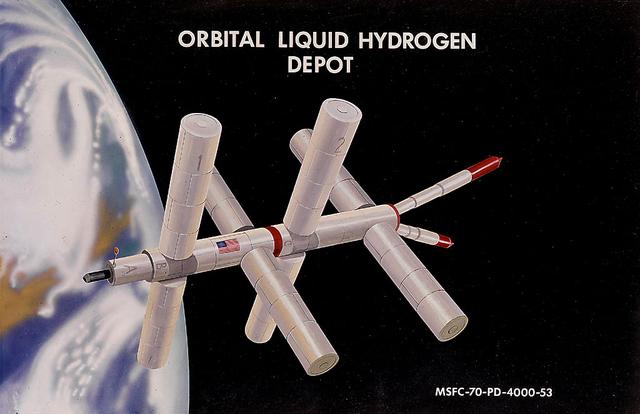
This 1971 artist's concept illustrates a proposed Orbital Liquid Hydrogen Depot. As envisioned by Marshall Space Flight Center Program Development persornel, an orbital modular propellant storage depot, supplied periodically by the Space Sh…

KENNEDY SPACE CENTER, FLA. -- Space Shuttle Endeavour is viewed from a high level in the Vehicle Assembly Building. Lights from above cast an orange glow. Visible behind Endeavour are the orange external tank and the white solid rocket…

KENNEDY SPACE CENTER, FLA. -- Space Shuttle Endeavour is viewed from a high level in the Vehicle Assembly Building. Lights from above cast an orange glow. Visible behind Endeavour, at left, are the orange external tank and the white sol…

This view of the Skylab Orbital Space Station was taken from the Skylab 2 Command/Service Module during it's initial fly around inspection. The micrometeoroid shield can be seen to be missing and a parasol solar shield was later fitted in i…

VANDENBERG AFB – Detail of the Orbital Sciences Pegasus XL rocket that will lift NASA's IRIS solar observatory into orbit in June. The work is taking place in a hangar at Vandenberg Air Force Base where IRIS, short for Interface Region Imag…
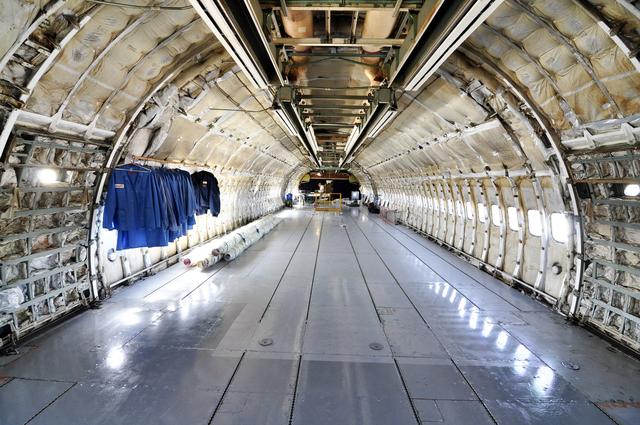
VANDENBERG ABF, Calif. – A look through the inside of the fuselage of the Orbital Sciences L-1011 aircraft called "Stargazer" after arrival at Vandenberg Air Force Base for the upcoming launch of the company's Pegasus XL rocket lifting NASA…
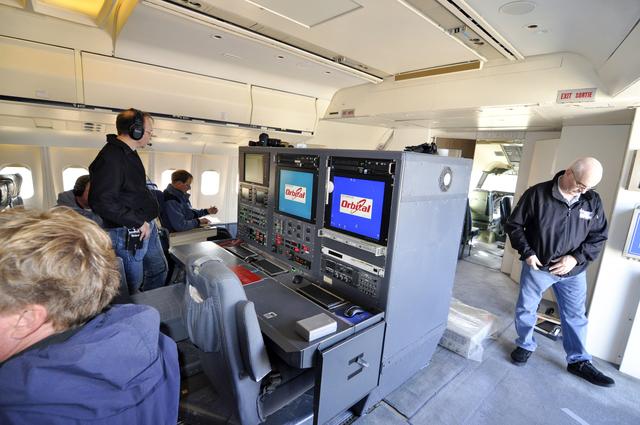
VANDENBERG ABF, Calif. - The launch crew of the Orbital Sciences L-1011 aircraft called "Stargazer" after arrival at Vandenberg Air Force Base for the upcoming launch of the company's Pegasus XL rocket lifting NASA's IRIS solar observatory…
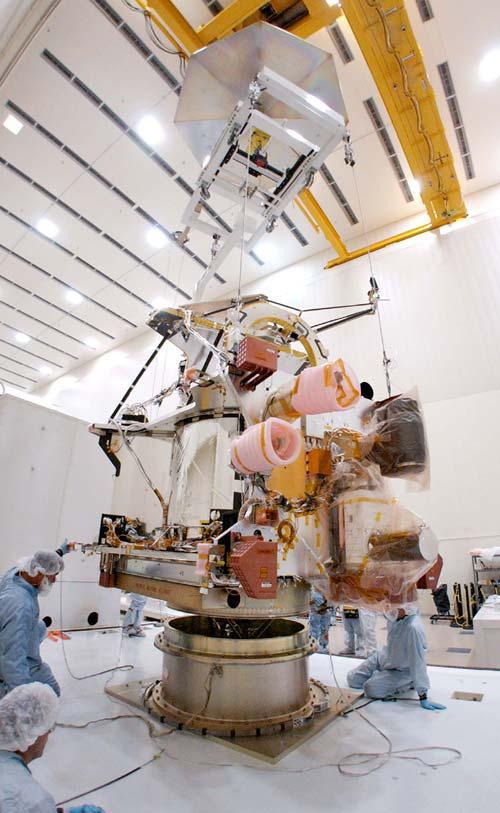
In late October 2004, NASA Mars Reconnaissance Orbiter was moved from the High Bay 100,000-class clean room at Lockheed Martin Space Systems, Denver, to the facility Reverberant Acoustic Lab.

VANDENBERG AFB – Orbital Sciences engineers connect the payload fairing over NASA's IRIS spacecraft. The fairing connects to the nose of the Orbital Sciences Pegasus XL rocket that will lift the solar observatory into orbit in June. The wor…

Workers at Lockheed Martin Space Systems, Denver, hoist a telescopic camera for installation onto NASA Mars Reconnaissance Orbiter spacecraft on Dec. 11, 2004.
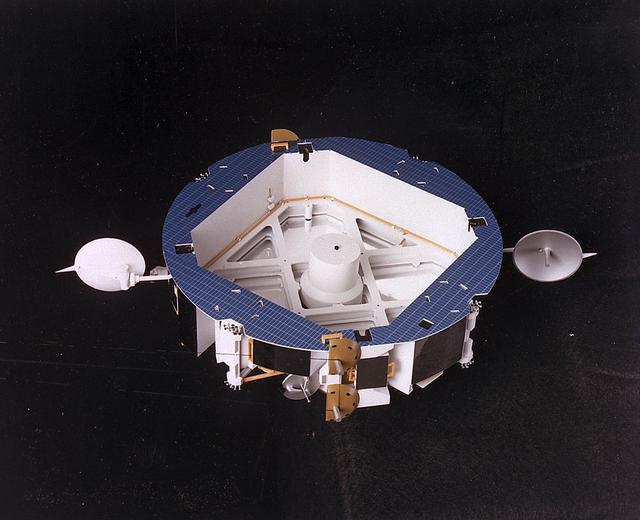
In this 1986 artist's concept, the Orbital Maneuvering Vehicle (OMV), is shown without its main propulsion module. Essentially two propulsion vehicles in one, the OMV could be powered by a main propulsion module , or, in its short range veh…

S83-30220 (9 April 1983) --- The space shuttle Challenger makes its first landing shortly before 11 a.m. (PST) on April 9, 1983, on Runway 22 at the Edwards Air Force Base in Southern California. Onboard the reusable spacecraft, having just…

VANDENBERG AFB – Orbital Sciences team members move the second half of the payload fairing before it is placed over NASA's IRIS spacecraft. The fairing connects to the nose of the Orbital Sciences Pegasus XL rocket that will lift the solar…

VANDENBERG AFB – Orbital Sciences engineers monitor the connection of the payload fairing over NASA's IRIS spacecraft. The fairing connects to the nose of the Orbital Sciences Pegasus XL rocket that will lift the solar observatory into orbi…

This cutaway illustration shows the characteristics and basic elements of the Skylab Orbiter Workshop (OWS). The OWS was divided into two major compartments. The lower level provided crew accommodations for sleeping, food preparation and co…

VANDENBERG AFB – Orbital Sciences team members move the second half of the payload fairing before it is placed over NASA's IRIS spacecraft. The fairing connects to the nose of the Orbital Sciences Pegasus XL rocket that will lift the solar…
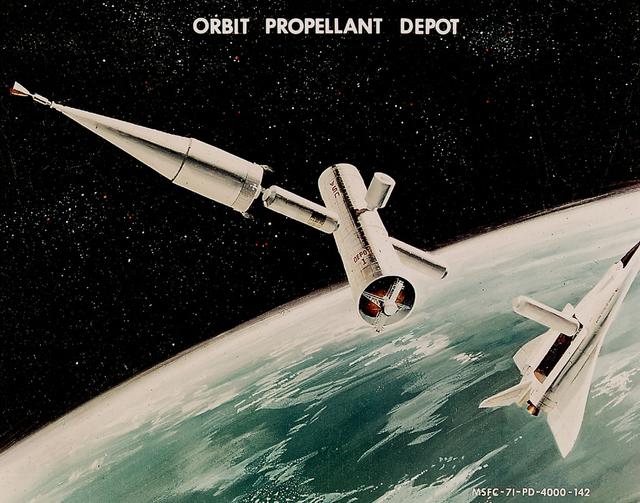
This 1971 artist's concept shows a Nuclear Shuttle and an early Space Shuttle docked with an Orbital Propellant Depot. As envisioned by Marshall Space Flight Center Program Development persornel, an orbital modular propellant storage depot,…

KENNEDY SPACE CENTER, FLA. -- Space Shuttle Endeavour is viewed from a high level in the Vehicle Assembly Building. Lights from above cast an orange glow. Visible behind Endeavour are the orange external tank and the white solid rocket…

S65-18741 (23 March 1965) --- Astronaut John W. Young took this picture during the Gemini-Titan 3 three-orbit mission as the spacecraft "Molly Brown" passed over Northern Mexico. The large light-brown area is the Sonoran Desert. The Colorad…

KENNEDY SPACE CENTER, FLA. -- Lights from above bathe Space Shuttle Endeavour in a soft glow as it sits in the Vehicle Assembly Building waiting for rollout to Launch Pad 39A. Visible behind the orbiter are the white solid rocket booster…

Columbia, Orbiter Vehicle (OV) 102, slated for mission STS-35, left, rolls past Atlantis, OV-104, on its way to Kennedy Space Center (KSC) launch pad 39A. OV-104, being readied for STS-38, is parked in front of the Vehicle Assembly Building…

VANDENBERG ABF, Calif. - The Orbital Sciences launch team monitors the Pegasus XL rocket that will lift NASA's IRIS solar observatory into orbit as the rocket and payload are moved from a hangar onto a transporter at Vandenberg Air Force Ba…
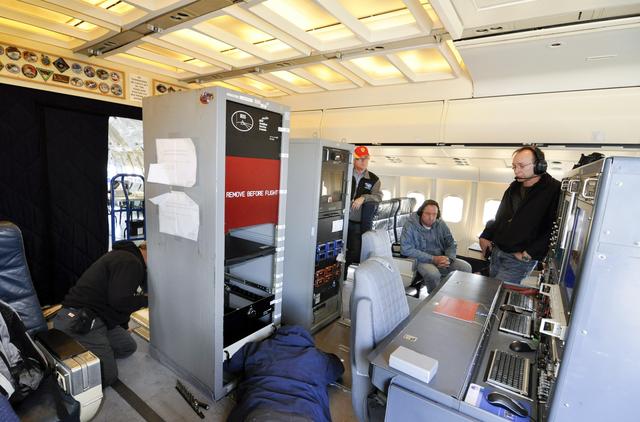
VANDENBERG ABF, Calif. - The launch crew of the Orbital Sciences L-1011 aircraft called "Stargazer" after arrival at Vandenberg Air Force Base for the upcoming launch of the company's Pegasus XL rocket lifting NASA's IRIS solar observatory…
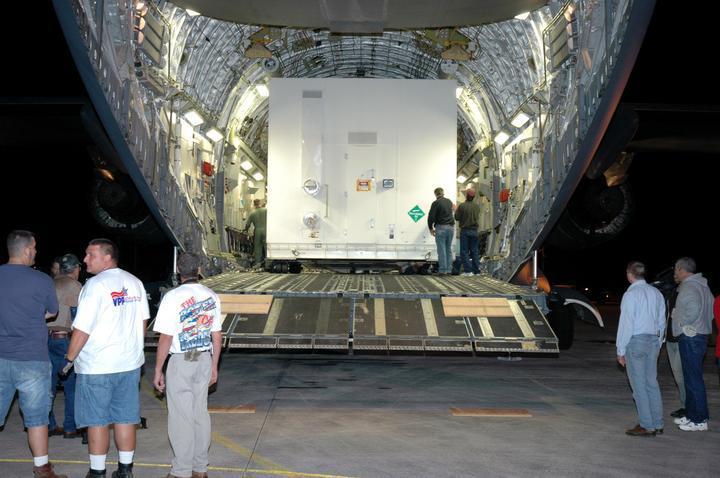
NASA Mars Reconnaissance Orbiter was delivered in two large containers from Lockheed Martin to Cape Canaveral on an Air Force C-17 cargo plane.

With the Atlantic Ocean as a backdrop, an Atlas V launch vehicle, 19 stories tall, with a two-ton NASA Mars Reconnaissance Orbiter MRO on top, roars away from Launch Complex 41 at Cape Canaveral Air Force Station.

VANDENBERG AFB – Orbital Sciences team members move the second half of the payload fairing before it is placed over NASA's IRIS spacecraft. The fairing connects to the nose of the Orbital Sciences Pegasus XL rocket that will lift the solar…

A telescopic camera called the High Resolution Imaging Science Experiment, or HiRISE, was installed onto the main structure of NASA Mars Reconnaissance Orbiter on Dec. 11, 2004 at Lockheed Martin Space Systems, Denver, Colo. HiRISE is at th…
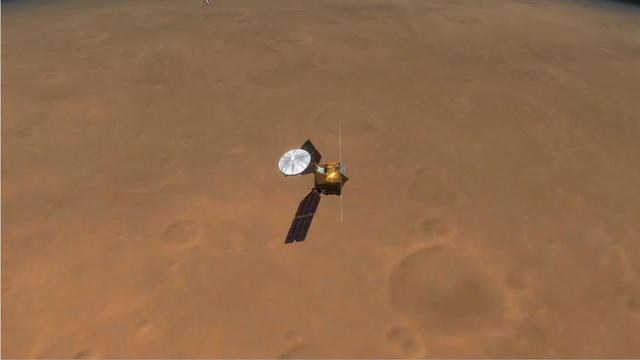
This artist animation illustrates how NASA Mars Reconnaissance Orbiter used radar to map the insides of the north polar ice cap on Mars.
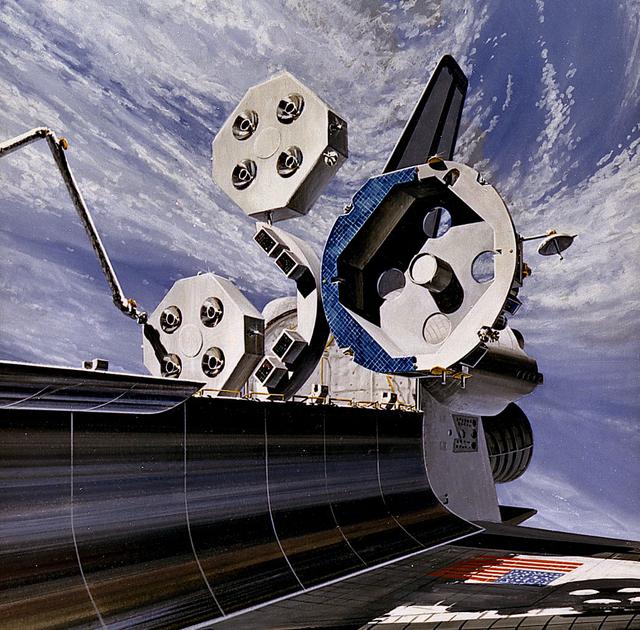
In this 1986 artist's concept, the Orbital Maneuvering Vehicle (OMV), undergoes changeout of the Propulsion Module outside the Space Shuttle Cargo Bay. As envisioned by Marshall Space Flight Center plarners, the OMV would be a remotely-cont…

VANDENBERG ABF, Calif. - The cockpit of the Orbital Sciences L-1011 aircraft called "Stargazer" after arrival at Vandenberg Air Force Base for the upcoming launch of the company's Pegasus XL rocket lifting NASA's IRIS solar observatory into…

VANDENBERG AFB – Orbital Sciences engineers connect the payload fairing over NASA's IRIS spacecraft. The fairing connects to the nose of the Orbital Sciences Pegasus XL rocket that will lift the solar observatory into orbit in June. The wor…
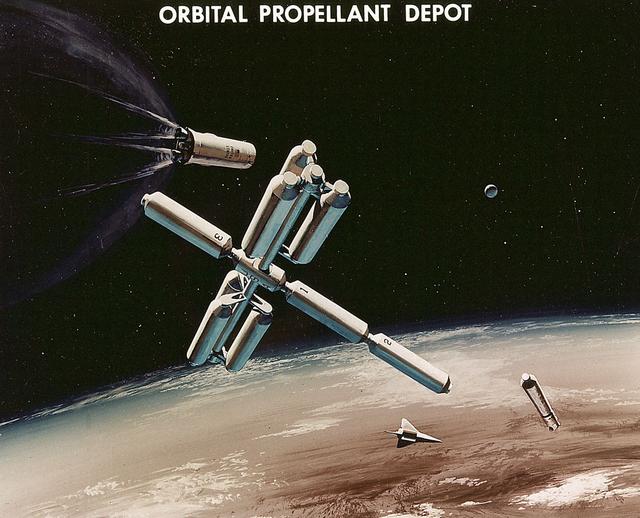
In this artist's concept from 1971, an Earth-to orbit fuel tanker approaches the Orbital Propellant Depot. As envisioned by Marshall Space Flight Center Program Devlopment plarners, an orbital modular propellant storage depot, supplied peri…

KENNEDY SPACE CENTER, FLA. -- Space Shuttle Endeavour sits in the Vehicle Assembly Building waiting for rollout to Launch Pad 39A. Visible behind the orbiter are the white solid rocket boosters at each side of the external tank. Rollout…

KENNEDY SPACE CENTER, FLA. -- Space Shuttle Endeavour is viewed from a high level in the Vehicle Assembly Building. Lights from above cast an orange glow. Visible behind Endeavour are the orange external tank and one of the white solid…

SL2-07-651 (22 June 1973) --- This overhead view of the Skylab Space Station was taken from the Departing Skylab Command/Service Module during the Skylab 2's final fly-around inspection. The single solar panel is quite evident as well as th…
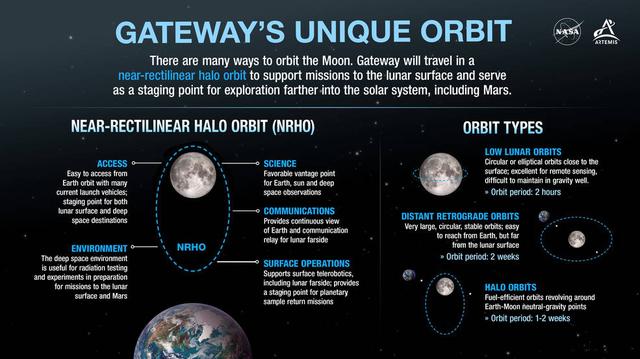
The Gateway space station will operate in a near-rectilinear halo orbit (NRHO) around the Moon, providing substantial capabilities and opportunities for Artemis missions.

NASA Mars Reconnaissance Orbiter dips into the thin martian atmosphere to adjust its orbit in this artist concept illustration.

VANDENBERG AFB – NASA's IRIS spacecraft before the second half of the payload fairing is installed over it. The fairing connects to the nose of the Orbital Sciences Pegasus XL rocket that will lift the solar observatory into orbit in June.…

Lockheed Martin Space Systems engineer Terry Kampmann left and lead technician Jack Farmerie work on assembly and test of NASA Mars Reconnaissance Orbiter spacecraft bus in a cleanroom at the company Denver facility.
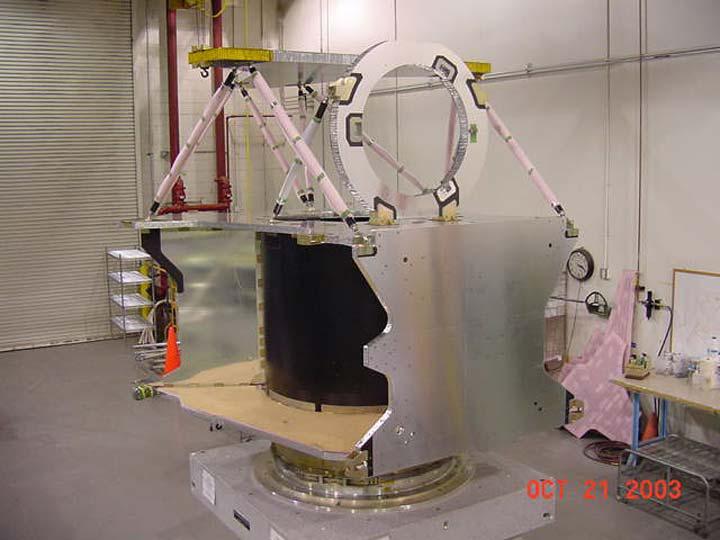
The structure of NASA Mars Reconnaissance Orbiter spacecraft is constructed from composite panels of carbon layers over aluminum honeycomb, lightweight yet strong.

VANDENBERG ABF, Calif. - The Orbital Sciences L-1011 aircraft called "Stargazer" arrives at Vandenberg Air Force Base for the upcoming launch of the company's Pegasus XL rocket lifting NASA's IRIS solar observatory into orbit. The aircraft…

NASA Mars Reconnaissance Orbiter passes over the planet south polar region in this artist concept illustration.

This artist concept of NASA Mars Reconnaissance Orbiter features the spacecraft main bus facing down, toward the red planet.

Close-up of the Diviner solar calibration target. Diviner is one of seven instruments aboard NASA LRO Mission.
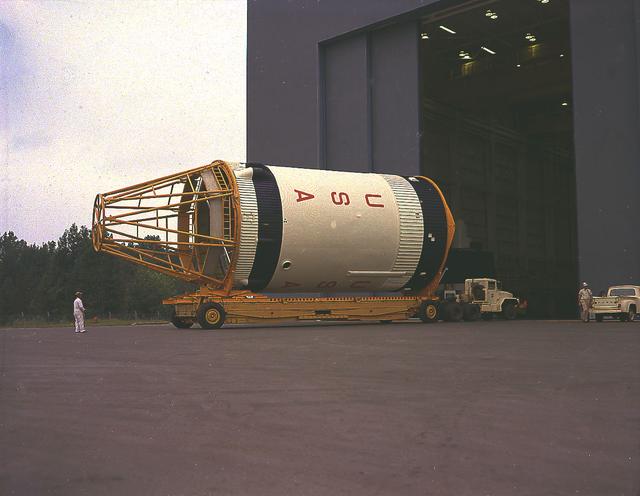
This September 1967 photograph shows workmen removing a mockup of the Saturn V S-IVB stage that housed the Skylab Orbital Workshop (OWS) from the Marshall Space Flight Center (MSFC), building 4755. The mockup was shipped to McDornell Dougla…

VANDENBERG AFB - Orbital Sciences engineers connect the payload fairing over NASA's IRIS spacecraft. The fairing connects to the nose of the Orbital Sciences Pegasus XL rocket that will lift the solar observatory into orbit in June. The wor…

The Diviner instrument following integration to NASA Lunar Reconnaissance Orbiter. Diviner is one of seven instruments aboard the Lunar Reconnaissance Orbiter.