Astronomers have made the most detailed study yet of an extremely massive young galaxy cluster using three of NASA's Great Observatories. This multi-wavelength image shows this galaxy cluster, called IDCS J1426.5+3508 (IDCS 1426 for short),…
Galaxy Cluster IDCS J1426
This image from ESA Herschel Space Observatory reveals a suspected ring at the center of our galaxy is warped for reasons scientists cannot explain. The ring is twisted so that part of it rises above and below the plane of our Milky Way gal…
The Case of the Warped Galactic Ring
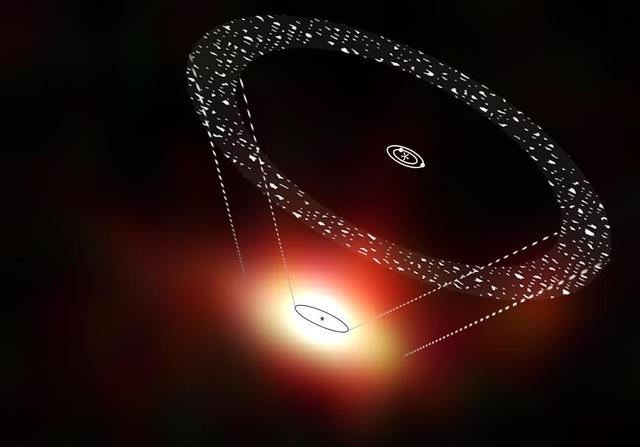
This artist impression shows the orbits of planets and comets around the star 61 Vir, superimposed on a view from the Herschel Space Telescope.
A Vast Disk of Comets Artist Concept
New stars are the lifeblood of our galaxy, and there is enough material revealed by ESA Herschel of the constellation Vulpecula little fox OB1. The giant stars at the heart of Vulpecula OB1 are some of the biggest in the galaxy.
The Little Fox and the Giant Stars
SCI2016_0001: SOFIA/GREAT [O I] spectrum at 4.7 THz (63 μm) superimposed on a picture of Mars. Absorption line depth is approximately 10% of the continuum. The abundance of atomic oxygen computed from the data is less than expected from the…
SOFIA Science Imagery
These two images show tacked Chandra images for two different classes of distant, massive galaxy detected with NASA Spitzer. Image stacking is a procedure used to detect emission from objects that is too faint to be detected in single image…
Stacks of Light
ESA Herschel Space Observatory has discovered a giant, galaxy-packed filament ablaze with billions of new stars. The filament connects two clusters of galaxies that, along with a third cluster, will smash together in several billion years.
A Star-Bursting Filament
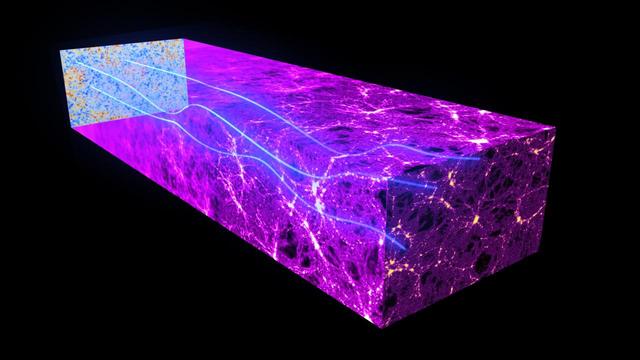
This artist impression shows how photons from the early universe are deflected by the gravitational lensing effect of massive cosmic structures as they travel across the universe.
Ancient Light Deflected
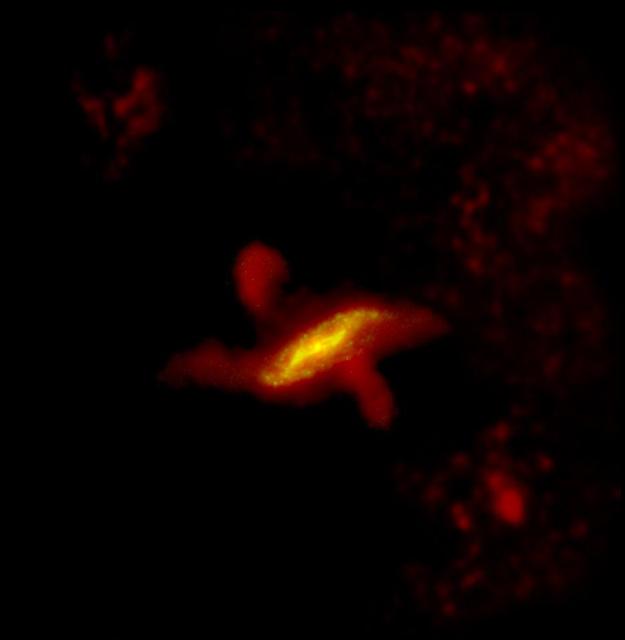
This parallelogram shaped region of dust observed by ESA Herschel Space telescope can be best described using galaxy formation models where a flat spiral galaxy collides with an elliptical galaxy becoming warped in the process.
The Action-Packed Centaurus A
CAPE CANAVERAL, Fla. – Most of the protective covering has been removed from the lower stack, mini-stack number 1, two of the observatories for NASA's Magnetospheric Multiscale Observatory, or MMS, inside Building 1 D high bay at the Astrot…
KSC-2014-4363
CAPE CANAVERAL, Fla. – A technician carefully removes the protective covering from the lower stack, mini-stack number 1, two of the observatories for NASA's Magnetospheric Multiscale Observatory, or MMS, in Building 1 D high bay at the Astr…
KSC-2014-4361
Artist’s concept of the Orbiting Carbon Observatory.
Artist Concept of the Orbiting Carbon Observatory
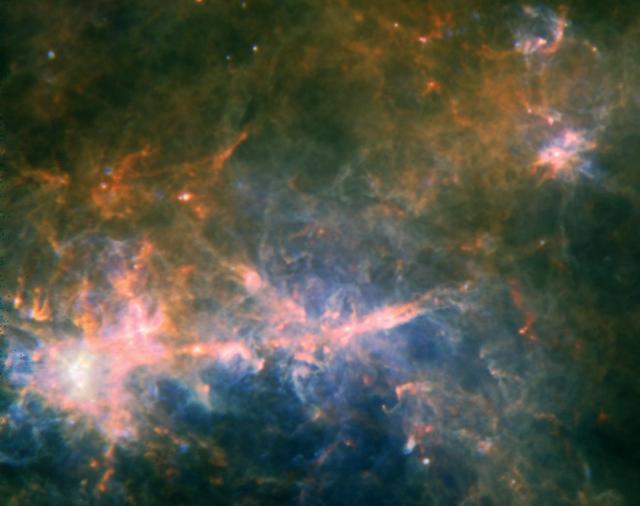
New images of huge filamentary structures of gas and dust from ESA's Herschel space observatory reveal how matter is distributed across our Milky Way galaxy. Long and flimsy threads emerge from a twisted mix of material, taking on complex s…
Herschel View of G49 Filament
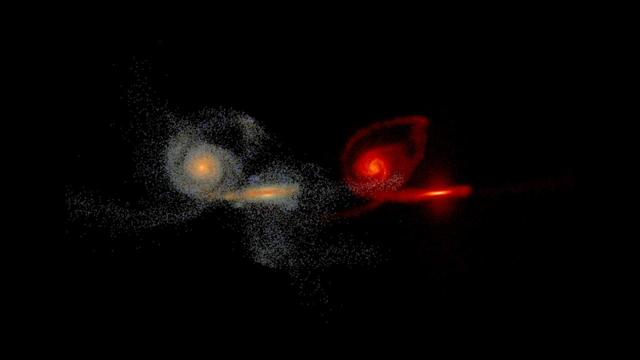
This frame from a simulation shows the merging of two massive galaxies. The merging galaxies are split into two views: a visible-light view on the left, and infrared view on the right.
Mega Galaxy Merger
This image is of the Crab Nebula in visible light photographed by the Hale Observatory optical telescope in 1959. The faint object at the center had been identified as a pulsar and is thought to be the remains of the original star. It had b…
High Energy Astronomy Observatory (HEAO)
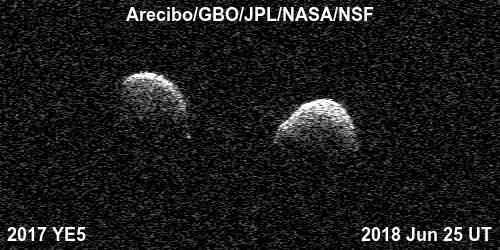
Bi-static radar images of the binary asteroid 2017 YE5 from the Arecibo Observatory and the Green Bank Observatory on June 25. The observations show that the asteroid consists of two separate objects in orbit around each other.  A movie is…
Bi-static Radar Images of the Binary Asteroid 2017 YE5
Spatial distribution of snow water equivalent across the Tuolumne River Basin from April 10 to June 1, 2013 as measured by NASA Airborne Snow Observatory.
Spatial Distribution of Tuolumne River Basin Mapped by Airborne Snow Observatory
CAPE CANAVERAL, Fla. – Technicians begin to remove the protective covering from the lower stack, mini-stack number 1, two of the observatories for NASA's Magnetospheric Multiscale Observatory, or MMS, in Building 1 D high bay at the Astrote…
KSC-2014-4357
CAPE CANAVERAL, Fla. – Technicians remove the protective covering from the lower stack, mini-stack number 1, two of the observatories for NASA's Magnetospheric Multiscale Observatory, or MMS, in Building 1 D high bay at the Astrotech payloa…
KSC-2014-4360
CAPE CANAVERAL, Fla. – Most of the protective covering has been removed from the lower stack, mini-stack number 1, two of the observatories for NASA's Magnetospheric Multiscale Observatory, or MMS, inside Building 1 D high bay at the Astrot…
KSC-2014-4364
The dusty side of the Sword of Orion is illuminated in this striking infrared image from the European Space Agency's Hershel Space Observatory.  This immense nebula is the closest large region of star formation, situated about 1,500 light y…
Ionized Carbon Atoms in Orion
This map shows the distribution of water in the stratosphere of Jupiter as measured with the Herschel space observatory. White and cyan indicate highest concentration of water, and blue indicates lesser amounts.
Distribution of Water in Jupiter Stratosphere
CAPE CANAVERAL, Fla. – Technicians remove the protective covering from the lower stack, mini-stack number 1, two of the observatories for NASA's Magnetospheric Multiscale Observatory, or MMS, in Building 1 D high bay at the Astrotech payloa…
KSC-2014-4359
Dwarf planet Ceres is located in the main asteroid belt, between the orbits of Mars and Jupiter, as illustrated in this artist conception.
Dwarf Planet Ceres, Artist Impression
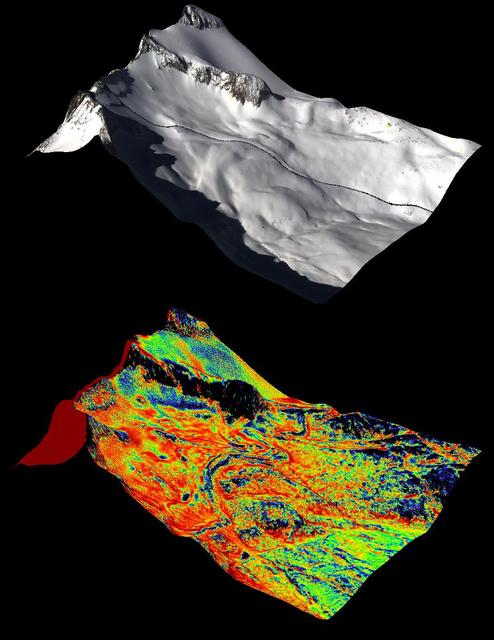
A natural color image of Mt. Lyell, the highest point in the Tuolumne River Basin top image is compared with a three-dimensional color composite image of Mt. Lyell from NASA Airborne Snow Observatory depicting snow depth bottom image.
Snow Depth Depicted on Mt. Lyell by NASA Airborne Snow Observatory
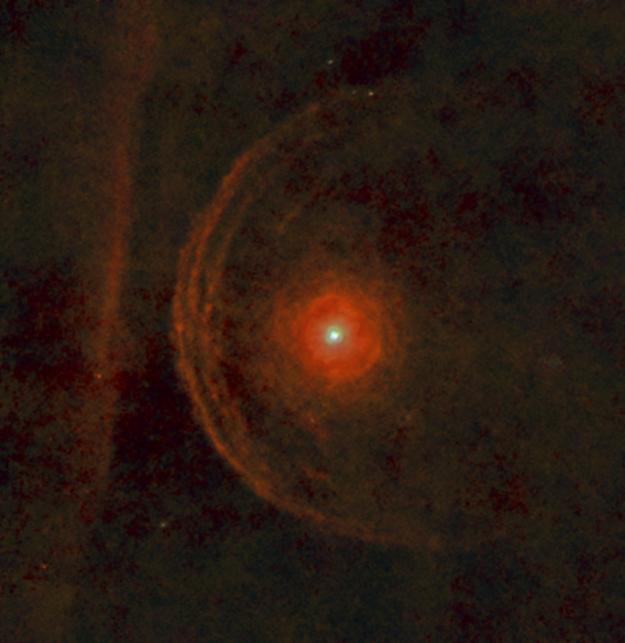
The red supergiant star Betelgeuse center is surrounded by a clumpy envelope of material in its immediate vicinity in this view from the Herschel Space Observatory.
Betelgeuse Enigmatic Environment
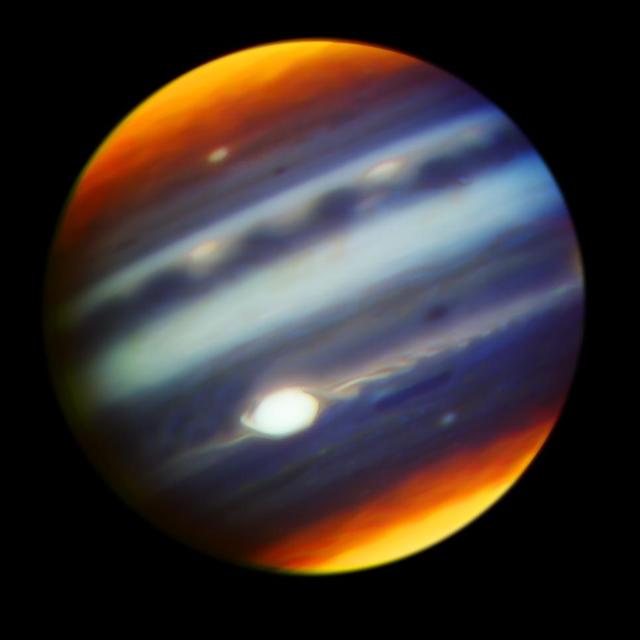
This composite, false-color infrared image of Jupiter reveals haze particles over a range of altitudes, as seen in reflected sunlight. It was taken using the Gemini North Telescope's Near-InfraRed Imager (NIRI) on May 18, 2017, in collabora…
Jupiter With Great Red Spot, Near Infrared, May 2017
Mt. Dana and Dana Plateau in the Tuolumne River Basin within Yosemite National Park, Calif., as seen out the window of a Twin Otter aircraft carrying NASA Airborne Snow Observatory on April 3, 2013.
Tuolumne River Basin seen by NASA Airborne Snow Observatory
The large bubble is an embryonic star that looks set to turn into one of the brightest stars in our Milky Way galaxy in this infrared image from the Herschel Space Telescope.
Galactic Bubble
This artist concept, based on data from NASA Herschel telescope, illustrates an icy planet-forming disk around a young star called TW Hydrae, located about 175 light-years away in the Hydra, or Sea Serpent, constellation.
Misty Star in the Sea Serpent Artist Concept
In this new view of the Andromeda, also known as M31, galaxy from the Herschel space observatory, cool lanes of forming stars are revealed in the finest detail yet. M31 is the nearest major galaxy to our own Milky Way at a distance of 2.5 m…
Cool Andromeda
This image from the Herschel Observatory, a European Space Agency mission, reveals some of the coldest and darkest material in our galaxy. The yellow filaments show the coldest dust dotted with the youngest embryonic stars.
Dark Wombs of Stars
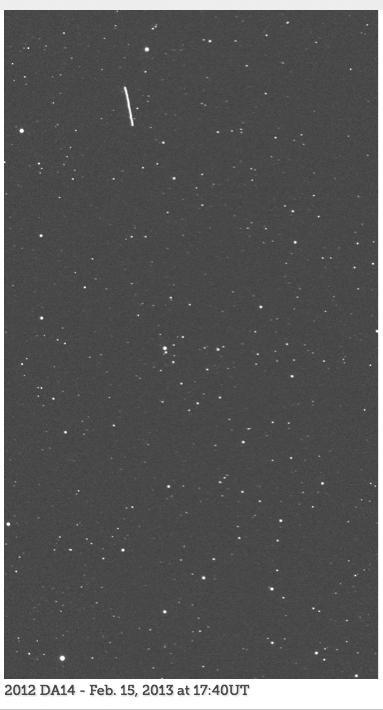
An animated set of images, from the telescope known as the iTelescope.net Siding Spring Observatory, shows asteroid 2012 DA14 as the streak moving from top to bottom in the field of view. The animation is available in the Planetary Photojou…
Asteroid 2012 DA14 as Seen from Siding Spring, Australia
The ring-like swirls of dust filling the Andromeda galaxy stand out colorfully in this new image from the Herschel Space Observatory.
Andromeda Colorful Rings
W3 is an enormous stellar nursery about 6,200 light-years away in the Perseus Arm, one of the Milky Way galaxy main spiral arms as seen by ESA Herschel space observatory.
Churning Out Stars
This frame from a movie from the Samford Valley Observatory in Brisbane, Australia, shows the progress of asteroid 2012 DA14 across the night sky as it nears its closest approach. It was taken at 12:59 UTC on Feb. 15 7:59 a.m. EST, or 4:59…
Approach of Asteroid 2012 DA14 from Samford Valley Observatory
New data from the Herschel Space Observatory suggest comets are constantly smashing together around the star Fomalhaut, a young star, just a few hundred million years old, and twice as massive as the sun.
Herschel Spots Comet Massacre Around Nearby Star
This artist impression shows the tarburst galaxy HFLS3. The galaxy appears as little more than a faint, red smudge in images from the Herschel space observatory.
Artist Impression of Starburst Galaxy
This image from NASA Herschel, in the constellation of Vulpecula, shows an entire assembly line of newborn stars. The diffuse glow reveals the widespread cold reservoir of raw material that our Milky Way galaxy has in stock for building sta…
Assembly Line of Stars
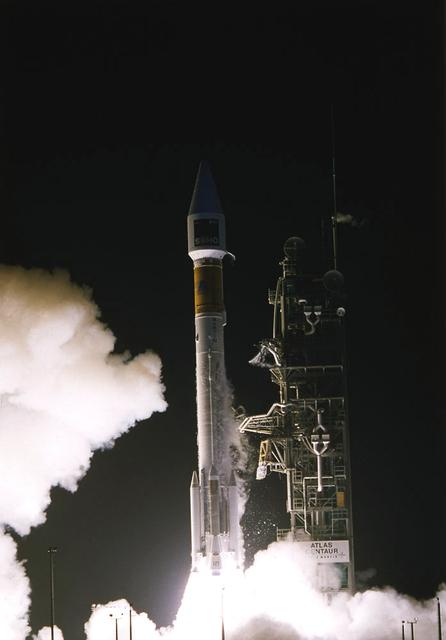
The Solar Heliospheric Observatory (SOHO) is launched atop an ATLAS-IIAS expendable launch vehicle. Liftoff from launch complex 36B at Cape Canaveral Air Station marked the 10th Atlas launch from the Eastern range for 1995. SOHO is a cooper…
Earth Science
This image shows the Parkes telescope in Australia, part of the Commonwealth Scientific and Industrial Research Organization. Researchers used the telescope to detect the first population of radio bursts known to originate from beyond our g…
Parkes Telescope
CAPE CANAVERAL, Fla. – Technicians have removed most of the protective covering from the lower stack, mini-stack number 1, two of the observatories for NASA's Magnetospheric Multiscale Observatory, or MMS, in Building 1 D high bay at the As…
KSC-2014-4362