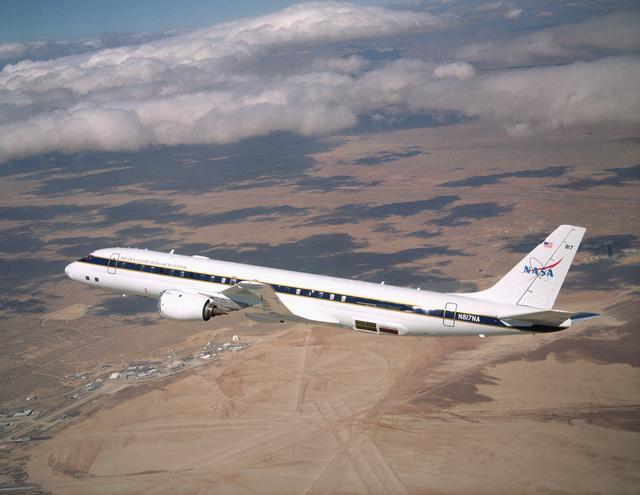
NASA's large Airborne Science research aircraft, a modified DC-8 airliner, displayed new colors in a check flight Feb. 24, 2004, over its home base, the NASA Dryden Flight Research Center at Edwards AFB, California.
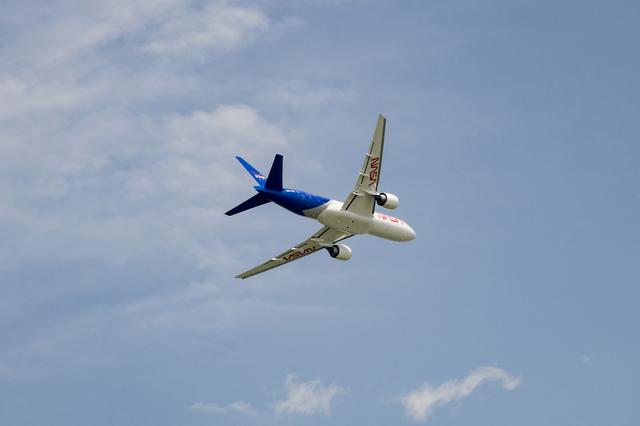
NASA's DC-8 Airborne Science research aircraft, in new colors and markings, takes off Feb. 24, 2004. Dark panels on lower fuselage are synthetic aperture radar antennas enabling sophisticated studies of Earth features.
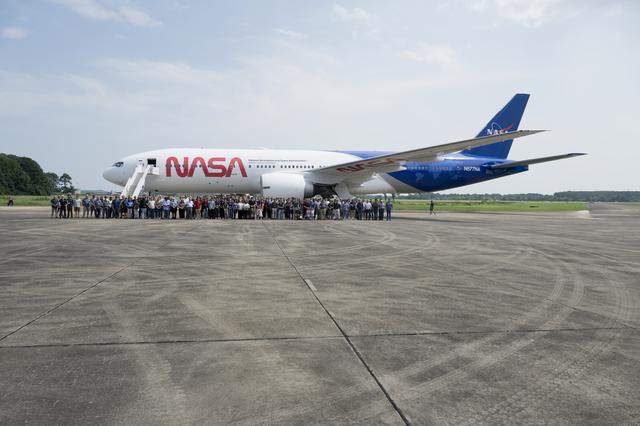
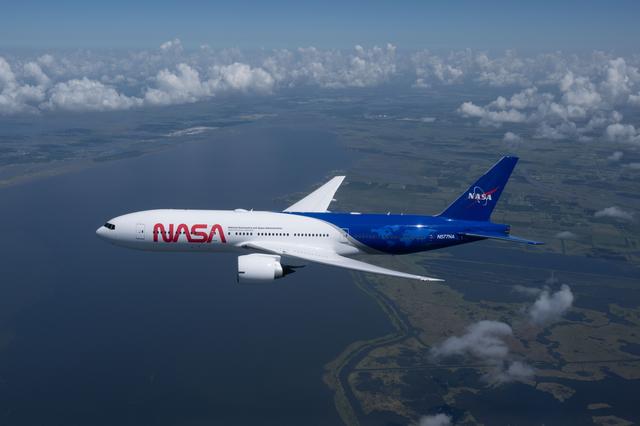
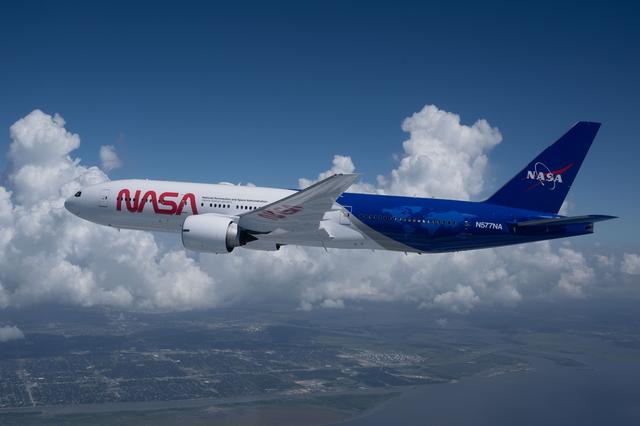
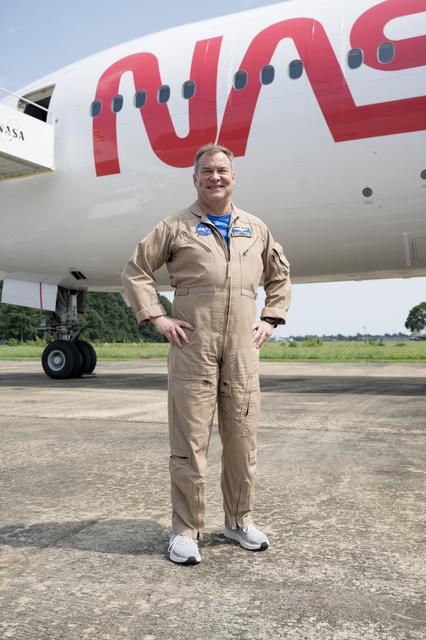
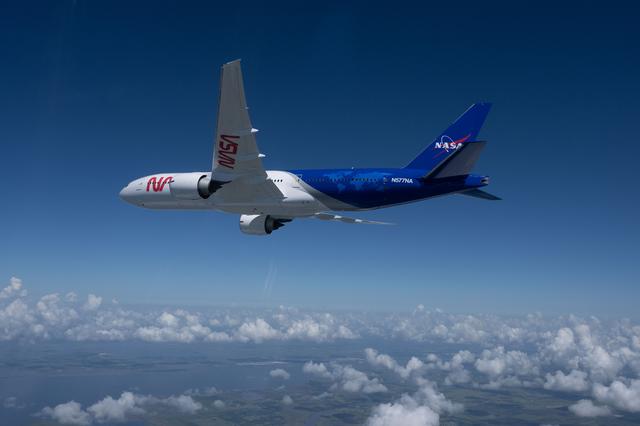
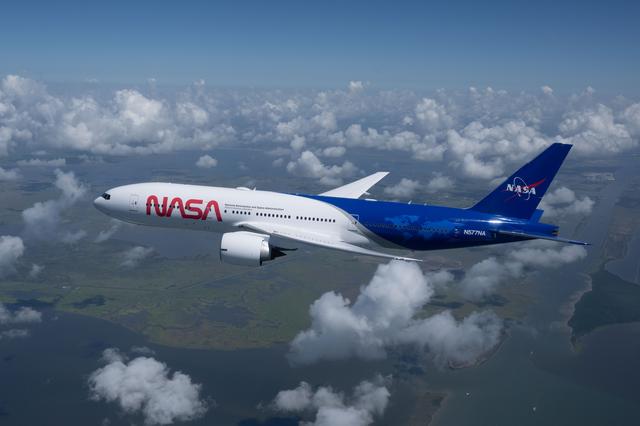
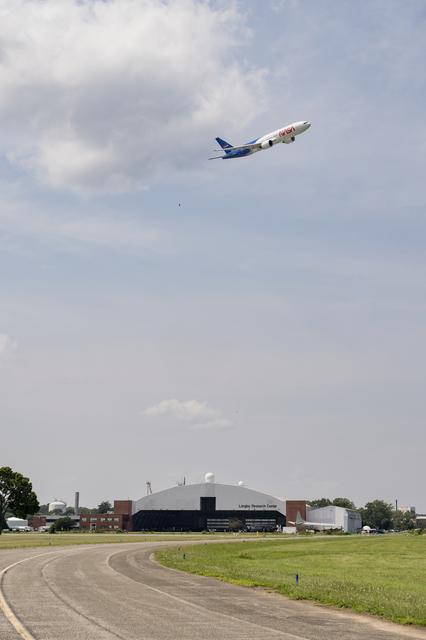
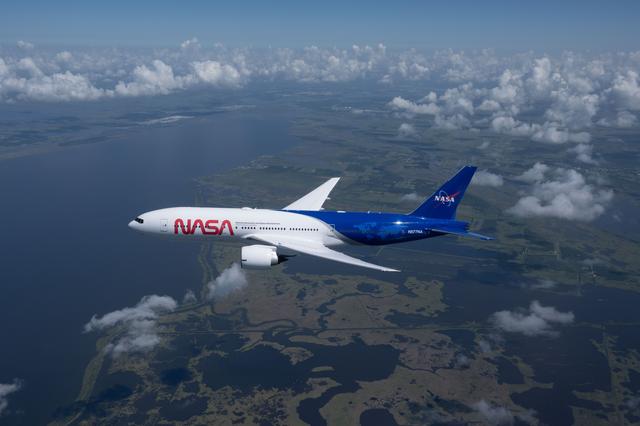
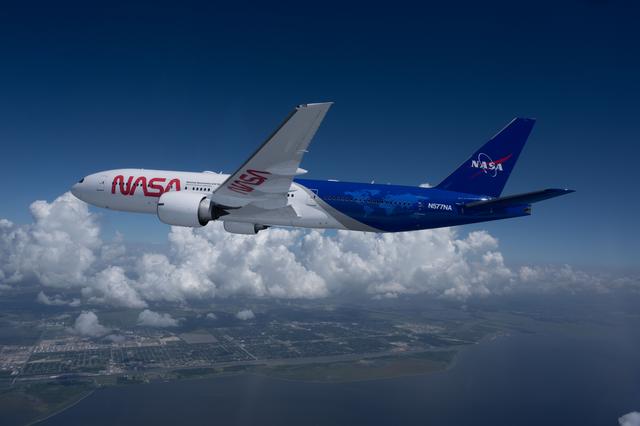
NASA B777-200ER (N577NA) arrived at Langley Research Center’s Hangar with new paint livery Aug 12. It was flown by NASA pilot Taylor Thorson, as this marks his final flight. Photo Credit NASA/ Mark Knopp
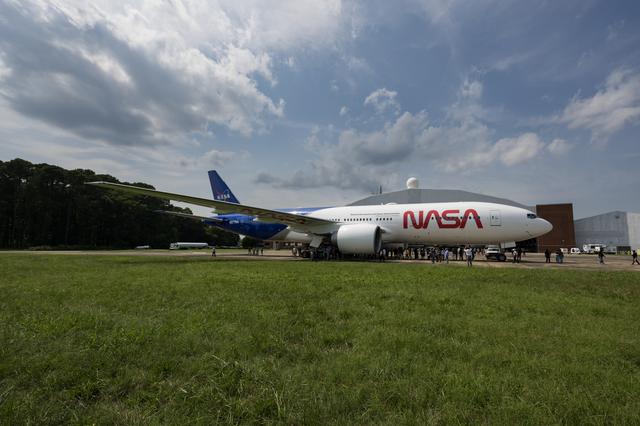
NASA B777-200ER (N577NA) arrived at Langley Research Center’s Hangar with new paint livery Aug 12. It was flown by NASA pilot Taylor Thorson, as this marks his final flight. Photo Credit NASA/ Mark Knopp
NASA's large Airborne Science research aircraft, a modified DC-8 airliner, displayed new colors in a check flight Feb. 24, 2004, over its home base, the NASA Dryden Flight Research Center at Edwards AFB, California.
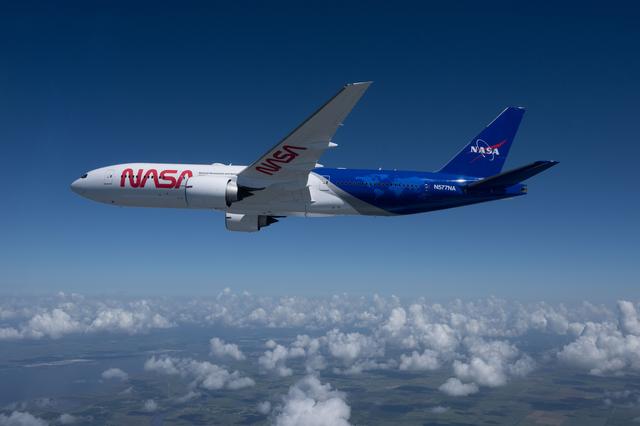
NASA B777-200ER (N577NA) arrived at Langley Research Center’s Hangar with new paint livery Aug 12. It was flown by NASA pilot Taylor Thorson, as this marks his final flight. Photo Credit NASA/ Mark Knopp
NASA B777-200ER (N577NA) arrived at Langley Research Center’s Hangar with new paint livery Aug 12. It was flown by NASA pilot Taylor Thorson, as this marks his final flight. Photo Credit NASA/ Mark Knopp
NASA's DC-8 Airborne Science research aircraft, in new colors and markings, in flight Feb. 24, 2004. Dark panels on lower fuselage are synthetic aperture radar antennas enabling sophisticated studies of Earth features.
NASA B777-200ER (N577NA) arrived at Langley Research Center’s Hangar with new paint livery Aug 12. It was flown by NASA pilot Taylor Thorson, as this marks his final flight. Photo Credit NASA/ Mark Knopp