THE INTERIOR OF THE MARSHALL SPACE FLIGHT CENTER’S NEWLY OPENED BUILDING 4220, PRIMARILY HOME TO THE SPACE LAUNCH SYSTEM PROGRAM, REFLECTS A BLEND OF AESTHETICS, PRACTICALITY AND HIGH EFFICIENCY. THE COST-CONSCIOUS NEW FACILITY IS ENVIRONME…
1400877
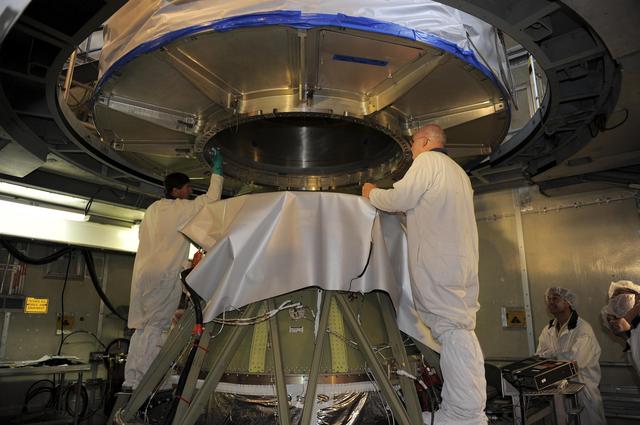
NASA twin Gravity Recovery and Interior Laboratory GRAIL spacecraft are lowered onto the second stage of their Delta II launch vehicle. At top is the spacecraft adapter ring which holds the two lunar probes in their side-by-side launch conf…
GRAIL Mission Comes Together
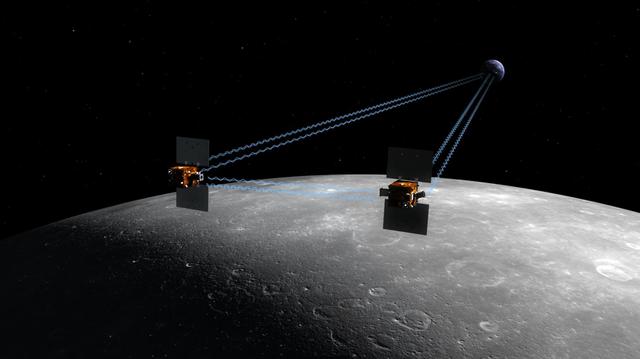
Using a precision formation-flying technique, the twin GRAIL spacecraft maps the moon gravity field, as depicted in this artist rendering.
GRAIL Artist Rendition
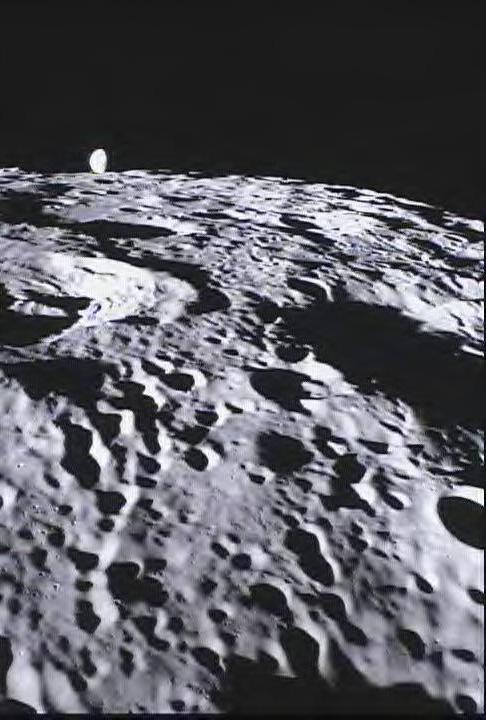
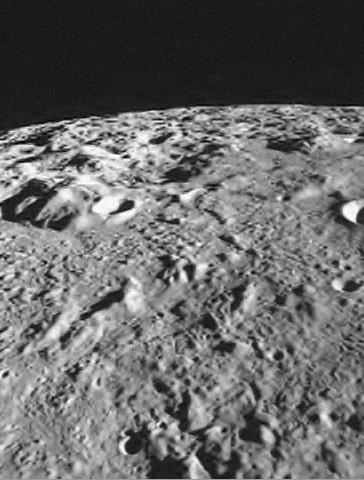
This image of the far side of the lunar surface, with Earth in the background, is of crater De Forest and was taken by NASA MoonKAM system onboard the Ebb spacecraft.
MoonKAM Looks Homeward
The Gravity Recovery and Interior Laboratory, or GRAIL, mission will fly twin spacecraft in tandem orbits around the moon to measure its gravity field in unprecedented detail. GRAIL is a part of NASA Discovery Program.
New NASA Mission to Reveal Moon Internal Structure and Evolution Artist Concept
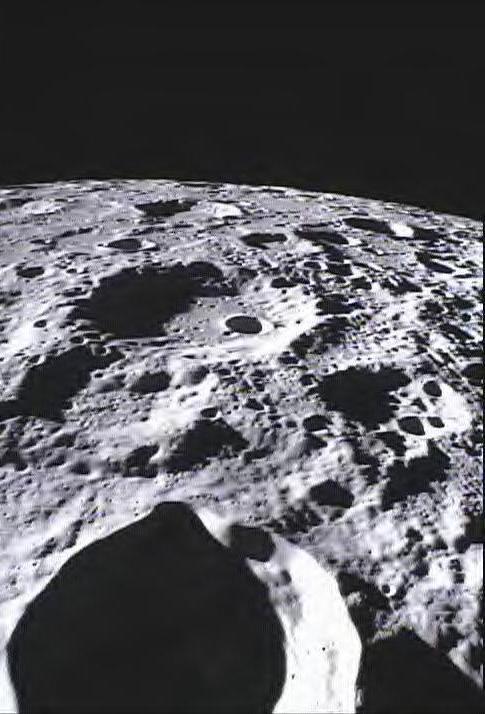
This image of the lunar surface was taken by NASA MoonKAM system onboard the Ebb spacecraft and shows Crater Poinsot located on the northern part of the moon far side.
Far Side of Moon Imaged by MoonKAM
NICER engineer Steven Kenyon prepares seven of the 56 X-ray concentrators for installation in the NICER instrument.  The payload’s 56 mirror assemblies concentrate X-rays onto silicon detectors to gather data that will probe the interior ma…
Neutron star Interior Composition Explorer (NICER)
NICER Optics Lead Takashi Okajima makes a fine adjustment to the orientation of one X-ray “concentrator” optic. The 56 optics must point in the same direction in order for NICER to achieve its science goals.   The payload’s 56 mirror assemb…
Neutron star Interior Composition Explorer (NICER)
The Gravity Recovery and Interior Laboratory GRAIL mission utilizes the technique of twin spacecraft flying in formation with a known altitude above the lunar surface and known separation distance to investigate the gravity field of the moo…
GRAIL Twin Spacecraft fly in Tandem Around the Moon Artist Concept
The Apollo Telescope Mount (ATM), designed and developed by the Marshall Space Flight Center, served as the primary scientific instrument unit aboard the Skylab. The ATM contained eight complex astronomical instruments designed to observe t…
Saturn Apollo Program
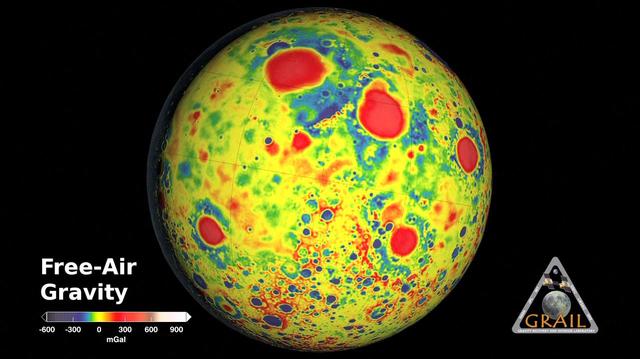
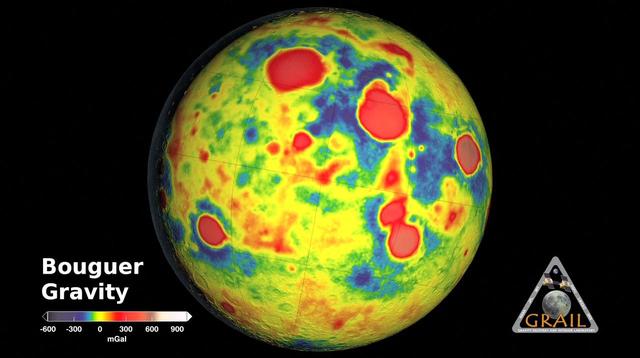
These maps of the moon show the Bouguer gravity anomalies as measured by NASA GRAIL mission. Red areas have stronger gravity, while blue areas have weaker gravity.
Gravity of the Moon Crust
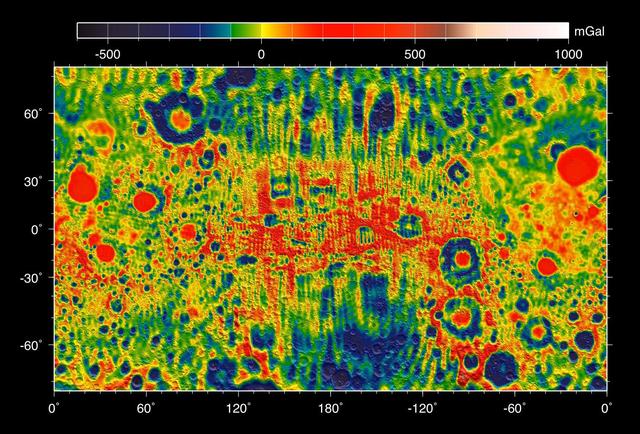
This map shows the gravity field of the moon from the Lunar Prospector mission. The viewing perspective, known as a Mercator projection, shows the far side of the moon in the center and the nearside as viewed from Earth at either side.
Moon Gravity Field Using Prospector Data
Many of NICER’s 56 X-ray “concentrators” seen from within the instrument optical bench. Light reflected from the gold surfaces of the 24 concentric foils in each concentrator is focused onto detectors slightly more than 1 meter (3.5 feet) a…
Neutron star Interior Composition Explorer (NICER)
David Lehman, GRAIL project manager, NASA's Jet Propulsion Laboratory, Pasadena, Calif., speaks at a press conference about the upcoming launch to the moon of the Gravity Recovery and Interior Laboratory (GRAIL) mission, Thursday, Aug. 25,…
GRAIL Mission Briefing
Leesa Hubbard, teacher in residence, Sally Ride Science, San Diego, speaks at a press conference about the upcoming launch to the moon of the Gravity Recovery and Interior Laboratory (GRAIL) mission, Thursday, Aug. 25, 2011 in Washington.…
GRAIL Mission Briefing
THE INTERIOR OF THE MARSHALL SPACE FLIGHT CENTER’S NEWLY OPENED BUILDING 4220, PRIMARILY HOME TO THE SPACE LAUNCH SYSTEM PROGRAM, REFLECTS A BLEND OF AESTHETICS, PRACTICALITY AND HIGH EFFICIENCY. THE COST-CONSCIOUS NEW FACILITY IS ENVIRONME…
1400876
Using a precision formation-flying technique, NASA twin GRAIL spacecraft will map the moon gravity field. This is an artist concept.
GRAIL Flying in Formation Artist Concept
In this photo, taken April 29, 2011, technicians install lifting brackets prior to hoisting the 200-kilogram 440-pound GRAIL-A spacecraft out of vacuum chamber after testing.
Testing the GRAIL Twins
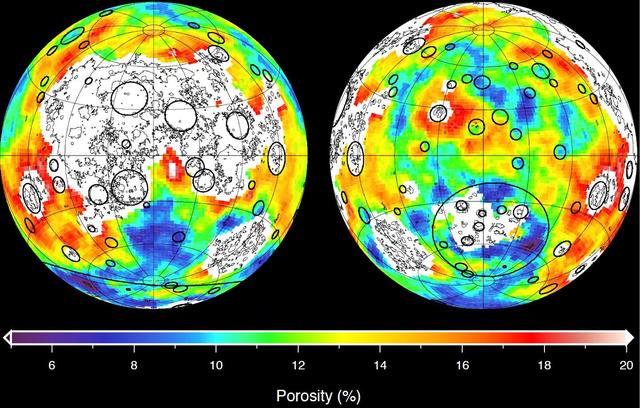
This image depicting the porosity of the lunar highland crust was derived using bulk density data from NASA GRAIL mission and independent grain density measurements from NASA Apollo moon mission samples as well as orbital remote-sensing dat…
Closer Look at Lunar Highland Crust
A photo taken during the NICER range-of-motion test at NASA’s Goddard Space Flight Center shows the photographer’s reflection in the mirror-like radiator surface of the detector plate. Teflon-coated silver tape is used to keep NICER’s detec…
Neutron star Interior Composition Explorer (NICER)
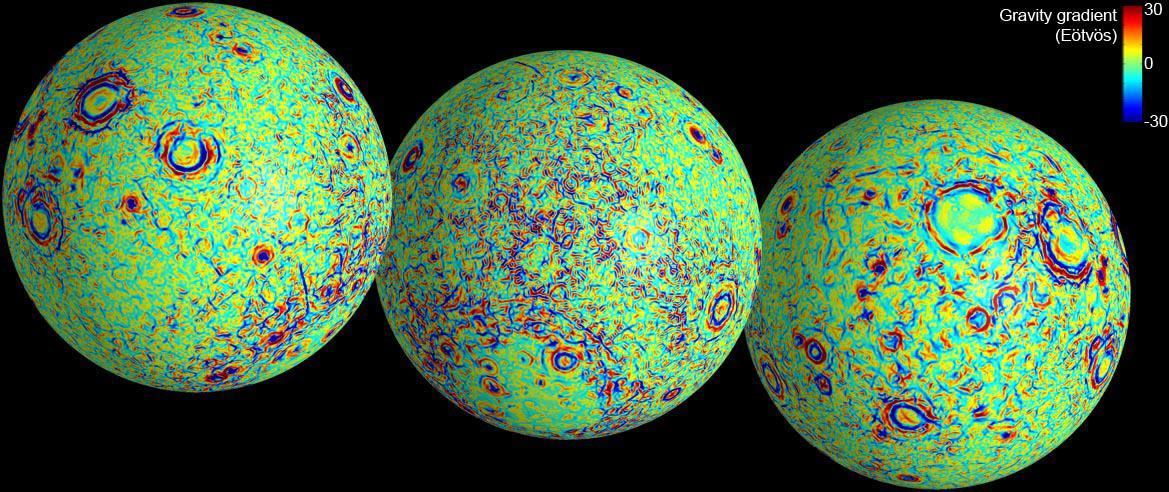
These maps of the near and far side of the moon show gravity gradients as measured by NASA GRAIL mission. Red and blue areas indicate stronger gradients due to underlying mass anomalies.
GRAIL Gravity Gradients
NICER’s X-ray concentrator optics are inspected under a black light for dust and foreign object debris that could impair functionality once in space.   The payload’s 56 mirror assemblies concentrate X-rays onto silicon detectors to gather d…
Neutron star Interior Composition Explorer (NICER)
This is a polar stereographic map of gravity of the north polar region of the moon from the Gravity Recovery and Interior Laboratory GRAIL mission. The map displays the region from latitude 60 north to the pole.
Gravity at the Moon North Pole
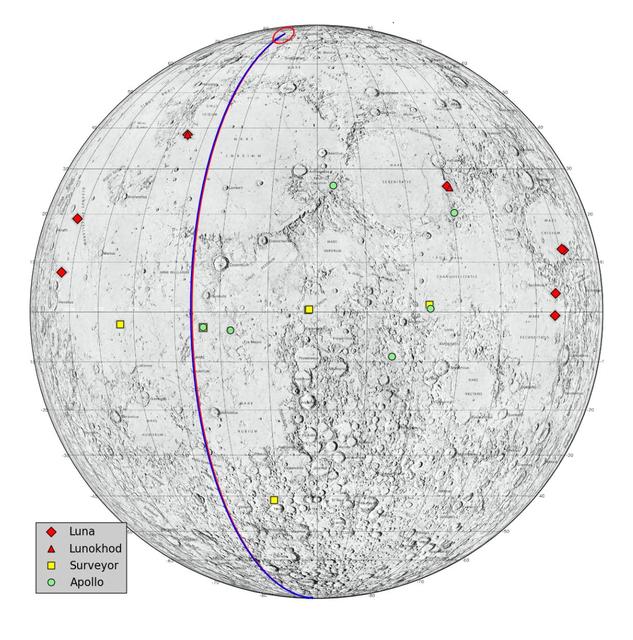
This graphic highlights locations on the moon NASA considers lunar heritage sites and the path NASA Gravity Recovery and Interior Laboratory spacecraft will take on their final flight.
Lunar Heritage Sites and GRAIL Final Mile
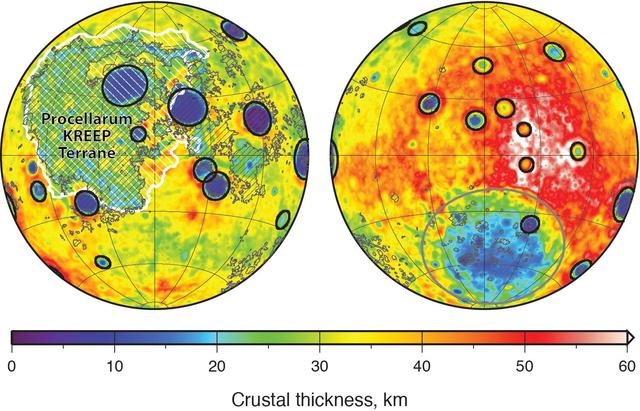
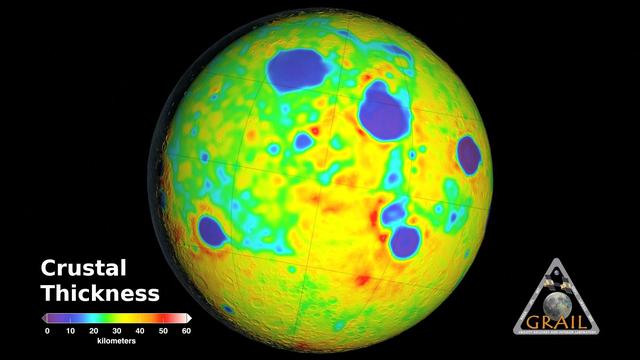
Global map of crustal thickness of the moon derived from gravity data obtained by NASA GRAIL spacecraft. The lunar near side is represented on the left hemisphere. The far side is represented in the right hemisphere.
Moon Crustal Thickness
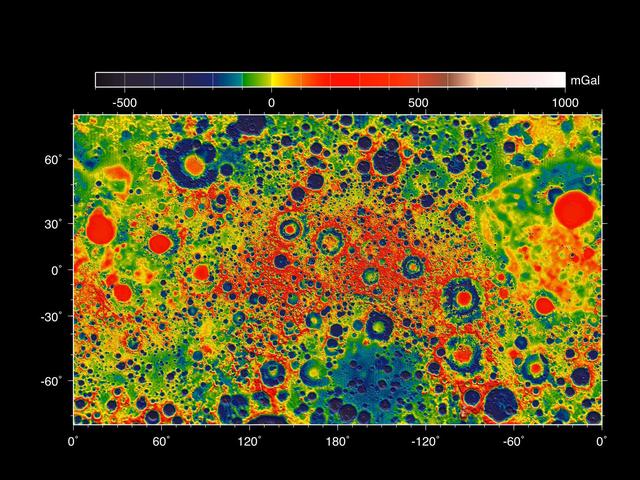
This map shows the gravity field of the moon as measured by NASA GRAIL mission. The viewing perspective, known as a Mercator projection, shows the far side of the moon in the center and the nearside as viewed from Earth at either side.
GRAIL Gravity Field of the Moon
This moon map shows the gravity gradients calculated by NASA GRAIL mission. Red and blue correspond to stronger gravity gradients.
Lunar Gravity Gradients
These maps of the near and far side of the moon show the gravity gradients as measured by NASA GRAIL mission, highlighting a population of linear gravity anomalies.
Linear Gravity Anomalies
GRAIL Gravity Tour of the Moon
Jim Green (left), director, Planetary Science Division at NASA Headquarters, speaks at a press conference about the upcoming launch to the moon of the Gravity Recovery and Interior Laboratory (GRAIL) mission, Thursday, Aug. 25, 2011 in Wash…
GRAIL Mission Briefing
Maria Zuber, GRAIL principal investigator, Massachusetts Institute of Technology, Cambridge, answers a reporter's question at a press briefing about the upcoming launch to the moon of the Gravity Recovery and Interior Laboratory (GRAIL) mis…
GRAIL Mission Briefing
These side-by-side, 3-D comparisons depict the unnamed lunar mountain targeted by the NASA Gravity Recovery and Interior Laboratory GRAIL mission for controlled impact of the Ebb and Flow spacecraft.
Ebb and Flow Final Moments
An artist depiction of the twin spacecraft that comprise NASA GRAIL mission. During the GRAIL mission science phase, spacecraft Ebb and Flow transmit radio signals precisely defining the distance between them as they orbit the moon in forma…
NASA GRAIL Spacecraft in Science Collection Phase Artist Concept
An artist depiction of the twin spacecraft Ebb and Flow that comprise NASA GRAIL mission. As Ebb and Flow fly over areas of greater and lesser gravity surface features can influence the distance between the two spacecraft.
GRAIL Spacecraft Over the Moon Artist Concept
Spacecraft technicians monitor the movement of a section of the clamshell-shaped Delta payload fairing as it encloses NASA twin Gravity Recovery and Interior Laboratory spacecraft at Cape Canaveral Air Force Station in Florida on Aug. 23, 2…
GRAIL Twins are Covered
NICER Optics Lead Takashi Okajima installs one of NICER’s 56 X-ray “concentrators,” each consisting of 24 concentric foils. To minimize the effects of Earth’s gravity on their alignment, the concentrator assemblies were installed from the o…
Neutron star Interior Composition Explorer (NICER)
The Gravity Recovery and Interior Laboratory GRAIL mission utilizes the technique of twin spacecraft flying in formation with a known altitude above the lunar surface and known separation distance to investigate the gravity field of the moo…
GRAIL Twin Spacecraft -- Crust to Core Artist Concept
Map of Moon Crust
Map of Moon Crust
GRAIL Bouguer Gravity Moon Map
NICER engineer Steven Kenyon installs an X-ray detector onto the payload’s detector plate. The detectors are protected by red caps during installation because they are very sensitive to dust and other foreign object debris.  The Neutron sta…
Neutron star Interior Composition Explorer (NICER)
A profile across one of the linear gravity anomalies found by NASA GRAIL mission shows that it has higher gravity than the surroundings.
GRAIL Identifies Moon Dikes
NICER team members Takashi Okajima, Yang Soong, and Steven Kenyon apply epoxy to the X-ray concentrator mounts after alignment. The epoxy holds the optics assemblies fixed in position through the vibrations experienced during launch to the…
Neutron star Interior Composition Explorer (NICER)
A NICER team member measures the focused optical power of each X-ray concentrator in a clean tent at NASA’s Goddard Space Flight Center.   The Neutron star Interior Composition Explorer (NICER) is a NASA Explorer Mission of Opportunity dedi…
Neutron star Interior Composition Explorer (NICER)
The Multiple Docking Adapter (MDA), designed and constructed under the direction of the Marshall Space Flight Center, was one of four principal sections comprising Skylab. The MDA provided the means by which the Command and Service Modules…
Skylab
The NICER payload, blanketed and waiting for launch in the Space Station Processing Facility at NASA’s Kennedy Space Center in Cape Canaveral, Florida. The instrument is in its stowed configuration for launch.  The Neutron star Interior Com…
Neutron star Interior Composition Explorer (NICER)
Mare Orientale Flyover
Jim Green, director, Planetary Science Division at NASA Headquarters, speaks at a press conference about the upcoming launch to the moon of the Gravity Recovery and Interior Laboratory (GRAIL) mission, Thursday, Aug. 25, 2011 in Washington.…
GRAIL Mission Briefing
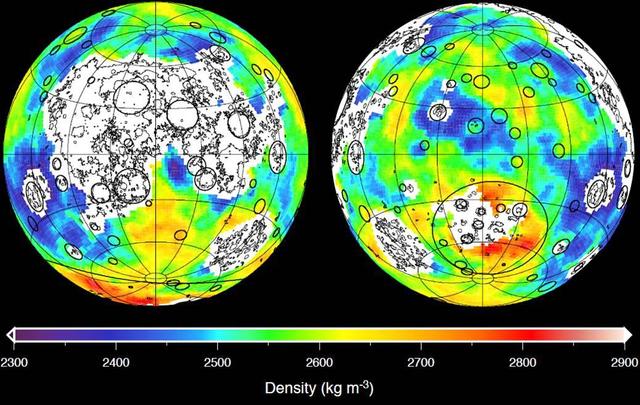
This graphic depicting the bulk density of the lunar highlands on the near and far sides of the moon was generated using gravity data from NASA GRAIL mission and topography data from NASA Lunar Reconnaissance Orbiter.
Mapping Lunar Highlands