
Minneapolis Ice research project: Ice formation on left wing of the Lockheed 12-A during flight after shutting off heat. The wind was completely cleared within 2 minutes after the application of heat.

An area of broken glacier ice seen from the IceBridge DC-8 on Oct. 22, 2012. Credit: NASA / George Hale NASA's Operation IceBridge is an airborne science mission to study Earth's polar ice. For more information about IceBridge, visit: <a h…

CAPE CANAVERAL, Fla. – In the Space Station Processing Facility at NASA's Kennedy Space Center in Florida, STS-127 mission crew members get hands-on familiarization with equipment to be used on the mission. Crew members are Commander Mark…

CAPE CANAVERAL, Fla. – STS-127 Mission Specialists Tim Kopra (left) and Tom Marshburn are in the Space Station Processing Facility at NASA's Kennedy Space Center in Florida to gain familiarization with hardware and equipment that will be us…

CAPE CANAVERAL, Fla. – In the Space Station Processing Facility at NASA's Kennedy Space Center in Florida, STS-127 crew members discuss some of the equipment for the mission. From left are Mission Specialists Tim Kopra, Tom Marshburn, Dave…

CAPE CANAVERAL, Fla. – In the Space Station Processing Facility at NASA's Kennedy Space Center in Florida, STS-127 mission crew members inspect the installation of the Japanese Aerospace Exploration Agency's Visual Equipments, or VE, to its…

CAPE CANAVERAL, Fla. – In the Space Station Processing Facility at NASA's Kennedy Space Center in Florida, STS-127 mission crew members inspect the installation of the Japanese Aerospace Exploration Agency's Visual Equipments, or VE, to its…

CAPE CANAVERAL, Fla. – In the Space Station Processing Facility at NASA's Kennedy Space Center in Florida, STS-127 mission crew members get hands-on familiarization with equipment to be used on the mission. Crew members are Commander Mar…

Pictured is a model to study the ice collection on struts in jet engines during flight. Researchers inspect the ice after the model encounters a simulated icing cloud during testing. Super cooled water created from the icing cloud that flo…

Scientists and crew with NASA’s Operation IceBridge, which makes annual aerial surveys of polar ice, are wrapping up their seventh campaign over the Arctic. In spring 2015, the team began using a different research aircraft—an adapted C-130…

Looking like a spider web swirled into a spiral, galaxy IC 342 presents its delicate pattern of dust in this infrared light image from NASA Spitzer Space Telescope. The very center glows especially brightly in the infrared.

A rift in Antarctica's Larsen C ice shelf has grown to 110 miles (175 km) long, making it inevitable that an iceberg larger than Rhode Island will soon calve from the ice shelf. Larsen C is the fourth largest ice shelf in Antarctica, with a…

On February 4, 2014 the Moderate Resolution Imaging Spectroradiometer (MODIS) flying aboard NASA’s Aqua satellite captured a true-color image of sea ice off of western Alaska. In this true-color image, the snow and ice covered land appears…
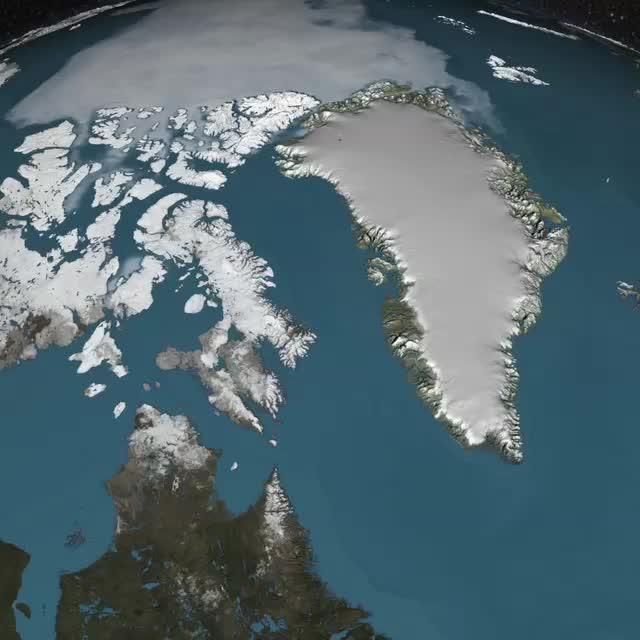
Peering into the thousands of frozen layers inside Greenland’s ice sheet is like looking back in time. Each layer provides a record of what Earth’s climate was like at the dawn of civilization, or during the last ice age, or during an ancie…

On July 18, 2011, Melinda Webster of University of Washington, calculated distances between sampling locations during the 2011 ICESCAPE mission's eighth sea ice station in the Arctic Ocean. The ICESCAPE mission, or "Impacts of Climate…

ICESCAPE scientists watched from the deck of the Healy as it cut a path through thick multiyear ice on July 6, 2011. Cutting the path is key for getting researchers to remote research sites amid the sea ice. Credit: NASA/Kathryn Hansen The…
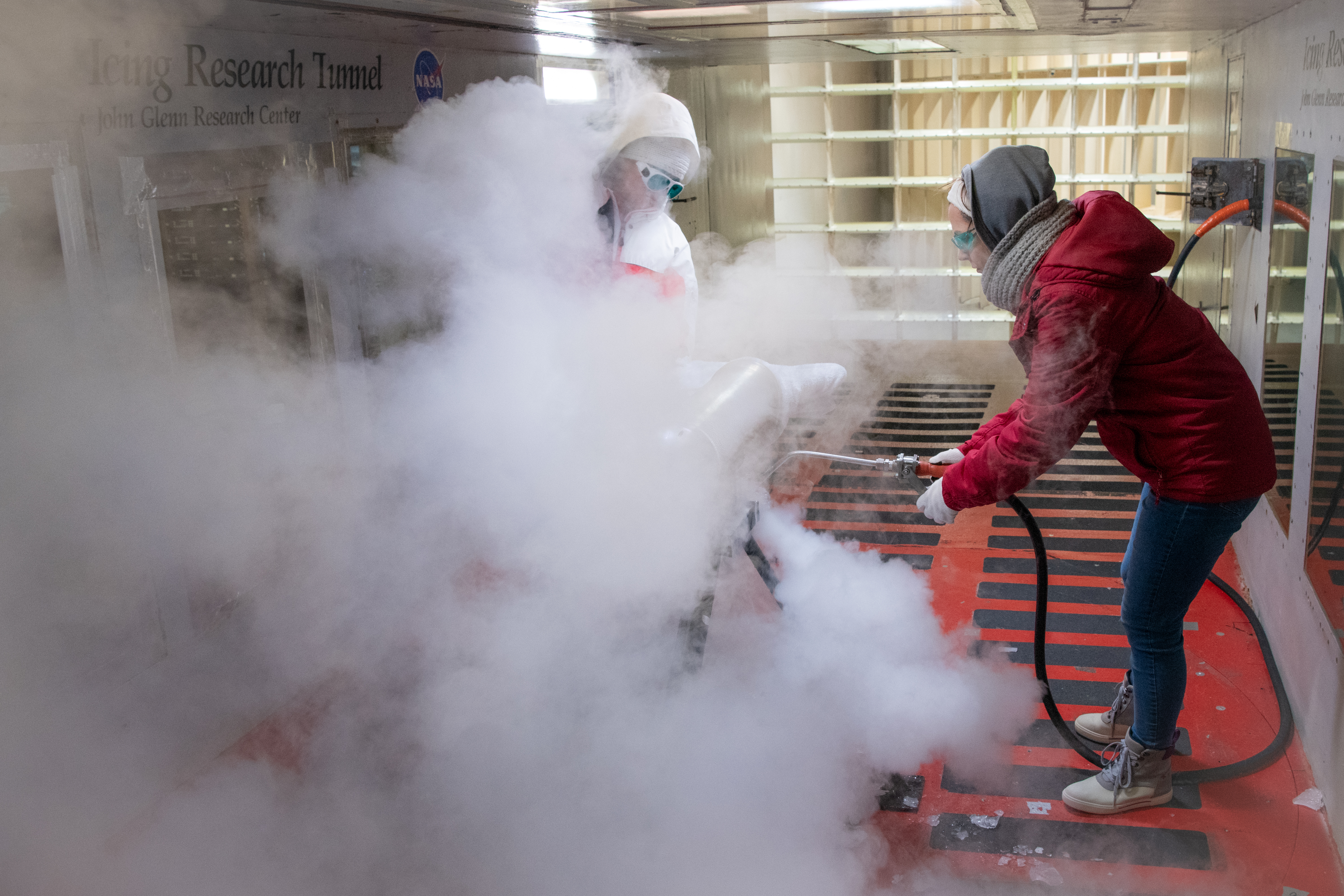
Test engineers clean the ice cloud detection probe in the Icing Research Tunnel in between test runs. Steam is used to melt the accumulated ice on the detection probe. The test engineers need to wear goggles to protect them from the laser…

Though North America is a full month into astronomical spring, the Great Lakes have been slow to give up on winter. As of April 22, 2014, the Great Lakes were 33.9 percent ice covered. The lake they call Superior dominated the pack. In the…
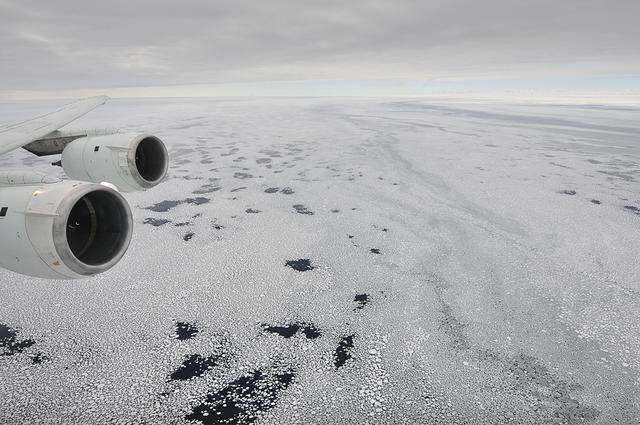
Sea ice is seen out the window of NASA's DC-8 research aircraft as it flies 2,000 feet above the Bellingshausen Sea in West Antarctica on Wednesday, Oct., 21, 2009. This was the fourth science flight of NASA’s Operation Ice Bridge airborne…

CAPE CANAVERAL, Fla. – In the Space Station Processing Facility at NASA's Kennedy Space Center in Florida, STS-127 Mission Specialist Christopher Cassidy looks at a piece of equipment to be used on the mission. Other crew members are Com…
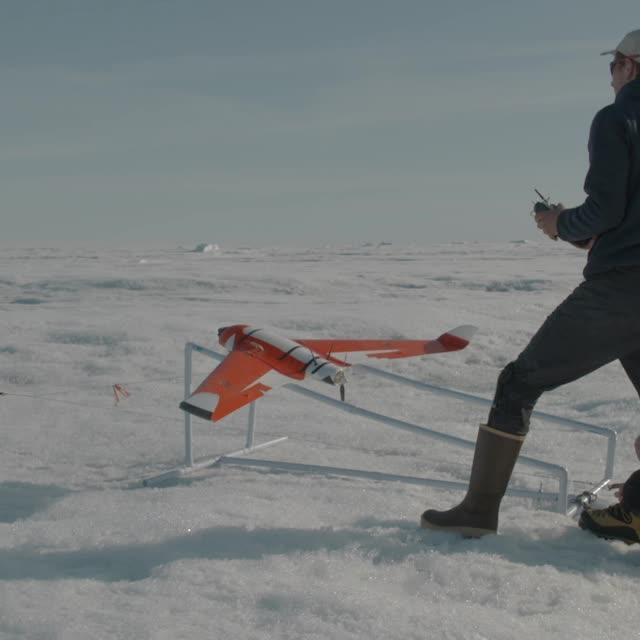
At 1 p.m. EDT (10 a.m. PDT) on Friday, Aug. 28, NASA's Goddard Space Flight Center in Greenbelt, Maryland, will host a live TV program about agency research into how and why the massive Greenland ice sheet is changing. The event features sc…

IC 3639, a galaxy with an active galactic nucleus, is seen in this image combining data from the Hubble Space Telescope and the European Southern Observatory. This galaxy contains an example of a supermassive black hole hidden by gas and d…

CAPE CANAVERAL, Fla. – In the Space Station Processing Facility at NASA's Kennedy Space Center in Florida, STS-127 mission crew members get hands-on familiarization with equipment to be used on the mission. Crew members are Commander Mark…
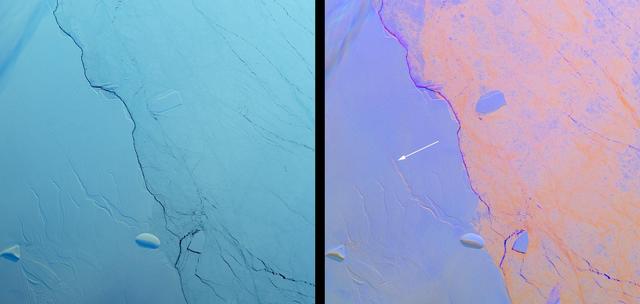
Project MIDAS, a United Kingdom-based group that studies the Larsen Ice Shelf in Antarctica, reported Aug. 18, 2016, that a large crack in the Larsen C shelf has grown by another 13 miles (22 kilometers) in the past six months. The crack is…

On June 15, 2016, the Advanced Land Imager (ALI) on NASA’s Earth Observing-1 satellite acquired a natural-color image of an area just inland from the coast of southwestern Greenland (120 kilometers southeast of Ilulisat and 500 kilometers n…
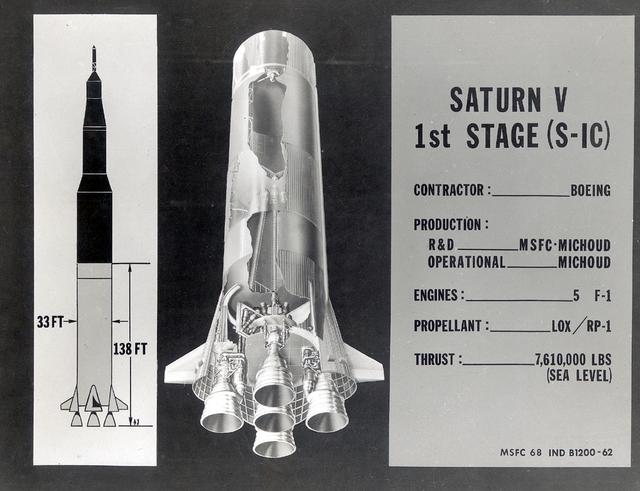
This is a cutaway view of the Saturn V first stage, known as the S-IC, detailing the five F-1 engines and fuel cells. The S-IC stage is 138 feet long and 33 feet in diameter, producing more than 7,500,000 pounds of thrust through the five F…

This cutaway illustration shows the Saturn V S-IC (first) stage with detailed callouts of the components. The S-IC Stage is 138 feet long and 33 feet in diameter, producing 7,500,000 pounds of thrust through five F-1 engines that are powere…
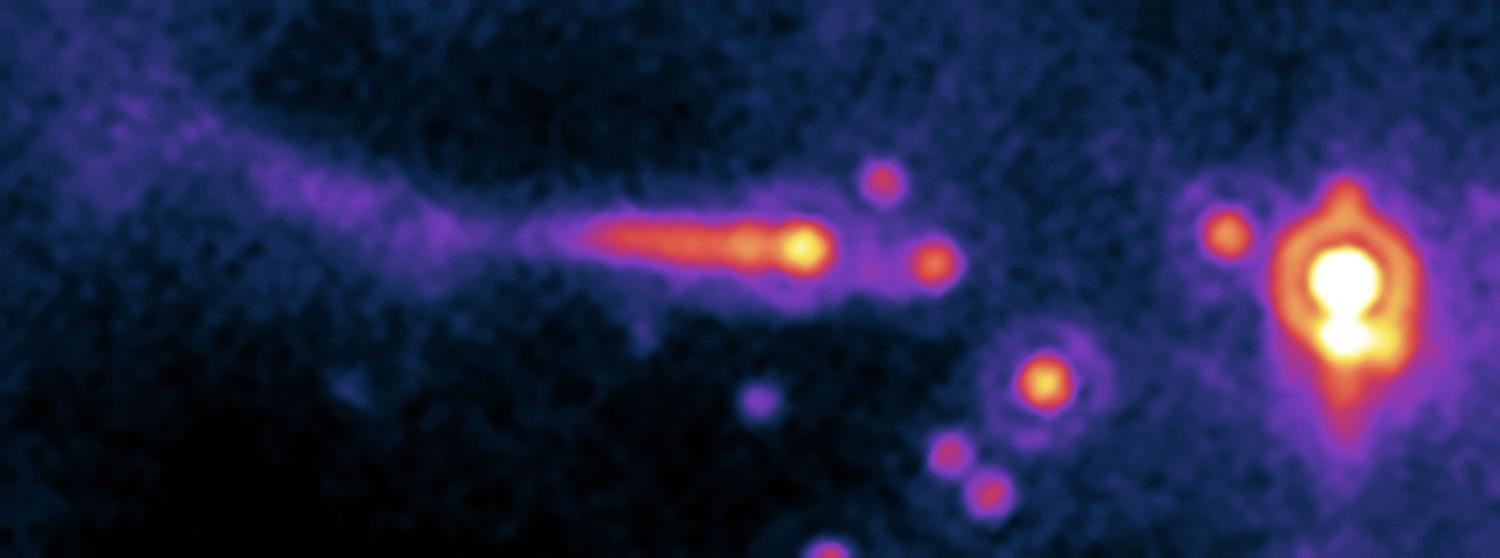
The potential planet-forming disk (or "protoplanetary disk") of a sun-like star is being violently ripped away by the powerful winds of a nearby hot O-type star in this image from NASA's Spitzer Space Telescope. At up to 100 times the mass…
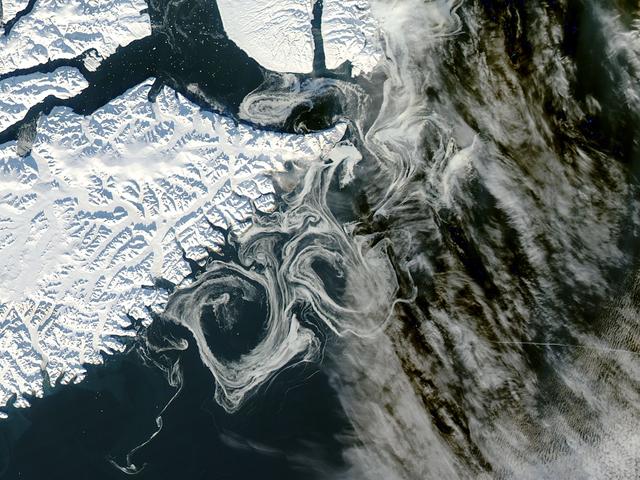
NASA image acquired October 16, 2012 The MODIS instrument on NASA's Aqua satellite captured this visible image of Sea Ice off eastern Greenland on October 16, 2012. NASA/GSFC/Jeff Schmaltz/MODIS Land Rapid Response Team <b><a href="htt…

The Visible Infrared Imaging Radiometer Suite (VIIRS) on the Suomi NPP satellite captured this view of extensive sea-ice fracturing off the northern coast of Alaska. The event began in late-January and spread west toward Banks Island throug…

Ice built up on a test article at the at the Icing Research Tunnel as researchers study the icing physics that occur when aircraft fly through freezing weather conditions.
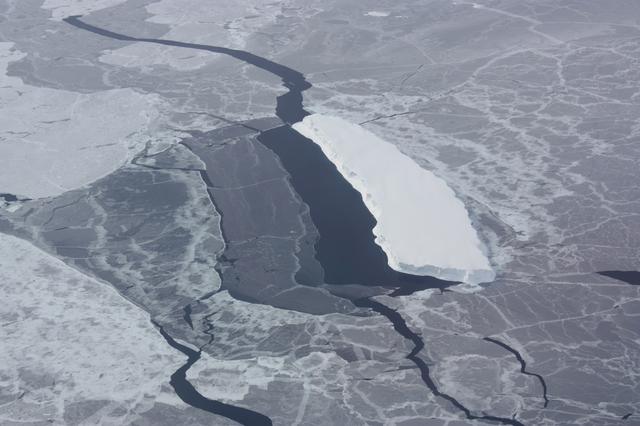
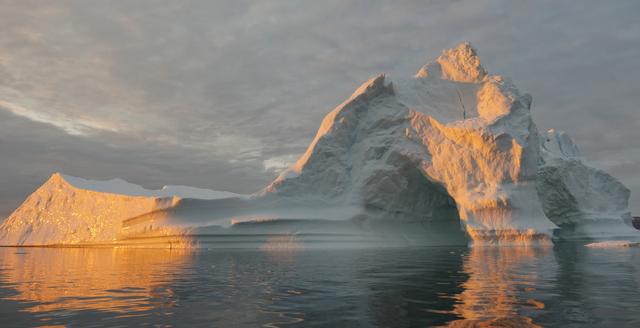
Iceberg embedded in sea ice with a lead on one side. This opening was likely caused by winds blowing against the side of the iceberg. Credit: NASA / George Hale NASA's Operation IceBridge is an airborne science mission to study Earth's p…

Edge of an ice shelf in Adelaide Island, off the Antarctic Peninsula. Credit: NASA / Maria-Jose Vinas NASA's Operation IceBridge is an airborne science mission to study Earth's polar ice. For more information about IceBridge, visit: <a h…

Sunlight reflecting off of ice in the Bellingshausen Sea on Oct. 19, 2012. Credit: NASA / George Hale NASA's Operation IceBridge is an airborne science mission to study Earth's polar ice. For more information about IceBridge, visit: <a h…
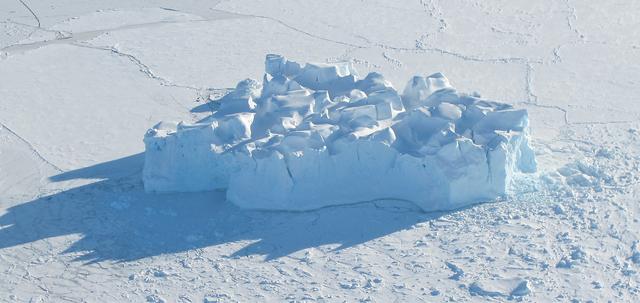
An iceberg embedded in sea ice as seen from the IceBridge DC-8 over the Bellingshausen Sea on Oct. 19, 2012. Credit: NASA / James Yungel NASA's Operation IceBridge is an airborne science mission to study Earth's polar ice. For more informa…

CAPE CANAVERAL, Fla. – In the Space Station Processing Facility at NASA's Kennedy Space Center in Florida, STS-127 crew members get hands-on familiarization with equipment to be used on the mission. They are looking at the hoist of one of…

CAPE CANAVERAL, Fla. – In the Space Station Processing Facility at NASA's Kennedy Space Center in Florida, STS-127 crew members get hands-on familiarization with equipment to be used on the mission. They are looking at the hoist of one of…

As the northern hemisphere experiences the heat of summer, ice moves and melts in the Arctic waters and the far northern lands surrounding it. The Moderate Resolution Imaging Spectroradiometer (MODIS) aboard NASA’s Aqua satellite captured t…

CAPE CANAVERAL, Fla. – In the Space Station Processing Facility at NASA's Kennedy Space Center in Florida, STS-127 mission crew members look over hardware for the mission. From left are Mission Specialists Tom Marshburn, Dave Wolf and Pilo…
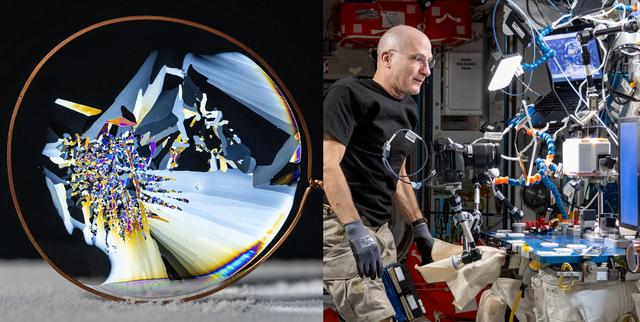
iss072e096196 and iss072e098100 (Oct. 23, 2024) -- NASA Astronaut Don Pettit views thin wafers of ice under polarized filters on the International Space Station. Pettit conducts “science of opportunity” using station’s MELFI freezer to unde…

Technicians spray steam to help scrape off ice at the Icing Research Tunnel. The technicians need all the help they can get in sub-zero temperatures. Photo Credit: (NASA/Jordan Salkin)

Looking like a spider web swirled into a spiral, galaxy IC 342 presents its delicate pattern of dust in this infrared light image from NASA Spitzer Space Telescope.
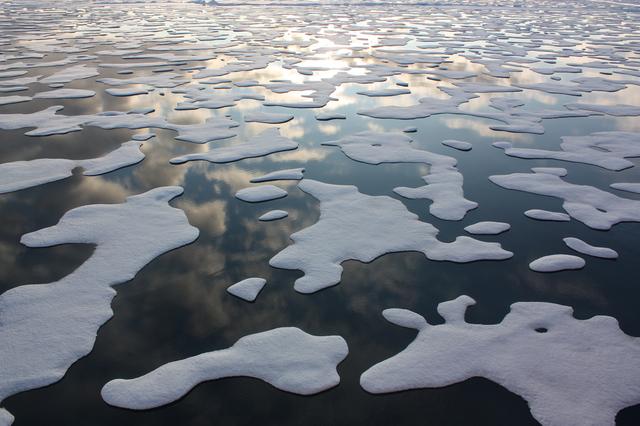
On July 20, the U.S. Coast Guard Cutter Healy steamed south in the Arctic Ocean toward the edge of the sea ice. The ICESCAPE mission, or "Impacts of Climate on Ecosystems and Chemistry of the Arctic Pacific Environment," is NASA'…

Pictured is the Saturn V S-IC-T stage (static testing stage) being assembled in the horizontal assembly station at the Marshall Space Flight Center (MSFC), building 4705. This stage underwent numerous static firings at the newly-built S-IC…
Sea level rise is a natural consequence of the warming of our planet. We know this from basic physics. When water heats up, it expands. So when the ocean warms, sea level rises. When ice is exposed to heat, it melts. And when ice on land m…

On July 12, 2011, crew from the U.S. Coast Guard Cutter Healy retrieved a canister dropped by parachute from a C-130, which brought supplies for some mid-mission fixes. The ICESCAPE mission, or "Impacts of Climate on Ecosystems and Ch…

On July 10, 2011, Melinda Webster of University of Washington mapped the locations where measurements were collected during the 2011 ICESCAPE mission's fourth sea ice station in the Chukchi Sea. The ICESCAPE mission, or "Impacts of Cl…

Calving front of an ice shelf in West Antarctica. The traditional view on ice shelves, the floating extensions of seaward glaciers, has been that they mostly lose ice by shedding icebergs. A new study by NASA and university researchers has…