
The completely assembled Saturn 1 S-1 stage is being ready for checkout in the Marshall Space Flight Center, building 4705, January 18, 1961. The Saturn I S-I stage had eight H-1 engines clustered, using liquid oxygen/kerosene-1 (LOX/RP-1)…

art001e002164 (Dec. 5, 2022): Cameras mounted on the crew module of the Orion spacecraft captured these views of the Moon’s surface. On flight day 20 of the Artemis I mission, the spacecraft made its second and final close approach to the M…

In this photograph, the Saturn I S-I stages for the SA-4, SA-6, and SA-7 missions were being assembled at the Fabrication and Assembly Engineering Division in the Marshall Space Flight Center building 4705, January 13, 1963.

art001e002164 (Dec. 5, 2022): Cameras mounted on the crew module of the Orion spacecraft captured these views of the Moon’s surface. On flight day 20 of the Artemis I mission, the spacecraft made its second and final close approach to the M…

art001e002164 (Dec. 5, 2022): Cameras mounted on the crew module of the Orion spacecraft captured these views of the Moon’s surface. On flight day 20 of the Artemis I mission, the spacecraft made its second and final close approach to the M…
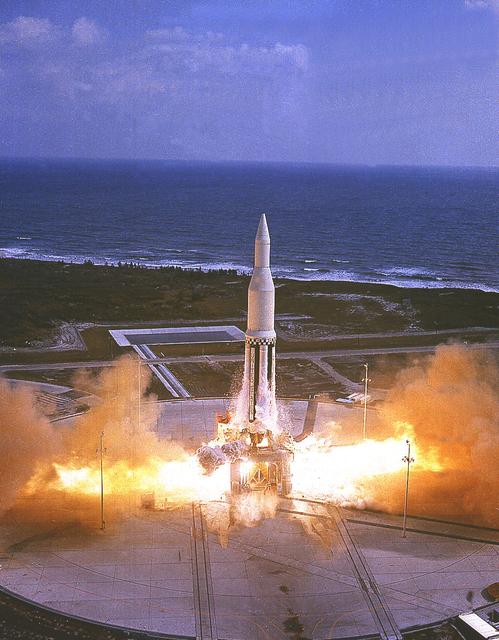
The Marshall Space Flight Center's first Saturn I vehicle, SA-1, lifts off from Cape Canaveral, Florida, on October 27, 1961. This early configuration, Saturn I Block I, 162 feet tall and weighing 460 tons, consisted of the eight H-1 engine…

art001e002164 (Dec. 5, 2022): Cameras mounted on the crew module of the Orion spacecraft captured these views of the Moon’s surface. On flight day 20 of the Artemis I mission, the spacecraft made its second and final close approach to the M…

Pictured is one of the earliest testing of the Saturn I S-I (first) stage, with a cluster of eight H-1 engines, at the Marshall Space Flight Center (MSFC). It was a part of the test program to prove out the clustered-booster concept. MSFC w…
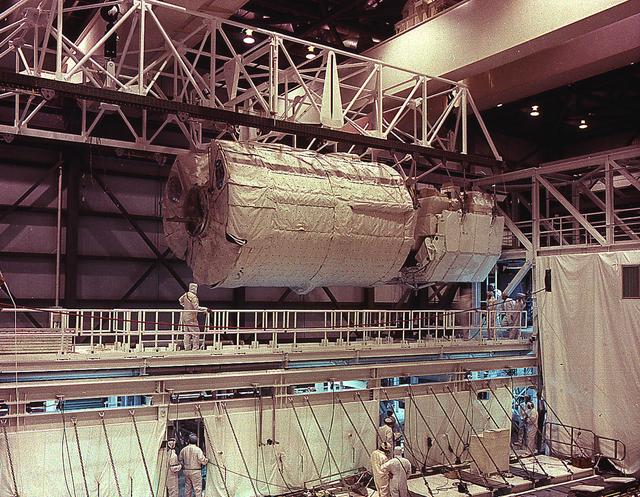
This photograph shows the Spacelab 1 module and pallet ready to be installed in the cargo bay of the Space Shuttle Orbiter Columbia at the Kennedy Space Center. The overall goal of the first Spacelab mission was to verify its Space performa…

art001e001822 (Nov. 28, 2022) On flight day 13 of the Artemis I mission, Orion captured this view of Earth and the Moon on either sides of one of the spacecraft’s four solar arrays.

art001e002998 (Dec. 10, 2022) On flight day 25 of the Artemis I mission, Orion captured this photo of the Moon from a camera mounted on one of its solar arrays. The spacecraft is now closer to Earth than to the Moon, and will splash down on…

art001e003069 (Dec. 11, 2022) On the day of its return to Earth, Orion’s optical navigation camera captured this image of the planet. The spacecraft splashed down at 12:40 p.m. EST Dec. 11, completing the Artemis I mission and paving the wa…

jsc2022e090743 (Dec. 1, 2022): Public Affairs Officer Shaneequa Vereen speaks on camera in Houston’s Mission Control Center as the Orion spacecraft departs its distant retrograde orbit on flight day 16 of the Artemis I mission – one of the…

art001e000268 (Nov. 21, 2022) A portion of the far side of the Moon looms large just beyond the Orion spacecraft in this image taken on the sixth day of the Artemis I mission by a camera on the tip of one of Orion’s solar arrays. The spacec…

art001e002599 (Dec. 5, 2022): The optical navigation camera mounted on the Orion spacecraft captured these views of the Moon’s surface. On flight day 20 of the Artemis I mission, the spacecraft made its second and final close approach to th…
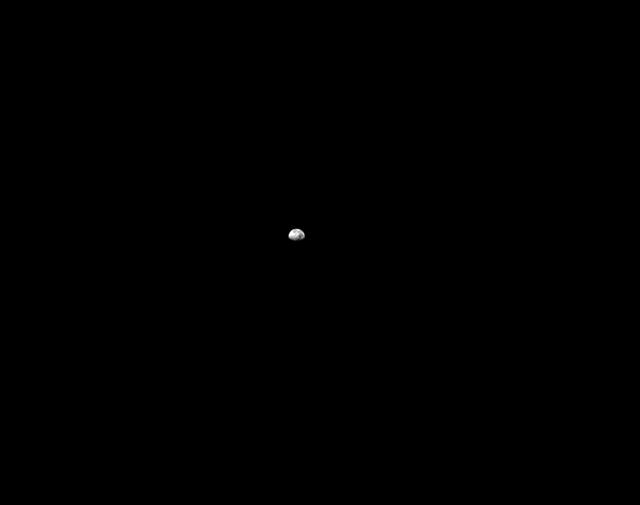
art001e003051 (Dec. 10, 2022) On flight day 25 of the 25.5-day Artemis I mission, Orion’s optical navigation camera looked back at the Moon as the spacecraft continued its return journey to Earth. Orion uses the optical navigation camera to…

The photograph shows the completed Saturn 1 S-1 stage (booster) during the checkout in the Marshall Space Flight Center, building 4705, January 23, 1961. The Saturn I S-I stage had eight H-1 engines clustered, using liquid oxygen/kerosene-1…

The Saturn project was approved on January 18, 1960 as a program of the highest national priority. The formal test program to prove out the clustered-booster concept was well underway. A series of static tests of the Saturn I booster (S-I s…

The Saturn Project was approved on January 18, 1960 as a program of the highest national priority. The formal test program to prove out the clustered-booster concept was well underway. A series of static tests of the Saturn I booster (S-I s…

(Nov. 21, 2022) A portion of the Moon looms large just beyond the Orion spacecraft in this image taken on the sixth day of the Artemis I mission by a camera on the tip of one of Orion’s solar arrays. The spacecraft entered the lunar sphere…

The Saturn I (SA-4) flight lifted off from Kennedy Space Center launch Complex 34, March 28, 1963. The fourth launch of Saturn launch vehicles, developed at the Marshall Space Flight Center (MSFC) under the direction of Dr. Wernher von Brau…

art001e000263 (Nov. 21, 2022) - A portion of the Moon looms large just beyond the Orion spacecraft in this image taken on the sixth day of the Artemis I mission by a camera on the tip of one of Orion’s solar arrays. The spacecraft entered t…

A Cluster of eight H-1 engines were used to thrust the first stage of Saturn I (S-I stage) and Saturn IB (S-IB stage). The engines were arranged in a double pattern. Four engines, located inboard, were fixed in a square pattern around the s…

The S-I stages for the Saturn I (SA-1 at right and SA-2 at left) are being assembled at the Marshall Space Flight Center, building 4705. The Saturn I S-I stage had eight H-1 engines clustered, using liquid oxygen/kerosene-1 (LOX/RP-1) prope…

art001e000260 (Nov. 21, 2022) - A portion of the Moon looms large just beyond the Orion spacecraft in this image taken on the sixth day of the Artemis I mission by a camera on the tip of one of Orion’s solar arrays. The spacecraft entered t…
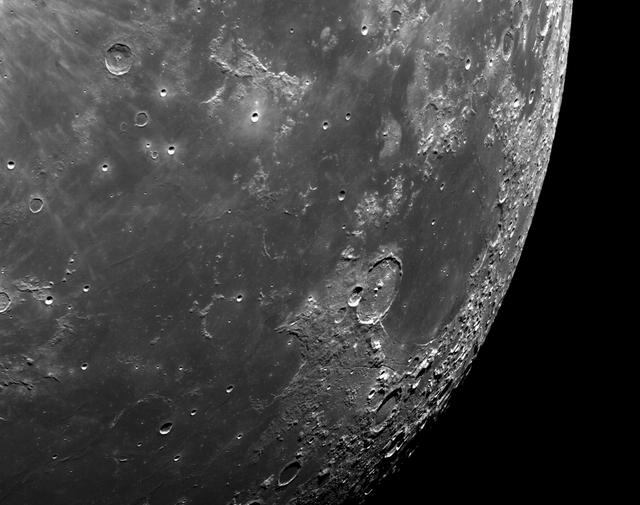
art001e002594 (Dec. 5, 2022): The optical navigation camera mounted on the Orion spacecraft captured these views of the Moon’s surface. On flight day 20 of the Artemis I mission, the spacecraft made its second and final close approach to th…

art001e002192 (Dec. 7, 2022) Orion continues its journey home to Earth, which appears here as a crescent, still 234,000 miles away. The Artemis I spacecraft is scheduled to splash down in the Pacific Ocean on Sunday, Dec. 11.

art001e000345 (Nov. 21, 2022) – On the sixth day of the Artemis I mission, Orion’s optical navigation camera captured black-and-white images of craters on the Moon below. Orion uses the optical navigation camera to capture imagery of the Ea…

jsc2022e090747 (Dec. 1, 2022): Chief Flight Director Emily Nelson in Houston’s Mission Control Center observes the Orion spacecraft as it departs its distant retrograde orbit on flight day 16 of the Artemis I mission – one of the steps need…

art001e002001 (Dec. 4, 2022) On the 19th day of the Artemis I mission, Orion captures Earth from a camera mounted on one of its solar arrays as the spacecraft prepares for the return powered flyby of the Moon on Dec. 5, when it will pass ap…

art001e001936 (Dec. 2, 2022) A camera mounted on one of Orion’s four solar arrays captured this image of the Earth on flight day 17 of the 25.5-day Artemis I mission from a distance of more than 222,000 miles. Orion has exited the distant l…

art001e000415 (Nov. 23, 2022) – On Flight Day 8, NASA’s Orion spacecraft remains two days away from reaching its distant retrograde orbit. The Moon is in view as Orion snaps a selfie using a camera mounted on one of its solar array at 10:57…

The Saturn I (SA-4) flight lifted off from Kennedy Space Center launch Complex 34, March 28, 1963. The fourth launch of Saturn launch vehicles developed at the Marshall Space Flight Center (MSFC), under the direction of Dr. Wernher von Brau…

art001e002164 (Dec. 5, 2022): Cameras mounted on the crew module of the Orion spacecraft captured these views of the Moon’s surface. On flight day 20 of the Artemis I mission, the spacecraft made its second and final close approach to the M…

(Nov. 21, 2022) A portion of the Moon looms large just beyond the Orion spacecraft in this image taken on the sixth day of the Artemis I mission by a camera on the tip of one of Orion’s solar arrays. The spacecraft entered the lunar sphere…

art001e002164 (Dec. 5, 2022): Cameras mounted on the crew module of the Orion spacecraft captured these views of the Moon’s surface. On flight day 20 of the Artemis I mission, the spacecraft made its second and final close approach to the M…

The Saturn I (SA-3) flight lifted off from Kennedy Space Center launch Complex 34, November 16, 1962. The third launch of Saturn launch vehicles, developed at the Marshall Space Flight Center (MSFC) under the direction of Dr. Wernher von Br…

The Saturn Project was approved on January 18, 1960 as a program of the highest national priority. The formal test program to prove out the clustered-booster concept was well underway at Redstone Arsenal. This photograph depicts a mockup of…

art001e002164 (Dec. 5, 2022): Cameras mounted on the crew module of the Orion spacecraft captured these views of the Moon’s surface. On flight day 20 of the Artemis I mission, the spacecraft made its second and final close approach to the M…

art001e002164 (Dec. 5, 2022): Cameras mounted on the crew module of the Orion spacecraft captured these views of the Moon’s surface. On flight day 20 of the Artemis I mission, the spacecraft made its second and final close approach to the M…

Coverage of the imagery and views received from the Orion spacecraft on Nov. 16 following liftoff of Orion atop the Space Launch System from the Kennedy Space Center in Florida just hours before. Orion is completing a 25-day test flight of…

art001e002187 (Dec. 7, 2022) The Moon appears smaller from Orion’s perspective on flight day 22 as the Artemis I spacecraft continues distancing itself from our lunar neighbor, over 125,000 miles away in this image.

art001e001823 (Nov. 28, 2022) On flight day 13 of the Artemis I mission, Orion captured this view of Earth and the Moon on either sides of one of the spacecraft’s four solar arrays.

art001e001619 (Nov. 30, 2022): On flight day 16 of NASA’s Artemis I mission, flight controllers captured this view looking at the aft portion of Orion’s service module, contributed by ESA (European Space Agency). The orbital maneuvering sys…

art001e000673 (Nov. 28, 2022) On flight day 13, Orion reached its maximum distance from Earth during the Artemis I mission when it was 268,563 miles away from our home planet. Orion has now traveled farther than any other spacecraft built f…

jsc2022e090101 (Nov. 28, 2022): Flight controllers observe the Orion spacecraft under the direction of Flight Director Paul Konyha. The spacecraft reached its maximum distance from the Earth on flight day 14 of the Artemis I mission, flying…
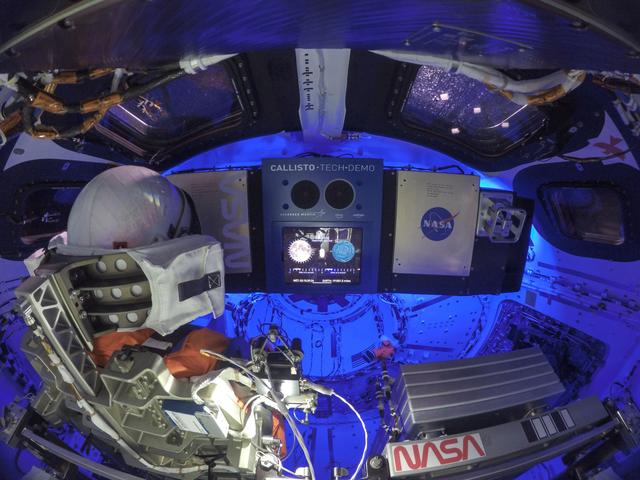
Engineers activated the Callisto payload, Lockheed Martin’s technology demonstration in collaboration with Amazon and Cisco. Callisto will test voice-activated and video technology that may assist future astronauts on deep space missions.
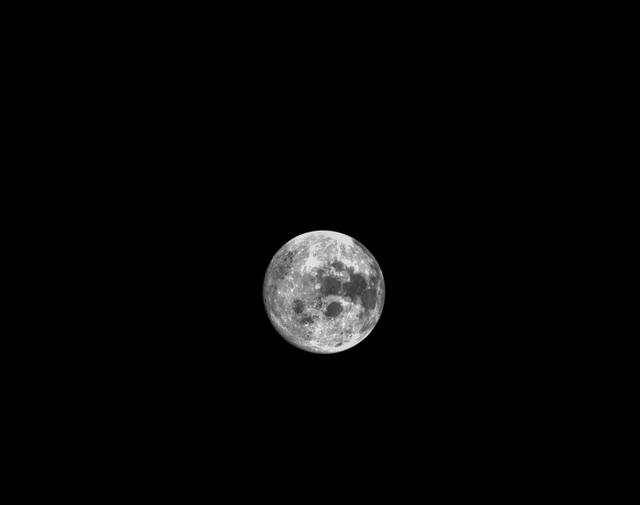
art001e002057 (Dec. 4, 2022) On flight day 19, Orion’s optical navigation camera captured this image of the full Moon as the spacecraft continued its approach toward the return powered flyby burn. Orion uses the optical navigation camera to…