An artist's rendering of the air-breathing, hypersonic X-43B, the third and largest of NASA's Hyper-X series flight demonstrators, which could fly later this decade. Revolutionizing the way we gain access to space is NASA's primary goal for…
Advanced Concept
Jonathan Lopez and Nathan Rick prepare the hypersonic Fiber Optic Sensing System for vibration tests in the Environmental Laboratory at NASA’s Armstrong Flight Research Center in Edwards, California. Testing on a machine called a shaker pro…
NASA Completes Vibration Tests on Temperature and Strain Measurement System
Jonathan Lopez and Allen Parker confer on the hypersonic Fiber Optic Sensor System at NASA’s Armstrong Flight Research Center in Edwards, California, on February 13, 2025. The system measures strain and temperature, critical safety data for…
NASA Temperature and Strain Measurement System Ready for Tests
NASA’s C-20A with Generation Orbit’s hypersonic testbed attached is chased by the agency’s F-18 jet for safety and photography.
NASA Armstrong Flight Tests Generation Orbit’s Hypersonic Testbed on Agency C-20A
Anthony piazza, a researcher at NASA’s Armstrong Flight Research center in Edwards, California, works with high-temperature strain sensors. This test article is a bending load bar, which enables high-temperature optical strain sensor resear…
Piazza Knows How to Manage the Heat
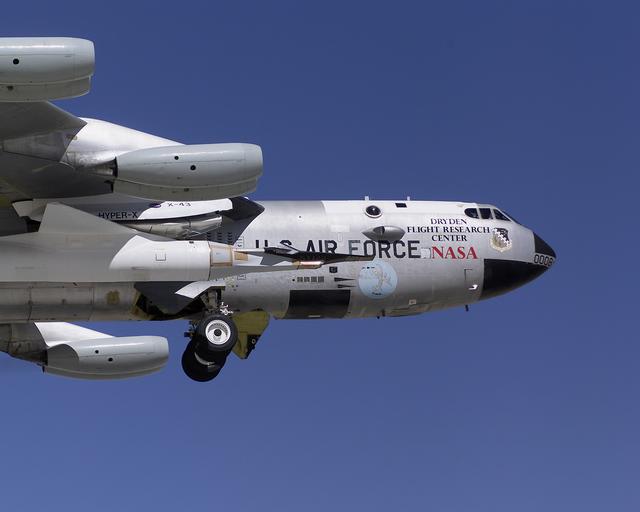
Attached to the same B-52B mothership that once launched X-15 research aircraft in the 1960s, NASA's third X-43A performed a captive carry evaluation flight from Edwards Air Force Base, California on September 27, 2004. The X-43 remained ma…
NASA's B-52B launch aircraft takes off carrying the third X-43A hypersonic research vehicle on a captive carry evaluation flight September 27, 2004
The second X-43A hypersonic research aircraft and its modified Pegasus booster rocket left the runway, carried aloft by NASA's B-52B launch aircraft from the NASA Dryden Flight Research Center at Edwards Air Force Base, Calif., on March 27,…
NASA's B-52B launch aircraft takes off carrying the second X-43A hypersonic research vehicle attached to a modified Pegasus rocket, on March 27, 2004
NASA's B-52B launch aircraft at sunset with the second X-43A hypersonic research vehicle attached to a modified Pegasus rocket under its right wing.
NASA's B-52B launch aircraft at sunset with the second X-43A hypersonic research vehicle attached to a modified Pegasus rocket under its right wing
The second X-43A hypersonic research aircraft and its modified Pegasus booster rocket drop away from NASA's B-52B launch aircraft over the Pacific Ocean on March 27, 2004. The mission originated from the NASA Dryden Flight Research Center a…
A modified Pegasus rocket drops steadily away after release from NASA's B-52B, before accelerating the X-43A over the Pacific Ocean on March 27, 2004
The second X-43A hypersonic research aircraft and its modified Pegasus booster rocket accelerate after launch from NASA's B-52B launch aircraft over the Pacific Ocean on March 27, 2004. The mission originated from the NASA Dryden Flight Res…
he second X-43A and its modified Pegasus booster rocket accelerate after launch from NASA's B-52B launch aircraft over the Pacific Ocean
The second X-43A hypersonic research aircraft and its modified Pegasus booster rocket left the runway, carried aloft by NASA's B-52B launch aircraft from the NASA Dryden Flight Research Center at Edwards Air Force Base, Calif., on March 27,…
NASA's B-52B launch aircraft takes off carrying the second X-43A hypersonic research vehicle attached to a modified Pegasus rocket, on March 27, 2004
The Pegasus air-launched space booster is carried aloft under the right wing of NASA's B-52 carrier aircraft on its first captive flight from the Dryden Flight Research Center, Edwards, California. The first of two scheduled captive flights…
Pegasus Mated to B-52 Mothership - First Flight
Southwestern US, with Las Vegas, NV in foreground, taken by X-15 Hycon HR-236 Camera during flt. 2-39-70 on June 27, 1965.
Southwestern US, with Las Vegas, NV in foreground, taken by X-15 Hycon HR-236 Camera during flt. 2-39-70 on June 27, 1965
NASA research pilot Jack McKay was injured in a crash landing of the X-15 #2 on November 9, 1962. Following the launch from the B-52 to begin flight 2-31-52, he started the X-15's rocket engine, only to discover that it produced just 30 per…
X-15 #2 landing accident at Mud Lake, Nevada on November 9, 1962 after flight 2-31-52
X-15A-2 post flight photo showing heat damage from Mach 6.7 flight on 3 Oct 67. Flt. 2-53-97; pilot-Pete Knight.
X-15A-2 post flight photo showing heat damage from Mach 6.7 flight on 3 Oct 67. Flt. 2-53-97; pilot-Pete Knight
From left, April Torres and Karen Estes watch incoming data from vibration tests on the hypersonic Fiber Optic Sensing System at NASA’s Armstrong Flight Research Center in Edwards California. Testing on a machine called a shaker proved that…
NASA Completes Vibration Tests on Temperature and Strain Measurement System
Jonathan Lopez works on a hypersonic Fiber Optic Sensing System at NASA’s Armstrong Flight Research Center in Edwards, California, on Feb. 13, 2025. The system measures strain and temperature, critical safety data for hypersonic vehicles th…
NASA Temperature and Strain Measurement System Ready for Tests
Jonathan Lopez prepares the hypersonic Fiber Optic Sensing System for vibration tests in the Environmental Laboratory at NASA’s Armstrong Flight Research Center in Edwards, California. Testing on a machine called a shaker proved that the sy…
NASA Completes Vibration Tests on Temperature and Strain Measurement System
In the skies above NASA Armstrong in Southern California, Generation Orbit’s hypersonic pod is flight tested on agency C-20A.
NASA Armstrong Flight Tests Generation Orbit’s Hypersonic Testbed on Agency C-20A
The X-37 advanced technology demonstrator flaperon unit was one of the first ever thermal and mechanical qualification tests of a carbon-carbon control surface designed for space flight. The test also featured extensive use of high-temperat…
Piazza Knows How to Manage the Heat
Against the midnight blue of a high-altitude sky, Orbital Sciences’ Pegasus winged rocket booster ignites after being dropped from NASA’s B-52 mothership on a July 1991 flight. A NASA chase plane for the flight is also visible above the roc…
Pegasus Engine Ignites after Drop from B-52 Mothership
A close-up view of the front end of a Pegasus rocket booster being prepared by technicians at the Dryden Flight Research Center for flight tests with the X-43A "Hypersonic Experimental Vehicle," or "Hyper-X." The X-43A, which will be attach…
Pegasus Rocket Booster Being Prepared for X-43A/Hyper-X Flight Test
The second X-43A hypersonic research aircraft, attached to a modified Pegasus booster rocket and followed by a chase F-18, was taken to launch altitude by NASA's B-52B launch aircraft from the NASA Dryden Flight Research Center at Edwards A…
NASA's B-52B launch aircraft cruises to a test range over the Pacific Ocean carrying the second X-43A vehicle attached to a Pegasus rocket on March 27, 2004
The second X-43A hypersonic research vehicle, mounted under the right wing of the B-52B launch aircraft, viewed from the B-52 cockpit. The crew is working on closing out the research vehicle, preparing it for flight.
The second X-43A hypersonic research vehicle, mounted under the right wing of the B-52B launch aircraft, viewed from the B-52 cockpit
Technicians prepare a Pegasus rocket booster for flight tests with the X-43A "Hypersonic Experimental Vehicle," or "Hyper-X." The X-43A, which will be attached to the Pegasus booster and drop launched from NASA's B-52 mothership, was develo…
Pegasus Rocket Booster Being Prepared for X-43A/Hyper-X Flight Test
The second X-43A hypersonic research aircraft and its modified Pegasus booster rocket left the runway, carried aloft by NASA's B-52B launch aircraft from the NASA Dryden Flight Research Center at Edwards Air Force Base, Calif., on March 27,…
NASA's B-52B launch aircraft takes off carrying the second X-43A hypersonic research vehicle attached to a modified Pegasus rocket, on March 27, 2004
The Hyper III was a low-cost test vehicle for an advanced lifting-body shape. Like the earlier M2-F1, it was a "homebuilt" research aircraft, i.e., built at the Flight Research Center (FRC), later redesignated the Dryden Flight Research Cen…
ECN-2301
Three view art of the North American X-15.
Three view art of the North American X-15
X-15A-2 is rolled out of the paint shop after having the full scale ablative applied. In June 1967, the X-15A-2 rocket-powered research aircraft received a full-scale ablative coating to protect the craft from the high temperatures associat…
X-15A-2 is rolled out of the paint shop after having the full scale ablative applied
Cutaway drawing of the North American X-15.
Cutaway drawing of the North American X-15
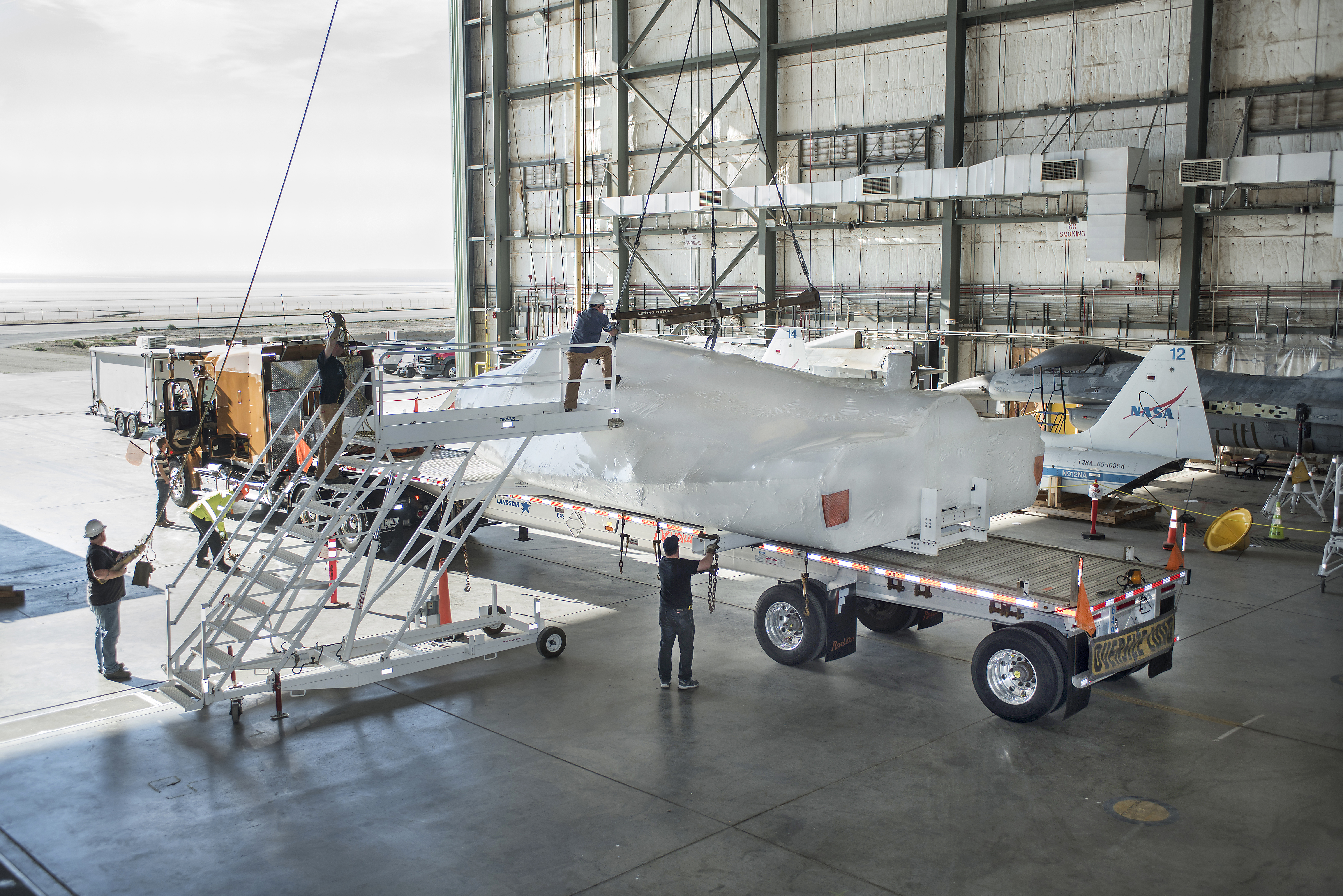
Dream Chaser departs in front of HL-10 at NASA Armstrong where it underwent testing and preparation for successful approach and landing flight. The spacecraft returned to SNC facility in Colorado.
Dream Chaser Departs NASA Armstrong
Allen Parker, Mark Hagiwara, Paul Bean, Patrick Chan, Jonathan Lopez (seated), and Frank Pena comprise the Fiber Optic Sensing System team at NASA’s Armstrong Flight Research Center, in Edwards, California. The systems on the table measure…
NASA Temperature and Strain Measurement System Ready for Tests
Jonathan Lopez prepares the hypersonic Fiber Optic Sensing System for vibration tests in the Environmental Laboratory at NASA’s Armstrong Flight Research Center in Edwards, California. Testing on a machine called a shaker proved that the sy…
NASA Completes Vibration Tests on Temperature and Strain Measurement System
April Torres, from left, Cryss Punteney, and Karen Estes watch as data flows from the hypersonic Fiber Optic Sensing System at NASA’s Armstrong Flight Research Center in Edwards, California. Testing on a machine called a shaker proved that…
NASA Completes Vibration Tests on Temperature and Strain Measurement System
NASA’s C-20A with Generation Orbit’s hypersonic pod attached undergoes flight test overs skies of Armstrong Flight Research Center.
NASA Armstrong Flight Tests Generation Orbit’s Hypersonic Testbed on Agency C-20A
Anthony piazza, a researcher at NASA’s Armstrong Flight Research center in Edwards, California, works with high-temperature strain sensors. This test article is a bending load bar, which enables high-temperature optical strain sensor resear…
Piazza Knows How to Manage the Heat
Attached to the same B-52B mothership that once launched X-15 research aircraft in the 1960s, NASA's third X-43A performed a captive carry evaluation flight from Edwards Air Force Base, California on September 27, 2004. The X-43 remained ma…
NASA's B-52B launch aircraft takes off carrying the third X-43A hypersonic research vehicle on a captive carry evaluation flight September 27, 2004
The Hyper III was a full-scale lifting-body remotely piloted research vehicle (RPRV) built at what was then the NASA Flight Research Center located at Edwards Air Force Base in Southern California.
ECN-2304
NASA's B-52B aircraft over the Dryden Flight Research Center after the successful launch of the second X-43A hypersonic research vehicle.
NASA's B-52B aircraft over the Dryden Flight Research Center after the successful launch of the second X-43A hypersonic research vehicle
The second X-43A hypersonic research aircraft and its modified Pegasus booster rocket accelerate after launch from NASA's B-52B launch aircraft over the Pacific Ocean on March 27, 2004. The mission originated from the NASA Dryden Flight Res…
A modified Pegasus rocket ignites moments after release from the B-52B, beginning the acceleration of the X-43A over the Pacific Ocean on March 27, 2004
Employees atop NASA Dryden's main building celebrate the return flyby of the B-52B aircraft after it launched the second X-43A aircraft on its successful flight.
Employees atop DFRC's main building celebrate the return flyby of the B-52B aircraft after it launched the second X-43A aircraft on its successful flight
The second X-43A hypersonic research aircraft and its modified Pegasus booster rocket left the runway, carried aloft by NASA's B-52B launch aircraft from the NASA Dryden Flight Research Center at Edwards Air Force Base, Calif., on March 27,…
NASA's B-52B launch aircraft takes off carrying the second X-43A hypersonic research vehicle attached to a modified Pegasus rocket, on March 27, 2004
The Hyper-X X-43A project team in front of NASA's B-52B launch aircraft with the Pegasus booster and X-43A vehicle attached.
The Hyper-X X-43A project team
NASA personnel in a control room during the successful second flight of the X-43A aircraft. front row, left to right: Randy Voland, LaRC Propulsion; Craig Christy, Boeing Systems; Dave Reubush, NASA Hyper-X Deputy Program Manager; and Vince…
NASA personnel in a control room during the successful second flight of the X-43A aircraft
Cutaway drawing of the North American X-15.
Cutaway drawing of the North American X-15
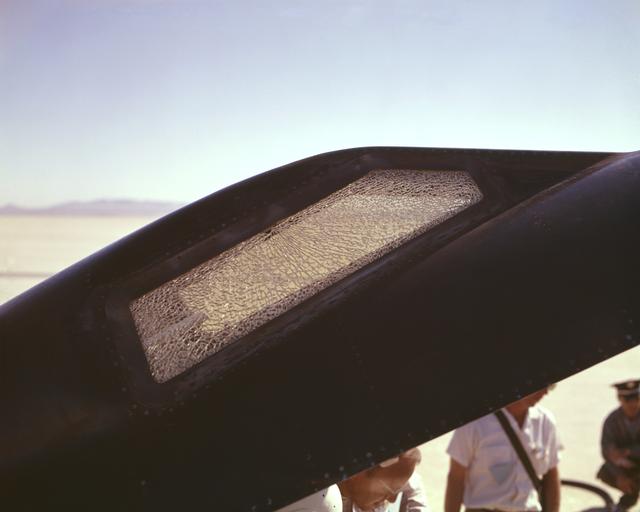
Cracked canopy glass on right side of X-15 #2 after flt. 2-21-37 on Nov. 9 1961. Robert White-pilot. First flight to mach 6.
Cracked canopy glass on right side of X-15 #2 after flt. 2-21-37 on Nov. 9 1961. Robert White-pilot. First flight to mach 6
X-15A-2 with full scale ablative and external tanks installed parked in front of hangar. In June 1967, the X-15A-2 rocket-powered research aircraft received a full-scale ablative coating to protect the craft from the high temperatures assoc…
X-15A-2 with full scale ablative and external tanks installed parked in front of hangar
SNC Dream Chaser is in NASA Armstrong, previously known as space shuttle, hangar being loaded on truck for its departure from the center heading to SNC in Colorado.
Dream Chaser Departs NASA Armstrong