
The Microgravity Science Glovebox Ground Unit, delivered to the Marshall Space Flight Center on August 30, 2002, will be used at Marshall's Microgravity Development Laboratory to test experiment hardware before it is installed in the flight…

ED BERMEA, (BLUE SHIRT), AND MSG TEAM MEMBERS AT CONSOLE
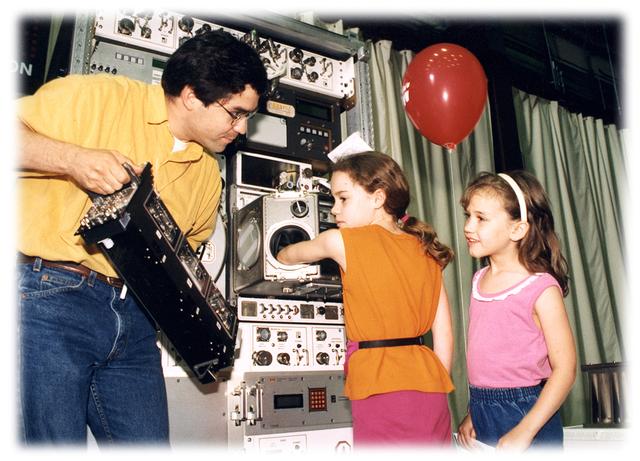
Glovebox Systems Engineer, Sam Ortega, explains how the microgravity glovebox works to 2 young MSFC Open House visitors.

The USML-1 Glovebox (GBX) is a multi-user facility supporting 16 experiments in fluid dynamics, combustion sciences, crystal growth, and technology demonstration. The GBX has an enclosed working space which minimizes the contamination risks…
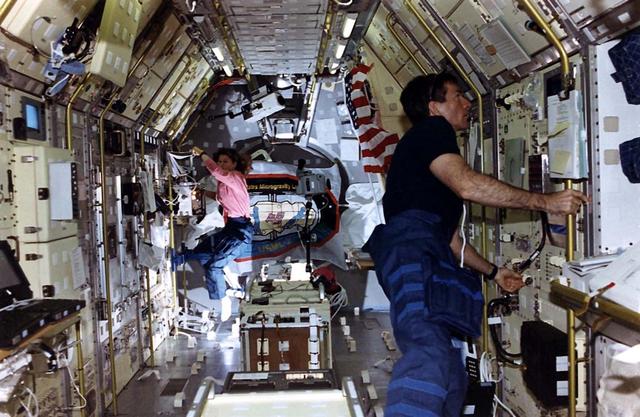
This wide view gives an overall perspective of the working environment of five astronauts and two guest researchers for 16 days in Earth-orbit. At work in support of the U.S. Microgravity Laboratory (USML-2) mission in this particular scene…

A versatile experiment facility for the International Space Station moved closer to flight recently with delivery of the ground-test model to NASA's Marshall Flight Center. The Microgravity Science Glovebox Ground Unit was delivered to the…
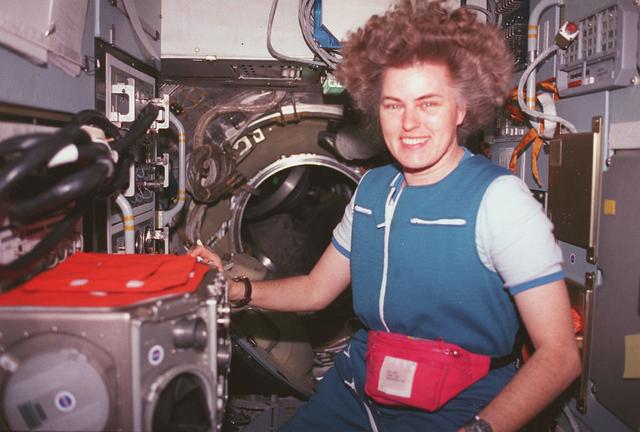
Sharnon Lucid aboard STS-79, with the Glovebox in MIR Priroda module. Priroda is the Russian word for nature.

NASA representatives prepare for another day's work answering questions and handing out posters at AirVenture 2000. Part of their demonstrations included a training model of the Middeck Glovebox used aboard the Space Shuttle and Russian Mir…

Tim Broach (seen through window) of NASA/Marshall Spce Flight Center (MSFC), demonstrates the working volume inside the Microgravity Sciences Glovebox being developed by the European Space Agency (ESA) for use aboard the U.S. Destiny labora…

Experiment sequence test on USML-1 Glovebox equipment and test investigator group.

STS-76, Mir Glovebox and NASA-2 (Mir-21) increment. Astronaut Sharnon Lucid, Cosmonaut Yuriy-V Usachov and Flight Engineer/Cosmonaut Yuriy-I Onuufriyenko.

The Microgravity Science Glovebox (MSG) is being developed by the European Space Agency (ESA) and NASA for use aboard the International Space Station (ISS). Scientists will use the MSG to carry out multidisciplinary studies in combustion sc…

This photo shows the interior reach in the Microgravity Science Glovebox (MSG) being developed by the European Space Agency (ESA) and NASA for use aboard the International Space Station (ISS). Scientists will use the MSG to carry out multid…

Access ports, one on each side of the Microgravity Science Glovebox (MSG), will allow scientists to place large experiment items inside the MSG. The ports also provide additional glove ports (silver disk) for greater access to the interior.…
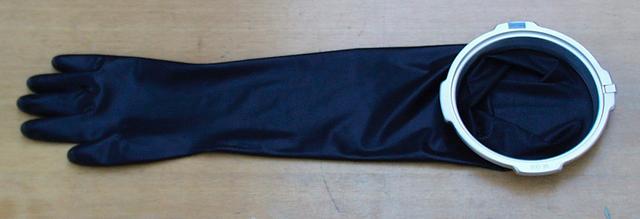
This photo shows a rubber glove and its attachment ring for the Microgravity Science Glovebox (MSG) being developed by the European Space Agency (ESA) and NASA for use aboard the International Space Station (ISS). Scientists will use the MS…

Interior lights give the Microgravity Science Glovebox (MSG) the appearance of a high-tech juke box. The European Space Agency (ESA) and NASA are developing the MSG for use aboard the International Space Station (ISS). Scientists will use t…

This photo shows the access through the internal airlock (bottom right) on the Microgravity Science Glovebox (MSG) being developed by the European Space Agency (ESA) and NASA for use aboard the International Space Station (ISS). The airlock…

An array of miniature lamps will provide illumination to help scientists as they conduct experiments inside the Microgravity Science Glovebox (MSG). The European Space Agency (ESA) and NASA are developing the MSG for use aboard the Internat…

This excellent shot of Marshall Space Flight Center's (MSFC's) Mark Whorton, testing experiment hardware in the Microgravity Science Glovebox Ground Unit delivered to MSFC on August 30, 2002, reveals a close look at the components inside of…
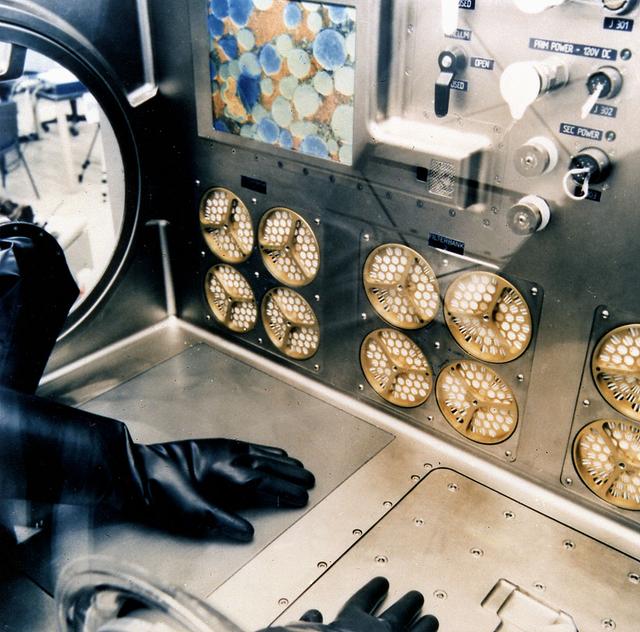
The Microgravity Science Glovebox is a facility for performing microgravity research in the areas of materials, combustion, fluids and biotechnology science. The facility occupies a full ISPR, consisting of: the ISPR rack and infrastructure…

USML-1, Howard Ross working with the Glovebox Module

Larry DeLucas operating USML-1 Glovebox

STS-73 crewmember with the Glovebox

Astronaut Mae Jemison working on Glovebox experiment.
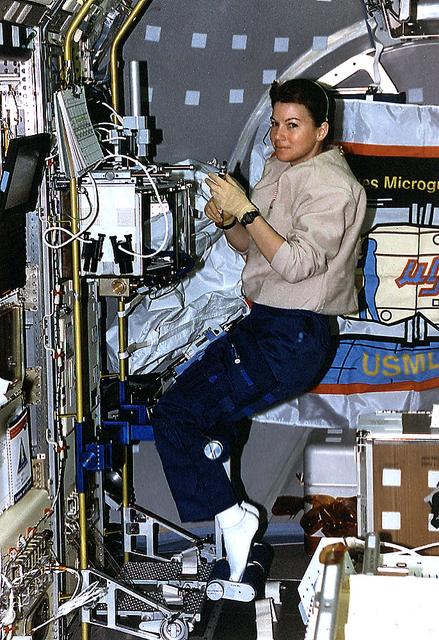
Onboard Space Shuttle Columbia (STS-73) Mission Specialists Catherine Cady Coleman works at the glovebox facility in support of the Protein Crystal Growth Glovebox (PCG-GBX) experiment in the United States Microgravity Laboratory 2 (USML-2)…

A Virginia student works with a bottle and its cap in a mockup of the Middeck Glovebox used by astronauts on a number of space shuttle research missions. The activity was part of the Space Research and You education event held by NASA's Off…

In the Destiny laboratory aboard the International Space Station (ISS), European Space Agency (ESA) astronaut Pedro Duque of Spain is seen working at the Microgravity Science Glovebox (MSG). He is working with the PROMISS experiment, which…

The first United States Microgravity Laboratory (USML-1) provided scientific research in materials science, fluid dynamics, biotechnology, and combustion science in a weightless environment inside the Spacelab module. This photograph is a c…

Interior lights give the Microgravity Science Glovebox (MSG) the appearance of a high-tech juke box. The European Space Agency (ESA) and NASA are developing the MSG for use aboard the International Space Station (ISS). Scientists will use t…

This photo shows the access through the internal airlock (bottom right) on the Microgravity Science Glovebox (MSG) being developed by the European Space Agency (ESA) and NASA for use aboard the International Space Station (ISS). Scientists…

Once the Microgravity Science Glovebox (MSG) is sealed, additional experiment items can be inserted through a small airlock at the bottom right of the work volume. It is shown here with the door open. The European Space Agency (ESA) and NAS…

In this photograph, astronaut David Hilmers conducts a life science experiment by using the Biorack Glovebox (GBX) during the International Microgravity Laboratory-1 (IML-1) mission. The Biorack was a large multipurpose facility designed fo…
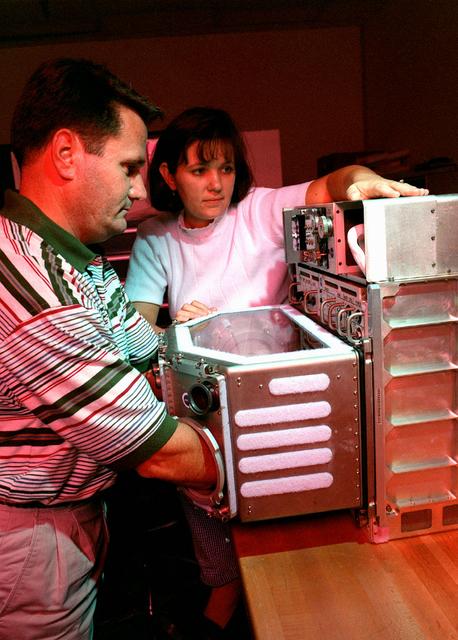
Mary-Etta Wright and Dornie McCaghren with Russia's Mir Flight Glovebox.

The USML-1 Glovebox (GBX) is a multi-user facility supporting 16 experiments in fluid dynamics, combustion sciences, crystal growth, and technology demonstration. The GBX has an enclosed working space which minimizes the contamination risks…

NASA’s Virtual Glovebox (VGX) was developed to allow astronauts on Earth to train for complex biology research tasks in space. The astronauts may reach into the virtual environment, naturally manipulating specimens, tools, equipment, and a…

MSG TEAM MEMBERS JOHN WILSON, (L), AND PHILLIP BRYANT TEST AND INTEGRATE HARDWARE BEFORE SENDING TO ISS

Astronaut Mae Jemison using the Glovebox microscope onboard STS-47.

NASA representatives prepare for another day's work answering questions and handing out posters at AirVenture 2000. Part of their demonstrations included a training model of the Middeck Glovebox used aboard the Space Shuttle and Russian Mir…

Dr. Albert Sacco with Glovebox
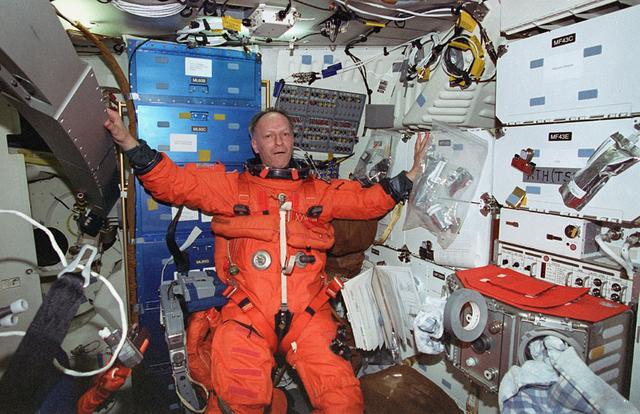
Onboard photo of space shuttle Columbia (STS-75) Swiss crewmember Claude Nicollier with a view of Middeck Glovebox (MGBX) which provides a general-purpose enclosed workspace to carry out small-scale microgravity science experiments.
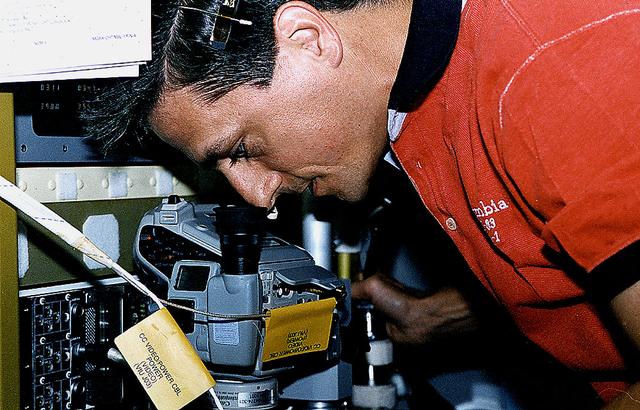
Onboard Space Shuttle Columbia (STS-94) Mission Specialist Donald A. Thomas observes an experiment in the glovebox aboard the Spacelab Science Module. Thomas is looking through an eye-piece of a camcorder and recording his observations on t…

Tim Broach (center) of NASA/Marshall Space Flight Center (MSFC), demonstrates the working volume inside the Microgravity Sciences Glovebox being developed by the European Space Agency (ESA) for use aboard the U.S. Destiny laboratory module…

Interior lights give the Microgravity Science Glovebox (MSG) the appearance of a high-tech juke box. The European Space Agency (ESA) and NASA are developing the MSG for use aboard the International Space Station (ISS). Scientists will use t…

Interior lights give the Microgravity Science Glovebox (MSG) the appearance of a high-tech juke box. The European Space Agency (ESA) and NASA are developing the MSG for use aboard the International Space Station (ISS). Scientists will use t…

Interior lights give the Microgravity Science Glovebox (MSG) the appearance of a high-tech juke box. The European Space Agency (ESA) and NASA are developing the MSG for use aboard the International Space Station (ISS). Scientists will use t…

A Virginia student wears gloves inside a water tank to simulate the awkward feel and dexterity that astronauts experience when working in spacesuits. He is directed by Brad McLain for the Space Biology Museum Network. The activity was part…

This is an image of a colloidal crystal from the CDOT-2 investigation flown on STS-95. There are so many colloidal particles in this sample that it behaves like a glass. In the laboratory on Earth, the sample remained in an amorphous state,…

Access ports, one on each side of the Microgravity Science Glovebox (MSG), will allow scientists to place large experiment items inside the MSG. The ports also provide additional glove ports (dark circle) for greater access to the interior.…