An artist’s rendering displays a configuration of the lunar-orbiting Gateway space station’s modules and visiting spacecraft. The core elements of Gateway consist of the Habitation and Logistics Outpost (HALO) element, the Power and Propuls…
Gateway Configuration Illustrations
Deep Space Station 56, or DSS-56, is a powerful 34-meter-wide (112-foot-wide) antenna that was added to the Deep Space Network's Madrid Deep Space Communications Complex in Spain in early 2021 after beginning construction in 2017. Deep Spac…
New All-in-One Antenna for the Deep Space Network
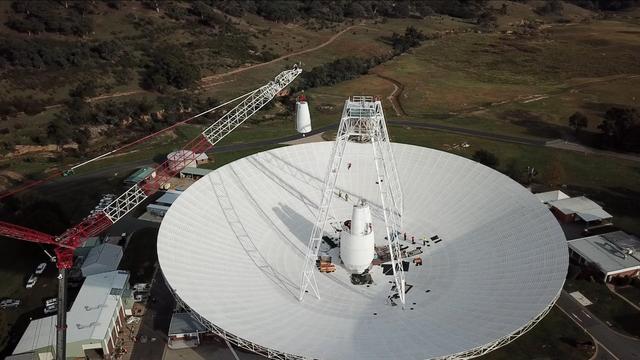
A crane lowers the 112-foot-wide (34-meter-wide) steel framework for the Deep Space Station 23 (DSS-23) reflector dish into position on Dec. 18, 2024, at the Deep Space Network's Goldstone Space Communications Complex near Barstow, Californ…
Deep Space Station 23: Goldstone Antenna Gets Its Giant Reflector
      In the early morning of Dec. 18, 2024, a crane looms over the 112-foot-wide (34-meter-wide) steel framework for Deep Space Station 23 (DSS-23) reflector dish, which will soon be lowered into position on the antenna's base structure.…
A New Antenna at DSN's Goldstone Awaits Construction
Deep Space Station 53, or DSS-53, is a new 34-meter (111-foot) beam waveguide antenna that went online in February 2022 at the Madrid ground station of NASA's Deep Space Network (DSN).  DSS-53 is the fourth of six antennas being added to ex…
The Deep Space Network's New DSS-53 at Night
 In a historic first, all six radio frequency antennas at the Madrid Deep Space Communication Complex – part of NASA's Deep Space Network (DSN) – carried out a test to receive data from the agency's Voyager 1 spacecraft at the same time on…
Six Deep Space Network Antennas in Madrid Arrayed For the First Time
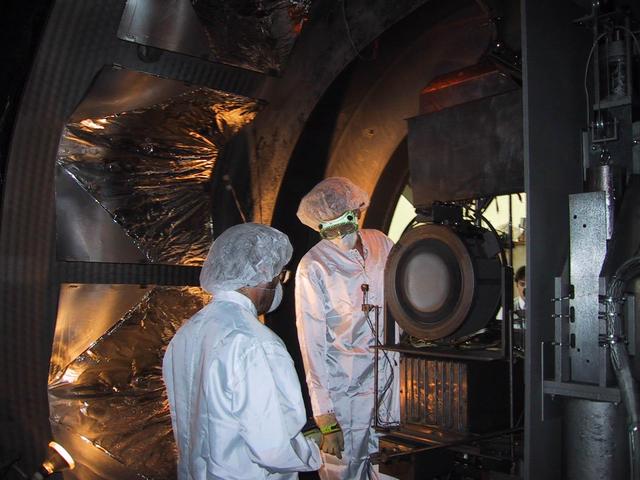
This image of a xenon ion engine prototype, photographed through a port of the vacuum chamber where it was being tested at NASA's Jet Propulsion Laboratory, shows the faint blue glow of charged atoms being emitted from the engine. The engin…
Deep Space 1 Ion Engine
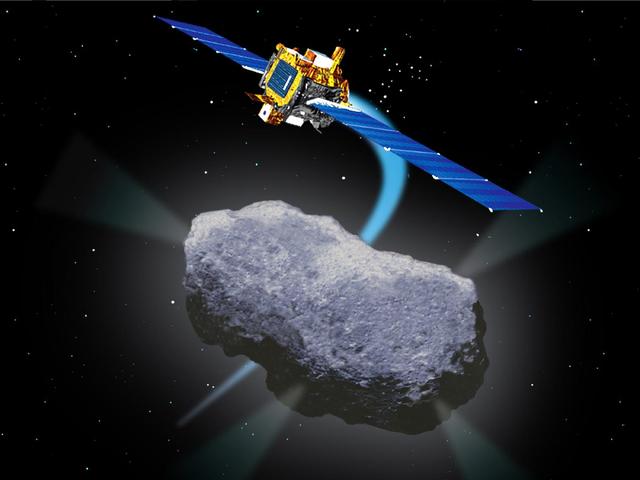
Artist concept of NASA Deep Space 1 Encounter with Comet Borrelly.
Artist Concept of Deep Space 1 Encounter with Comet Borrelly
The Deep Space Optical Communications (DSOC) technology demonstration's flight laser transceiver can be easily identified on NASA's Psyche spacecraft, seen in this December 2021 photograph inside a clean room at the agency's Jet Propulsion…
DSOC Flight Laser Transceiver Integrated with NASA's Psyche Spacecraft
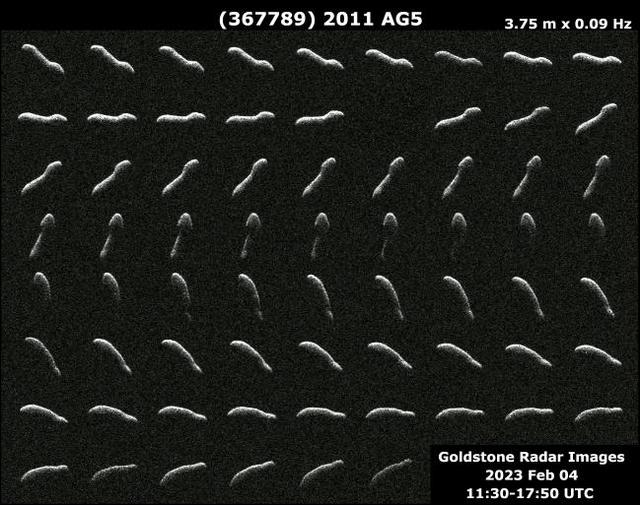
      This collage represents NASA radar observations of near-Earth asteroid 2011 AG5 on Feb. 4, 2023, one day after its close approach to Earth brought it about 1.1 million miles (1.8 million kilometers, or a little under five times the di…
Radar Observations of Elongated Near-Earth Asteroid 2011 AG5
Asteroid 1997 QK1 is shown to be an elongated, peanut-shaped near-Earth object in this series of 28 radar images obtained by the Deep Space Network's Goldstone Solar System Radar on Aug. 21, 2025. The asteroid is about 660 feet (200 meters)…
NASA's Planetary Radar Reveals Peanut Shape of Asteroid 1997 QK1
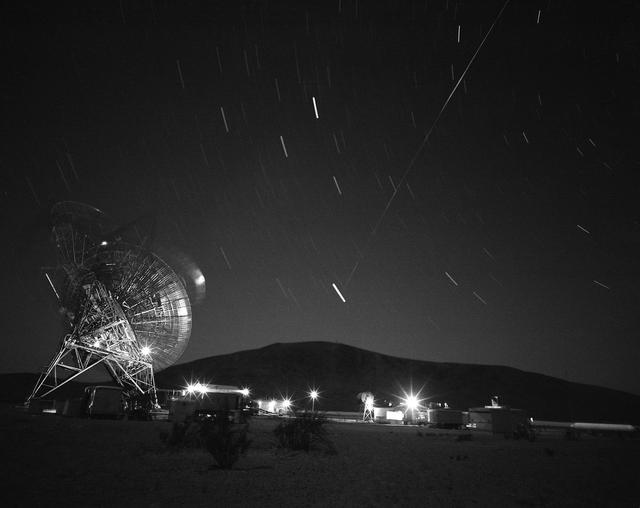
This archival image was released as part of a gallery comparing JPL’s past and present, commemorating the 80th anniversary of NASA’s Jet Propulsion Laboratory on Oct. 31, 2016.      This photograph shows the first pass of Echo 1, NASA's fir…
Goldstone Tracking the Echo Satelloon.
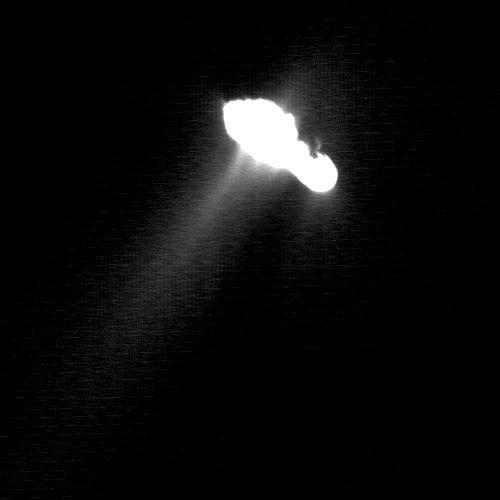
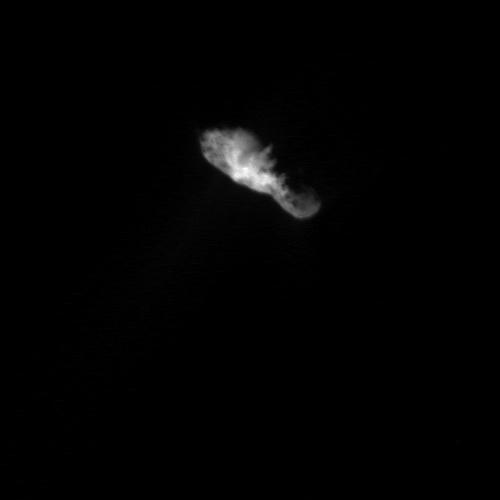
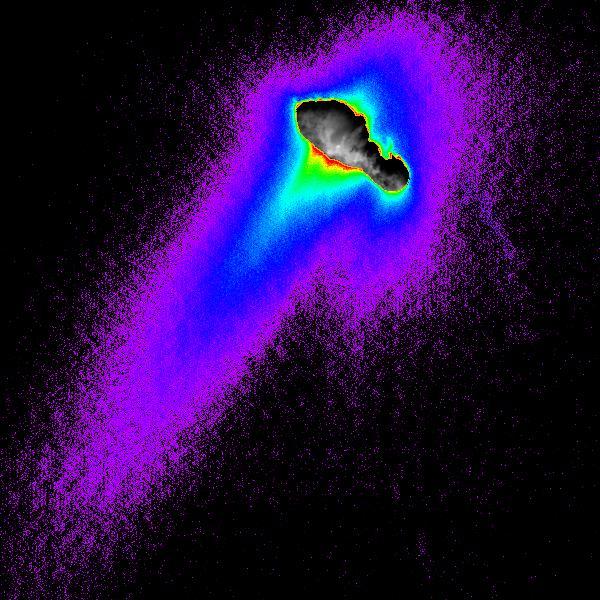
This image, taken by NASA Deep Space 1 on September 22, 2001, has been enhanced to reveal dust being ejected from the nucleus of comet Borrelly. As a result, the nucleus is bright white in the image.
Several Jets and a Crater on Comet Borrelly
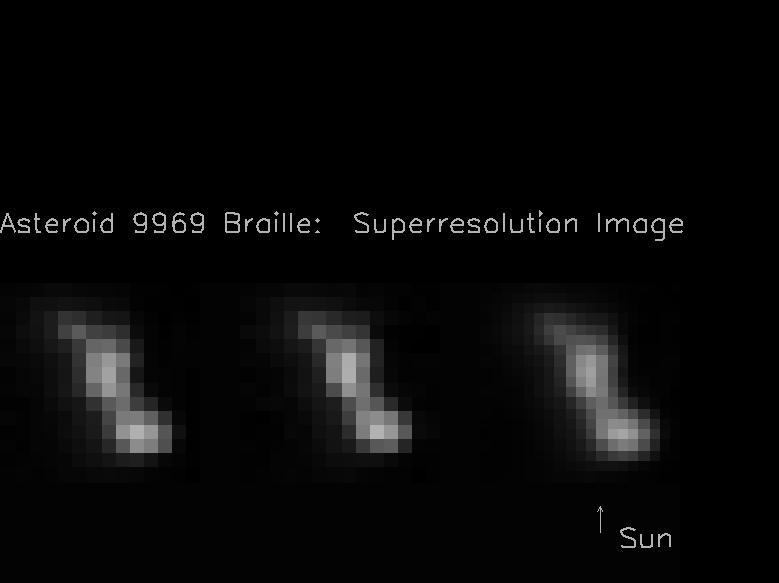
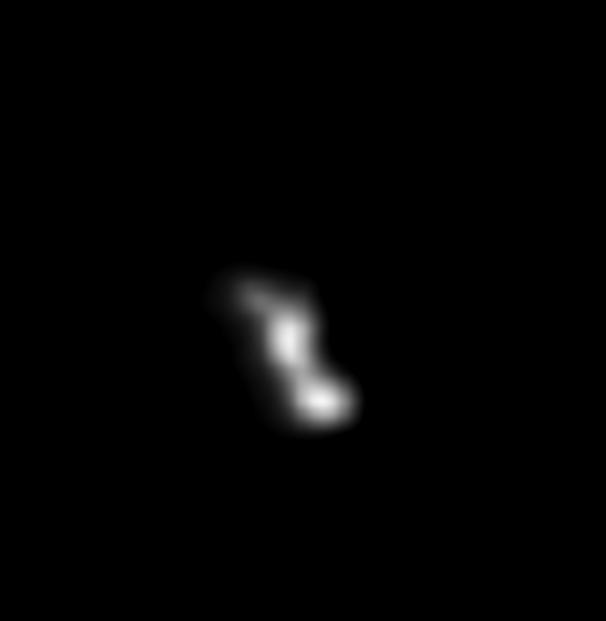
The two images on the left hand side of this composite image frame were taken 914 seconds and 932 seconds after the NASA Deep Space 1 encounter with the asteroid 9969 Braille. The image on the right was created by combining the two images o…
Composite View of Asteroid Braille from Deep Space 1
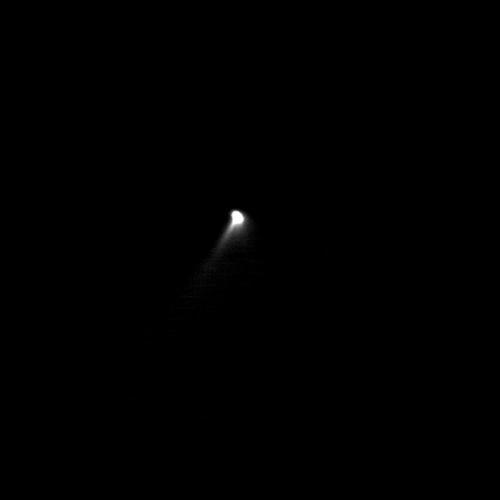
The solid nucleus of comet Borrelly is barely resolved in this image from NASA Deep Space 1, enhanced to reveal the highly collimated dust extending towards the bottom left corner of the picture.
Early Close Image of Comet Borrelly
An artist’s rendering displays a configuration of the lunar-orbiting Gateway space station’s modules and visiting spacecraft. The core elements of Gateway consist of the Habitation and Logistics Outpost (HALO) element, the Power and Propuls…
Gateway Configuration Illustrations
In a delicate operation, a 400-ton crane lifts the new X-band cone into the 70-meter (230-foot) Deep Space Network's Deep Space Station 43 (DSS-43) dish in Canberra, Australia. The new cone houses upgraded receiver and transmitter equipment…
Swinging the Cone Into Place
A crane lowers a four-legged support structure called a quadripod onto the steel framework of the Deep Space Station 23 (DSS-23) reflector dish on Dec. 18, 2024. The reflector framework was bolted into place earlier in the day, and the quad…
Deep Space Station 23: Goldstone Antenna Gets Its Quadripod
Deep Space Station 53, or DSS-53, is a new 34-meter (111-foot) beam waveguide antenna that went online in February 2022 at NASA's Deep Space Network's ground station in Madrid.  DSS-53 is the fourth of six antennas being added to expand the…
A New Antenna for NASA's Deep Space Network
DSS43 is a 70-meter-wide (230-feet-wide) radio antenna at the Deep Space Network's Canberra facility in Australia. It is the only antenna that can send commands to the Voyager 2 spacecraft.  https://photojournal.jpl.nasa.gov/catalog/PIA2368…
NASA's Deep Space Antenna Upgrade to Affect Voyager
Deep Space Station 13 (DSS-13) at NASA's Goldstone Deep Space Communications Complex near Barstow, California – part of the agency's Deep Space Network – is a 34-meter (112-foot) experimental antenna that has been retrofitted with an optica…
DSN's Experimental Hybrid Antenna Tracks DSOC's Laser Downlink
Located in Canberra, Australia, the Deep Space Network's Deep Space Station 43 spans 70 meters (230 feet), making it the largest steerable parabolic antenna in the Southern Hemisphere. Since March 2020, it has been undergoing upgrades — exp…
A Big Crane for a Big Dish
These images and animation represent NASA radar observations of 4660 Nereus on Dec. 10, 2021, before the asteroid's close approach on Dec. 11, when it came within 2.5 million miles (4 million kilometers) of Earth. Using the 70-meter radio a…
Radar Observations of Asteroid 4660 Nereus
This sunset photo shows Deep Space Station 14 (DSS-14), the 230-foot-wide (70-meter) antenna at the Goldstone Deep Space Communications Complex near Barstow, California, part of NASA's Deep Space Network. The network's three complexes aroun…
The Goldstone Solar System Radar at Sunset
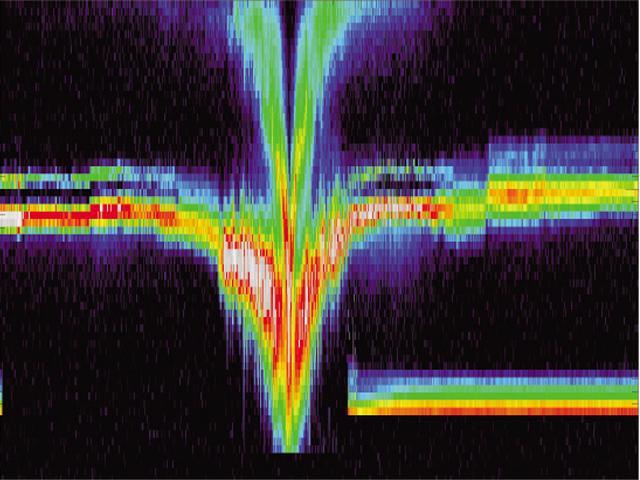
Over 1300 energy spectra taken on September 22, 2001 from the ion and electron instruments on NASA Deep Space 1 span a region of 1,400,000 kilometers 870,000 miles centered on the closest approach to the nucleus of comet Borrelly.
Comet Borrelly Slows Solar Wind
This artist's concept shows what Deep Space Station-23, a new antenna dish at the Deep Space Network's complex in Goldstone, California, will look like when complete in several years. DSS-23 will communicate with NASA's deep space missions…
Goldstone's DSS-23 Antenna (Artist's Concept)
This figure represents the 1,000th near-Earth asteroid (NEA) to be detected by planetary radar since 1968. Being only 65 to 100 feet (20 to 30 meters) wide, asteroid 2021 PJ1 was too small to be imaged in any detail, but the powerful 70-met…
The Doppler Spike of Asteroid 2021 PJ1
Between Aug. 20 and 24, near-Earth asteroid (NEA) 2016 AJ193 drifted past Earth at a distance of 2.1 million miles (about 3.4 million kilometers), creating an opportunity for planetary radar to image its surface for the first time since its…
Radar Reveals the Surface of Asteroid 2016 AJ193
Antenna dishes at NASA's Deep Space Network complex in Goldstone, California, photographed on Feb. 11, 2020.  https://photojournal.jpl.nasa.gov/catalog/PIA23214
NASA's Deep Space Network Goldstone Complex
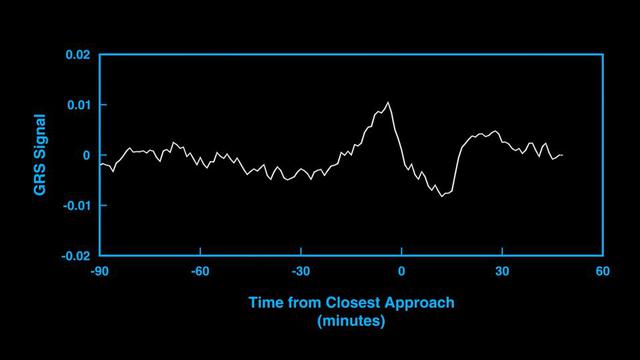
This animation and audio represent the subtle gravitational signal acquired by an antenna of NASA's Deep Space Network as the agency's Juno spacecraft performed a close flyby of Jupiter's Great Red Spot in July 2019. The changes in the sign…
Great Red Spot Gravity
This image was created from a composite of two images which were taken 914 seconds and 932 seconds after NASA Deep Space 1 encounter with the asteroid 9969 Braille.
Enhanced Image of Asteroid Braille from Deep Space 1
This collage and animation represent NASA radar observations of near-Earth asteroid 7335 1989 JA on May 26, 2022, one day before it made its closest approach with Earth. The potentially hazardous asteroid came within 2.5 million miles (4 mi…
Radar Observations of Near-Earth Asteroid 7335 1989 JA
The antenna of the Deep Space Network's Deep Space Station 43 (DSS-43) in Canberra, Australia, spans 70 meters (230 foot) and stands 73 meters (239 foot), dwarfing workers as they perform upgrades on the central cone that contains sensitive…
Inside a Big Dish
Deep Space Antenna 210' at Goldstone, CA  (JPL ref: P-116594AC)
ARC-1972-A72-2699
Suzanne Dodd, the director for the Interplanetary Network Directorate at NASA's Jet Propulsion Laboratory in Southern California, addresses an audience at the Deep Space Network's Canberra complex on March 19, 2025. That day marked 60 years…
JPL's Suzanne Dodd Speaks at the DSN Canberra 60th Anniversary Celebration
An ion thruster is removed from a vacuum chamber at NASA Jet Propulsion Laboratory, Pasadena, Calif., its job done following almost five years of testing.
Spare Ion Engine Being Checked
This image of a xenon ion engine, photographed through a port of the vacuum chamber where it was being tested at NASA's Jet Propulsion Laboratory, shows the faint blue glow of charged atoms being emitted from the engine.      The ion propul…
Deep Space 1 Ion Engine
This series of radar images obtained by the Goldstone Solar System Radar near Barstow, California, on Aug. 18, 2024, shows the asteroid 2024 JV33 shortly before its close approach with Earth. The images were captured when the asteroid was a…
Goldstone Planetary Radar Observes Peanut-Shaped Asteroid
This mosaic shows NASA's radar observations in one-minute increments of asteroid 2024 MK, a 500-foot-wide (150-meter-wide) near-Earth object, made June 30, 2024, a day after it passed our planet from a distance of only 184,00 miles (295,000…
Detailed Planetary Radar Observations of Asteroid 2024 MK
This series of radar images obtained by the Deep Space Network's Goldstone Solar System Radar near Barstow, California, on Sept. 16, 2024, shows the near-Earth asteroid 2024 ON a day before its close approach with our planet. The asteroid p…
NASA's Planetary Radar Spies (Another) Peanut-Shaped Asteroid
This series of 41 radar images obtained by the Deep Space Network's Goldstone Solar System Radar on July 28, 2025, shows the near-Earth asteroid 2025 OW as it made its close approach with our planet. The asteroid safely passed at about 400,…
NASA's Goldstone Planetary Radar Observes Fast-Spinning Asteroid
The Deep Space Optical Communications (DSOC) technology demonstration's flight laser transceiver is shown at NASA's Jet Propulsion Laboratory in Southern California in April 2021, before being installed inside its box-like enclosure that wa…
DSOC's Flight Laser Transceiver
This collage represents a selection of NASA radar observations of near-Earth asteroid 2006 HV5 on April 25, 2023, less than one day before its close approach with our planet at a distance of about 1.5 million miles (2.4 million kilometers,…
NASA's Planetary Radar Images Asteroid 2006 HV5
This series of seven radar observations by the Deep Space Network's Goldstone Solar System Radar shows the asteroid 2011 UL21 during its close approach with Earth from 4.1 million miles (6.6 million kilometers) away – about 17 times the dis…
Goldstone Planetary Radar Observes Binary Asteroid 2011 UL21
NASA's Deep Space Atomic Clock could revolutionize deep space navigation. One key requirement for the technology demonstration was a compact design. The complete hardware package is shown here and is only about 10 inches (25 centimeters) on…
Deep Space Atomic Clock Hardware
Sunlight illuminates the bowling-pin shaped nucleus from directly below comet Borrelly as seen by NASA Deep Space 1. At this distance, many features become vivid on the surface of the nucleus, including a jagged line between day and night o…
Comet Borrelly Varied Landscape
A composite of images from NASA Deep Space 1 spacecraft shows features of comet Borrelly nucleus, dust jets escaping the nucleus and the cloud-like coma of dust and gases surrounding the nucleus.
Composite of Comet Borrelly Nucleus, Jets, Coma
This collage represents a selection of planetary radar observations of asteroid 2008 OS7 that were made the day before its close approach with our planet on Feb. 2, 2024. The stadium-size near-Earth object passed at a distance of about 1.8…
NASA's Planetary Radar Images Slow-Spinning Asteroid 2008 OS7