NASA Dawn mission patch, part of the Dawn Mission Art series.  http://photojournal.jpl.nasa.gov/catalog/PIA19375
Dawn Mission Patch
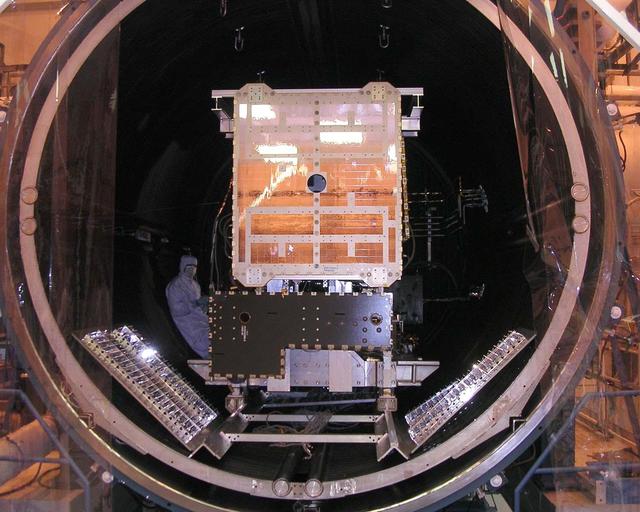
NASA Dawn spacecraft in thermal vacuum chamber.
Dawn Spacecraft in Thermal Vacuum Chamber
CAPE CANAVERAL, Fla. -- Fog near the traffic control tower at the Shuttle Landing Facility begins to burn off as the sun rises over NASA's Kennedy Space Center in Florida.      On this particular morning, preparations are underway for a lau…
KSC-2014-2696
Technician helps guide the second half of the fairing for installation around NASA Dawn spacecraft.
Payload Fairing Installation Around the Dawn Spacecraft
CAPE CANAVERAL, Fla. -- Sunrise is reflected in the water abundant on NASA's Kennedy Space Center in Florida.  In the background are Launch Pad 39A and the Rotation/Processing Facility, which supported solid rocket booster preparations duri…
KSC-2014-2694
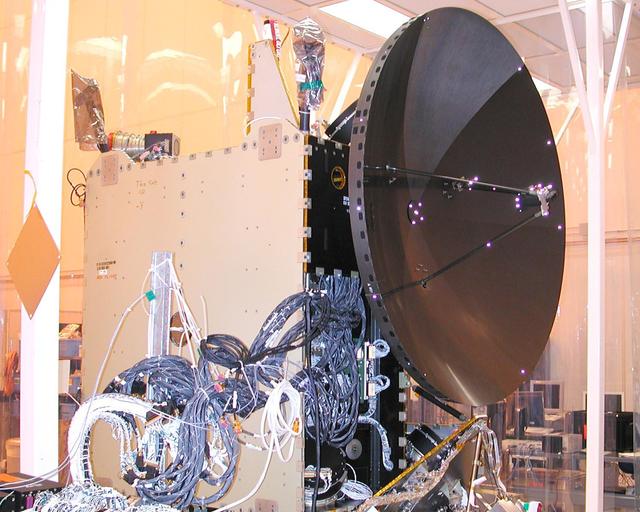
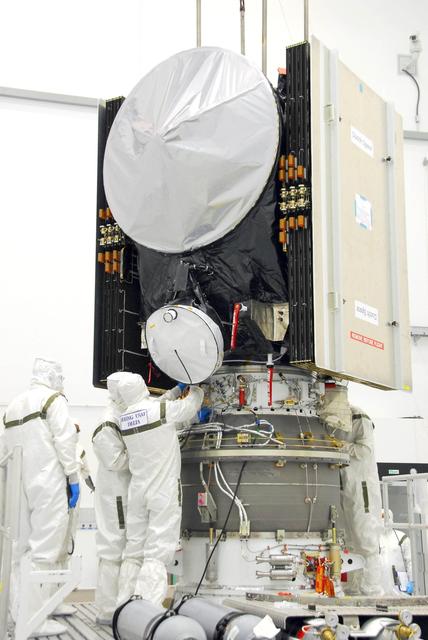
NASA Dawn spacecraft after installation of high gain antenna.
Dawn Spacecraft After Installation of High Gain Antenna
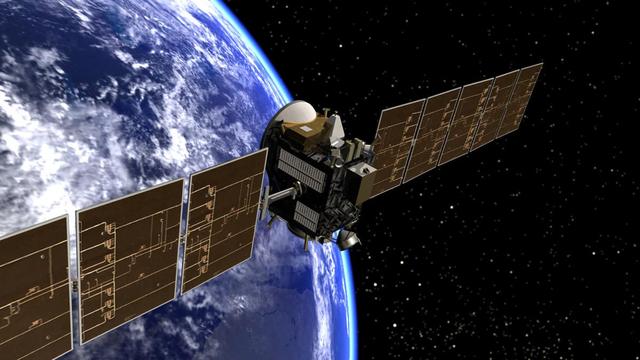
Artist concept of Dawn spacecraft leaving Earth.
Dawn Spacecraft Leaving Earth Artist Concept
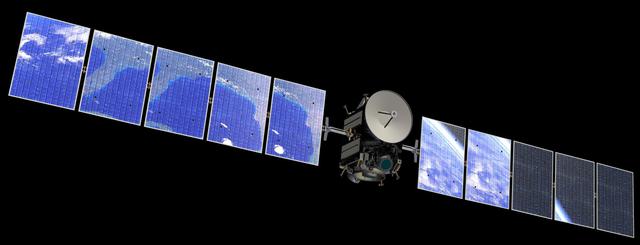
Artist concept of Earth reflection in Dawn spacecraft.
Earth Reflection in Dawn Spacecraft Artist Concept
CAPE CANAVERAL, Fla. -- The sun rises over NASA's Kennedy Space Center in Florida. In view at right are Launch Pad 39A and the Rotation/Processing Facility, which supported solid rocket booster preparations during the Space Shuttle Program.…
KSC-2014-2693
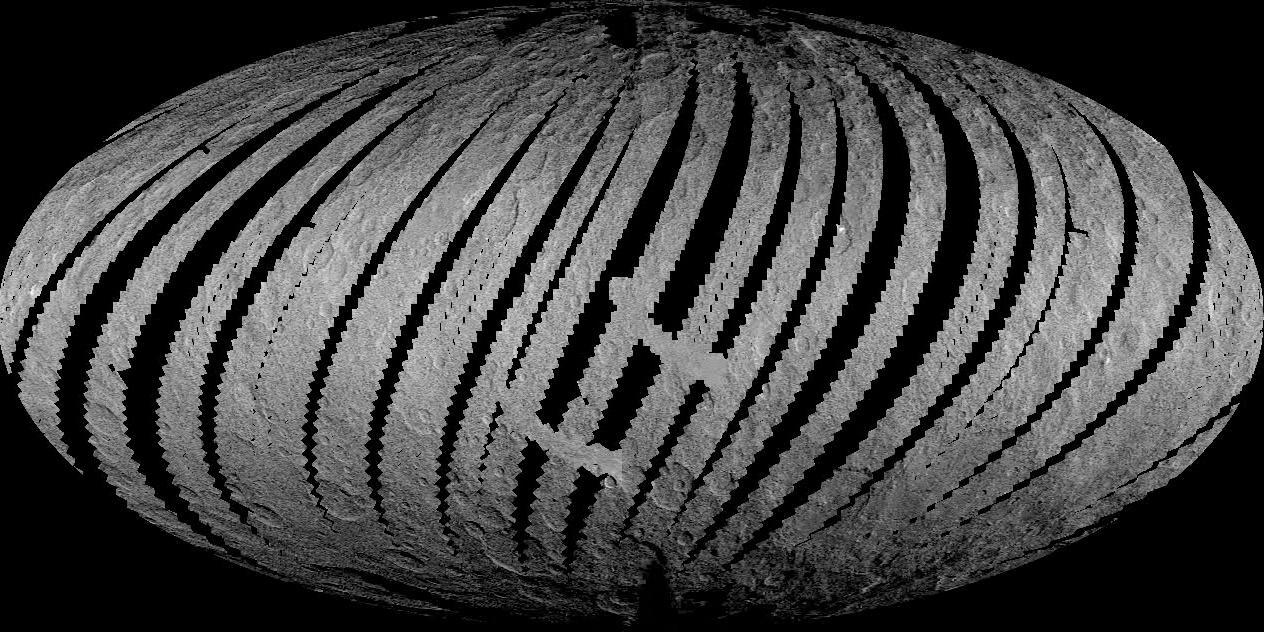
This frame from a movie shows that the brightest area on Ceres, located in Occator Crater, was one of the last features to be imaged as NASA Dawn progressively built its map.
Ceres LAMO Coverage Map
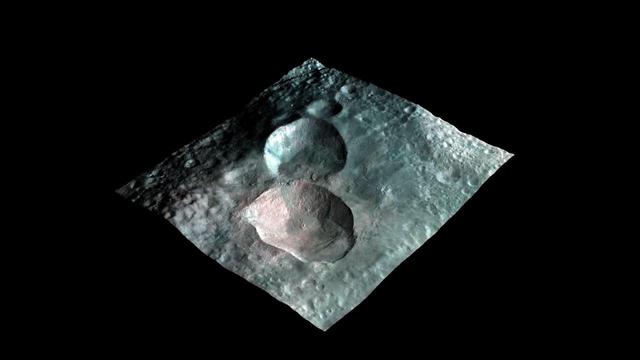
This image from NASA Dawn mission shows a 3-D rendering of the craters that make up the nowman feature on the giant asteroid Vesta. From left to right, the craters are named Marcia, Calpurnia, and Minucia.
Views of the Snowman
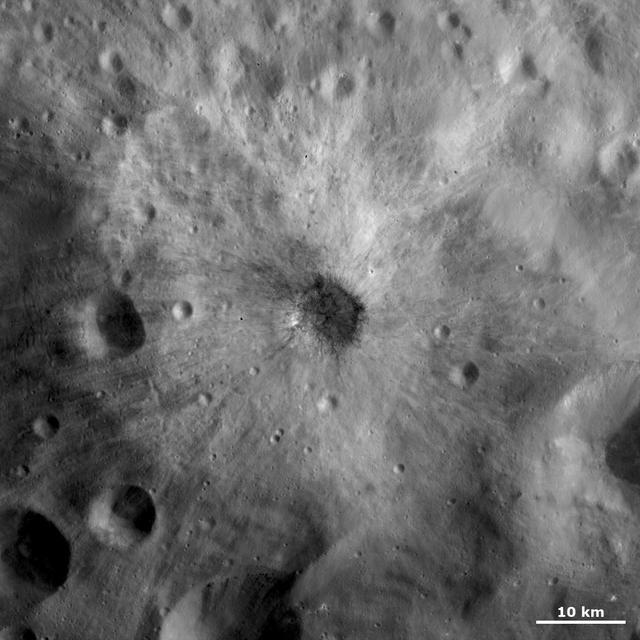
This image from NASA Dawn spacecraft is centered on a small, young, fresh crater with bright and dark ejecta rays extending from it. The crater is located in Vesta Tuccia quadrangle on asteroid Vesta.
Crater with Dark and Bright Ejecta
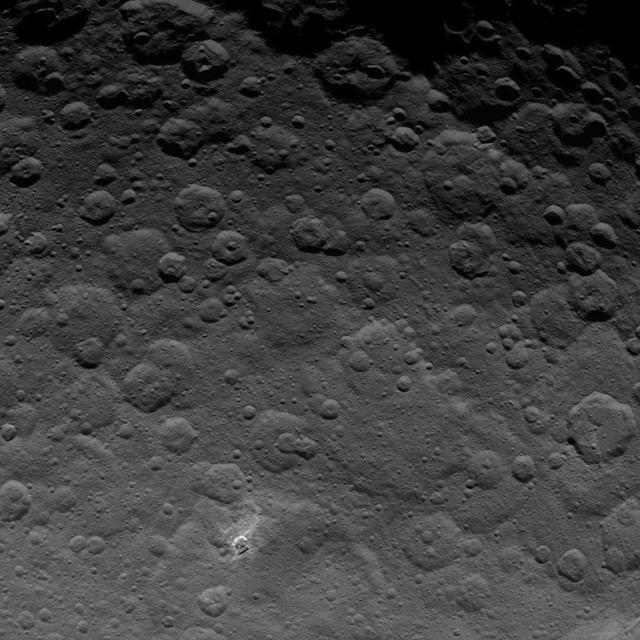
The north pole of Ceres can be seen in this image taken on June 9, 2015 by NASA Dawn spacecraft, shows dwarf planet Ceres from an altitude of 2,700 miles 4,400 kilometers with a resolution of 1,400 feet 410 meters per pixel.  http://photojo…
Dawn Survey Orbit Image 13
These images from NASA Dawn spacecraft show part of asteroid Vesta equatorial region, which contains impact craters and troughs linear depressions.
Topography of Vesta Equatorial Region III
This image from NASA Dawn spacecraft of asteroid Vesta shows Rubria crater, with dark and bright material, offset from the center of the image. Rubria crater is located in Vesta Gegania quadrangle, just south of Vesta equator.
Rubria Crater
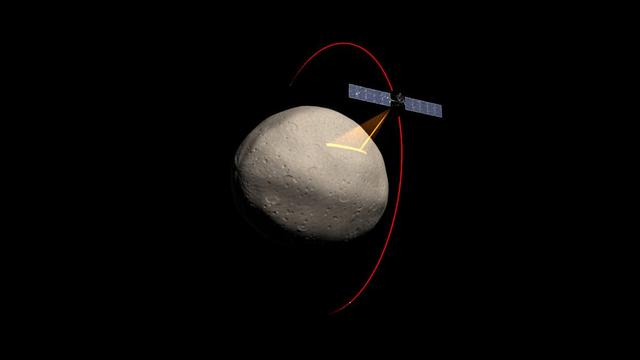
This artist concept shows NASA Dawn spacecraft orbiting the giant asteroid Vesta. The depiction of Vesta is based on images obtained by Dawn framing cameras.
Dawn Orbiting Vesta Artist Concept
CAPE CANAVERAL, Fla. -- A balmy May morning finds visitors to Playalinda Beach in Florida enjoying the water, fishing and walking along the shore. The beach borders NASA's Kennedy Space Center to the north.    On this particular morning, pr…
KSC-2014-2697
Artist concept of the Dawn spacecraft orbiting Ceres.
Dawn Spacecraft Orbiting Ceres Artist Concept
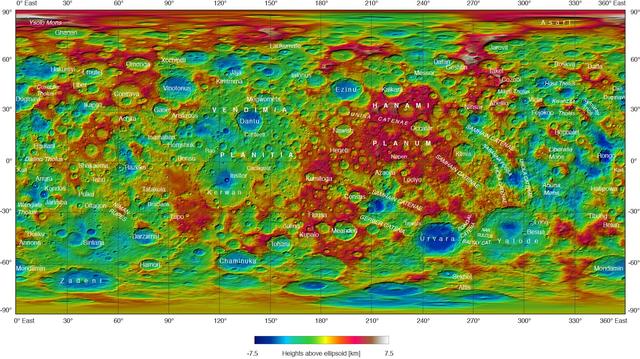
This topographical map of Ceres, made with images from NASA's Dawn spacecraft, shows all of the dwarf planet's named features as of September 2016. Dawn celebrated nine years since launch on September 27, 2016.  To date, more than 110 place…
Ceres Feature Names: September 2016
Artist concept of NASA Dawn spacecraft. The giant asteroid Vesta, Dawn next destination, is on the lower left. Another larger asteroid and Dawn second destination, Ceres, is on the upper right.
NASA Dawn Spacecraft Headed for Vesta Artist Concept
NASA Dawn spacecraft being moved into thermal vacuum chamber for bake-out.
Dawn Spacecraft Moved into Thermal Vacuum Chamber
CAPE CANAVERAL, Fla. -- Sunrise over NASA's Kennedy Space Center in Florida brings with it the promise of a balmy Florida morning.      On this particular morning, preparations are underway for a launch from Space Launch Complex-41 on Cape…
KSC-2014-2695
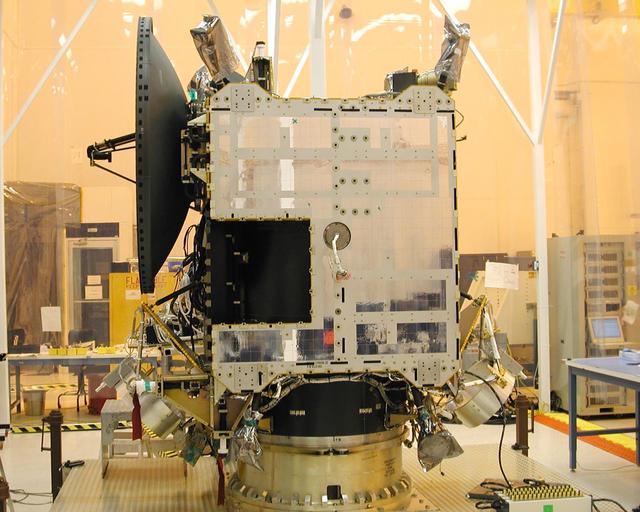
NASA Dawn spacecraft being assembled.
Dawn Spacecraft Being Assembled
NASA Dawn spacecraft after installation of high gain antenna.
Dawn Spacecraft After Installation of High Gain Antenna
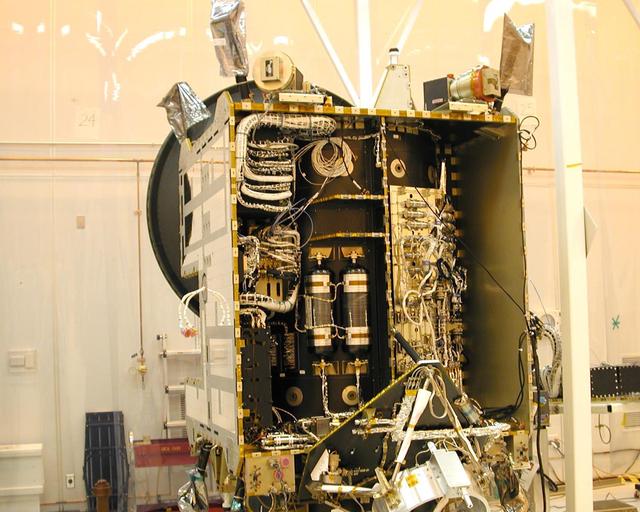
Exposed interior of NASA Dawn spacecraft showing ion propulsion system xenon feed system.
Exposed Interior of Dawn Spacecraft
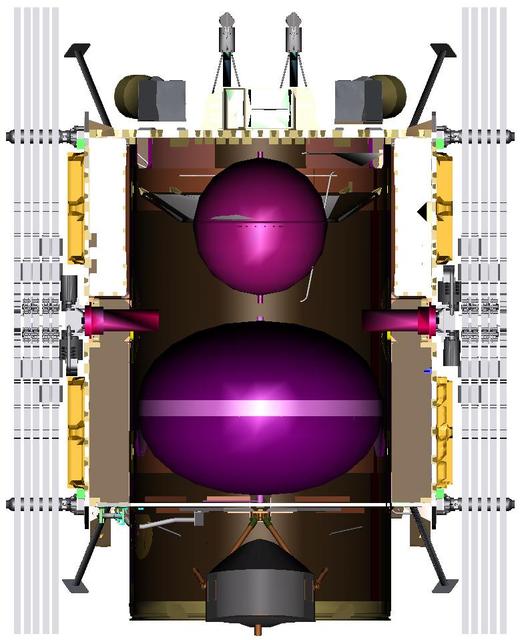
This illustration shows an inside view of the NASA Dawn spacecraft.
Illustration of Dawn Spacecraft Inside View
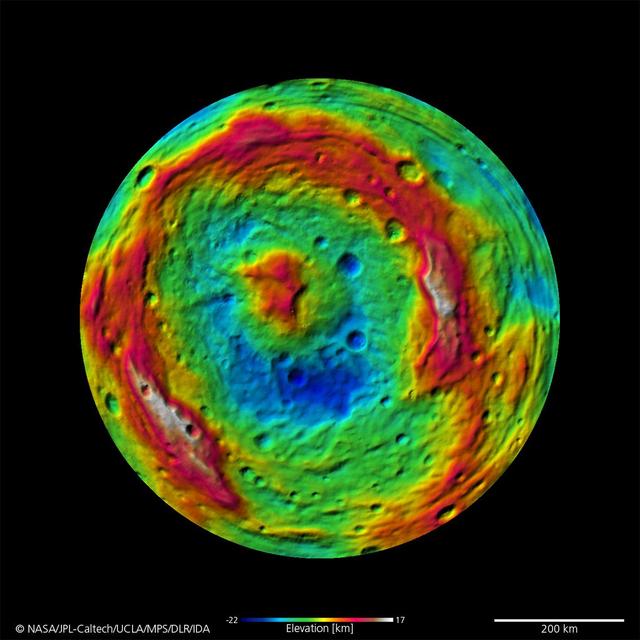
The terrain model of Vesta southern hemisphere shows a big circular structure, its rim rising above the interior of the structure. This false-color map of the giant asteroid Vesta is from the framing camera aboard NASA Dawn spacecraft.
A False-Color Topography of Vesta South Pole
This image shows infrared views of two craters,Bellicia left and Arruntia right, at the giant asteroid Vesta that NASA Dawn mission has found to sport the mineral olivine.
Two Craters with Olivine
In this closest-yet view of Ceres, the brightest spots within a crater in the northern hemisphere are revealed to be composed of many smaller spots. This frame is from an animation of sequences taken by NASA Dawn spacecraft on May 4, 2015.…
Ceres RC3 Animation
These images from NASA Dawn spacecraft show part of asteroid Vesta equatorial region, which contains many different sizes of impact craters.
Topography of Vesta Equatorial Region II
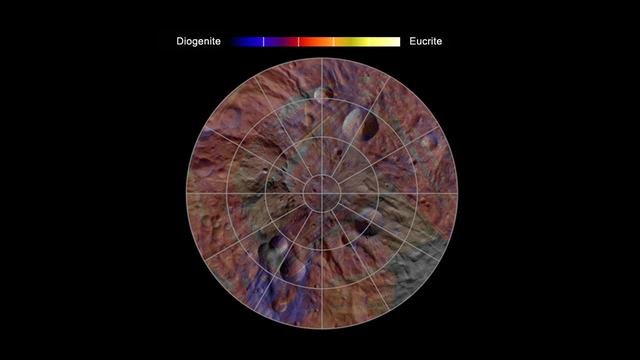
This image, made from data obtained by NASA Dawn spacecraft, shows the mineral distribution in the southern hemisphere of the giant asteroid Vesta.
Mineral Diversity at Vesta South Pole
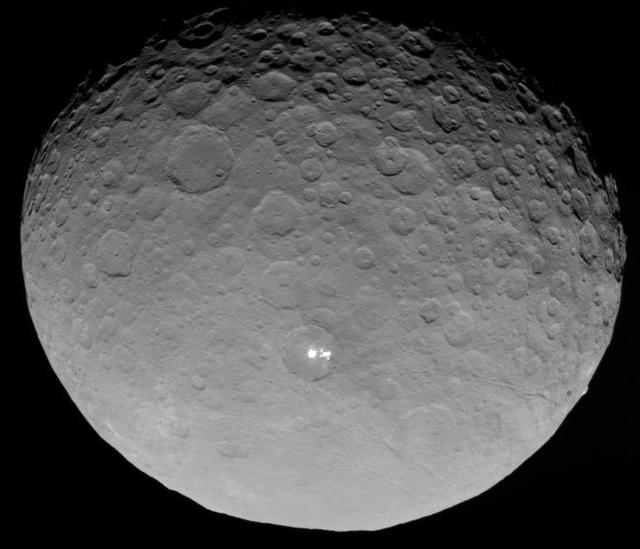
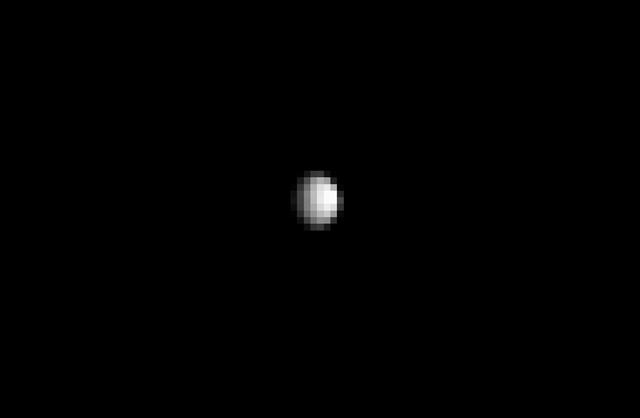
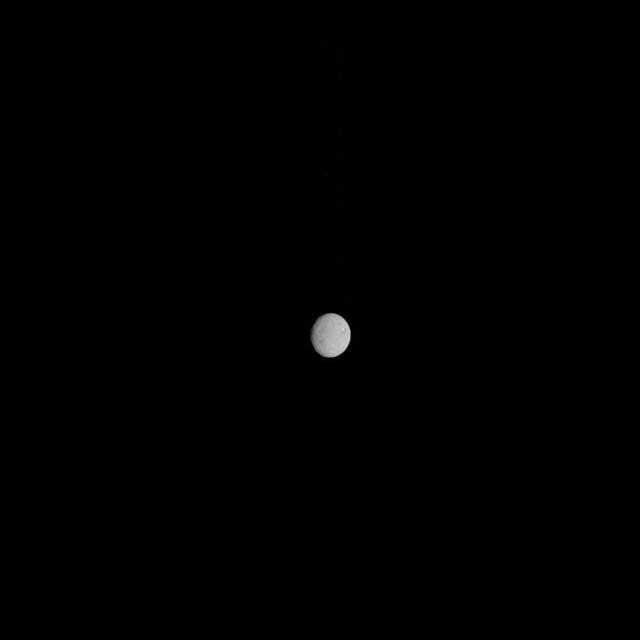
From about three times the distance from Earth to the moon, NASA's Dawn spacecraft spies its final destination -- the dwarf planet Ceres.  The resolution of this image does not yet exceed the best views of Ceres, which were obtained by the…
Dawn Gateway View of Ceres
NASA Dawn spacecraft solar array wings are folded to fit inside nose section of protective fairing.
Dawn Spacecraft Ready for Payload Fairing Installation
CAPE CANAVERAL, Fla. -- The sun rises over NASA's Kennedy Space Center in Florida. In view at right are the Rotation/Processing Building and the mobile launcher, one of the key elements of ground support equipment being upgraded by the Grou…
KSC-2014-2692
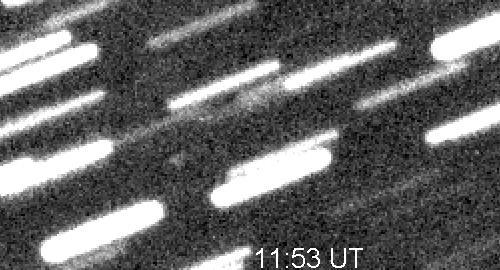
This image is a blinking of two 14-minute exposures of NASA Dawn spacecraft from 600,000 miles from Earth. Bill Dillon, a regular advanced user of Sierra Stars Observatory.
Image of Dawn Spacecraft 600,000 miles From Earth
CAPE CANAVERAL, Fla. -- The sun rises over the Press Site in Launch Complex 39 at NASA's Kennedy Space Center in Florida. Launch Pad 39A is in the background at left.      On this particular morning, preparations are underway for a launch f…
KSC-2014-2691
CAPE CANAVERAL, Fla. -- A balmy May morning finds surfers out to catch the waves at Playalinda Beach in Florida. The beach borders NASA's Kennedy Space Center to the north.    On this particular morning, preparations are underway for a laun…
KSC-2014-2698
Artist concept of the Dawn spacecraft with Vesta and Ceres.
Dawn Spacecraft with Vesta and Ceres Artist Concept
Artist concept of the Dawn spacecraft gathering spectral data from Vesta.
Dawn Spacecraft Gathering Spectral Data from Vesta Artist Concept
Workers secure the attachments of NASA Dawn spacecraft onto the upper stage booster.
Dawn Spacecraft Secured
This illustration shows the core structure with ion propulsion system installed aboard NASA Dawn spacecraft.
Illustration of Dawn Spacecraft Core Structure
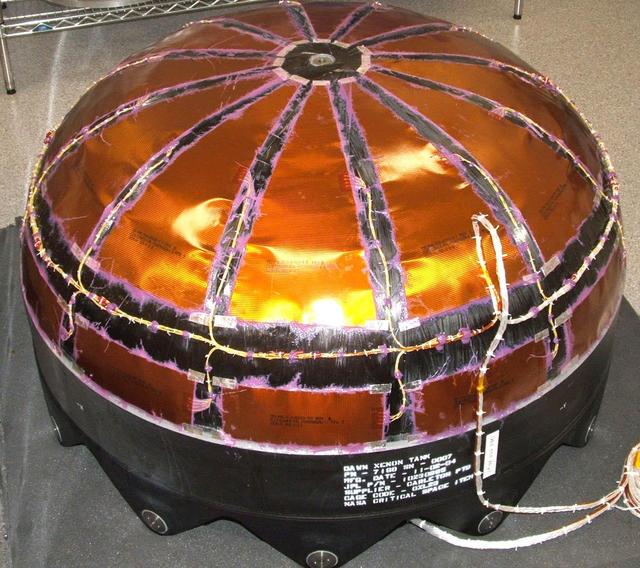
This image shows NASA Dawn spacecraft Xenon tank -- composite overwrapped  pressure vessel with titanium liner.
Dawn Spacecraft Xenon Tank
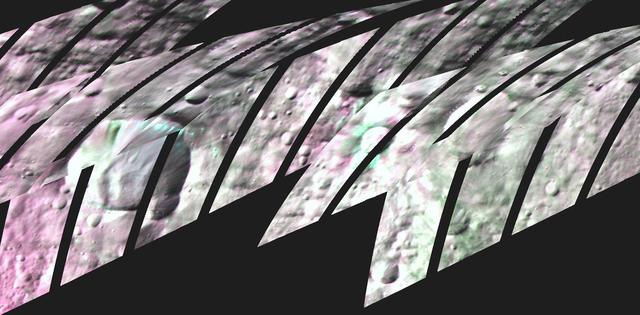
These composite images from NASA Dawn spacecraft show three views of a terrain with ridges and grooves near Aquilia crater in the southern hemisphere of the giant asteroid Vesta.
Aquilia Area in Color
In this image, dwarf planet Ceres is seen on Feb. 4, 2015, from a distance of about 90,000 miles 145,000 kilometers. NASA Dawn spacecraft is due to arrive at Ceres on March 6, 2015.  http://photojournal.jpl.nasa.gov/catalog/PIA19181
Ceres, Seen by Dawn on Approach
This view of Ceres from NASA Dawn spacecraft, taken on May 29, 2016, features a small crater at upper left that adjoins Messor Crater.  Dawn took this image on May 29, 2016, from its low-altitude mapping orbit, at a distance of about 240 mi…
Dawn LAMO Image 162
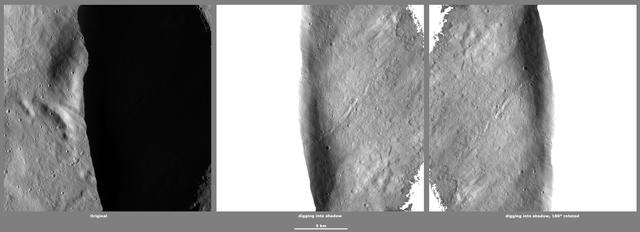
These images from NASA Dawn spacecraft, located in asteroid Vesta Oppia quadrangle, in Vesta northern hemisphere, demonstrate a special analytical technique, which results in shadowed areas of Vesta surface becoming illuminated.
Revealing Shadows 2
This image from NASA Dawn spacecraft of asteroid Vesta shows Laelia crater and Sextilia crater, located in Vesta Sextilia quadrangle, in Vesta southern hemisphere.
Laelia and Sextilia Craters
This image obtained by the framing camera on NASA Dawn spacecraft shows the south pole of the giant asteroid Vesta. Scientists are discussing whether the circular structure that covers most of this image originated by a collision with anoth…
Viewing the South Pole of Vesta