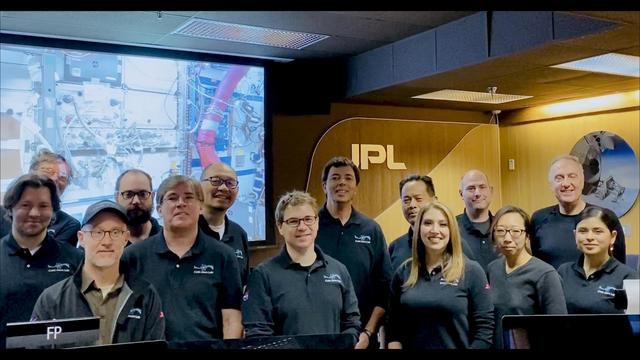
Members of the Cold Atom Laboratory team at NASA Jet Propulsion Laboratory are seen here with their ground-based testbed, which can reliably create a Bose-Einstein condensate.
Cold Atom Laboratory Team Displays Ground-Based Testbed
Astronaut Christina Koch assists with a hardware upgrade for NASA's Cold Atom Lab aboard the International Space Station in January 2020.  https://photojournal.jpl.nasa.gov/catalog/PIA23862
Christina Koch Assists Upgrade for Cold Atom Lab
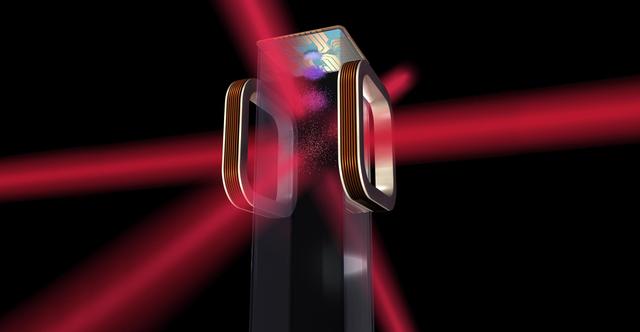
Artist concept of a magneto-optical trap and atom chip to be used by NASA Cold Atom Laboratory CAL aboard the International Space Station.
NASA Cold Atom Laboratory CAL Chip Artist Concept
Astronaut Ricky Arnold assists with the installation of NASA's Cold Atom Laboratory (CAL) on the International Space Station.  https://photojournal.jpl.nasa.gov/catalog/PIA22920
CAL Astronaut Installation
Summertime heat and humidity in the U.S. East Coast is on hold for a couple of days thanks to a cold front and that brought clouds, showers, thunderstorms, and some severe weather on July 16 to the coast.   The National Oceanic and Atmosphe…
Cold Front Cools the Eastern U.S.
Engineers complete a test of the Ground Operations Demo Unit for liquid hydrogen at NASA's Kennedy Space Center in Florida. The system includes a 33,000 gallon liquid hydrogen storage tank with an internal cold heat exchanger supplied from…
Liquid Hydrogen Fill
Pumping helium into the first BARREL balloon to launch from Halley Research Satation.    Credit: NASA  ---  In Antarctica in January, 2013 – the summer at the South Pole – scientists launched 20 balloons up into the air to study an enduring…
NASA’s BARREL Mission Launches 20 Balloons
A BARREL balloon floats into the sky as it is partially filled. When fully inflated, each balloon is 90 feet in diameter and carries an instrument suite that weighs 50 pounds. This is small for an Antarctica balloon launch, which can have b…
NASA’s BARREL Mission Launches 20 Balloons
BARREL team members run under the payload as the balloon first takes flight at the SANAE IV research station in Antarctica.   Credit: NASA  ---  In Antarctica in January, 2013 – the summer at the South Pole – scientists launched 20 balloons…
NASA’s BARREL Mission Launches 20 Balloons
Arctic air has surged into the U.S. pushing into the Southeastern states and dropping high temperatures there into the 20s with colder wind chills.   This NOAA GOES-East satellite image was captured at 1445 UTC/9:45 a.m. EST on January 28,…
Satellite Shows an "Arctic Blanket" Over the U.S. [detail]
A long, strong, cold front draped over the eastern U.S. is marking a stark change from record-warmth to very cold temperatures. This NOAA GOES-East satellite image from December 23 at 1515 UTC/10:15 a.m. EST shows a powerful cold front cove…
Long, Strong Eastern U.S. Cold Front Brings Changes
<b>View detail image here: <a href="http://bit.ly/1bvJlaN" rel="nofollow">bit.ly/1bvJlaN</a></b>  Arctic air has surged into the U.S. pushing into the Southeastern states and dropping high temperatures there into the 20s with colder wind ch…
Satellite Shows an "Arctic Blanket" Over the U.S.
Some of the BARREL balloon launches took place at the South African National Antarctic Expedition Research base, called SANAE IV, the others at Halley Research Station. This balloon is taking flight at SANAE IV.    Credit: NASA  ---  In Ant…
NASA’s BARREL Mission Launches 20 Balloons
An iceberg as viewed from the bow of the RRS Ernest Shackleton a few days before the BARREL team reached Halley Research Station in Antarctica. This research vessel regularly carries scientists and supplies to Halley.  Credit: NASA  ---  In…
NASA’s BARREL Mission Launches 20 Balloons
The Polar Vortex is a whirling and persistent large area of low pressure, found typically over both north and south poles. The northern Polar Vortex is pushing southward over western Wisconsin/eastern Minnesota today, Monday, January 6, 201…
Satellite Image Shows Entry of the Polar Vortex into the Northern U.S.
Climate researchers from the National Center for Atmospheric Research (NCAR) and several universities install and perform functional checkouts of a variety of sensitive atmospheric instruments on NASA's DC-8 airborne laboratory prior to beg…
Eric Apel and Alan Hills of the National Center for Atmospheric Research install the Trace Organic Gas Analyzer's sensor probe on the exterior of NASA's DC-8
Climate researchers from the National Center for Atmospheric Research (NCAR) and several universities install and perform functional checkouts of a variety of sensitive atmospheric instruments on NASA's DC-8 airborne laboratory prior to beg…
Eric Scheuer of the University of New Hampshire installs the Soluble Acidic Gases and Aerosol instrument in NASA's DC-8 for the ARCTAS mission
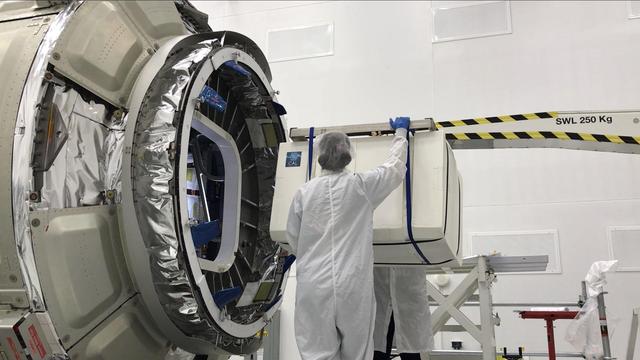
The Cold Atom Laboratory (CAL), packaged in a protective layer, is loaded onto a Northrop Grumman (formerly Orbital ATK) Cygnus spacecraft for its trip to the International Space Station. The facility launched in May 2018 from NASA's Wallop…
CAL Boards Cygnus
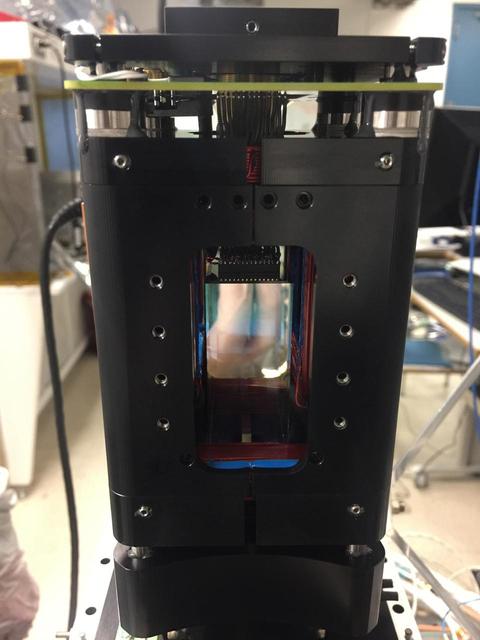
Shown here, the "physics package" inside NASA's Cold Atom Lab, where ultracold clouds of atoms called Bose-Einstein condensates are produced.   https://photojournal.jpl.nasa.gov/catalog/PIA22563
Cold Atom Lab Physics Package
Astronaut Christina Koch unloads new hardware for the Cold Atom Lab aboard the International Space Station the week of Dec. 9, 2020.  The Cold Atom Laboratory launched to the space station on May 21, 2018, aboard a Northrop Grumman (formerl…
CAL Unloading on ISS
Though North America is a full month into astronomical spring, the Great Lakes have been slow to give up on winter. As of April 22, 2014, the Great Lakes were 33.9 percent ice covered. The lake they call Superior dominated the pack. In the…
Persistent Ice on Lake Superior
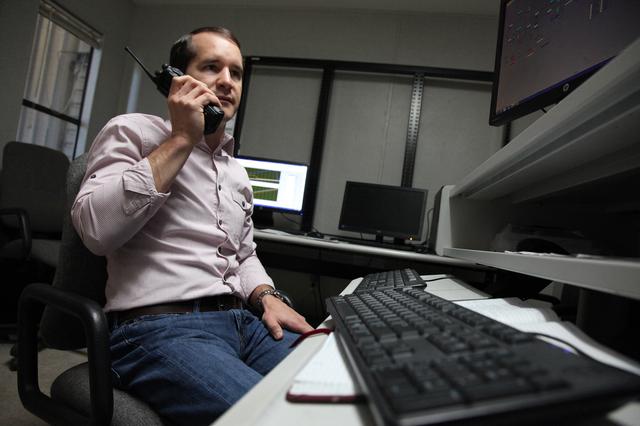
Inside a control building at NASA's Kennedy Space Center in Florida, Adam Swinger, cryogenic research engineer in the Exploration Research and Technology Directorate, communicates with team members during a test of the Ground Operations Dem…
Liquid Hydrogen Fill
An emperor penguin waddles away on Christmas morning in Antarctica. On Christmas day, the BARREL team visited a penguin colony.    Credit: NASA  ---  In Antarctica in January, 2013 – the summer at the South Pole – scientists launched 20 bal…
NASA’s BARREL Mission Launches 20 Balloons
The BARREL cargo on its four-hour journey from the supply ship to the research station.   Credit: NASA  ---  In Antarctica in January, 2013 – the summer at the South Pole – scientists launched 20 balloons up into the air to study an endurin…
NASA’s BARREL Mission Launches 20 Balloons
Arrival of the RRS Ernest Shackleton near Halley Research Station in Antarctica. The Shackleton is the regular resupply ship for the station and it also brought in some of the BARREL team scientists. The long tether is for the ship’s moorin…
NASA’s BARREL Mission Launches 20 Balloons
Liftoff!  A balloon begins to rise over the brand new Halley VI Research Station, which had its grand opening in February 2013.   Credit: NASA  ---  In Antarctica in January, 2013 – the summer at the South Pole – scientists launched 20 ball…
NASA’s BARREL Mission Launches 20 Balloons
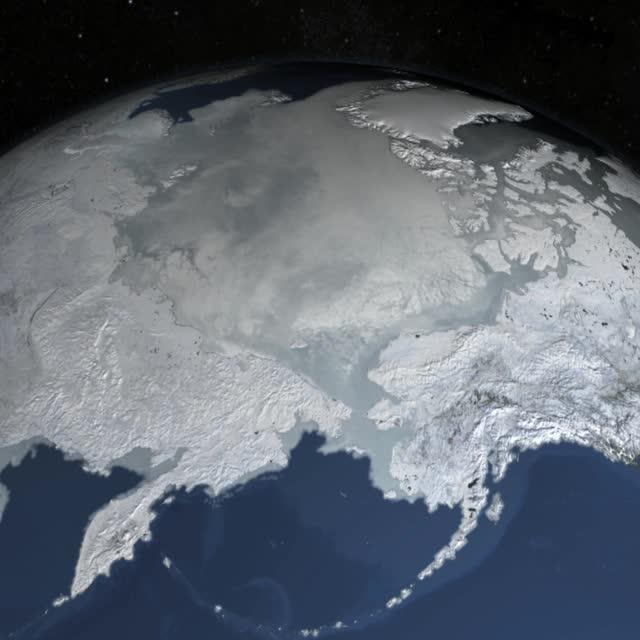
The sea ice cap of the Arctic appeared to reach its annual maximum winter extent on February 25, according to data from the NASA-supported National Snow and Ice Data Center (NSIDC) at the University of Colorado, Boulder. At 5.61 million squ…
Arctic Sea Ice Sets New Record Winter Low
Watching a BARREL balloon – and the instruments dangling below – float up over the SANAE IV research base in Antarctica.    Credit: NASA  ---  In Antarctica in January, 2013 – the summer at the South Pole – scientists launched 20 balloons u…
NASA’s BARREL Mission Launches 20 Balloons
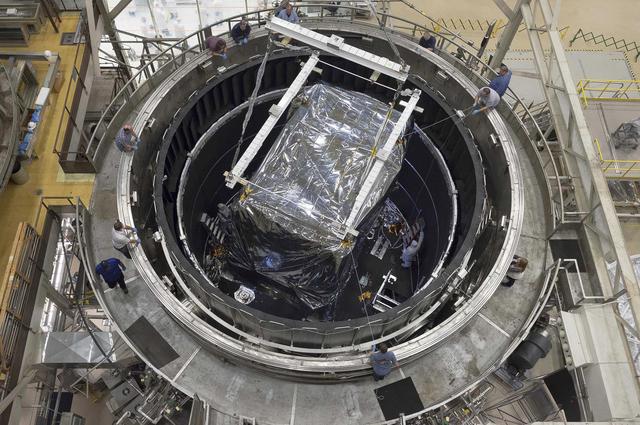
At NASA's James Webb Space Telescope's final destination in space, one million miles away from Earth, it will operate at incredibly cold temperatures of -387 degrees Fahrenheit, or 40 degrees Kelvin. This is 260 degrees Fahrenheit colder th…
NASA's James Webb Space Telescope Science Instruments Begin Final Super Cold Test at Goddard
NASA's DC-8 flying laboratory lifts off the runway at Air Force Plant 42 in Palmdale, Calif., on its first flight in the ARCTAS atmospheric science mission.
NASA's DC-8 flying laboratory lifts off the runway at Air Force Plant 42 in Palmdale, Calif., on its first flight in the ARCTAS atmospheric science mission
Climate researchers from the National Center for Atmospheric Research (NCAR) and several universities install and perform functional checkouts of a variety of sensitive atmospheric instruments on NASA's DC-8 airborne laboratory prior to beg…
Lee Mauldin inspects the National Center for Atmospheric Research CIMS instrument probe on the exterior of NASA's DC-8 flying lab prior to the ARCTAS mission
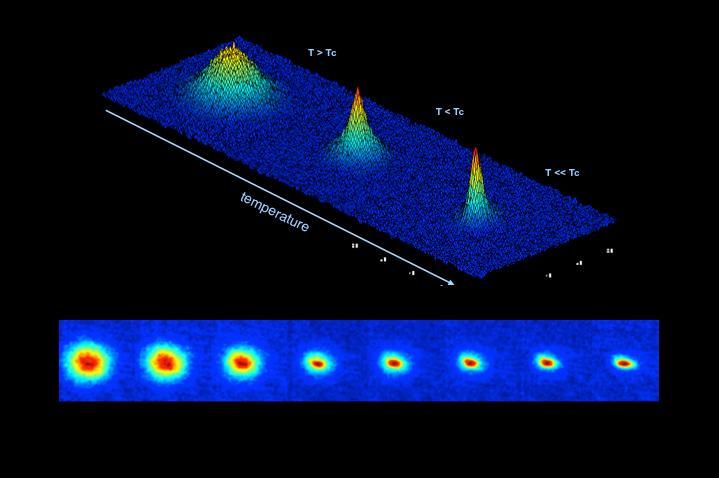
This sequence of false-color images shows the formation of a Bose-Einstein condensate in the Cold Atom Laboratory prototype at NASA Jet Propulsion Laboratory as the temperature gets progressively closer to absolute zero.
Forming a Bose-Einstein Condensate
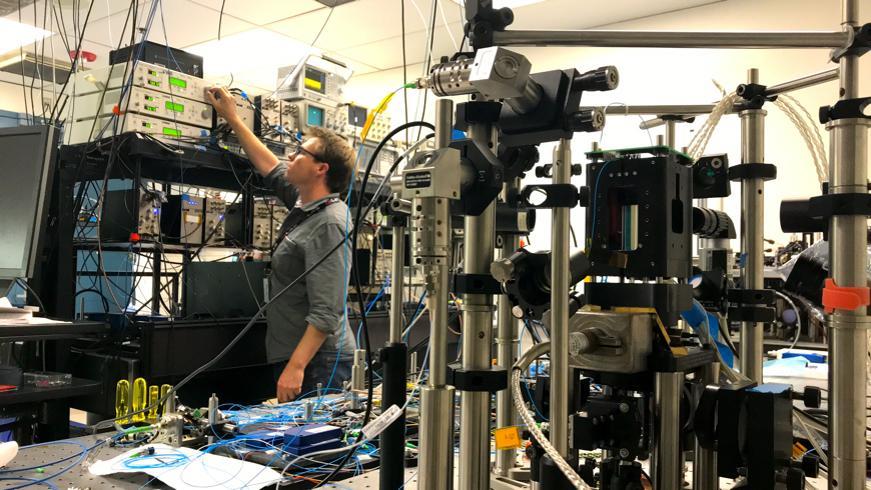
Cold Atom Laboratory (CAL) physicist David Aveline works in the CAL test bed, which is a replica of the CAL facility that stays on Earth. Scientists use the test bed to run tests and understand what is happening inside CAL while it is opera…
CAL Ground Test Bed
In January 2020, members of the Cold Atom Lab operations team assisted remotely in a hardware upgrade to Cold Atom Lab while the facility was still aboard the International Space Station.  https://photojournal.jpl.nasa.gov/catalog/PIA23861
Cold Atom Lab Operations Team
The Cold Atom Laboratory consists of two standardized containers that will be installed on the International Space Station. The larger container is called a "quad locker," and the smaller container is called a "single locker." The quad lock…
CAL Before Flight
NOAA's GOES-East satellite captured an image of a powerful cold front that triggered flash flood watches and warnings along the U.S. East Coast on May 16. NOAA's National Weather Service noted flash flooding was possible from New England in…
Satellite Shows Powerful Cold Front Moving Off U.S. East Coast
Technicians with Praxair pressurize the hydrogen trailer before offloading liquid hydrogen during a test of the Ground Operations Demo Unit for liquid hydrogen at NASA's Kennedy Space Center in Florida. The system includes a 33,000 gallon l…
Liquid Hydrogen Fill
A crane lowers two BARREL balloon payloads onto the platform at Halley Research Station in Antarctica.    Credit: NASA  ---  In Antarctica in January, 2013 – the summer at the South Pole – scientists launched 20 balloons up into the air to…
NASA’s BARREL Mission Launches 20 Balloons
The BARREL team at the SANAE IV research station celebrates their final launch in the Antarctica sun.    Credit: NASA  ---  In Antarctica in January, 2013 – the summer at the South Pole – scientists launched 20 balloons up into the air to s…
NASA’s BARREL Mission Launches 20 Balloons
A &quot;backdoor cold front&quot; is bringing April temperatures to the U.S. northeast and Mid-Atlantic today, May 29. The backdoor cold front brings relief to the Mid-Atlantic after temperatures in Washington, D.C. hit 92F on Tuesday, May…
A Satellite View of a Back-door Cold Front
Testing is crucial part of NASA's success on Earth and in space. So, as the actual flight components of NASA's James Webb Space Telescope come together, engineers are testing the non-flight equipment to ensure that tests on the real Webb te…
NASA's Webb "Pathfinder Telescope" Successfully Completes First Super-Cold Optical Test
As icy cold Canadian air settled over the eastern two-thirds of the U.S. bringing snow and bitter cold, NOAA's GOES-East satellite captured this infrared view of what looks like a frozen blanket over the region.  NOAA's GOES-East satellite…
Satellite View of the U.S. Wrapped in a Frozen Blanket
NOAA's GOES-East satellite provided a look at the frigid eastern two-thirds of the U.S. on Jan. 7, 2015, that shows a blanket of northern snow, lake-effect snow from the Great Lakes and clouds behind the Arctic cold front.   A visible pictu…
Satellite Picture Shows the Snow-covered U.S. Deep Freeze
NASA's Terra satellite captured an image of the snow-covered eastern U.S. that looks like the states have been sitting in a freezer. In addition to the snow cover, Arctic and Siberian air masses have settled in over the Eastern U.S. trigger…
NASA Snaps Picture of Eastern U.S. in a Record-Breaking "Freezer"
At NASA's James Webb Space Telescope's final destination in space, one million miles away from Earth, it will operate at incredibly cold temperatures of -387 degrees Fahrenheit, or 40 degrees Kelvin. This is 260 degrees Fahrenheit colder th…
NASA's James Webb Space Telescope Science Instruments Begin Final Super Cold Test at Goddard
The NASA SR-71A successfully completed its first cold flow flight as part of the NASA/Rocketdyne/Lockheed Martin Linear Aerospike SR-71 Experiment (LASRE) at NASA's Dryden Flight Research Center, Edwards, California on March 4, 1998. During…
Linear Aerospike SR-71 Experiment (LASRE) dumps water after first in-flight cold flow test
Climate researchers from the National Center for Atmospheric Research (NCAR) and several universities install and perform functional checkouts of a variety of sensitive atmospheric instruments on NASA's DC-8 airborne laboratory prior to beg…
Jingqiu Moa and Xinrong Ren check out Pennsylvania State University's Airborne Tropospheric Hydrogen Oxides Sensor instrument during the ARCTAS mission upload