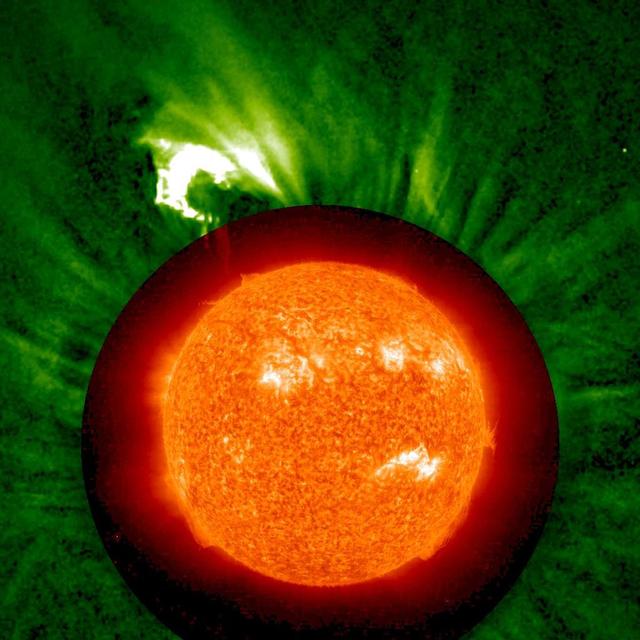
NASA image acquired May 30, 2011 On May 30, 2011, the STEREO Behind spacecraft caught a prominence in the process of leaping from one part of the Sun to another. In this movie: <a href="http://www.flickr.com/photos/gsfc/5804079351">www.fli…
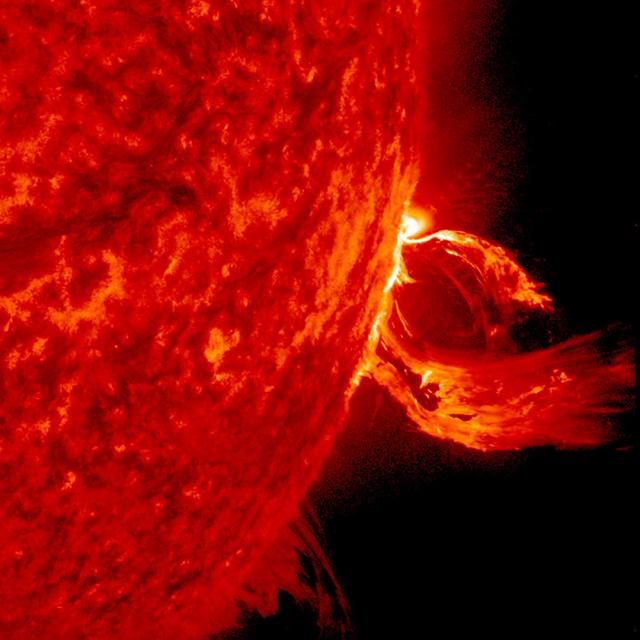
A substantial coronal mass ejection, or CME, blew out from side of the Sun, giving us a great view of the event in profile (June 17-18, 2015). NASA's Solar Dynamics Observatory caught the action in the 304 Angstrom wavelength of extreme ult…
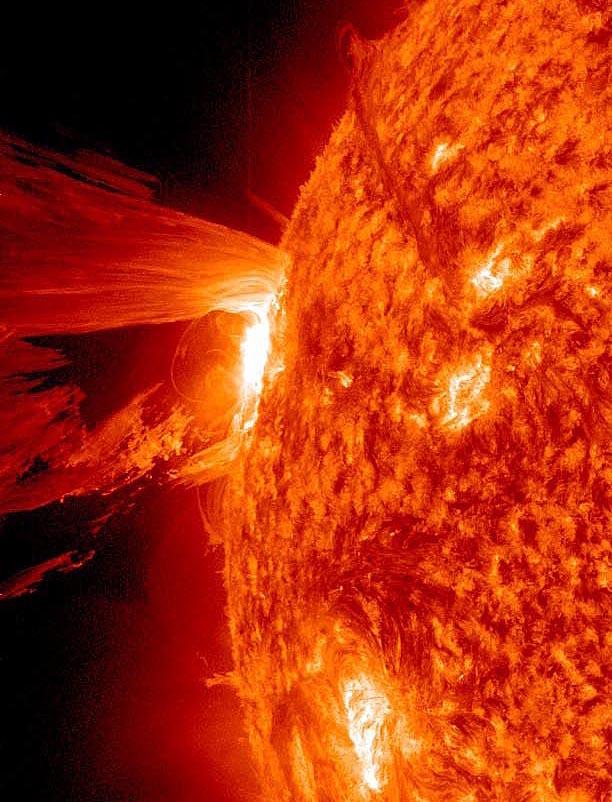
A beautiful prominence eruption shot off the east limb (left side) of the sun on Monday, April 16, 2012. Such eruptions are often associated with solar flares, and in this case an M1 class (medium-sized) flare did occur at the same time, th…
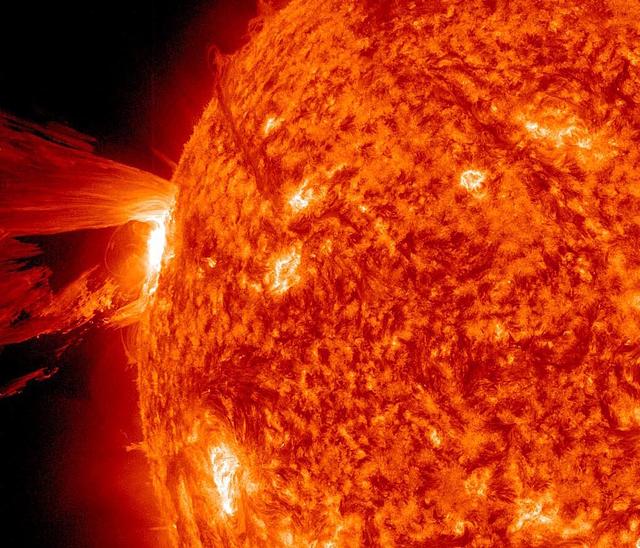
A beautiful prominence eruption shot off the east limb (left side) of the sun on Monday, April 16, 2012. Such eruptions are often associated with solar flares, and in this case an M1 class (medium-sized) flare did occur at the same time, th…

The Sun blew out a coronal mass ejection along with part of a solar filament over a three-hour period (Feb. 24, 2015). While some of the strands fell back into the Sun, a substantial part raced into space in a bright cloud of particles (as…
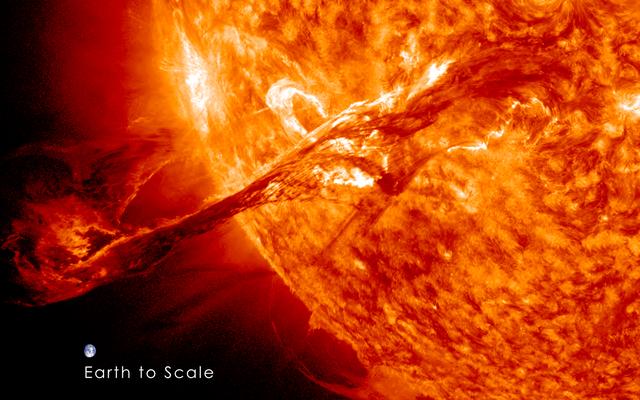
On August 31, 2012 a long filament of solar material that had been hovering in the sun's atmosphere, the corona, erupted out into space at 4:36 p.m. EDT. The coronal mass ejection, or CME, traveled at over 900 miles per second. The CME did…
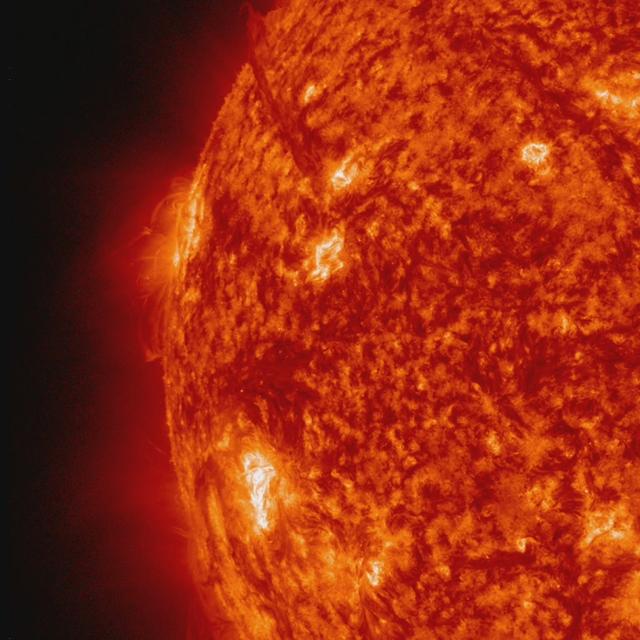
A beautiful prominence eruption shot off the east limb (left side) of the sun on Monday, April 16, 2012. Such eruptions are often associated with solar flares, and in this case an M1 class (medium-sized) flare did occur at the same time, th…

NASA’s Solar Dynamics Observatory caught this image of an eruption on the side of the sun on June 18, 2015. The eruption ultimately escaped the sun, growing into a substantial coronal mass ejection, or CME — a giant cloud of solar material…
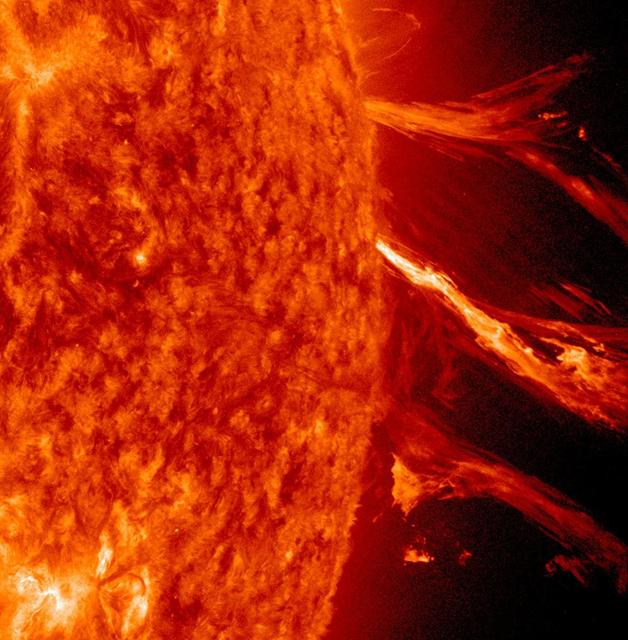
NASA image captured January 2, 2012 To view a video of this event go here: <a href="http://www.flickr.com/photos/gsfc/6648724193">www.flickr.com/photos/gsfc/6648724193</a> The Sun erupted with a good-sized solar flare and a coronal mass e…

STEREO witnessed the March 5, 2013, CME from the side of the sun – Earth is far to the left of this picture. While the SOHO images show a halo CME, STEREO shows the CME clearly moving away from Earth. Credit: NASA/STEREO --- CME WEEK: W…
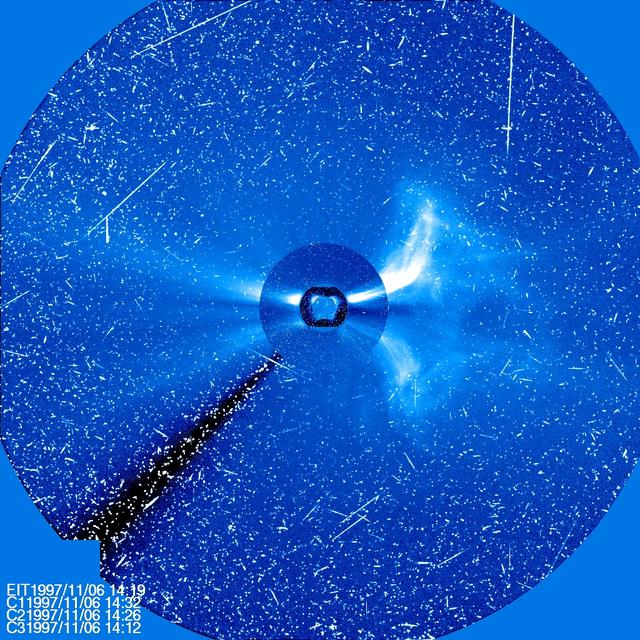
Four different instruments on SOHO show a large CME on Nov. 6, 1997. The sun is at the center, with three coronagraph images of different sizes around it. The streaks of white light are from protons hitting the SOHO cameras producing a snow…
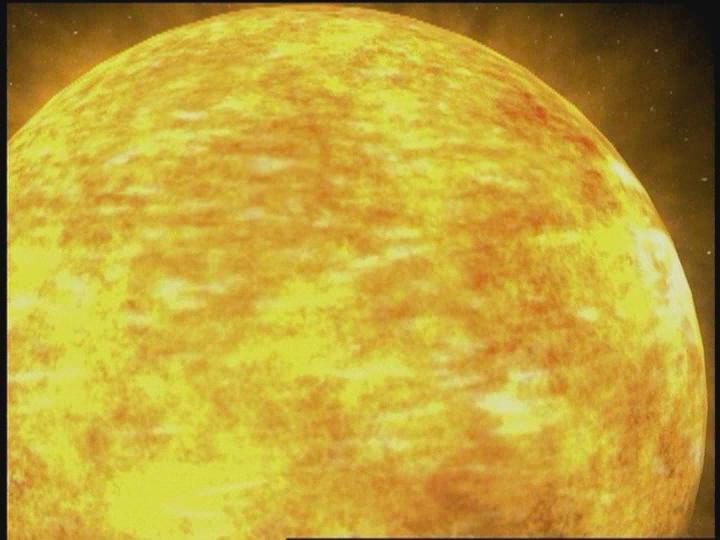
Animation of a CME leaving the Sun, slamming into our magnetosphere. Credit: NASA/GSFC/SOHO/ESA Sound: Juan Carlos Garcia To learn more go to the SOHO website: <a href="http://sohowww.nascom.nasa.gov/home.html" rel="nofollow">sohowww.nas…

NASA image release Sept 9, 2010 Just as sunspot 1105 was turning away from Earth on Sept. 8, the active region erupted, producing a solar flare and a fantastic prominence. The eruption also hurled a bright coronal mass ejection into space.…
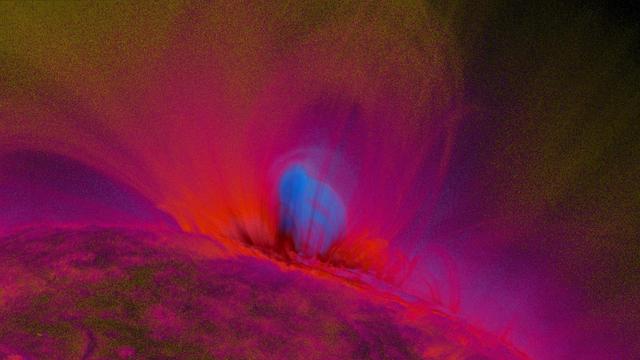
Caption: This is an image of magnetic loops on the sun, captured by NASA's Solar Dynamics Observatory (SDO). It has been processed to highlight the edges of each loop to make the structure more clear. A series of loops such as this is kno…
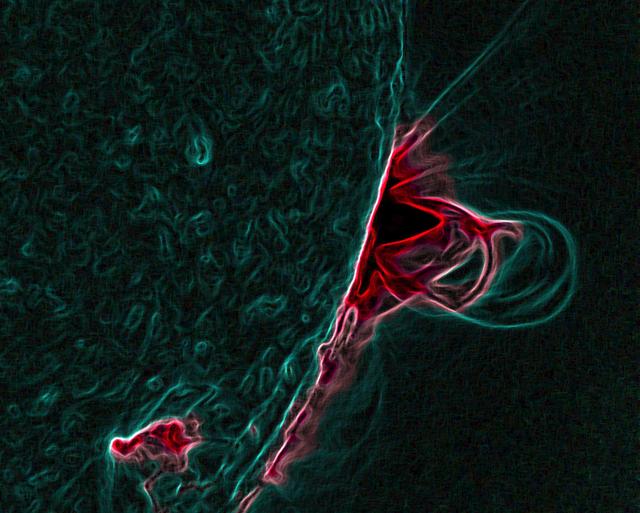
Caption: This is an image of magnetic loops on the sun, captured by NASA's Solar Dynamics Observatory on July 18, 2012. It has been processed to highlight the edges of each loop to make the structure more clear. A series of loops such as…
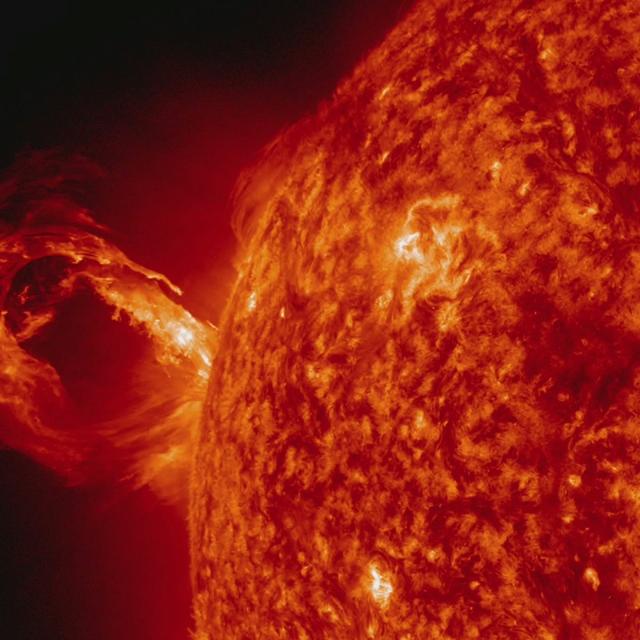
A corona mass ejection (CME) erupted from just around the edge of the sun on May 1, 2013, in a gigantic rolling wave. CMEs can shoot over a billion tons of particles into space at over a million miles per hour. This CME occurred on the sun’…
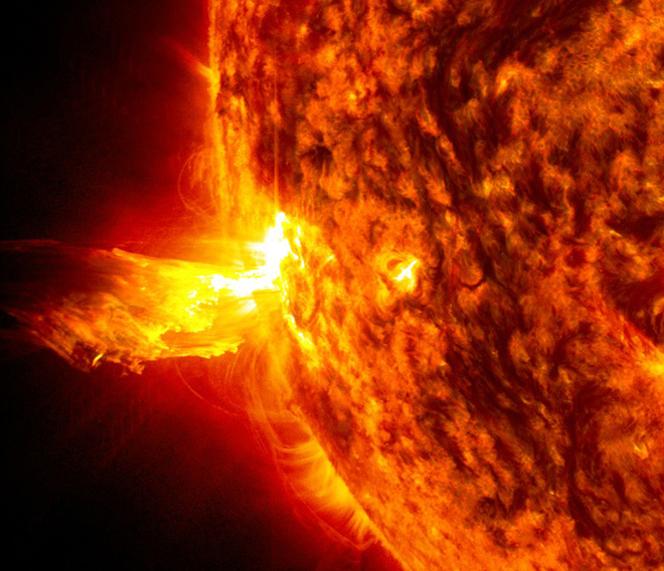
Caption: This image from June 20, 2013, at 11:15 p.m. EDT shows the bright light of a solar flare on the left side of the sun and an eruption of solar material shooting through the sun’s atmosphere, called a prominence eruption. Shortly the…

Nearly a dozen coronal mass ejections in less than four days (May 3-6, 2012) may serve as a reminder that the Sun is approaching its period of maximum activity, expected to peak next year. STEREO (Ahead) from its position over 100 degrees a…
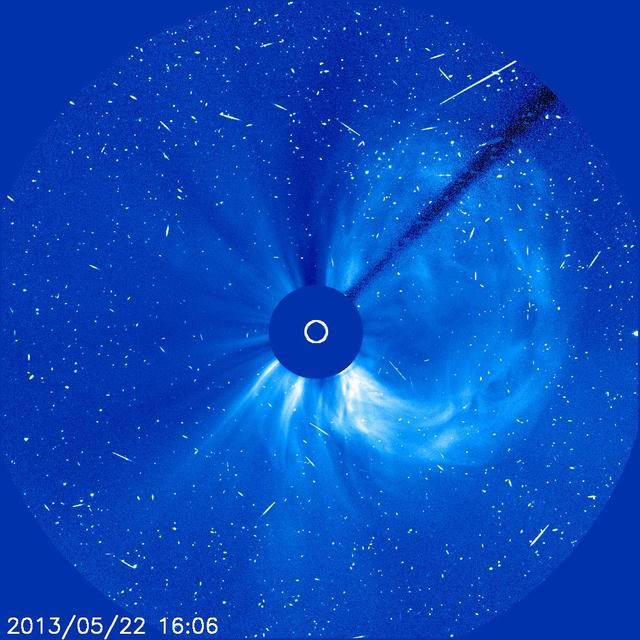
A solar flare associated with the coronal mass ejection seen in this image generated a flurry of fast-moving solar protons. As each one hits the CCD camera on SOHO, it produces a brief snow-like speckle in the image. Credit: NASA/SOHO CM…
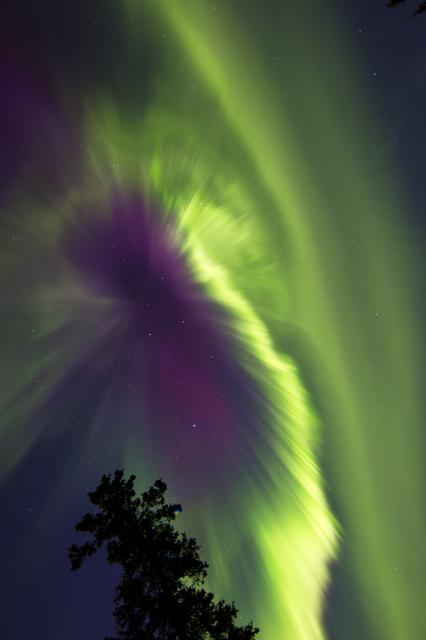
An aurora in Whitehorse Yukon Canada that appeared in the sky in the early hours of Oct. 1, 2012 due to the effects of a coronal mass ejection (CME) that erupted from the sun three days earlier. Image Courtesy of Joseph Bradley to read m…

A beautiful prominence eruption shot off the east limb (left side) of the sun on Monday, April 16, 2012. Such eruptions are often associated with solar flares, and in this case an M1 class (medium-sized) flare did occur at the same time, th…

An active region just about squarely facing Earth erupted with an X 1.6 flare (largest class) as well as a coronal mass ejection (CME) on Sept. 10-11, 2014. This event featured both a long flare decay time and a storm of electrically charge…

This LASCO C2 image, taken 8 January 2002, shows a widely spreading coronal mass ejection (CME) as it blasts more than a billion tons of matter out into space at millions of kilometers per hour. The C2 image was turned 90 degrees so that t…

NASA image release August 6, 2010 On August 1, 2010, almost the entire Earth-facing side of the sun erupted in a tumult of activity. This image from the Solar Dynamics Observatory of the news-making solar event on August 1 shows the C3-cla…
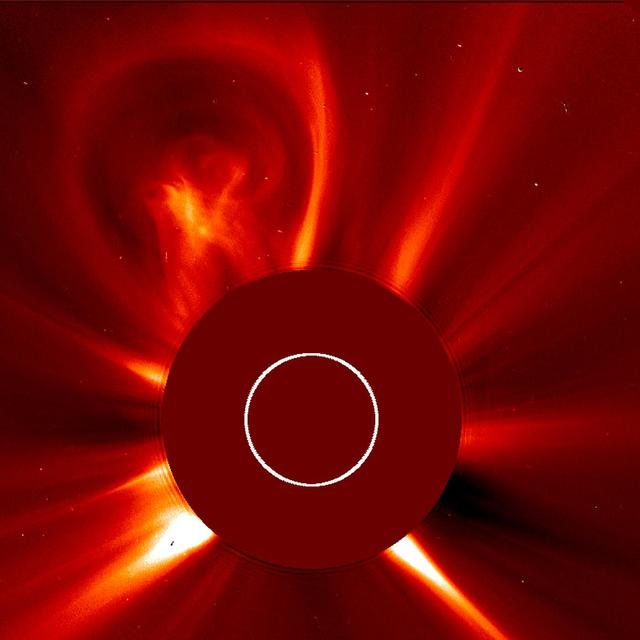
The first of a series of coronal mass ejections (CMEs) over three days (Aug. 20-22), this bulbous CME certainly resembles a light bulb. It has the thin outer edge and a bright, glowing core at its center. CMEs are often bulbous, but it has…
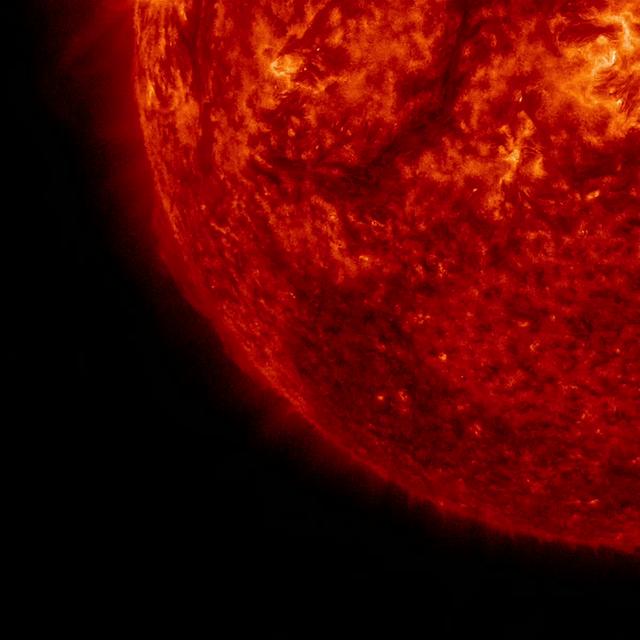
The Sun blew out a coronal mass ejection along with part of a solar filament over a three-hour period (Feb. 24, 2015). While some of the strands fell back into the Sun, a substantial part raced into space in a bright cloud of particles (as…
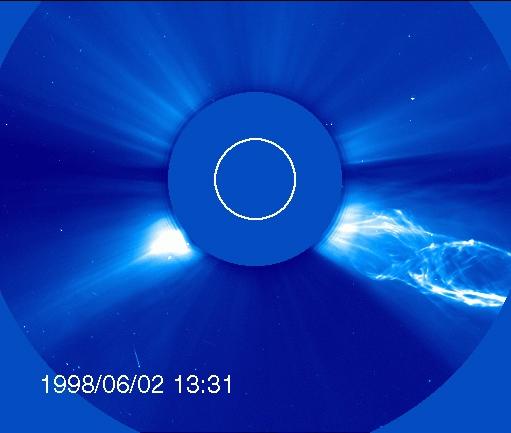
OHO captured this image of a CME from the side – but the structure looks much different from the classic light bulb CME. The filament of material bursting off the sun has a helical magnetic structure, which is unraveling like a piece of yar…

The Sun blew out a coronal mass ejection along with part of a solar filament over a three-hour period (Feb. 24, 2015). While some of the strands fell back into the Sun, a substantial part raced into space in a bright cloud of particles (as…

Watch a video from this event here: <a href="https://www.flickr.com/photos/gsfc/14118958800/">www.flickr.com/photos/gsfc/14118958800/</a> A coronal mass ejection, or CME, surged off the side of the sun on May 9, 2014, and NASA's newest sol…

Watch a video from this event here: <a href="https://www.flickr.com/photos/gsfc/14118958800/">www.flickr.com/photos/gsfc/14118958800/</a> A coronal mass ejection, or CME, surged off the side of the sun on May 9, 2014, and NASA's newest sol…

This movie from NASA’s STEREO spacecraft's Heliospheric Imager shows Comet ISON, Mercury, Comet Encke and Earth over a five-day period from Nov. 20 to Nov. 25, 2013. The sun sits right of the field of view of this camera. Comet ISON, which…
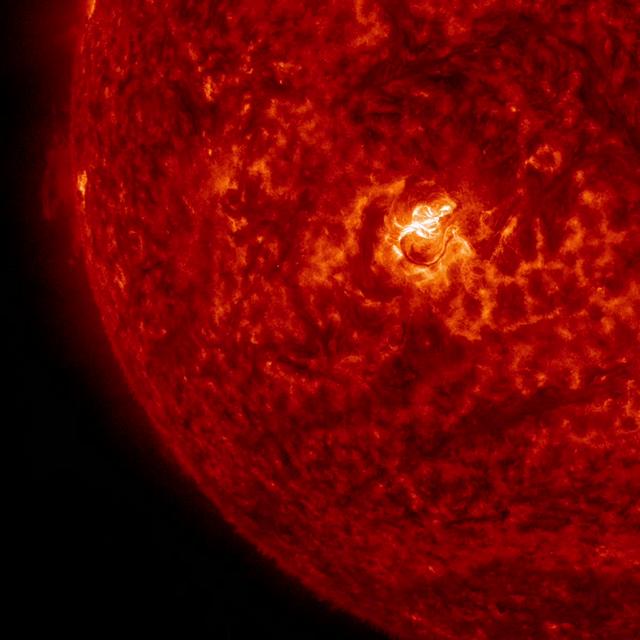
The sun emitted a significant solar flare, peaking at 12:22 p.m. EDT on March 11, 2015. NASA’s Solar Dynamics Observatory, which watches the sun constantly, captured an image of the event. Solar flares are powerful bursts of radiation. Harm…

Caption: This image from June 20, 2013, at 11:15 p.m. EDT shows the bright light of a solar flare on the left side of the sun and an eruption of solar material shooting through the sun’s atmosphere, called a prominence eruption. Shortly the…

A giant cloud appears to expand outward from the sun in all directions in this image from Sept. 28, 2012, which is called a halo CME. This kind of image occurs when a CME moves toward Earth – as here – or directly away from it. Credit: ES…
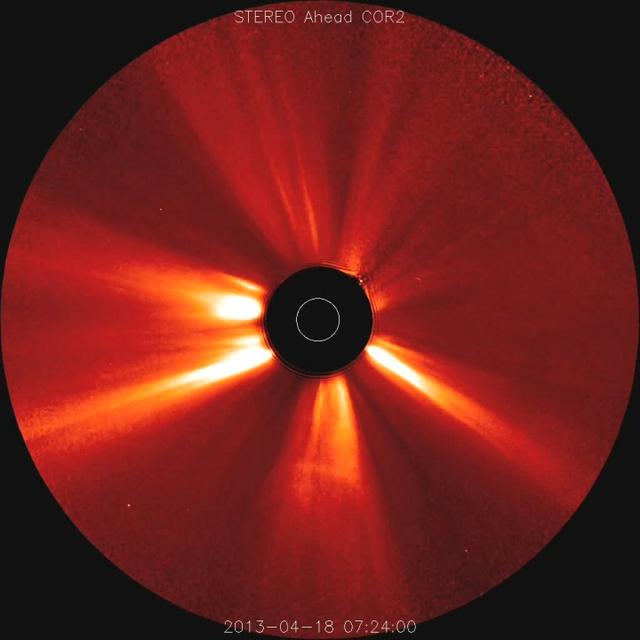
Coronal mass ejections were popping out from the Sun at a pace of two per day on average (Apr. 18-23, 2013). We counted ten CMEs for the five days, but some of the eruptions were complex and difficult to differentiate from one another. Almo…
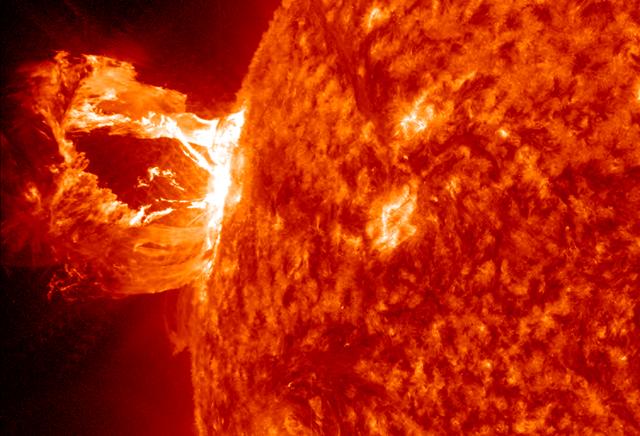
A beautiful prominence eruption shot off the east limb (left side) of the sun on Monday, April 16, 2012. Such eruptions are often associated with solar flares, and in this case an M1 class (medium-sized) flare did occur at the same time, th…
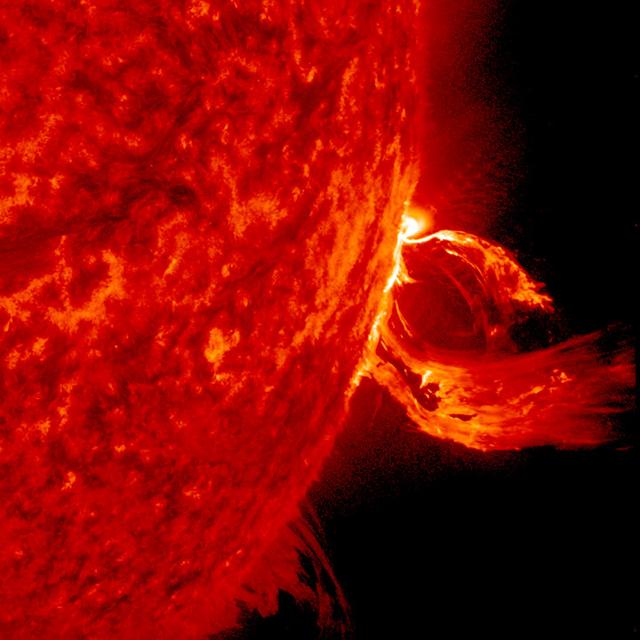
A substantial coronal mass ejection, or CME, blew out from side of the Sun, giving us a great view of the event in profile (June 17-18, 2015). NASA's Solar Dynamics Observatory caught the action in the 304 Angstrom wavelength of extreme ult…
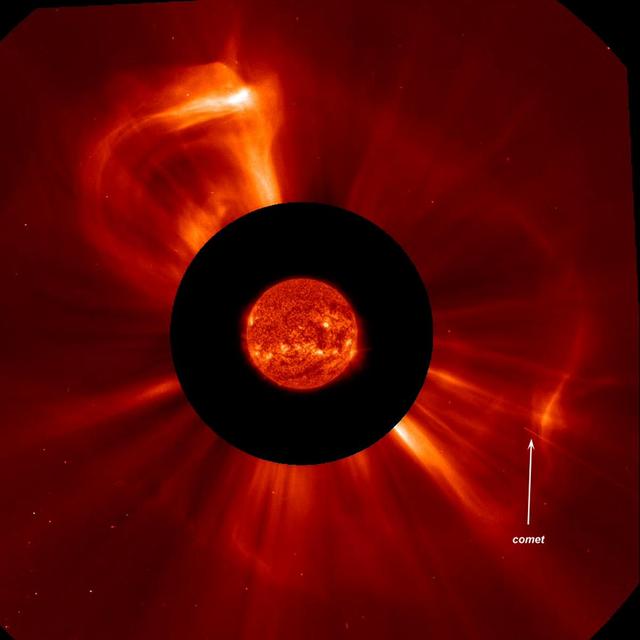
A small comet was streaking towards the Sun when the Sun blew out a "halo" coronal mass ejection (CME) Aug. 19-20, 2013). The CME originated from the far side of the Sun and did not have any interaction with the comet. The comet,…

Solar Flare Extremely energetic objects permeate the universe. But close to home, the sun produces its own dazzling lightshow, producing the largest explosions in our solar system and driving powerful solar storms.. When solar activity cont…

On August 31, 2012 a long filament of solar material that had been hovering in the sun's atmosphere, the corona, erupted out into space at 4:36 p.m. EDT. The coronal mass ejection, or CME, traveled at over 900 miles per second. The CME did…

A coronal mass ejection (CME) erupted from just around the edge of the sun on May 1, 2013, in a gigantic rolling wave. CMEs can shoot over a billion tons of particles into space at over a million miles per hour. This CME occurred on the sun…
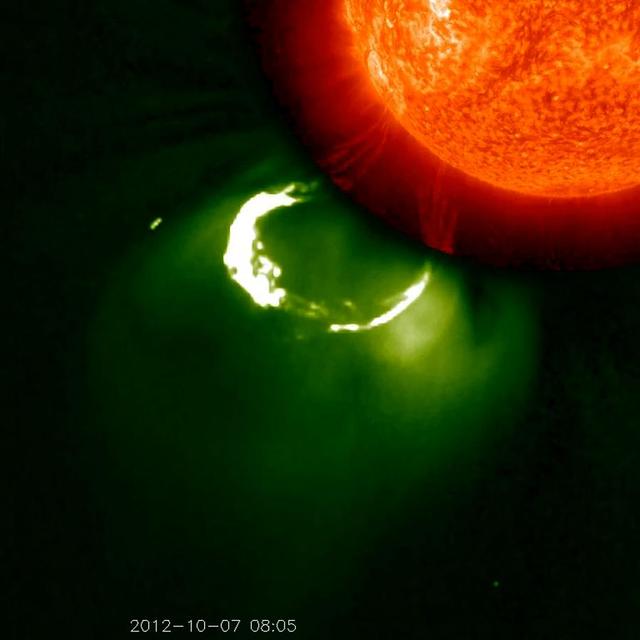
This CME image from Oct. 7, 2012, captured by two instruments on STEREO, shows the eruption from its base out into space. The base of the CME near the sun is seen in extreme ultraviolet light emitted directly from the solar material; the gr…
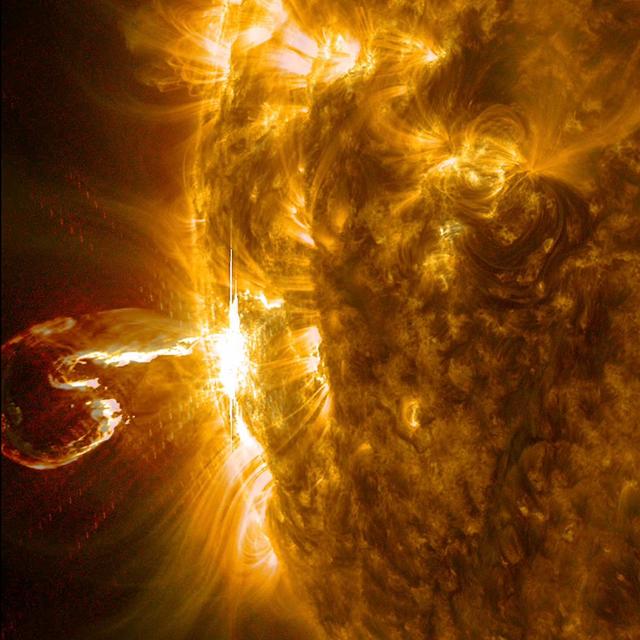
An active region at the edge of the Sun blew out an X4 flare (one of the largest of the solar cycle) and a coronal mass ejection on Feb. 25, 2014. The still image of the ejected plasma (taken at 00:45 UT) shows it curled like a shrimp, but…
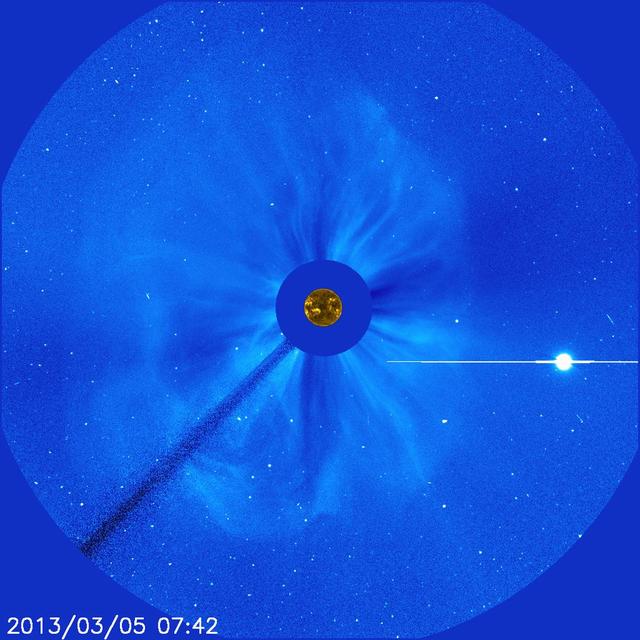
There's no way to tell from this SOHO image whether the halo CME on March 5, 2013, originated from the front or far of the sun. But the STEREO spacecraft were watching the sun from the sides and showed it was from the far side. The bright p…

Watch a video from this event here: <a href="https://www.flickr.com/photos/gsfc/14118958800/">www.flickr.com/photos/gsfc/14118958800/</a> A coronal mass ejection, or CME, surged off the side of the sun on May 9, 2014, and NASA's newest sol…
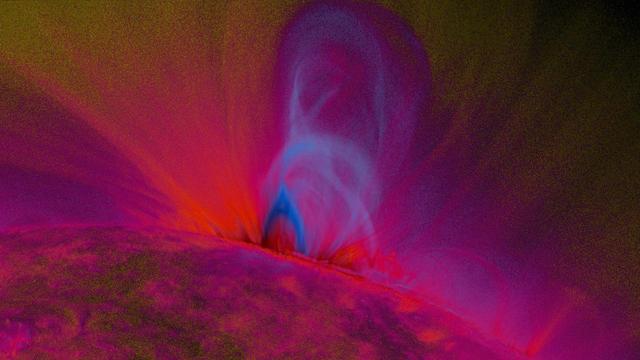
Caption: This is an image of magnetic loops on the sun, captured by NASA's Solar Dynamics Observatory (SDO). It has been processed to highlight the edges of each loop to make the structure more clear. A series of loops such as this is kno…
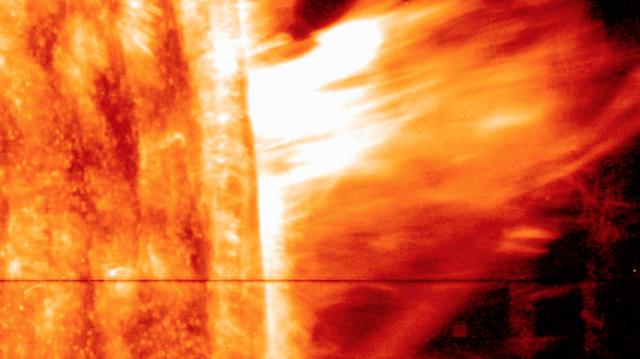
Watch a video from this event here: <a href="https://www.flickr.com/photos/gsfc/14118958800/">www.flickr.com/photos/gsfc/14118958800/</a> A coronal mass ejection, or CME, surged off the side of the sun on May 9, 2014, and NASA's newest sol…
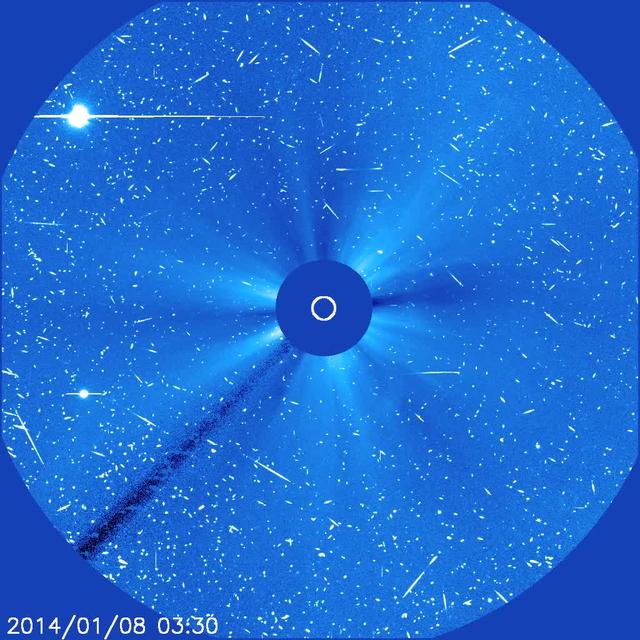
A solar magnetic active region containing the largest sunspot group of the last 10 years unleashed a large (X1.2) flare when it was facing right towards Earth. The flare was associated with a bright coronal mass ejection that emerges from…