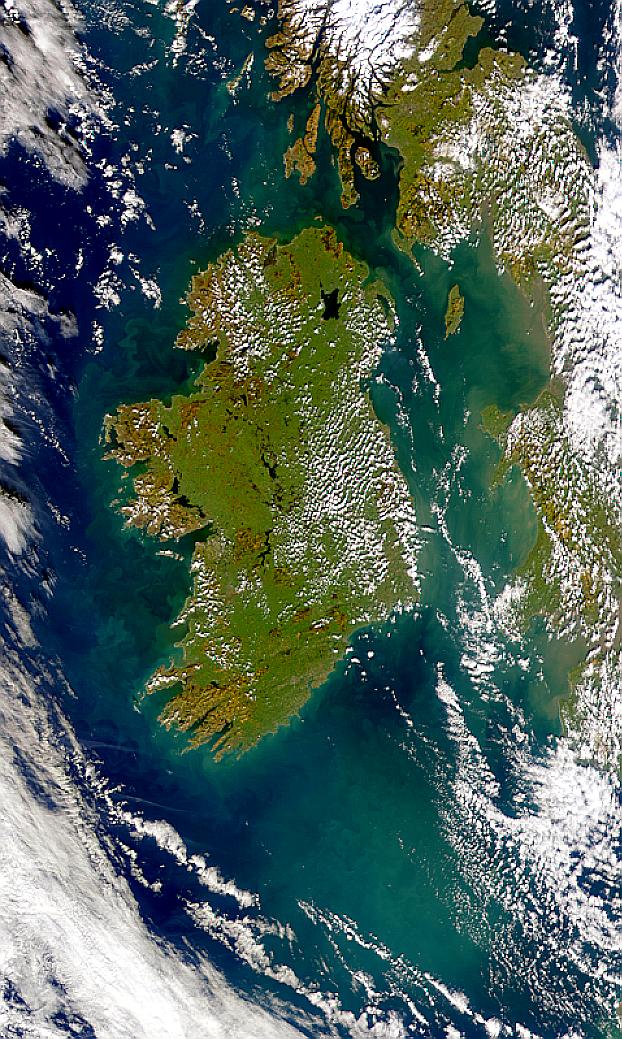
Visualization Date 2000-02-19  Possible coccolithophore blooms are visible in this SeaWiFS image of Ireland.   Sensor OrbView-2/SeaWiFS   Credit Provided by the SeaWiFS Project, NASA/Goddard Space Flight Center, and ORBIMAGE   For more info…
Blooms around Ireland
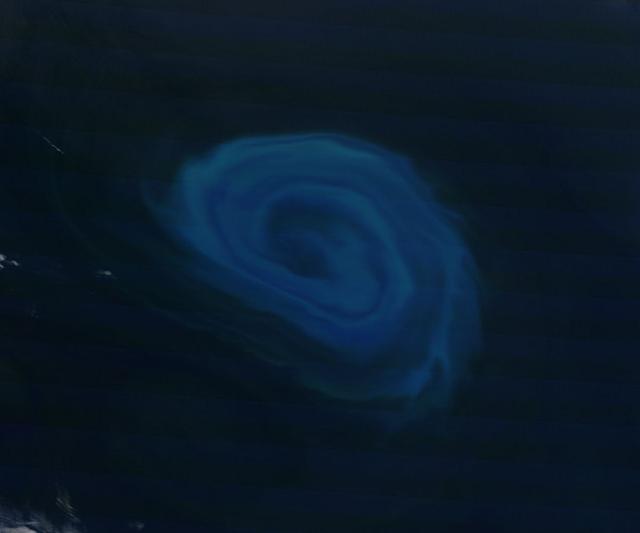
NASA image acquired December 26, 2011  Off the coast of South Africa, near where the South Atlantic meets the Southern Indian Ocean, a massive summer phytoplankton bloom colored the waters with a swirl of turquoise, green and white in late…
Phytoplankton bloom off South Africa
NASA Glenn Research Pilot Jim Demers flies the T-34C Mentor aircraft. When NASA scientists study Great Lakes algal blooms, Demers is one of the pilots at the controls.
T-34C Mentor aircraft
NASA image acquired August 31, 2010  To see the full view of this image go to: <a href="http://www.flickr.com/photos/gsfc/4970549945">www.flickr.com/photos/gsfc/4970549945</a>  In this natural-color image from August 31, 2010, the ocean’s c…
Phytoplankton Bloom in the Barents Sea [Detail]
Aircraft mechanics reposition the Twin Otter after a research flight. The aircraft was used to gather data from Lake Erie for the Algae Bloom Project.
Twin Otter Aircraft
On July 10, 2011, Melinda Webster of University of Washington mapped the locations where measurements were collected during the 2011 ICESCAPE mission's fourth sea ice station in the Chukchi Sea.  The ICESCAPE mission, or &quot;Impacts of Cl…
Mapping an Ice Station
On July 6, 2011, the U.S. Coast Guard Cutter Healy parked in an ice floe for the 2011 ICESCAPE mission's third ice station in the Chukchi Sea.  The ICESCAPE mission, or &quot;Impacts of Climate on Ecosystems and Chemistry of the Arctic Paci…
Healy at 3rd Ice Station
Phytoplankton growth in the Bay of Biscay intensified in early May, 2013, painting the deep blue waters with huge swirls of jewel-tone colors that were brilliantly visible from space. The Moderate Resolution Imaging Spectroradiometer (MODIS…
Phytoplankton bloom in the Bay of Biscay
Springtime in the Bay of Biscay, off the coast of France, as in most places, is a season of abundant growth. On April 20, 2013, the Moderate Resolution Imaging Spectroradiometer (MODIS) aboard NASA’s Aqua satellite captured this true-color…
Phytoplankton bloom in the Bay of Biscay
View from a NASA aircraft, TG-14, over the Superbloom of wildflowers and poppies from the Antelope Valley in Southern California, Poppy Reserve and solar panels are in the background.
Rainy Winter Season Brings Abundance of Wildflowers and Poppies in Southern California’s Antelope Valley. Solar panels are in the background.
View from a NASA aircraft, TG-14, over the Superbloom of wildflowers and poppies from the Antelope Valley in Southern California and Poppy Reserve and solar panels in background
Rainy Winter Season Brings Abundance of Wildflowers and Poppies in Southern California’s Antelope Valley. The poppy is the state flower.
NASA’s T-34 aircraft flown from the agency’s Armstrong Flight Research Center aims the plane toward Southern California’s Antelope Valley Poppy Reserve flying over yellow wildflowers. The aircraft was flown from the agency’s Armstro…
NASA Aircraft flies over yellow wildflowers abundant due to rainy winter season. The T-34 aircraft was flown from the agency's Armstrong Flight Research Center.
Situated between the Black Sea and the Aegean Sea, the Sea of Marmara is full of a rich soup of nutrients and life and surrounded by a rich history of civilization. Like the Black Sea to its northeast, the Marmara has an unusual layered str…
Blooms in the Sea of Marmara
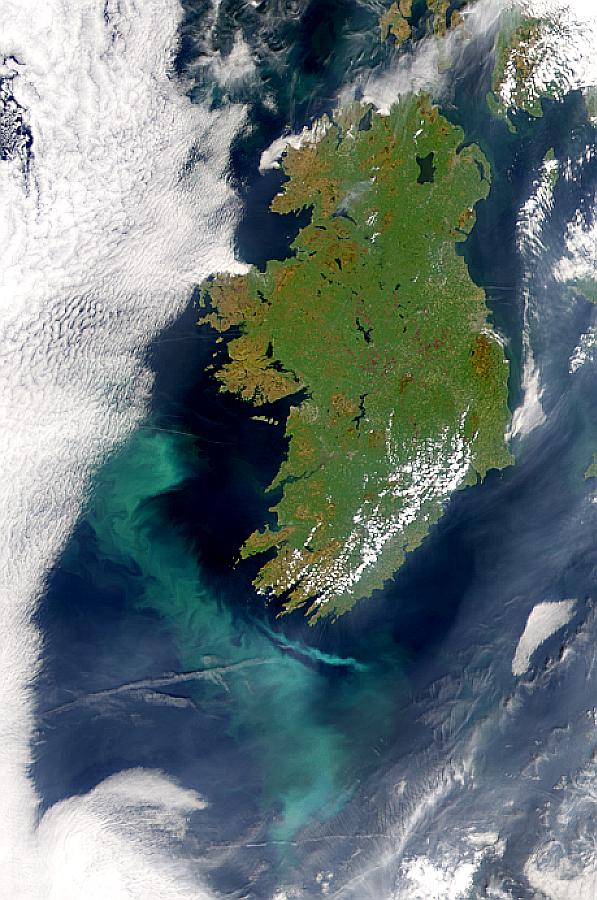
Visualization Date 2000-05-10  A possible coccolithophore bloom is seen to the southwest of Ireland in this SeaWiFS image.  Sensor OrbView-2/SeaWiFS  Credit Provided by the SeaWiFS Project, NASA/Goddard Space Flight Center, and ORBIMAGE   F…
Coccolithophore Bloom Southwest of Ireland
NASA image acquired August 31, 2010  To see a detail of this image go to: <a href="http://www.flickr.com/photos/gsfc/4971318856/">www.flickr.com/photos/gsfc/4971318856/</a>  In this natural-color image from August 31, 2010, the ocean’s canv…
Phytoplankton Bloom in the Barents Sea
NASA image acquired January 22, 2011  To see a detail of this image go to: <a href="http://www.flickr.com/photos/gsfc/5398237910">www.flickr.com/photos/gsfc/5398237910</a>  Every southern spring and summer, after the Sun has risen into its…
Bloom in the Ross Sea
NASA image acquired August 9, 2010  Phytoplankton are microscopic organisms that live in watery environments. When conditions are right, phytoplankton undergo explosive population growth, creating blooms visible from space. Such a bloom occ…
Phytoplankton bloom off Newfoundland
Phytoplankton bloom in the Great Australian Bight captured by the MODIS instrument on the Aqua satellite on December 30, 2013 at 6:05 UTC.  The Great Australian Bight is a large bight, or open bay, off the central and western portions of th…
Phytoplankton Bloom off Coast of Australia
On July 10, 2011, Don Perovich, of Cold Regions Research and Engineering Laboratory, maneuvered through melt ponds collecting optical data along the way to get a sense of the amount of sunlight reflected from sea ice and melt ponds in the C…
Maneuvering Melt Ponds
ICESCAPE scientists watched from the deck of the Healy as it cut a path through thick multiyear ice on July 6, 2011. Cutting the path is key for getting researchers to remote research sites amid the sea ice. Credit: NASA/Kathryn Hansen  The…
Cutting Through Multiyear Ice
On July 10, 2011, Jens Ehn of Scripps Institution of Oceanography (left), and Christie Wood of Clark University (right), scooped water from melt ponds on sea ice in the Chukchi Sea. The water was later analyzed from the Healy's onboard scie…
Sampling Melt Ponds
On July 12, 2011, crew from the U.S. Coast Guard Cutter Healy retrieved a canister dropped by parachute from a C-130, which brought supplies for some mid-mission fixes.  The ICESCAPE mission, or &quot;Impacts of Climate on Ecosystems and Ch…
Retrieving Dropped Supplies
The U.S. Coast Guard Cutter Healy encountered only small patches of sea ice in the Chukchi Sea during the final days collecting ocean data for the 2011 ICESCAPE mission.  The ICESCAPE mission, or &quot;Impacts of Climate on Ecosystems and C…
Sea Ice in the Chukchi Sea
On June 28, 2011, Holley Kelly, a teacher from Farragut High School, helped retrieve the CTD/Rosette ensemble from the Bering Strait, east of the Diomede Islands.  The ICESCAPE mission, or &quot;Impacts of Climate on Ecosystems and Chemistr…
Retrieving the CTD:Rosette
View from a NASA aircraft, TG-14, over the Superbloom of yellow wildflowers and orange poppies from the Antelope Valley in Southern California, Poppy Reserve and solar panels are in the background.
Rainy Winter Season Brings Abundance of Wildflowers and Poppies in Southern California’s Antelope Valley. The Poppy is the state flower.
View from a NASA aircraft, TG-14, over the Superbloom of wildflowers and poppies from the Antelope Valley in Southern California. The Poppy Reserve is in the foreground and solar panels are in the background.
Rainy Winter Season Brings Abundance of Wildflowers and Poppies in Southern California’s Antelope Valley showing Poppy Reserve and solar panels are in the background.
NASA’s T-34 aircraft flown from the agency’s Armstrong Flight Research Center heading toward Southern California’s Antelope Valley Poppy Reserve. The aircraft was flown from the agency’s Armstrong Flight Research Center.
NASA Aircraft heads to Southern California’s Poppy Reserve in the foreground. Rainy Season made the Antelope Valley colorful with poppies and wildflowers.
A massive phytoplankton bloom stained the waters of the Atlantic Ocean north of Iceland with brilliant jewel tones in late summer, 2014. The Moderate Resolution Imaging Spectroradiometer (MODIS) aboard NASA’s Aqua satellite captured this tr…
Phytoplankton bloom off Iceland
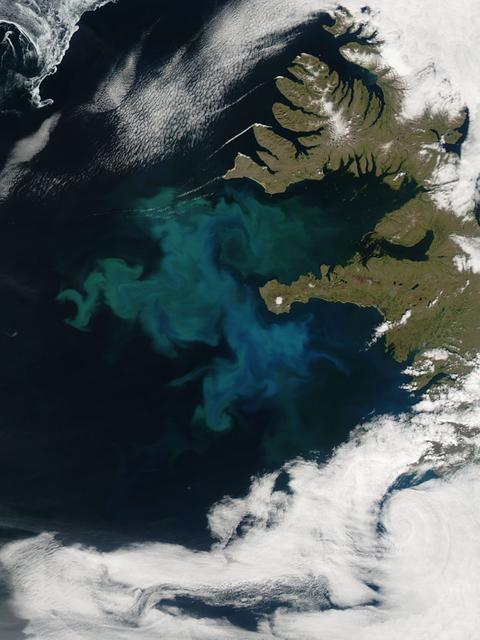
NASA image captured 06/24/2010 at 14 :30 UTC  Phytoplankton bloom off western Iceland  Satellite: Aqua  NASA/GSFC/Jeff Schmaltz/MODIS Land Rapid Response Team  To learn more about MODIS go to: <a href="http://rapidfire.sci.gsfc.nasa.gov/gal…
Phytoplankton bloom off western Iceland
NASA image acquired January 22, 2011  Every southern spring and summer, after the Sun has risen into its 24-hour circuit around the skies of Antarctica, the Ross Sea bursts with life. Floating, microscopic plants, known as phytoplankton, so…
Bloom in the Ross Sea
On July 23, 2013 the deep blue waters of the central North Atlantic Ocean provided a background for a spectacular bloom of phytoplankton. The Moderate Resolution Imaging Spectroradiometer (MODIS) captured this true-color image of the event…
Phytoplankton bloom in the North Atlantic Ocean
Scientists on board the U.S. Coast Guard Cutter Healy in the Beaufort Sea, northeast of Barrow, Alaska, finished collecting the mission¹s sea ice data and cruised south on July 20, 2011, through thin ice and ultimately into the open ocean.…
U.S. Coast Guard Cutter Healy in the Beaufort Sea
On July 18, 2011, Melinda Webster of University of Washington, calculated distances between sampling locations during the 2011 ICESCAPE mission's eighth sea ice station in the Arctic Ocean.  The ICESCAPE mission, or &quot;Impacts of Climate…
Ice Station Diagrams
Dr. Katherine Calvin listens to a harmful algal bloom presentation on June 17, 2024. NASA Glenn Research Center conducts aerial remote sensing of harmful algal blooms to warn water filtration plants to enact more stringent filtering when ha…
Tours with Chief Scientist and Senior Climate Advisor Dr. Kate Calvin
On July 13, 2011, Don Perovich, of Cold Regions Research and Engineering Laboratory, measured the light that drives photosynthesis at the sixth sea ice station of the 2011 ICESCAPE mission.  The ICESCAPE mission, or &quot;Impacts of Climate…
Measuring Light
On July 6, 2011, Don Perovich, of Cold Regions Research and Engineering Laboratory, used a spectroradiometer to measure the amount of sunlight reflected from the surface of ice and melt ponds in the Chukchi Sea.  The ICESCAPE mission, or &q…
Melt Pond Optics
NASA image acquired January 22, 2011  To view the full image go to: <a href="http://www.flickr.com/photos/gsfc/5397636843">www.flickr.com/photos/gsfc/5397636843</a>  Every southern spring and summer, after the Sun has risen into its 24-hour…
Bloom in the Ross Sea [detail]
On July 6, 2011, ICESCAPE scientists lowered optical instruments through a hole at the bottom of a melt pond, to study the waters underneath the ice.  The ICESCAPE mission, or &quot;Impacts of Climate on Ecosystems and Chemistry of the Arct…
ICESCAPE Optical Insturments
On July 19, 2011, Zachary Brown of Stanford University sipped freshwater from a melt pond on sea ice in the Arctic ocean.  The ICESCAPE mission, or &quot;Impacts of Climate on Ecosystems and Chemistry of the Arctic Pacific Environment,&quot…
Sipping From a Melt Pond
View from a NASA aircraft, TG-14, over the Superbloom of yellow wildflowers and orange poppies from the Antelope Valley in Southern California. The poppy is the state flower.
Rainy Winter Season Brings Abundance of Wildflowers and Poppies in Southern California’s Antelope Valley. The poppy is the state flower.
Image from a NASA aircraft, TG-14, over the Superbloom of wildflowers and poppies from the Antelope Valley in Southern California
Rainy Winter Season Brings Abundance of Wildflowers and Poppies in Southern California's Antelope Valley. The poppy is the state flower.
NASA's T-34 aircraft flown from the agency's Armstrong Flight Research Center aims the plane toward Southern California's Antelope Valley Poppy Reserve. The aircraft was flown from the agency's Armstrong Flight Research Center.
NASA Aircraft heads to Southern California's Poppy Reserve in the foreground. Rainy Season made the Antelope Valley colorful with poppies and wildflowers.
No more images