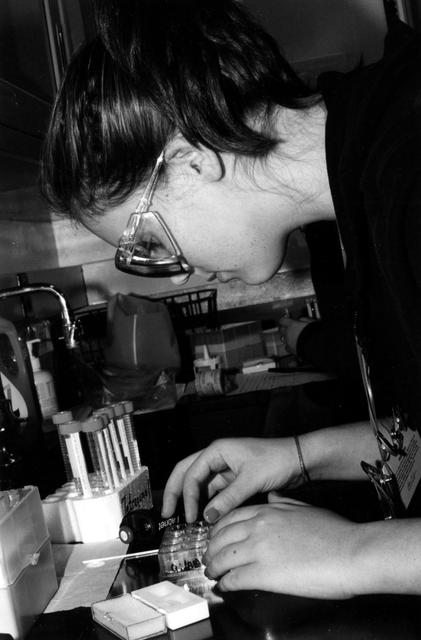
High school students screen crystals of various proteins that are part of the ground-based work that supports Alexander McPherson's protein crystal growth experiment. The students also prepared and stored samples in the Enhanced Gaseous Nit…
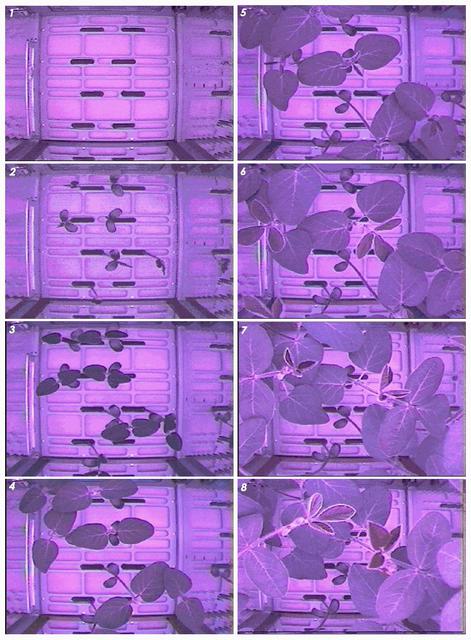
This composite image shows soybean plants growing in the Advanced Astroculture experiment aboard the International Space Station during June 11-July 2, 2002. DuPont is partnering with NASA and the Wisconsin Center for Space Automation and R…

Aboard the International Space Station (ISS), the Tissue Culture Module (TCM) is the stationary bioreactor vessel in which cell cultures grow. However, for the Cellular Biotechnology Operations Support Systems-Fluid Dynamics Investigation…

Aboard the International Space Station (ISS), the Tissue Culture Module (TCM) is the stationary bioreactor vessel in which cell cultures grow. However, for the Cellular Biotechnology Operations Support Systems-Fluid Dynamics Investigation…

Aboard the International Space Station (ISS), the Tissue Culture Module (TCM) is the stationary bioreactor vessel in which cell cultures grow. However, for the Cellular Biotechnology Operations Support Systems-Fluid Dynamics Investigation…

Aboard the International Space Station (ISS), the Tissue Culture Medium (TCM) is the bioreactor vessel in which cell cultures are grown. With its two syringe ports, it is much like a bag used to administer intravenous fluid, except it allo…
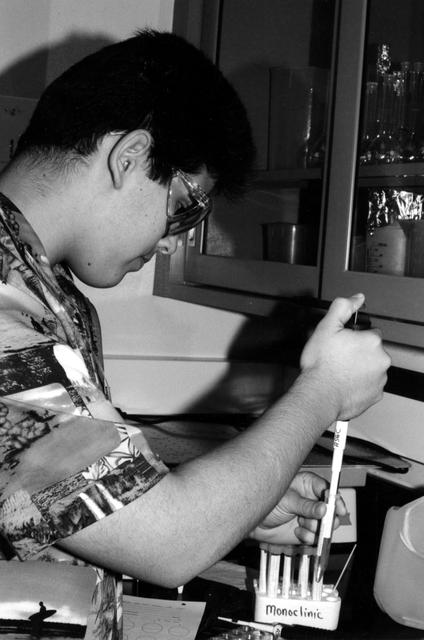
High school students screen crystals of various proteins that are part of the ground-based work that supports Alexander McPherson's protein crystal growth experiment. The students also prepared and stored samples in the Enhanced Gaseous Nit…

ProVision Technologies, a NASA research partnership center at Sternis Space Center in Mississippi, has developed a new hyperspectral imaging (HSI) system that is much smaller than the original large units used aboard remote sensing aircraft…
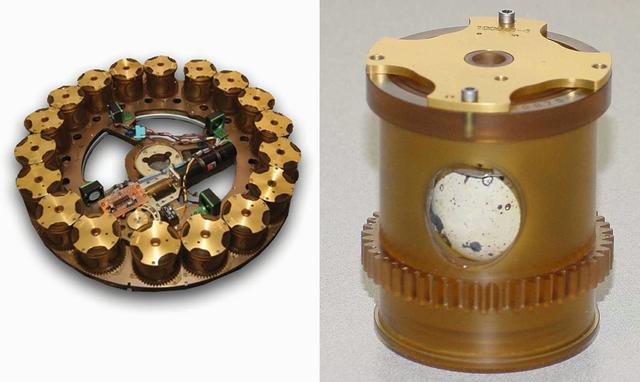
The Avian Development Facility (ADF) supports 36 eggs in two carousels, one of which rotates to provide a 1-g control for comparing to eggs grown in microgravity. The ADF was designed to incubate up to 36 Japanese quail eggs, 18 in microgra…

STS063-68-018 (3-11 Feb 1995) --- Russian cosmonaut Vladimir G. Titov, mission specialist, handles vials of samples for the Commercial Generic Bioprocessing Apparatus (CGBA) experiment in SpaceHab 3 Module onboard the Earth-orbiting Space S…
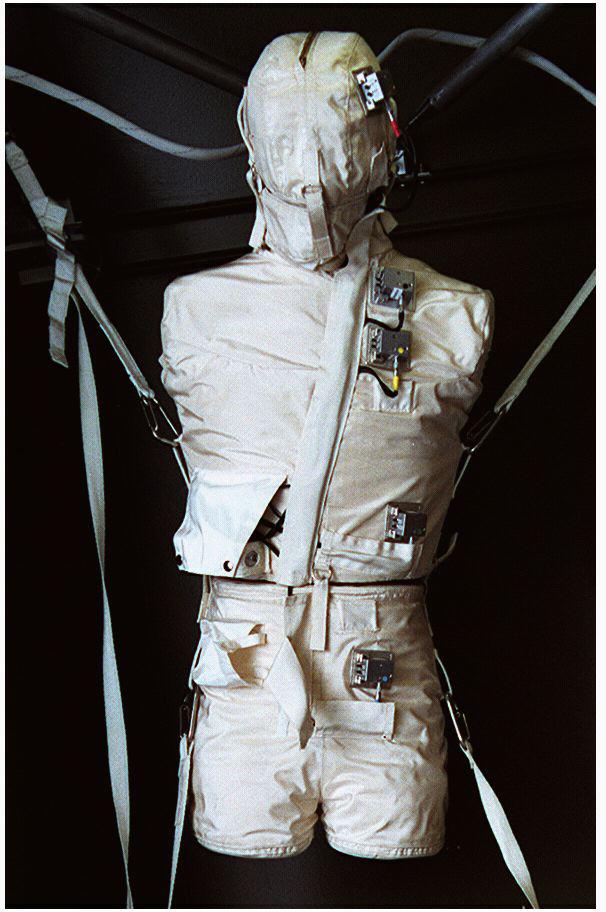
The Phantom Torso is a tissue-muscle plastic anatomical model of a torso and head. It contains over 350 radiation measuring devices to calculate the radiation that penetrates internal organs in space travel. The Phantom Torso is one of thre…
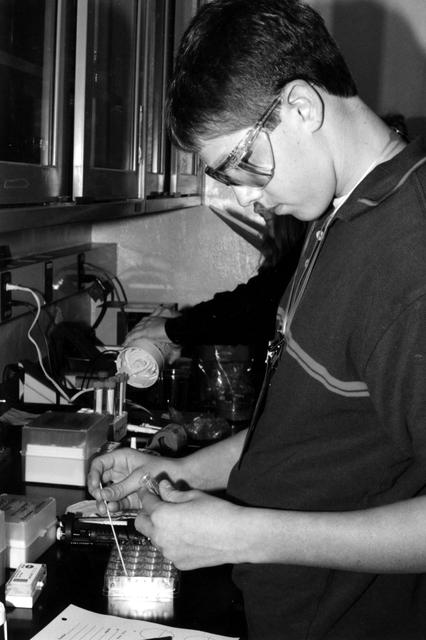
High school students screen crystals of various proteins that are part of the ground-based work that supports Alexander McPherson's protein crystal growth experiment. The students also prepared and stored samples in the Enhanced Gaseous Nit…

ProVision Technologies, a NASA research partnership center at Sternis Space Center in Mississippi, has developed a new hyperspectral imaging (HSI) system that is much smaller than the original large units used aboard remote sensing aircraft…
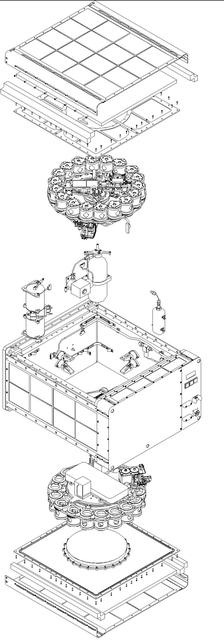
The Avian Development Facility (ADF) supports 36 eggs in two carousels, one of which rotates to provide a 1-g control for comparing to eggs grown in microgravity. The ADF was designed to incubate up to 36 Japanese quail eggs, 18 in microgra…