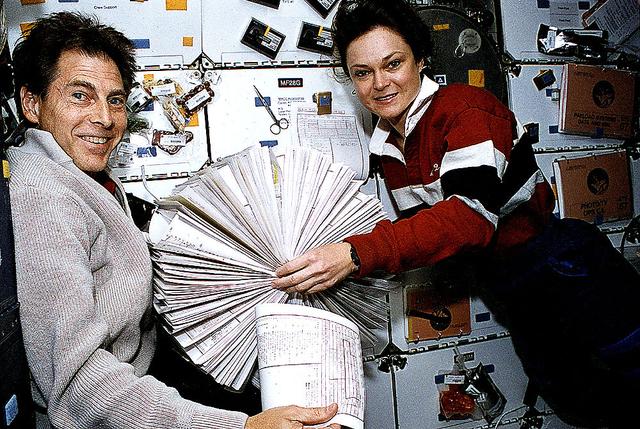
Astronaut Tamara Jernigan, STS-67 payload commander, and payload specialist Samuel T. Durrance use the absence of gravity for a perusal of Astro-2 targets in a loose-leaf, Rolodex-type collection of data. The two are in the mid-deck of the…

Each year, more than 400 Mississippi and out-of-state youths visit Stennis Space Center for weeklong Astro Camp activities. During 2012 sessions, campers were asked to design a human outpost for one of three distant destinations in our sola…

Each year, more than 400 Mississippi and out-of-state youths visit Stennis Space Center for weeklong Astro Camp activities. In 2012, campers investigated the science behind 21st century space travel, particularly related to the Internationa…

This photograph was taken during the Astro-1 mission (STS-35) showing activities at NASA's new Payload Operations Control Center (POCC) at the Marshall Space Flight Center. The POCC was the air/ground communication charnel used between the…

Sara Beth Casey, 5, proudly displays her artwork, 'Planets.' Sara Beth created the art as a student of Stennis Day Camp, a free camp for Stennis Space Center employees' children whose schools have not resumed since Hurricane Katrina hit the…

The primary objective of the STS-35 mission was round the clock observation of the celestial sphere in ultraviolet and X-Ray astronomy with the Astro-1 observatory which consisted of four telescopes: the Hopkins Ultraviolet Telescope (HUT);…

Young people prepare model rockets during an Astro Camp activity at Keesler Air Force Base in Biloxi. Stennis hosted the camp June 28 - July 1 in support of the White House Military Families Initiative. The camp also marked the beginning of…

Onboard the Space Shuttle Orbiter Columbia (STS-35), the various components of the Astro-1 payload are seen backdropped against a blue and white Earth. Parts of the Hopkins Ultraviolet Telescope (HUT), the Ultraviolet Imaging Telescope (UIT…

Astro is a robot dog operated by staff via remote control, is fitted with an infrared camera with 40 times zoom, utilizes thermography and a microphone and can navigate all three levels of the facility. The beloved robot conducts inspection…

Fallon Nettles (left), an Astro Camp counselor at NASA's John C. Stennis Space Center, assists a young fan attending the University of Southern Mississippi football game in Hattiesburg, Miss., on Oct. 17 in launching a balloon 'rocket.' Pri…

STS067-713-072 (2-18 March 1995) --- This 70mm cargo bay scene, backdropped against a desert area of Namibia, typifies the view that daily greeted the Astro-2 crew members during their almost 17-days aboard the Space Shuttle Endeavour. Pos…

STS035-35-007 (2-10 Dec 1990) --- During the STS-35 mission, the Astronomy Laboratory 1 (ASTRO-1) payload, in its on-orbit operating configuration in the payload bay (PLB), is silhouetted against the firing of a reaction control system (RCS…

In 1986, NASA introduced a Shuttle-borne ultraviolet observatory called Astro. The Astro Observatory was designed to explore the universe by observing and measuring the ultraviolet radiation from celestial objects. Astronomical targets of o…

This photograph was taken during the integration of the Astro-1 mission payloads at the Kennedy Space Center on March 20, 1990, showing the Broad Band X-Ray Telescope (BBXRT) at the left, as three telescopes for the Astro-1 Observatory are…

The primary objective of the STS-35 mission was round the clock observation of the celestial sphere in ultraviolet and X-Ray astronomy with the Astro-1 observatory which consisted of four telescopes: the Hopkins Ultraviolet Telescope (HUT);…

In this photograph, the instruments of the Astro-1 Observatory are erected in the cargo bay of the Columbia orbiter. Astro-1 was launched aboard the the Space Shuttle Orbiter Columbia (STS-35) mission on December 2, 1990. The Astro Observat…

The primary payload for Space Shuttle Mission STS-35, launched December 2, 1990, was the ASTRO-1 Observatory. Designed for round the clock observation of the celestial sphere in ultraviolet and X-ray astronomy, ASTRO-1 featured a collection…

Children at Astro Camp at the John C. Stennis Space Center in Hancock County, Miss., launch rockets as one of their activities in the weeklong camp. Each week during the summer, approximately 30 children ages 9-12 from across Mississippi an…

Ian Tonglet, 13, (left) and Seth Malley, 13, both of Picayune, Miss., and both participants in the 2010 Astro Stars session at Stennis Space Center, work with an underwater robot during a camp activity June 29. NASA joined with the U.S. Nav…
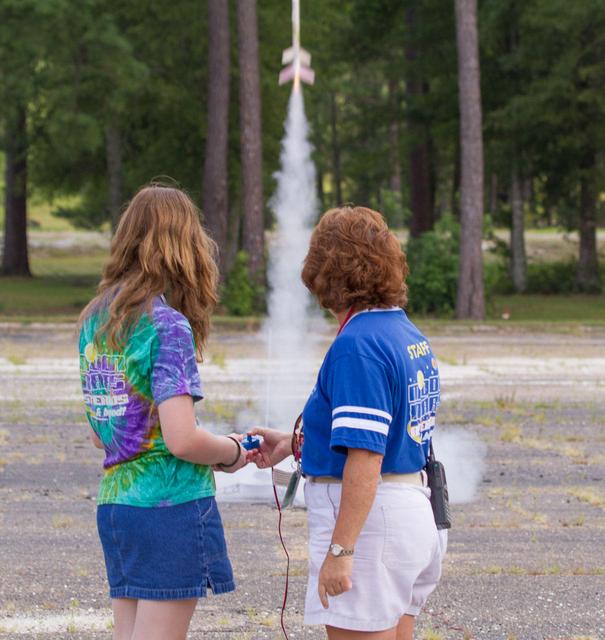
Summer is a time of educational activity at Stennis Space Center. In June 2012, 25 young people age 13-15 attended the annual Astro STARS (Spaceflight, Technology, Astronomy and Robotics at Stennis) camp at the rocket engine test facility.…

Katie Craig, daughter of former Stennis Space Center Deputy Director Mark Craig, launches a 'balloon rocket' with the help of Rebecca Compretta, Astro Camp coordinator at SSC. SSC took Astro Camp on the road to Florida this week to engage c…

Tom Nicolaides, an aerospace technologist in the Engineering & Test Directorate at Stennis Space Center, looks on as 2011 Astro STARS participants take turns gazing at the sun through a special telescope. The sun-gazing activity was part of…

This is a presentation of two comparison images of the Spiral Galaxy M81 in the constellation URA Major. The galaxy is about 12-million light years from Earth. The left image is the Spiral Galaxy M81 as photographed by the Ultraviolet Imagi…
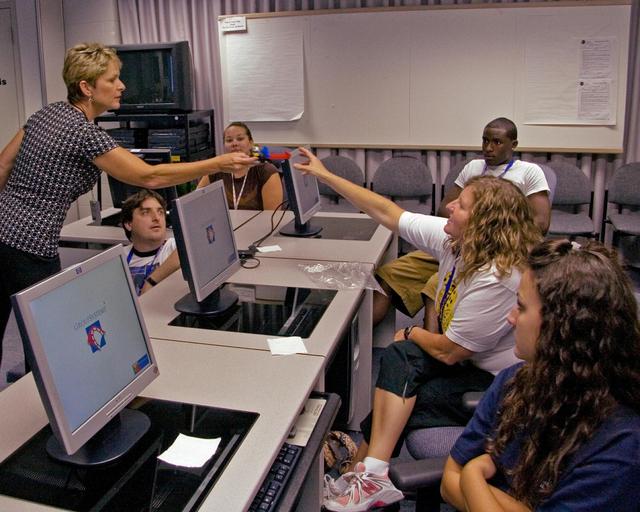
Barbara Marino (left), Stennis Space Center education technology specialist, shows Astro Camp Counselor Beverly Fitzsimmons a LEGO model during a teambuilding exercise May 29 at SSC's North Gate computer lab as a part of the counselors' `ne…

The primary objective of the STS-35 mission was round the clock observation of the celestial sphere in ultraviolet and X-Ray astronomy with the Astro-1 observatory which consisted of four telescopes: the Hopkins Ultraviolet Telescope (HUT);…
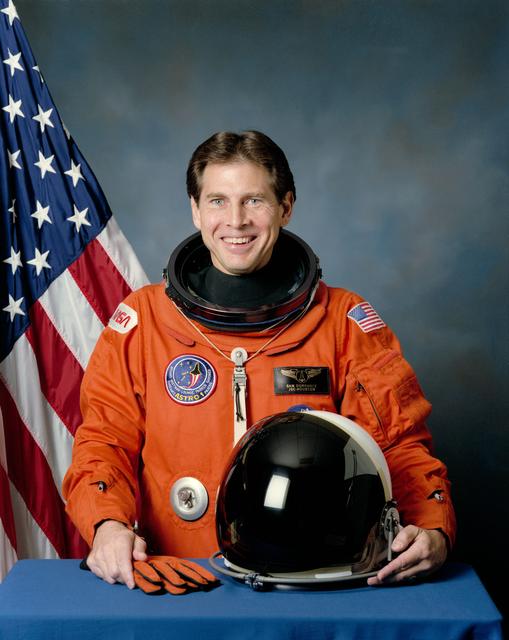
Official portrait of Samuel T. Durrance, Ph.D. and STS-35 Columbia, Orbiter Vehicle (OV) 102, Astronomy Laboratory 1 (ASTRO-1) payload specialist. Durrance wears launch and entry suit (LES) with helmet displayed on table at his left.

Astro, the robot dog conducts inspections in building 64 to spare the employees ears in this extremely loud environment. The facility is extremely loud even with double hearing protection, so Glenn has come up with an alternative to keep th…
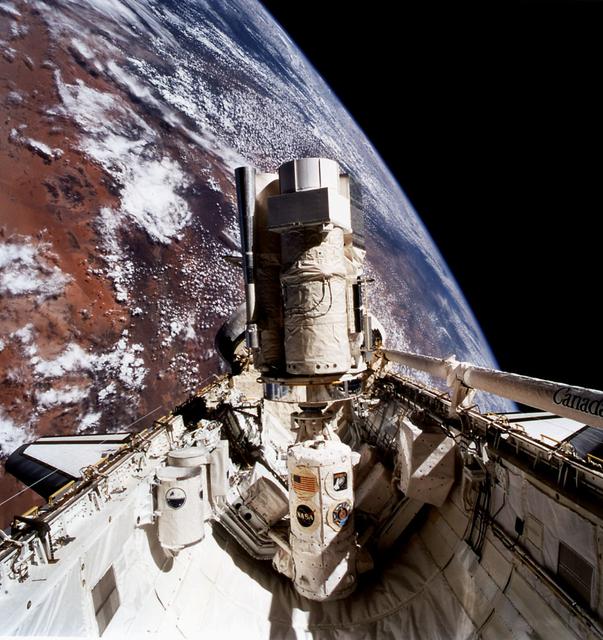
ASTRO-2 was the second dedicated Spacelab mission to conduct astronomical observations in the ultraviolet spectral regions. It consisted of three unique instruments: the Hopkins Ultraviolet Telescope (HUT), the Ultraviolet Imaging Telescope…

STS-35 Mission Specialist (MS) Robert A.R. Parker (left) and Payload Specialist Samuel T. Durrance practice Astronomy Laboratory 1 (ASTRO-1) experiment procedures in a space shuttle aft flight deck mockup in the Payload Crew Training Comple…

Tori Williams, of Brownie Girl Scout Troop 313, builds her own `stomp rocket' with the help of adult chaperone Pamela Cottrell. The two, of Gulfport, participated in NASA Brownie Day on Oct. 13 at Stennis Space Center. They were among nearl…

STS035-28-006 (2-10 Dec 1990) --- STS-35 Astronomy Laboratory 1 (ASTRO-1) telescopes, in on-orbit operating position in the payload bay (PLB), are silhouetted against an reaction control system (RCS) right thruster firing. Three ultraviolet…

The primary objective of the STS-35 mission was round the clock observation of the celestial sphere in ultraviolet and X-Ray astronomy with the Astro-1 observatory which consisted of four telescopes: the Hopkins Ultraviolet Telescope (HUT);…
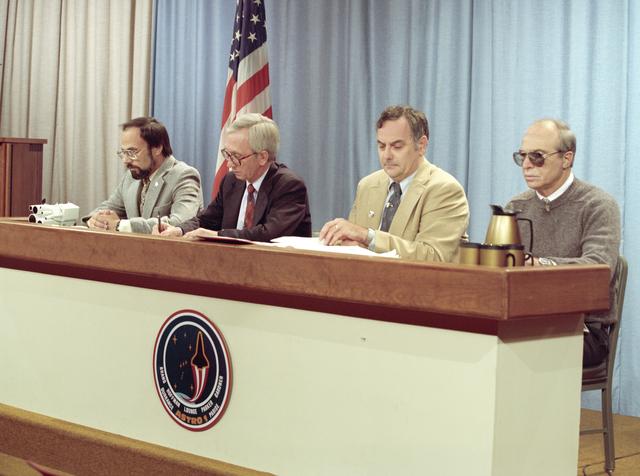
The primary objective of the STS-35 mission was round the clock observation of the celestial sphere in ultraviolet and X-Ray astronomy with the Astro-1 observatory which consisted of four telescopes: the Hopkins Ultraviolet Telescope (HUT);…

An Astro Camp counselor and her campers perform a science experiment to learn what types of `fuel' will best propel their 'rockets.' Stennis Space Center's popular series of day camps have campers design, build and test model rockets based…

Stennis Space Center's new Astro Camp Plus camp kicked off June 19 for teens ages 13-15. The new camp delves more deeply into the science, math and technology concepts introduced in the center's popular Astro Camp series. Campers including…

Each year, more than 400 Mississippi and out-of-state youths visit Stennis Space Center for weeklong Astro Camp activities. Astro Camp sessions are for children ages 7-12. The focus for 2012 Astro Camp participants was on 'What's Next for N…
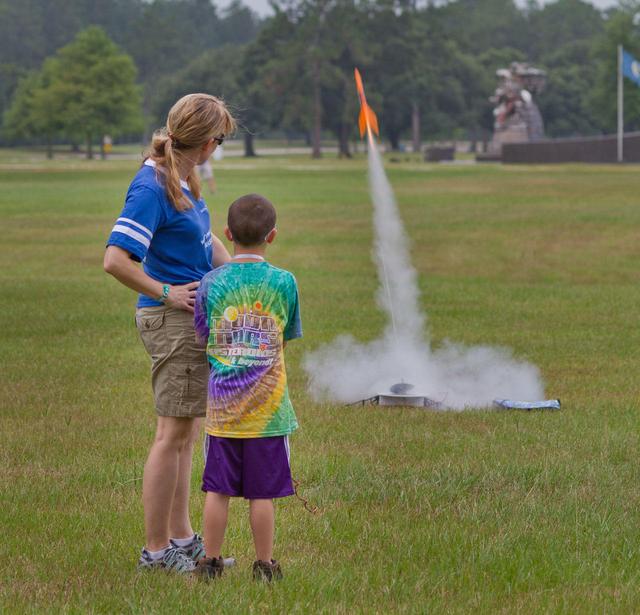
Each year, more than 400 Mississippi and out-of-state youths visit Stennis Space Center for weeklong Astro Camp activities. As in previous years, a highlight of the 2012 sessions was the launching of campers' rockets.
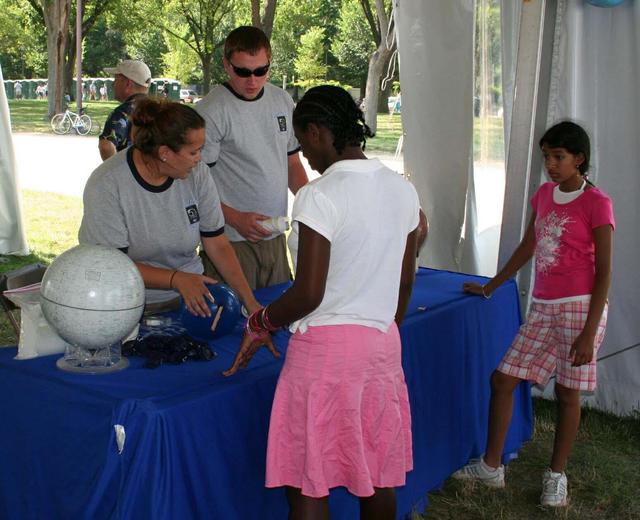
Tammy Estapa and Wesley Oliver from Stennis Space Center assist young people visiting the Smithsonian Folklife Festival in Washington, D.C., to participate in Astro Camp activities.

This image shows a part of the Cygnus loop supernova remnant, taken by the Ultraviolet Imaging Telescope (UIT) on the Astro Observatory during the Astro-1 mission (STS-35) on December 5, 1990. Pictured is a portion of the huge Cygnus loop,…
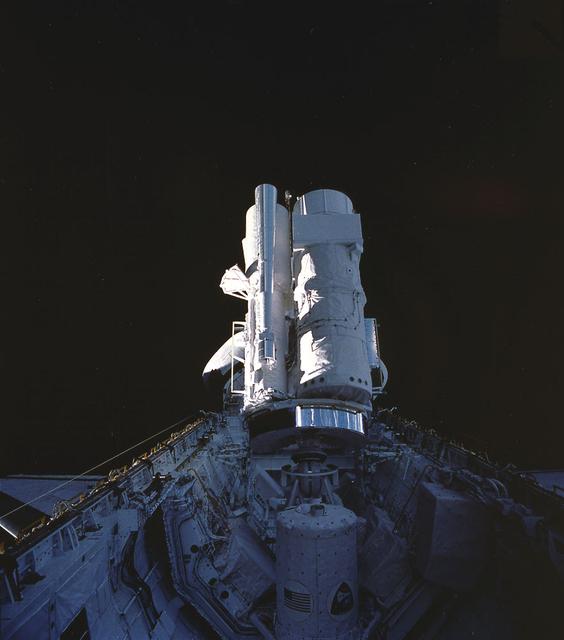
Onboard the Space Shuttle Orbiter Columbia (STS-35), the various components of the Astro-1 payload are seen backdropped against dark space. Parts of the Hopkins Ultraviolet Telescope (HUT), Ultraviolet Imaging Telescope (UIT), and the Wisco…

STS067-S-001 (October 1994) --- Observation and remote exploration of the Universe in the ultraviolet wavelengths of light are the focus of the STS-67/ASTRO-2 mission, as depicted in the crew patch designed by the crew members. The insignia…

STS067-371-028 (2-18 March 1995) --- This 35mm lunar-illuminated scene of the Astro-2 payload in the Space Shuttle Endeavour's cargo bay was recorded by one of by the seven crew members during one of the many night passes of the almost 17-d…

STS067-377-008 (2-18 March 1995) --- Astronaut John M. Grunsfeld, mission specialist, uses a handheld Hasselblad camera to record the Astro-2 payload. Orbiting Earth at 190 nautical miles, Grunsfeld joined four other NASA astronauts and two…

STS-35 Astronomy Laboratory 1 (ASTRO-1) is installed in Columbia's, Orbiter Vehicle (OV) 102's, payload bay (PLB) at the Kennedy Space Center (KSC) Orbiter Processing Facility (OPF). On the left, in the aft PLB is the Broad Band X Ray Teles…

STS035-13-008 (2-10 Dec. 1990) --- The various components of the Astro-1 payload are seen backdropped against the blue and white Earth in this 35mm scene photographed through Columbia's aft flight deck windows. Parts of the Hopkins Ultravio…

The primary objective of the STS-35 mission was round the clock observation of the celestial sphere in ultraviolet and X-Ray astronomy with the Astro-1 observatory which consisted of four telescopes: the Hopkins Ultraviolet Telescope (HUT);…

The primary objective of the STS-35 mission was round the clock observation of the celestial sphere in ultraviolet and X-Ray astronomy with the Astro-1 observatory which consisted of four telescopes: the Hopkins Ultraviolet Telescope (HUT);…

The primary objective of the STS-35 mission was round the clock observation of the celestial sphere in ultraviolet and X-Ray astronomy with the Astro-1 observatory which consisted of four telescopes: the Hopkins Ultraviolet Telescope (HUT);…