
SIX OF THE EIGHTEEN JAMES WEBB SPACE TELESCOPE MIRROR SEGMENTS ARE BEING PREPPED TO MOVE INTO THE X-RAY AND CRYOGENIC FACILITY FOR TESTING.

SIX OF THE EIGHTEEN JAMES WEBB SPACE TELESCOPE MIRROR SEGMENTS ARE BEING PREPPED TO MOVE INTO THE X-RAY AND CRYOGENIC FACILITY FOR TESTING.

SIX OF THE EIGHTEEN JAMES WEBB SPACE TELESCOPE MIRROR SEGMENTS ARE BEING PREPPED TO MOVE INTO THE X-RAY AND CRYOGENIC FACILITY FOR TESTING.

SIX OF THE EIGHTEEN JAMES WEBB SPACE TELESCOPE MIRROR SEGMENTS ARE BEING PREPPED TO MOVE INTO THE X-RAY AND CRYOGENIC FACILITY FOR TESTING.

SIX OF THE EIGHTEEN JAMES WEBB SPACE TELESCOPE MIRROR SEGMENTS ARE BEING PREPPED TO MOVE INTO THE X-RAY AND CRYOGENIC FACILITY FOR TESTING.

SIX OF THE EIGHTEEN JAMES WEBB SPACE TELESCOPE MIRROR SEGMENTS ARE BEING PREPPED TO MOVE INTO THE X-RAY AND CRYOGENIC FACILITY FOR TESTING.

SIX OF THE EIGHTEEN JAMES WEBB SPACE TELESCOPE MIRROR SEGMENTS ARE BEING PREPPED TO MOVE INTO THE X-RAY AND CRYOGENIC FACILITY FOR TESTING.

This composite image shows one of the clusters, NGC 2024, which is found in the center of the so-called Flame Nebula about 1,400 light years from Earth. Astronomers have studied two star clusters using NASA Chandra and infrared telescopes.

SIX OF THE EIGHTEEN JAMES WEBB SPACE TELESCOPE MIRROR SEGMENTS ARE BEING PREPPED TO MOVE INTO THE X-RAY AND CRYOGENIC FACILITY FOR TESTING.

SIX OF THE EIGHTEEN JAMES WEBB SPACE TELESCOPE MIRROR SEGMENTS ARE BEING PREPPED TO MOVE INTO THE X-RAY AND CRYOGENIC FACILITY FOR TESTING.

SIX OF THE EIGHTEEN JAMES WEBB SPACE TELESCOPE MIRROR SEGMENTS ARE BEING PREPPED TO MOVE INTO THE X-RAY AND CRYOGENIC FACILITY FOR TESTING.

VANDENBERG AIR FORCE BASE, Calif. -- The wing of the Pegasus XL launch vehicle arrives at Vandenberg Air Force Base in California. The Orbital Sciences Corp. Pegasus rocket is being processed to launch the Nuclear Spectroscopic Telescope A…

SIX OF THE EIGHTEEN JAMES WEBB SPACE TELESCOPE MIRROR SEGMENTS ARE BEING PREPPED TO MOVE INTO THE X-RAY AND CRYOGENIC FACILITY FOR TESTING.

This 1970 photograph shows Skylab's Dual X-Ray Telescopes, an Apollo Telescope Mount facility. It was designed to gather solar radiation data in the x-ray region of the solar spectrum and provide information on physical processes within the…

This photograph details Skylab's X-Ray Spectrographic Telescope, an Apollo Telescope Mount facility. It was designed to sequentially photograph solar flares and other active regions in x-ray spectrum. The Marshall Space Flight Center had pr…

This composite of 30 Doradus, the Tarantula Nebula, contains data from Chandra blue, Hubble green, and Spitzer red. Located in the Large Magellanic Cloud, the Tarantula Nebula is one of the largest star-forming regions close to the Milky Wa…

The tip of the wing of the Small Magellanic Cloud galaxy is dazzling in this new view from NASA Great Observatories. The SMC, is a small galaxy about 200,000 light-years way that orbits our own Milky Way spiral galaxy.

This composite image of the star cluster NGC 28 contains X-ray data from Chandra, in purple, with infrared observations from Spitzer, in red, green, blue. NGC 281 is known informally as the Pacman Nebula because of its appearance in optical…

A composite image from NASA Chandra and Spitzer space telescopes shows the dusty remains of a collapsed star, a supernova remnant called G54.1+0.3. The white source at the center is a dead star called a pulsar.

SIX OF THE EIGHTEEN JAMES WEBB SPACE TELESCOPE MIRROR SEGMENTS ARE BEING PREPPED TO MOVE INTO THE X-RAY AND CRYOGENIC FACILITY FOR TESTING.

This new composite image of stellar cluster NGC 1333 combines X-rays from NASA's Chandra X-ray Observatory (pink); infrared data from NASA's Spitzer Space Telescope (red); and optical data from the Digitized Sky Survey and the National Opti…

SIX OF THE EIGHTEEN JAMES WEBB SPACE TELESCOPE MIRROR SEGMENTS ARE BEING PREPPED TO MOVE INTO THE X-RAY AND CRYOGENIC FACILITY FOR TESTING.

VANDENBERG AIR FORCE BASE, Calif. -- The wing of the Pegasus XL launch vehicle awaits processing in a clean room at Vandenberg Air Force Base in California. The Orbital Sciences Corp. Pegasus rocket will launch the Nuclear Spectroscopic Te…
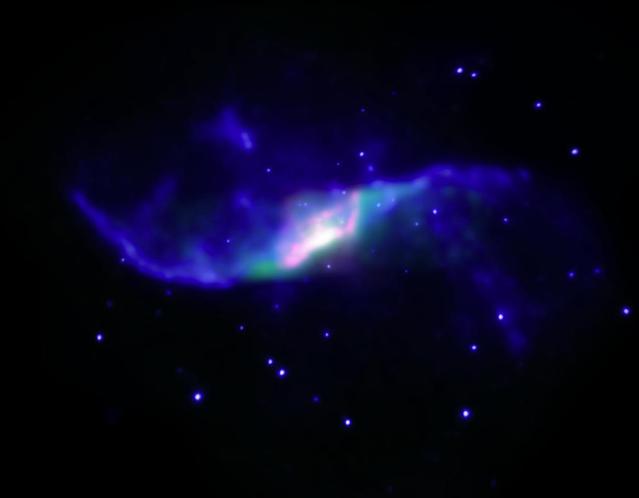
A composite image of the spiral galaxy NGC 4258 showing X-ray emission observed with NASA Chandra X-ray Observatory blue and infrared emission observed with NASA Spitzer Space Telescope red and green.

SIX OF THE EIGHTEEN JAMES WEBB SPACE TELESCOPE MIRROR SEGMENTS ARE BEING PREPPED TO MOVE INTO THE X-RAY AND CRYOGENIC FACILITY FOR TESTING.

SIX OF THE EIGHTEEN JAMES WEBB SPACE TELESCOPE MIRROR SEGMENTS ARE BEING PREPPED TO MOVE INTO THE X-RAY AND CRYOGENIC FACILITY FOR TESTING.

SIX OF THE EIGHTEEN JAMES WEBB SPACE TELESCOPE MIRROR SEGMENTS ARE BEING PREPPED TO MOVE INTO THE X-RAY AND CRYOGENIC FACILITY FOR TESTING.

SIX OF THE EIGHTEEN JAMES WEBB SPACE TELESCOPE MIRROR SEGMENTS ARE BEING PREPPED TO MOVE INTO THE X-RAY AND CRYOGENIC FACILITY FOR TESTING.

SIX OF THE EIGHTEEN JAMES WEBB SPACE TELESCOPE MIRROR SEGMENTS ARE BEING PREPPED TO MOVE INTO THE X-RAY AND CRYOGENIC FACILITY FOR TESTING.

A BALL AEROSPACE TECHNICIAN STANDS WITHIN A JAMES WEBB SPACE TELESCOPE ARRAY THAT WAS IN THE X-RAY AND CRYOGENIC FACILITY FOR TESTING

This image combines data from four different space telescopes to create a multi-wavelength view of all that remains of the oldest documented example of a supernova, called RCW 86.

This composite image, combining data from NASA Chandra X-ray Observatory and Spitzer Space Telescope shows the star-forming cloud Cepheus B, located in our Milky Way galaxy about 2,400 light years from Earth

SIX OF THE EIGHTEEN JAMES WEBB SPACE TELESCOPE MIRROR SEGMENTS ARE BEING PREPPED TO MOVE INTO THE X-RAY AND CRYOGENIC FACILITY FOR TESTING.

VANDENBERG AIR FORCE BASE, Calif. -- Orbital Sciences Corp. workers uncrate the wing of the Pegasus XL launch vehicle at Vandenberg Air Force Base in California. Orbital's Pegasus rocket is being processed to launch the Nuclear Spectroscop…

About 2,400 massive stars in the center of 30 Doradus, the Tarantula Nebula, produce intense radiation and powerful winds as they blow off material seen as infrared emission from NASA Spitzer Space Telescope and X-rays from Chandra X-ray Ob…

SIX OF THE EIGHTEEN JAMES WEBB SPACE TELESCOPE MIRROR SEGMENTS ARE BEING PREPPED TO MOVE INTO THE X-RAY AND CRYOGENIC FACILITY FOR TESTING.

SIX OF THE EIGHTEEN JAMES WEBB SPACE TELESCOPE MIRROR SEGMENTS ARE BEING PREPPED TO MOVE INTO THE X-RAY AND CRYOGENIC FACILITY FOR TESTING.

SIX OF THE EIGHTEEN JAMES WEBB SPACE TELESCOPE MIRROR SEGMENTS ARE BEING PREPPED TO MOVE INTO THE X-RAY AND CRYOGENIC FACILITY FOR TESTING.

SIX OF THE EIGHTEEN JAMES WEBB SPACE TELESCOPE MIRROR SEGMENTS ARE BEING PREPPED TO MOVE INTO THE X-RAY AND CRYOGENIC FACILITY FOR TESTING.

SIX OF THE EIGHTEEN JAMES WEBB SPACE TELESCOPE MIRROR SEGMENTS ARE BEING PREPPED TO MOVE INTO THE X-RAY AND CRYOGENIC FACILITY FOR TESTING.

SIX OF THE EIGHTEEN JAMES WEBB SPACE TELESCOPE MIRROR SEGMENTS ARE BEING PREPPED TO MOVE INTO THE X-RAY AND CRYOGENIC FACILITY FOR TESTING.

SIX OF THE EIGHTEEN JAMES WEBB SPACE TELESCOPE MIRROR SEGMENTS ARE BEING PREPPED TO MOVE INTO THE X-RAY AND CRYOGENIC FACILITY FOR TESTING.

SIX OF THE EIGHTEEN JAMES WEBB SPACE TELESCOPE MIRROR SEGMENTS ARE BEING PREPPED TO MOVE INTO THE X-RAY AND CRYOGENIC FACILITY FOR TESTING.

SIX OF THE EIGHTEEN JAMES WEBB SPACE TELESCOPE MIRROR SEGMENTS ARE BEING PREPPED TO MOVE INTO THE X-RAY AND CRYOGENIC FACILITY FOR TESTING.

This chart details Skylab's Dual X-Ray Telescopes, one of eight Apollo Telescope Mount facilities. It was designed to gather solar radiation data in the x-ray region of the solar spectrum and provide information on physical processes within…

This chart details Skylab's X-Ray Spectrographic Telescope, an Apollo Telescope Mount facility. It was designed to sequentially photograph solar flares and other active regions in the x-ray spectrum. The Marshall Flight Center had program m…

Puppis A, around 7,000 light-years away, is seen in this image from NASA Spitzer Space Telescope and Chandra X-Ray Observatory, and the European Space Agency XMM-Newton.

The Milky Way and other galaxies in the universe harbor many young star clusters and associations that each contain hundreds to thousands of hot, massive, young stars known as O and B stars.