
P-21738 BW Raange: 4.76 million kilometers (2.9 million miles) This Voyager 2 picture of Io was taken in ultraviolet light and shows one of the volcanic eruption plumes first photographed by Voyager 1. (the bright spot on the right limb) Th…
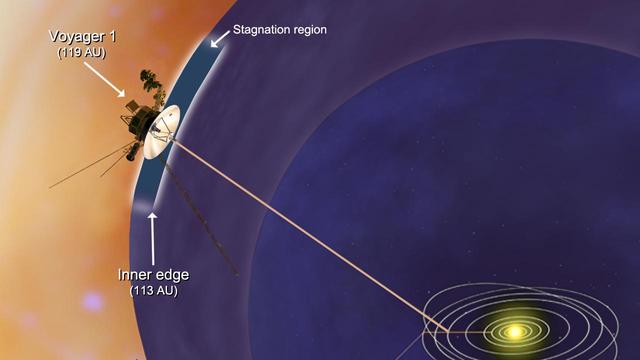
NASA Voyager 1 spacecraft has entered a new region between our solar system and interstellar space, which scientists are calling the stagnation region as depicted in this artist rendering.

Voyager Saturn Mission Artwork (Mariner - Jupiter - Saturn - Uranus) show slingshot technique
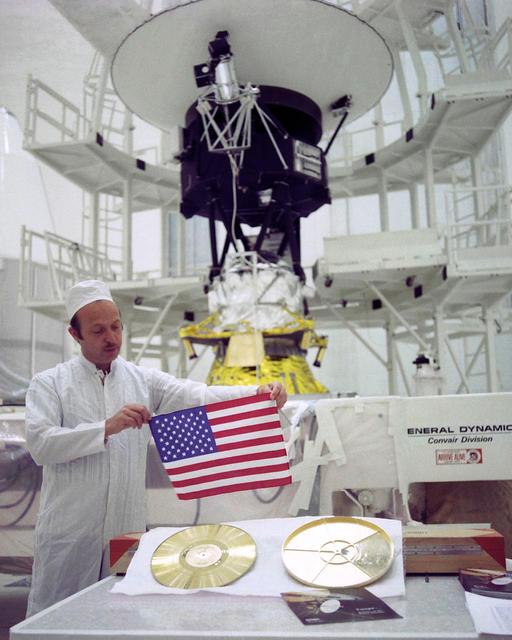
As NASA two Voyager spacecraft travel out into deep space, they carry a small American flag and a Golden Record packed with pictures and sounds -- mementos of our home planet.
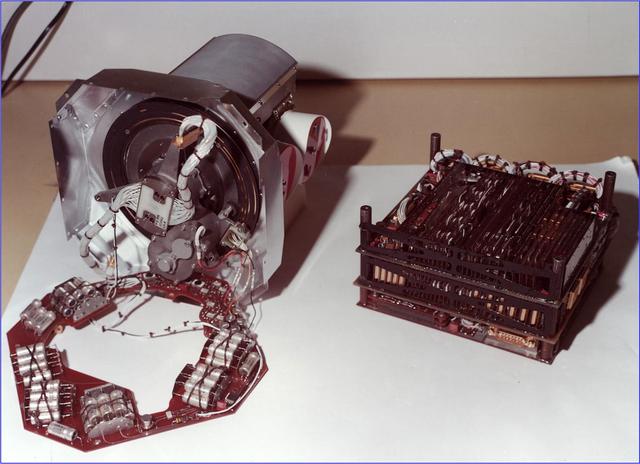
This image shows the low-energy charged particle instrument before it was installed on one of NASA Voyager spacecraft in 1977. The instrument includes a stepper motor that turns the platform on which the sensors are mounted.

This image of Neptune satellite 1989N1 was obtained by NASA Voyager 2 on Aug. 25, 1989 from a range of 146,000 kilometers 91,000 miles. http://photojournal.jpl.nasa.gov/catalog/PIA00062

This photograph from Sept. 5, 1977, shows the launch of NASA Voyager 1 spacecraft from NASA Kennedy Space Center at Cape Canaveral, Fla.

Resolution : 2 km. ( 1.2 miles ) P-24069C In this computer generated photograph, created from a cross section of Saturn's rings by Voyager 2 photopolarimeter's star occulation, the Encke Division in the outer A-ring. Clearly shown is the c…
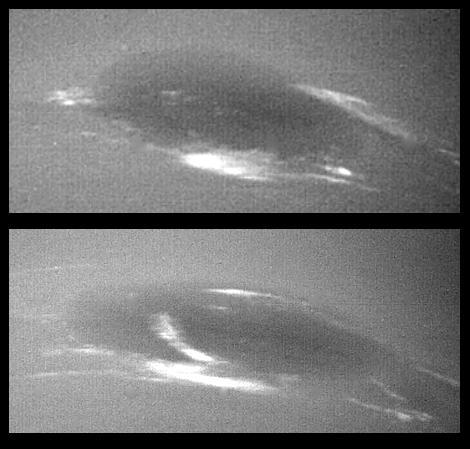
The bright cirrus-like clouds of Neptune change rapidly, often forming and dissipating over periods of several to tens of hours. In this sequence NASA Voyager 2 observed cloud evolution in the region around the Great Dark Spot GDS.
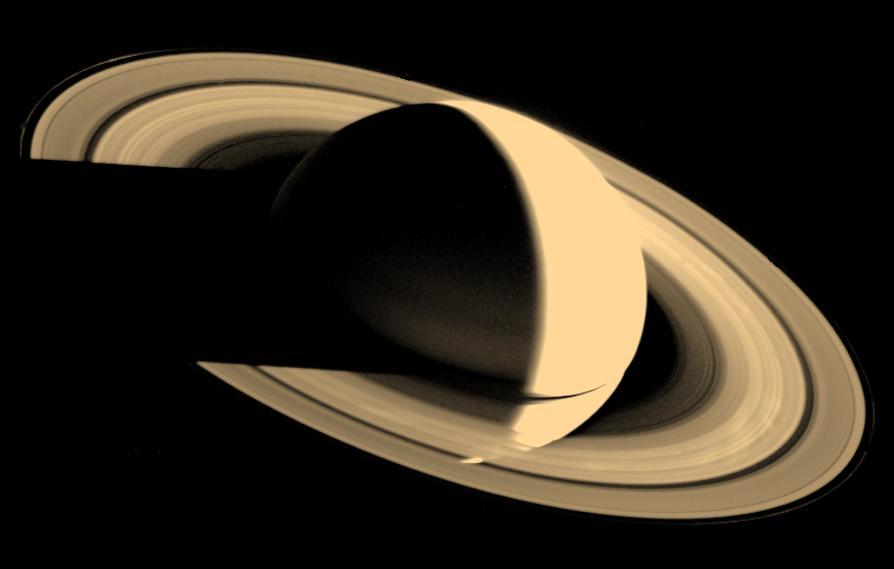
Saturn and its Rings
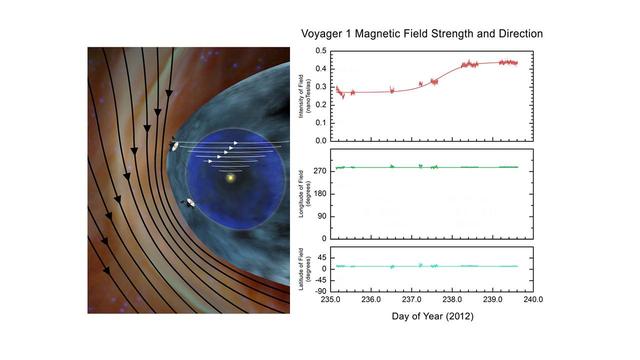
The artist concept on left is based on theoretical models predicting the direction and strength of magnetic field lines coming from the sun and interstellar space.
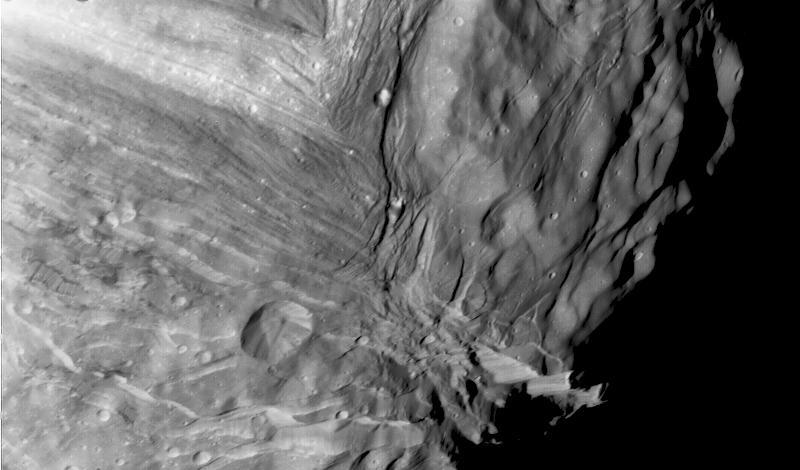
Miranda, innermost of Uranus large satellites, is seen at close range in this Voyager 2 image, taken Jan. 24, 1986, as part of a high-resolution mosaicing sequence.

This photograph of Neptune southern hemisphere was taken by the narrow-angle camera on NASA Voyager 2 when the spacecraft was 4.2 million km 2.6 million miles from the planet. http://photojournal.jpl.nasa.gov/catalog/PIA00050

Jupiter Great Red Spot

This photograph of Neptune was reconstructed from two images taken by NASA Voyager 2. At the north top is the Great Dark Spot, accompanied by bright, white clouds that undergo rapid changes in appearance.

This archival photo shows engineers working on vibration acoustics and pyro shock testing of NASA's Voyager on November 18, 1976. https://photojournal.jpl.nasa.gov/catalog/PIA21732

This archival photo shows engineers working on NASA's Voyager 2 spacecraft on March 23, 1977. https://photojournal.jpl.nasa.gov/catalog/PIA21736
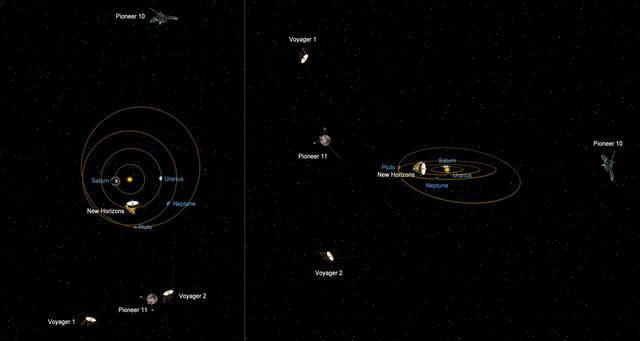
This graphic shows the relative positions of NASA most distant spacecraft in early 2011, looking at the solar system from the side. Voyager 1 is the most distant spacecraft, 10.9 billion miles away from the sun at a northward angle.
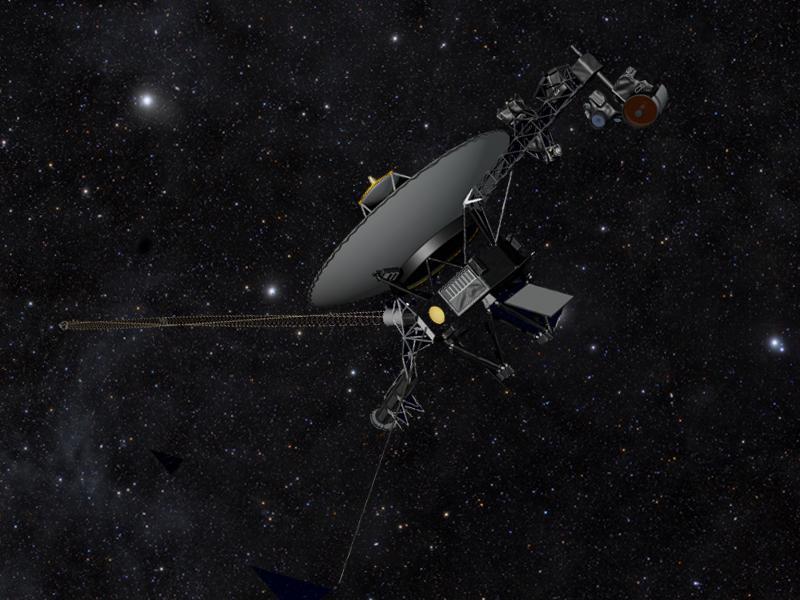
This artist concept shows NASA Voyager spacecraft against a field of stars in the darkness of space as they travel farther away from Earth, on a journey to interstellar space, and will eventually circle around the center of the Milky Way ga…

Engineers are engaged in the construction of a high gain antenna for one of the Voyager spacecraft in This archival photo taken on October 29, 1975. https://photojournal.jpl.nasa.gov/catalog/PIA21479

An engineer works on vibration acoustics and pyro shock testing for one of NASA's Voyager spacecraft on November 18, 1976. Several of the spacecraft's science instruments are visible at left. https://photojournal.jpl.nasa.gov/catalog/PIA21…

This graphic shows the NASA Voyager 1 spacecraft and the location of its low-energy charged particle instrument. A labeled close-up of the low-energy charged particle instrument appears as the inset image.

This archival photo shows the system test configuration for Voyager on October 1, 1976. The spacecraft's 10-sided bus is visible behind the catwalk railing in the foreground. The boom that holds several of the spacecraft's science instrumen…

P-34668 This narrow angled image of Neptune's Triton, part of a sequence recieved from Voyager 2 shows a large flooded basin about 200 km. or 120 miles wide and 400 km. or 240 miles long. It appears to have been formed chiefly by two large,…
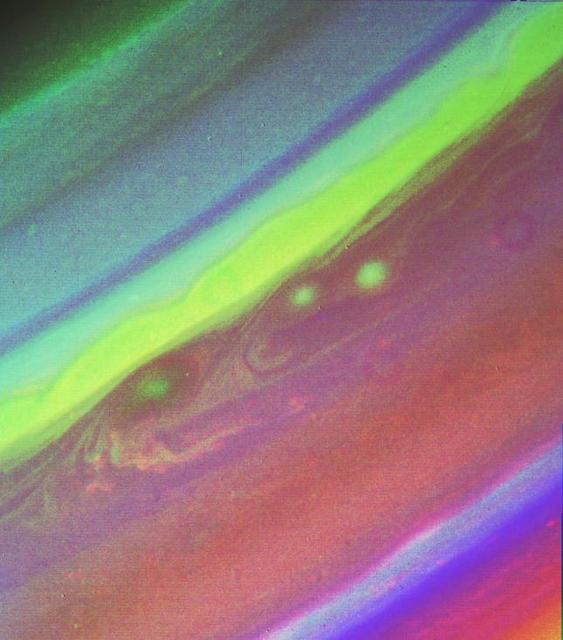
This false color picture of Saturn’s northern hemisphere was assembled from ultraviolet, violet and green images obtained Aug. 19 by Voyager 2 from a range of 7.1 million kilometers (4.4 million miles). The several weather patterns evident…

These three images of Neptune were acquired 90 minutes apart by NASA Voyager 2 spacecraft on April 3, 1989, from a range of 208 million kilometers 129 million miles. Several atmospheric features clouds are visible.
Callisto From 8,023,000 kilometers

Range : 1 illion km. ( 600,000 mi. ) Resolution : 140 km. ( 90 mi. ) P-29539C This Voyager 2 image of Uranus was captured as the spacecraft was leaving Uranus behind on its cruise to Neptune. The image is a color composite of three photog…

This polar projection from NASA Voyager 2 of Triton southern hemisphere provides a view of the southern polar cap and bright equatorial fringe. The margin of the cap is scalloped and ranges in latitude from +10 degrees to -30 degrees. The b…
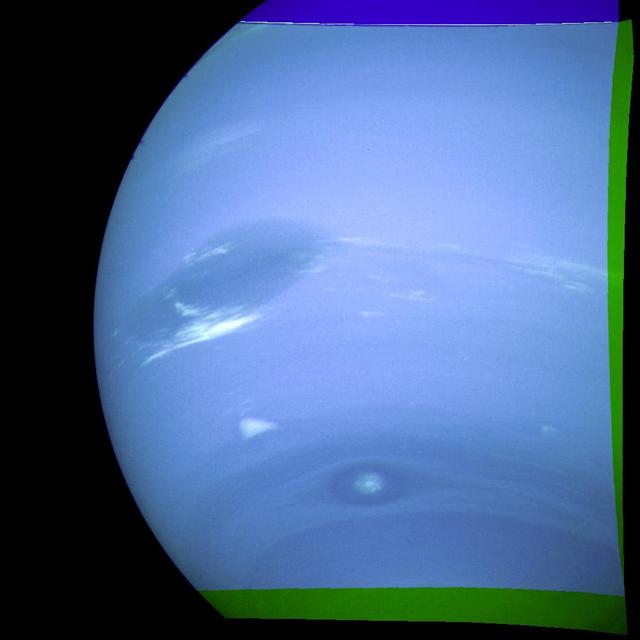
This photograph of Neptune was reconstructed from two images taken by NASA Voyager 2. At the north top is the Great Dark Spot. http://photojournal.jpl.nasa.gov/catalog/PIA00049
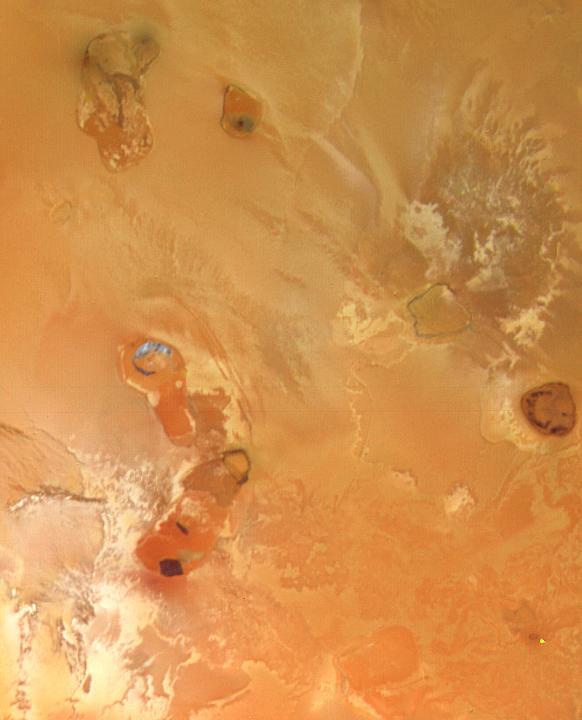
This photograph of Jupiter satellite Io taken by NASA Voyager 1 shows what appears to be a volcanic caldera that is venting gasses the bright blue patch at left center.
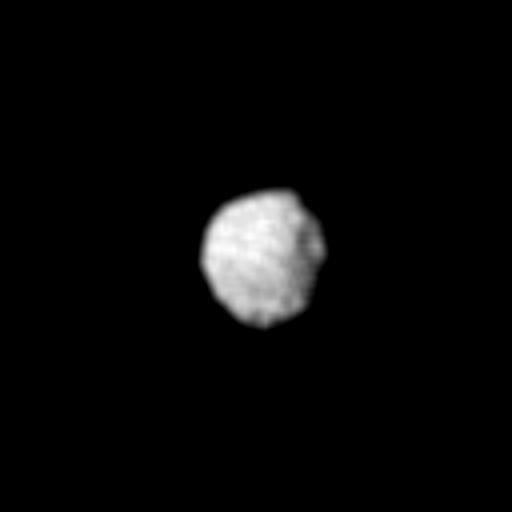
Uranus Moon - 1985U1
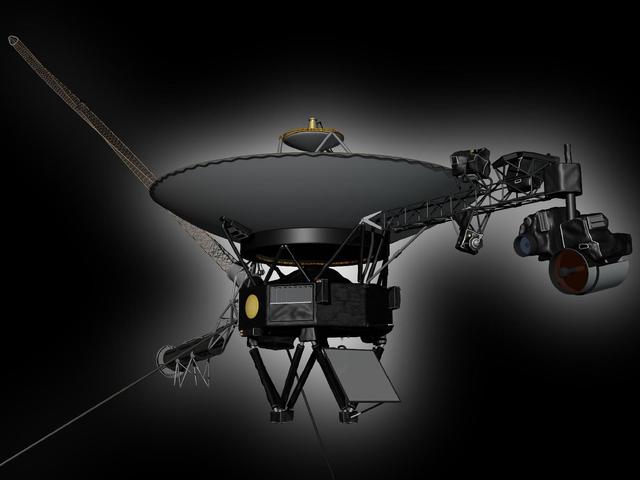
This artist rendering shows NASA Voyager spacecraft. Voyager 2 was launched on Aug. 20, 1977. Voyager 1 was launched on Sept. 5, 1977.
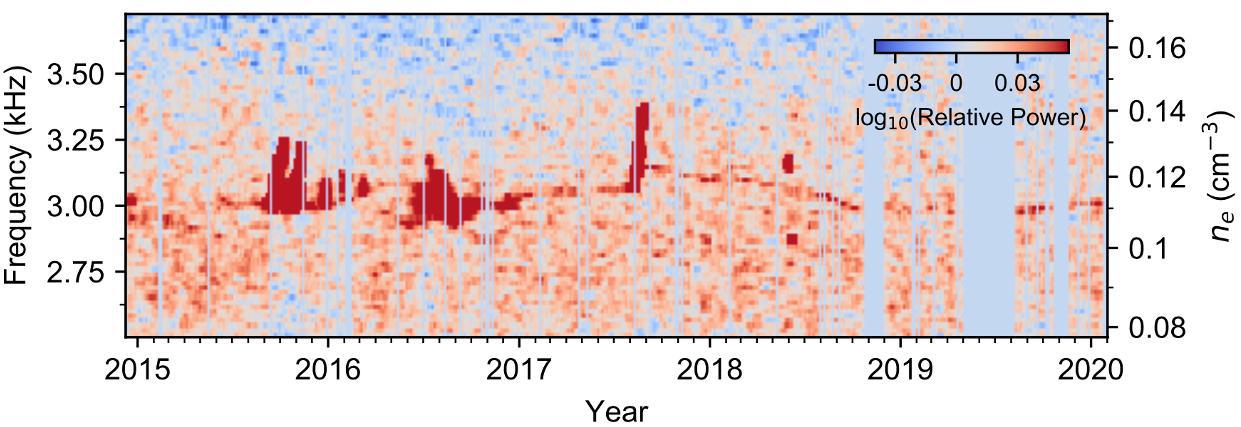
Weak but nearly continuous plasma oscillation events — visible as a thin red line in this graphic — connect stronger events in Voyager 1's Plasma Wave Subsystem data. https://photojournal.jpl.nasa.gov/catalog/PIA24572
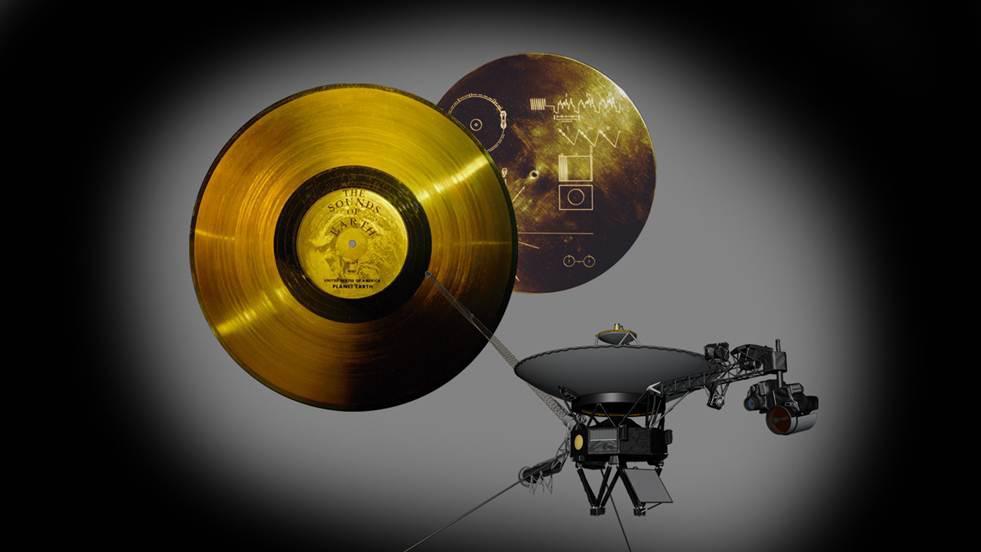
This image highlights the special cargo onboard NASA Voyager spacecraft: the Golden Record. Each of the two Voyager spacecraft launched in 1977 carry a 12-inch gold-plated phonograph record with images and sounds from Earth.
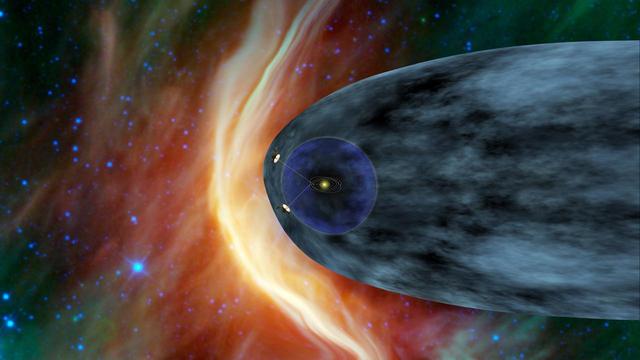
This artist concept shows NASA two Voyager spacecraft exploring a turbulent region of space known as the heliosheath, the outer shell of the bubble of charged particles around our sun. The Voyagers have been in space 33 years.

Voyager violet, green and ultraviolet images of Triton were map projected into cylindrical coordinates and combines to produce this false-color terrain map. Several compositionally distinct terrain and geologic features are portrayed. At…
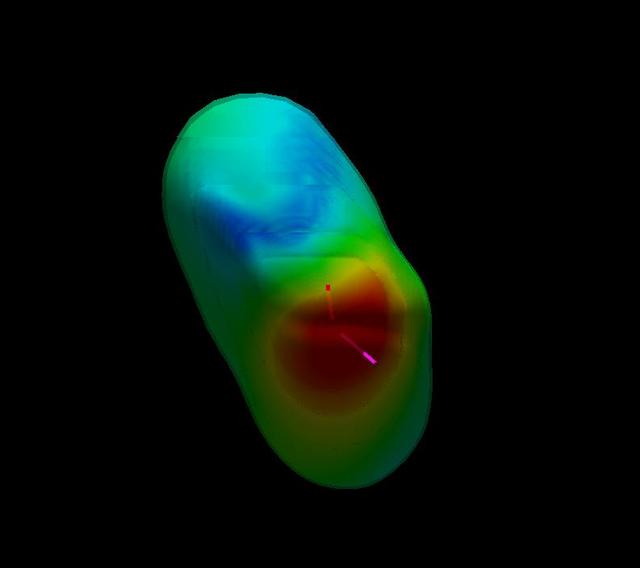
This graphic, based on data from NASA Voyager spacecraft, shows a model of what our solar system looks like to an observer outside in interstellar space, watching our solar system fly towards the observer.
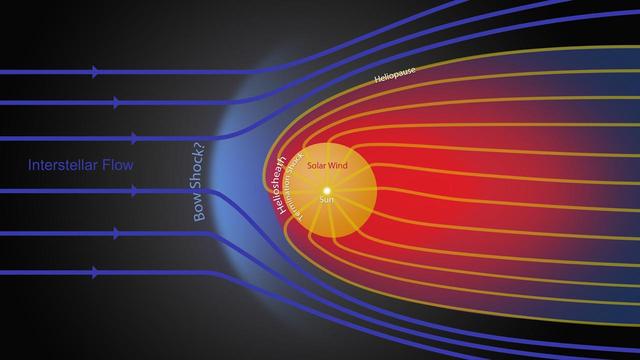
This graphic shows the different streams of charged particles inside the bubble around our sun and outside, in the unexplored territory of interstellar space. The heliosheath, where NASA two Voyager spacecraft are now traveling, is shown in…

Callisto , The outermost Galilean Satellite , or Moon , of Jupiter, as taken by Voyager I . Range : About 7 Million km (5 Million miles) . Callisto, the darkest of the Galilean Satellites, still nearly twice as bright as the Earth's Moo…
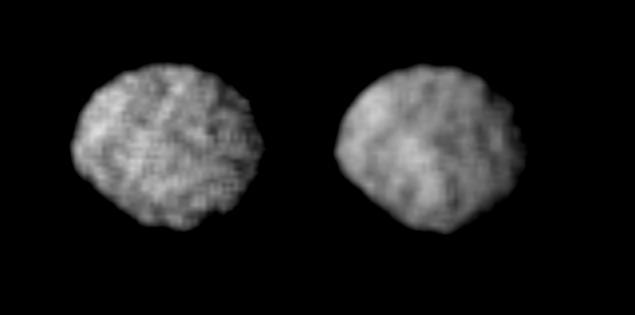
Satellite 1989N2

This contrast enhanced color picture of Neptune was acquired by NASA Voyager 2 on Aug. 14, 1989. As Voyager 2 approached Neptune, rapidly increasing image resolution is revealed striking new details. Bright, wispy clouds are seen overlying…

This image of the Earth is one of 60 frames taken by NASA Voyager 1 spacecraft on Feb. 14, 1990 from a distance of approximately 4 billion miles and about 32 degrees above the ecliptic plane.
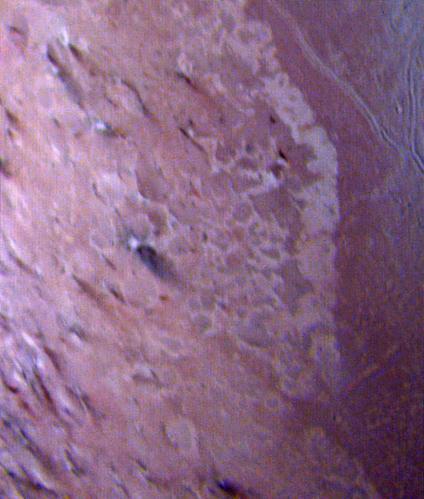
This false color image of Triton is a composite of images taken through the violet, green and ultraviolet filters. The image was taken early on Aug. 25, 1989 when Voyager 2 was about 190,000 kilometers 118,000 miles from Triton surface.

Titan

NASA Voyager 2 obtained this color image of Neptune largest satellite,Triton, on Aug. 22, 1989. The south pole of Triton is tipped toward the sun and it is summer in the southern hemisphere.
The large, dark oval spot in Neptune atmosphere is just coming into view in this picture returned from NASA Voyager 2 spacecraft on June 30, 1989.

This computer generated montage created from images obtained by NASA Voyager 2 shows Neptune as it would appear from a spacecraft approaching Triton, Neptune largest moon at 2706 km 1683 mi in diameter. http://photojournal.jpl.nasa.gov/cat…