NASA's Katherine Johnson Independent Verification and Validation Facility in Fairmont, West Virginia.  Credit: NASA
NASA Renames Facility in Honor of ‘Hidden Figure’ Katherine Johnson
ER-2s bearing tail numbers 806 and 809 are used as airborne science platforms by NASA's Dryden Flight Research Center. The aircraft are platforms for a variety of high-altitude science missions flown over various parts of the world. They ar…
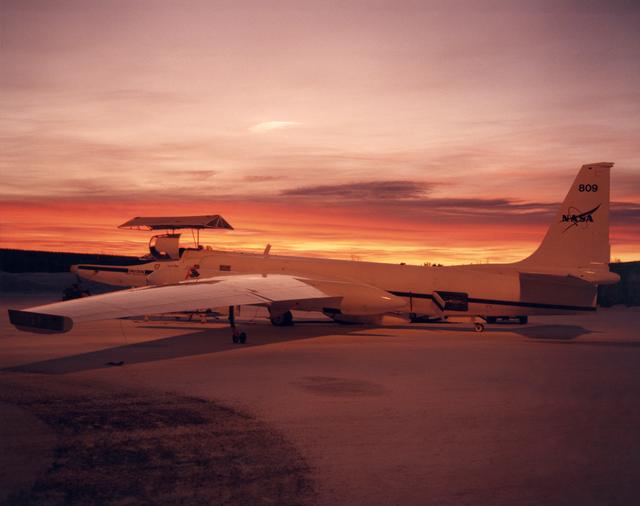
ER-2 #809 outside Arena Arctica hangar in Kiruna, Sweden prior to the SAGE III Ozone Loss and Validation Experiment (SOLVE)
ER-2s bearing tail numbers 806 and 809 are used as airborne science platforms by NASA's Dryden Flight Research Center. The aircraft are platforms for a variety of high-altitude science missions flown over various parts of the world. They ar…
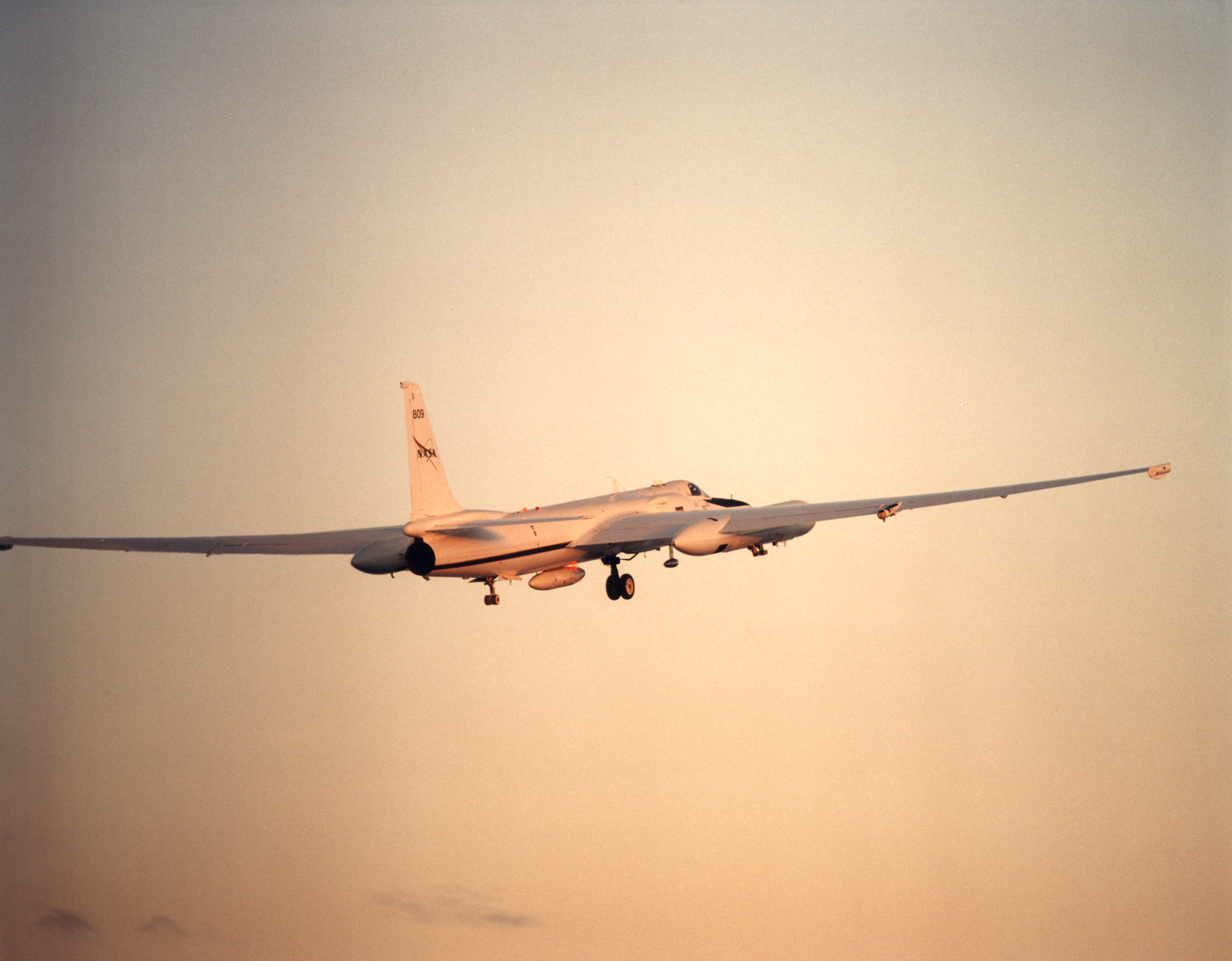
ER-2 #809 landing in Kiruna, Sweden after second flight of the SAGE III Ozone Loss and Validation Experiment (SOLVE)
ER-2s bearing tail numbers 806 and 809 are used as airborne science platforms by NASA's Dryden Flight Research Center. The aircraft are platforms for a variety of high-altitude science missions flown over various parts of the world. They ar…
ER-2 #809 receives preflight fueling outside Arena Arctica hangar in Kiruna, Sweden prior to the SAGE III Ozone Loss and Validation Experiment (SOLVE)
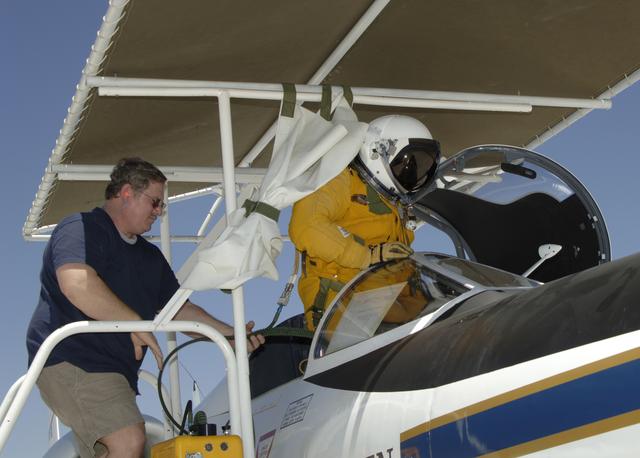
NASA Dryden life support technician Jim Sokolik assists pressure-suited pilot Dee Porter into the cockpit of NASA's ER-2 Earth resources aircraft.
The large air intakes for its powerful engine are obvious as NASA's high-flying ER-2 #806 Earth resources aircraft taxies out for another science mission.
ER-2 #809 awaiting pilot entry for the third flight of the SAGE III Ozone Loss and Validation Experiment (SOLVE). The ER-2, a civilian variant of Lockheed's U-2, and another NASA flying laboratory, Dryden's DC-8, were based north of the Arc…
ER-2 #809 awaits pilot entry for the third flight of the SAGE III Ozone Loss and Validation Experiment (SOLVE)
Boeing Quiet Experimental Validation Concept, QEVC, performance model
Boeing Quiet Experimental Validation Concept, QEVC, performance
NASA ER-2 # 809 and its DC-8 shown in Arena Arctica before the SAGE III Ozone Loss and Validation Experiment (SOLVE). The two airborne science platforms were based north of the Arctic Circle in Kiruna, Sweden, during the winter of 2000 to s…
ER-2 #809 and DC-8 in Arena Arctica hangar in Kiruna, Sweden prior to the SAGE III Ozone Loss and Validation Experiment (SOLVE)
ER-2s bearing tail numbers 806 and 809 are used as airborne science platforms by NASA's Dryden Flight Research Center. The aircraft are platforms for a variety of high-altitude science missions flown over various parts of the world. They ar…
ER-2 #809 during fueling for first flight in Kiruna, Sweden prior to the SAGE III Ozone Loss and Validation Experiment (SOLVE)
ER-2s bearing tail numbers 806 and 809 are used as airborne science platforms by NASA's Dryden Flight Research Center. The aircraft are platforms for a variety of high-altitude science missions flown over various parts of the world. They ar…
ER-2 #809 in Kiruna, Sweden for the SAGE III Ozone Loss and Validation Experiment (SOLVE) with pilot Dee Porter entry for first flight
NASA'S ER-2 #806 lifts off from Edwards Air Force Base on a CALIPS/CloudSat validation instrument checkout flight.
NASA engineer Larry Hudson and Ikhana ground crew member James Smith work on a ground validation test with new fiber optic sensors that led to validation flights on the Ikhana aircraft. NASA Dryden Flight Research Center is evaluating an ad…
ED08-0016-20
No more images