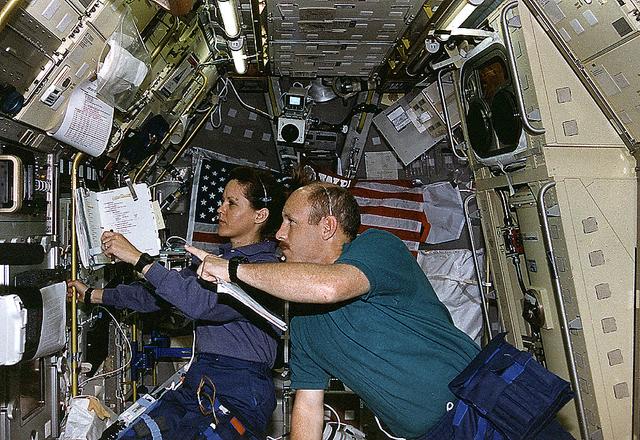
Onboard Space Shuttle Columbia (STS-73) Payload Commander Kathryn Thornton and Commander Ken Bowersox discuss the Drop Physics Module (DPM) experiment in the United States Microgravity Laboratory 2 (USML-2) spacelab science module.
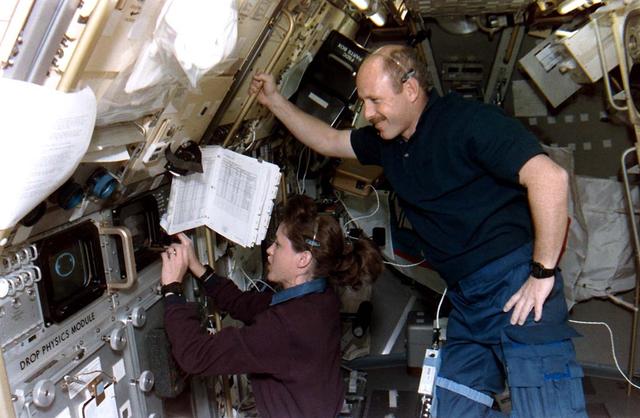
Astronaut Kathryn C. Thornton, payload commander, works at the Drop Physics Module (DPM) on the portside of the science module supporting the U.S. Microgravity Laboratory (USML-2). Astronaut Kerneth D. Bowersox, mission commander, looks on.
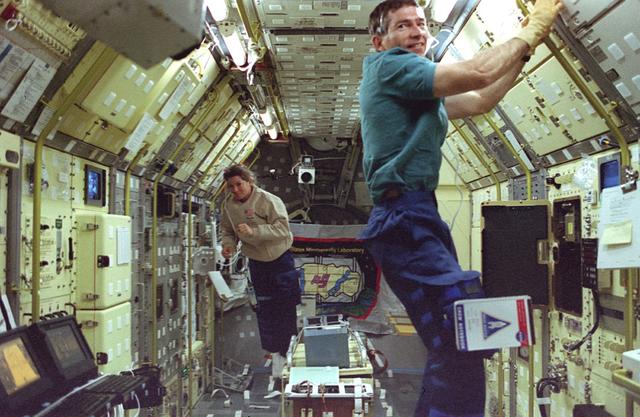
Onboard photo of space shuttle Columbia (STS-73) crewmembers Fred Leslie (foreground) and Catherine Coleman aboard the United States Microgravity Laboratory (USML) conducting experiments in a microgravitational environment available in the…
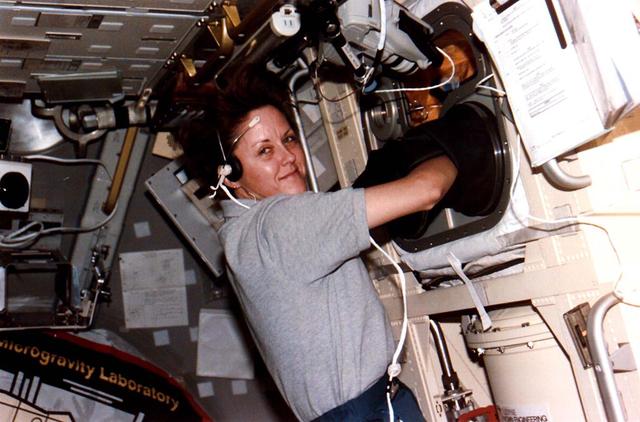
Astronaut Kathryn C. Thornton, payload commander, works in the glovebox of the science module supporting the U.S. Microgravity Laboratory (USML-2) mission. Five NASA astronauts and two payload specialists are in the last few days of a sched…

Experiment sequence test on USML-1 Glovebox equipment and test investigator group.
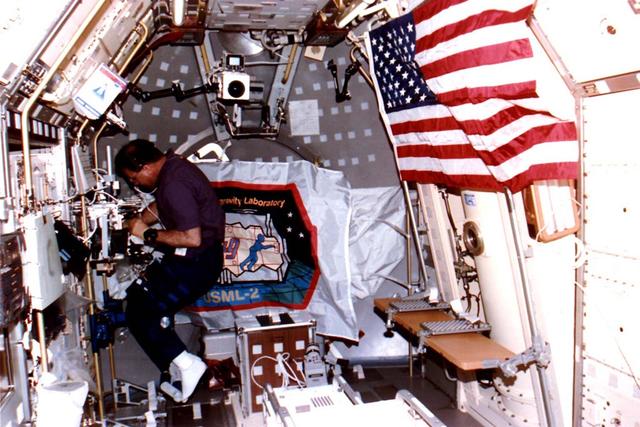
Albert Sacco Jr., payload specialist for STS-73, works in the glovebox on the portside of the science module aboard the Space Shuttle Columbia in earth orbit.
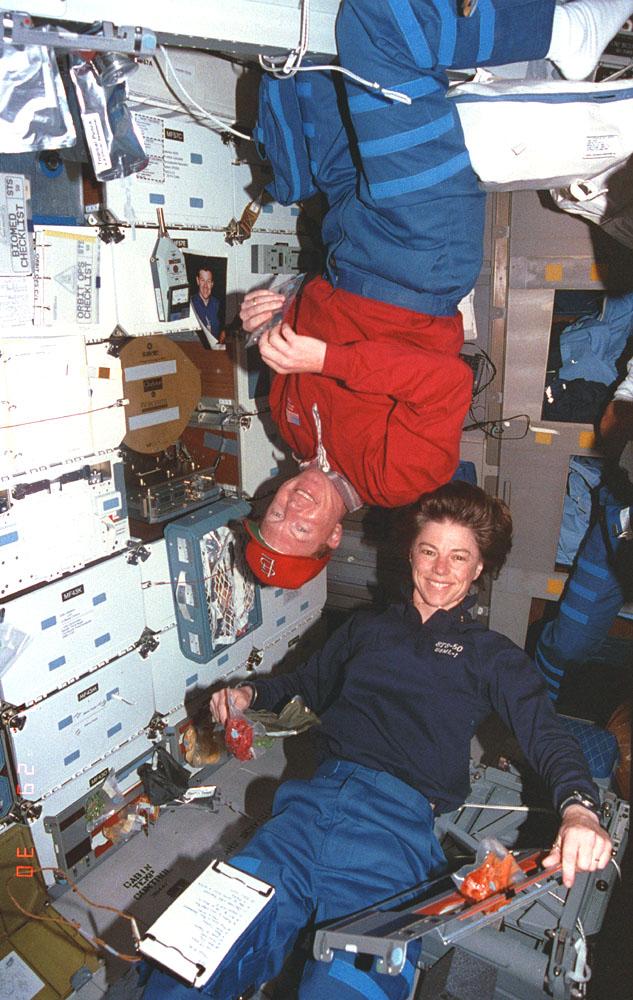
Onboard Space Shuttle Columbia (STS-50) all work and no play make commander Richard (Dick) Richards and payload commander Bornie Dunbar take a break from their work in the United States Microgravity Laboratory (USML-1) responsibilities.

In this photograph, astronaut Eugene Trinh, a payload specialist for this mission, is working at the Drop Physics Module (DPM), and mission specialist Carl Meade is working on the experiment at the Glovebox inside the first United States Mi…

The first United States Microgravity Laboratory (USML-1) was one of NASA's science and technology programs that provided scientists an opportunity to research various scientific investigations in a weightless environment inside the Spacelab…
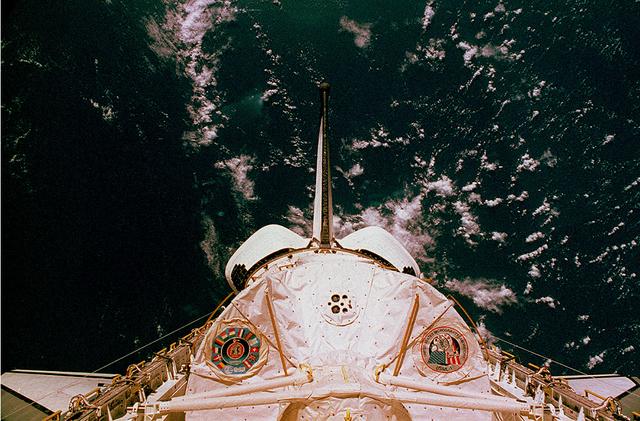
This is a photograph of the Spacelab module for the first United States Microgravity Laboratory (USML-1) mission, showing logos of the Spacelab mission on the left and the USML-1 mission on the right. The USML-1 was one part of a science an…

The first United States Microgravity Laboratory (USML-1) was one of NASA's science and technology programs that provided scientists an opportunity to research various scientific investigations in a weightless environment inside the Spacelab…

The first United States Microgravity Laboratory (USML-1) flew in orbit inside the Spacelab science module for extended periods, providing scientists and researchers greater opportunities for research in materials science, fluid dynamics, bi…

SSE (Solar System Exploration) flight apparatus: PDE (Particle Dispersion Experiement) on-board USML-1 (GEM)

Larry DeLucas operating USML-1 Glovebox
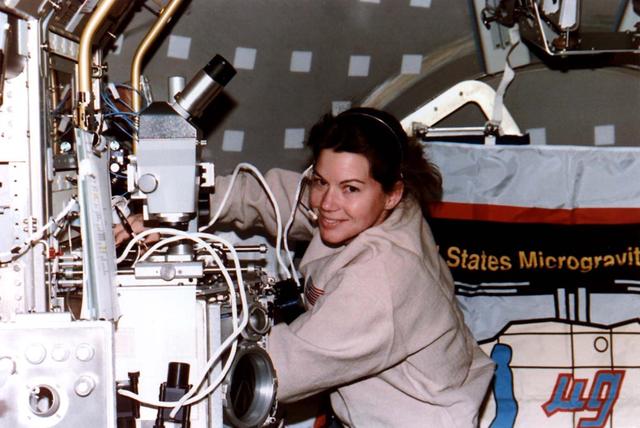
Astronaut Catherine G. Coleman, mission specialist for STS-73, works in the glovebox on the portside of the science module aboard the Space Shuttle Columbia in earth-orbit.
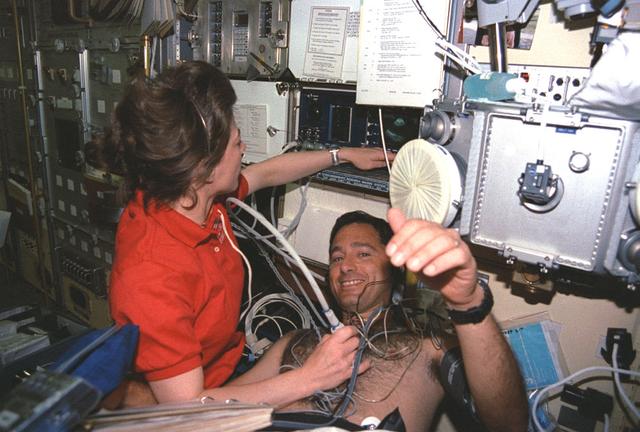
Onboard Space Shuttle Columbia (STS-50) payload commander Bornie Dunbar performs life science experiments on crewmember payload specialist Lawrence Delucas in the United States Microgravity Laboratory (USML-1) science module.

STS-50, USML-1, Spacelab module in cargo bay with earth in background
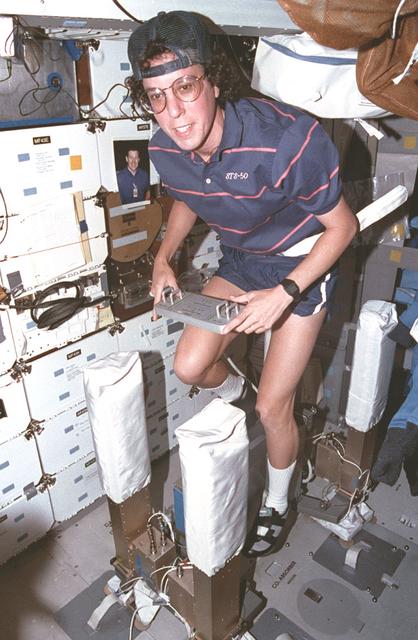
Onboard Space Shuttle Columbia (STS-50) in the United States Microgravity Laboratory (USML-1) mission specialist Ellen S. Baker is hard at work.
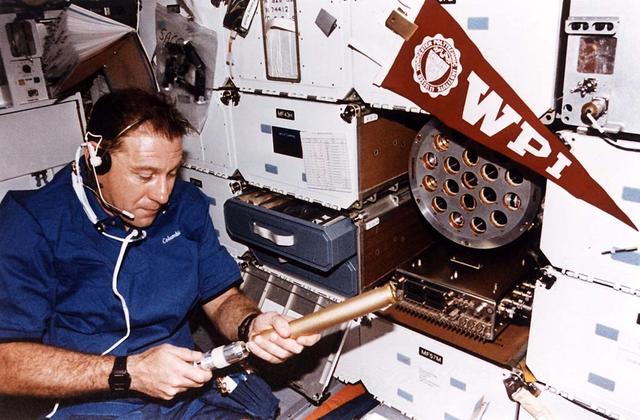
Payload specialist Albert Sacco Jr. inspects a crystal in a cylindrical autoclave on the mid-deck of the earth-orbiting space shuttle Columbia. This Zeolite Crystal Growth (ZCG) experiment was one of a few U.S. Microgravity Laboratory (USML…
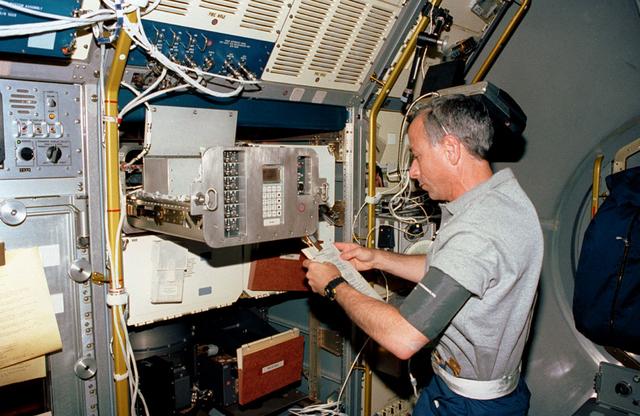
The first United States Microgravity Laboratory (USML-1) was one of NASA's science and technology programs and provided scientists an opportunity to research various scientific investigations in a weightless environment inside the Spacelab…
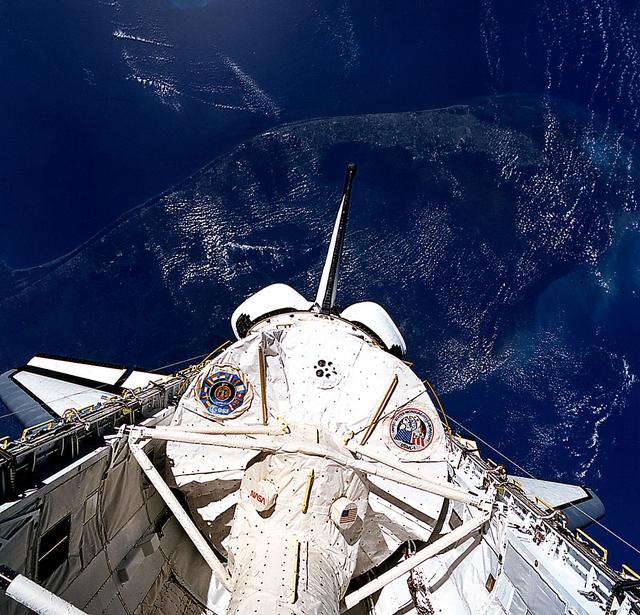
Space Shuttle Columbia (STS-50) onboard photo of the United States Microgravity Laboratory (USML-1) module in payload bay in this scene over the southern two-thirds of the Florida peninsula. Kennedy Space Center (KSC) can be seen just above…
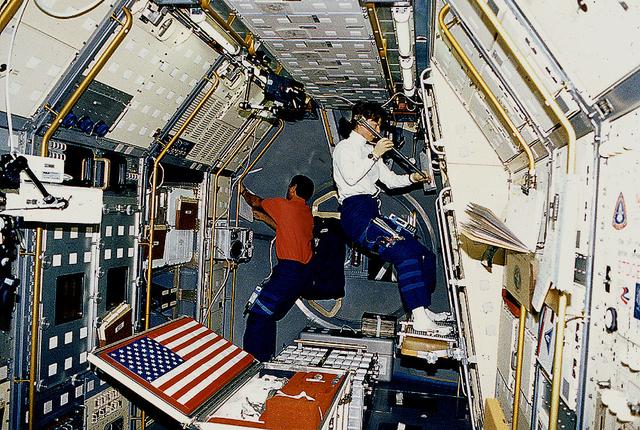
Space Shuttle Columbia (STS-50) onboard photo of astronauts working in United States Microgravity Laboratory (USML-1). USML-1 will fly in orbit for extended periods of time attached to the Shuttle, providing greater opportunities for resear…

The first United States Microgravity Laboratory (USML-1) flew in orbit inside the Spacelab science module for extended periods, providing scientists and researchers greater opportunities for research in materials science, fluid dynamics, bi…

SSE (Solar System Exploration) flight apparatus: PDE (Particle Dispersion Experiement) on-board USML-1 (GEM)

Two versions of (PCAM) Protein Crystallization Apparatus for Microgravity, (DCAM) Diffusion Controled Crystallization Apparatus is in the (STES) Single Locker Thermal Enclosure System. Principal Investigator was Dan Carter.
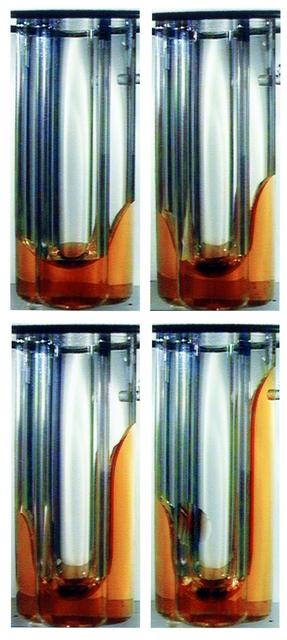
Interface Configuration Experiment on the Second United States Microgravity Laboratory (USML-2). Over time the photos show a change in the shape of the interface between a liquid and a gas in a sealed, slightly asymmetrical container. Under…
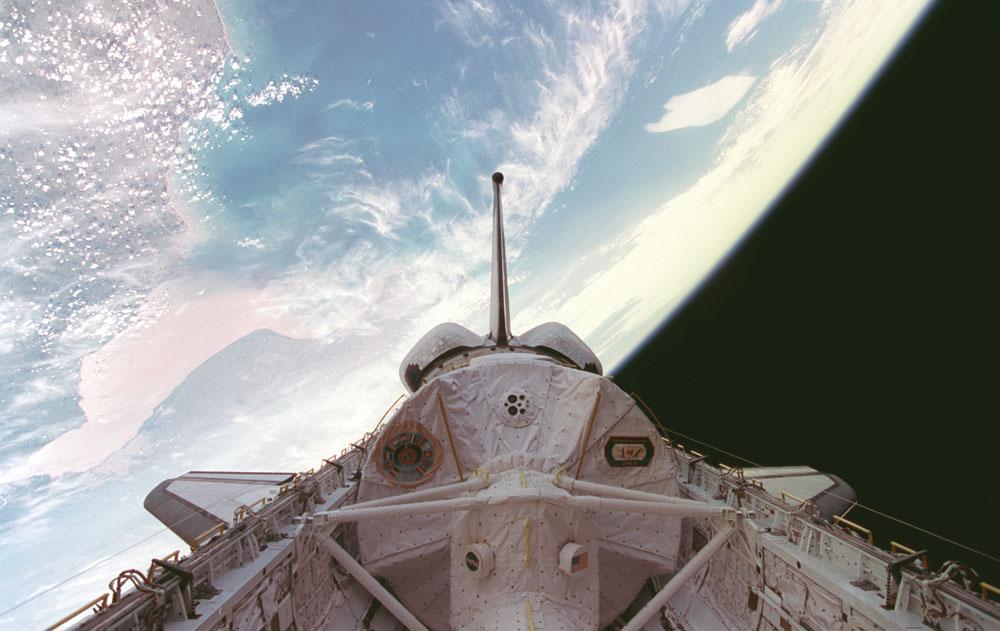
Onboard photo of space shuttle Columbia (STS-73) cargo bay payload - the United States Microgravity Laboratory-2 (USML-2) with an earthview.
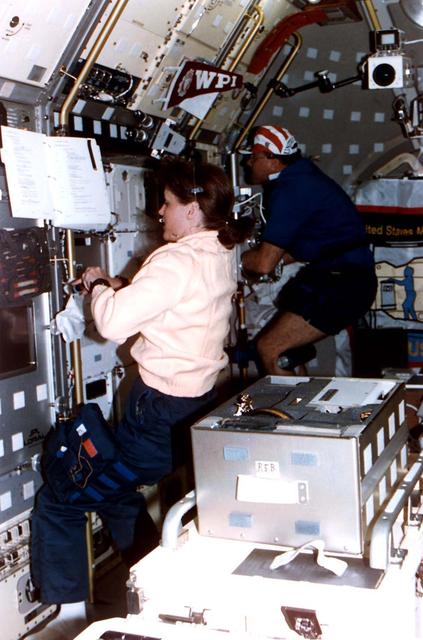
Astronaut Kathryn C. Thornton, payload commander for STS-73, works at the drop physics module (DPM) on the portside of the science module aboard the Space Shuttle Columbia in Earth orbit.
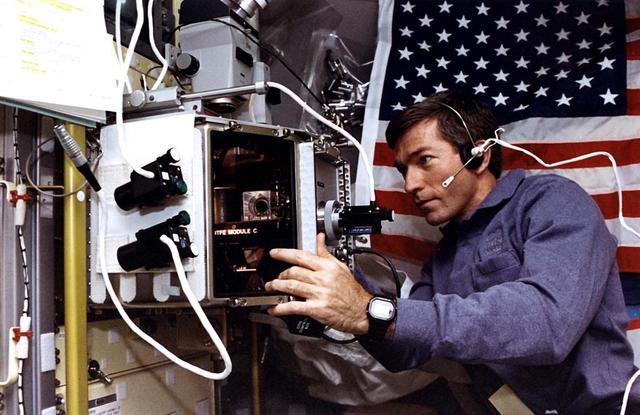
Payload specialist Fred Leslie makes use of the versatile U.S. Microgravity Laboratory (USML-2) glovebox to conduct an investigation with the Oscillatory Thermocapillary Flow Experiment (OTFE). This complement of the Surface-Tension-Driven…

The first United States Microgravity Laboratory (USML-1) was one of NASA's science and technology programs that provided scientists an opportunity to research various scientific investigations in a weightlessness environment inside the Spac…

The first United States Microgravity Laboratory (USML-1) provided scientific research in materials science, fluid dynamics, biotechnology, and combustion science in a weightless environment inside the Spacelab module. This photograph is a c…
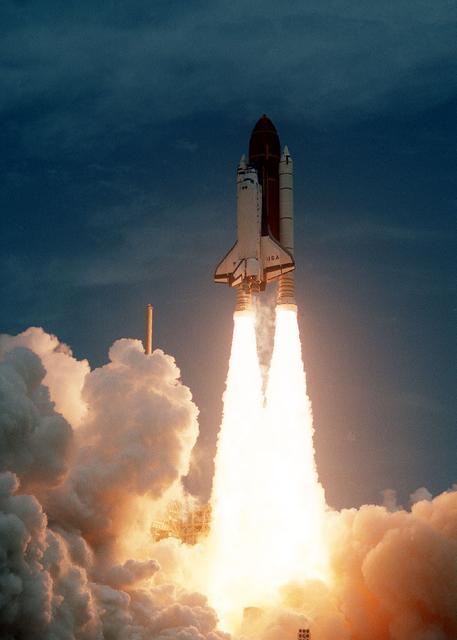
Space Shuttle Columbia (STS-50) launched into history carrying crew of seven and its payload was comprised of the US Microgravity Laboratory 1 (USML-1).The USML-1 was one of NASA's missions dedicated to scientific investigations in a microg…