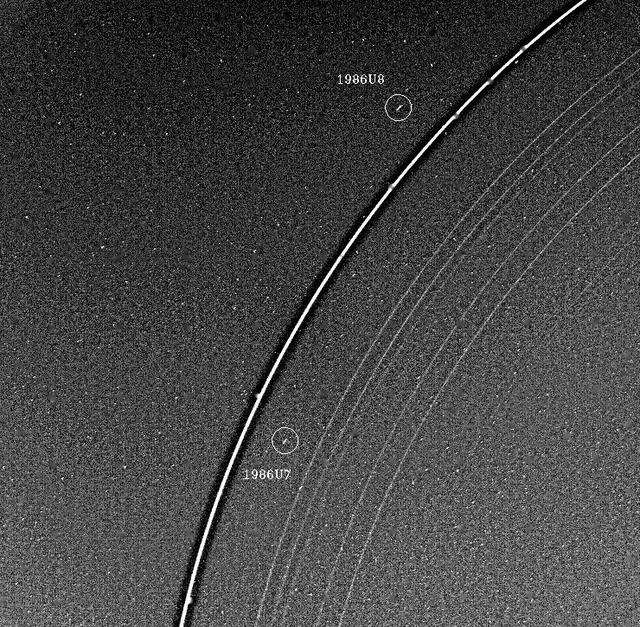
Voyager 2 has discovered two hepherd satellites associated with the rings of Uranus. The two moons, designated 1986U7 and 1986U8, are seen here on either side of the bright epsilon ring; all nine of the known Uranian rings are visible.
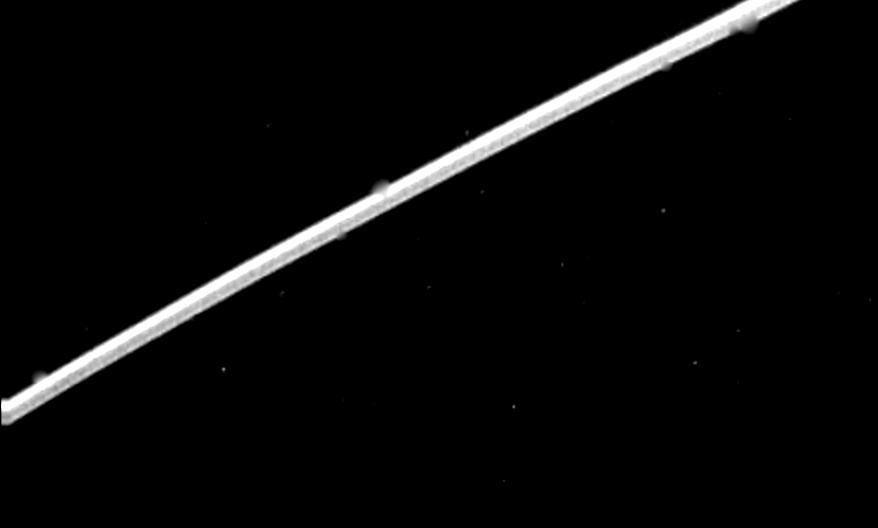
NASA Voyager 2 acquired this high-resolution image of the epsilon ring of Uranus on Jan. 23, 1986. This clear-filter image from Voyager narrow-angle camera has a resolution of about 10 km 6 mi.
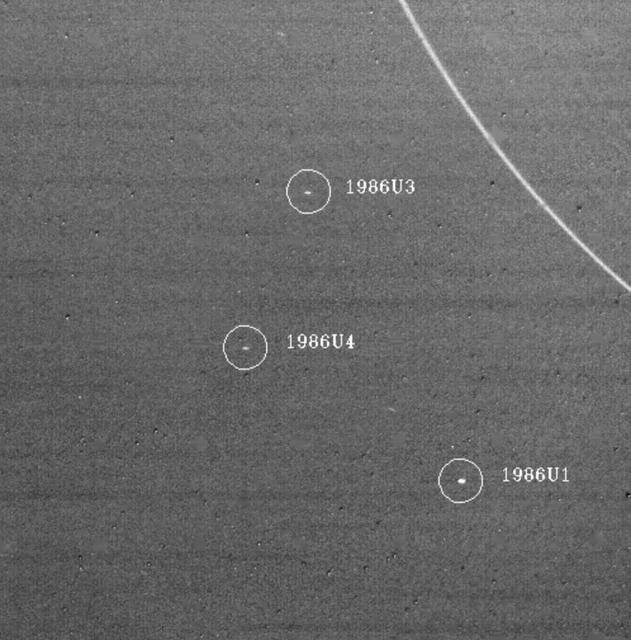
On Jan. 18, 1986, NASA Voyager 2 discoverd three Uranus satellites. All three lie outside the orbits of Uranus nine known rings, the outermost of which, the epsilon ring, is seen at upper right. http://photojournal.jpl.nasa.gov/catalog/PI…
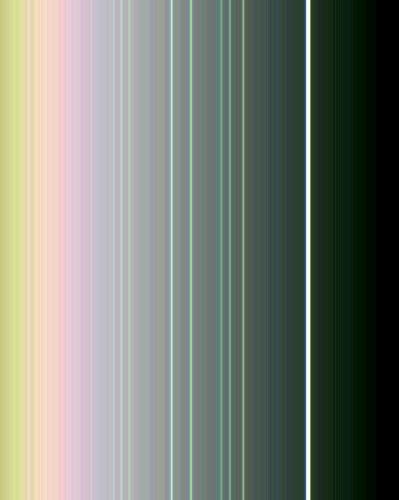
This false-color view of the rings of Uranus was made from images taken by NASA Voyager 2 on Jan. 21, 1986. All nine known rings are visible here; the somewhat fainter, pastel lines seen between them are contributed by the computer enhancem…

This silhouetted image of the rings of Uranus was taken by NASA Voyager 2 spacecraft on Jan. 24, 1986, just 27 minutes before its closest approach to the planet.
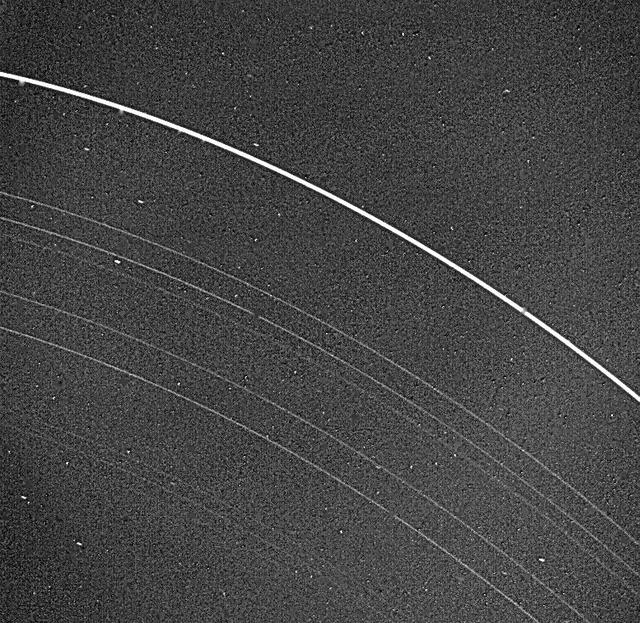
NASA Voyager 2 returned this picture of the Uranus rings on Jan. 22, 1986, from a distance of 2.52 million kilometers 1.56 million miles. All nine known rings are visible in this image.

Uranus rings, photographed by NASA Voyager 2 in 1986 as it approached the plane of the Uranian ring system.
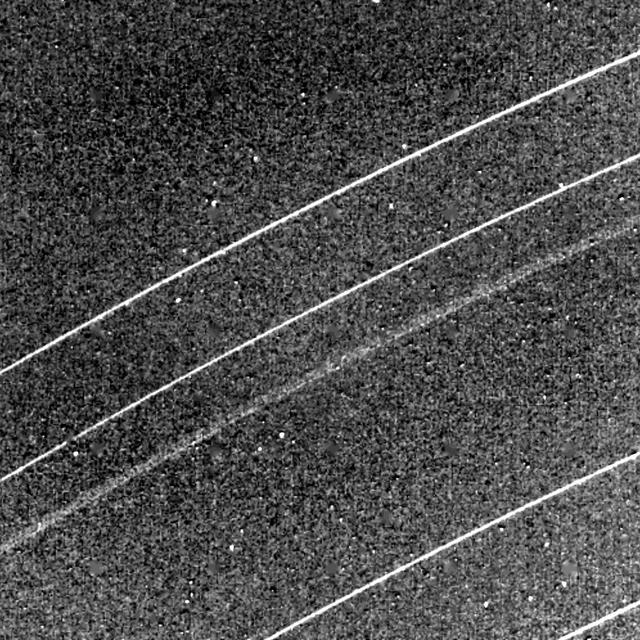
This NASA Voyager 2 image of the Uranian rings delta, gamma, eta, beta and alpha from top was taken Jan. 23, 1986.
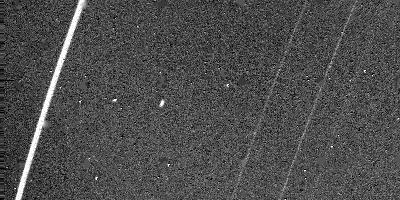
The outer rings of Uranus are visible in this image, obtained by NASA Voyager 2 on Jan. 23, 1986. The outermost and brightest ring, called epsilon, is visible along with the fainter and narrower delta and gamma rings from left.
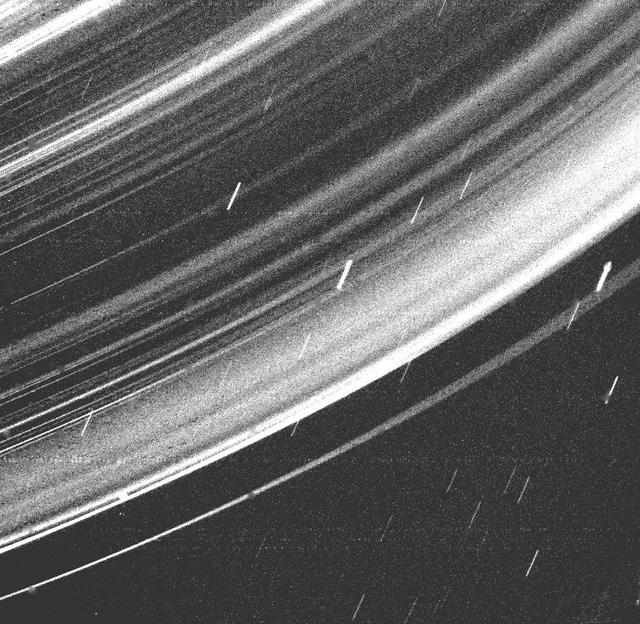
This image captured by NASA's Voyager 2 in 1986 revealed a continuous distribution of small particles throughout the Uranus ring system. This unique geometry, the highest phase angle at which Voyager imaged the rings, allowed us to see lane…
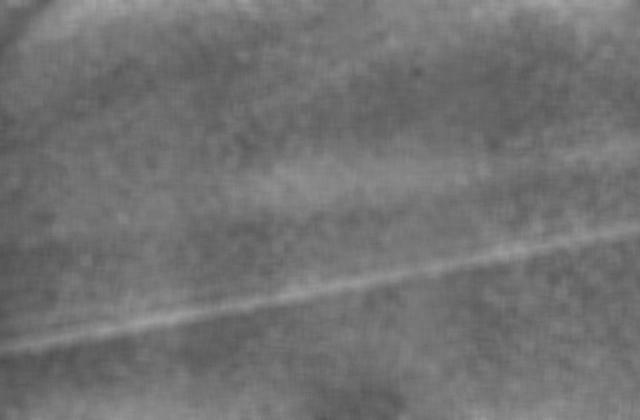
NASA Voyager 2 took this wide-angle image of Uranus rings as the spacecraft neared the plane of the rings less than an hour before closest approach to the planet.
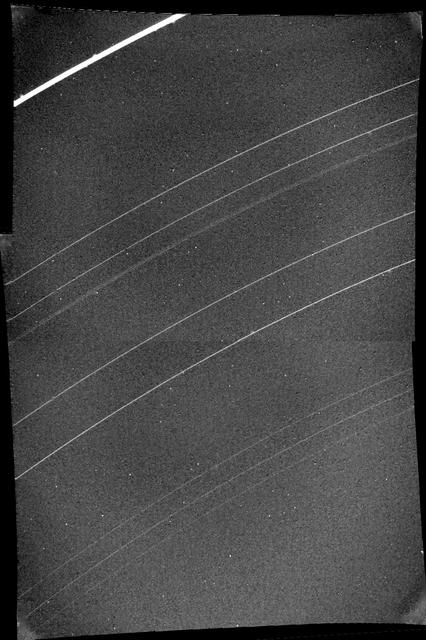
On Jan. 23, 1986, NASA Voyager 2 discovered a tenth ring orbiting Uranus. The tenth ring is about midway between the bright, outermost epsilon ring and the next ring down, called delta. http://photojournal.jpl.nasa.gov/catalog/PIA00035