Titan
Titan
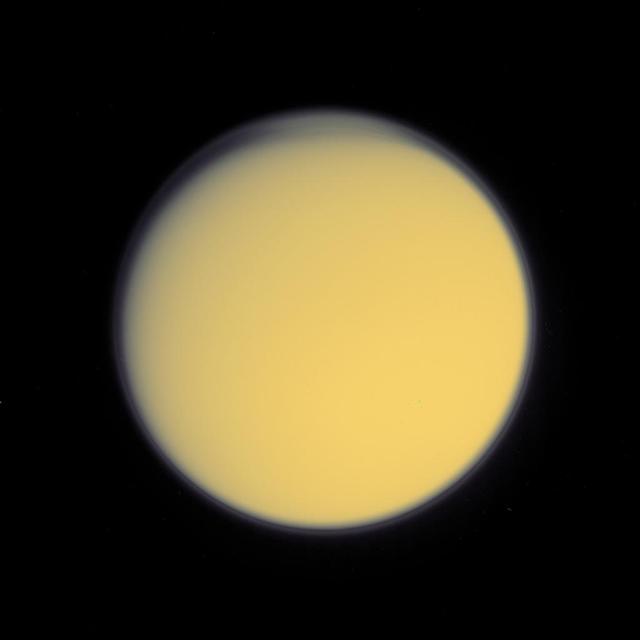
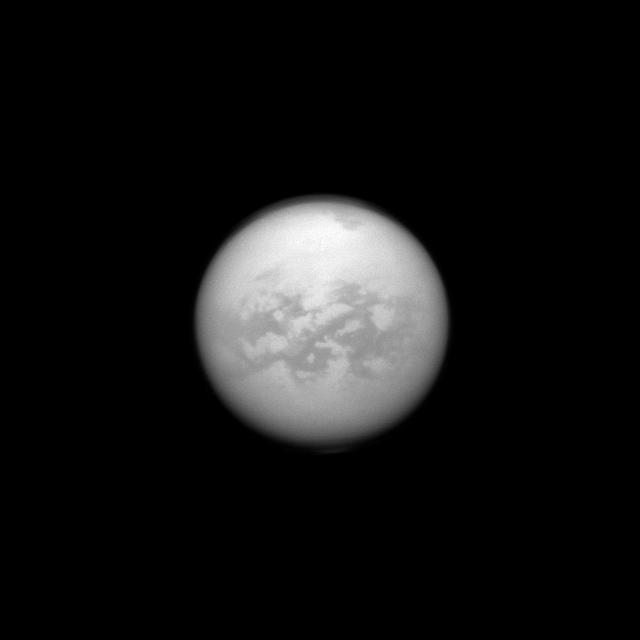
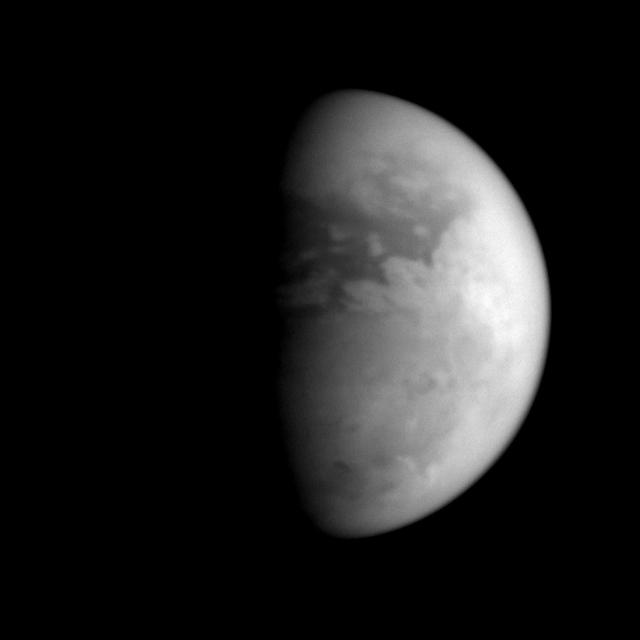
Titan Brighter Southern Hemisphere
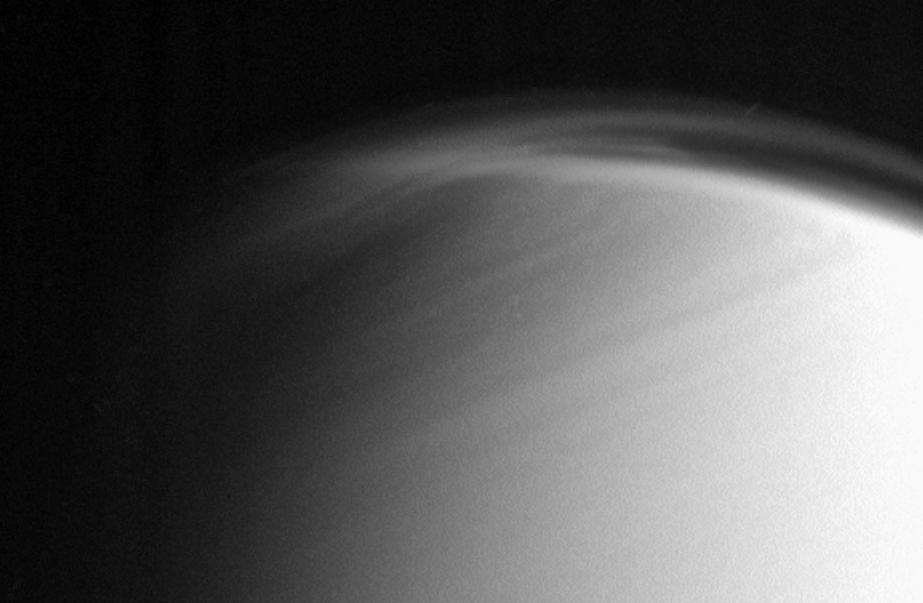
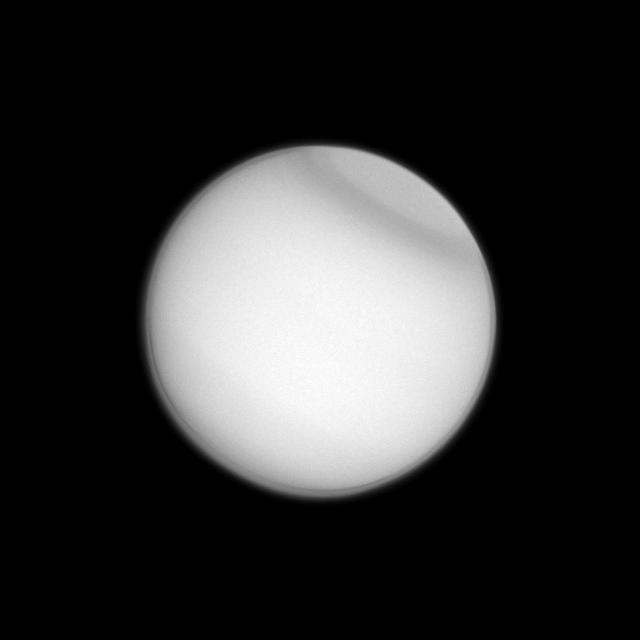
Titan Haze
Titan Haze
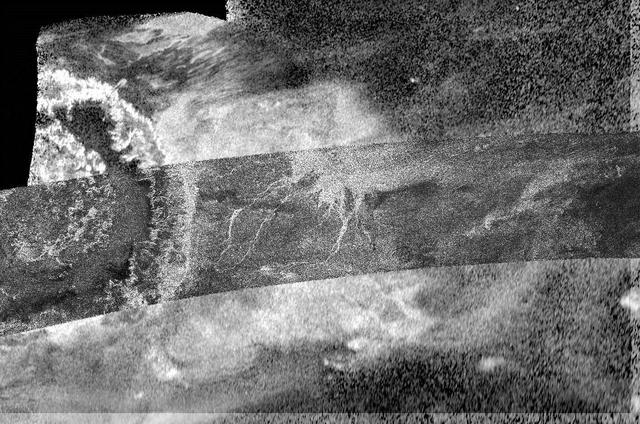
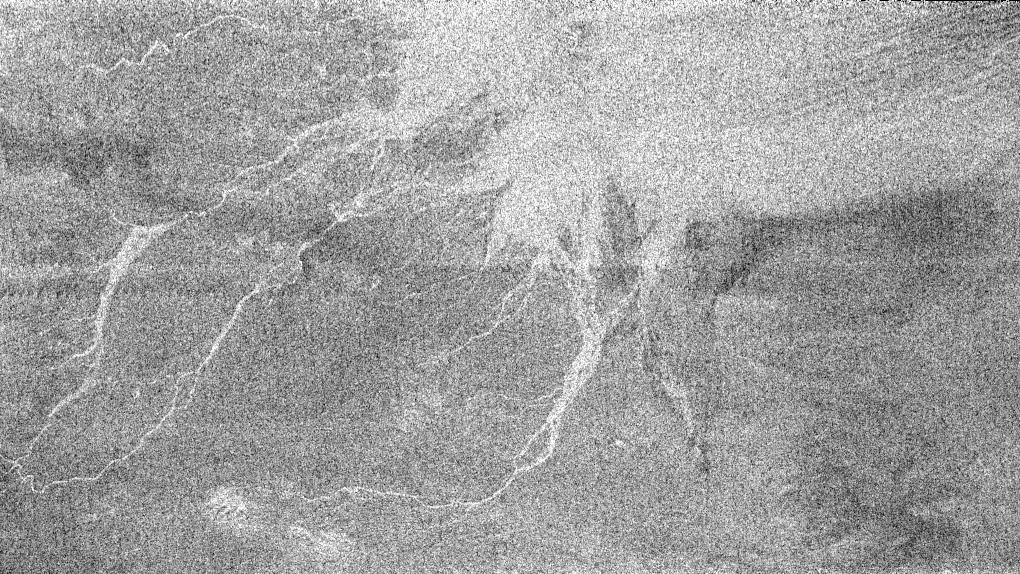
Titan Viewed by Cassini Radar
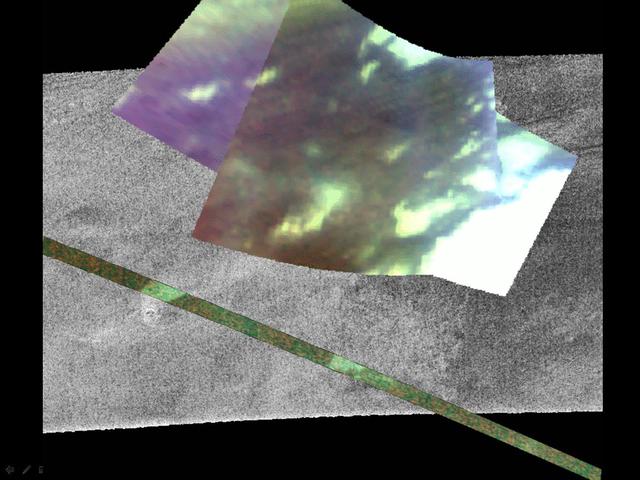
This image was obtained by NASA's Cassini radar instrument during a flyby on June 22, 2009. The radar antenna was pointing toward Titan at an altitude of 955 kilometers 593 miles during the closest approach.  The image has been processed wi…
Titan Radar Swath T-57 Flyby - June 22, 2009
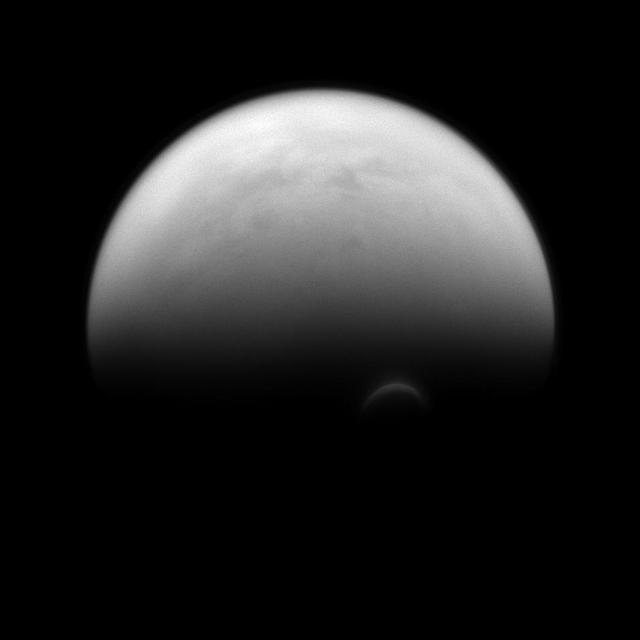
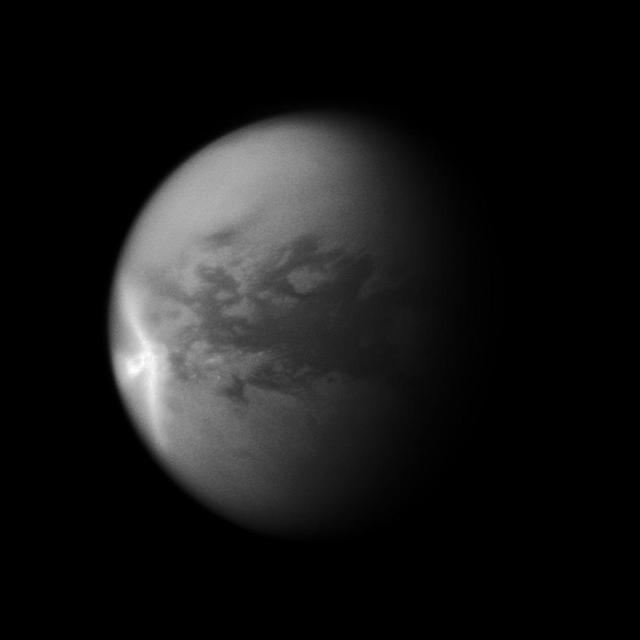
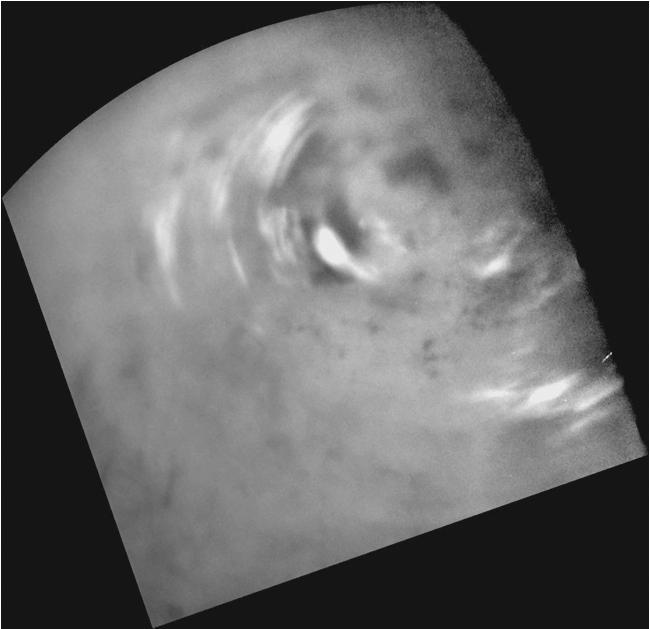
The sunlit edge of Titan south polar vortex stands out distinctly against the darkness of the moon unilluminated hazy atmosphere as seen by NASA Cassini spacecraft.
Bright Vortex
Infrared and Radar Views of Titan #2
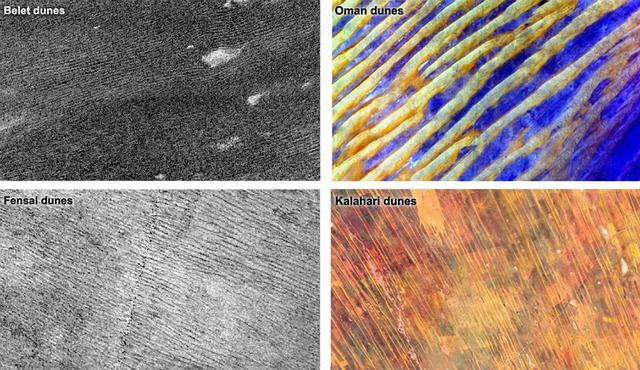
Data from NASA Cassini spacecraft show that the sizes and patterns of dunes on Saturn moon Titan vary as a function of altitude and latitude left. Images of Earth dunes Oman and Kalahari are shown at right as seen by NASA Terra spacecraft.
Dune Patterns
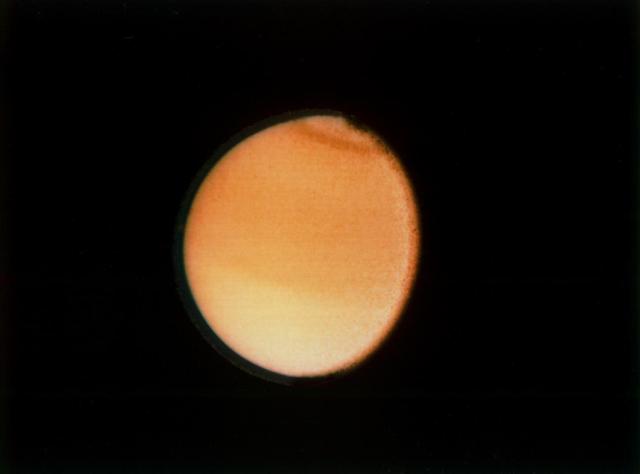
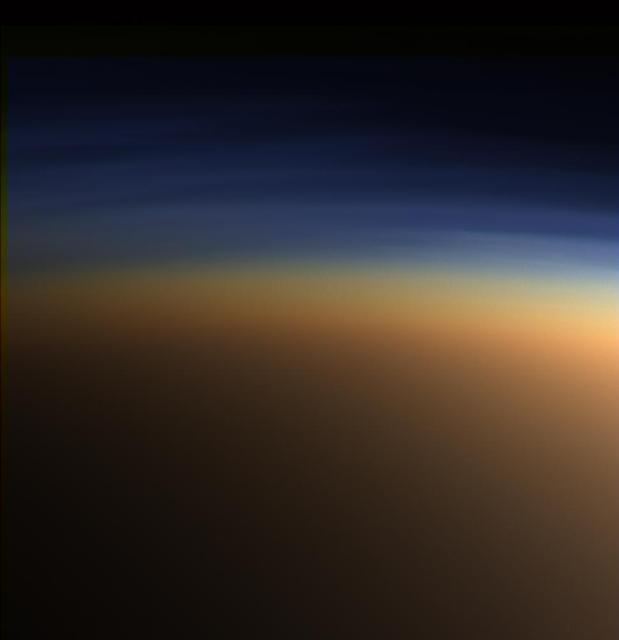
High Haze in Color
High Haze in Color
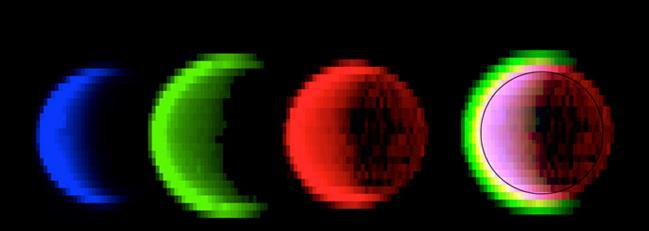
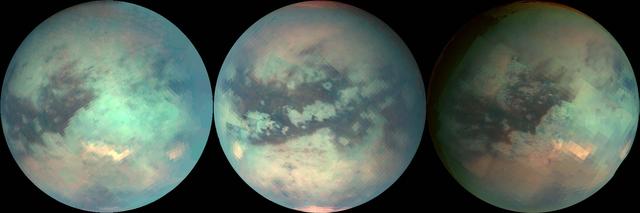
Cassini Views of Titan: False Color Composite
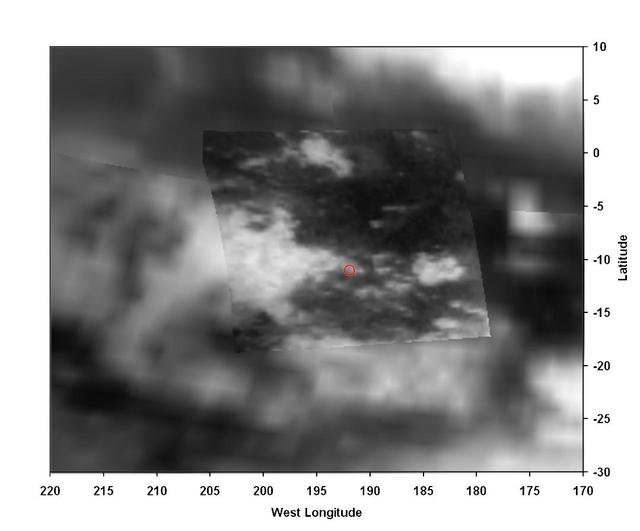
Infrared Map of Titan Active Regions
The complex and dynamic atmosphere of Titan displays multiple haze layers near the north pole in this view, which also provides an excellent look at the detached stratospheric haze layer that surrounds the moon at lower latitudes
Shifting Northern Hazes
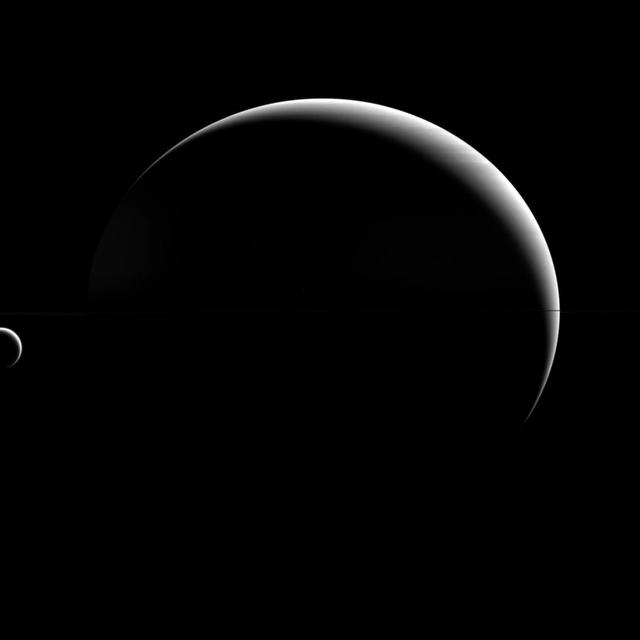
When Galileo first observed Venus displaying a crescent phase, he excitedly wrote to Kepler (in anagram) of Venus mimicking the moon-goddess. He would have been delirious with joy to see Saturn and Titan, seen in this image, doing the same…
Mimicking the Moon
This image, created by combining two different types of radar images from NASA Cassini spacecraft, reveals more details of Titan crater Menrva at left and its surroundings than a single image could provide.
Cassini Radar Zooms Out on Menrva
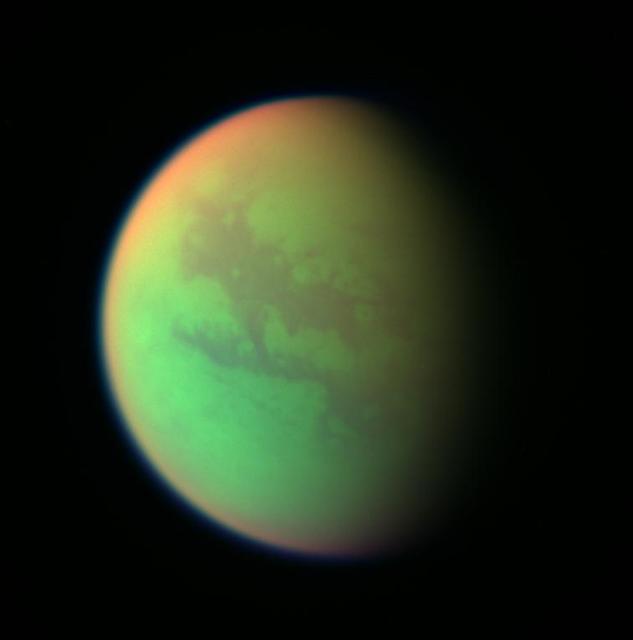
NASA Cassini spacecraft uses special infrared glasses to peer through Titan haze and monitor its surface inequatorial region dubbed Senkyo. The dark features are believed to be vast dunes of hydrocarbon particles.
Senkyo Through the Clouds
Titan polar collar, previously seen by Voyager 2 and the Hubble Space Telescope, has now been observed by the Cassini spacecraft, seen here in ultraviolet light. The collar is believed to be seasonal in nature.
Titan Fancy Collar
Titan Cloud Systems
Titan Cloud Systems
TITAN III in  14ft wind tunnel
ARC-1962-A-29073
A huge arrow-shaped storm blows across the equatorial region of Titan in this image from NASA Cassini spacecraft, chronicling the seasonal weather changes on Saturn largest moon.
Titan Arrow-Shaped Storm
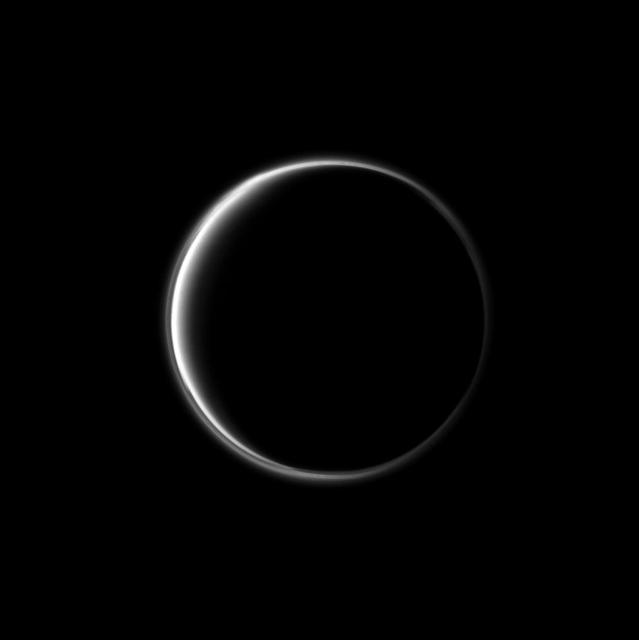
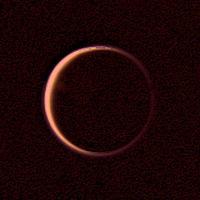
NASA Cassini spacecraft looks toward the dark side of Saturn largest moon and captures the halo-like ring produced by sunlight scattering through the periphery of Titan atmosphere.
Ethereal Ring
Dawn at the Huygens Site
Rainy Day at Hotei Arcus Artist Concept
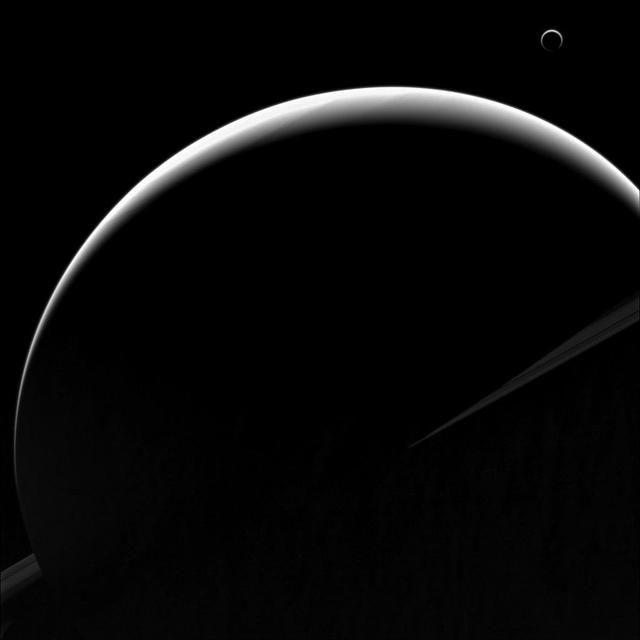
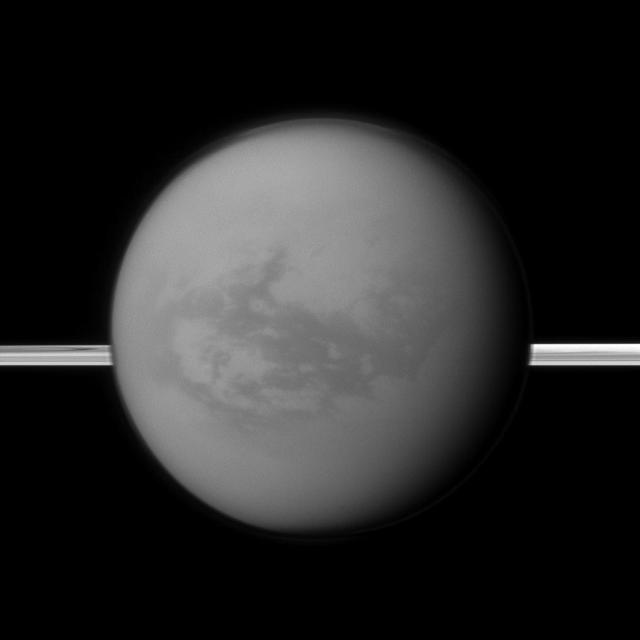
Titan Beyond the Rings
This image from NASA Cassini spacecraft shows an ancient southern sea that used to sprawl out near the south pole of Saturn moon Titan. Within this basin is the largest present-day lake in Titan southern hemisphere, Ontario Lacus.
Outline of an Ancient Sea on Titan
Titan Variety
Titan Variety
Changes in Titan Lakes
This map of Titan shows the names of many (but not all) features on the Saturnian moon that have been approved by the International Astronomical Union.  This map was produced by the USGS Astrogeology Science Center for the International Ast…
Map of Titan with Labeled Features
Tectonics on Titan
Tectonics on Titan
Titan: Complex Anti-greenhouse
Each of these two montages shows four synthetic views of Titan created using data acquired by NASA Cassini spacecraft between 2004 and 2015. With each flyby, a brief opportunity to add small pieces to the overall mapping coverage of Titan.
Working Toward Seamless Infrared Maps of Titan
NASA Cassini spacecraft looks toward the dark Senkyo region on Saturn moon Titan. Senkyo is the dark region towards the right. Two other dark regions, Aztlan and Fensal are also shown here. The bright area below Aztlan is called Tsegihi.
Titan Dark Senkyo
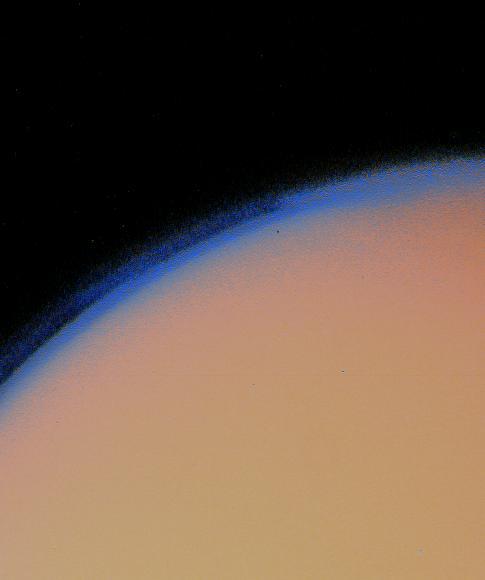
NASA Voyager 2 obtained this wide-angle image of the night side of Titan on Aug. 25, 1979. This is a view of Titan extended atmosphere. the bright orangish ring being caused by the atmosphere scattering of the incident sunlight.
Night Side of Titan
Titan Thick Haze Layer
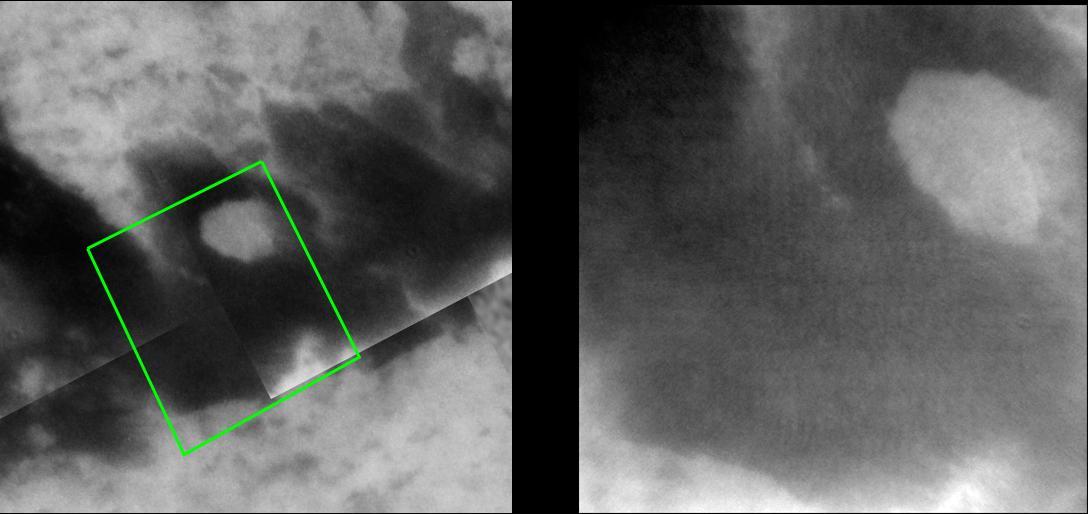
Pinpointing Huygens Landing Site
Diverse Geology
Diverse Geology
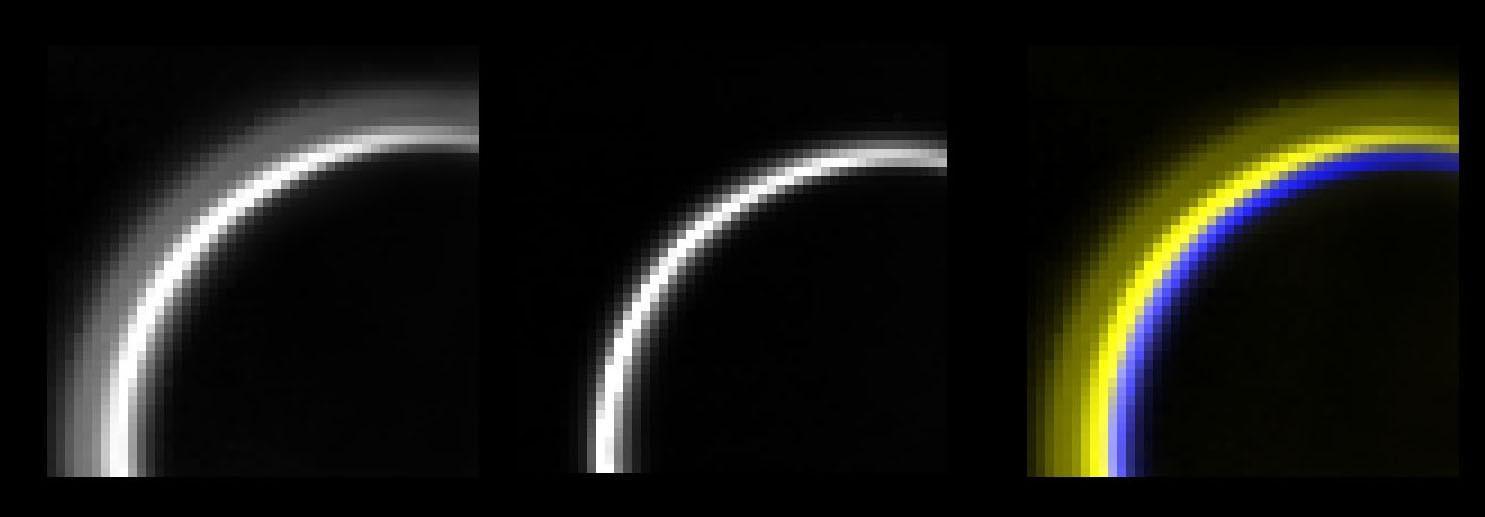
Haze Silhouettes Against Titan Glow
Titan may be a "large" moon -- its name even implies it! -- but it is still dwarfed by its parent planet, Saturn. As it turns out, this is perfectly normal.  Although Titan (3200 miles or 5150 kilometers across) is the second-largest moon i…
Not So Titanic
Glowing Titan
Glowing Titan
Saturn rings lie in the distance as NASA Cassini spacecraft looks toward Titan and its dark region called Shangri-La, east of the landing site of the Huygens Probe.
East of Huygens
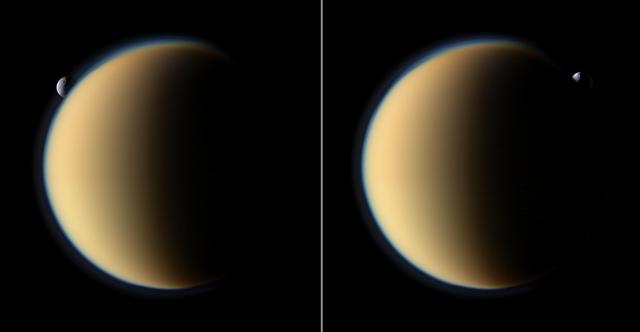
Saturn moon Tethys with its prominent Odysseus Crater silently slips behind Saturn largest moon Titan and then emerges on the other side in this image taken by NASA Cassini spacecraft.
Tethys Slips Behind Titan
Titan Landing Site Seen From Cassini
The three mosaics shown here were composed with data from Cassini visual  and infrared mapping spectrometer taken during the last three Titan  flybys
Mapping Titan Changes
Saturn's largest and second largest moons, Titan and Rhea, appear to be stacked on top of each other in this true-color scene from NASA's Cassini spacecraft.  The north polar hood can be seen on Titan (3,200 miles or 5,150 kilometers across…
Fire and Ice
Titan Makes Contact
Titan Makes Contact
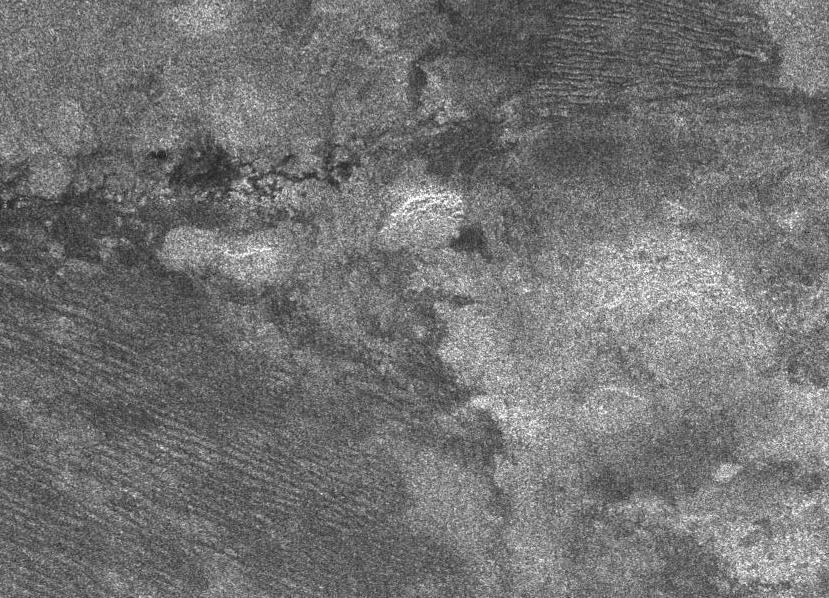
In this synthetic aperture radar image obtained by NASA Cassini spacecraft, two generally similar features, upper center and lower right, appear to be low mountains with grooves running roughly in the up-down direction.
New Wrinkles on Titan
Angular Bright Spot
Angular Bright Spot
Clouds move above Titan large methane lakes and seas near the moon north pole in this image from NASA Cassini spacecraft. Methane clouds in the troposphere, the lowest part of the atmosphere, appear white here.
Northern Clouds in Motion
Huygens Landing Site Similarities