
This pair of images shows the before-and-after comparison of the part of comet Tempel 1 that was hit by the impactor from NASA Deep Impact spacecraft.
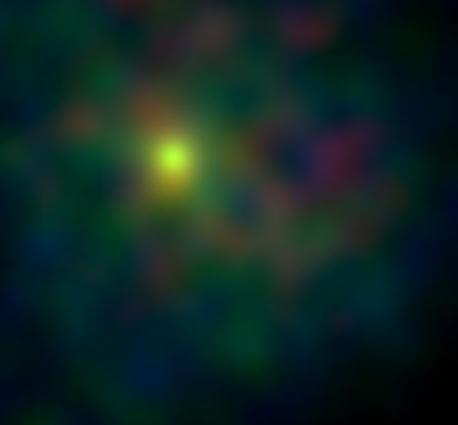
This false-color image shows comet Tempel 1 as seen by NASA Chandra X-ray Observatory on June 30, 2005, Universal Time. The comet was bright and condensed.
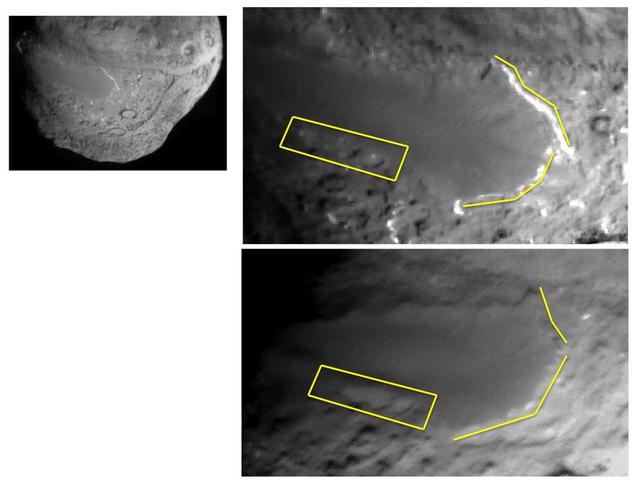
This image layout depicts changes in the surface of comet Tempel 1, observed first by NASA Deep Impact Mission in 2005 top right and again by NASA Stardust-NExT mission on Feb. 14, 2011 bottom right.
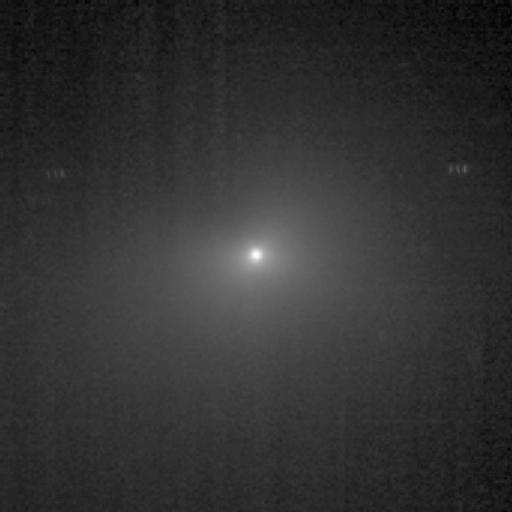
This image shows comet Tempel 1 as seen through the clear filter of the medium resolution imager camera on NASA Deep Impact. It was taken on June 30, 2005.
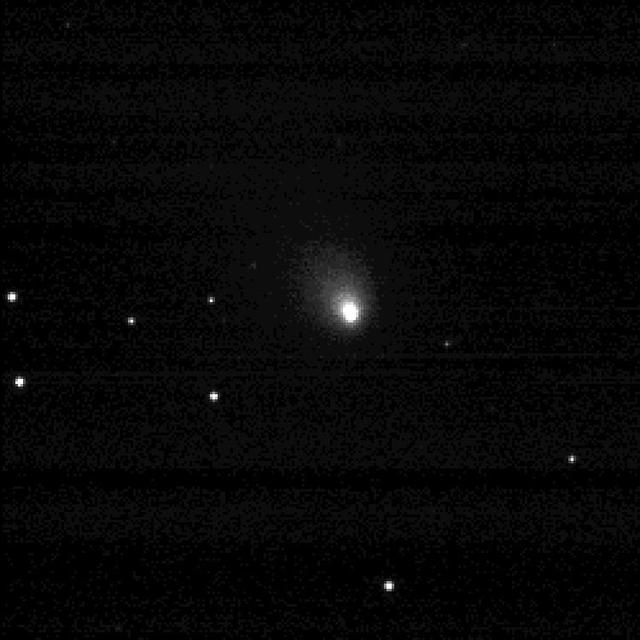
Taken on April 25, 2005, sixty-nine days before it gets up-close-and-personal with a comet, NASA Deep Impact spacecraft successfully photographed its quarry, comet Tempel 1, at a distance of 39.7 million miles.
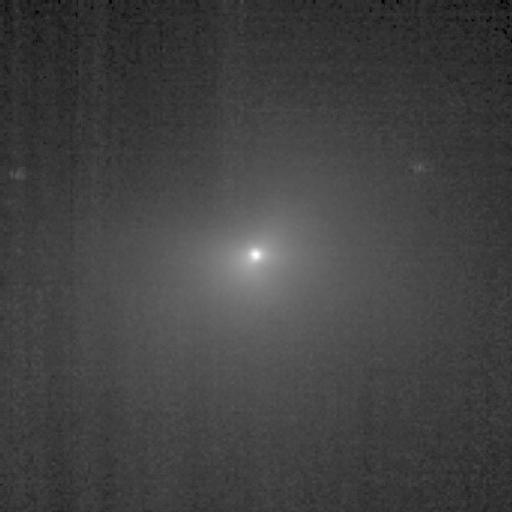
This image shows comet Tempel 1 as seen through the clear filter of the medium resolution imager camera on NASA Deep Impact. It was taken on July 1, 2005.

These artist concepts illustrate Tempel 1 shape, reflectivity, rotation rate and surface temperature, based on information from NASA Hubble Space Telescope and Spitzer Space Telescope.
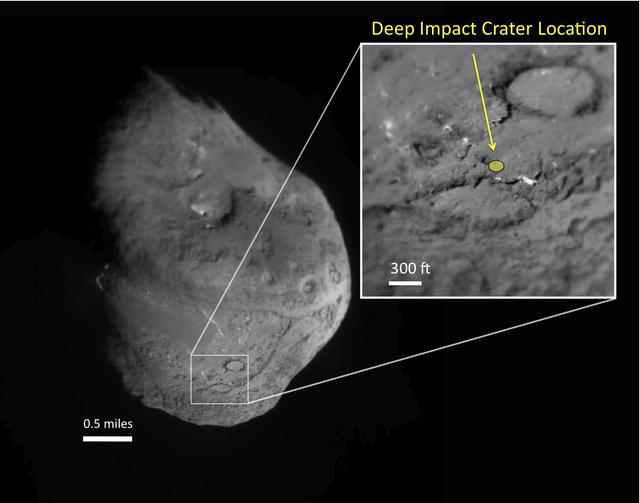
This pair of images shows the area affected by the impactor released by NASA Deep Impact spacecraft in July 2005.
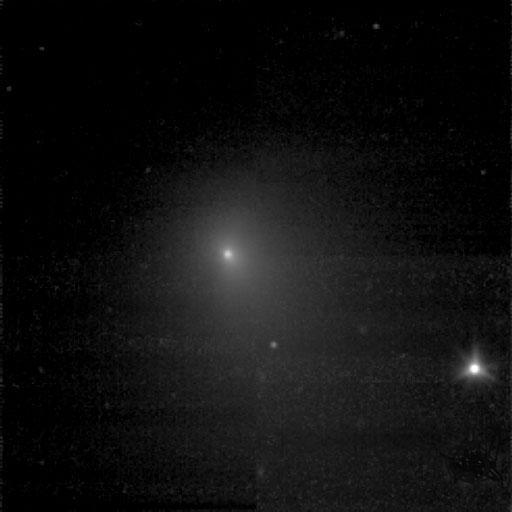
One of the two pictures of Tempel 1 (see also PIA02101) taken by Deep Impact's medium-resolution camera is shown next to data of the comet taken by the spacecraft's infrared spectrometer. This instrument breaks apart light like a prism to r…
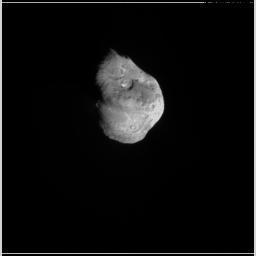
This frame from a movie shows NASA Deep Impact impactor probe approaching comet Tempel 1. It is made up of images taken by the probe impactor targeting sensor in 2005.

Artist concept of NASA Stardust-NExT mission, which will fly by comet Tempel 1 on Feb. 14, 2011.
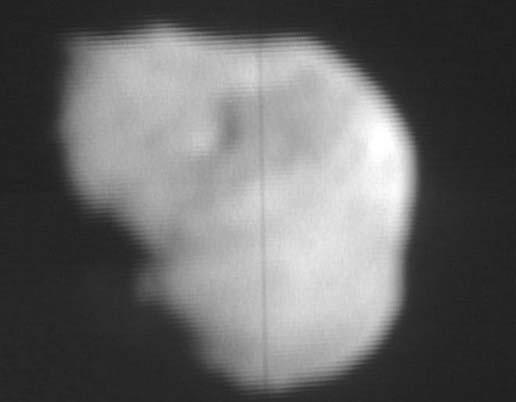
This image from NASA TV shows the nucleus of comet Tempel 1 from Deep Impact flyby high-resolution imager.
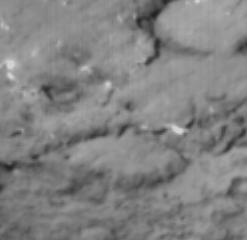
This image shows comet Tempel 1 sixty seconds before it ran over NASA Deep Impact probe at 10:52 p.m. Pacific time, July 3 1:52 a.m. Eastern time, July 4., 2005.
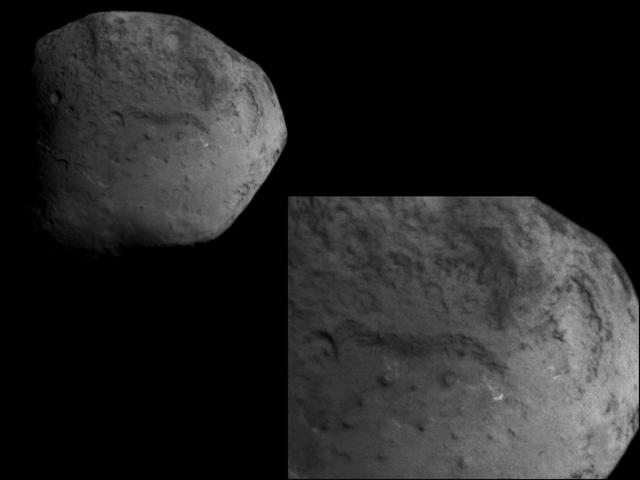
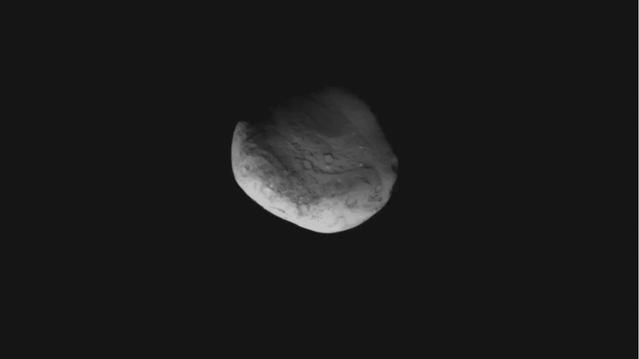
This image obtained by NASA Stardust spacecraft shows a side of the nucleus of comet Tempel 1 that has never been seen before; three terraces of different elevations are visible, with dark, banded scarps, or slopes, separating them.
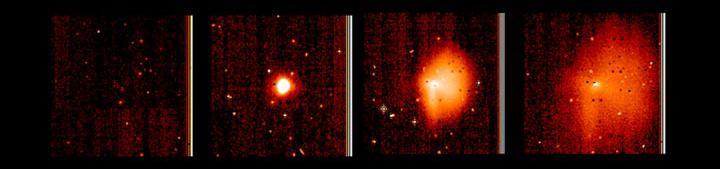
This display shows highly processed images of the outburst of comet Tempel 1 between June 22 and 23, 2005. The pictures were taken by NASA Deep Impact medium-resolution camera.

This artist concept gives us a look at the moment of impact and the forming of the crater.

This pair of images shows a before-and-after comparison of the area on comet Tempel 1 targeted by an impactor from NASA Deep Impact spacecraft in July 2005.
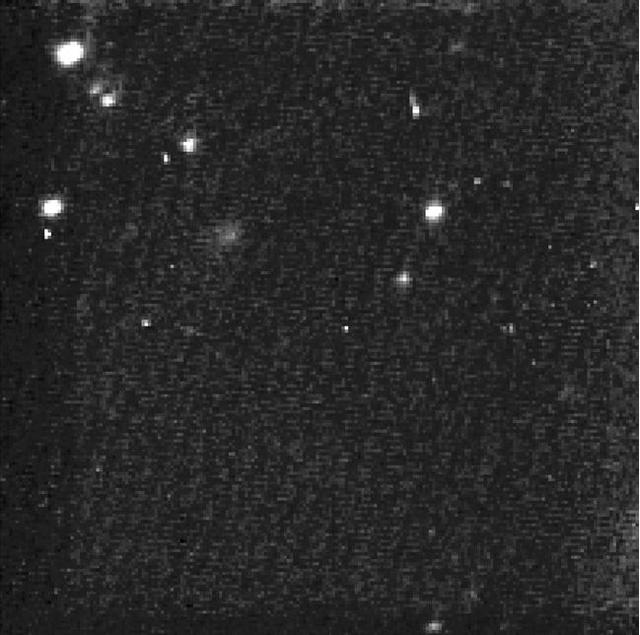
This composite image is the first taken by NASA Stardust spacecraft navigation camera. The observations were made on Jan. 18 and 19, 2011. Stardust will fly within about 200 kilometers 124 miles of the comet nucleus.
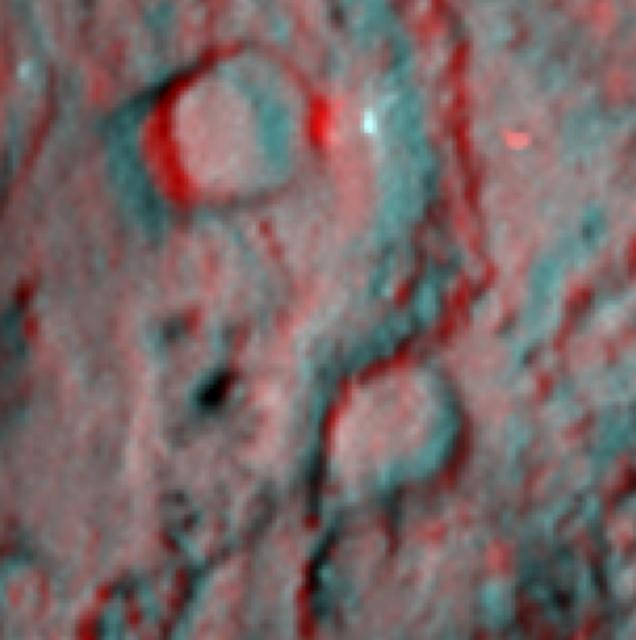
This anaglyph shows the region where NASA Deep Impact mission sent a probe into the surface of comet Tempel 1 in 2005. 3D glasses are necessary to view this image.
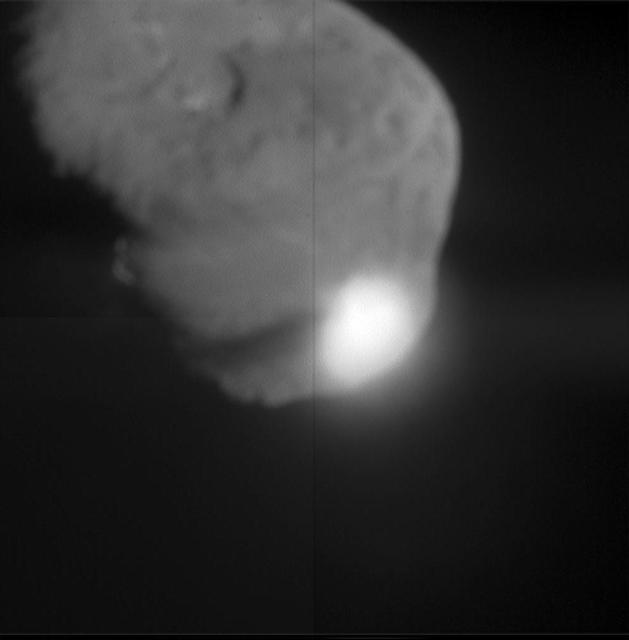
When NASA Deep Impact probe collided with Tempel 1, a bright, small flash was created, which rapidly expanded above the surface of the comet. This flash lasted for more than a second.

This composite image was taken by NASA Stardust navigation camera 42 hours before its encounter with comet Tempel 1. The spacecraft is due to encounter the comet in the evening hours of Feb. 14, 2011.
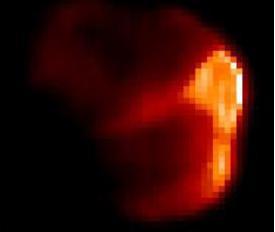
This image composite shows comet Tempel 1 in infrared light . The infrared picture highlights the warm, or sunlit, side of the comet, where NASA Deep Impact probe later hit.
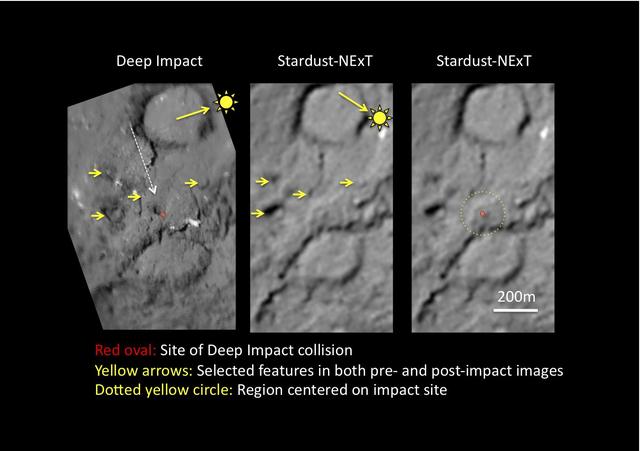
This image shows the surface of comet Tempel 1 before and after NASA Deep Impact mission sent a probe into the comet in 2005. The region was imaged by Deep Impact before the collision left, then six years later on by NASA Stardust-NExT miss…
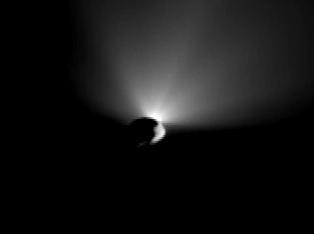
NASA Deep Impact flyby spacecraft took this image after it turned around to capture last shots of a receding comet Tempel 1. Earlier, the mission probe had smashed into the surface of Tempel 1.
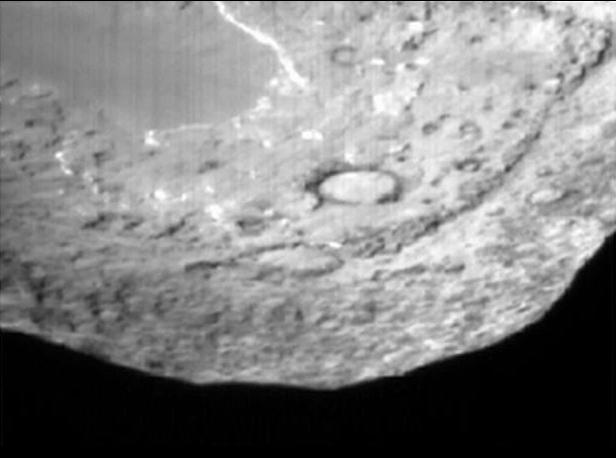
This image shows NASA Deep Impact impactor probe approaching comet Tempel 1. It is made up of images taken by the probe impactor targeting sensor on July 4, 2005. Animation available at the Photojournal.
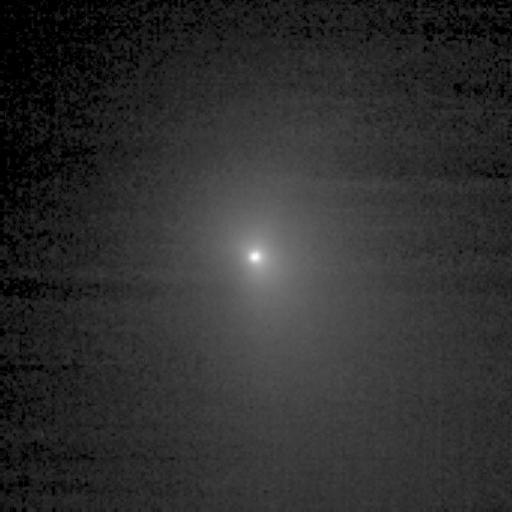
This image shows comet Tempel 1 as seen through the clear filter of the medium resolution imager camera on NASA Deep Impact. It was taken on June 27, 2005.
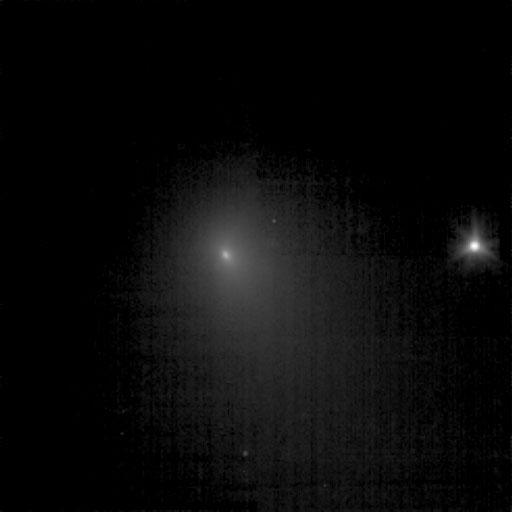
This image of Tempel 1 is a compilation of nine images that were taken on June 19, 2005 by NASA Deep Impact spacecraft.
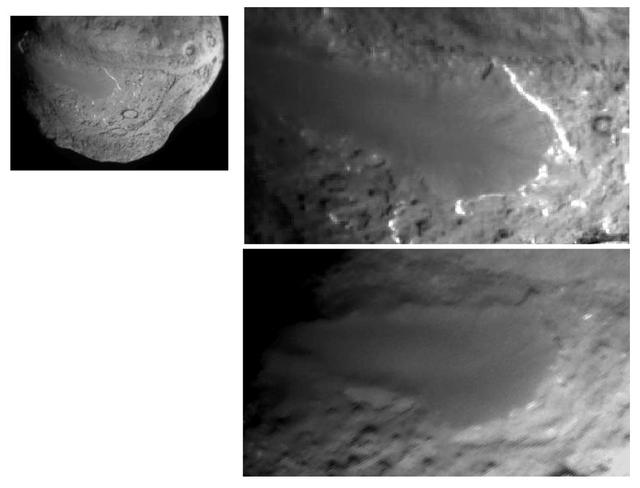
This image layout depicts changes in the surface of comet Tempel 1, observed first by NASA Deep Impact Mission in 2005 top right and again by NASA Stardust-NExT mission on Feb. 14, 2011 bottom right.
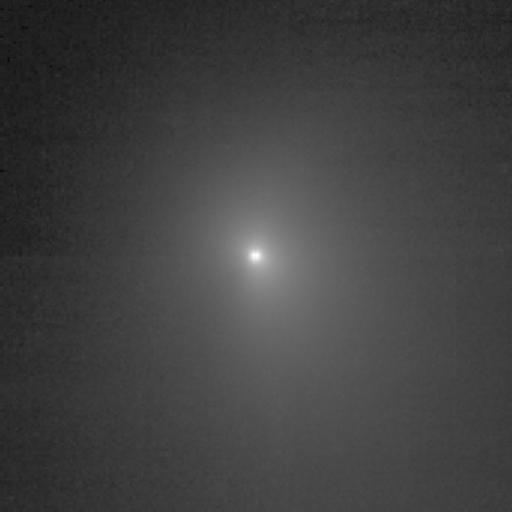
This image shows comet Tempel 1 as seen through the clear filter of the medium resolution imager camera on NASA Deep Impact. It was taken on June 25, 2005.
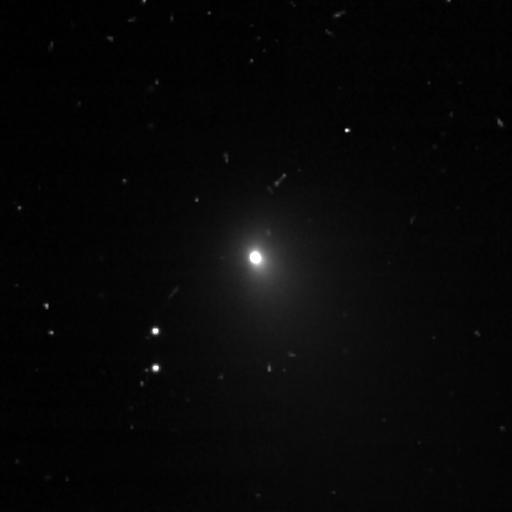
This image is a compilation of four images that were taken on June 13, 2005 by NASA Deep Impact. The spacecraft is 18,675,137.9 kilometers 11,604,190 miles away from comet Tempel 1.
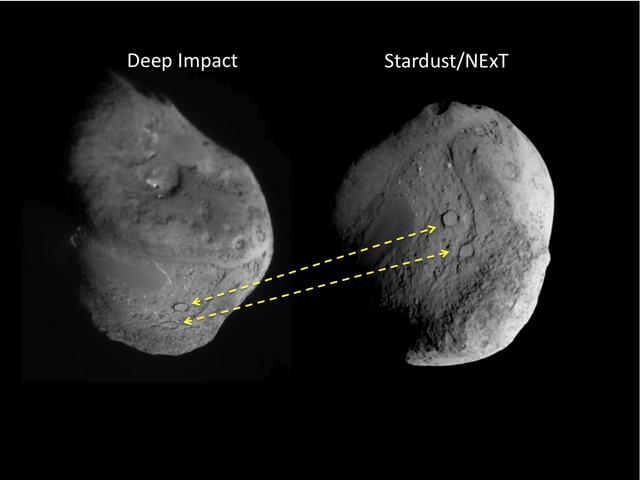
These two images show the different views of comet Tempel 1 seen by NASA Deep Impact spacecraft left and NASA Stardust spacecraft right.
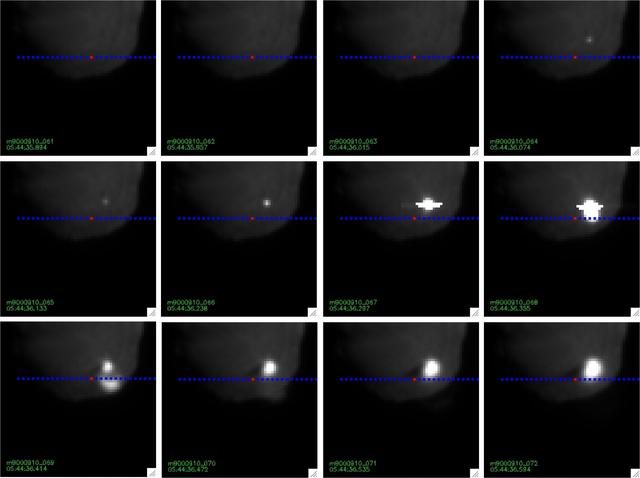
NASA Deep Impact Tempel 1 Mission Update. Images of impact taken with the medium resolution imager. The blue dotted line is the position of the spectrometer slit.
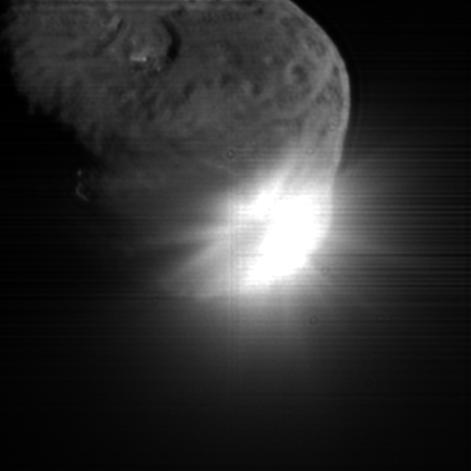
This image shows the initial ejecta that resulted when NASA Deep Impact probe collided with comet Tempel 1 on July 3, 2005. It was taken by the spacecraft high-resolution camera 13 seconds after impact.
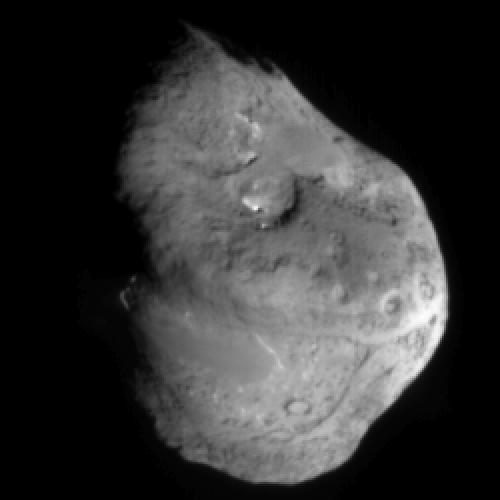
This image shows comet Tempel 1 approximately 5 minutes before NASA Deep Impact probe smashed into its surface. It was taken by the probe impactor targeting sensor.
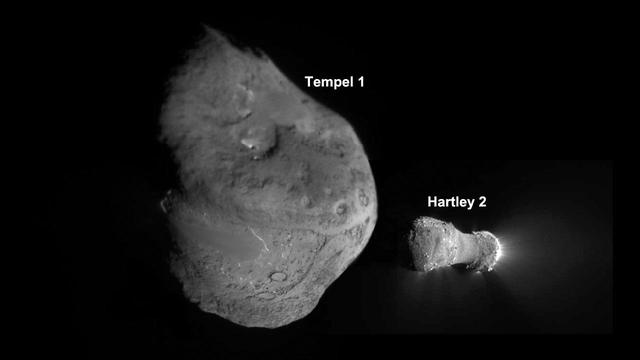
This image shows the nuclei of comets Tempel 1 and Hartley 2, as imaged by NASA Deep Impact spacecraft, which continued as an extended mission known as EPOXI.
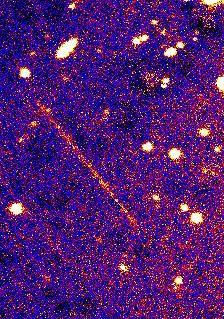
The high speed of NASA Deep Impact spacecraft causes it to appear as a long streak across the sky in the constellation Virgo during the 10-minute exposure time of this photograph taken by Mr. Palomar 200-inch telescope.
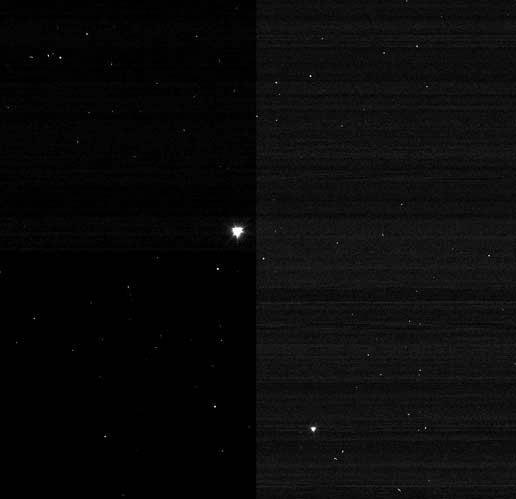
This image of NASA Deep Impact impactor probe was taken by the mission mother ship, or flyby spacecraft, after the two separated at 11:07 p.m. Pacific time, July 2 2:07 a.m. Eastern time, July 3, 2005.

This Tempel 1 image was built up from scaling images from NASA Deep Impact to 5 meters/pixel and aligned to fixed points. Each image at closer range replaced equivalent locations observed at a greater distance.
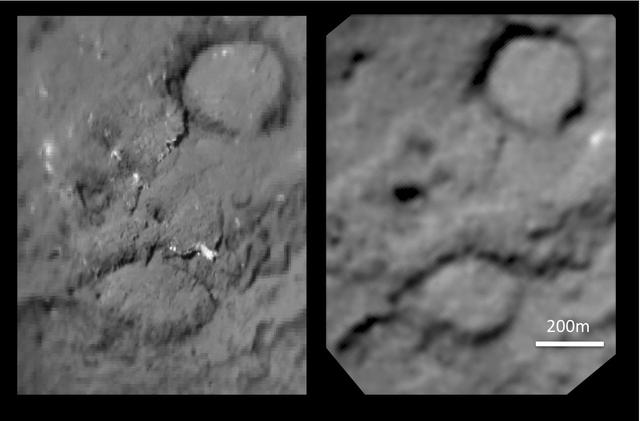
This pair of images shows the before-and-after comparison of the part of comet Tempel 1 that was hit by the impactor from NASA Deep Impact spacecraft.

This image of the surface of comet Tempel 1 was taken about 20 seconds before NASA Deep Impact probe crashed into the comet on July 3, 2005. This particular region contains the impact site.
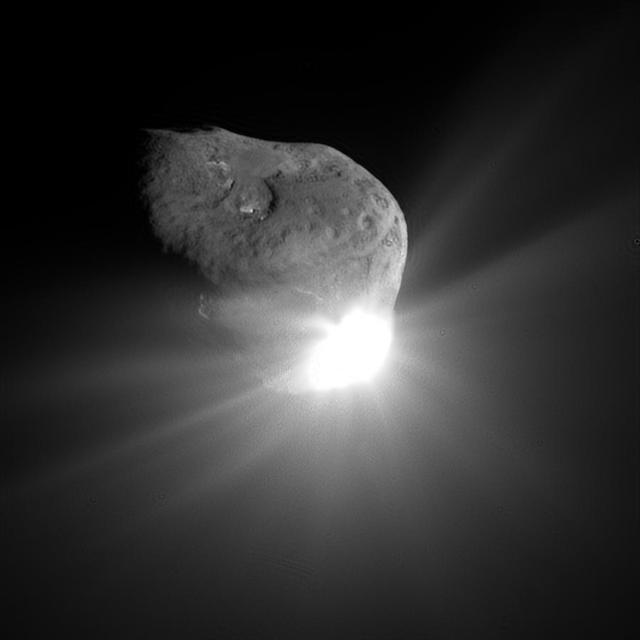
This spectacular image of comet Tempel 1 was taken 67 seconds after it obliterated NASA Deep Impact impactor spacecraft.
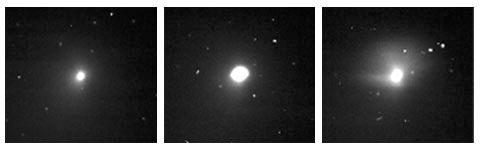
These images shows comet Tempel 1 as seen through the clear filter of the medium resolution imager camera on NASA Deep Impact. The images were acquired between June 22 and June 24, 2005.
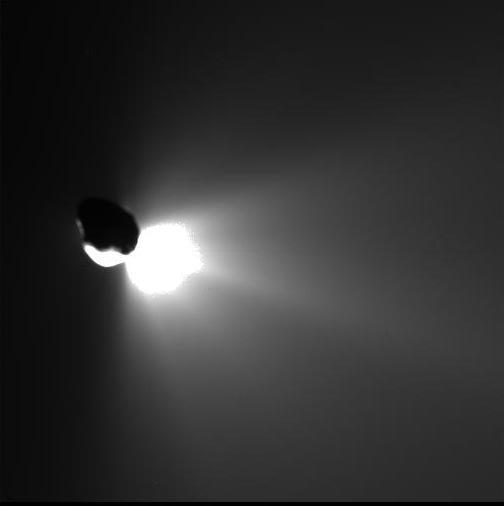
This image shows the view from NASA Deep Impact flyby spacecraft as it turned back to look at comet Tempel 1. Fifty minutes earlier, the spacecraft probe was run over by the comet.
This image shows the location of the newly discovered planet-like object, dubbed Sedna, in relation to the rest of the solar system in 2004.

This image mosaic shows four different views of comet Tempel 1 as seen by NASA Stardust spacecraft as it flew by on Feb. 14, 2011. The images progress in time beginning at upper left, upper right, to lower left, then lower right.

This image of Tempel 1 is a compilation of nine images that were taken on June 15, 2005 by NASA Deep Impact spacecraft.
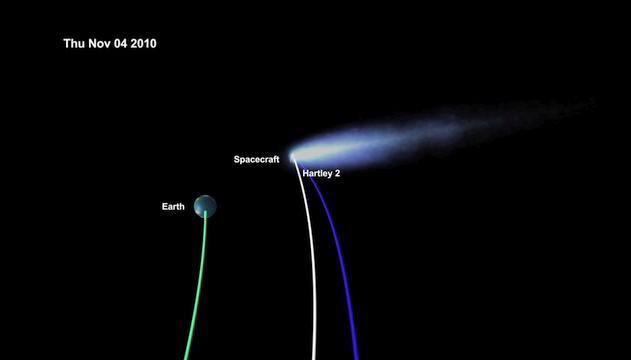
This frame from a movie begins with the launch of NASA Deep Impact on Jan. 12, 2005, from Cape Canaveral, Fla. On July 4, 2005, the mission released a probe into Comet Tempel 1, revealing its pristine, inner material.
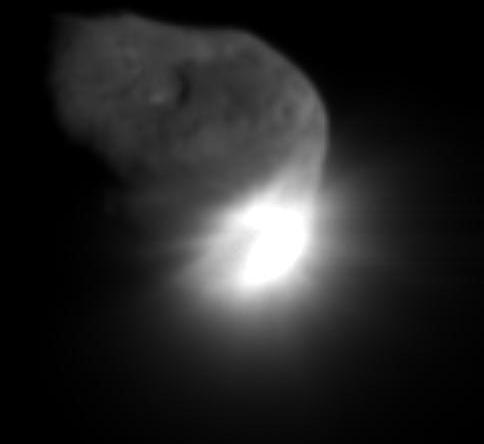
This image shows the initial ejecta that resulted when NASA Deep Impact probe collided with comet Tempel 1 at 10:52 p.m. Pacific time, July 3 1:52 a.m. Eastern time, July 4, 2005.