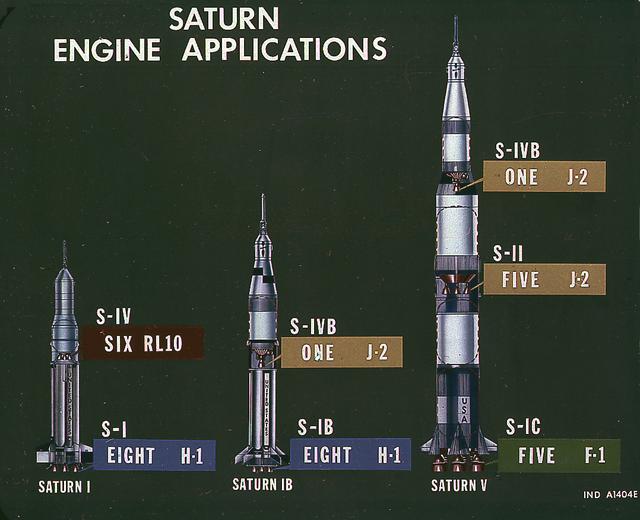
This image illustrates the basic differences between the three Saturn launch vehicles developed by the Marshall Space Flight Center. The Saturn I, consisted of two stages, the S-I (eight H-1 engines) and the S-IV (six RL-10 engines). The Sa…
Saturn Apollo Program
A Cluster of eight H-1 engines were used to thrust the first stage of Saturn I (S-I stage) and Saturn IB (S-IB stage). The engines were arranged in a double pattern. Four engines, located inboard, were fixed in a square pattern around the s…
Saturn Apollo Program
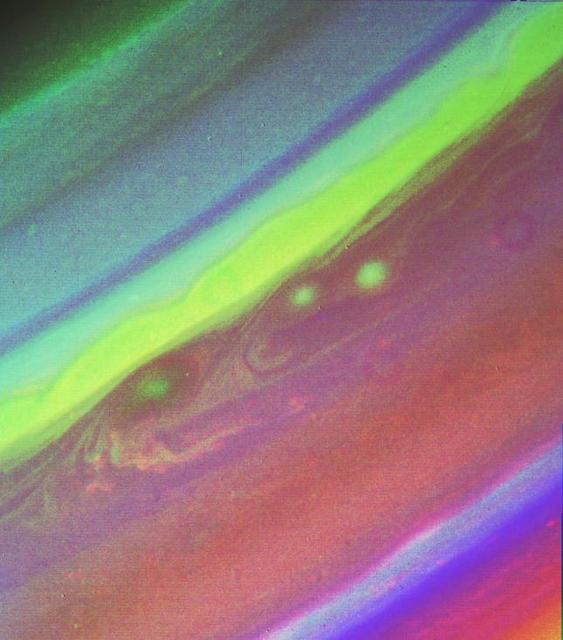
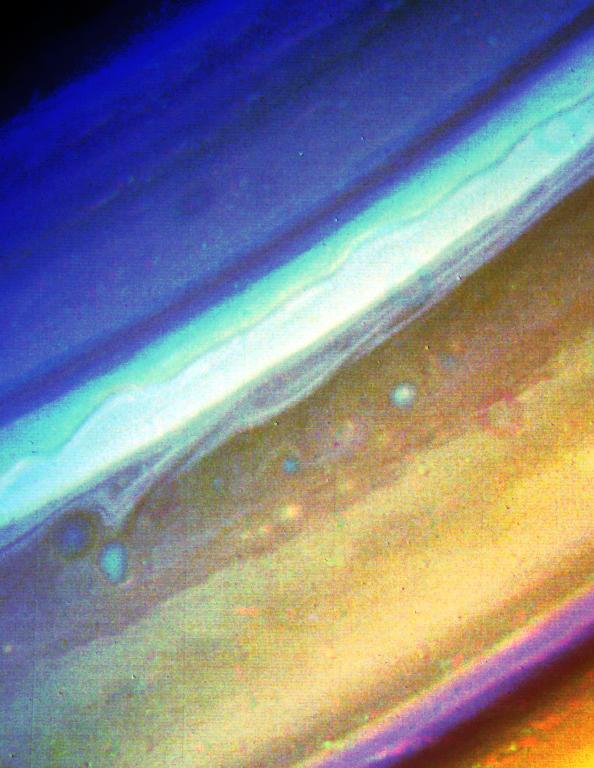
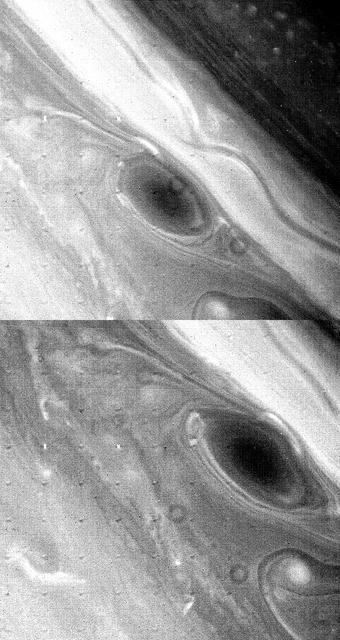
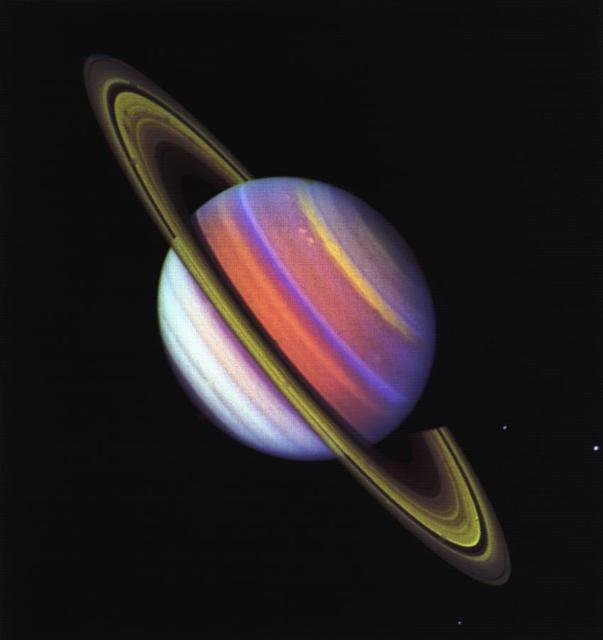
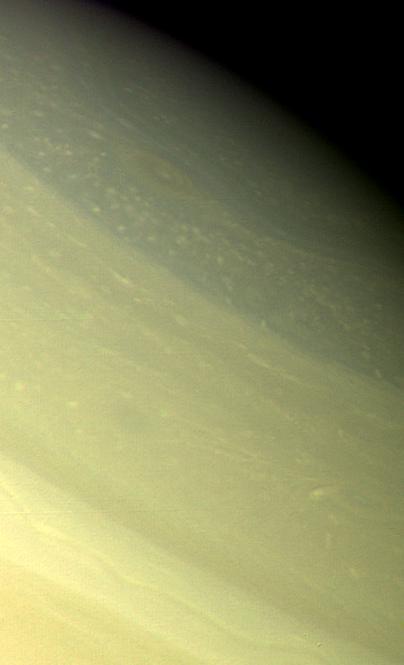
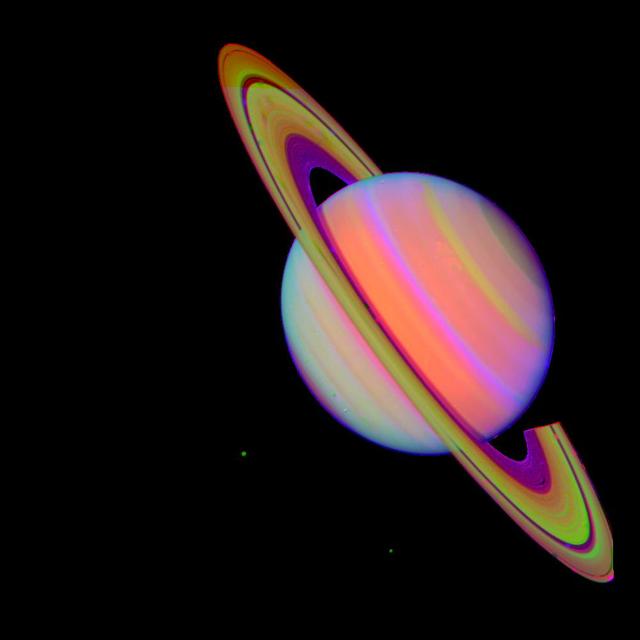
This false color picture of Saturn’s northern hemisphere was assembled from ultraviolet, violet and green images obtained Aug. 19 by Voyager 2 from a range of 7.1 million kilometers (4.4 million miles). The several weather patterns evident…
Saturn Northern Hemisphere
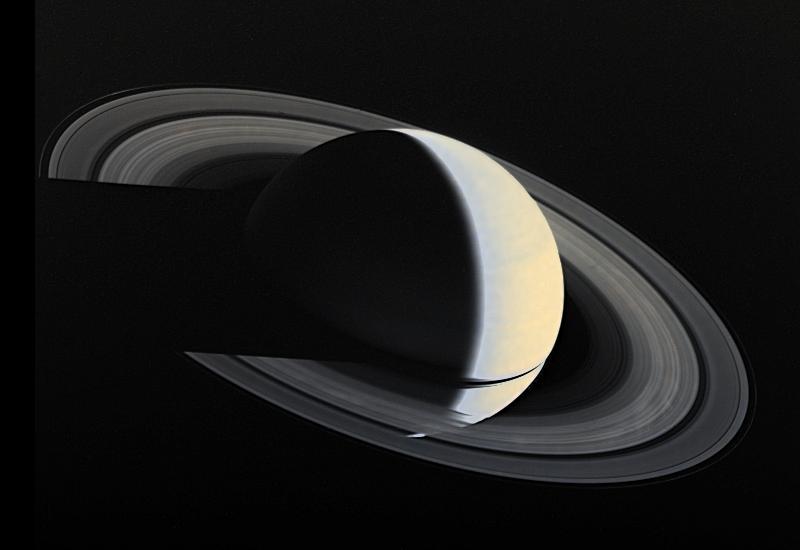
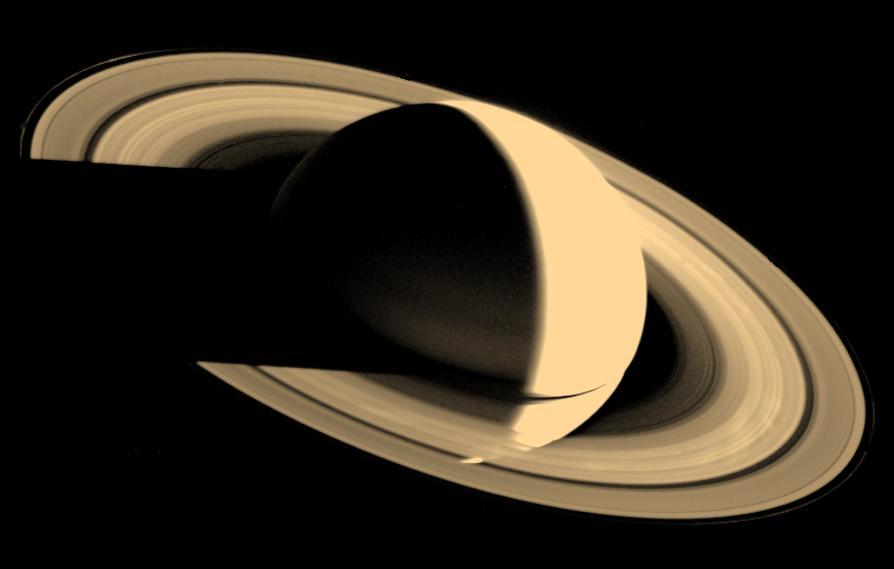
Full-disk Color Image of Crescent Saturn with Rings and Ring Shadows  http://photojournal.jpl.nasa.gov/catalog/PIA00335
Full-disk Color Image of Crescent Saturn with Rings and Ring Shadows
This 1968 chart depicts the various mission configurations for the Saturn IB launch vehicle. Developed by the Marshall Space Flight Center (MSFC) as an interim vehicle in MSFC's "building block" approach to the Saturn rocket development, th…
Saturn Apollo Program
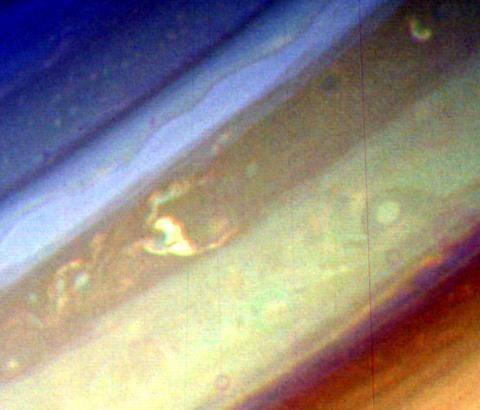
Saturn North Temperate Region
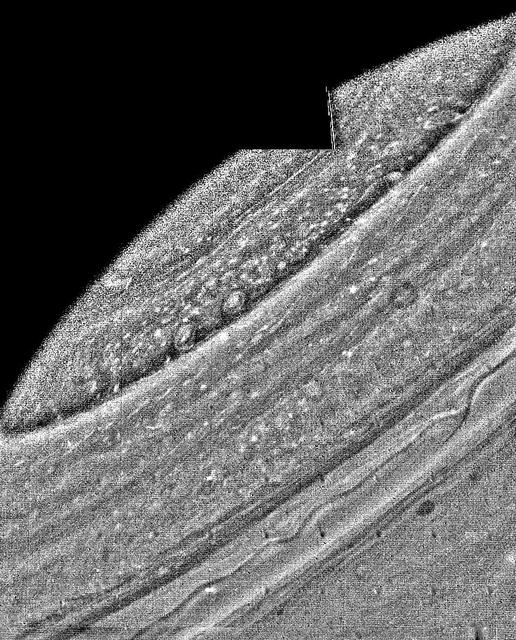
Saturn - North Polar Region
Saturn System Montage
This chart provides a launch summary of the Saturn IB launch vehicle as of 1973. Developed by the Marshall Space Flight Center (MSFC) as an interim vehicle in MSFC's "building block" approach to the Saturn rocket development, the Saturn IB…
Saturn Apollo Program
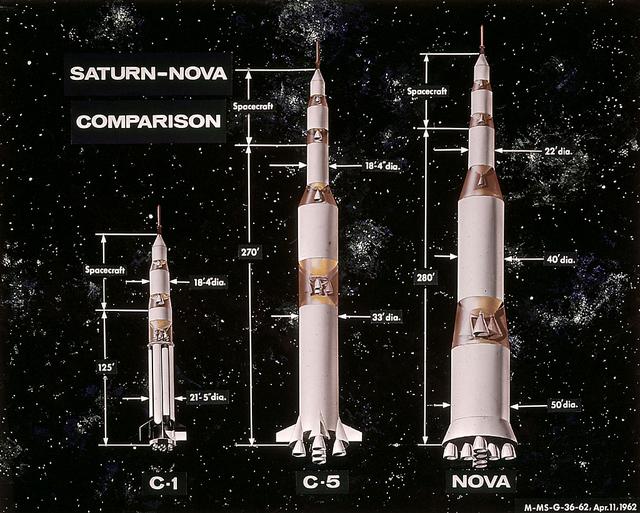
In this 1962 artist's concept , a proposed Nova rocket, shown at right, is compared to a Saturn C-1, left, and a Saturn C-5, center. The Marshall Space Flight Center directed studies of Nova configuration from 1960 to 1962 as a means of ach…
Early Program Development
Voyager 2 Image of Saturn
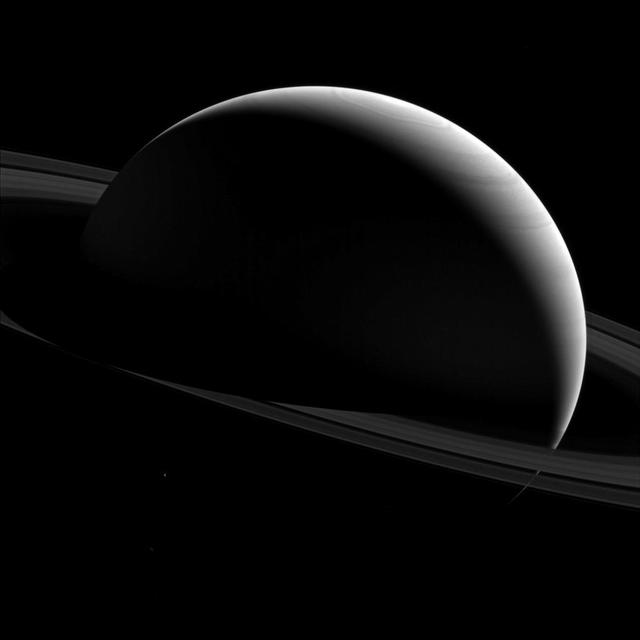
The night sides of Saturn and Tethys are dark places indeed.  We know that shadows are darker areas than sunlit areas, and in space, with no air to scatter the light, shadows can appear almost totally black.  Tethys (660 miles or 1,062 kilo…
From the Night Side
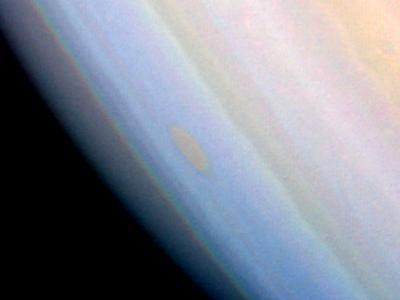
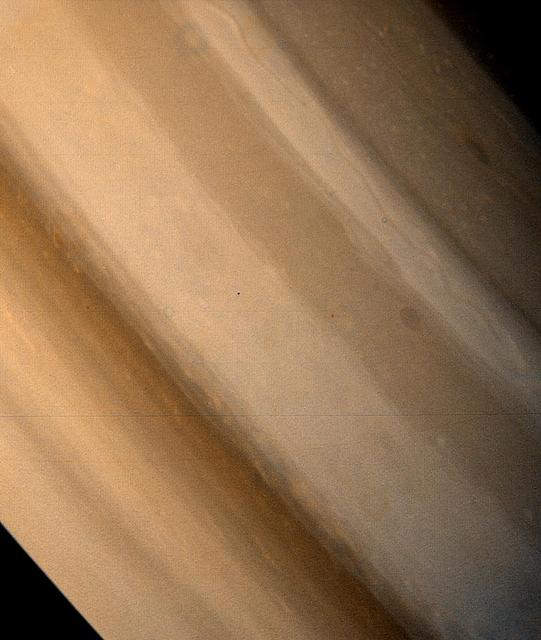
Large Brown Spot in Saturn Atmosphere
Saturn Atmosphere
Saturn Atmosphere
Saturn storms observed by NASA Voyager, Aug. 5, 2004. Voyager 1 and 2 observed radio signals from lightning which were interpreted as being from a persistent, low-latitude storm system.
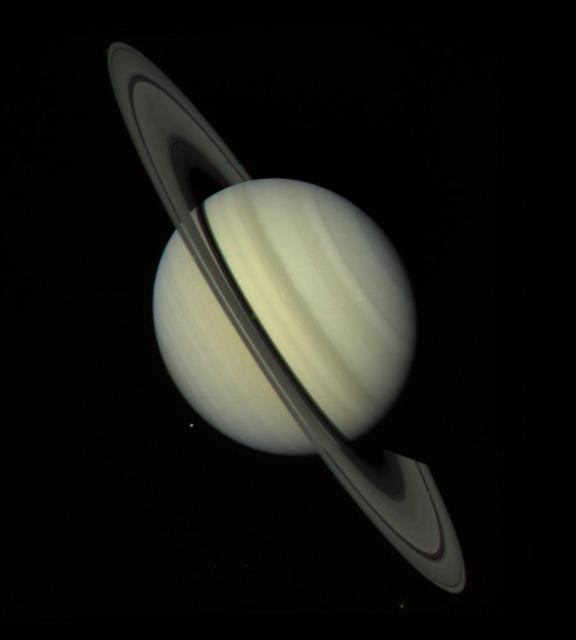
Saturn Taken from Voyager 2
Saturn and its Ring System
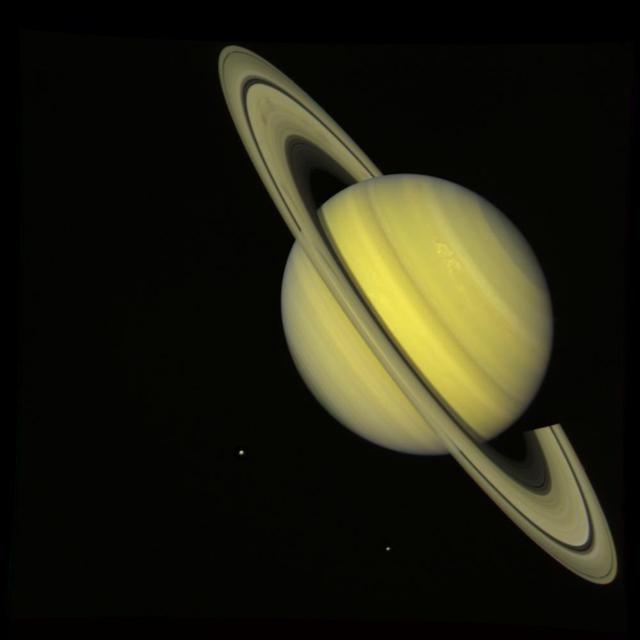
Saturn and two of its moons, Tethys above and Dione, were photographed by Voyager 1 on November 3, 1980, from 13 million kilometers 8 million miles.
Saturn With Tethys and Dione
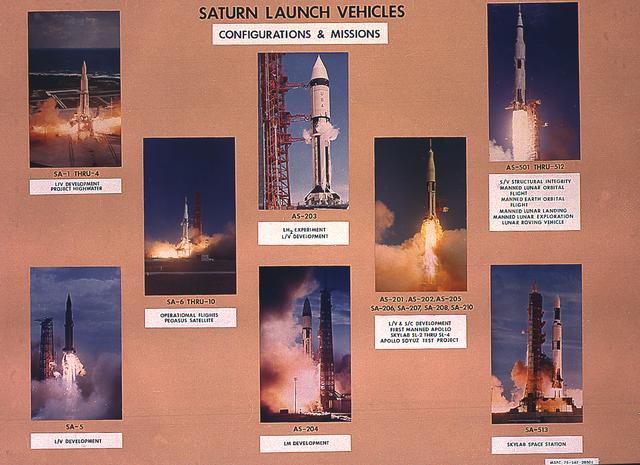
This montage illustrates the various configurations and missions of the three classes of the Saturn vehicles developed by the Marshall Space Flight Center. The missions for the Saturn I included atmospheric science investigations and the de…
Saturn Apollo Program
This undated chart provides a description of the Saturn IB and Saturn V's Instrument Unit (IU) and its major components. Designed by NASA at the Marshall Space Flight Center (MSFC), the Instrument Unit, sandwiched between the S-IVB stage an…
Saturn Apollo Program
A Cluster of eight H-1 engines were used to thrust the first stage of Saturn I (S-I stage) and Saturn IB (S-IB stage). The engines were arranged in a double pattern. Four engines, located inboard, were fixed in a square pattern around the s…
Saturn Apollo Program
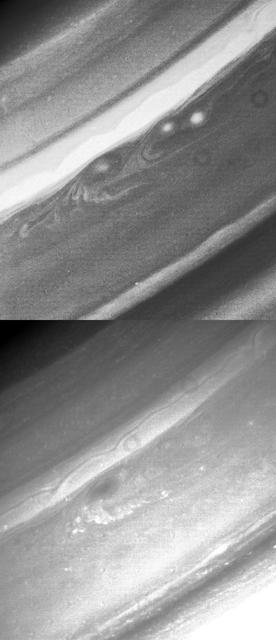
Saturn Atmospheric Changes
Saturn F Ring
Saturn F Ring
Saturn Satellite 1980S1
Saturn  Voyager Mission Artwork with instruments and parts labeled
ARC-1977-AC77-0850
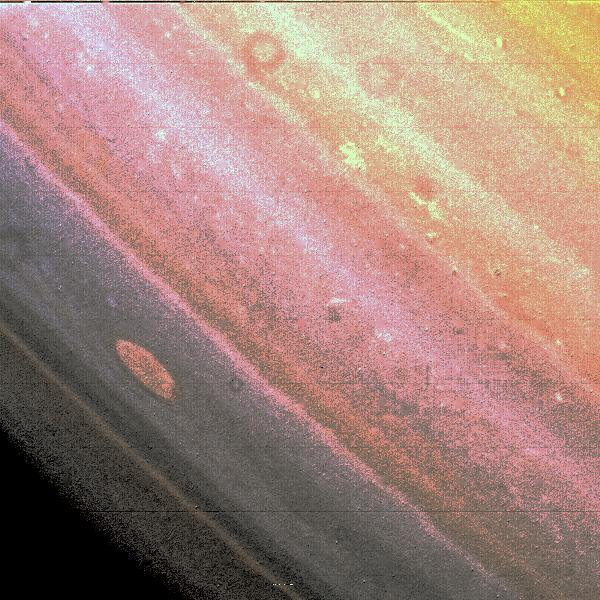
This false-color image of Saturn southern hemisphere taken by NASA Voyager 1 on Nov. 6, 1980, shows the unique red oval cloud feature located at 55 degrees south latitude.
Saturn - False Color of Southern Hemisphere
Photographic Mosaic of Saturn
Saturn Northern Hemisphere
Saturn 1 Launch summary of research and development flights and operational flights. NASA's initial development plan for the Saturn program had called for the Saturn I to serve as a stepping stone to the development of larger Saturn vehicle…
Saturn Apollo Program
Voyager 2 Image of Saturn
Northern Hemisphere of Saturn
Saturn North Temperate Belt
Saturn Approach - Full Disk
This is a cutaway illustration of the Saturn V launch vehicle with callouts of the major components. The Saturn V is the largest and most powerful launch vehicle developed in the United States. It was a three stage rocket, 363 feet in heigh…
Saturn Apollo Program
H-1 engine major components with callouts (chart 1). The H-1 engine was used in a cluster of eight on the the first stage of Saturn I (S-I stage) and Saturn IB (S-IB stage). The engines were arranged in a double pattern: four engines, locat…
Saturn Apollo Program
Saturn and its Rings
This montage of images of the planets visited by NASA's Voyager 2 was prepared from an assemblage of images taken by the 2 Voyager spacecraft.  https://photojournal.jpl.nasa.gov/catalog/PIA01483
Voyager Tour Montage
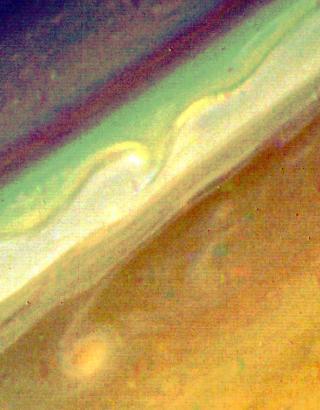
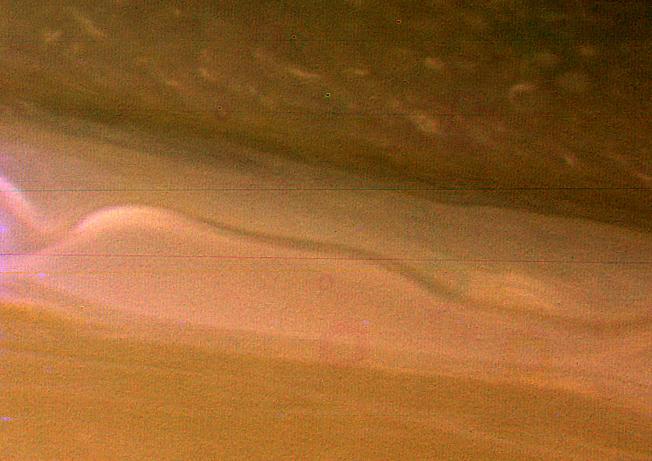
A view of Saturn clouds extending from 40 N latitude shows a ribbon-like wave structure in the south with small convective features marking a westward jet in the north. This image was obtained on November 10, 1980 by NASA Voyager 1.
Saturn -- Ribbon-like Wave Structure in Atmosphere
Two brown ovals, at right, some 10,000 km 6,000 miles across, were found at approximately 40 latitude in Saturn northern hemisphere by NASA Voyager 1. The photo was taken on November 7, 1980.
Saturn - Brown Ovals in Northern Hemisphere
Saturn Ribbonlike Cloud Structure
Saturn Northern Mid-latitudes
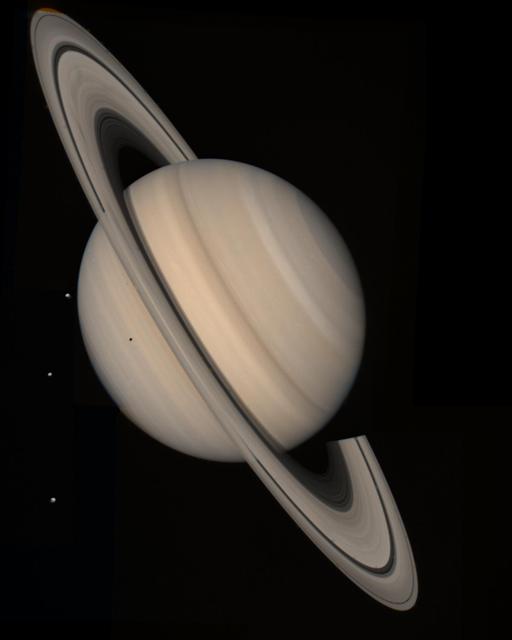
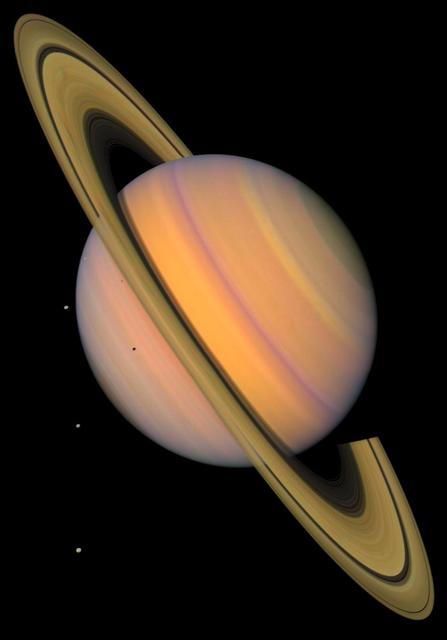
NASA Voyager 2 took this true color photograph of Saturn on July 21, 1981. The moons Rhea and Dione appear as blue dots to the south and southeast of Saturn, respectively.
Saturn With Rhea and Dione True Color
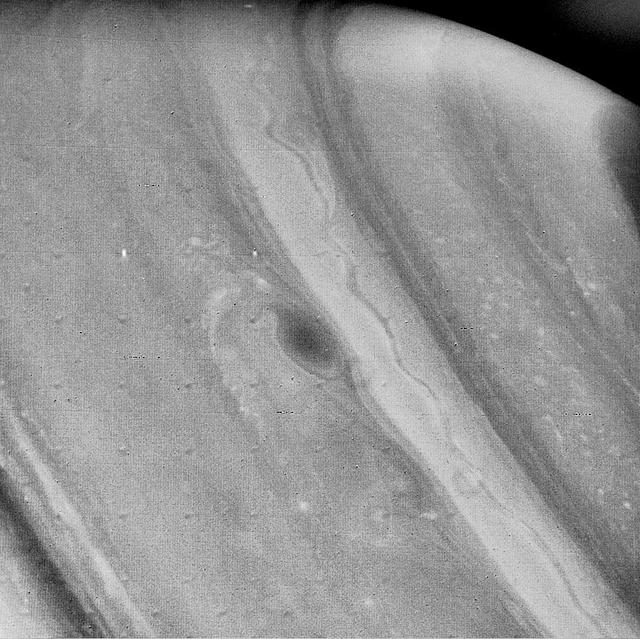
Saturn Red Spot
Saturn Red Spot
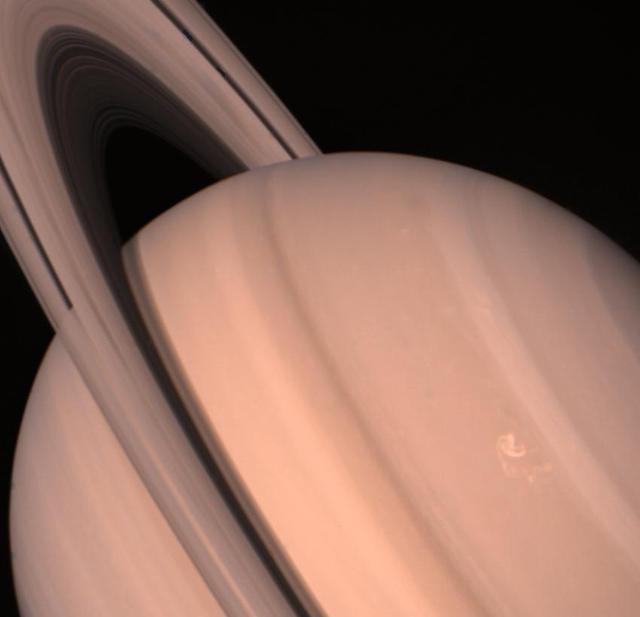
A vortex, or large atmospheric storm, is visible in this color composite of NASA Voyager 2 Saturn images obtained Aug. 25, 1979 from a range of 1 million kilometers 620,000 miles.
Saturnian Atmospheric Storm
Collage of Saturn Smaller Satellites
Saturn With Rhea and Dione false color
This 1968 chart illustrates the characteristics and proposed missions for the Saturn IB launch vehicle. Developed by the Marshall Space Flight Center (MSFC) as an interim vehicle in MSFC's "building block" approach to the Saturn rocket deve…
Saturn Apollo Program
Saturn F-ring
Saturn F-ring
Saturn and 4 Icy Moons, Enhanced Color  http://photojournal.jpl.nasa.gov/catalog/PIA00349
Saturn and 4 Icy Moons, Enhanced Color