
NASA Kennedy Space Center's Associate Director Kelvin Manning, center, signs a license agreement with the President and CEO of ecoSPEARS, which allows the company to commercially sell a soil remediation technology developed by a research te…

CAPE CANAVERAL, Fla. – At NASA’s Kennedy Space Center Visitor Complex in Florida, college students arrive for NASA’s Lunabotics Mining Competition. The mining competition is sponsored by NASA Kennedy Space Center’s Education Office for t…

CAPE CANAVERAL, Fla. – At NASA’s Kennedy Space Center Visitor Complex in Florida, college students from The University of Akron in Ohio prepare their Lunabot, S.T.E.V.E., for the Lunarena during NASA’s Lunabotics Mining Competition. The…

CAPE CANAVERAL, Fla. - At NASA’s Kennedy Space Center Visitor Complex in Florida, Lunabotics Emcee Kimberly Land welcomes U.S. and international college students to NASA’s Lunabotics Mining Competition. Land is the Education, Public Outreac…

CAPE CANAVERAL, Fla. - At NASA’s Kennedy Space Center Visitor Complex in Florida, a color guard brings the U.S. Flag and NASA flag forward during the opening ceremony for NASA’s Lunabotics Mining Competition. The mining competition is sp…

Brad Doorn, SMAP applications lead, Science Mission Directorate’s Applied Sciences Program at NASA Headquarters speaks during a briefing about the upcoming launch of the Soil Moisture Active Passive (SMAP) mission, Thursday, Jan. 08, 2015,…

Christine Bonniksen, SMAP program executive with the Science Mission Directorate’s Earth Science Division at NASA Headquarters speaks during a briefing about the upcoming launch of the Soil Moisture Active Passive (SMAP) mission, Thursday,…
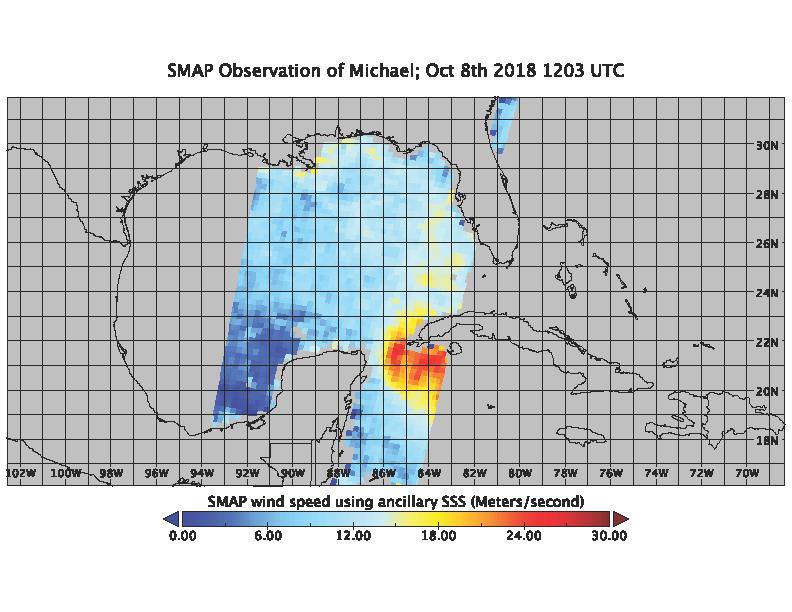
On the morning of Oct. 8, 2018, the NASA Soil Moisture Active Passive (SMAP) Radiometer got a snapshot of Hurricane Michael, which has intensified to a Category 2 hurricane over the warm waters of the Gulf of Mexico. The radiance acquired b…

The second manned lunar landing mission, Apollo 12 launched from launch pad 39-A at Kennedy Space Center in Florida on November 14, 1969 via a Saturn Five launch vehicle. The Saturn V vehicle was developed by the Marshall Space Flight Cente…
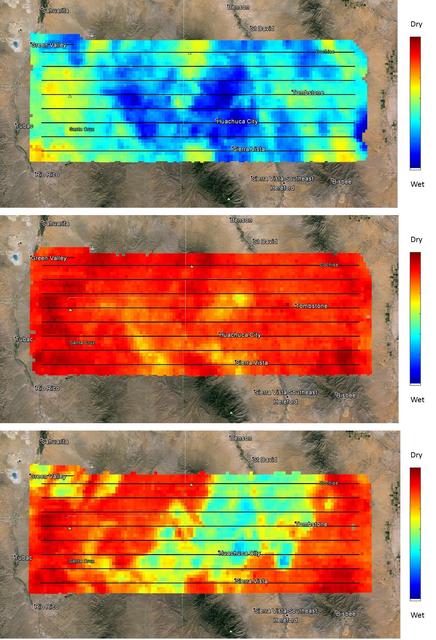
NASA's SMAP (Soil Moisture Active Passive) satellite observatory conducted a field experiment as part of its soil moisture data product validation program in southern Arizona on Aug. 2-18, 2015. The images here represent the distribution of…

High-resolution global soil moisture map from NASA SMAP combined radar and radiometer instruments, acquired between May 4 and May 11, 2015 during SMAP commissioning phase. The map has a resolution of 5.6 miles (9 kilometers). The data gap i…
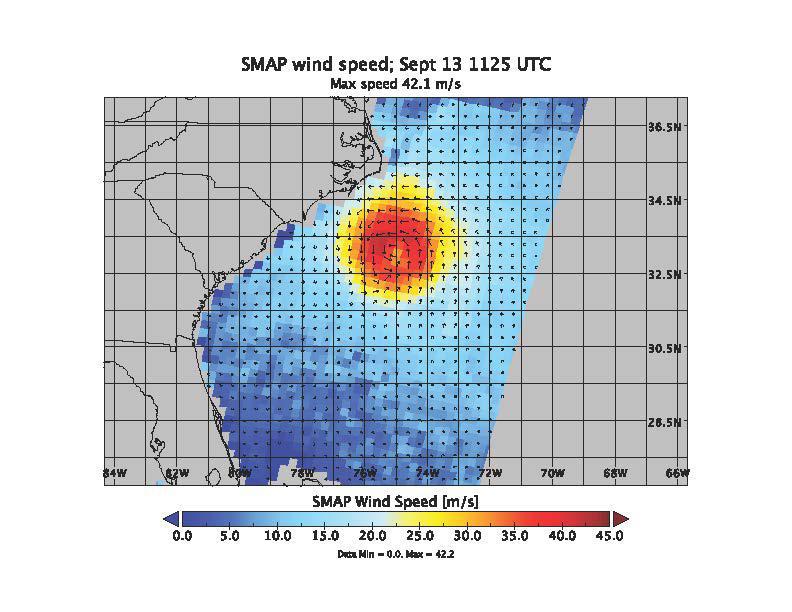
SMAP wind estimates over Hurricane Florence on Sept. 12, 2018 at 10:49 UTC and on Sept. 13, 2018 at 11:25 UTC. We see weakening of the hurricane from the 12th to the 13th; however, the overall size and energy of the storm has increased. The…

These maps of global soil moisture were created using data from the radiometer instrument on NASA Soil Moisture Active Passive SMAP observatory. Evident are regions of increased soil moisture and flooding during April, 2015.
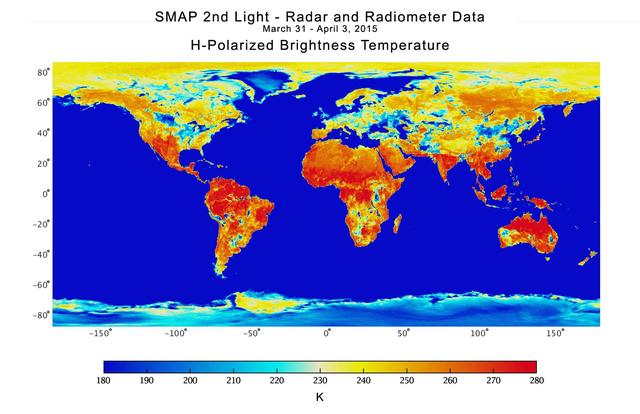
With its antenna now spinning at full speed, NASA new Soil Moisture Active Passive SMAP observatory has successfully re-tested its science instruments and generated its first global maps, a key step to beginning routine science operations i…

Dara Entekhabi, SMAP science team lead, Massachusetts Institute of Technology, center, speaks during a briefing about the upcoming launch of the Soil Moisture Active Passive (SMAP) mission, Thursday, Jan. 08, 2015, at NASA Headquarters in W…

CAPE CANAVERAL, Fla. - At NASA’s Kennedy Space Center Visitor Complex in Florida, Kennedy Space Center’s Deputy Director Janet Petro speaks during the opening ceremony for NASA’s Lunabotics Mining Competition. The mining competition is s…

CAPE CANAVERAL, Fla. - At NASA’s Kennedy Space Center Visitor Complex in Florida, Lunabotics Emcee Kimberly Land gives a high five to a student during the opening ceremony for NASA’s Lunabotics Mining Competition. Land is the Education, Pub…

CAPE CANAVERAL, Fla. - At NASA’s Kennedy Space Center Visitor Complex in Florida, college students from California State University in Chico, prepare their custom lunabot, BEAR, for NASA’s Lunabotics Mining Competition. The mining compet…

CAPE CANAVERAL, Fla. – At NASA’s Kennedy Space Center Visitor Complex in Florida, college students prepare their custom lunabot for NASA’s Lunabotics Mining Competition. The mining competition is sponsored by NASA Kennedy Space Center’s…

CAPE CANAVERAL, Fla. – At NASA’s Kennedy Space Center Visitor Complex in Florida, college students prepare their custom lunabot for NASA’s Lunabotics Mining Competition. The mining competition is sponsored by NASA Kennedy Space Center’s…

CAPE CANAVERAL, Fla. - At NASA’s Kennedy Space Center Visitor Complex in Florida, college students from the ITT Technical Institute in Henderson, Nev., make last minute adjustments to their custom lunabot, Moon Shredder, for NASA’s Lunaboti…

NASA Soil Moisture Active Passive SMAP spacecraft is slowly lowered into place in the Spacecraft Assembly Facility at NASA Jet Propulsion Laboratory, Pasadena, California.

Dara Entekhabi, SMAP science team lead, Massachusetts Institute of Technology, speaks during a briefing about the upcoming launch of the Soil Moisture Active Passive (SMAP) mission, Thursday, Jan. 08, 2015, at NASA Headquarters in Washingto…

NASA Soil Moisture Active Passive SMAP satellite is transported across Vandenberg Air Force Base in California to Space Launch Complex 2, where it will be mated to a Delta II rocket for launch, targeted for Jan. 29.

SOIL UNLOAD FOR THE SIMULATED PLANETARY BODY FIELD IN THE WEST TEST AREA. AREA TO BE USED FOR TESTING OF THE MIGHTY EAGLE LANDER

In the Astrotech payload processing facility on Vandenberg Air Force Base in California, technicians secure a transportation canister around NASA Soil Moisture Active Passive SMAP spacecraft for its move to the launch pad.

The sun sets behind Space Launch Complex 2, Vandenberg Air Force Base, California, where NASA Soil Moisture Active Passive SMAP mission satellite is being prepared for liftoff. Launch is scheduled for Jan. 29.
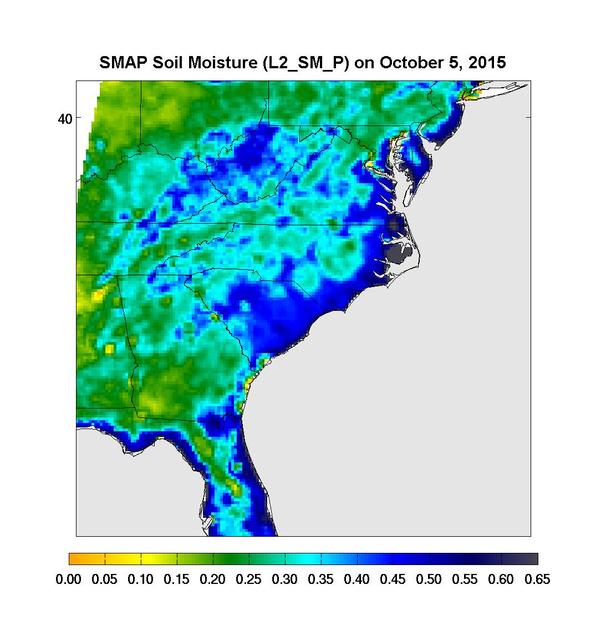
Surface soil moisture in the Southeastern United States as retrieved from NASA's Soil Moisture Active Passive (SMAP) satellite observatory at around 6 a.m. on Oct. 5, 2015. Large parts of South Carolina appear blue, representing the impact…
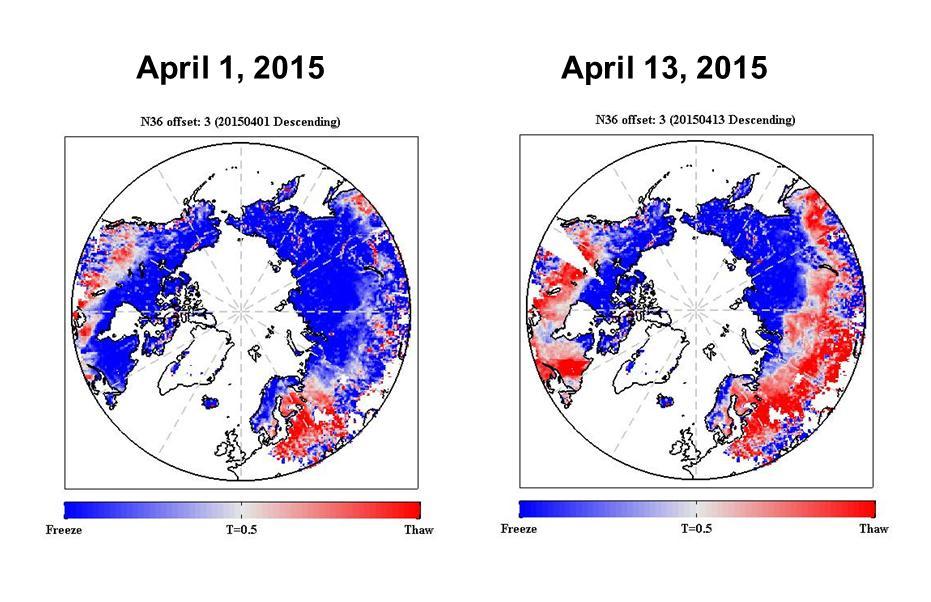
The radar measurements made by NASA Soil Moisture Active Passive SMAP observatory are sensitive to whether land surfaces are frozen or thawed.
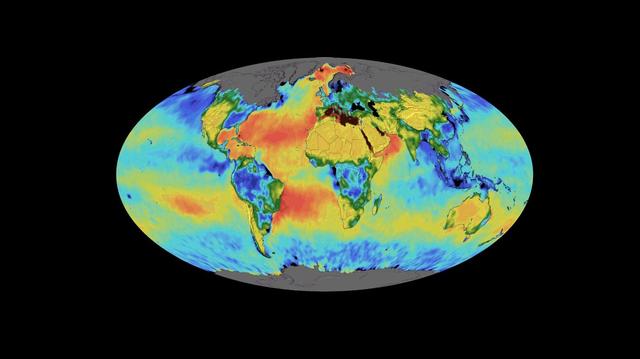
This animation shows a time lapse of sea surface salinity and soil moisture from NASA's Soil Moisture Active Passive (SMAP) satellite from April 2015 through February 2019. Animation available at https://photojournal.jpl.nasa.gov/catalog/P…

A three-day composite global map of surface soil moisture as retrieved from NASA SMAP radiometer instrument between Aug. 25-27, 2015. Dry areas appear yellow/orange, such as the Sahara Desert, western Australia and the western U.S. Wet area…

AS14-68-9448 (6 Feb. 1971) --- A close-up view of a large multi-colored boulder in the boulder field located on the rim of Cone Crater, as photographed by the moon-exploring crew members of the Apollo 14 lunar landing mission. This view is…

CAPE CANAVERAL, Fla. – At NASA’s Kennedy Space Center Visitor Complex in Florida, the For Inspiration and Recognition of Science and Technology FIRST Argos Team 1756 robot from Limestone Community, Brimfield and Richwoods High Schools in Pe…

CAPE CANAVERAL, Fla. – At NASA’s Kennedy Space Center Visitor Complex in Florida, Lunabotics team spirit judges gather on stage during the opening ceremony for NASA’s Lunabotics Mining Competition. From left, are Lead Team Spirit Judge Beth…

CAPE CANAVERAL, Fla. – At NASA’s Kennedy Space Center Visitor Complex in Florida, Lunabotics UAM Team students from the Universidad Autonoma Metropolitano in Mexico transport their lunabot to the Lunarena during NASA’s Lunabotics Mining Com…

CAPE CANAVERAL, Fla. - At NASA’s Kennedy Space Center Visitor Complex in Florida, U.S. and international college students watch the opening ceremony for NASA’s Lunabotics Mining Competition. The mining competition is sponsored by NASA Ke…

CAPE CANAVERAL, Fla. – At NASA’s Kennedy Space Center Visitor Complex in Florida, college students make last minute adjustments to their custom lunabot for NASA’s Lunabotics Mining Competition. The mining competition is sponsored by NASA…

CAPE CANAVERAL, Fla. – At NASA’s Kennedy Space Center Visitor Complex in Florida, two judges monitor the progress of two Lunabots inside the Lunarena during NASA’s Lunabotics Mining Competition. The mining competition is sponsored by NAS…

NASA Soil Moisture Active Passive SMAP mission will produce high-resolution global maps of soil moisture to track water availability around our planet and guide policy decisions.

Kent Kellogg, SMAP project manager at NASA’s Jet Propulsion Laboratory (JPL) in Pasadena, CA, speaks during a briefing about the upcoming launch of the Soil Moisture Active Passive (SMAP) mission, Thursday, Jan. 08, 2015, at NASA Headquarte…

Southern U.S. NASA's SMAP soil moisture retrievals from April 27, 2015, when severe storms were affecting Texas. Top: radiometer data alone. Bottom: combined radar and radiometer data with a resolution of 5.6 miles (9 kilometers). The combi…
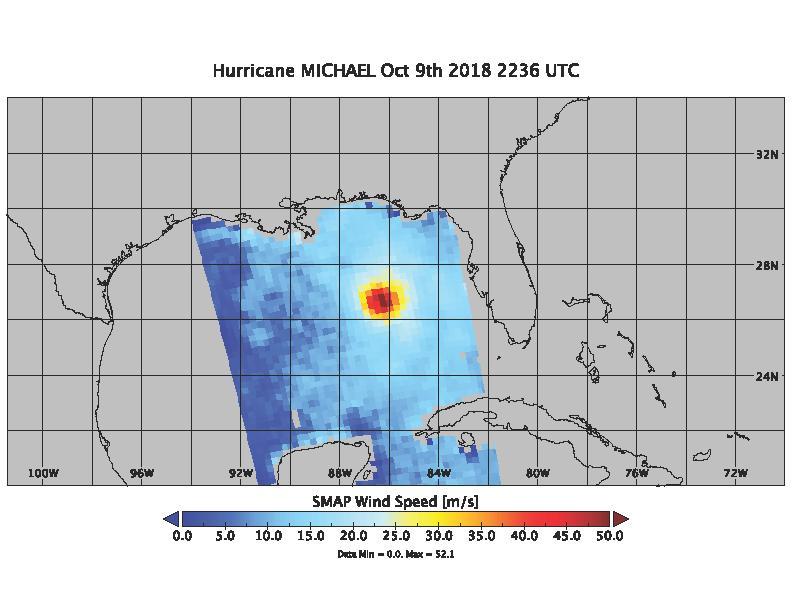
On Oct. 9, 2018 at about 4:30pm EDT, the NASA Soil Moisture Active Passive (SMAP) Radiometer got one more snap shot of Hurricane Michael. The radiance acquired by the SMAP L-band Microwave Radiometer can see through clouds and rain, and is…
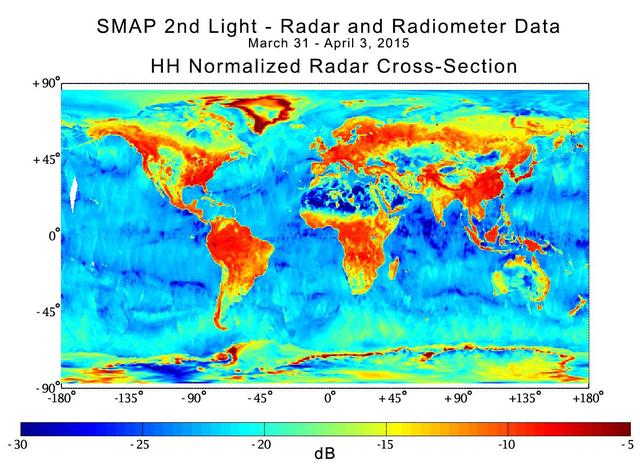
With its antenna now spinning at full speed, NASA new Soil Moisture Active Passive SMAP observatory has successfully re-tested its science instruments and generated its first global maps, a key step to beginning routine science operations i…
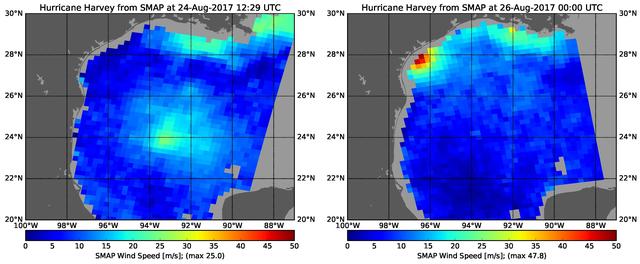
The rapid intensification of Hurricane Harvey is seen in this pair of images of ocean surface wind speeds as observed by the radiometer instrument aboard NASA's Soil Moisture Active Passive (SMAP) satellite at 7:29 a.m. CDT Aug. 24th, 2017…

At Space Launch Complex 2 on Vandenberg Air Force Base in California, NASA Soil Moisture Active Passive SMAP mission satellite is lifted up the side of a mobile service tower for mating to its Delta II rocket.
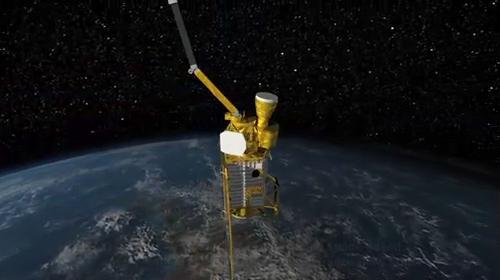
This image, created at the Jet Propulsion Laboratory JPL, shows the Soil Moisture Active Passive SMAP mission, specifically depicting how the scanning antenna will fly in space and the swath coverage over the Earth.

NASA Soil Moisture Active Passive spacecraft is lowered onto the Delta II payload attach structure in the Astrotech payload processing facility at Vandenberg Air Force Base, California, in preparation for launch, to take place no sooner tha…

Artist rendering of the Soil Moisture Active Passive SMAP satellite. The width of the region scanned on Earth surface during each orbit is about 620 miles 1,000 kilometers.