
Spacelab-3 launched aboard STS-51B, with the major science objective being to perform engineering tests on two new facilities: the rodent animal holding facility and the primate animal holding facility. In addition, scientists observed the…

Spacelab-3 launched aboard STS-51B, with the major science objective being to perform engineering tests on two new facilities: the rodent animal holding facility and the primate animal holding facility. In addition, scientists observed the…

The group of Japanese researchers of the Spacelab-J (SL-J) were thumbs-up in the Payload Operations Control Center (POCC) at the Marshall Space Flight Center after the successful launch of Space Shuttle Orbiter Endeavour that carried their…

The science laboratory, Spacelab-J (SL-J), flown aboard the STS-47 flight was a joint venture between NASA and the National Space Development Agency of Japan (NASDA) utilizing a manned Spacelab module. The mission conducted 24 materials sci…

The science laboratory, Spacelab-J (SL-J), flown aboard the STS-47 flight was a joint venture between NASA and the National Space Development Agency of Japan (NASDA) utilizing a manned Spacelab module. The mission conducted 24 materials sci…

The primary objective of the STS-35 mission was round the clock observation of the celestial sphere in ultraviolet and X-Ray astronomy with the Astro-1 observatory which consisted of four telescopes: the Hopkins Ultraviolet Telescope (HUT);…

The primary objective of the STS-35 mission was round the clock observation of the celestial sphere in ultraviolet and X-Ray astronomy with the Astro-1 observatory which consisted of four telescopes: the Hopkins Ultraviolet Telescope (HUT);…

The primary objective of the STS-35 mission was round the clock observation of the celestial sphere in ultraviolet and X-Ray astronomy with the Astro-1 observatory which consisted of four telescopes: the Hopkins Ultraviolet Telescope (HUT);…
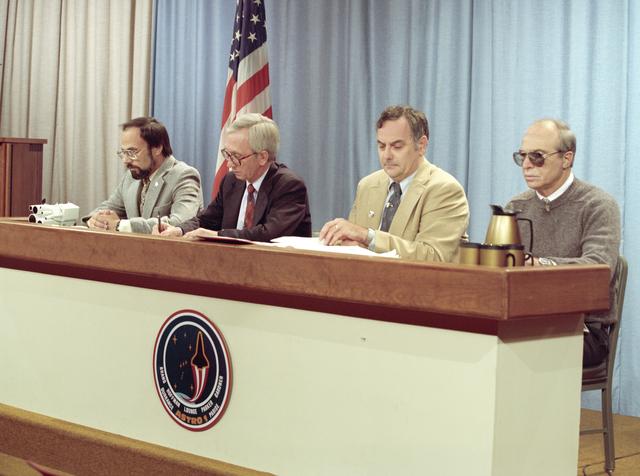
The primary objective of the STS-35 mission was round the clock observation of the celestial sphere in ultraviolet and X-Ray astronomy with the Astro-1 observatory which consisted of four telescopes: the Hopkins Ultraviolet Telescope (HUT);…

The primary objective of the STS-35 mission was round the clock observation of the celestial sphere in ultraviolet and X-Ray astronomy with the Astro-1 observatory which consisted of four telescopes: the Hopkins Ultraviolet Telescope (HUT);…
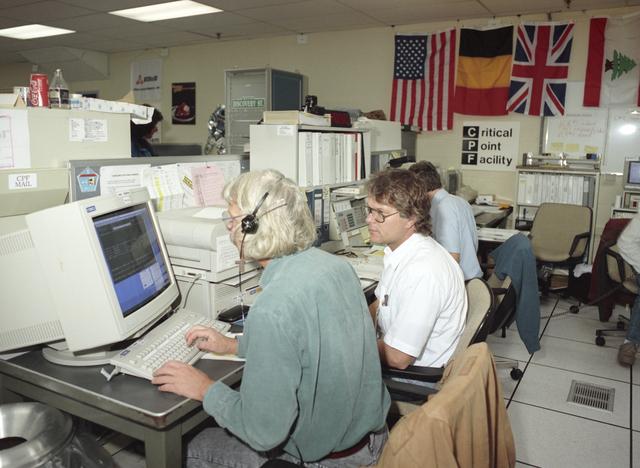
The primary payload for Space Shuttle Mission STS-42, launched January 22, 1992, was the International Microgravity Laboratory-1 (IML-1), a pressurized manned Spacelab module. The goal of IML-1 was to explore in depth the complex effects of…

Spacelab-3 launched aboard STS-51B, with the major science objective being to perform engineering tests on two new facilities: the rodent animal holding facility and the primate animal holding facility. In addition, scientists observed the…

Spacelab-3 launched aboard STS-51B, with the major science objective being to perform engineering tests on two new facilities: the rodent animal holding facility and the primate animal holding facility. In addition, scientists observed the…

The science laboratory, Spacelab-J (SL-J), flown aboard the STS-47 flight was a joint venture between NASA and the National Space Development Agency of Japan (NASDA) utilizing a manned Spacelab module. The mission conducted 24 materials sci…

The primary objective of the STS-35 mission was round the clock observation of the celestial sphere in ultraviolet and X-Ray astronomy with the Astro-1 observatory which consisted of four telescopes: the Hopkins Ultraviolet Telescope (HUT);…

The science laboratory, Spacelab-J (SL-J), flown aboard the STS-47 flight was a joint venture between NASA and the National Space Development Agency of Japan (NASDA) utilizing a manned Spacelab module. The mission conducted 24 materials sci…

Launched on June 20, 1996, the STS-78 mission’s primary payload was the Life and Microgravity Spacelab (LMS), which was managed by the Marshall Space Flight Center (MSFC). During the 17 day space flight, the crew conducted a diverse slate o…

The primary payload for Space Shuttle Mission STS-42, launched January 22, 1992, was the International Microgravity Laboratory-1 (IML-1), a pressurized manned Spacelab module. The goal of IML-1 was to explore in depth the complex effects of…

The primary payload for Space Shuttle Mission STS-42, launched January 22, 1992, was the International Microgravity Laboratory-1 (IML-1), a pressurized manned Spacelab module. The goal of IML-1 was to explore in depth the complex effects of…

The primary objective of the STS-35 mission was round the clock observation of the celestial sphere in ultraviolet and X-Ray astronomy with the Astro-1 observatory which consisted of four telescopes: the Hopkins Ultraviolet Telescope (HUT);…

The primary payload for Space Shuttle Mission STS-42, launched January 22, 1992, was the International Microgravity Laboratory-1 (IML-1), a pressurized manned Spacelab module. The goal of IML-1 was to explore in depth the complex effects of…

The primary payload for Space Shuttle Mission STS-42, launched January 22, 1992, was the International Microgravity Laboratory-1 (IML-1), a pressurized manned Spacelab module. The goal of IML-1 was to explore in depth the complex effects of…

The primary payload for Space Shuttle Mission STS-42, launched January 22, 1992, was the International Microgravity Laboratory-1 (IML-1), a pressurized manned Spacelab module. The goal of IML-1 was to explore in depth the complex effects of…

Spacelab-3 launched aboard STS-51B, with the major science objective being to perform engineering tests on two new facilities: the rodent animal holding facility and the primate animal holding facility. In addition, scientists observed the…

Spacelab-3 launched aboard STS-51B, with the major science objective being to perform engineering tests on two new facilities: the rodent animal holding facility and the primate animal holding facility. In addition, scientists observed the…

The primary objective of the STS-35 mission was round the clock observation of the celestial sphere in ultraviolet and X-Ray astronomy with the Astro-1 observatory which consisted of four telescopes: the Hopkins Ultraviolet Telescope (HUT);…

The science laboratory, Spacelab-J (SL-J), flown aboard the STS-47 flight was a joint venture between NASA and the National Space Development Agency of Japan (NASDA) utilizing a manned Spacelab module. The mission conducted 24 materials sci…

The primary objective of the STS-35 mission was round the clock observation of the celestial sphere in ultraviolet and X-Ray astronomy with the Astro-1 observatory which consisted of four telescopes: the Hopkins Ultraviolet Telescope (HUT);…

Launched on June 20, 1996, the STS-78 mission’s primary payload was the Life and Microgravity Spacelab (LMS), which was managed by the Marshall Space Flight Center (MSFC). During the 17 day space flight, the crew conducted a diverse slate o…

The primary payload for Space Shuttle Mission STS-42, launched January 22, 1992, was the International Microgravity Laboratory-1 (IML-1), a pressurized manned Spacelab module. The goal of IML-1 was to explore in depth the complex effects of…

The primary payload for Space Shuttle Mission STS-42, launched January 22, 1992, was the International Microgravity Laboratory-1 (IML-1), a pressurized manned Spacelab module. The goal of IML-1 was to explore in depth the complex effects of…