This image shows stone stripes on the side of a volcanic cone on Mauna Kea, Hawaii. The stripes are made of small rock fragments and they are aligned downhill as freeze-thaw cycles have lifted them up and out of the finer-grained regolith,…
Rock Stripe Pattern on Hawaii's Mauna Kea
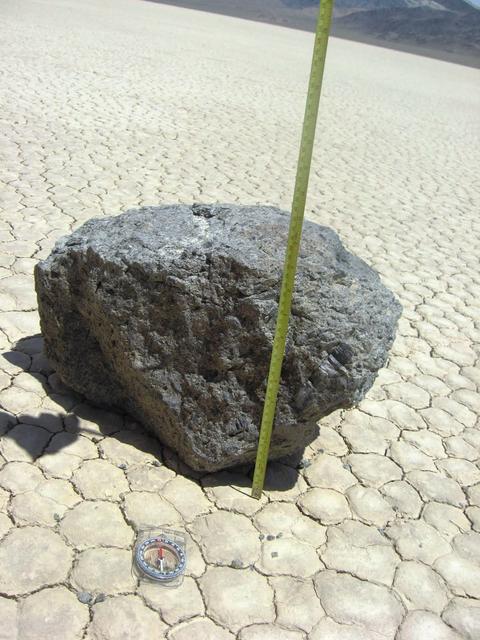
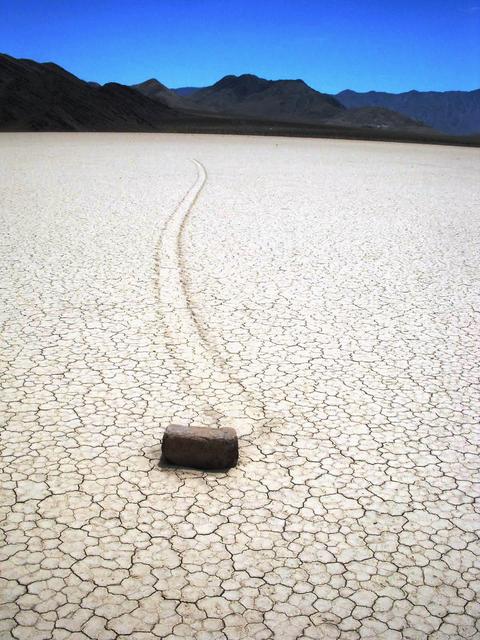
Some of the moving rocks are large. This one is about 10 inches tall. Researchers in the late 1960s and early 1970s documented the movements of one very large rock that they named Karen. (The two men named all the rocks after women.) They e…
Mysterious Roving Rocks of Racetrack Playa
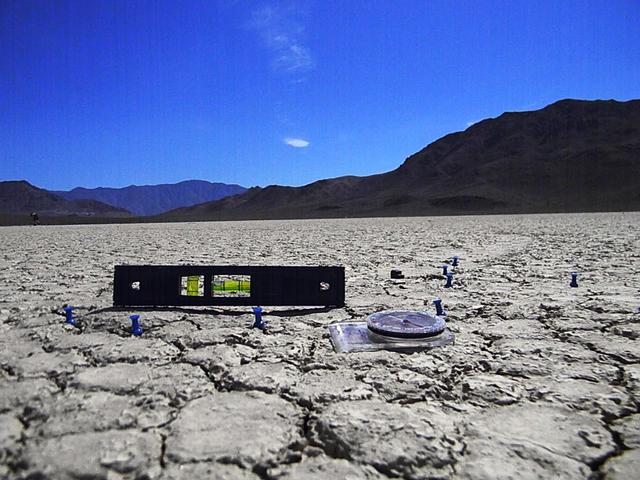
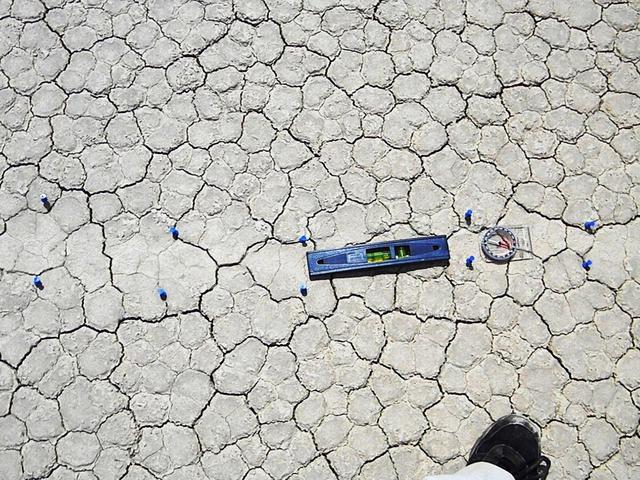
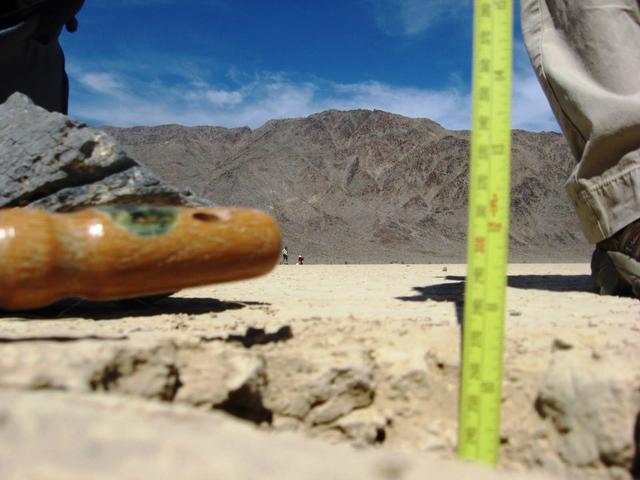
A small level is used to see if the trail is tilted upward or downward. In most cases where a rock has moved, the trail is tilted very slightly uphill, but the interns don't think this has a noticeable effect on the movement. The compass is…
Mysterious Roving Rocks of Racetrack Playa
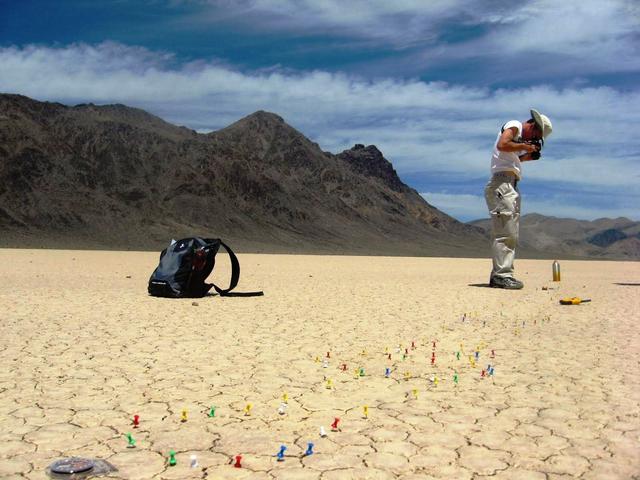
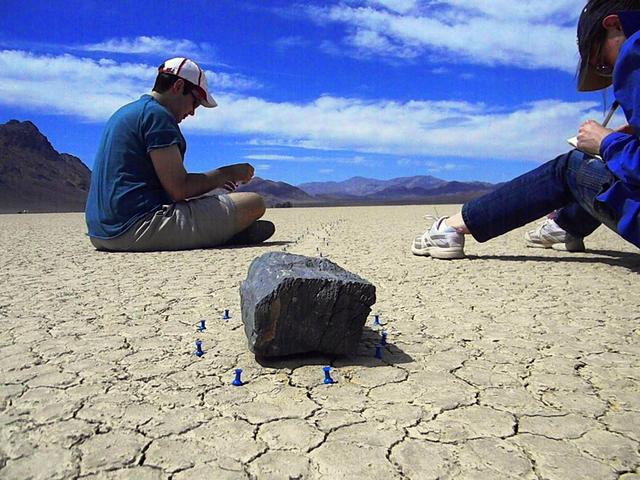
Intern Kyle Yawn marked the boundaries of this trail by placing pushpins into cracks in the clay. Now, he photographs the trail to document it.  Photo credit: NASA/GSFC/Maggie McAdam     To read a feature story on the Racetrack Playa go to:…
Mysterious Roving Rocks of Racetrack Playa
The main mystery on Racetrack Playa is how the rocks move, but another, possibly greater mystery, is why some trails don't have rocks.  Photo credit: NASA/GSFC/Mindy Krzykowski/LPSA intern     To read a feature story on the Racetrack Playa…
Mysterious Roving Rocks of Racetrack Playa
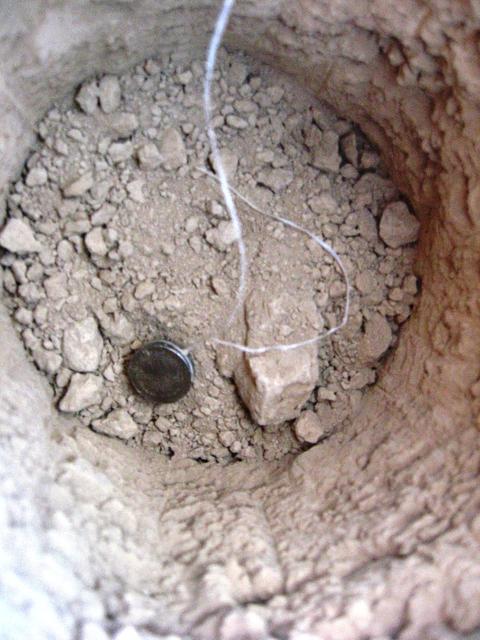
Researchers think that water, ice, and wind work together to move the stones. In this photo, the students dig up small sensors called Hygrochrons, which had been buried three months before the interns arrived and recorded temperature and hu…
Mysterious Roving Rocks of Racetrack Playa
The rocks at Racetrack Playa in Death Valley, Calif., are famous.  Photo credit: NASA/GSFC/Maggie McAdam  To read a feature story on the Racetrack Playa go to: <a href="http://www.nasa.gov/topics/earth/features/roving-rocks.html" rel="nofol…
Mysterious Roving Rocks of Racetrack Playa
A Moon rock is seen in the NASA Headquarters lobby ahead of an event where NASA outlined how the agency is executing President Donald J. Trump’s National Space Policy and accelerating preparations for America’s return to the surface of the…
NASA Update on Implementation of National Space Policy
In the summer and fall of 2017, the team operating NASA's Curiosity Mars rover conducted tests in the "Mars Yard" at NASA's Jet Propulsion Laboratory, Pasadena, California, to develop techniques that Curiosity might be able to use to resume…
Testing New Techniques for Mars Rover Rock-Drilling
Moon rocks are seen as NASA Moon Base Program Executive Carlos Garcia-Galan speaks during an event where NASA is outlining how the agency is executing President Donald J. Trump’s National Space Policy and accelerating preparations for Ameri…
NASA Update on Implementation of National Space Policy
S71-43052 (August 1971) --- A close-up view of a container full of green-colored lunar soil in the Non-Sterile Nitrogen Processing Line (NNPL) in the Lunar Receiving Laboratory (LRL) at the Manned Spacecraft Center (MSC). This sample, broke…
View of container of green-colored lunar soil in Lunar Receiving Laboratory
Apollo 13 astronaut and Biloxi native Fred Haise Jr. was honored for a lifetime of achievement with NASA's Ambassador of Exploration Award during a Dec. 2 ceremony at Gorenflo Elementary School in Biloxi. Haise subsequently presented the mo…
NASA honors Apollo 13 astronaut Fred Haise Jr.
NASA astronaut Jack Fischer speaks about his time aboard the International Space Station as part of Expeditions 51 and 52, Saturday, Nov. 4, 2017 at the Rock Creek Park Nature Center and Planetarium in Washington, DC. During his 136 day mis…
Astronaut Jack Fischer at Rock Creek Park
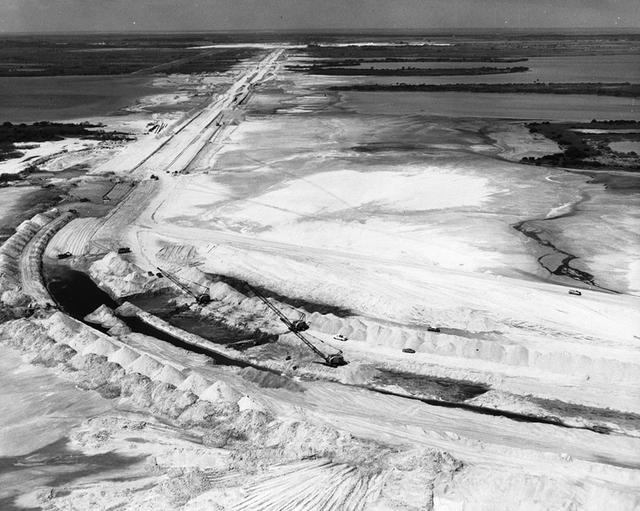
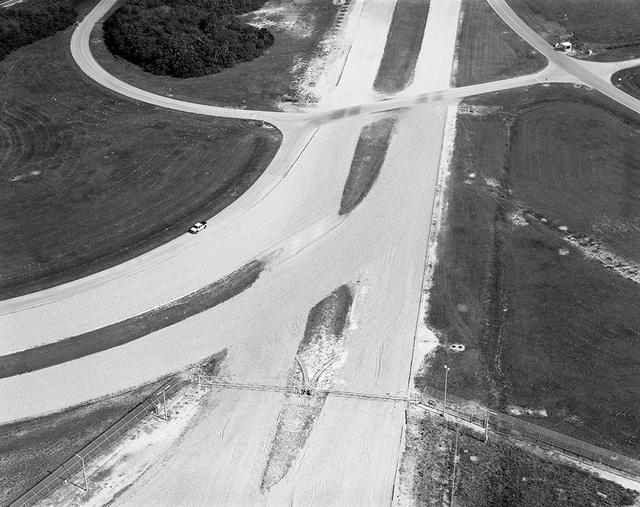
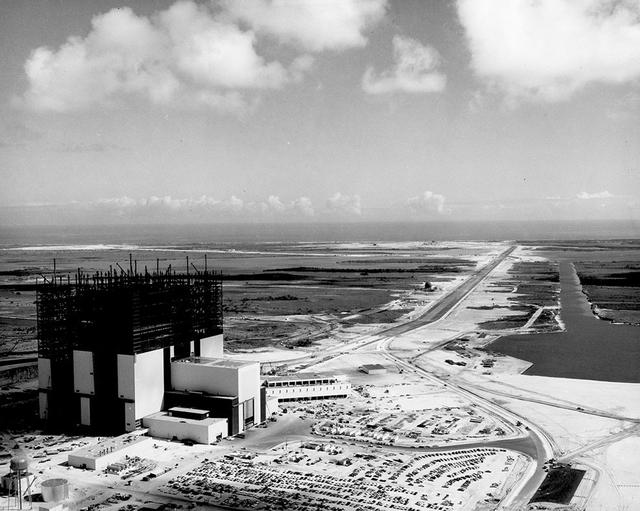
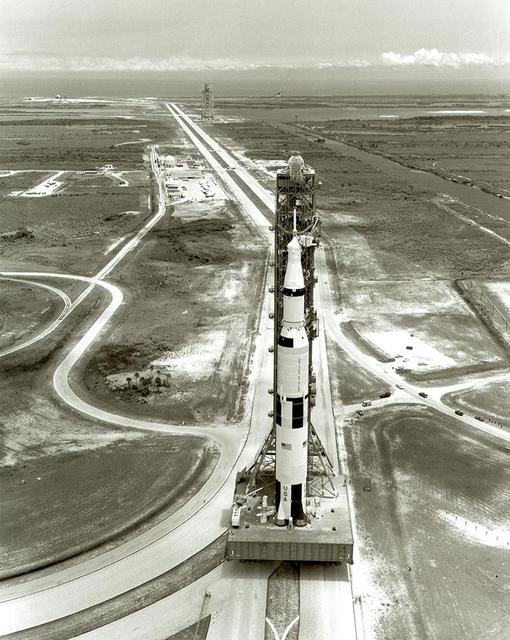
Aerial view of Crawlerway
KSC-20120924-PH-PRB_crawlerway25
AS17-140-21496 (13 Dec. 1972) --- Scientist-astronaut Harrison H. Schmitt is photographed standing next to a huge, split boulder during the third Apollo 17 extravehicular activity (EVA) at the Taurus-Littrow landing site on the moon. Schmit…
Astronaut Harrison Schmitt standing next to boulder during third EVA
The second manned lunar landing mission, Apollo 12 launched from launch pad 39-A at Kennedy Space Center in Florida on November 14, 1969 via a Saturn V launch vehicle. The Saturn V vehicle was developed by the Marshall Space Flight Center (…
Saturn Apollo Program
The trails can be straight, or they can curve. Sometimes, two trails run alongside each other. Those two lines running from left to right in the back look like they were made by a car; but they were made by rocks.   Photo credit: NASA/GSFC/…
Mysterious Roving Rocks of Racetrack Playa
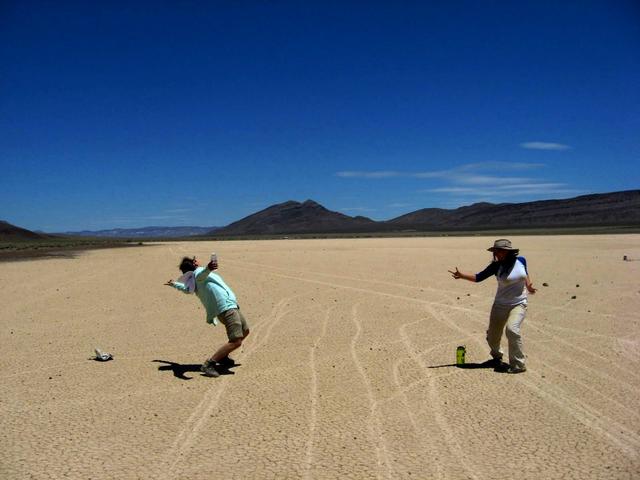
Sometimes, a gunfight breaks out, like this one between (left) Mindy Krzykowski and (right) Leva McIntire. This is the wild West, after all.  Photo credit: NASA/GSFC/Maggie McAdam  To read a feature story on the Racetrack Playa go to: <a hr…
Mysterious Roving Rocks of Racetrack Playa
Many of the moving rocks are about the size of a loaf of bread and weigh about 25 pounds. Interns Kristopher Schwebler and Valerie Fox make notes about this one.  Photo credit: NASA/GSFC/Leva McIntire/LPSA intern  To read a feature story on…
Mysterious Roving Rocks of Racetrack Playa
In some cases, the trail starts narrow and gets wider, as in this photo.  Photo credit: NASA/GSFC/Leva McIntire/LPSA intern  To read a feature story on the Racetrack Playa go to: <a href="http://www.nasa.gov/topics/earth/features/roving-roc…
Mysterious Roving Rocks of Racetrack Playa
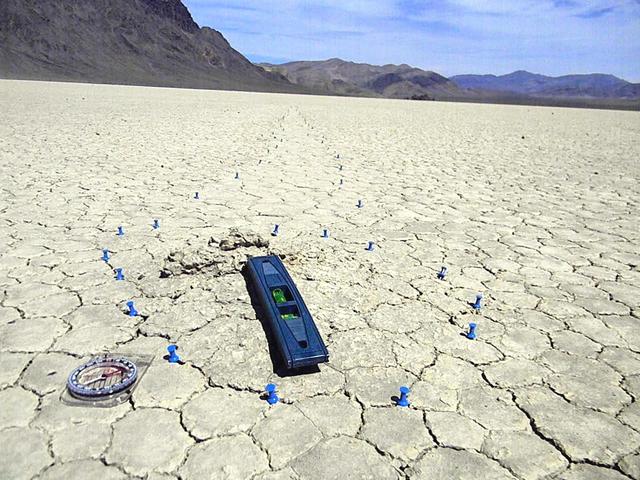
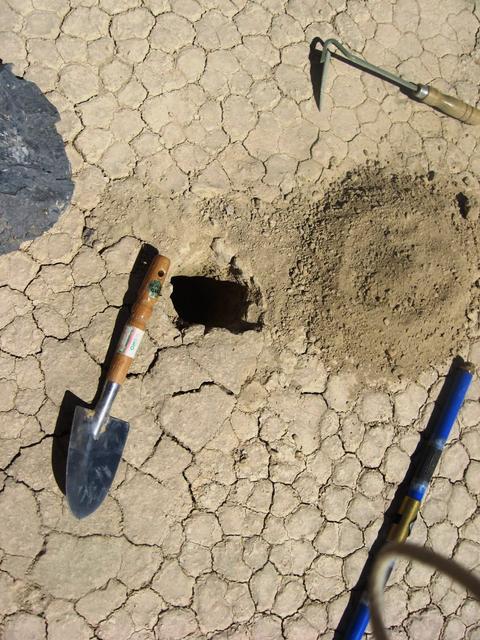
The trails have some curious features. Sometimes the clay gets pushed into a mound at the trail's end, as in this photo.   Photo credit: NASA/GSFC/Cynthia Cheung  To read a feature story on the Racetrack Playa go to: <a href="http://www.nas…
Mysterious Roving Rocks of Racetrack Playa
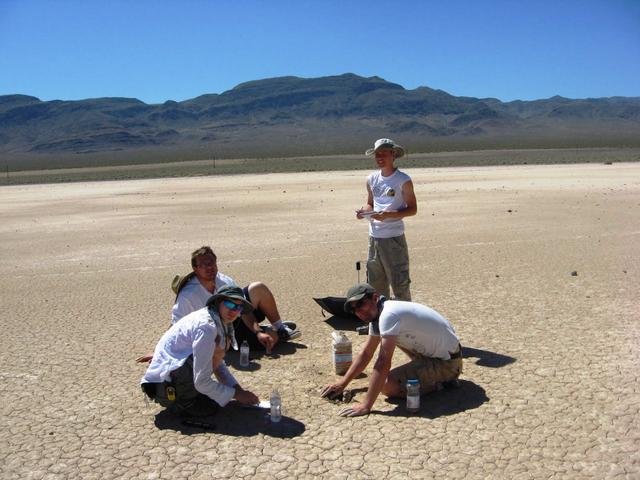
Four LPSA interns test the clay at Bonnie Claire Playa, another location where the rocks move, to see how quickly water is absorbed. Interns, clockwise: Kyle Yawn (standing), Gregory Romine, Emily Kopp, and Clint Naquin.  Photo credit: NASA…
Mysterious Roving Rocks of Racetrack Playa
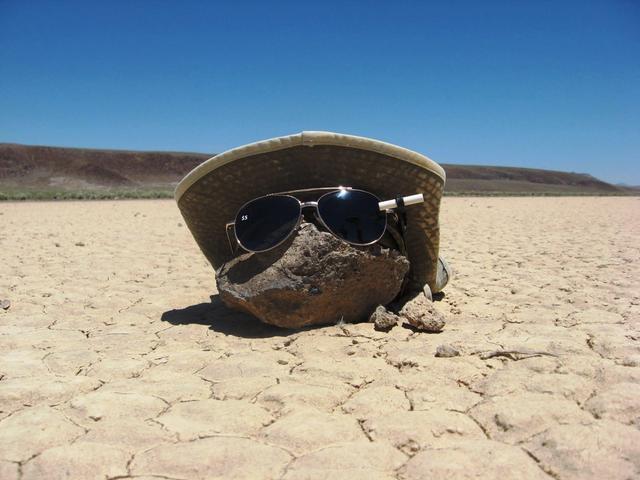
There's nothing special about these rocks, which are ordinary dolomite from the surrounding mountains. The rocks move because of where they are, not what they are made of.  Credit: NASA/GSFC/Maggie McAdam  To read a feature story on the Rac…
Mysterious Roving Rocks of Racetrack Playa
AS14-64-9135 (6 Feb. 1971) --- Astronaut Alan B. Shepard Jr., commander, took this close-up view of a large boulder, approximately five feet long, during the second extravehicular activity (EVA), on Feb. 6, 1971. Astronauts Shepard and Edga…
View of large boulder found by Apollo 14 crew
A Moon rock is seen in the NASA Headquarters lobby ahead of an event where NASA outlined how the agency is executing President Donald J. Trump’s National Space Policy and accelerating preparations for America’s return to the surface of the…
NASA Update on Implementation of National Space Policy
A Moon rock is seen in the NASA Headquarters lobby ahead of an event where NASA outlined how the agency is executing President Donald J. Trump’s National Space Policy and accelerating preparations for America’s return to the surface of the…
NASA Update on Implementation of National Space Policy
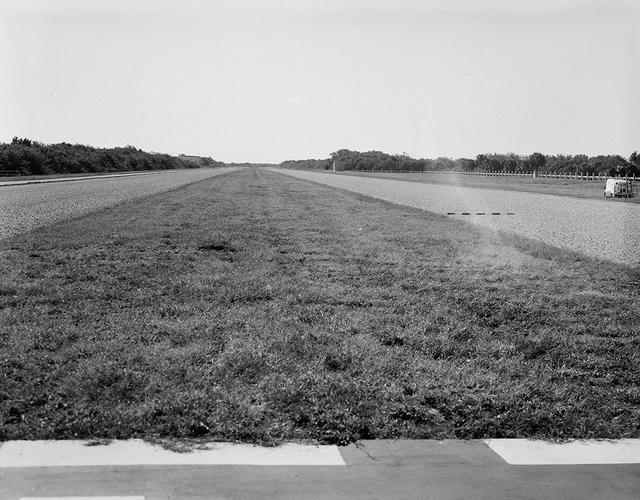
Aerial view of Crawlerway
KSC-20120924-PH-PRB_crawlerway21
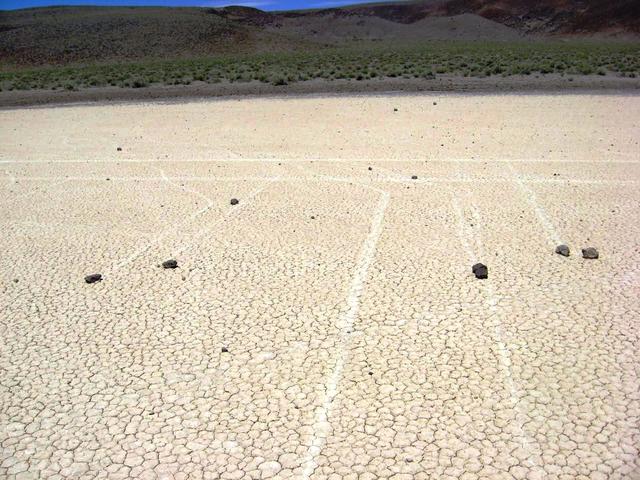
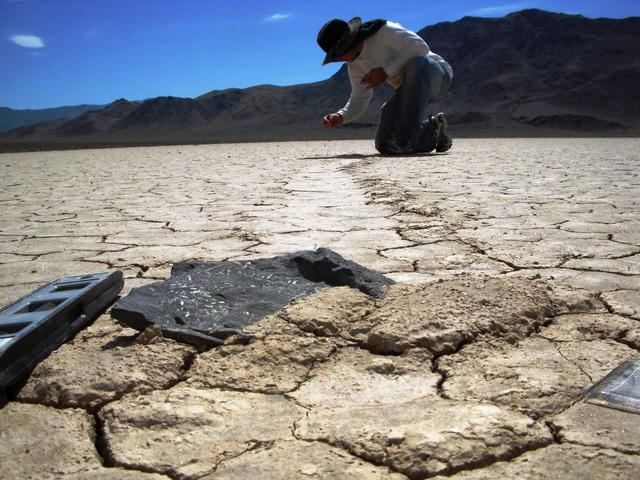
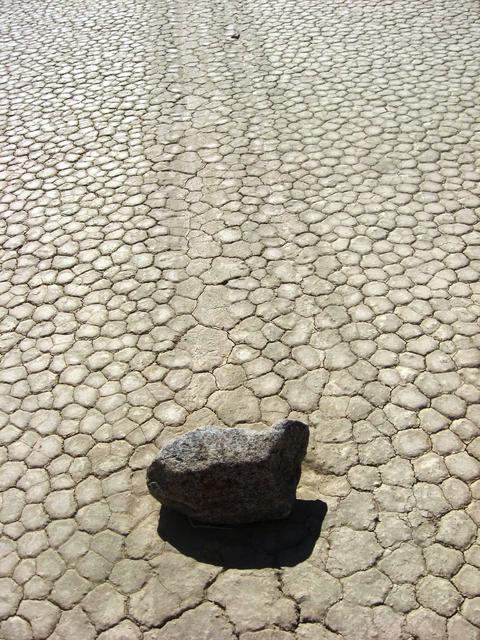
The rocks are famous because they move, leaving tell-tale trails in the clay, like this one. This happens at several playa in California and Nevada. There's no record of anybody seeing one of the rocks move, and scientists aren't quite sure…
Mysterious Roving Rocks of Racetrack Playa
This is a Hygrochron sensor. Sensors were buried at different depths, to see how the temperature and moisture levels in the ground changed close to and farther from the surface. Special permission from the National Park Service is needed to…
Mysterious Roving Rocks of Racetrack Playa
The summer interns with the 2010 Lunar and Planetary Science Academy (LPSA) at NASA's Goddard Space Flight Center came to study the Racetrack Playa rocks.  Photo credit: NASA/GSFC/Mindy Krzykowski/LPSA intern  To read a feature story on the…
Mysterious Roving Rocks of Racetrack Playa
Data from the sensors were downloaded, and then the sensors were reburied. The LPSA team plans to publish a research paper that will present their data and offer their explanation for how the rocks move.  Photo credit: NASA/GSFC/Maggie McAd…
Mysterious Roving Rocks of Racetrack Playa
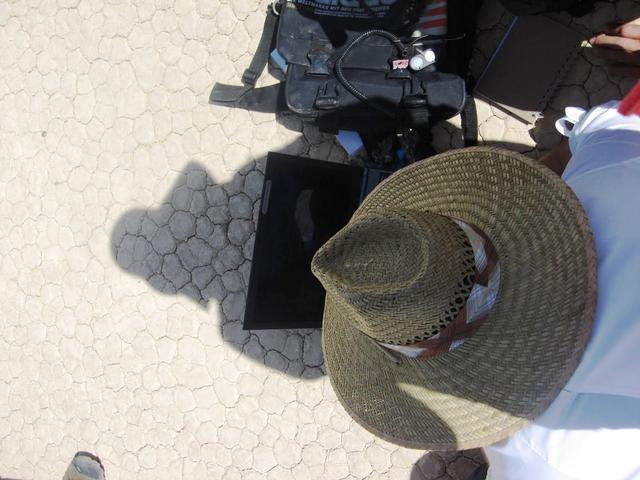
To investigate the rocks and trails, the interns collect many kinds of data, such as trail length, width, and depth; rock size; magnetic and radiation measurements; and GPS coordinates. The students also photograph the rocks, the trails and…
Mysterious Roving Rocks of Racetrack Playa
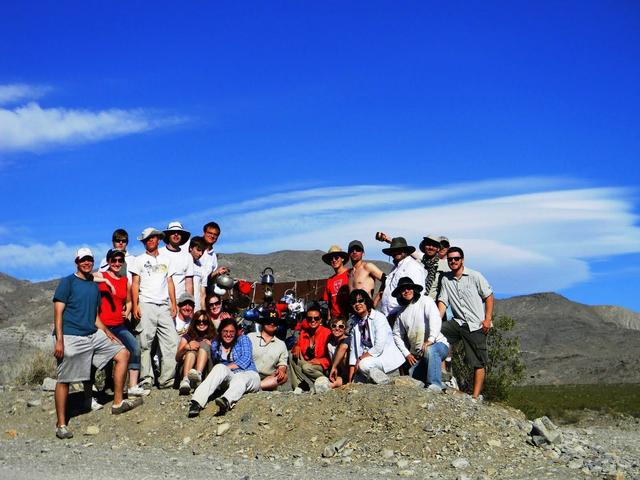
This group photo of the LPSA interns and trip leaders was taken at Tea Kettle Junction in Death Valley, Calif. (Standing on left side, left to right): Kristopher Schwebler, Valerie Fox, Emily Kopp, Kyle Yawn, Dan Burger, Ian Schoch, Devon M…
Mysterious Roving Rocks of Racetrack Playa
AS14-68-9448 (6 Feb. 1971) --- A close-up view of a large multi-colored boulder in the boulder field located on the rim of Cone Crater, as photographed by the moon-exploring crew members of the Apollo 14 lunar landing mission. This view is…
View of large boulder found by Apollo 14 crew
A Moon rock is seen in the NASA Headquarters lobby ahead of an event where NASA outlined how the agency is executing President Donald J. Trump’s National Space Policy and accelerating preparations for America’s return to the surface of the…
NASA Update on Implementation of National Space Policy
Apollo 11 astronauts, (left to right) Edwin E. Aldrin Jr., Lunar Module pilot; Michael Collins, Command Module pilot; and Neil A. Armstrong, commander, are showing a two-pound Moon rock to Frank Taylor, director of the Smithsonian Institute…
Saturn Apollo Program
This photo taken in the "Mars Yard" at NASA's Jet Propulsion Laboratory, Pasadena, California, on Aug. 1, 2017, shows a step in development of possible alternative techniques that NASA's Curiosity Mars rover might be able to use to resume d…
New Rock-Drilling Method in 'Mars Yard' Test
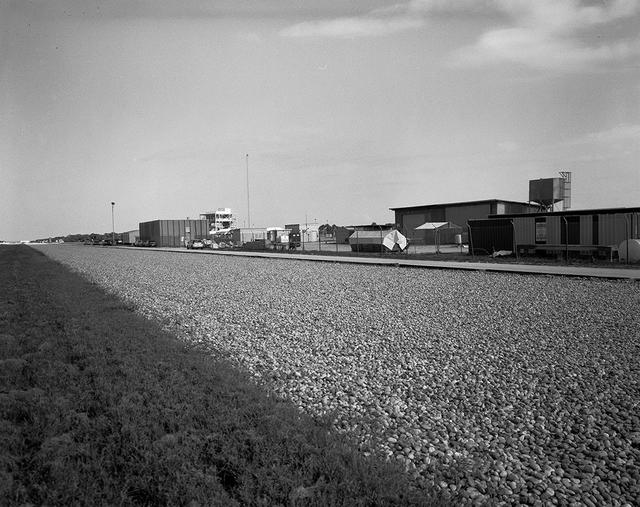
Aerial view of Crawlerway
KSC-20120924-PH-PRB_crawlerway34
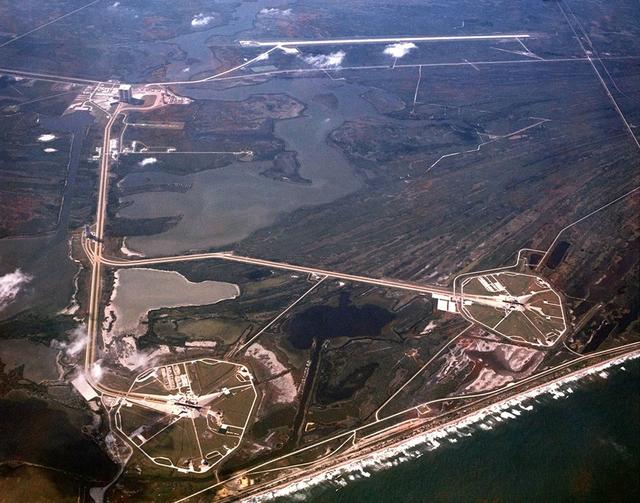
Aerial view of Crawlerway
KSC-20120924-PH-PRB_crawlerway22
Aerial view of Crawlerway
KSC-20120924-PH-PRB_crawlerway27
AS17-140-21438 (7-19 Dec. 1972) --- This 70mm frame features a close-up view of a large multi-cracked boulder discovered by astronauts Eugene A. Cernan, commander, and Harrison H. (Jack) Schmitt, lunar module pilot, during their visit to ex…
View of boulder found at Station 6 by Apollo 16 astronauts
Aerial view of Crawlerway
KSC-20120924-PH-PRB_crawlerway30