NASA is targeting 2022 for the first flight of the X-59 Quiet SuperSonic Technology (QueSST) research aircraft. Its mission – fly over communities to collect data that could cut passenger travel time in half without disturbing people on the…
SEG 210 Forebody
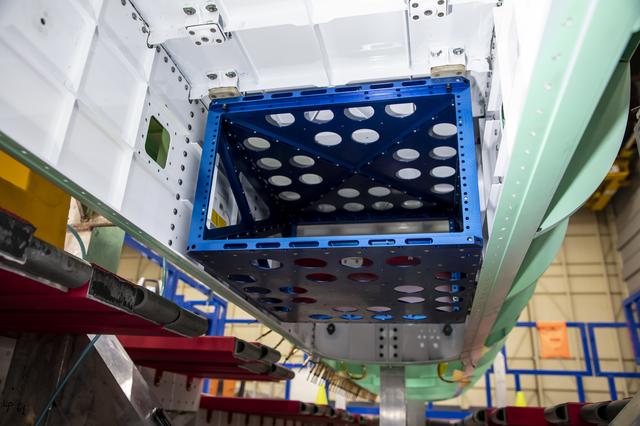
Following the successful installation of mounting brackets, technicians successfully installed the pallet for the eXternal Visibility System, or XVS, onto the X-59 Quiet SuperSonic Technology X-plane, also known as X-59 QueSST. The pallet i…
NASA Payload Pallet XVS Mock-Up
Artist illustration of the X-59 in flight over land.
X59_Plate_003-Aug.jpg
Technicians check out the X-59 aircraft as it sits near the runway at Lockheed Martin Skunk Works in Palmdale, California, on June 19, 2023.  Lockheed Martin Photography By Garry Tice 1011 Lockheed Way, Palmdale, Ca. 93599 Event: Move to Ru…
Move to Run Stall 5
Here you see the X-59 scaled model inside the JAXA supersonic wind tunnel during critical tests related to sound predictions.
X-59 Model Tested in Japanese Supersonic Wind Tunnel
A Lockheed Martin Skunk Works technician works to complete wiring on the X-59 aircraft in preparation for the power-on system checkouts.  Once complete, the X-59 aircraft will demonstrate the ability to fly supersonic while reducing the lou…
Cockpit Lights SCO - Right Tomahawk Skin
The X-59 Quiet SuperSonic Technology (QueSST) aircraft is taking shape at the Lockheed Martin Skunk Works facility in Palmdale, California. The team positioned the X-59 QueSST's nose at the front of the aircraft.   As one of the more recogn…
Manufacturing Area From Above
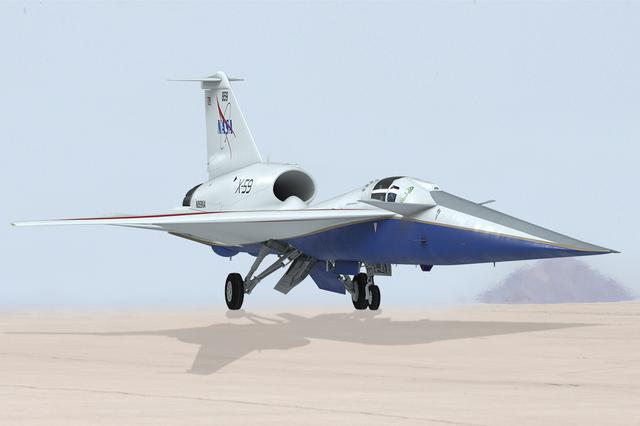
Artist illustration of the X-59 taking off from the runway.
Takeoff_001_LM_Aug_update.jpg
Artist illustration of the X-59 landing on the runway.
X59_Landing_001-new-update-Aug
Artist concept of the X-59 top view
X59_T
Artist concept of the X-59 bottom view with landing gears down.
X59_Bot_LGD
A overhead view of the X-59 with its nose on. The X-59’s nose is 38-feet long – approximately one third of the length of the entire aircraft. The plane is under construction at Lockheed Martin Skunk Works in Palmdale, California, will fly t…
Manufacturing Area From Above
Event: Manufacturing Area From Above  A overhead view of the X-59 with its nose on. The X-59’s nose is 38-feet long – approximately one third of the length of the entire aircraft. The aircraft, under construction at Lockheed Martin Skunk Wo…
Manufacturing Area From Above
Event: SEG 230 Nose The X-59’s nose is wrapped up safely and rests on a dolly before the team temporarily attaches it to the aircraft for fit checks at Lockheed Martin in Palmdale, California. The full length of the X-plane’s nose is 38-fee…
SEG 230 Nose
A Lockheed Martin technician prepares holes for installation of the fuselage panel on the X-59. The fuselage is the section of the aircraft that contains the cockpit. The aircraft, under construction at Lockheed Martin Skunk Works in Palmda…
LRC-2022-H1_P_X-59-8
Artist concept of the X-59 side view (left side)
X59_L
Technicians are shown here working on the X-59 fuselage section of the aircraft.  The fuselage contains the cockpit and helps define the distinct shape of the X-59.  Lockheed Martin Photography By Garry Tice 1011 Lockheed Way, Palmdale, Ca.…
SEG 210 Forebody-Subsystems
This overview shot of the X-59 Quiet Supersonic Technology or QueSST aircraft shows the vehicle before a major merger of three major aircraft sections – the fuselage, the wing, and the tail assembly – together, making it looks more like an…
Manufacture Area From Above
The test director runs through a check list as a military test volunteer prepares to undergo a rapid decompression test.
WJS_8700
The X-59 is free from its structural support jig for the first time. In this image, cranes are holding up the aircraft prior to placement on the floor jacks. Notice that the nose has been removed temporarily  — it will be reinstalled again…
Removal From Tooling Jig
Artist illustration of the X-59 in flight above the clouds with land below, flying left.
X59_Plate_002_WIP-Aug
NASA’s X-59 research aircraft moves from its construction site to the flight line – or the space between the hangar and the runway – at Lockheed Martin Skunk Works in Palmdale, California, on June 16, 2023. This milestone kicks off a series…
Move to Run Stall 5
Artist concept of the X-59 three forths view
X59_threeForthsFront_LGD
The pilot of NASAÕs X-59 Quiet SuperSonic Technology, or QueSST, aircraft will navigate the skies in a cockpit unlike any other. There wonÕt be a forward-facing window. ThatÕs right; itÕs actually a 4K monitor that serves as the central win…
NASA artist concept of the eXternal Vision System that will be used for the X-59 Quiet SuperSonic Technology aircraft.
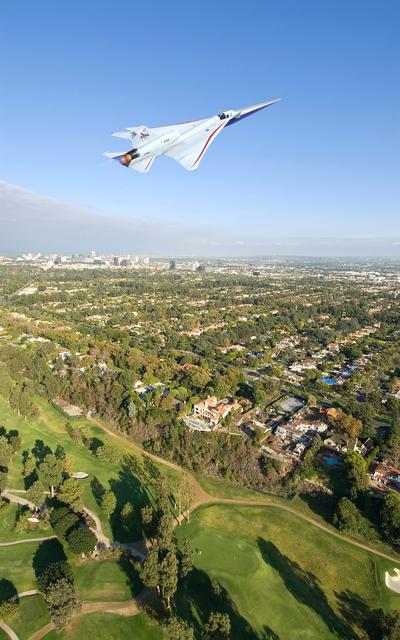
Artist illustration of the X-59 in flight over land (with cities and rural areas below). Satellite image from USGS/NASA Landsat.
X-59-fying-over-land-15x11-300dpi
Artist illustration of the X-59 in flight in blue skies and white clouds.
x59_mark_placement_white-clouds-AUG
The team at Lockheed Martin Skunk Works in Palmdale, California, merged the major sections of the X-59 Quiet SuperSonic Technology aircraft, which includes the wing, tail assembly, and fuselage or forward section. This marks the first time…
Manufacturing Area From Above
The X-59 is transported to the fuel barn at Lockheed Martin in Fort Worth, Texas to undergo fuel tank calibration tests. During this phase, the X-59’s gas tanks were filled and fuel-remaining sensors inside the aircraft were checked.
Move to Fuel Barn
Event: Forebody and Nose - Windtunnel Testing A model of the X-59 forebody is shown in the Lockheed Martin Skunk Works’ wind tunnel in Palmdale, California. These tests gave the team measurements of wind flow angle around the aircraft’s nos…
Forebody and Nose - Windtunnel Testing
 Here is an image of the X-59’s 13-foot General Electric F414 engine as the team prepares for a fit check. Making sure components, like the aircraft’s hydraulic lines, which help control functions like brakes or landing gear, and wiring of…
Engine Test Fit Install
Lockheed Martin technicians work to align and check the fastener holes on the X-59’s fuselage skin. The aircraft, under construction at Lockheed Martin Skunk Works in Palmdale, California, will demonstrate the ability to fly supersonic whil…
LRC-2022-H1_P_X-59-6
Artist concept of the X-59 configuration views.
X59_B
This is an image of the X-59 inlet with a safety covering. The inlet’s purpose is to adjust air speeds before they pass through the aircraft’s engine. The purpose of the covering is to protect the inlet and engine from foreign objects.
Critical Components - Forebody and Miscellaneous
This overhead shot of the X-59 Quiet SuperSonic Technology or QueSST aircraft shows the assembly progress of the vehicle during Spring 2021.  Pictured here you can see the nose (far left) which will later be mounted to the middle section in…
Manufacture Area From Above
This image shows a close up of the cockpit view of the eXternal Vision System that will be placed in the X-59. Instead of a front facing window, the pilot will use these monitors for forward facing visibility.  Lockheed Martin Photography B…
X-59 SIL Round 2
The low pressure (hypobaric) chamber at KBR’s facility in San Antonio, Texas, simulates very high altitudes by reducing the air pressure inside of the chamber. The subject  inside the chamber experiences the reduced pressure conditions that…
WJS_8750
A view of the X-59 being supported by ground supports in preparation for installation of the landing gear and other hardware required for structural testing.  Lockheed Martin Photography By Garry Tice 1011 Lockheed Way, Palmdale, Ca. 93599…
Removal From Tooling Jig
NASA’s X-59 aircraft is parked in stall five near the runway at Lockheed Martin Skunk Works in Palmdale, California, on June 19, 2023. This is where the X-59 will be housed during ground and initial flight tests.  Lockheed Martin Photograph…
Move to Run Stall 5
NASA’s X-59 aircraft is parked near the runway at Lockheed Martin Skunk Works in Palmdale, California, on June 19, 2023. This is where the X-59 will be housed during ground and initial flight tests.  Lockheed Martin Photography By Garry Tic…
Move to Run Stall 5
NASA Administrator Bridenstine stands with AFRC center director McBride by model NASA's Supersonic X-Plane, X-59 Quiet Supersonic Technology or QueSST. Bridenstine spoke at press event at Mojave Air and Space Port in California. The goal of…
NASA Administrator Bridenstine and Armstrong Flight Research Center's Center Director McBride stand beside model of NASA's Supersonic X-Plane, X-59 Quiet Supersonic Technology or QueSST at press event in Mojave Air & Space Port in California
An artist illustration of the Low-Boom Flight Demonstration vehicle flying over a community.
Low-Boom Flight Demonstration over land
Artist illustration of the X-59 taxiing on the runway.
Taxi_001_Aug_update.jpg
Artist concept of the X-59 top view (pointing up)
X59_T-vertical
In July 2021, NASA associate administrator Bob Cabana visits Lockheed Martin in Palmdale, California to see the assembly of the X-59 QueSST.
P21-142-21
Artist illustration of the X-59 in flight above land and clouds.
Flying-002-Aug-update
Event: SEG 230 Nose - Craned Onto Tooling A close up of the X-59’s duckbill nose, which is a crucial part of its supersonic design shaping. The team prepares the nose for a fit check. The X-59’s nose is 38-feet long – approximately one thir…
SEG 230 Nose - Craned Onto Tooling
Pictured here is a side view of the X-59 spine and engine inlet during assembly.  Lockheed Martin Photography By Garry Tice 1011 Lockheed Way, Palmdale, Ca. 93599 Event: SEG 210 Forebody, SEG 430 Spine, SEG 500 Empennage Date: 6/08/2021
SEG 210 Forebody, SEG 430 Spine, SEG 500 Empennage
The X-59 sits in the fuel barn at Lockheed Martin in Fort Worth, Texas. While in the fuel barn, the X-59 underwent fuel tank calibration tests. During this phase, the X-59’s gas tanks were filled and fuel-remaining sensors inside the aircra…
Fuel Barn Testing