Mechanical technician Dan Pitts prepares a scale model of Lockheed Martin's Quiet Supersonic Technology (QueSST) X-plane preliminary design for its first high-speed wind tunnel tests at NASA's Glenn Research Center.
Dr. Alexandra Loubeau, one of the technical co-leads for sonic boom community testing for the Quesst mission, sets out a microphone in the California desert. . The Quesst mission recently completed testing of operations and equipment to be…
The Quesst mission recently completed testing of operations and equipment to be used in recording the sonic thumps of the X-59. Shown is one of 10 ground recording stations set up along a 30-mile stretch of desert to record sonic booms duri…
The low pressure (hypobaric) chamber at KBR’s facility in San Antonio, Texas, simulates very high altitudes by reducing the air pressure inside of the chamber. The subject inside the chamber experiences the reduced pressure conditions that…
NASA Life Support Technician Mathew Sechler provides support as the X-59’s ejection seat is installed into the aircraft at Lockheed Martin Skunk Works’ facilities in Palmdale, California. Completion of the seat’s installation marks an integ…
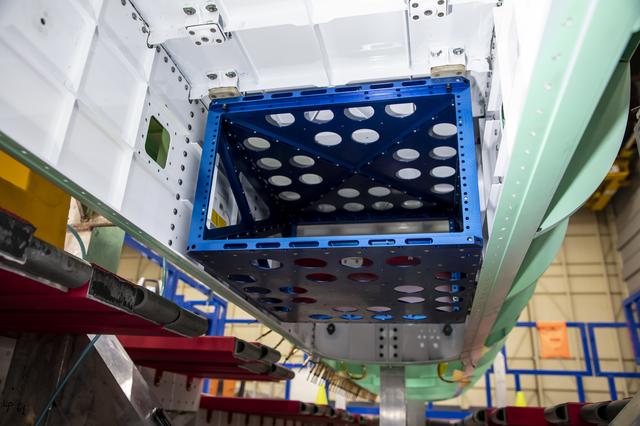
Following the successful installation of mounting brackets, technicians successfully installed the pallet for the eXternal Visibility System, or XVS, onto the X-59 Quiet SuperSonic Technology X-plane, also known as X-59 QueSST. The pallet i…
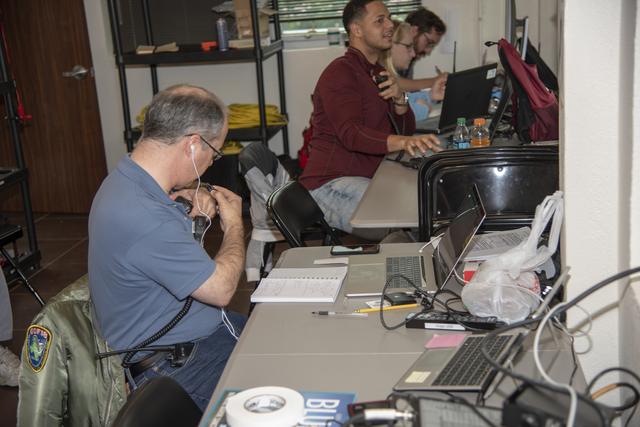
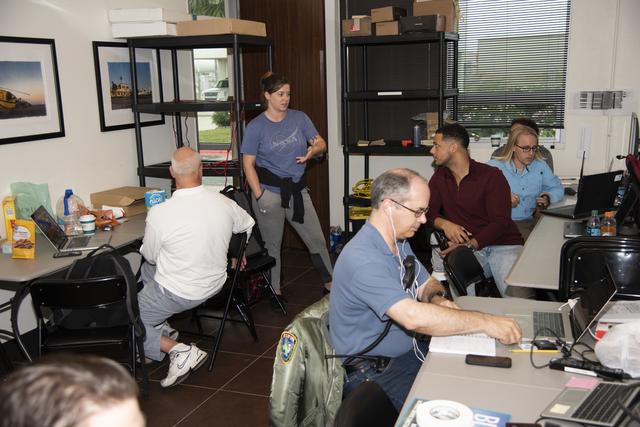
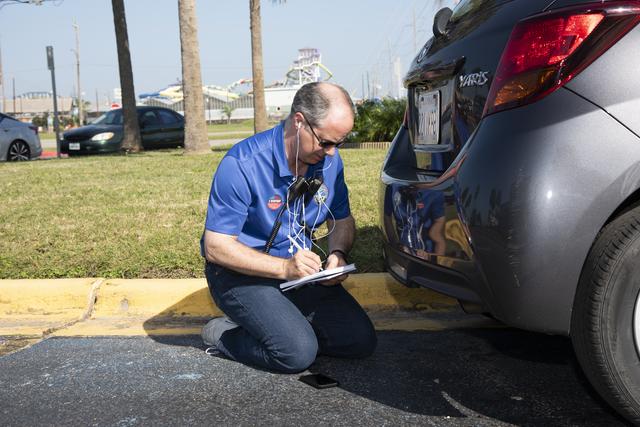
While NASA's F/A-18 goes supersonic off the coast, a team of researchers monitor the flight and operate multiple sound monitor stations around Galveston and its surrounding area. This allows NASA to obtain accurate sound level data, which g…
The X-59, NASA’s quiet supersonic technology experimental aircraft, is suspended in the air at Lockheed Martin’s Skunk Works facility in Palmdale, California, following several months of critical ground testing in Ft. Worth, Texas
The X-59, NASA’s quiet supersonic technology experimental aircraft, arrives back at Lockheed Martin’s Skunk Works facility in Palmdale, California, following several months of critical ground testing in Ft. Worth, Texas
NASA's 2017 astronaut candidates toured aircraft hangar at Armstrong Flight Research Center, in Southern California (L to R) Jenni Sidey-Gibbons, Raja Chari, Loral O'Hara, Jasmin Moghbeli, Jonny Kim and Jessica Watkins look inside the engin…
NASA’s 2017 astronaut candidates toured aircraft hangar at Armstrong Flight Research Center, in Southern California where Jenni Sidey-Gibbons looks inside engine nozzle of F-15 jet. The F-15 will fly in tandem with the X-59 QueSST during ea…
While NASA’s F/A-18 goes supersonic off the coast, a team of researchers monitor the flight and operate multiple sound monitor stations around Galveston and its surrounding area. This allows NASA to obtain accurate sound level data, which g…
A Lockheed Martin Skunk Works technician works to complete wiring on the X-59 aircraft in preparation for the power-on system checkouts. Once complete, the X-59 aircraft will demonstrate the ability to fly supersonic while reducing the lou…
While NASA's F/A-18 goes supersonic off the coast, a team of researchers monitor the flight and operate multiple sound monitor stations around Galveston and its surrounding area. This allows NASA to obtain accurate sound level data, which g…
The Quesst mission recently completed testing of operations and equipment to be used in recording the sonic thumps of the X-59. Researchers used three weather towers and a sonic anemometer to collect weather and atmospheric data while recor…
The Quesst mission recently completed testing of operations and equipment to be used in recording the sonic thumps of the X-59. To simulate the sonic thumps expected to be created by the X-59, NASA Armstrong Flight Researcher Center pilot J…
Aerospace engineer Larry Cliatt, Quesst Phase 2 Sub-Project Manager and technical lead for the acoustic validation phase of the Quesst mission, sets up a ground recording system in the California desert. The Quesst mission recently complete…
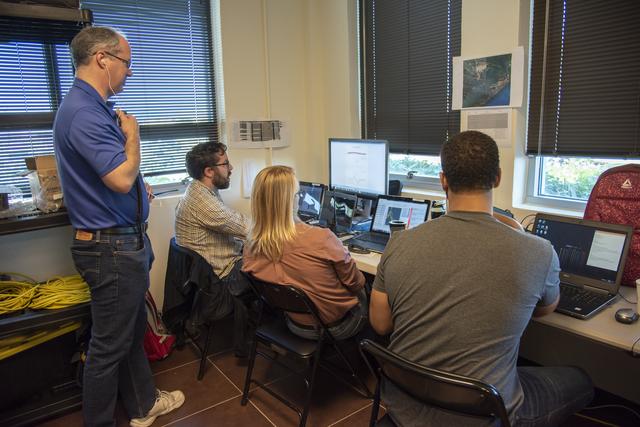
Dr. Forrest Carpenter, left, principal investigator for the third phase of CarpetDIEM, Carpet Determination in Entirety Measurements flights, monitors a test from one of the control rooms at NASA’s Armstrong Flight Research Center. Next to…
The pilot of NASAÕs X-59 Quiet SuperSonic Technology, or QueSST, aircraft will navigate the skies in a cockpit unlike any other. There wonÕt be a forward-facing window. ThatÕs right; itÕs actually a 4K monitor that serves as the central win…
While NASA's F/A-18 goes supersonic off the coast, a team of researchers monitor the flight and operate multiple sound monitor stations around Galveston and its surrounding area. This allows NASA to obtain accurate sound level data, which g…
While NASA’s F/A-18 goes supersonic off the coast, a team of researchers monitor the flight and operate multiple sound monitor stations around Galveston and its surrounding area. This allows NASA to obtain accurate sound level data, which…
While NASA's F/A-18 goes supersonic off the coast, a team of researchers monitor the flight and operate multiple sound monitor stations around Galveston and its surrounding area. This allows NASA to obtain accurate sound level data, which g…
Following the successful installation of mounting brackets, technicians successfully installed the pallet for the eXternal Visibility System, or XVS, onto the X-59 Quiet SuperSonic Technology X-plane, also known as X-59 QueSST. The pallet i…
The X-59 is free from its structural support jig for the first time. In this image, cranes are holding up the aircraft prior to placement on the floor jacks. Notice that the nose has been removed temporarily — it will be reinstalled again…
While NASA’s F/A-18 goes supersonic off the coast, a team of researchers monitor the flight and operate multiple sound monitor stations around Galveston and its surrounding area. This allows NASA to obtain accurate sound level data, which g…
While NASA’s F/A-18 goes supersonic off the coast, a team of researchers monitor the flight and operate multiple sound monitor stations around Galveston and its surrounding area. This allows NASA to obtain accurate sound level data, which g…
A view of the X-59 being supported by ground supports in preparation for installation of the landing gear and other hardware required for structural testing. Lockheed Martin Photography By Garry Tice 1011 Lockheed Way, Palmdale, Ca. 93599…
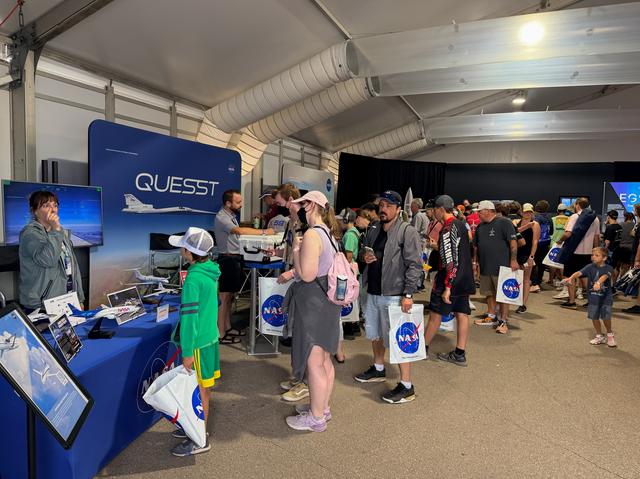
A line of visitors work their way through the exhibits and stop by the Quesst table in the NASA pavilion at the 2026 Experimental Aircraft Association (EAA) AirVenture air show in Oshkosh, Wisconsin, on Saturday, July 25, 2026.
A NASA TG-14 sits on the ramp at NASA’s Armstrong Flight Research Center in Edwards, California, on Monday, Aug. 4, 2025, to support NASA’s Quesst mission.
Aerospace engineer Larry Cliatt, Quesst Phase 2 Sub-Project Manager abd technical lead for the acoustic validation phase of the Quesst mission, sets up a ground recording system in the California desert. The Quesst mission recently complete…
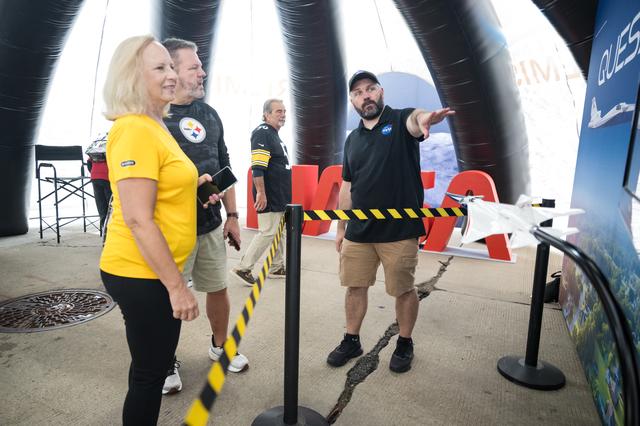
Fans learn about the X-59 supersonic aircraft at the NASA Experience Zone at an NFL game between the Pittsburgh Steelers and the Atlanta Falcons at Acrisure Stadium, Sunday, Sept. 13, 2026, in Pittsburgh, Pennsylvania. NASA’s engagement at…
The X-59 simulator at NASA's Armstrong Flight Research Center in Edwards, California, will help pilots prepare for Quesst missions. Quesst is NASA's mission to demonstrate how the X-59 can fly supersonic without generating loud sonic booms…
NASA is targeting 2022 for the first flight of the X-59 Quiet SuperSonic Technology (QueSST) research aircraft. Its mission – fly over communities to collect data that could cut passenger travel time in half without disturbing people on the…
While NASA’s F/A-18 goes supersonic off the coast, a team of researchers monitor the flight and operate multiple sound monitor stations around Galveston and its surrounding area. This allows NASA to obtain accurate sound level data, which g…
While NASA’s F/A-18 goes supersonic off the coast, a team of researchers monitor the flight and operate multiple sound monitor stations around Galveston and its surrounding area. This allows NASA to obtain accurate sound level data, which g…
The X-59, NASA's quiet supersonic technology experimental aircraft, sits in Lockheed Martin's Skunk Works facility in Palmdale, California, following its return from several months of critical ground testing in Ft. Worth, Texas
While NASA's F/A-18 goes supersonic off the coast, a team of researchers monitor the flight and operate multiple sound monitor stations around Galveston and its surrounding area. This allows NASA to obtain accurate sound level data, which g…
While NASA's F/A-18 goes supersonic off the coast, a team of researchers monitor the flight and operate multiple sound monitor stations around Galveston and its surrounding area. This allows NASA to obtain accurate sound level data, which g…
While NASA's F/A-18 goes supersonic off the coast, a team of researchers monitor the flight and operate multiple sound monitor stations around Galveston and its surrounding area. This allows NASA to obtain accurate sound level data, which g…
While NASA’s F/A-18 goes supersonic off the coast, a team of researchers monitor the flight and operate multiple sound monitor stations around Galveston and its surrounding area. This allows NASA to obtain accurate sound level data, which g…