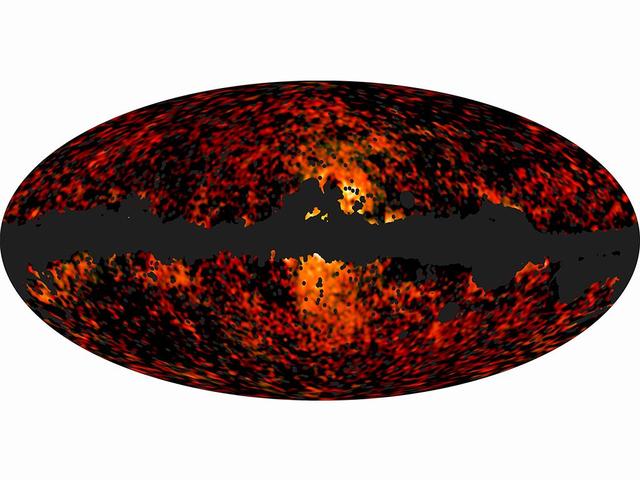
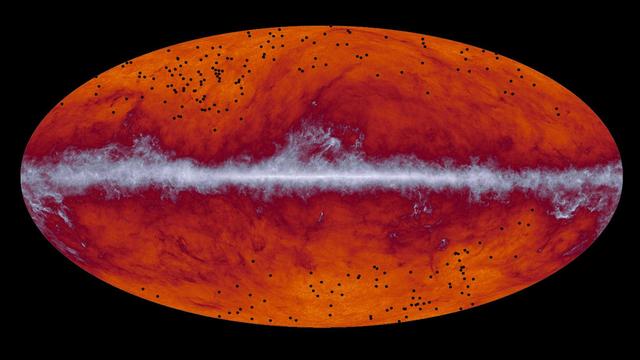
This map of the entire sky was captured by the European Space Agency's Planck mission. The band running through the middle corresponds to dust in our Milky Way galaxy. The black dots indicate the location of galaxy cluster candidates identi…
Astronomers Dig Up Treasure Trove of Galaxy Clusters
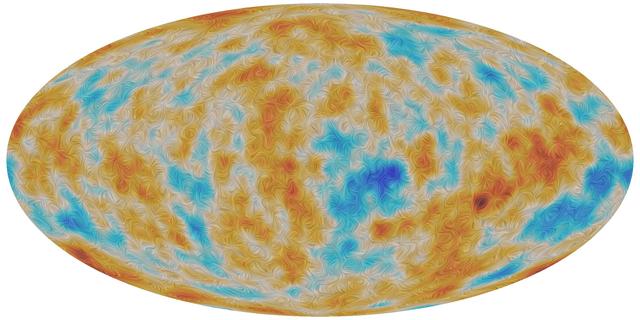
A visualization of the polarization of the Cosmic Microwave Background, or CMB, as detected by ESA Planck satellite over the entire sky.
Polarization of the Cosmic Microwave Background
Tones represents sound waves that traveled through the early universe, and were later heard by ESA Planck space telescope. The primordial sound waves have been translated into frequencies we can hear.
Sounds of the Ancient Universe
This detailed map of the oldest light in our universe allowed scientists to take the most precise inventory of the universe ingredients to date.
Refining the Ingredients of Our Universe
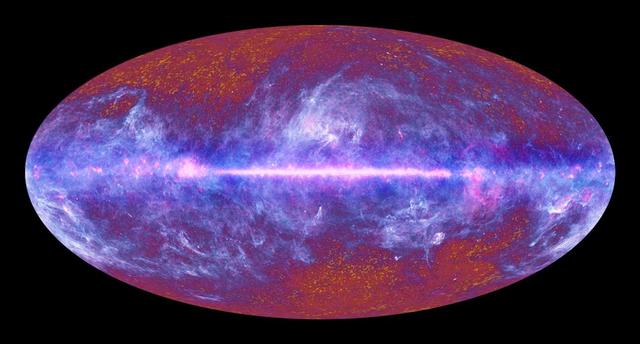
This image of the microwave sky was synthesized using data spanning the range of light frequencies detected by ESA Planck. A vast portion of the sky is dominated by the diffuse emission from gas and dust in our Milky Way galaxy.
Planck View of the Whole Sky
This graphic illustrates the evolution of satellites designed to measure ancient light leftover from the big bang that created our universe 13.8 billion years ago; NASA COBE Explorer left and WMAP middle, and ESA Planck right.
The Universe Comes into Sharper Focus
The oldest light in the universe, called the cosmic microwave background, as observed by the Planck space telescope is shown in the oval sky map. An artist concept of Planck is next to the map.
Planck and the Cosmic Microwave Background Artist Concept
This illustration summarizes the almost 14-billion-year-long history of our universe. It shows the main events that occurred between the initial phase of the cosmos.
The Story of Our Universe
This map shows the oldest light in our universe, as detected with the greatest precision yet by ESA Planck mission. The ancient light, called the cosmic microwave background, was imprinted on the sky when the universe was 370,000 years old.
Best Map Ever of the Universe
Our Milky Way galaxy is ablaze with dust in this new all-sky map from Planck, a European Space Agency mission with important NASA contributions. The towers of fiery colors are actually dust in the galaxy and beyond that has been polarized.
Polarized Dust Lights Up Milky Way
This composite image comes from the ESA Planck shows a festive portrait of our Milky Way galaxy shows a mishmash of gas, charged particles and several types of dust.
A Milky Way Mixer Amongst the Stars
At Space Launch Complex 3 at Vandenberg Air Force Base in California, the gantry is rolled back on the United Launch Alliance (ULA) Atlas V to a Centaur upper stage aft stub adapter (ASA) and interstage adapter (ISA) for NASA's Interior Exp…
InSight Atlas V Tower Roll
During a prelaunch briefing at Vandenberg Air Force Base in California, Jim Green, NASA Chief Scientist, speaks to members of the media. The presentation focused on NASA's Interior Exploration using Seismic Investigations, Geodesy and Heat…
InSight Prelaunch Overview
In the Astrotech facility at Vandenberg Air Force Base in California, NASA's Interior Exploration using Seismic Investigations, Geodesy and Heat Transport, or InSight, spacecraft is placed on a spin table during preflight processing. InSigh…
InSight Spacecraft Lift to Spin Table & Pre-Spin Processing
In the Astrotech facility at Vandenberg Air Force Base in California, the heatshield is lifted for placement on NASA's Interior Exploration using Seismic Investigations, Geodesy and Heat Transport, or InSight, Mars lander. InSight will be t…
VAFB-20180329-PH_CNW01_0019
At Space Launch Complex 3 at Vandenberg Air Force Base in California, technicians and engineers position NASA's Interior Exploration using Seismic Investigations, Geodesy and Heat Transport, or InSight, Mars lander atop a United Launch Alli…
InSight Lift & Mate
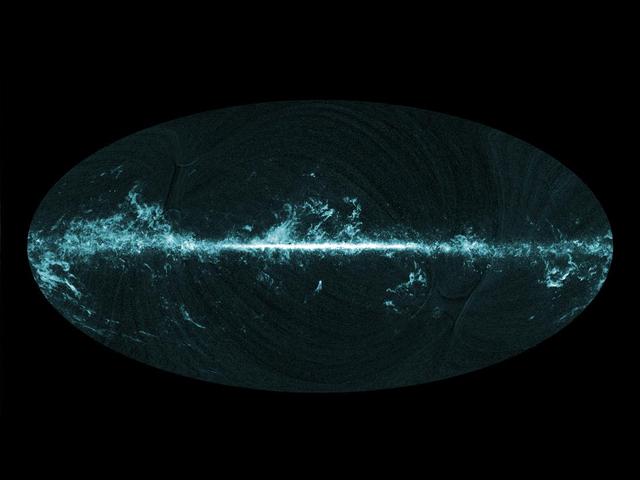
This all-sky image shows the spatial distribution over the whole sky of the galactic haze at 30 and 44 GHz, extracted from the Planck observations.
The Mysterious Galactic Haze seen by Planck
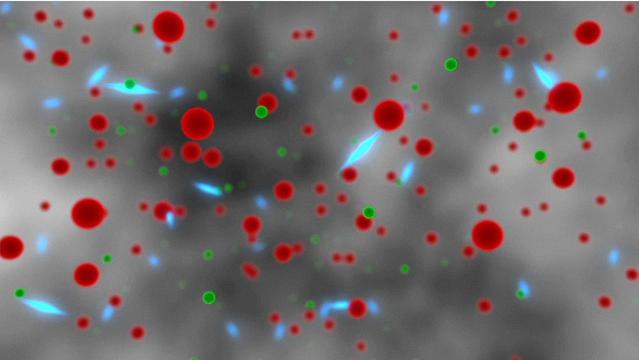
This frame from an artist animation depicts the life of a photon, or particle of light, as it travels across space and time, from the very early universe ESA Planck satellite.
A Journey of Light Through Space and Time
This all-sky image shows the distribution of carbon monoxide CO, a molecule used by astronomers to trace molecular clouds across the sky, as seen by Planck.
All-sky Image of Molecular Gas and Three Molecular Cloud Complexes seen by Planck
This full-sky map from ESA Planck mission shows matter between Earth and the edge of the observable universe. Regions with less mass show up as lighter areas while regions with more mass are darker.
Map of Matter in the Universe
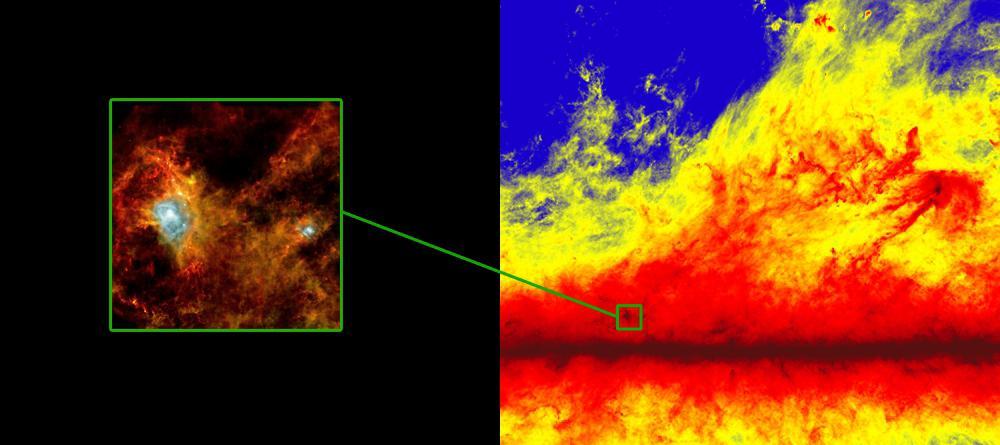
Filamentary structures in our Milky Way galaxy are apparent at large scales, as shown in this ESA image from Planck image, on the right, and small scales as seen the Herschel image on the left.
Milky Way Dust at Different Scales
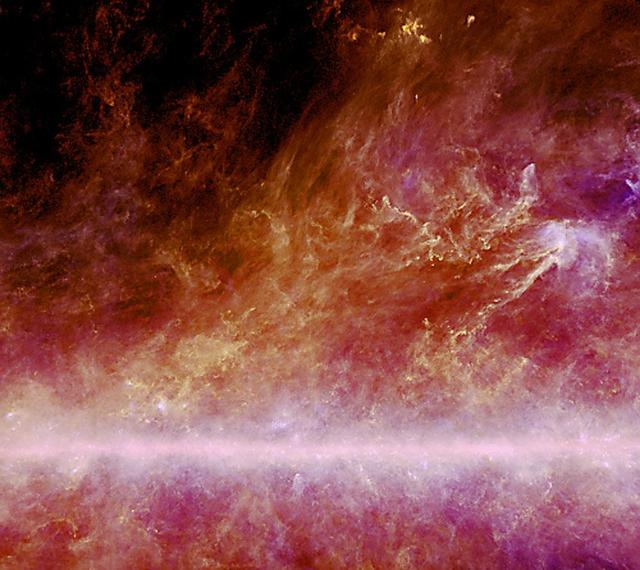
This three-color combination constructed from ESA Planck two highest frequency channels and an image obtained with the NASA Infrared Astronomical Satellite shows local dust structures within 500 light-years of the sun.
Tendrils of Cold Dust
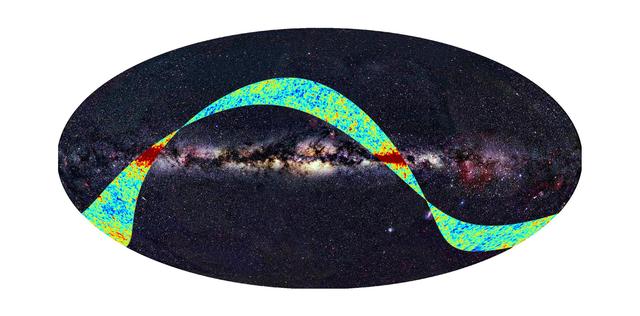
One of Planck first images is shown as a strip superimposed over a two dimensional projection of the whole sky as seen in visible light.
Planck First Glimpse at the Universe
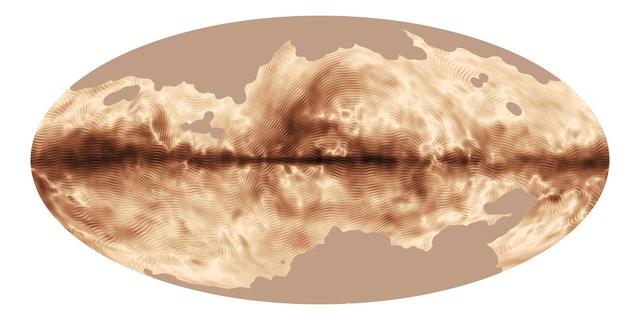
The magnetic field of our Milky Way galaxy as seen by ESA Planck satellite. This image was compiled from the first all-sky observations of polarized light emitted by interstellar dust in the Milky Way.
Magnetic Map of Milky Way
Matter lying between Earth and the edge of the observable universe is shown in this all-sky map from Planck, a European Space Agency mission with important NASA contributions.
Universal Matter
A new, dynamic portrait of our Milky Way galaxy shows a frenzy of gas, charged particles and dust as seen by the European Space Agency Planck mission.
Milky Way Untangled
At Vandenberg Air Force Base in California, the gantry rolls back at Space Launch Complex 3 in preparation for the liftoff of NASA's Interior Exploration using Seismic Investigations, Geodesy and Heat Transport, or InSight, Mars lander. The…
InSight Rollout for Launch
During a prelaunch briefing at Vandenberg Air Force Base in California, Col. Michael Hough, Commander 30th Space Wing, speaks to members of the media. The presentation focused on NASA's Interior Exploration using Seismic Investigations, Geo…
InSight Prelaunch Overview
At Vandenberg Air Force Base in California, the gantry rolls back at Space Launch Complex 3 in preparation for the liftoff of NASA's Interior Exploration using Seismic Investigations, Geodesy and Heat Transport, or InSight, Mars lander. The…
InSight Rollout for Launch
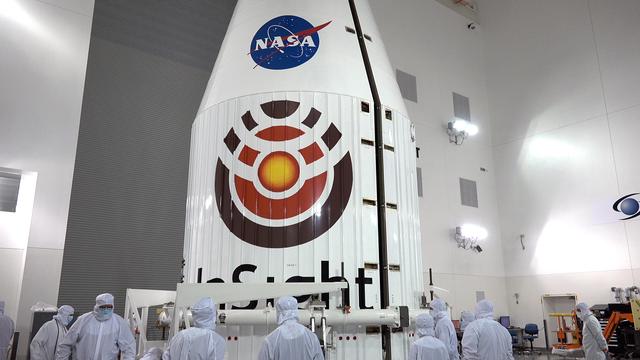
NASA's Interior Exploration using Seismic Investigations, Geodesy and Heat Transport, or InSight, is in a clean room inside the Astrotech processing facility at Vandenberg Air Force Base in California. The spacecraft's protective heat shiel…
InSight Media Day Preparation
Encapsulated in its payload fairing, NASA's Interior Exploration using Seismic Investigations, Geodesy and Heat Transport, or InSight, Mars lander is transported to Space Launch Complex 3 at Vandenberg Air Force Base in California. InSight…
InSight Rollout to Pad
A United Launch Alliance Atlas V rocket lifts off from Space Launch Complex 3 at Vandenberg Air Force Base, California, carrying NASA's Interior Exploration using Seismic Investigations, Geodesy and Heat Transport, or InSight, Mars lander.…
InSight Liftoff
At Space Launch Complex 3 at Vandenberg Air Force Base in California, the gantry is rolled back on the United Launch Alliance (ULA) Atlas V to a Centaur upper stage aft stub adapter (ASA) and interstage adapter (ISA) for NASA's Interior Exp…
InSight Atlas V Tower Roll
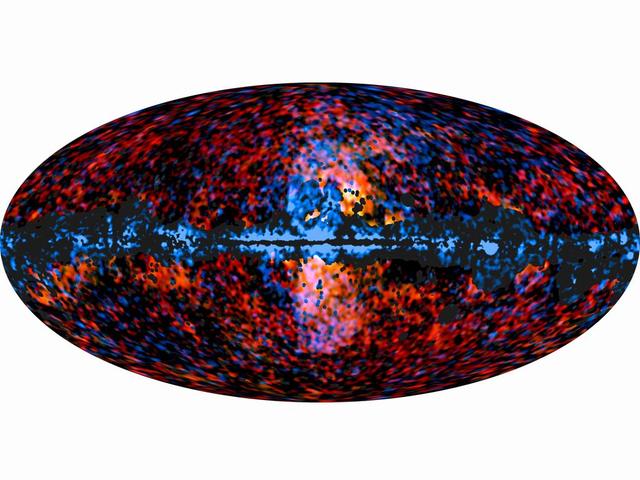
This all-sky image shows the distribution of the galactic haze seen by ESA Planck mission at microwave frequencies superimposed over the high-energy sky, as seen by NASA Fermi Gamma-ray Space Telescope.
Galactic Haze seen by Planck and Galactic Bubbles seen by Fermi
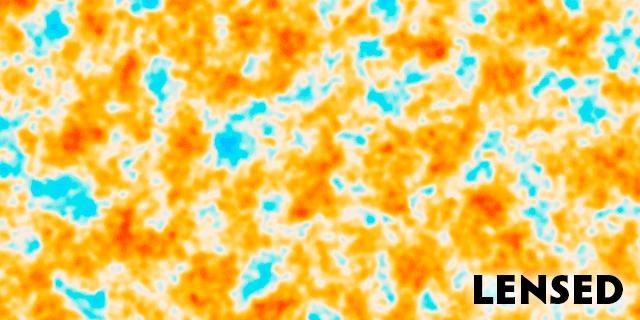
ESA Planck has imaged the most distant light we can observe, called the cosmic microwave background, with unprecedented precision.
Through the Universe Looking Glass
Planck has discovered a bridge of hot gas that connects galaxy clusters Abell 399 lower center and Abell 401 top left. The galaxy pair is located about a billion light-years from Earth.
Bridging Cities of Galaxies
ESA Planck mission has imaged the oldest light in our universe. The top map shows Planck all-sky map of the cosmic microwave background, whereas the bottom map shows the largest-scale features of the map.
Peculiar Features in Patterns of Ancient Light
This is an artist concept of the Planck spacecraft. Planck was launched with the Herschel spacecraft, though the two missions separated shortly after launch and operate independently from each other.
Planck Spacecraft Artist Concept
This map illustrates the numerous star-forming clouds, called cold cores, that European Space Agency Planck observed throughout our Milky Way galaxy. Planck detected around 10,000 of these cores, thousands of which had never been seen befor…
Clumps of Cold Stuff Across the Sky
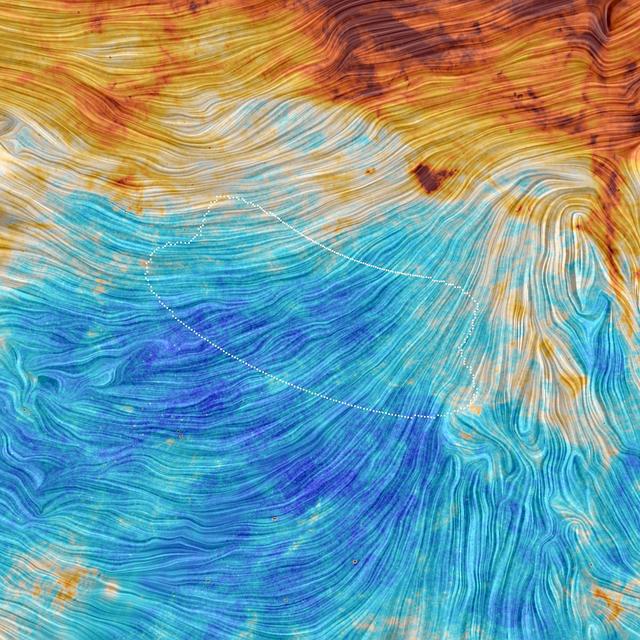
The color scale in this image from the Planck mission represents the emission from dust, a minor but crucial component that pervades our Milky Way galaxy. The texture indicates the orientation of the galactic magnetic field.
Planck View of BICEP2/Keck Array Field
This graph shows the temperature differences in the oldest light in the universe, called the cosmic microwave background, detected by ESA Planck at different distances apart on the sky.
The Universe, Summed Up in a Squiggly Line
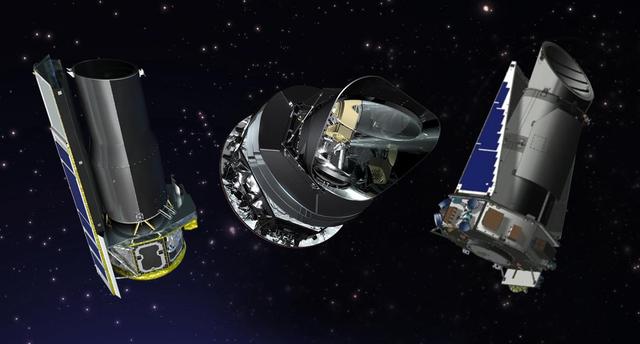
From left to right, artist concepts of the Spitzer, Planck and Kepler space telescopes. NASA extended Spitzer and Kepler for two additional years; and the U.S. portion of Planck, a European Space Agency mission, for one year.
Spitzer, Planck and Kepler Extended by NASA Artist Concept
At Vandenberg Air Force Base in California, twin communications-relay CubeSats, called Mars Cube One (MarCO) are prepared for installation on an Atlas V rocket. MarCO constitutes a technology demonstration being built by NASA's Jet Propulsi…
InSight Atlas V MARCO Cubesats Installation
In the gantry at Space Launch Complex 3 at Vandenberg Air Force Base in California, a technician prepares batteries for installation in NASA's Interior Exploration using Seismic Investigations, Geodesy and Heat Transport, or InSight, Mars l…
InSight Battery Installation
In the Astrotech facility at Vandenberg Air Force Base in California, technicians and engineers encapsulate NASA's Interior Exploration using Seismic Investigations, Geodesy and Heat Transport, or InSight, Mars lander in its payload fairing…
InSight Encapsulation
Members of the media and social media participants attended the NASA's Interior Exploration using Seismic Investigations, Geodesy and Heat Transport, or InSight, prelaunch briefing at Vandenberg Air Force Base in California. The presentatio…
InSight Prelaunch Overview
At Space Launch Complex 3 at Vandenberg Air Force Base in California, a crane is used to lift NASA's Interior Exploration using Seismic Investigations, Geodesy and Heat Transport, or InSight, Mars lander for mating atop a United Launch Alli…
InSight Lift & Mate
At Vandenberg Air Force Base in California, twin communications-relay CubeSats, called Mars Cube One (MarCO) are prepared for installation on an Atlas V rocket. MarCO constitutes a technology demonstration being built by NASA's Jet Propulsi…
InSight Atlas V MARCO Cubesats Installation