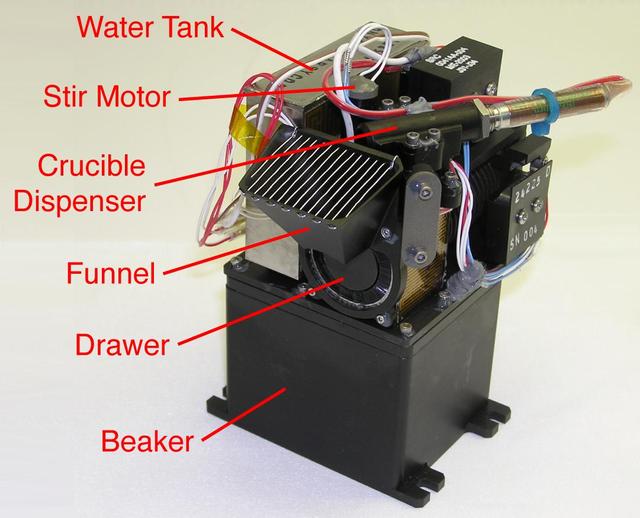
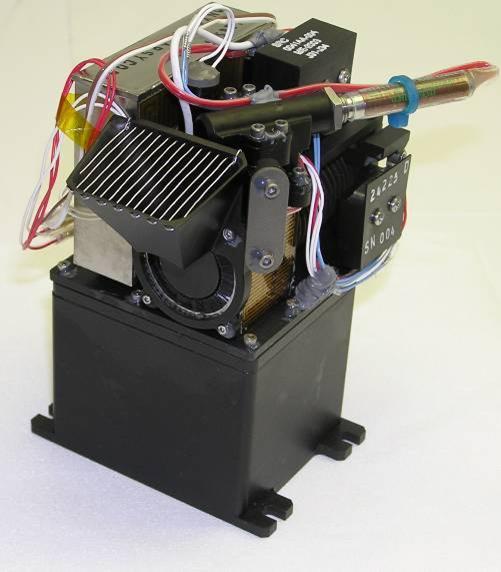
This picture of NASA Phoenix Mars Lander Wet Chemistry Laboratory WCL cell is labeled with components responsible for mixing Martian soil with water from Earth, adding chemicals and measuring the solution chemistry.
This map illustrates where NASA Phoenix Mars Lander was targeted to land on May 25, 2008, based on expectations as of noon pacific time 3 p.m. eastern time, May 24, 2008.
Members of NASA Phoenix Mars Mission Robotic Arm engineering team test the arm motorized rasp in the Payload Interoperability Testbed at the University of Arizona, Tucson.
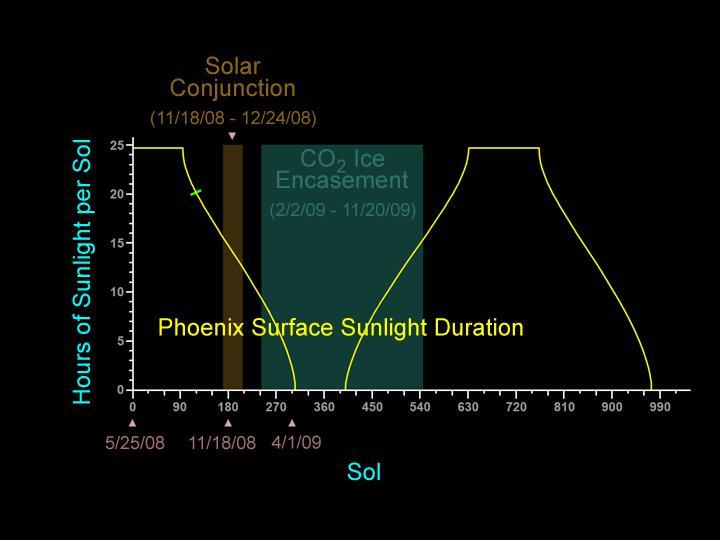
The yellow line on this graphic indicates the number of hours of sunlight each sol, or Martian day, beginning with the entire Martian day about 24 hours and 40 minutes for the first 90 sols, then declining to no sunlight by about sol 300.
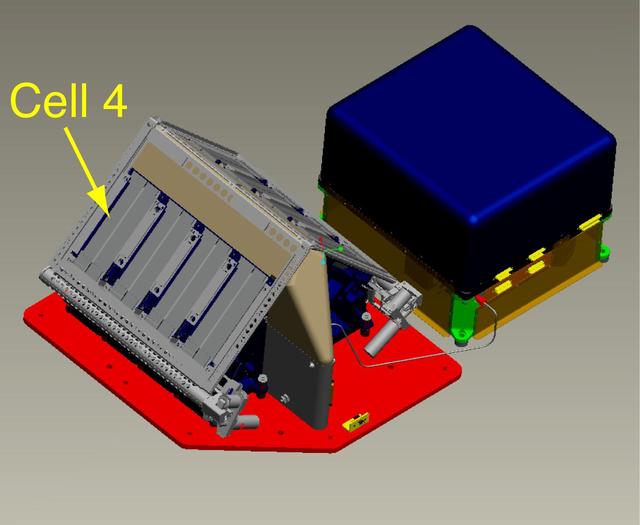
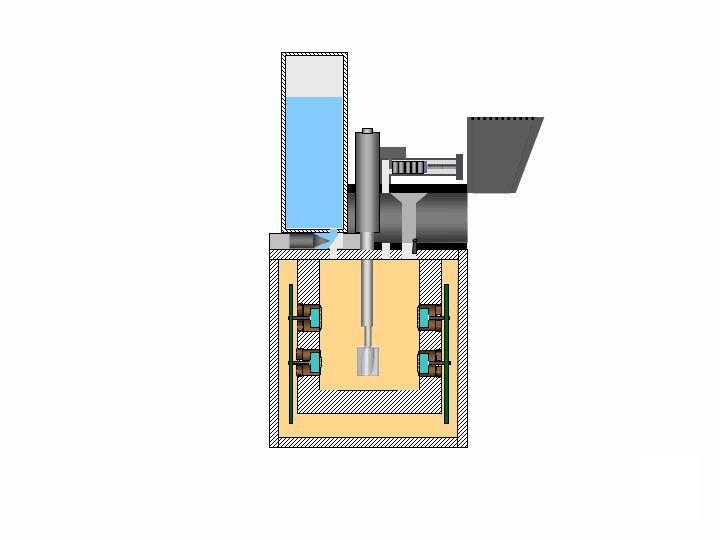
This is an illustration of the analytical procedure of NASA Phoenix Mars Lander Wet Chemistry Lab WCL on board the Microscopy, Electrochemistry, and Conductivity Analyzer MECA instrument.
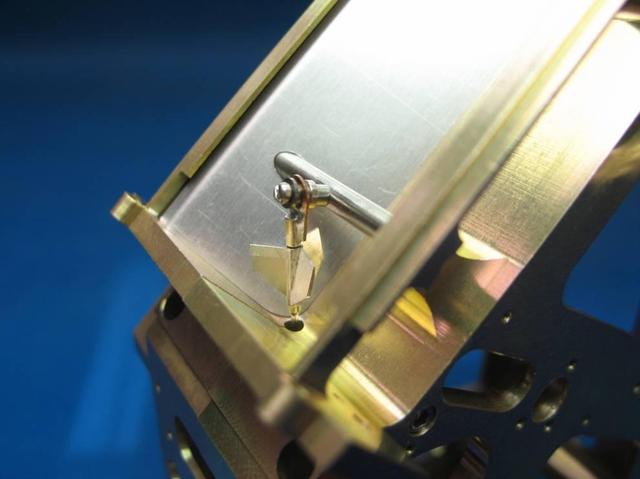
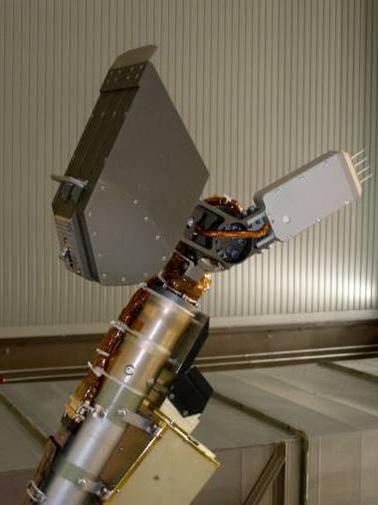
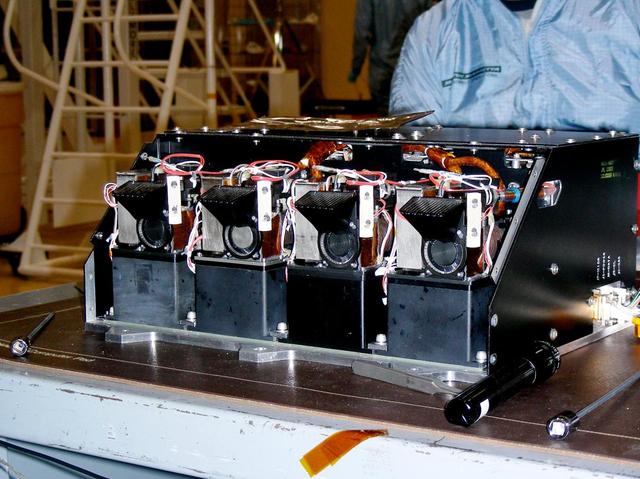
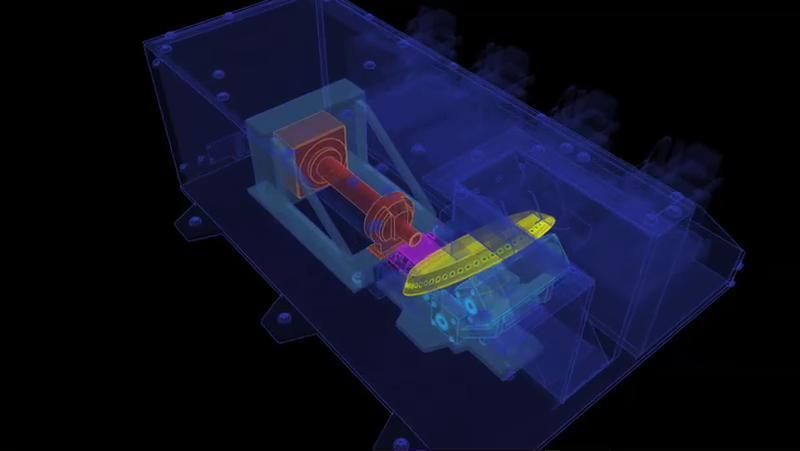
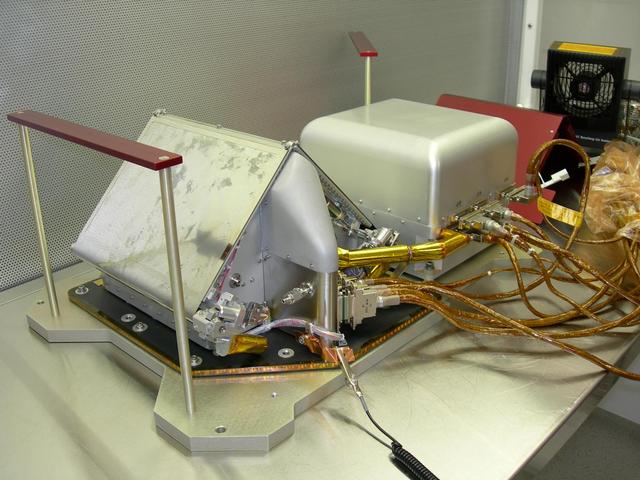
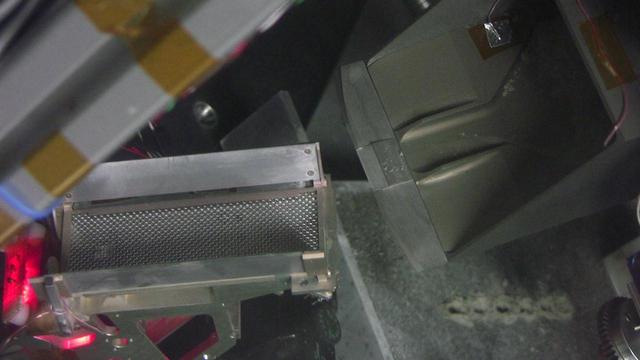
This is a photo of an engineering model of the Thermal and Evolved-Gas Analyzer TEGA instrument on board NASA Phoenix Mars Lander. This view shows a TEGA oven-loading mechanism beneath the input screen.
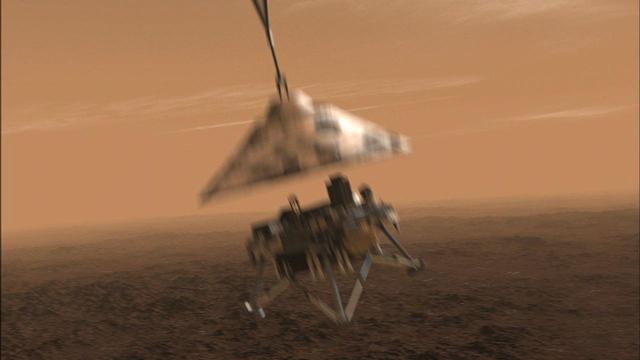
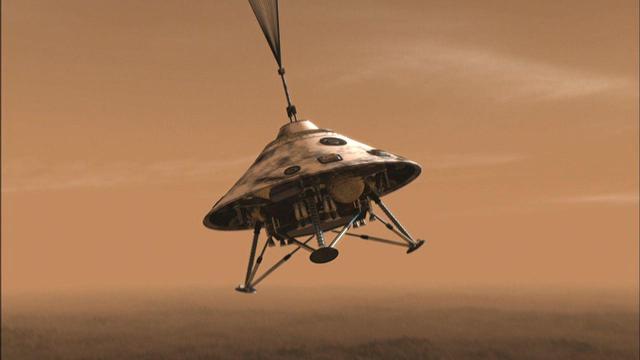
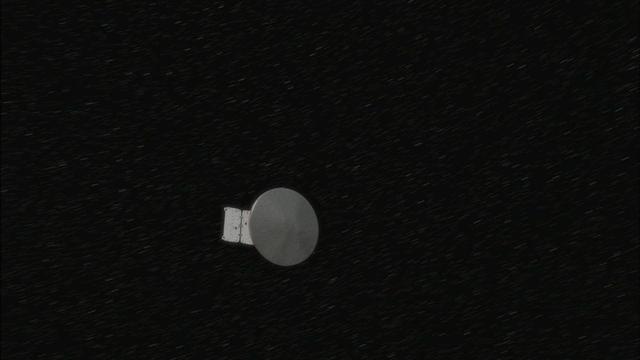
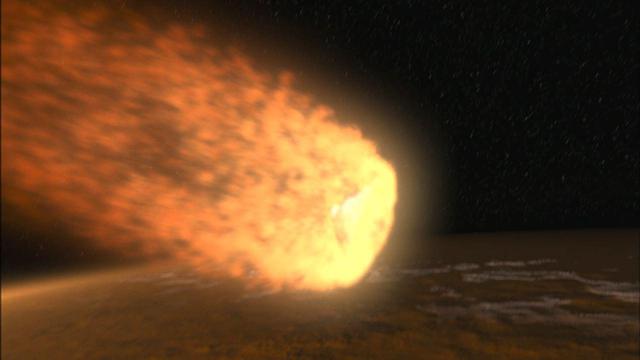
During the first 25 seconds after NASA Phoenix Mars Lander deploys its parachute, the spacecraft will jettison its heat shield and extend its three legs.
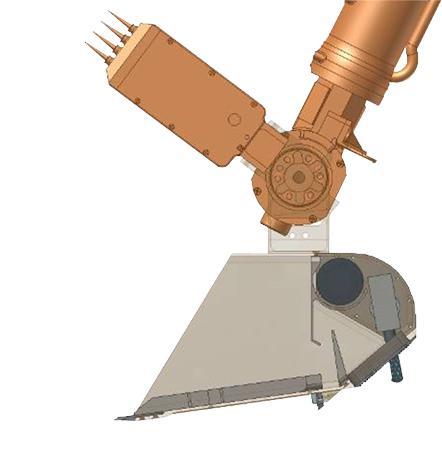
This four-spike tool, called the thermal and electrical conductivity probe, is in the middle-right of this photo, mounted near the end of the arm near NASA Phoenix Mars Lander scoop upper left.
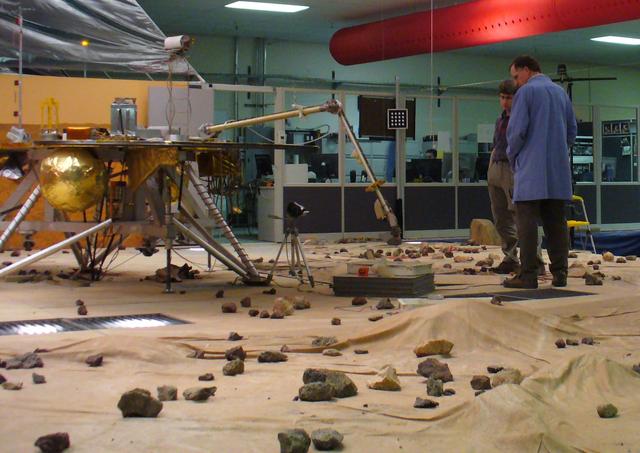
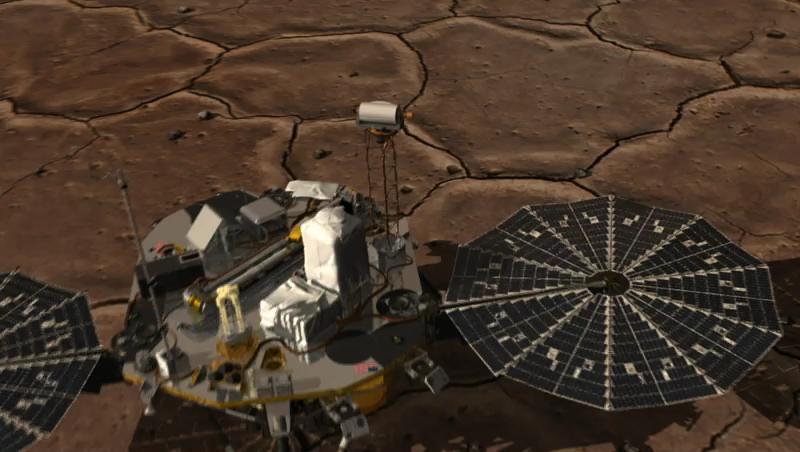
This image shows how NASA three-legged Phoenix Mars Lander is able to get a better look at its footing and the physical characteristics of the underlying soil on the surface of the Red Planet.
The targeted landing site for NASA Phoenix Mars Lander is at about 68 degrees north latitude, 233 degrees east longitude in the Martian arctic. The Phoenix lander, which landed May 25, 2008 ceased its operations about six months later.
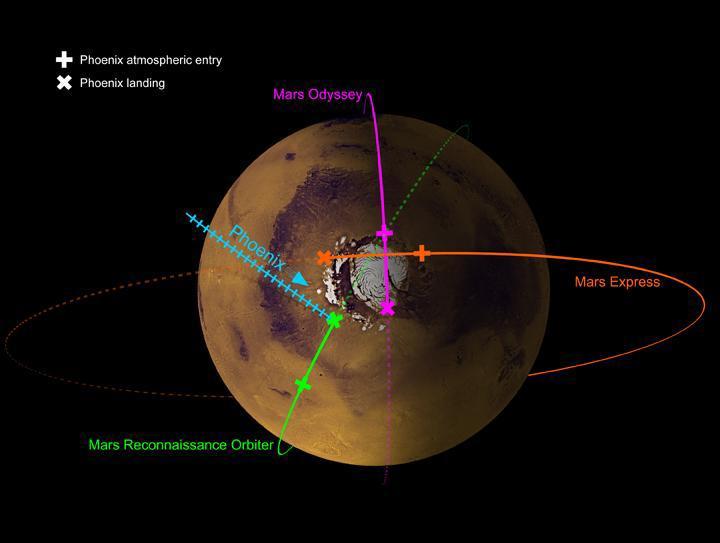
This image shows the paths of three spacecraft currently in orbit around Mars, as well as the path by which NASA Phoenix Mars Lander will approach and land on the planet.
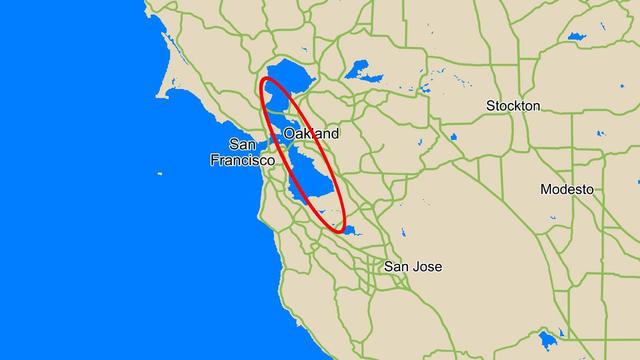
This map compares the size of the area where NASA Phoenix Mars Lander was expected to land, called the landing ellipse red, to the size of the San Francisco Bay Area.
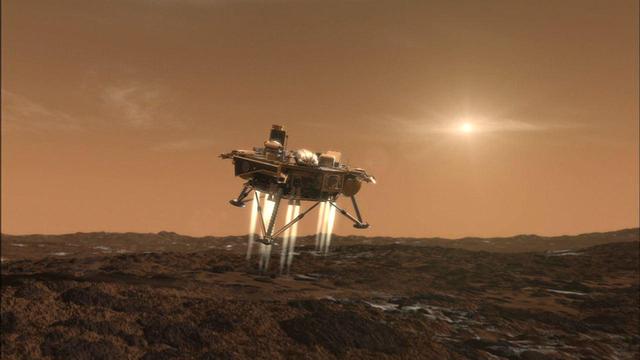
This artist concept depicts NASA Phoenix Mars Lander a moment before its 2008 touchdown on the arctic plains of Mars. Pulsed rocket engines control the spacecraft speed during the final seconds of descent.
This image shows the workings of the microscope station of the Microscopy, Electrochemistry and Conductivity Analyzer MECA instrument suite of NASA Phoenix Mars Lander.
This is a terrain model of Phoenix Robotic Arm workspace. It has been color coded by depth with a lander model for context. The model has been derived using images from the depth perception feature from Phoenix Surface Stereo Imager SSI.
This map compares the size of the area where NASA Phoenix Mars Lander was expected to land, called the landing ellipse red, to the size of Long Island, N.Y.
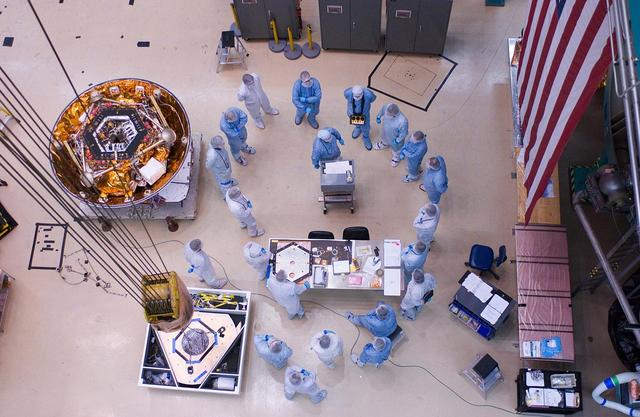
NASA next Mars-bound spacecraft, the Phoenix Mars Lander, partway through assembly and testing at Lockheed Martin Space Systems, Denver, in September 2006.
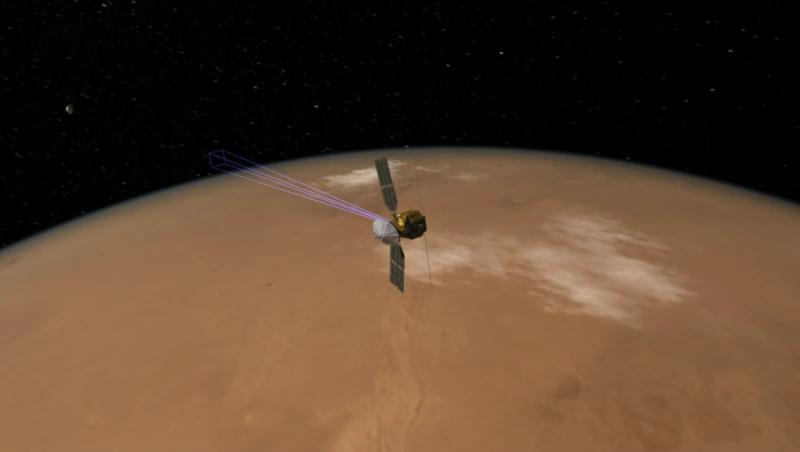
NASA Mars Reconnaissance Orbiter using the High Resolution Imaging Science Experiment HiRISE camera to take a picture of the Phoenix lander roughly 22 hours after landing.
This chart plots the minimum daily atmospheric temperature measured by NASA Phoenix Mars Lander spacecraft since landing on Mars. As the temperature increased through the summer season, the atmospheric humidity also increased.
NASA Phoenix Mars Lander, landed on May 25, 2008, and explored the history of water and monitored polar climate on Mars until communications ended in November, 2008, about six months after landing, when its solar panels ceased operating in…
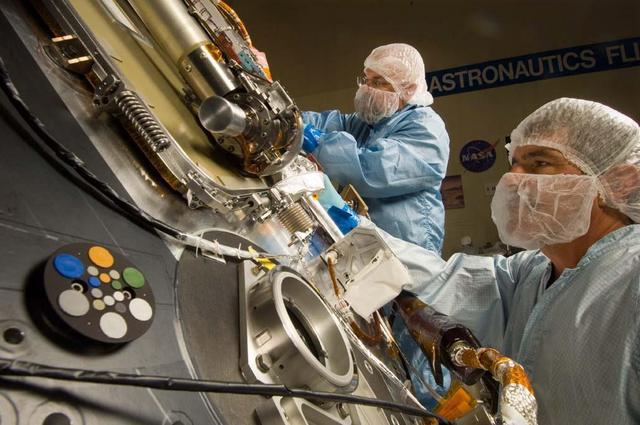
One part of the MECA instrument for NASA Phoenix Mars Lander is a pair of telescopes with a special wheel on the right in this photograph for presenting samples to be inspected with the microscopes.
This image shows testing under simulated Mars conditions on Earth in preparation for NASA Phoenix Mars Lander using its robotic arm for delivering a sample to the doors of a laboratory oven.
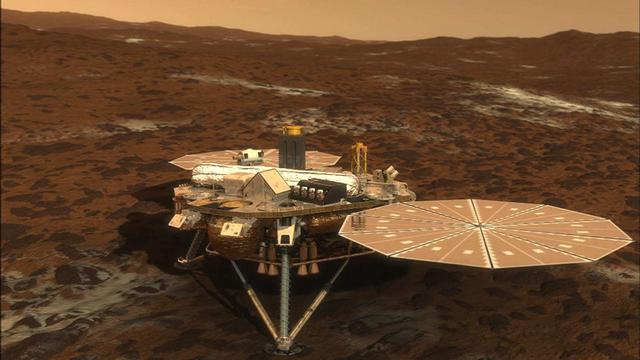
NASA Phoenix Mars Lander monitors the atmosphere overhead and reaches out to the soil below in this artist depiction of the spacecraft fully deployed on the surface of Mars.
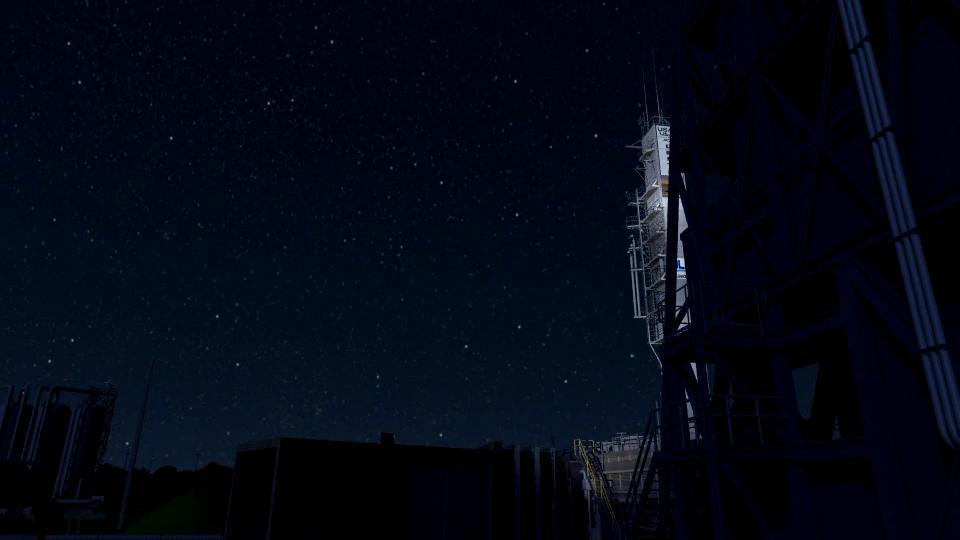
A camera view zooms in from NASA Phoenix Mars Lander launch site all the way to Phoenix Microscopy and Electrochemistry and Conductivity Analyzer MECA aboard the spacecraft on the Martian surface.
In this artist concept illustration, NASA Phoenix Mars Lander begins to shut down operations as winter sets in. The far-northern latitudes on Mars experience no sunlight during winter.
This is an illustration of soil analysis on NASA Phoenix Mars Lander Wet Chemistry Lab WCL on board the Microscopy, Electrochemistry, and Conductivity Analyzer MECA instrument.
This illustration shows some of the components on and near the end of the robotic arm on NASA Phoenix Mars Lander. Primary and secondary blades on the scoop that aided in the collection of soil samples.
This close-up photograph taken at the Payload Interoperability Testbed at the University of Arizona, Tucson, shows the motorized rasp protruding from the bottom of the scoop on the engineering model of NASA Phoenix Mars Lander Robotic Arm.
This calibration image presents three-dimensional data from the atomic force microscope on NASA Phoenix Mars Lander, showing surface details of a substrate on the microscope station sample wheel.
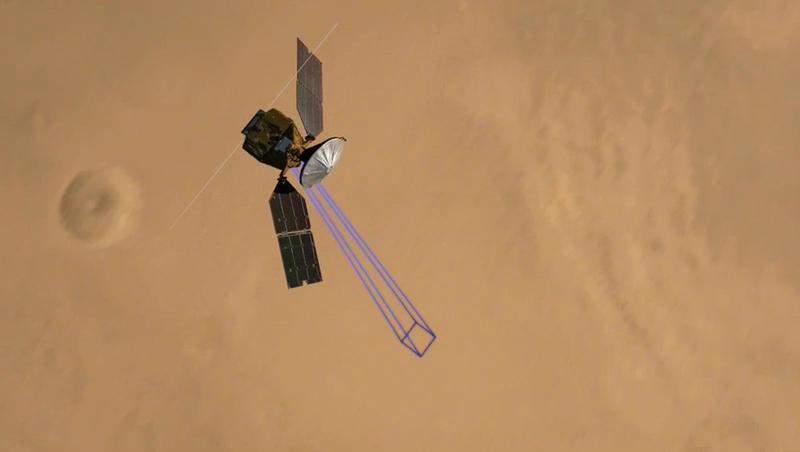
This image shows how NASA Mars Reconnaissance Orbiter was able to snap a picture of NASA Phoenix Mars Lander as it parachuted down to the surface of Mars.
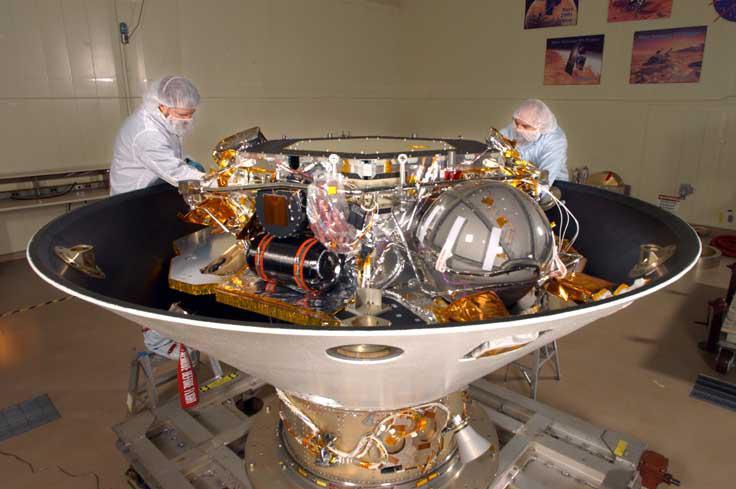
The Phoenix lander, housed in a 100,000-class clean room at Lockheed Martin Space Systems facilities near Denver, Colo. Shown here, the lander is contained inside the backshell portion of the aeroshell with the heat shield removed.
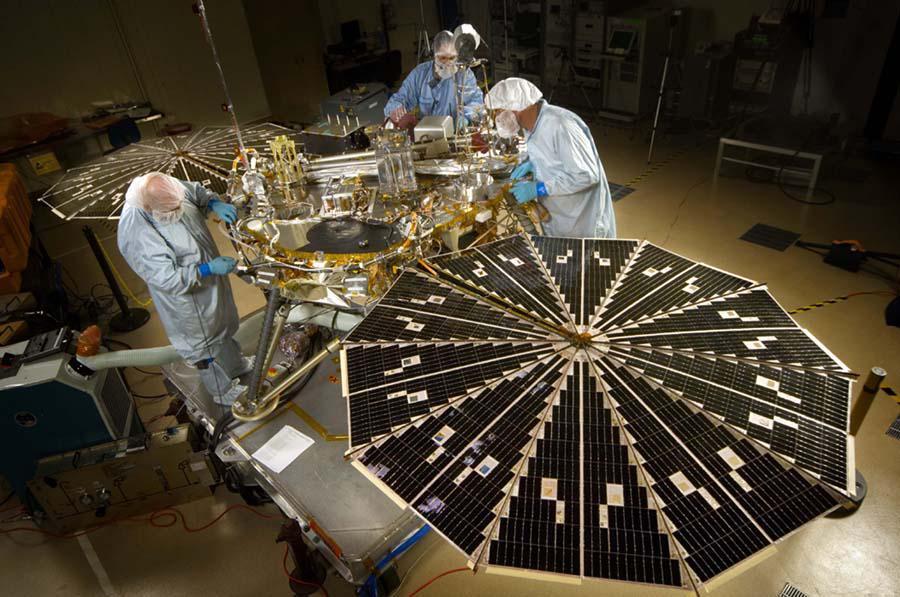
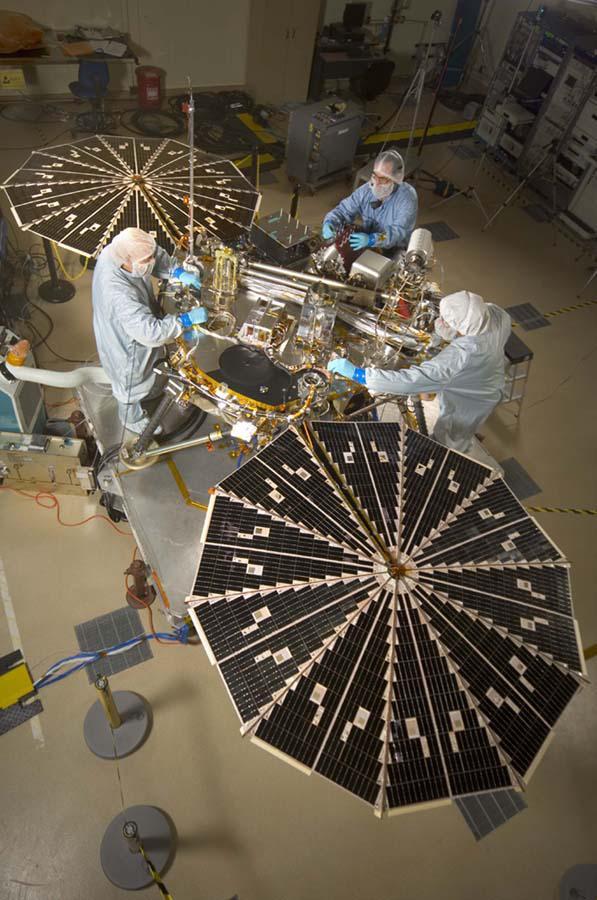
In this photograph of NASA Phoenix Mars Lander, the spacecraft specialists worked on the lander after its fan-like circular solar arrays had been spread open for testing.
NASA Phoenix Mars Lander parachuted for nearly three minutes as it descended through the Martian atmosphere on May 25, 2008. Extensive preparations for that crucial period included this drop test near Boise, Idaho, in October 2006.
NASA next Mars-bound spacecraft, the Phoenix Mars Lander, partway through assembly and testing at Lockheed Martin Space Systems, Denver, in September 2006.