
VANDENBERG AIR FORCE BASE, CALIF. - Inside Orbital Sciences Building 1555 at Vandenberg Air Force Base in California, workers get ready to install one of the fins on the aft skirt of the Pegasus XL rocket that will launch the Space Techno…

VANDENBERG AIR FORCE BASE, CALIF. - Inside Orbital Sciences Building 1555 at Vandenberg Air Force Base in California, a worker underneath the tail of the Pegasus XL rocket completes installation of the fin. The Pegasus will launch the Sp…

VANDENBERG AIR FORCE BASE, CALIF. - Workers prepare to transport the Space Technology 5 (ST5) spacecraft from Orbital Sciences’ Building 1555 at Vandenberg Air Force Base in California to the L-1011 carrier aircraft in position on the ramp…

VANDENBERG AIR FORCE BASE, CALIF. - On the ramp adjacent to the runway at Vandenberg Air Force Base in California, a worker positions the vertical fin within the Orbital Sciences L-1011 aircraft. The fin will then be attached to the Space T…

KENNEDY SPACE CENTER, FLA. - Inside Orbital Sciences’ Building 1555 at Vandenberg Air Force Base in California, the Pegasus XL launch vehicle is complete after mating with the Space Technology 5 (ST5). The ST5 contains three microsatellites…

VANDENBERG AIR FORCE BASE, Calif. – Technicians and engineers at Vandenberg Air Force Base in California mate the Pegasus XL rocket with the Interface Region Imaging Spectrograph, or IRIS, solar observatory to the Orbital Sciences L-1011 ca…

- VANDENBERG AFB – An engineer makes preparations on the starboard side of the payload fairing before it is connected into place for NASA's IRIS spacecraft. The fairing connects to the nose of the Orbital Sciences Pegasus XL rocket that wil…

VANDENBERG AIR FORCE BASE, Calif. – Technicians and engineers at Vandenberg Air Force Base in California mate the Pegasus XL rocket with the Interface Region Imaging Spectrograph, or IRIS, solar observatory to the Orbital Sciences L-1011 ca…

VANDENBERG AIR FORCE BASE, Calif. – At Vandenberg Air Force Base in California, technicians and engineers install a separation system ring that will be attached to NASA's Interface Region Imaging Spectrograph, or IRIS, spacecraft. The separ…

VANDENBERG AFB, Calif. – Members of the IRIS and Pegasus launch teams working in a hangar at Vandenberg prepare the separation ring for connection to NASA's IRIS spacecraft, short for Interface Region Imaging Spectrograph. The separation sy…

CAPE CANAVERAL, Fla. -- Viewed from across the Turn Basin in the Launch Complex 39 area at NASA's Kennedy Space Center in Florida, the Pegasus Barge is bathed in lights. The barge is being prepared to be towed from the dock to a more secure…

CAPE CANAVERAL, Fla. -- As the sun rises over the Vehicle Assembly Building at NASA's Kennedy Space Center in Florida, tugboats tow the Pegasus Barge from the dock in the Turn Basin to a more secure mooring area. The barge is 266 ft long an…

CAPE CANAVERAL, Fla. -- Tugboats in the Turn Basin in the Launch Complex 39 area at NASA's Kennedy Space Center in Florida have towed the Pegasus Barge from the dock to a more secure mooring area. The barge is 266 ft long and 50 ft wide and…

VANDENBERG AIR FORCE BASE, Calif. – At Vandenberg Air Force Base in California, technicians install the aft skirt on the Orbital Sciences Corp. Pegasus XL rocket which will launch the Interface Region Imaging Spectrograph, or IRIS, spacecra…

VANDENBERG AIR FORCE BASE, Calif. – At Vandenberg Air Force Base in California, the Pegasus XL rocket with the attached Interface Region Imaging Spectrograph IRIS solar observatory rolled out of the hangar on its transporter to the runway a…

VANDENBERG AIR FORCE BASE, Calif. – At Vandenberg Air Force Base in California, technicians install the aft skirt on the Orbital Sciences Corp. Pegasus XL rocket which will launch the Interface Region Imaging Spectrograph, or IRIS, spacecra…
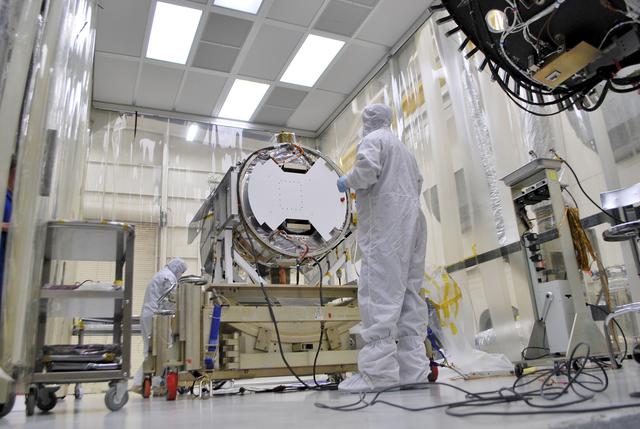
VANDENBERG AIR FORCE BASE, Calif. – At Vandenberg Air Force Base in California, technicians and engineers prepare a separation system ring that will be attached to NASA's Interface Region Imaging Spectrograph, or IRIS, spacecraft. The separ…

VANDENBERG AIR FORCE BASE, CALIF. - Inside Orbital Sciences Building 1555 at Vandenberg Air Force Base in California, workers attach segments of the Pegasus XL rocket that will launch the Space Technology 5 spacecraft later this month.…

VANDENBERG AIR FORCE BASE, CALIF. - Inside Orbital Sciences Building 1555 at Vandenberg Air Force Base in California, workers move the aft skirt toward the Pegasus XL launch vehicle for mating. The Pegasus will launch the Space Technolo…

KENNEDY SPACE CENTER, FLA. - Inside Orbital Sciences’ Building 1555 at Vandenberg Air Force Base in California, the Pegasus XL launch vehicle is ready for mating with the Space Technology 5 (ST5) spacecraft. The ST5 contains three microsat…

KENNEDY SPACE CENTER, FLA. - Inside Orbital Sciences’ Building 1555 at Vandenberg Air Force Base in California, workers begin the mating process of the Space Technology 5 (ST5), at right, with the Pegasus XL launch vehicle, at left. The ST…

VANDENBERG AIR FORCE BASE, Calif. – At Vandenberg Air Force Base in California, technicians and engineers prepare a separation system ring that will be attached to NASA's Interface Region Imaging Spectrograph, or IRIS, spacecraft. The separ…

VANDENBERG AIR FORCE BASE, Calif. – At Vandenberg Air Force Base in California, technicians and engineers prepare a separation system ring that will be attached to NASA's Interface Region Imaging Spectrograph, or IRIS, spacecraft. The separ…

VANDENBERG AIR FORCE BASE, Calif. – At Vandenberg Air Force Base in California, the Pegasus XL rocket with the attached Interface Region Imaging Spectrograph IRIS solar observatory rolled out of the hangar on its transporter to the runway a…

VANDENBERG AIR FORCE BASE, Calif. – Technicians and engineers at Vandenberg Air Force Base in California mate the Pegasus XL rocket with the Interface Region Imaging Spectrograph, or IRIS, solar observatory to the Orbital Sciences L-1011 ca…

VANDENBERG AIR FORCE BASE, Calif. – At Vandenberg Air Force Base in California, the Pegasus XL rocket with the attached Interface Region Imaging Spectrograph IRIS solar observatory rolled out of the hangar on its transporter to the runway a…

VANDENBERG AFB, Calif. – Members of the IRIS and Pegasus launch teams working in a hangar at Vandenberg prepare the separation ring for connection to NASA's IRIS spacecraft, short for Interface Region Imaging Spectrograph. The separation sy…

VANDENBERG AIR FORCE BASE, Calif. – Kennedy Space Center Resident Office personnel representing the NASA Launch Services Program at Vandenberg Air Force Base in California, display the Best Places to Work in the Federal Government plaque. N…

VANDENBERG AFB, Calif. – Members of the IRIS and Pegasus launch teams working in a hangar at Vandenberg connect the separation ring for NASA's IRIS spacecraft, short for Interface Region Imaging Spectrograph. The separation system will push…

VANDENBERG AIR FORCE BASE, Calif. – Technicians and engineers at Vandenberg Air Force Base in California mate the Pegasus XL rocket with the Interface Region Imaging Spectrograph, or IRIS, solar observatory to the Orbital Sciences L-1011 ca…

VANDENBERG AIR FORCE BASE, Calif. – At Vandenberg Air Force Base in California, the Pegasus XL rocket with the attached Interface Region Imaging Spectrograph IRIS solar observatory rolled out of the hangar on its transporter to the runway a…

VANDENBERG AIR FORCE BASE, CALIF. - Inside Orbital Sciences Building 1555 at Vandenberg Air Force Base in California, a worker installs one of the fins on the aft skirt of the Pegasus XL rocket that will launch the Space Technology 5 spa…

VANDENBERG AIR FORCE BASE, CALIF. - On the ramp adjacent to the runway at Vandenberg Air Force Base in California, the Space Technology 5's Pegasus rocket is placed in position to be mated to the underside of an Orbital Sciences L-1011 carr…

VANDENBERG AIR FORCE BASE, CALIF. - On the ramp adjacent to the runway at Vandenberg Air Force Base in California, workers secure the Space Technology 5's Pegasus rocket to the underside of an Orbital Sciences L-1011 carrier aircraft. The S…

VANDENBERG AIR FORCE BASE, CALIF. - On the ramp adjacent to the runway at Vandenberg Air Force Base in California, workers install the Space Technology 5's Pegasus rocket beneath an Orbital Sciences L-1011 carrier aircraft. The ST5, which c…

KENNEDY SPACE CENTER, FLA. - Inside Orbital Sciences’ Building 1555 at Vandenberg Air Force Base in California, a worker examines the end of the Pegasus XL launch vehicle that will be mated with the Space Technology 5 (ST5) spacecraft. The…

VANDENBERG AIR FORCE BASE, Calif. -- At Vandenberg Air Force Base in California, the third stage of the Pegasus XL rocket that will launch the Nuclear Spectroscopic Telescope Array (NuSTAR) to orbit arrives at Building 1555 for processing.…

CAPE CANAVERAL, Fla. -- Workers in a skiff prepare the Pegasus Barge floating in the Launch Complex 39 area Turn Basin at NASA's Kennedy Space Center in Florida, for its move from the dock to a more secure mooring area. The barge is 266 ft…

VANDENBERG AIR FORCE BASE, Calif. – At Vandenberg Air Force Base in California, technicians install the aft skirt on the Orbital Sciences Corp. Pegasus XL rocket which will launch the Interface Region Imaging Spectrograph, or IRIS, spacecra…

VANDENBERG AFB – Engineers make preparations on the starboard side of the payload fairing before it is connected into place for NASA's IRIS spacecraft. The fairing connects to the nose of the Orbital Sciences Pegasus XL rocket that will lif…

VANDENBERG AIR FORCE BASE, Calif. – Technicians and engineers at Vandenberg Air Force Base in California mate the Pegasus XL rocket with the Interface Region Imaging Spectrograph, or IRIS, solar observatory to the Orbital Sciences L-1011 ca…

VANDENBERG AIR FORCE BASE, Calif. – At Vandenberg Air Force Base in California, the Pegasus XL rocket with the attached Interface Region Imaging Spectrograph IRIS solar observatory rolled out of the hangar on its transporter to the runway a…
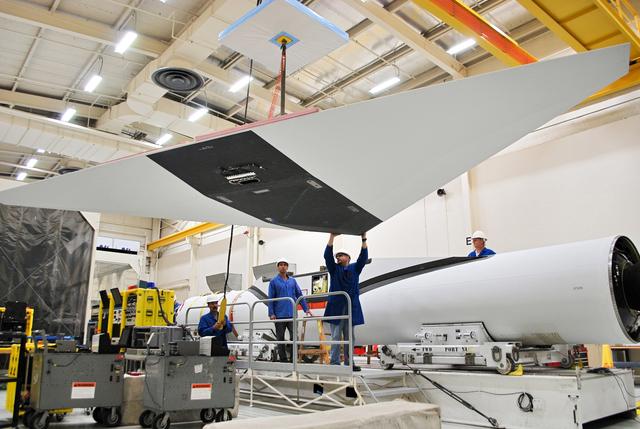
VANDENBERG AIR FORCE BASE, Calif. – At Vandenberg Air Force Base in California, technicians install the wing on the Orbital Sciences Corp. Pegasus XL rocket which will launch the Interface Region Imaging Spectrograph, or IRIS, spacecraft.…

VANDENBERG AIR FORCE BASE, Calif. – Technicians and engineers at Vandenberg Air Force Base in California mate the Pegasus XL rocket with the Interface Region Imaging Spectrograph, or IRIS, solar observatory to the Orbital Sciences L-1011 ca…

VANDENBERG AIR FORCE BASE, Calif. – At Vandenberg Air Force Base in California, the three stages of the Orbital Sciences Corp. Pegasus XL rocket have been mated in preparation for the launch the Interface Region Imaging Spectrograph, or IRI…

VANDENBERG AIR FORCE BASE, Calif. – At Vandenberg Air Force Base in California, NASA hosted a prelaunch mission briefing on the Interface Region Imaging Spectrograph, or IRIS, solar observatory scheduled to launch on a Pegasus XL rocket. Pa…