
Developed by the Marshall Space Flight Center (MSFC) as an interim vehicle in MSFC’s “building block” approach to the Saturn rocket development, the Saturn IB utilized Saturn I technology to further develop and refine the larger boosters an…
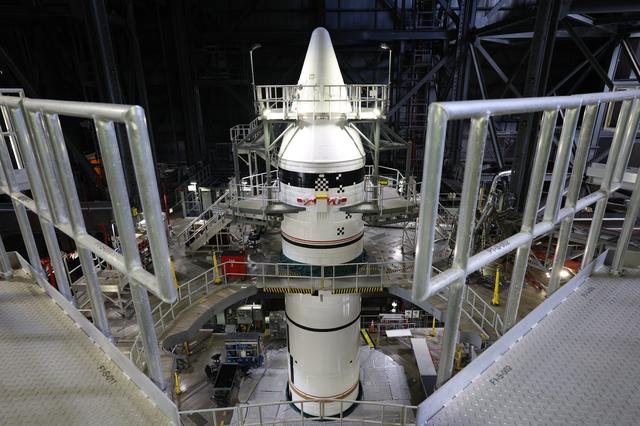
Engineers with NASA’s Exploration Ground Systems integrate the aerodynamic nose cone onto the left forward motor segment on the twin SLS (Space Launch System) solid rocket boosters for Artemis III inside the Vehicle Assembly Building’s High…
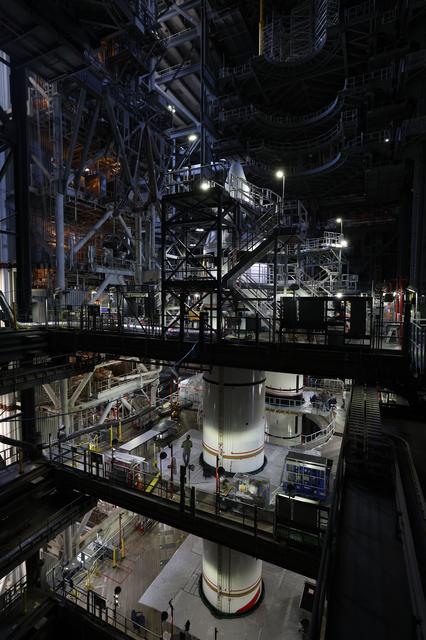
Engineers with NASA’s Exploration Ground Systems integrate the aerodynamic nose cone onto the left forward motor segment on the twin SLS (Space Launch System) solid rocket boosters for Artemis III inside the Vehicle Assembly Building’s High…
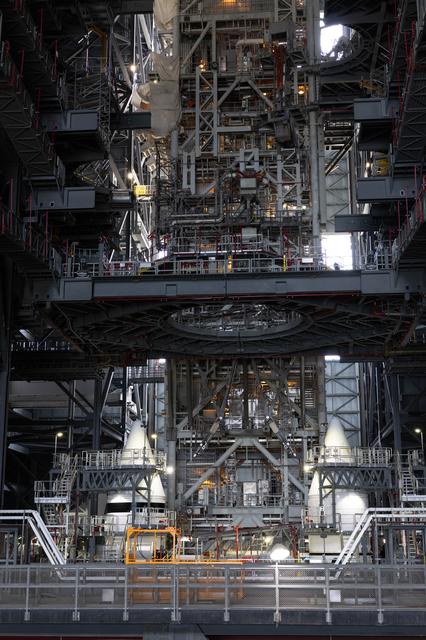
Engineers with NASA’s Exploration Ground Systems completed integrating the aerodynamic nose cones onto the left and right forward assemblies on the twin SLS (Space Launch System) solid rocket boosters, finishing their stacking operations fo…

Outlined with gold stripes are the hinged nose strakes, modifications made to NASA's F-18 HARV (High Alpha Research Vehicle) at the Dryden Flight Research Center, Edwards, California. Actuated Nose Strakes for Enhanced Rolling (ANSER) were…

During the final phase of tests with the HARV, Dryden technicians installed nose strakes, which were panels that fitted flush against the sides of the forward nose. When the HARV was at a high alpha, the aerodynamics of the nose caused a lo…

Engineers with NASA’s Exploration Ground Systems complete stacking operations on the twin SLS (Space Launch System) solid rocket boosters for Artemis II by integrating the nose cones atop the forward assemblies inside the Vehicle Assembly B…

Engineers with NASA’s Exploration Ground Systems complete stacking operations on the twin SLS (Space Launch System) solid rocket boosters for Artemis II by integrating the nose cones atop the forward assemblies inside the Vehicle Assembly B…

The X-59 arrives home in Palmdale, California after completing important structural and fuel tests at the Lockheed Martin facility in Ft. Worth, Texas. The nose, which is not installed in this image, was removed prior to the transport home…
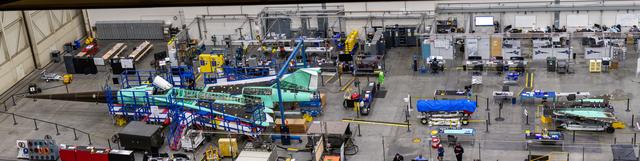
Here is an overhead view of the X-59 aircraft (left) prior to the installation of the General Electric F414 engine (center, located under the blue cover). After the engine is installed, the lower empennage (right), the last remaining major…

An overhead view of the X-59 during assembly in spring 2023. Assembly took place at Lockheed Martin’s Skunk Works facility in Palmdale, California. Once complete, the X-59 is designed to fly supersonic while reducing the loud sonic boom. T…

Event: Forebody and Nose - Windtunnel Testing A model of the X-59 forebody is shown in the Lockheed Martin Skunk Works’ wind tunnel in Palmdale, California. These tests gave the team measurements of wind flow angle around the aircraft’s nos…

ROBERT CARROLL, A MACHINIST WITH LOCKHEED MARTIN, DRILLS ALIGNMENT HOLES ON THE EXTERNAL TANK COMPOSITE NOSE CONE
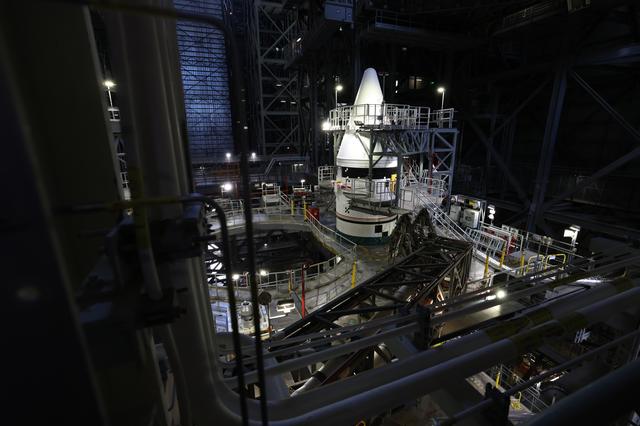
Engineers with NASA’s Exploration Ground Systems integrate the aerodynamic nose cone onto the left forward motor segment on the twin SLS (Space Launch System) solid rocket boosters for Artemis III inside the Vehicle Assembly Building’s High…
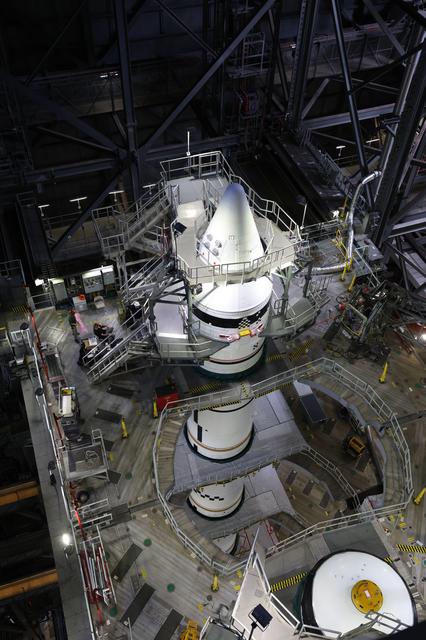
Engineers with NASA’s Exploration Ground Systems integrate the aerodynamic nose cone onto the left forward motor segment on the twin SLS (Space Launch System) solid rocket boosters for Artemis III inside the Vehicle Assembly Building’s High…
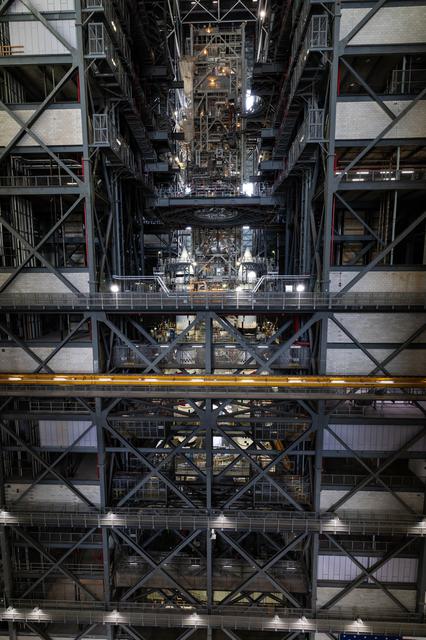
Engineers with NASA’s Exploration Ground Systems completed integrating the aerodynamic nose cones onto the left and right forward assemblies on the twin SLS (Space Launch System) solid rocket boosters, finishing their stacking operations fo…
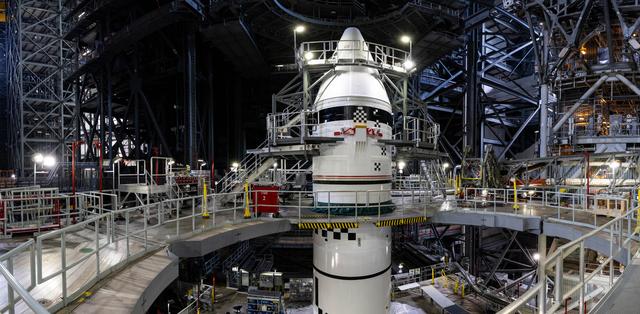
Engineers with NASA’s Exploration Ground Systems integrate the aerodynamic nose cone onto the left forward motor segment on the twin SLS (Space Launch System) solid rocket boosters for Artemis III inside the Vehicle Assembly Building’s High…

ED KIRCH, A LOCKHEED MARTIN TECHNICIAN, CUTS A PATTERN FROM COMPOSITE MATERIAL THAT WILL BE PLACED IN A MOLD TO BUILD A SPACE SHUTTLE EXTERNAL TANK COMPOSITE NOSE CONE.

A NASA CV-990, modified as a Landing Systems Research Aircraft (LSRA), is serviced on the ramp at NASA's Dryden Flight Research Center, Edwards, California, before a test of the space shuttle landing gear system. The space shuttle landing g…

Engineers with NASA’s Exploration Ground Systems complete stacking operations on the twin SLS (Space Launch System) solid rocket boosters for Artemis II by integrating the nose cones atop the forward assemblies inside the Vehicle Assembly B…

Event: SEG 230 Nose - Craned Onto Tooling A close up of the X-59’s duckbill nose, which is a crucial part of its supersonic design shaping. The team prepares the nose for a fit check. The X-59’s nose is 38-feet long – approximately one thir…

Event: Forebody and Nose - Windtunnel Testing A technician works on the X-59 model during testing in the low-speed wind tunnel at Lockheed Martin Skunk Works in Palmdale, California. These tests gave the team measurements of wind flow angle…

Event: SEG 230 Nose - Craned Onto Tooling A close-up of the X-59’s duckbill nose, which is a crucial part of its supersonic design shaping. The team prepares the nose for a fit check. The X-59’s nose is 38-feet long – approximately one thir…

This is an overhead view of the X-59 aircraft at Lockheed Martin Skunk Works in Palmdale, California. The nose was installed, and the plane awaits engine installation. Technicians continue to wire the aircraft as the team preforms several s…
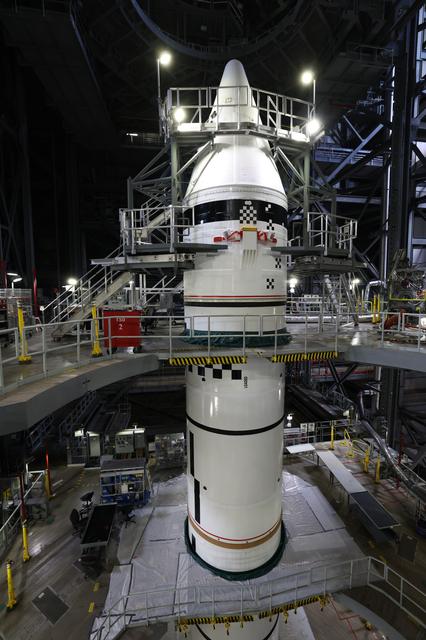
Engineers with NASA’s Exploration Ground Systems integrate the aerodynamic nose cone onto the left forward motor segment on the twin SLS (Space Launch System) solid rocket boosters for Artemis III inside the Vehicle Assembly Building’s High…
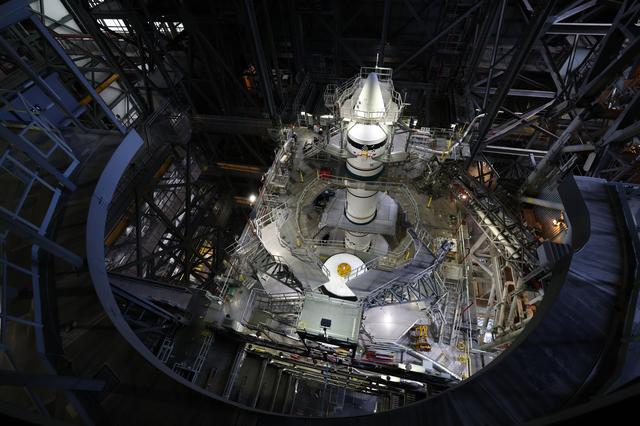
Engineers with NASA’s Exploration Ground Systems integrate the aerodynamic nose cone onto the left forward motor segment on the twin SLS (Space Launch System) solid rocket boosters for Artemis III inside the Vehicle Assembly Building’s High…
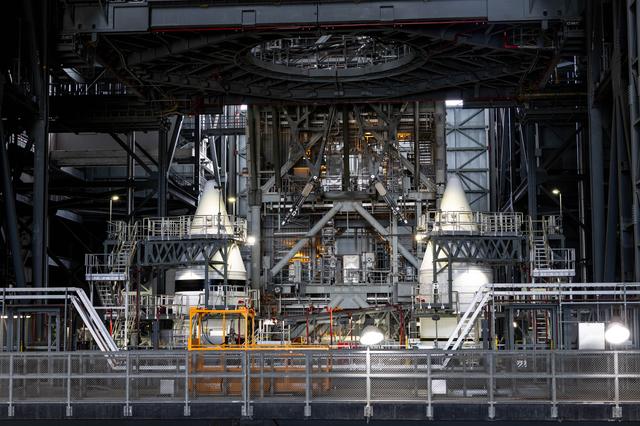
Engineers with NASA’s Exploration Ground Systems completed integrating the aerodynamic nose cones onto the left and right forward assemblies on the twin SLS (Space Launch System) solid rocket boosters, finishing their stacking operations fo…
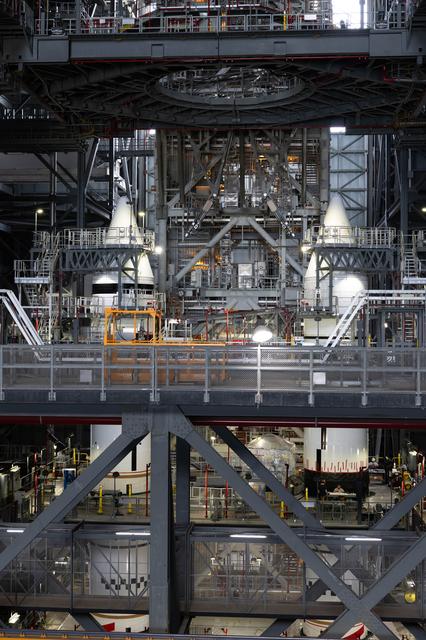
Engineers with NASA’s Exploration Ground Systems completed integrating the aerodynamic nose cones onto the left and right forward assemblies on the twin SLS (Space Launch System) solid rocket boosters, finishing their stacking operations fo…
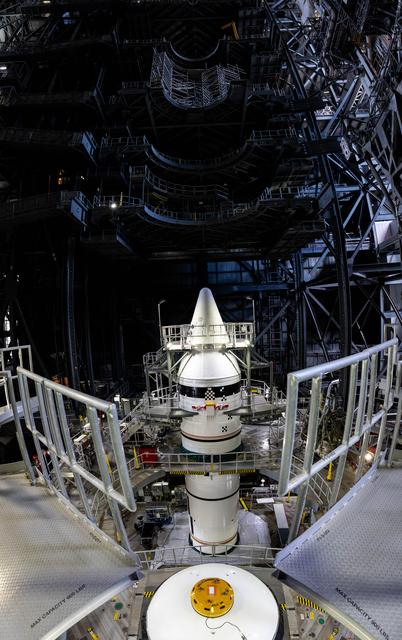
Engineers with NASA’s Exploration Ground Systems integrate the aerodynamic nose cone onto the left forward motor segment on the twin SLS (Space Launch System) solid rocket boosters for Artemis III inside the Vehicle Assembly Building’s High…

This panoramic side view of NASA’s X-59 Quiet SuperSonic Technology airplane shows the aircraft sitting on jacks at a Lockheed Martin test facility in Fort Worth, Texas. Lockheed Martin Aeronautics Company - Fort Worth - Chris Hanoch Subje…

Event: SEG 230 Nose The X-59’s nose is wrapped up safely and rests on a dolly before the team temporarily attaches it to the aircraft for fit checks at Lockheed Martin in Palmdale, California. The full length of the X-plane’s nose is 38-fee…

Event: Forebody and Nose - Windtunnel Testing A model of the X-59 forebody is shown in the Lockheed Martin Skunk Works’ wind tunnel in Palmdale, California. These tests gave the team measurements of wind flow angle around the aircraft’s nos…

This is an image of the X-59 inlet with a safety covering. The inlet’s purpose is to adjust air speeds before they pass through the aircraft’s engine. The purpose of the covering is to protect the inlet and engine from foreign objects.

Engineers with NASA’s Exploration Ground Systems complete stacking operations on the twin SLS (Space Launch System) solid rocket boosters for Artemis II by integrating the nose cones atop the forward assemblies inside the Vehicle Assembly B…

A panoramic view of NASA’s X-59 in Fort Worth, Texas to undergo structural and fuel testing. The X-59’s nose makes up one third of the aircraft, at 38-feet in length. The X-59 is a one-of-a-kind airplane designed to fly at supersonic speed…

Technicians perform landing gear checkout testing at Lockheed Martin Skunk Works in Palmdale, California. These tests make sure that all the parts of X-59’s landing gear and doors are working in the correct order. The X-59 is the centerpie…