
Astronauts Susan Helms (#1) and Carl Walz (#2) are training in the Neutral Buoyancy Simulator (NBS) at Marshall Space Flight center with an exercise for International Space Station Alpha. The NBS provided the weightless environment encounte…

An astronaut wearing a pressurized space suit performed a work task while suspended in a “zero-gravity” simulator known as the Neutral Buoyancy Simulator (NBS) at Marshall Space Flight Center. This particular task was one of many performed…
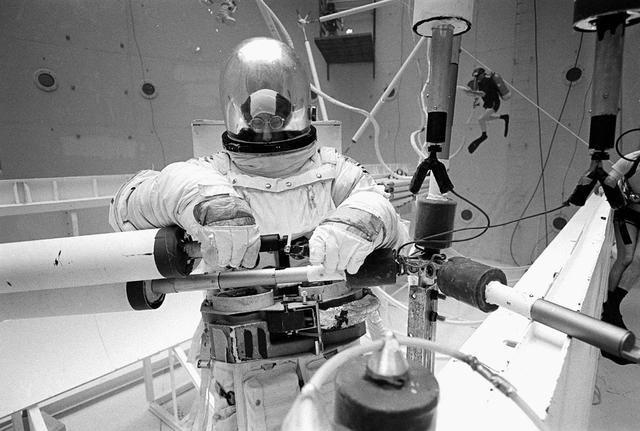
Once the United States' space program had progressed from Earth's orbit into outerspace, the prospect of building and maintaining a permanent presence in space was realized. To accomplish this feat, NASA launched a temporary workstation, Sk…

(L to R) Peter von Braun; Astronaut Frank Borman; M.P.Siebel; Dr. von Braun; Tris von Braun at the MSFC Neutral Buoyancy Simulator (NBS).
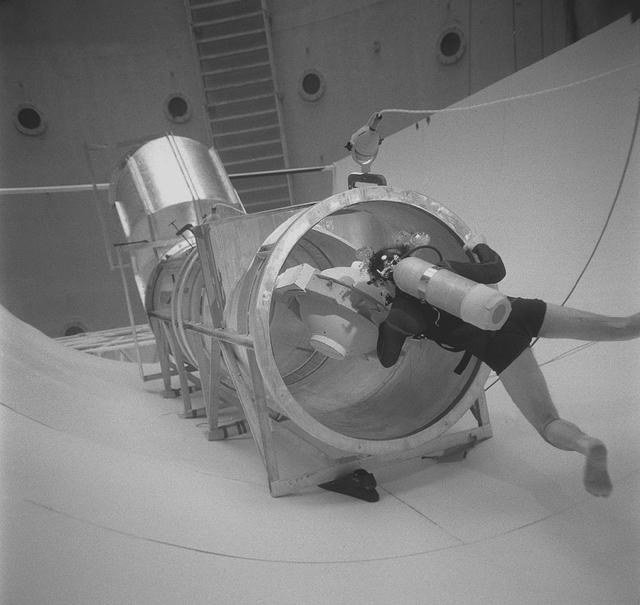
A Marshall scientist practices transferring objects in the Neutral Buoyancy Simulator (NBS) for the Spacelab transfer tunnel test.
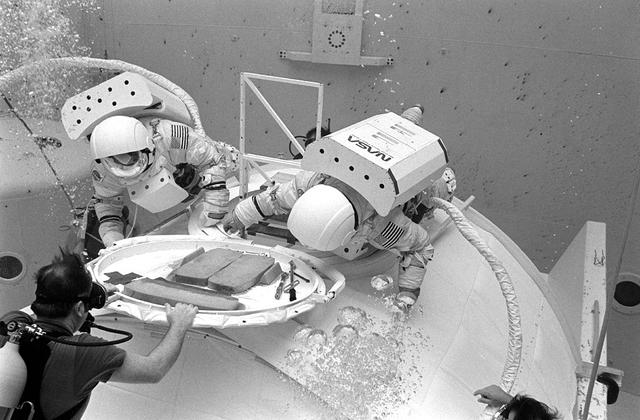
Once the United States' space program had progressed from Earth's orbit into outerspace, the prospect of building and maintaining a permanent presence in space was realized. To accomplish this feat, NASA launched a temporary workstation, Sk…
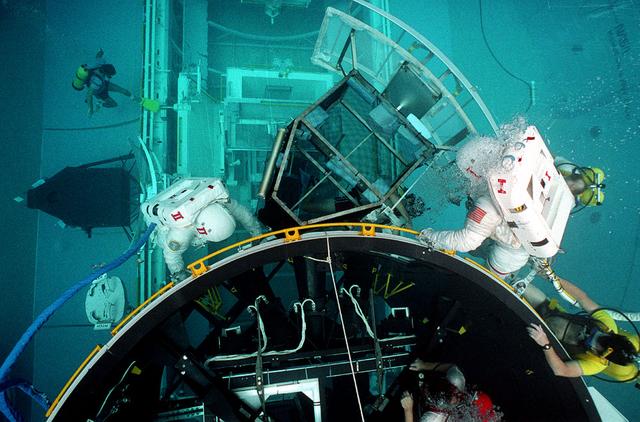
Astronauts Jim Voss and Jay Apt perform check-out procedures on a Hubble Space Telescope mock-up while working in the Marshall Space Flight Center's Neutral Buoyancy Simulator (NBS).
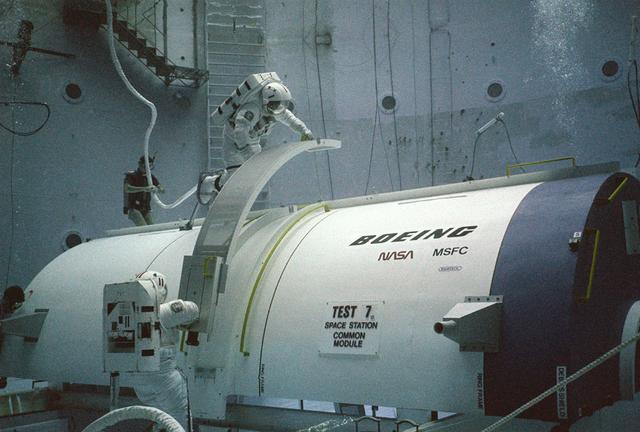
Skylab's success proved that scientific experimentation in a low gravity environment was essential to scientific progress. A more permanent structure was needed to provide this space laboratory. President Ronald Reagan, on January 25, 1984,…

Marshall Space Flight Center (MSFC) Director, Dr. von Braun, submerges after spending some time under water in the MSFC Neutral Buoyancy Simulator (NBS). Weighted to a neutrally buoyant condition, Dr. von Braun was able to perform tasks und…

Prior to its launch in April 1990, the Hubble Space Telescope (HST) went through years of development and testing. The HST was the first of its kind and the scientific community could only imagine the fruits of their collective labors. Howe…
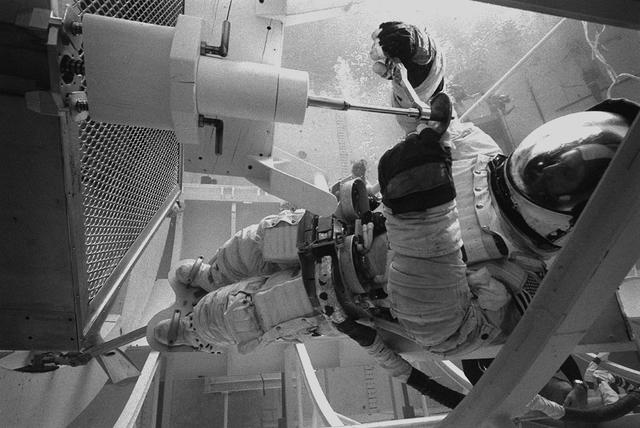
In February 1980, a satellite called Solar Maximum Mission Spacecraft, or Solar Max, was launched into Earth's orbit. Its primary objective was to provide a detailed study of solar flares,active regions on the Sun's surface, sunspots, and o…
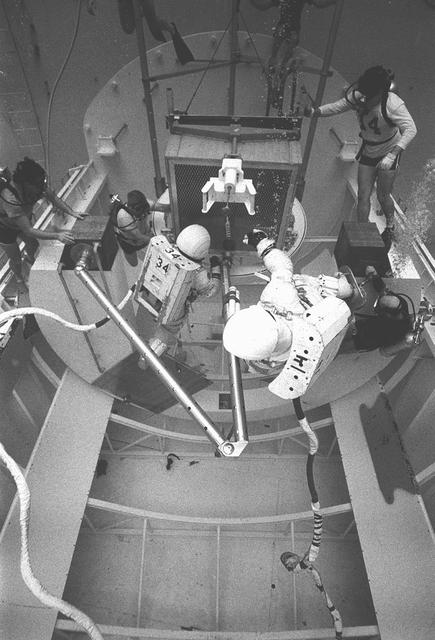
In February 1980, a satellite called Solar Maximum Mission Spacecraft, or Solar Max, was launched into Earth's orbit. Its primary objective was to provide a detailed study of solar flares, active regions on the Sun's surface, sunspots, and…

The Hubble Space Telescope (HST) is a cooperative program of the European Space Agency (ESA) and the National Aeronautical and Space Administration (NASA) to operate a long-lived space-based observatory. It was the flagship mission of NASA…

This close-up of astronaut and mission specialist, Kathryn Thornton, was captured under water in the Marshall Space Flight Center (MSFC) Neural Buoyancy Simulator (NBS) where she is participating in a training session for the STS-61 mission…
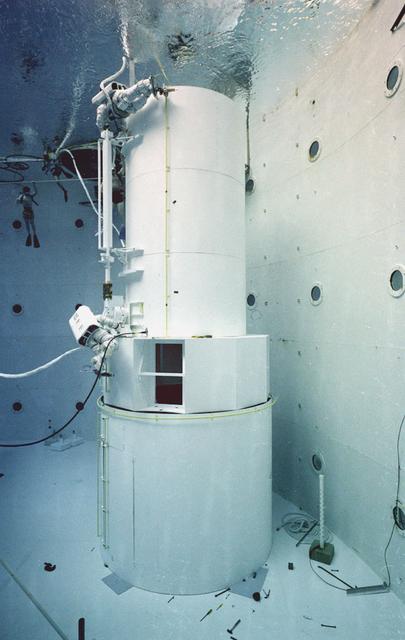
The Hubble Space Telescope (HST) is a cooperative program of the European Space Agency (ESA) and the National Aeronautical and Space Administration (NASA) to operate a long-lived space-based observatory. It was the first and flagship missio…

This close-up of astronaut and mission specialist Kathryn Thornton readies herself for submersion into the water in the Marshall Space Flight Center (MSFC) Neutral Buoyancy Simulator (NBS) where she is participating in a training session fo…
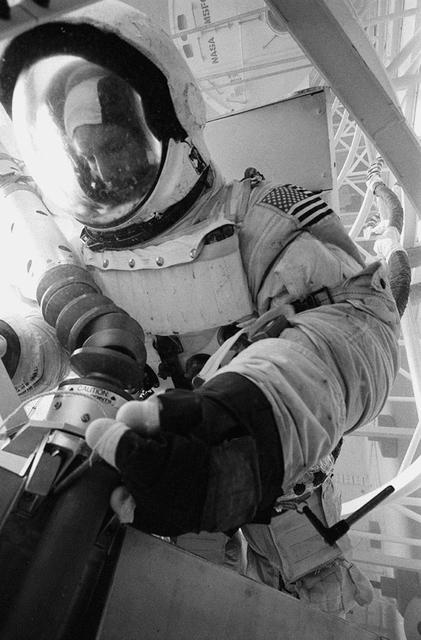
In February 1980, a satellite called Solar Maximum Mission Spacecraft, or Solar Max, was launched into Earth's orbit. Its primary objective was to provide a detailed study of solar flares,active regions on the Sun's surface, sunspots, and o…

Astronauts Tamara Jernigan (#1) and David Wolf (#2) are training in the Neutral Buoyancy Simulator (NBS) at Marshall Space Flight center with an exercise for International Space Station Alpha. The NBS provided the weightless environment enc…

This close-up of astronaut and mission specialist Kathryn Thornton was captured under water in the Marshall Space Flight Center (MSFC) Neural Buoyancy Simulator (NBS) where she is participating in a training session for the STS-61 mission.…
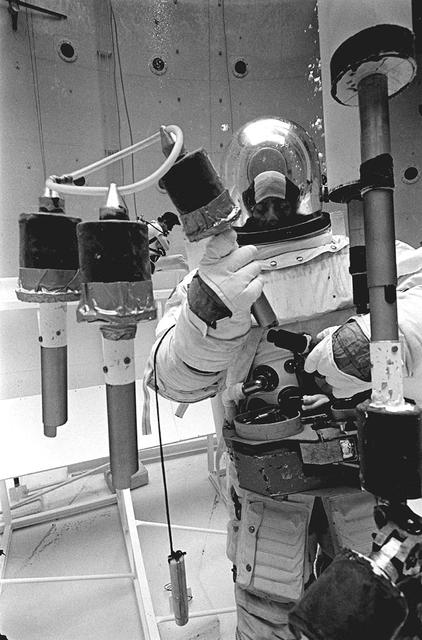
Once the United States' space program had progressed from Earth's orbit into outerspace, theprospect of building and maintaining a permanent presence in space was realized. To accomplish this feat, NASA launched a temporary workstation, Sky…
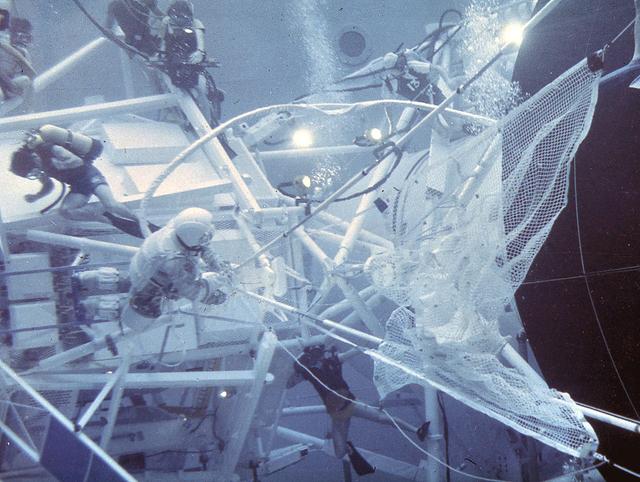
After its launch on May 14, 1973, it was immediately known that there were some major problems with Skylab. The large, delicate, meteoroid shield on the outside of the workshop was ripped off by the vibration of the launch. Its tearing off…
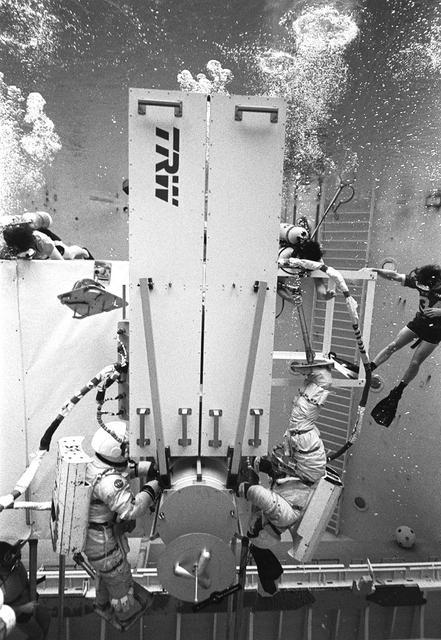
The Space Platform was first conceived as a launching site for deep space exploration. The original idea was to build this space platform either on the moon's surface or near lunar orbit. It would be used as a staging base, where the reusab…
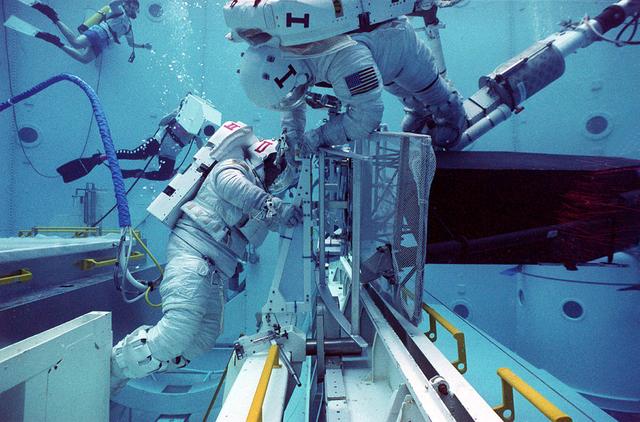
Astronauts Mark Lee and Rich Clifford perform test check-out procedures on the Hubble Space Telescope in the Marshall Space Flight Center's Neutral Buoyancy Simulator (NBS).

Marshall Space Flight Center (MSFC) Director, Dr. von Braun, is shown fitted with suit and diving equipment as he prepares for a tryout in the MSFC Neutral Buoyancy Simulator (NBS). Weighted to a neutrally buoyant condition, Dr. von Braun w…

Marshall Space Flight Center (MSFC) Director, Dr. von Braun, is shown leaving the suiting-up van wearing a pressure suit prepared for a tryout in the MSFC Neutral Buoyancy Simulator (NBS). Weighted to a neutrally buoyant condition, Dr. von…
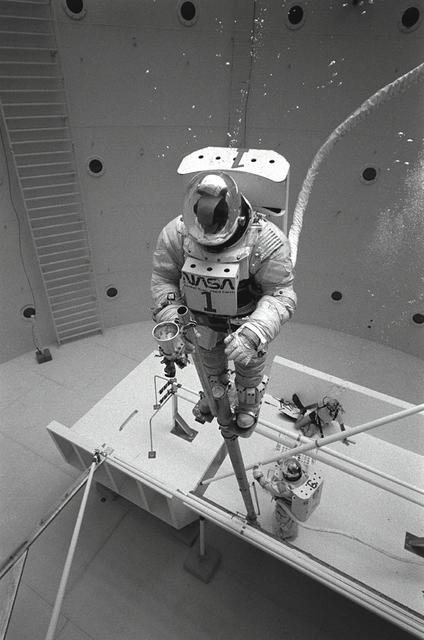
Once the United States' space program had progressed from Earth's orbit into outerspace, the prospect of building and maintaining a permanent presence in space was realized. To accomplish this feat, NASA launched a temporary workstation, Sk…
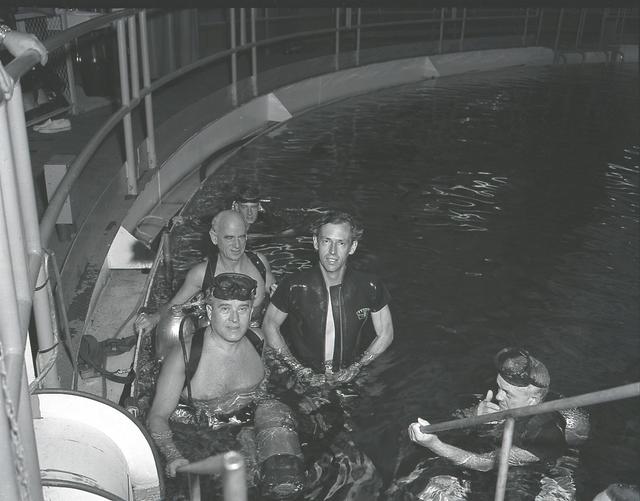
Dr. E. Stuhlinger, Dr. W. von Braun, and Dr. J. Piccard, along with others, take a swim in the Neutral Buoyancy Simulator (NBS) at the Marshall Space Flight Center. The NBS was instrumental in providing a zero-gravity environment where astr…
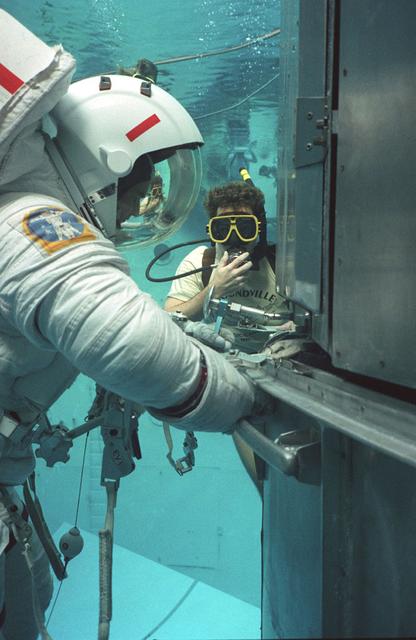
Prior to its launch in April 1990, the Hubble Space Telescope (HST) went through years of development and testing. The HST was the first of its kind and the scientific community could only imagine the fruits of their collective labors. Howe…

The Hubble Space Telescope (HST) is a cooperative program of the European Space Agency (ESA) and the National Aeronautical and Space Administration (NASA) to operate a long-lived space-based observatory. It was the flagship mission of NASA'…

The Hubble Space Telescope (HST) is a cooperative program of the European Space Agency (ESA) and the National Aeronautical and Space Administration (NASA) to operate a long-lived space-based observatory. It was the flagship mission of NASA…
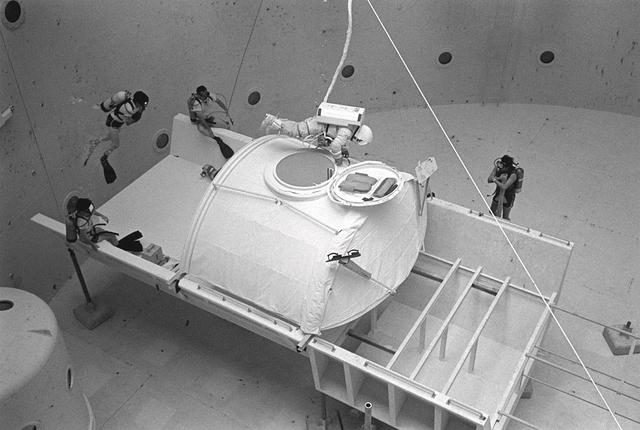
Once the United States' space program had progressed from Earth's orbit into outerspace, the prospect of building and maintaining a permanent presence in space was realized. To accomplish this feat, NASA launched a temporary workstation, Sk…
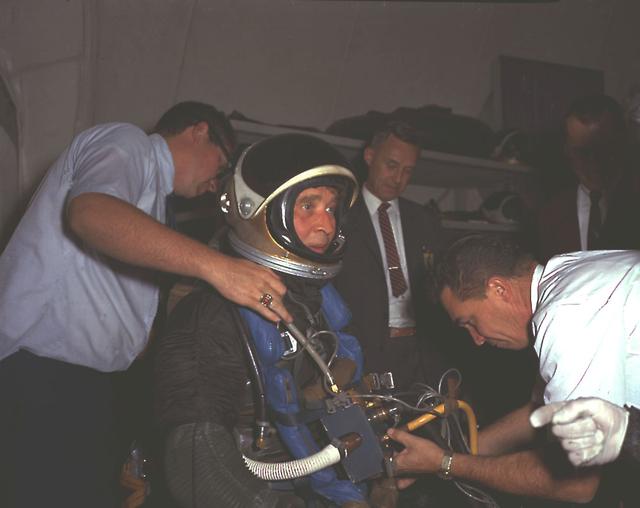
Dr. Wernher von Braun, Marshall Space Flight Center (MSFC) Director, was suited with a space suit and diving equipment at MSFC Neutral buoyancy Simulator (NBS).
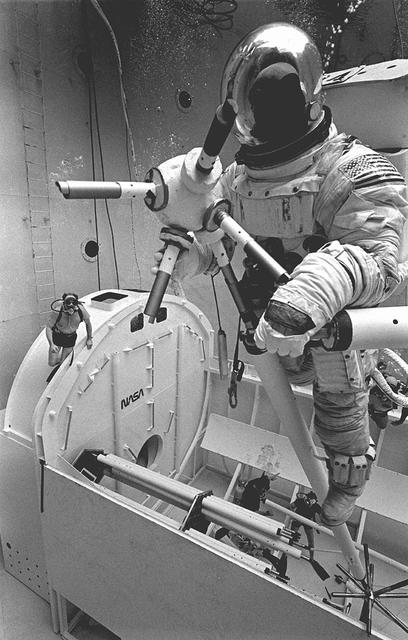
Once the United States' space program had progressed from Earth's orbit into outerspace, the prospect of building and maintaining a permanent presence in space was realized. To accomplish this feat, NASA launched a temporary workstation, Sk…
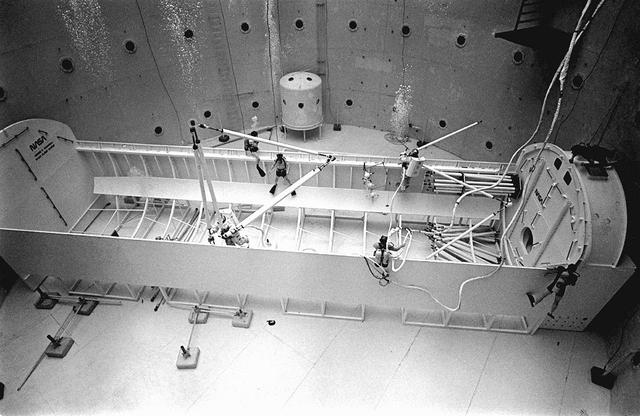
Once the United States' space program had progressed from Earth's orbit into outerspace, the prospect of building and maintaining a permanent presence in space was realized. To accomplish this feat, NASA launched a temporary workstation, Sk…
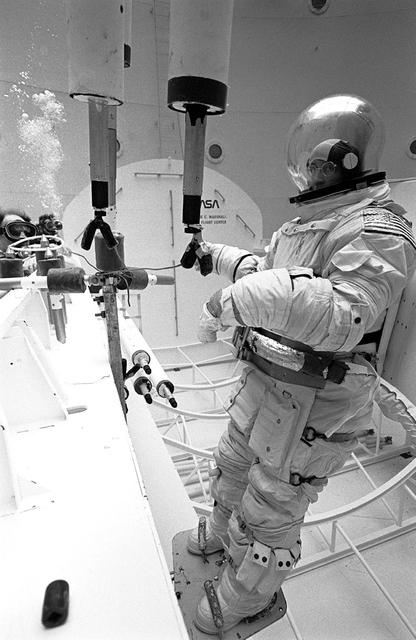
Once the United States' space program had progressed from Earth's orbit into outerspace, the prospect of building and maintaining a permanent presence in space was realized. To accomplish this feat, NASA launched a temporary workstation, Sk…

Astronaut L. Gordon Cooper checks the neck ring of a space suit worn by Marshall Space Flight Center (MSFC) Director, Dr. von Braun before he submerges into the water of the MSFC Neutral Buoyancy Simulator (NBS). Wearing a pressurized suit…

Marshall Space Flight Center (MSFC) Director, Dr. von Braun, submerges after spending some time under water in the MSFC Neutral Buoyancy Simulator (NBS). Weighted to a neutrally buoyant condition, Dr. von Braun was able to perform tasks und…
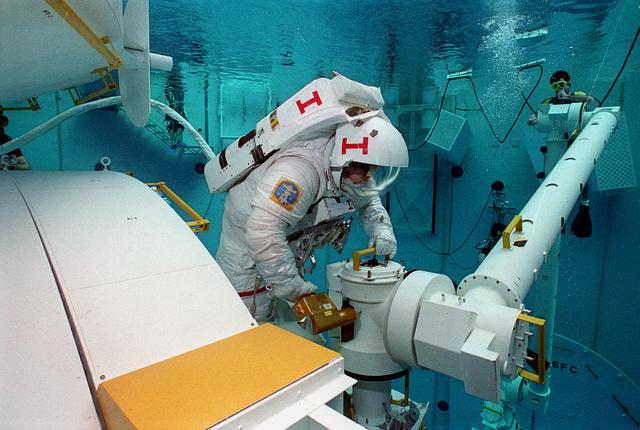
This photograph was taken in the Marshall Space Flight Center (MSFC) Neutral Buoyancy Simulator (NBS) during the testing of the Japanese Experimental Module. The NBS provided the weightless environment encountered in space needed for testin…

Marshall Space Flight Center’s (MSFC) Dr. Ernst Stuhlinger, Director of Research Projects Office; and Dr. Wernher von Braun, center director, along with others, took a swim in the Neutral Buoyancy Simulator (NBS) at MSFC. A safety diver ad…
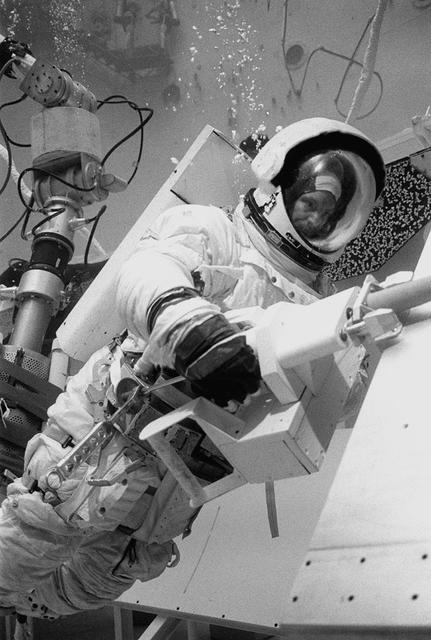
In February 1980, a satellite called Solar Maximum Mission Spacecraft, or Solar Max, was launched into Earth's orbit. Its primary objective was to provide a detailed study of solar flares, active regions on the Sun's surface, sunspots, and…
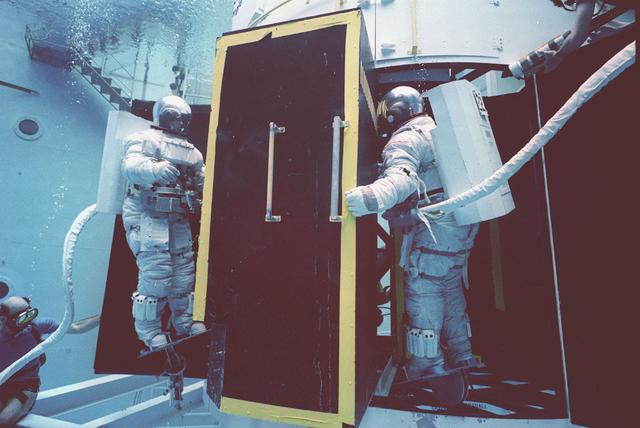
The Hubble Space Telescope (HST) is a cooperative program of the European Space Agency (ESA) and the National Aeronautical and Space Administration (NASA) to operate a long-lived space-based observatory. It was the flagship mission of NASA'…
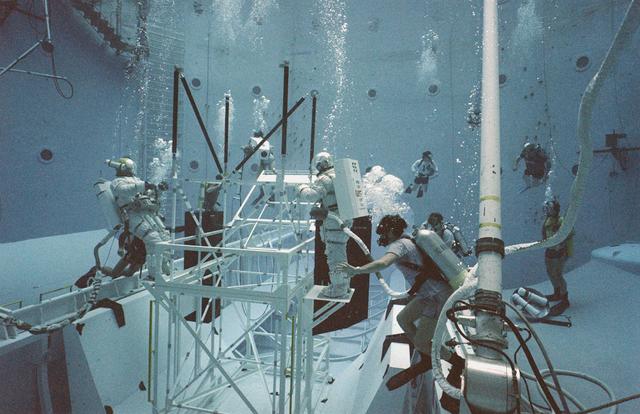
One of the main components of the Hubble Space Telescope (HST) is the Solar Array Drive Electronics (SADE) system. This system interfaces with the Support System Module (SSM) for exchange of operational commands and telemetry data. SADE ope…
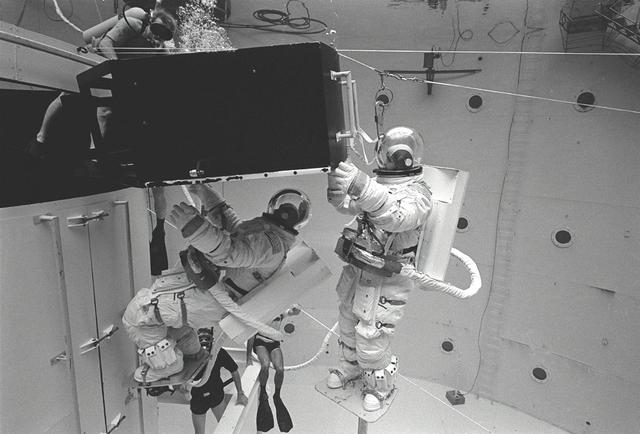
The Hubble Space Telescope (HST) is a cooperative program of the European Space Agency (ESA) and the National Aeronautical and Space Administration (NASA) to operate a long-lived space-based observatory. It was the first and flagship missio…

The Hubble Space Telescope (HST) is a cooperative program of the European Space Agency (ESA) and the National Aeronautical and Space Administration (NASA) to operate a long-lived space-based observatory. It was the flagship mission of NASA…

This is a cutaway illustration of the Neutral Buoyancy Simulator (NBS) at the Marshall Space Flight Center (MSFC ). The MSFC NBS provided an excellent environment for testing hardware to examine how it would operate in space and for evaluat…
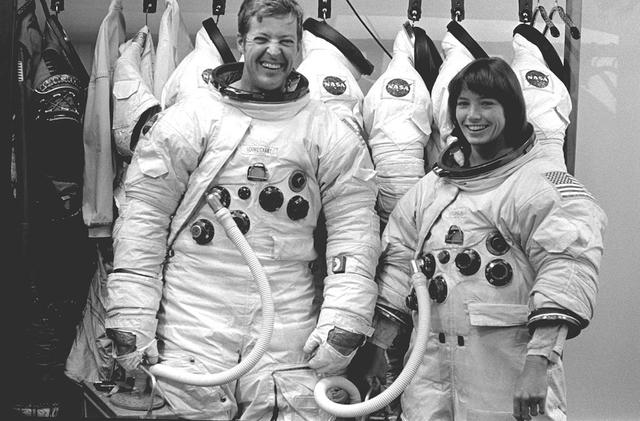
The Hubble Space Telescope (HST) is a cooperative program of the European Space Agency (ESA) and the National Aeronautical and Space Administration (NASA) to operate a long-lived space-based observatory. It was the flagship mission of NASA'…

The Hubble Space Telescope (HST) is a cooperative program of the European Space Agency (ESA) and the National Aeronautical and Space Administration (NASA) to operate a long-lived space-based observatory. It was the flagship mission of NASA…
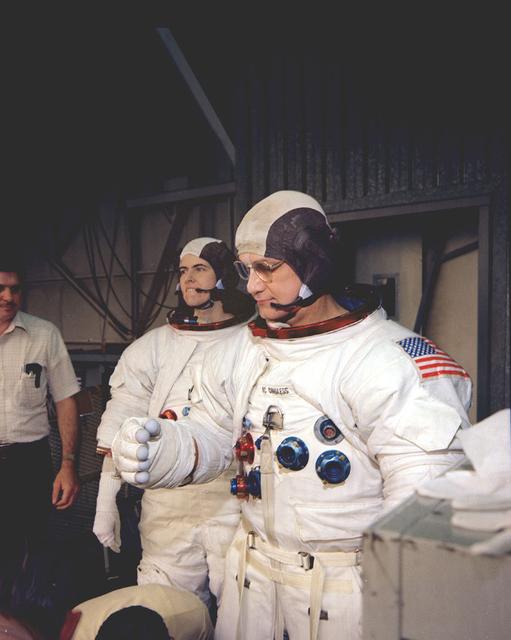
The Hubble Space Telescope (HST) is a cooperative program of the European Space Agency (ESA) and the National Aeronautical and Space Administration (NASA) to operate a long-lived space-based observatory. It was the flagship mission of NASA'…