This mosaic from NASA Galileo Probe is of an equatorial hotspot on Jupiter and shows the features of a hazy cloud layer tens of kilometers above Jupiter main visible cloud deck.

NASA Voyager spacecraft was 8.6 million kilometers 5.3 million miles from Neptune when it took this 61 second exposure through the clear filter with the narrow angle camera on August 19, 1989.

This wide-angle image from NASA Voyager 2, taken in 1989, was taken through the camera clear filter, and was the first to show Neptune rings in detail.

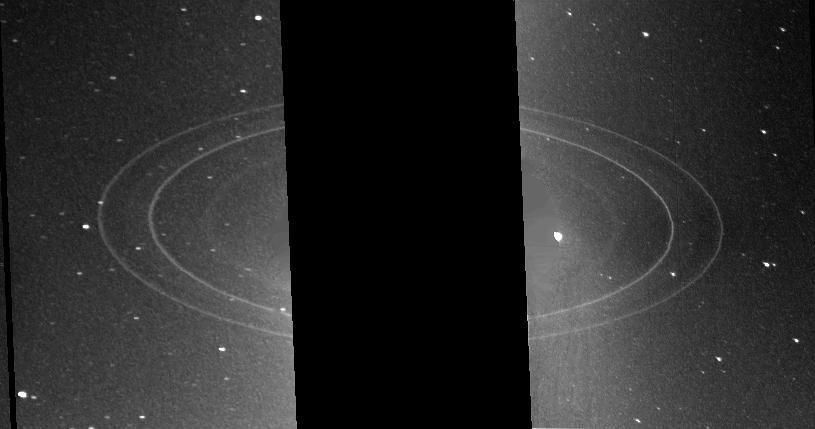
This 591-second exposure of the rings of Neptune were taken with the clear filter by NASA Voyager 2 wide-angle camera. The two main rings are clearly visible and appear complete over the region imaged.

These two 591-second exposures of the rings of Neptune were taken with the clear filter by the NASA Voyager 2 wide-angle camera on Aug. 26, 1989. The two main rings are clearly visible and appear complete over the region imaged.

In this image from NASA's Voyager wide-angle taken on Aug. 23 1989, the two main rings of Neptune can be clearly seen. In the lower part of the frame the originally announced ring arc, consisting of three distinct features, is visible. This…