The development of the electric space actuator represents an unusual case of space technology transfer wherein the product was commercialized before it was used for the intended space purpose. MOOG, which supplies the thrust vector control…
Benefit from NASA
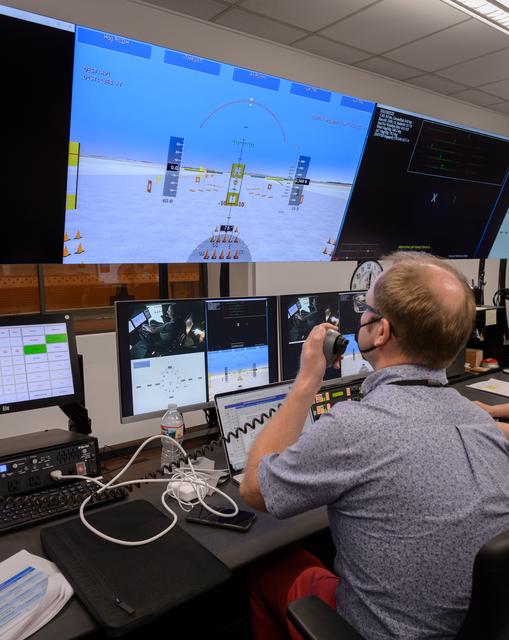
Out the window view of the ownship aircraft in the VMS’s R-Cab during the AVA-1h simulation in the VMS, N243.
Assured Vehicle Automation (AVA) - Hazard Perception and Avoidan
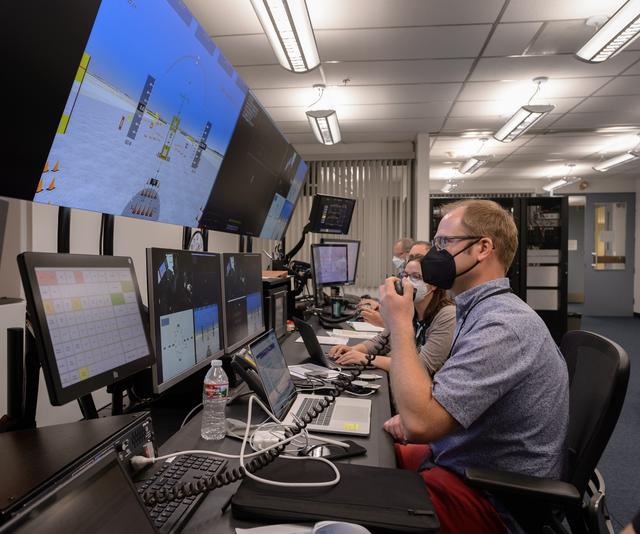
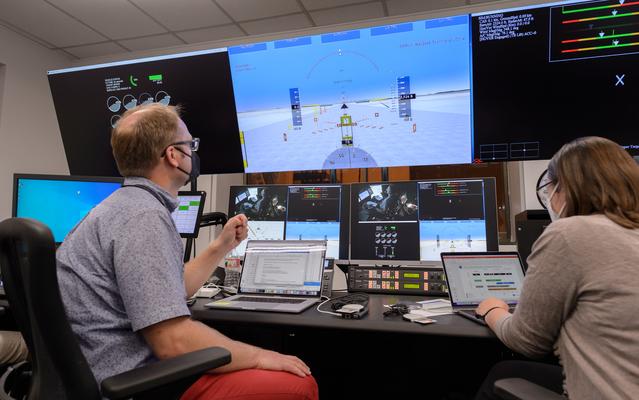
Human factors engineer Casey Smith, right, and pilot Wayne Ringelberg, left, discuss simulation results during a flight debrief in the VMS control room, N243.
Assured Vehicle Automation (AVA) - Hazard Perception and Avoidan
Primary flight display screen, left, and traffic display screen, right, of the ownship aircraft in the VMS’s R-Cab during the AVA-1h simulation in the VMS, N243.
Assured Vehicle Automation (AVA) - Hazard Perception and Avoidan
Out the window view of the ownship aircraft in the VMS’s R-Cab during the AVA-1h simulation in the VMS, N243.
Assured Vehicle Automation (AVA) - Hazard Perception and Avoidan
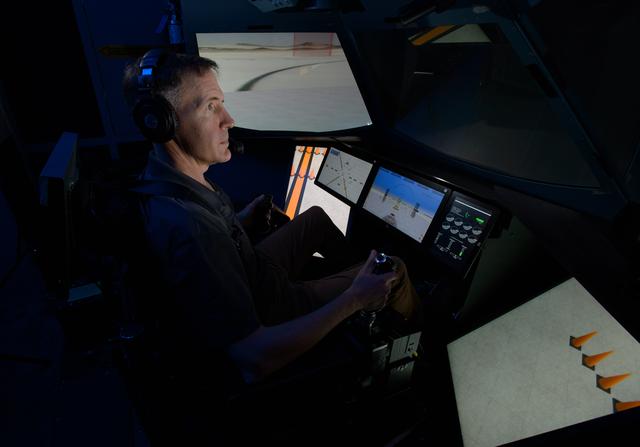
David Zahn pilots the ownship aircraft in the VMS’s R-Cab during the AVA-1h simulation in the VMS, N243.
Assured Vehicle Automation (AVA) - Hazard Perception and Avoidan
AFCM subproject simulation FAA-2 flight test team member Thomas Lombaerts in the VMS control room, N243, during a simulation.
Automated Flight and Contingency Management, or AFCM, Subproject
AFCM subproject simulation FAA-2 flight test team members Thomas Lombaerts, left, and Kimberlee Shish, right, in the VMS control room, N243, during a simulation.
Automated Flight and Contingency Management, or AFCM, Subproject
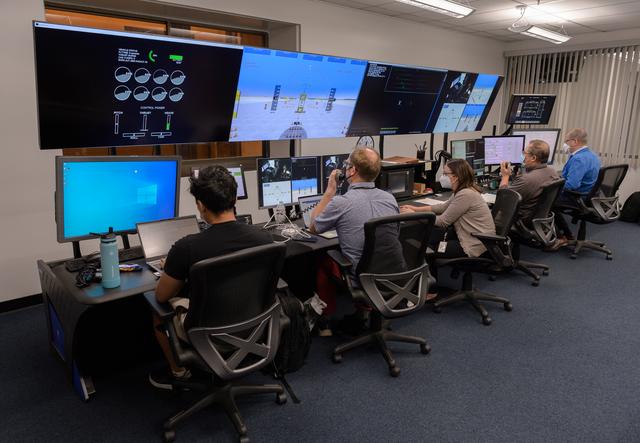
AFCM subproject simulation FAA-2 flight test team members Allen Ruan, left, Thomas Lombaerts, Kimberlee Shish, Edgar Torres, and Stephen Norris, right, in the VMS control room, N243 during a simulation.
Automated Flight and Contingency Management, or AFCM, Subproject
This in an aerial view (looking east) of a Lunar Roving Vehicle (LRV), often referred to as “Moonbuggy”, simulator area built at the Marshall Space Flight Center (MSFC) where testing was performed. The LRV was developed under the direction…
Saturn Apollo Program
The Marshall Space Flight Center (MSFC) played a crucial role in the development of the huge Saturn rockets that delivered humans to the moon in the 1960s.  Many unique facilities existed at MSFC for the development and testing of the Satur…
Saturn Apollo Program
The Marshall Space Flight Center (MSFC) played a crucial role in the development of the huge Saturn rockets that delivered humans to the moon in the 1960s.  Many unique facilities existed at MSFC for the development and testing of the Satur…
Saturn Apollo Program
Behind three Douglas D-558-IIs is the B-29 launch aircraft. Under its right wing is the world’s first ground-based reaction control system motion simulator.
A Full Flightline at Armstrong
David Zahn pilots the ownship aircraft in the VMS’s R-Cab during the AVA-1h simulation in the VMS, N243.
Assured Vehicle Automation (AVA) - Hazard Perception and Avoidan
Pilot David Zahn fine-tunes the traffic display screen of the ownship aircraft in the VMS’s R-Cab during the AVA-1h simulation in the VMS, N243.
Assured Vehicle Automation (AVA) - Hazard Perception and Avoidan
Pilot David Zahn fine-tunes the traffic display screen of the ownship aircraft in the VMS’s R-Cab during the AVA-1h simulation in the VMS, N243.
Assured Vehicle Automation (AVA) - Hazard Perception and Avoidan
Traffic display screen of the ownship aircraft in the VMS’s R-Cab during the AVA-1h simulation in the VMS, N243.
Assured Vehicle Automation (AVA) - Hazard Perception and Avoidan
Human factors engineer Casey Smith, right, and pilot Wayne Ringelberg, left, discuss simulation results during a flight debrief in the VMS control room, N243.
Assured Vehicle Automation (AVA) - Hazard Perception and Avoidan
The Marshall Space Flight Center (MSFC) played a crucial role in the development of the huge Saturn rockets that delivered humans to the moon in the 1960s.  Many unique facilities existed at MSFC for the development and testing of the Satur…
Saturn Apollo Program
AFCM subproject simulation FAA-2 flight test team members Allen Ruan, left, Thomas Lombaerts, Kimberlee Shish, Edgar Torres, and Stephen Norris, right, in the VMS control room, N243 during a simulation.
Automated Flight and Contingency Management, or AFCM, Subproject
Group photo of AFCM subproject simulation FAA-2 flight test team members Thomas Lombaerts, left, Mike Feary, Dave Sizoo, Kimberlee Shish, Loran Haworth, Mitch Soth, and Dave Webber, right, in the VMS control room, N243.
Automated Flight and Contingency Management, or AFCM, Subproject
AFCM subproject simulation FAA-2 flight test team members Allen Ruan, left, Thomas Lombaerts, and Kimberlee Shish, right, in the VMS control room, N243, during a simulation.
Automated Flight and Contingency Management, or AFCM, Subproject
The Marshall Space Flight Center (MSFC) played a crucial role in the development of the huge Saturn rockets that delivered humans to the moon in the 1960s.  Many unique facilities existed at MSFC for the development and testing of the Satur…
Saturn Apollo Program
The Marshall Space Flight Center (MSFC) played a crucial role in the development of the huge Saturn rockets that delivered humans to the moon in the 1960s.  Many unique facilities existed at MSFC for the development and testing of the Satur…
Saturn Apollo Program
The Marshall Space Flight Center (MSFC) played a crucial role in the development of the huge Saturn rockets that delivered humans to the moon in the 1960s.  Many unique facilities existed at MSFC for the development and testing of the Satur…
Saturn Apollo Program
Human factors engineer Casey Smith, left, and pilot Wayne Ringelberg, right, discuss simulation results during a flight debrief in the VMS control room, N243.
Assured Vehicle Automation (AVA) - Hazard Perception and Avoidan
Traffic display screen of the ownship aircraft in the VMS’s R-Cab during the AVA-1h simulation in the VMS, N243.
Assured Vehicle Automation (AVA) - Hazard Perception and Avoidan
Human factors engineer Casey Smith, left, and pilot Wayne Ringelberg, right, discuss simulation results during a flight debrief in the VMS control room, N243.
Assured Vehicle Automation (AVA) - Hazard Perception and Avoidan
Out the window view of the ownship aircraft in the VMS’s R-Cab during the AVA-1h simulation in the VMS, N243.
Assured Vehicle Automation (AVA) - Hazard Perception and Avoidan
AVA-1h simulation team members Megan Mitchell, left, Christian Schmitz, and Matthew Blanken, right, in the VMS control room, N243, prepare for a simulation.
Assured Vehicle Automation (AVA) - Hazard Perception and Avoidan
Michael Feary pilots a simulated electric vertical takeoff and landing, or eVTOL, aircraft in the VMS’s R-Cab during the AFCM subproject simulation FAA-2 flight tests in the VMS, N243.
Automated Flight and Contingency Management, or AFCM, Subproject
AFCM subproject simulation FAA-2 flight test team member Thomas Lombaerts in the VMS control room, N243, during a simulation.
Automated Flight and Contingency Management, or AFCM, Subproject
AFCM subproject simulation FAA-2 flight test team members Thomas Lombaerts, left, and Kimberlee Shish, right, in the VMS control room, N243, during a simulation.
Automated Flight and Contingency Management, or AFCM, Subproject
AFCM subproject simulation FAA-2 flight test team members Allen Ruan, left, Thomas Lombaerts, and Kimberlee Shish, right, in the VMS control room, N243, during a simulation.
Automated Flight and Contingency Management, or AFCM, Subproject
The Marshall Space Flight Center (MSFC) played a crucial role in the development of the huge Saturn rockets that delivered humans to the moon in the 1960s.  Many unique facilities existed at MSFC for the development and testing of the Satur…
Saturn Apollo Program
The Marshall Space Flight Center (MSFC) played a crucial role in the development of the huge Saturn rockets that delivered humans to the moon in the 1960s.  Many unique facilities existed at MSFC for the development and testing of the Satur…
Saturn Apollo Program
The Marshall Space Flight Center (MSFC) played a crucial role in the development of the huge Saturn rockets that delivered humans to the moon in the 1960s.  Many unique facilities existed at MSFC for the development and testing of the Satur…
Saturn Apollo Program
No more images