
The image depicts Redstone missile being erected. The Redstone ballistic missile was a high-accuracy, liquid-propelled, surface-to-surface missile developed by Army Ballistic Missile Agency, Redstone Arsenal, in Huntsville, Alabama, under t…

Installation of a Jupiter missile in ABMA (Army Ballistic Missile Agency) West Test Stand, Jan. 16, 1957. Jupiter was a 1500-mile range missile

CAPE CANAVERAL, Fla. – On Launch Complex 17-B at Cape Canaveral Air Force Station, the first stage of the Delta II rocket in the background waits for the mobile service tower and the solid rocket boosters (top foreground) that will be att…

CAPE CANAVERAL, Fla. – On Launch Complex 17-B at Cape Canaveral Air Force Station, the mobile service tower encloses the first stage of the Delta II rocket. The boosters in the tower will be attached to the rocket for launch of the STSS…

CAPE CANAVERAL, Fla. – On Launch Complex 17-B at Cape Canaveral Air Force Station, a third solid rocket booster is raised from the transporter. It will join the others in the mobile service tower for attachment to the Delta II rocket that…

CAPE CANAVERAL, Fla. – On Launch Complex 17-B at Cape Canaveral Air Force Station, solid rocket boosters are lifted into the mobile service tower. The boosters will be attached to the Delta II rocket that will launch the STSS Demonstrator s…

CAPE CANAVERAL, Fla. – On Launch Complex 17-B at Cape Canaveral Air Force Station, a third solid rocket booster is raised from the transporter. It will join the others in the mobile service tower for attachment to the Delta II rocket that…
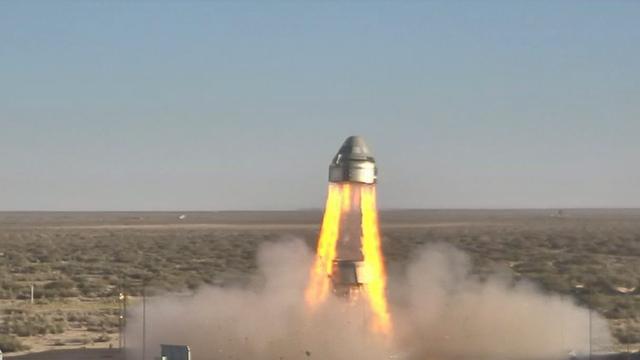
Boeing’s CST-100 Starliner’s four launch abort engines and several orbital maneuvering and attitude control thrusters ignite in the company’s Pad Abort Test, pushing the spacecraft away from the test stand with a combined 160,000 pounds of…
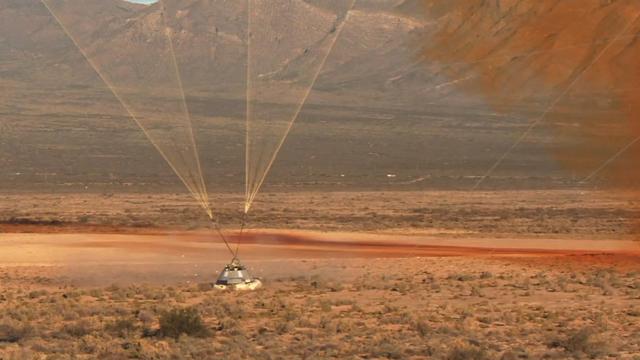
Boeing’s CST-100 Starliner lands in the New Mexico desert in the company’s Pad Abort Test for NASA’s Commercial Crew Program. The test, conducted Nov. 4 at the White Sands Missile Range, was designed to verify that each of Starliner’s syste…

The solar-electric Helios Prototype flying wing is shown near the Hawaiian island of Niihau during its first test flight on solar power from the U.S. Navy's Pacific Missile Range Facility on Kauai, Hawaii, July 14, 2001. The 18-hour flight…

The 247-foot length of the Helios prototype wing is in evidence as the high-altitude, solar-powered flying wing rests on its ground dolly during pre-flight tests at the U.S. Navy's Pacific Missile Range Facility on Kaua'i, Hawaii.
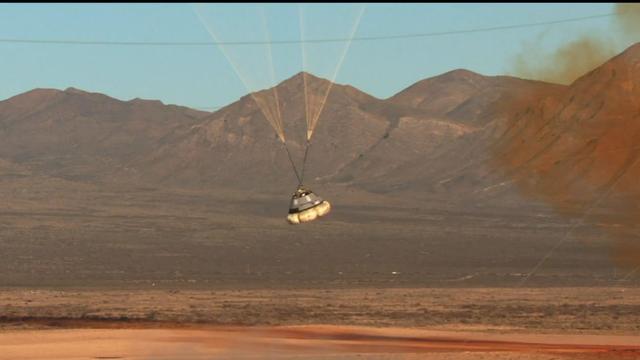
Boeing’s CST-100 Starliner’s airbags inflate in preparation for landing in the New Mexico desert in the company’s Pad Abort Test for NASA’s Commercial Crew Program. The test, conducted Nov. 4 at the White Sands Missile Range, was designed t…

Boeing’s CST-100 Starliner spacecraft and its service module stand atop the test stand at Launch Complex 32, White Sands Missile Range, New Mexico, in preparation for the Pad Abort Test. Boeing’s Pad Abort Test is designed to verify that ea…
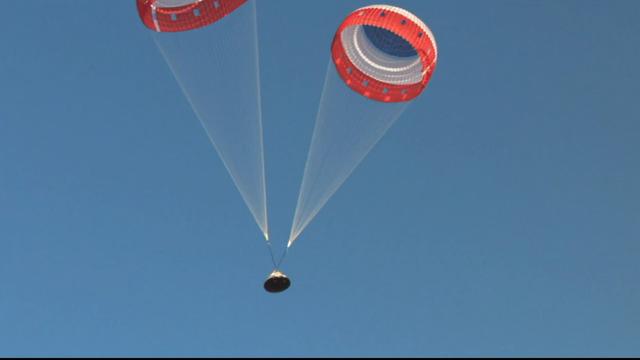
Parachutes deploy in in Boeing’s Pad Abort Test of its CST-100 Starliner spacecraft over the White Sands Missile Range in New Mexico, slowing the descent of the vehicle. The test, conducted Nov. 4, 2019, was designed to verify that each of…

Redstone missile No. 1002 on the launch pad at Cape Canaveral, Florida, on May 16, 1958. The Redstone ballistic missile was a high-accuracy, liquid-propelled, surface-to-surface missile developed by the Army Ballistic Missile Agency, Redsto…

VANDENBERG AIR FORCE BASE, Calif. -- A United Launch Alliance Delta II rocket, on behalf of the NASA Launch Services Program, is poised on its Space Launch Complex-2 launch pad at Vandenberg AFB, Calif., ready for launch. The Delta II wil…

The first circumferential welding being applied on a Saturn fuel container in the Army Ballistic Missile Agency (ABMA) fabrication laboratory, Building 4707, in May 1959.

This photograph of Dr. von Braun, shown here to the left of General Bruce Medaris, was taken in the fall of 1959, immediately prior to Medaris' retirement from the Army. At the time, von Braun and his associates worked for the Army Ballisti…

This photograph was taken in 1960 and shows Dr. von Braun, left, and Secretary of the Army, Wilbur Brucker in the Army Ballistic Missile Agency (ABMA) Fabrication Laboratory.

Marshall Space Flight Center’s (MSFC) Director, Dr. Wernher von Braun, is pictured here with Army Ballistic Missile Agency’s (ABMA) Commanding General, J.B. Medaris, before a display of Army missles at the ABMA test lab.

CAPE CANAVERAL, Fla. – On Launch Complex 17-B at Cape Canaveral Air Force Station, solid rocket boosters are lifted into the mobile service tower. The boosters will be attached to the Delta II rocket that will launch the STSS Demonstrator…

CAPE CANAVERAL, Fla. – On Launch Complex 17-B at Cape Canaveral Air Force Station, the mobile service tower at right moves closer to the first stage of the Delta II rocket. The boosters in the tower will be attached to the rocket for laun…

The solar-electric Helios Prototype flying wing is shown near the Hawaiian island of Niihau during its first test flight on solar power from the U.S. Navy's Pacific Missile Range Facility on Kauai, Hawaii, July 14, 2001. The 18-hour flight…

The solar-electric Helios Prototype flying wing is shown over the Pacific Ocean during its first test flight on solar power from the U.S. Navy's Pacific Missile Range Facility on Kauai, Hawaii, July 14, 2001. The 18-hour flight was a functi…

Boeing’s CST-100 Starliner spacecraft and its service module stand atop the test stand at Launch Complex 32, White Sands Missile Range, New Mexico, in preparation for the Pad Abort Test. Boeing’s Pad Abort Test is designed to verify that ea…

The first flight of a large aircraft to be powered by electric fuel cells began with a takeoff at 8:43 a.m. HST today from the Hawaiian island of Kauai. The Helios Prototype flying wing, built by AeroVironment, Inc., of Monrovia, Calif., as…

The solar-electric Helios Prototype flying wing is shown moments after takeoff, beginning its first test flight on solar power from the U.S. Navy's Pacific Missile Range Facility on Kauai, Hawaii, July 14, 2001. The 18-hour flight was a fun…

The first flight of a large aircraft to be powered by electric fuel cells began with a takeoff at 8:43 a.m. HST today from the Hawaiian island of Kauai. The Helios Prototype flying wing, built by AeroVironment, Inc., of Monrovia, Calif., as…

The solar-electric Helios Prototype flying wing is shown near the Hawaiian islands of Niihau and Lehua during its first test flight on solar power from the U.S. Navy's Pacific Missile Range Facility on Kauai, Hawaii, July 14, 2001. The 18-h…

The first flight of a large aircraft to be powered by electric fuel cells began with a takeoff at 8:43 a.m. HST today from the Hawaiian island of Kauai. The Helios Prototype flying wing, built by AeroVironment, Inc., of Monrovia, Calif., as…

White Sands Missile Range Fire Department team members listen to a pretending briefing as they, NASA, and Boeing teams prepare for the landing of Boeing’s CST-100 Starliner spacecraft at White Sands Missile Range’s Space Harbor, Wednesday,…

**Note also copied and numbered as L90-3749. -- L57-4827 caption: Take off of a five-stage missile research rocket from Wallops Island in 1957. The first two stages propelled the model to about 100,000 feet the last three stages were fir…

The Jupiter rocket was designed and developed by the Army Ballistic Missile Agency (ABMA). ABMA launched the Jupiter-A at Cape Canaveral, Florida, on March 1, 1957. The Jupiter vehicle was a direct derivative of the Redstone. The Army Balli…

Installation of a Jupiter Missile in ABMA (Army Ballistic Missile Agency) West Test Stand, Jan. 16, 1957. Jupiter was a 1500-mile range missile

CAPE CANAVERAL, Fla. – On Launch Complex 17-B at Cape Canaveral Air Force Station, the first stage of the Delta II rocket waits on the gantry for the solid rocket boosters. The STSS Demonstrators is a midcourse tracking technology demonstr…

CAPE CANAVERAL, Fla. – On Launch Complex 17-B at Cape Canaveral Air Force Station, the mobile service tower at right moves toward the first stage of the Delta II rocket. The boosters in the tower will be attached to the rocket for launch…

CAPE CANAVERAL, Fla. – On Launch Complex 17-B at Cape Canaveral Air Force Station, a third solid rocket booster is lifted into the mobile service tower next to the other two. The boosters will be attached to the Delta II rocket that will l…

3/4 front view in Ames 40x80 foot Wind Tunnel investigation of the Lockheed T-33 modified for area-suction leading-edge and trailing edge flaps.

The Army Ballistic Missile Agency (ABMA) test tower being modified for testing the Saturn booster.

The takeoff set the stage for a two-day Helios endurance flight in the stratosphere planned for mid-July. The Helios wing, spanning 247 feet and weighing about 2,400 pounds, is giving NASA and industry engineers confidence that remotely pil…

Sen. Doug Jones of Alabama, left, and Marshall Space Flight Center Director Jody Singer, center, talk with Marcia Lindstrom, Strategic Communications Manager for NASA’s Space Launch System, Aug. 7 at the annual Space & Missile Defense Sympo…

S65-63797 (12 Dec. 1965) --- Polaris, underwater launch, missile and trail, off Florida, as seen from the Gemini-7 spacecraft during its 31st revolution of Earth. Photo credit: NASA
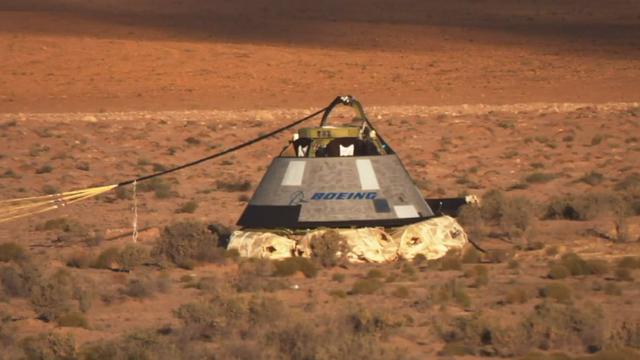
Boeing’s CST-100 Starliner lands in the New Mexico desert in the company’s Pad Abort Test for NASA’s Commercial Crew Program. The test, conducted Nov. 4 at the White Sands Missile Range, was designed to verify that each of Starliner’s syste…
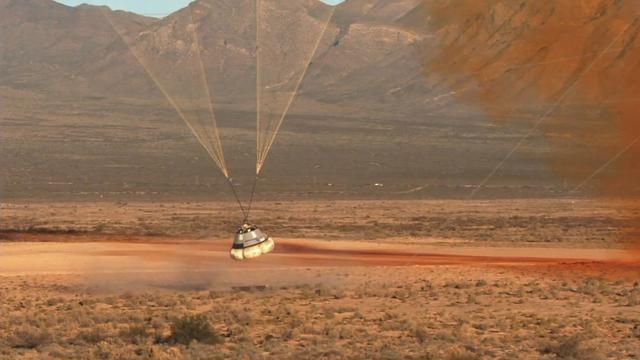
Boeing’s CST-100 Starliner’s airbags inflate in preparation for landing in the New Mexico desert in the company’s Pad Abort Test for NASA’s Commercial Crew Program. The test, conducted Nov. 4 at the White Sands Missile Range, was designed t…

The solar-electric Helios Prototype flying wing is shown over the Pacific Ocean during its first test flight on solar power from the U.S. Navy's Pacific Missile Range Facility on Kauai, Hawaii, July 14, 2001. The 18-hour flight was a functi…
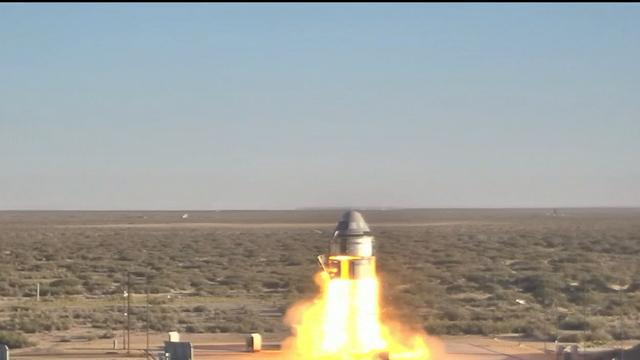
Boeing’s CST-100 Starliner’s four launch abort engines and several orbital maneuvering and attitude control thrusters ignite in the company’s Pad Abort Test, pushing the spacecraft away from the test stand with a combined 160,000 pounds of…

The first flight of a large aircraft to be powered by electric fuel cells began with a takeoff at 8:43 a.m. HST today from the Hawaiian island of Kauai. The Helios Prototype flying wing, built by AeroVironment, Inc., of Monrovia, Calif., as…

The solar-electric Helios Prototype flying wing is shown near the Hawaiian islands of Niihau and Lehua during its first test flight on solar power from the U.S. Navy's Pacific Missile Range Facility on Kauai, Hawaii, July 14, 2001. The 18-h…