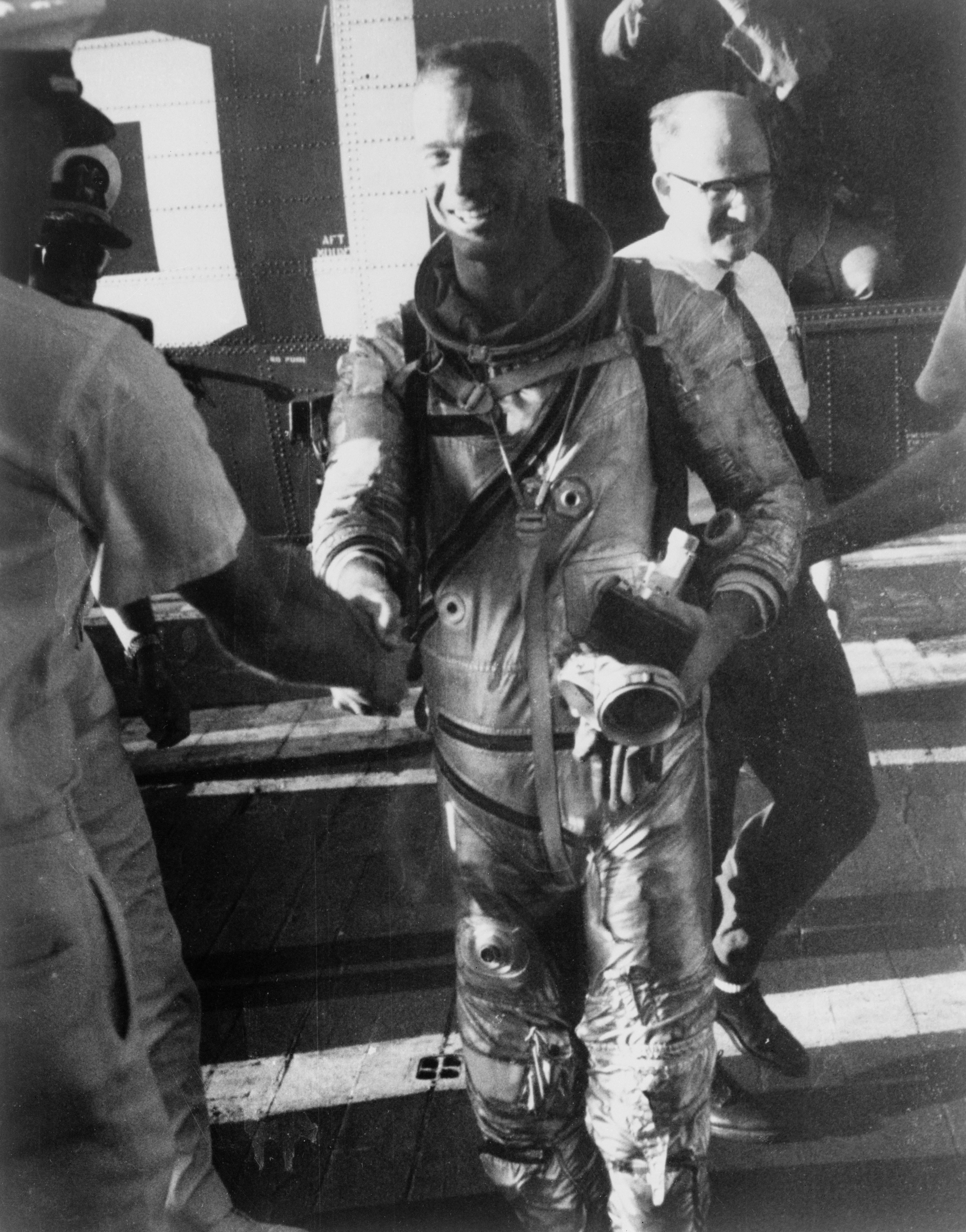
S62-04027 (24 May 1962) --- Astronaut M. Scott Carpenter, prime pilot for the Mercury-Atlas 7 (MA-7) mission, arrives aboard the prime recovery ship, USS Intrepid, during recovery operations following his Earth-orbital mission. Photo credit…
Interpid, Carpenter recovery
62-MA7-123 (1962) --- Scott Carpenter (foreground) demonstrates a point to John Glenn while relaxing after his three-orbit MA-7 spaceflight. Photo credit: NASA
Mercury 7
S64-40111 (1964) --- Wide angle view of the Mercury 7 memorial dedication. Photo credit: NASA
Wide angle view of thef Mercury 7 memorial dedication
S62-06157 (1962) --- Astronaut Walter Schirra Jr. gets modified calonic test. His balance mechanism (semicircular canals) are tested by running cool water into ear and measuring effect on eye motions (nystagmus) after his six-orbit flight i…
Astronaut Walter Schirra gets modified calonic test
S64-14870 (May 1962) --- Astronaut M. Scott Carpenter, prime pilot for the Mercury-Atlas 7 (MA-7) flight, is seen in Hangar S crew quarters during a preflight suiting activity at Cape Canaveral, Florida. He is assisted in suiting by technic…
Astronaut Scott Carpenter in Hangar S crew quarters during suiting activity
S62-05118 (1962) --- Astronaut L. Gordon Cooper Jr. on weight and balance scale in the White Room, Hangar S at Cape Canaveral. Photo credit: NASA
Astronaut L. Gordon Cooper on weight and balance scale
S62-03250 (24 May 1962) --- Earth and sky views taken with hand-held camera by astronaut M. Scott Carpenter during Mercury-Atlas 7 (MA-7) mission. Photo credit: NASA
Carpenter - Hand Held Camera - MA7 - MSC
JSC2013-E-076221 (15 May 1963) --- Astronaut L. Gordon Cooper Jr. waited inside the transfer van for several minutes and then leaving the transfer van walked to the elevator which took him to the spacecraft "Faith 7" atop the Atlas vehicle…
Mercury preflight image
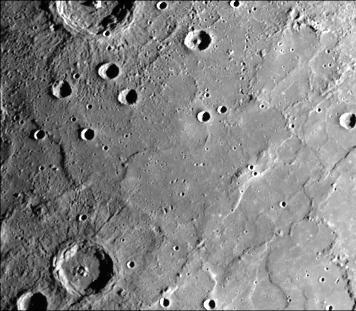
This photograph of Mercury was taken by NASA Mariner 10 spacecraft shows smooth plains areas on Mercury that are thought to be volcanic in origin with lava flows filling in heavily cratered areas.
Heavily Cratered Terrain and Smooth Plain
After passing Mercury the first time and making a trip around the Sun, NASA Mariner 10 again flew by Mercury on Sept. 21, 1974. The south pole is located on the right hand edge of Chao Meng Fu crater that has only its rim sticking up into t…
Mercury South Pole
This image, from NASA Mariner 10 spacecraft which launched in 1974, shows that several west-facing lobate scarps occur in the hummocky plains interpreted as Caloris ejecta.
Lobate Scarps within the Hummocky Plains East of Caloris Basin
This computer generated photomosaic from NASA Mariner 10 is of the southern half of Mercury Shakespeare Quadrangle, named for the ancient Shakespeare crater located on the upper edge to the left of center.
Photomosaic of Mercury - Inbound View
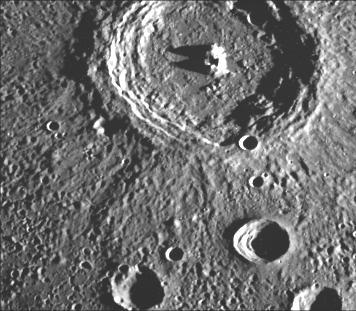
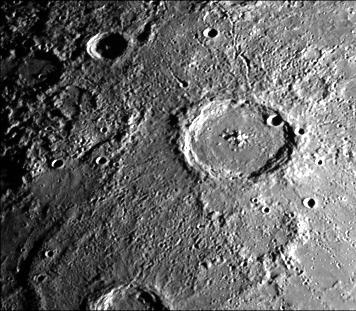
This crater illustrates the narrow hummocky rim facies, radial ridges, and surrounding extensive field of secondary craters. This image of Mercury was taken by NASA Mariner 10.
Terraced Craters
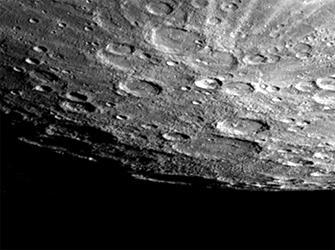
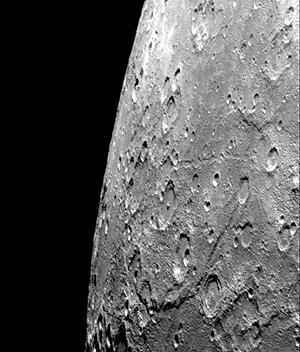
This image, from NASA Mariner 10 spacecraft which launched in 1974, is of the southern hemisphere of Mercury.
Mercury Southern Hemisphere
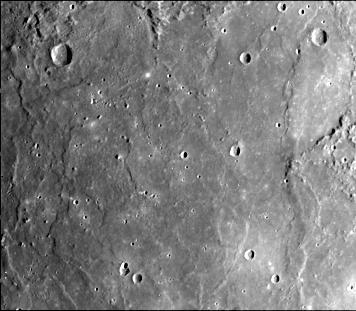
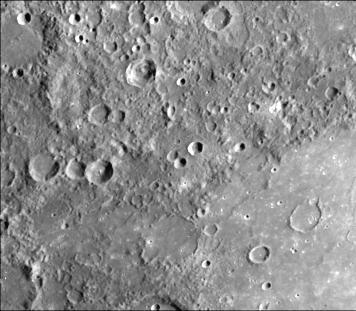
This image, from NASA Mariner 10 spacecraft which launched in 1974, is located about 500 km east of the Caloris basin and shows hummocky plains interpreted as Caloris ejecta in the upper half of the picture and smooth plains in the lower ha…
Hummocky and Smooth Plains
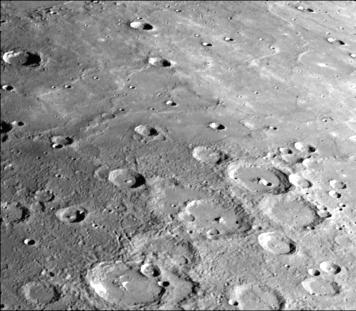
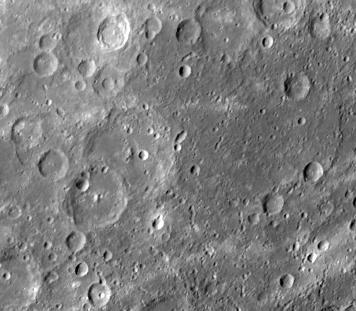
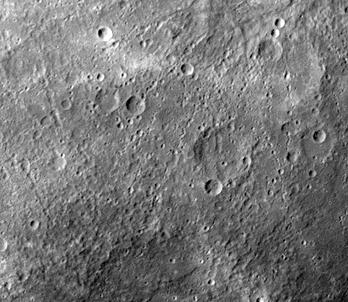
Intercrater plains and heavily cratered terrain typical of much of Mercury outside the area affected by the formation of the Caloris basin are shown in this image taken during the NASA Mariner 10 first encounter with Mercury in 1974.
Intercrater Plains and Heavily Cratered Terrain - First Encounter
This image, from NASA Mariner 10 spacecraft which launched in 1974, shows plains filling this basin are uniformly brighter and slightly redder than the surrounding cratered terrain.
Smooth Volcanic Plains
S64-40113 (1964) --- Astronaut Walter Schirra Jr. (right) and Walter Williams, Deputy Director of Mission Requirements, pictured at the Mercury 7 memorial dedication. Photo credit: NASA
Walter Schirra and Walter Williams at Mercury 7 memorial
S62-03248 (24 May 1962) --- Earth and sky views taken with hand-held camera by astronaut M. Scott Carpenter during Mercury-Atlas 7 (MA-7) mission. Photo credit: NASA
Carpenter - Hand Held Camera - MA7 - MSC
S62-04114 (1962) --- Astronaut M. Scott Carpenter, pilot of the Mercury-Atlas 7 (MA-7) mission, receives the NASA Distinguished Service Medal from NASA Adminstrator James E. Webb during ceremonies at Cape Canaveral, Florida. Photo credit: N…
Astronaut Scott Carpenter - Medal Presentation - Dr. James Webb Post Mercury-Atlas (MA-7)
S65-24623 (May 1962) --- Astronaut M. Scott Carpenter, prime pilot for the Mercury-Atlas 7 (MA-7) flight, is seen in Hangar S crew quarters during a suiting exercise. Carpenter is seated in a mock-up of his pilot's seat while fully suited.…
Mercury Suit up
S65-24622 (May 1962) --- Astronaut M. Scott Carpenter, prime pilot for the Mercury-Atlas 7 (MA-7) flight, is seen in Hangar S crew quarters during a suiting exercise. He is assisted in suiting by technician Al Rochford. In this view, Carpen…
SUITING-UP - ASTRONAUT CARPENTER, M. SCOTT - TRAINING - CAPE
S63-00581 (1963) --- Astronaut L. Gordon Cooper Jr., pilot of the Mercury Atlas 9 (MA-9) space mission, appears before newsmen at a preflight press conference. Photo credit: NASA
PRESS CONFERENCE - ASTRONAUT COOPER - MSC
S62-01358 (1962) --- Project Mercury astronaut M. Scott Carpenter, prime pilot of the Mercury-Atlas 7 (MA-7) spaceflight, goes through a water egress test. He is in the Mercury pressure suit, without the helmet, and is wearing a life vest.…
EGRESS TRAINING - ASTRONAUTS SCHIRRA AND CARPENTER
S62-05161 (1962) --- Astronaut L. Gordon Cooper Jr. participates in Mercury water egress training. He is wearing a snorkel and holding a camera for underwater photography. Photo credit: NASA
Astronaut L. Gordon Cooper participates in Mercury water egress training
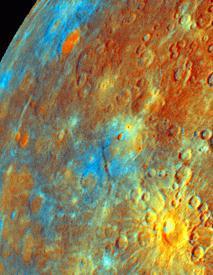
Updated calibration and subsequent mosaicing led to substantial improvements in NASA Mariner 10 color image data; the spacecraft launched in 1974.
Incoming Hemisphere - Enhanced Color
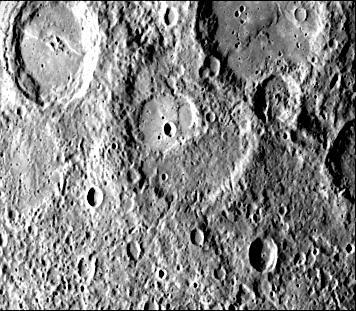
This image, from NASA Mariner 10 spacecraft which launched in 1974, shows an old basin hummocky rim is partly degraded and cratered by later events.
Old Basin Filled by Smooth Plains
Caloris Basin on Mercury, is one of the largest basins in the solar system, its diameter exceeds 1300 kilometers and is in many ways similar to the great Imbrium basin on the Moon. This image is from NASA Mariner 10 spacecraft which launche…
Caloris Basin
After passing Mercury the first time and making a trip around the Sun, NASA Mariner 10 again flew by Mercury on Sept. 21, 1974. This encounter brought the spacecraft in front of Mercury in the southern hemisphere.
Hero Rupes Scarp
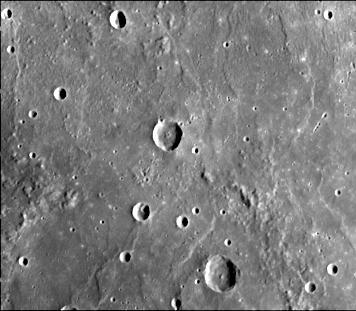
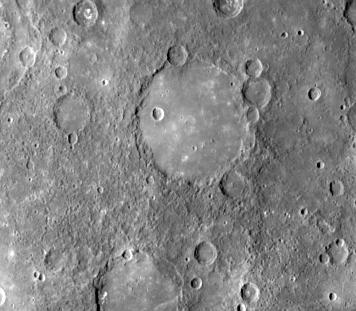
This image, from NASA Mariner 10 spacecraft which launched in 1974, shows intercrater plains and heavily cratered terrain typical of much of Mercury outside the area affected by the formation of the Caloris basin.
Intercrater Plains and Heavily Cratered Terrain
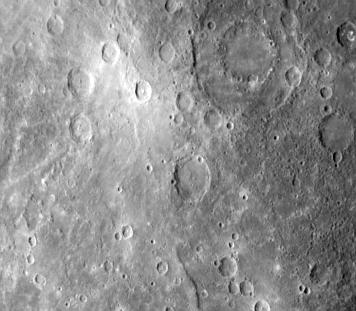
A faint double ring crater is seen at upper right in this picture of Mercury taken one hour and 40 minutes before NASA Mariner 10 second rendezvous with the planet Sept. 21, 1975
Double Ring Craters
This image, from NASA Mariner 10 spacecraft which launched in 1974, features a 140 kilometer diameter crater and its surrounding zone of secondary craters. T
Large Mercurian Crater
Installation of the Mercury capsule on Redstone booster at the Redstone Test Stand. Assembled at the Marshall Space Flight Center (MSFC), the Mercury-Redstone launch vehicle was designed to place a marned space capsule into orbital flight a…
Mercury Project
62-MA7-86 (1962) --- John Glenn (left) makes last minute preparations with Scott Carpenter prior to the flight of MA-7. Photo credit: NASA
Mercury 7 Preparations
62-MA7-169 (1962) --- John Glenn congratulates Scott Carpenter (left) on his three-orbit mission aboard the Aurora 7 spacecraft. Photo credit: NASA
Mercury 7
S62-04057 (24 May 1962) --- Astronaut M. Scott Carpenter, prime pilot for the Mercury-Atlas 7 (MA-7) mission, talks with President John F. Kennedy via radio-telephone from aboard the carrier USS Intrepid. Carpenter was recovered by a helico…
Scott Carpenter talking on the phone with President Kennedy
MANNED SPACECRAFT CENTER, HOUSTON, TX. -- FIRST ASTRONAUT TEAM -- Project Mercury Astronauts, whose selection was announced on April 9, 1959, only six months after the National Aeronautics and Space Administration was formally established o…
KSC-84pc-0022
S62-06148 (3 Oct. 1962) --- Close-up view of Mercury-Atlas 8 (MA-8) astronaut Walter Schirra being removed from his Sigma 7 capsule by Navy personnel. Schirra has just removed his helmet. Photo credit: NASA
Astronaut Walter Schirra being removed from his Sigma 7 capsule
S62-00120 (1961) --- Astronaut M. Scott Carpenter, prime pilot for the Mercury-Atlas 7 (MA-7) spaceflight, is seen in Hangar S crew quarters during a suiting exercise at Cape Canaveral, Florida. Photo credit: NASA
Astronaut Scott Carpenter - Hangar "S" - Crew Quarters - Suiting Exercise - Cape
The launch of the Mercury Atlas (MA-2), an unmarned suborbital Mercury capsule test on February 24, 1961.
Mercury Project
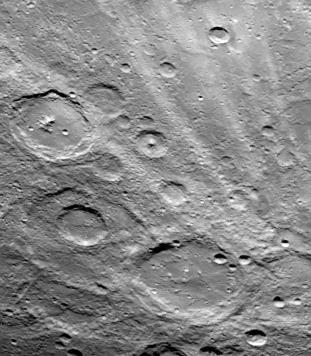
This image, from NASA Mariner 10 spacecraft which launched in 1974, shows young craters superposed on smooth plains. Larger young craters have central peaks, flat floors, terraced walls, and radial ejecta deposits.
Young Craters on Smooth Plains
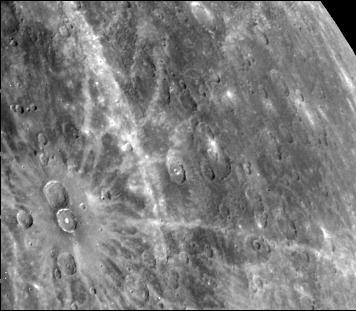
This photograph of Mercury, taken by NASA Mariner 10, shows two prominent rayed craters. Bright halos extend as far as 2 crater diameters beyond crater rims. Individual rays extend from halo.
Prominent Rayed Craters
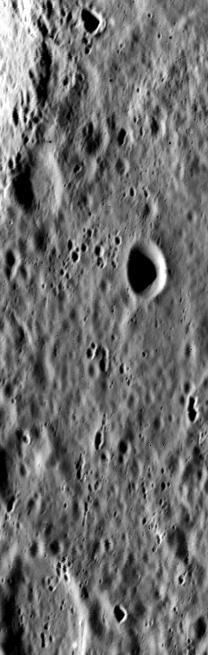
NASA Mariner 10 spacecraft was coaxed into a third and final encounter with Mercury in March of 1975. This is one of the highest resolution images of Mercury acquired by the spacecraft.
High Resolution View of Mercury
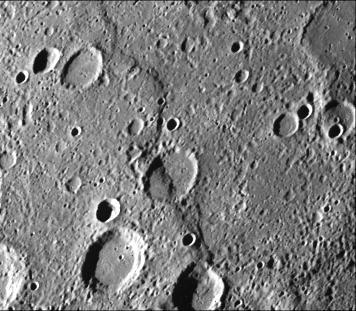
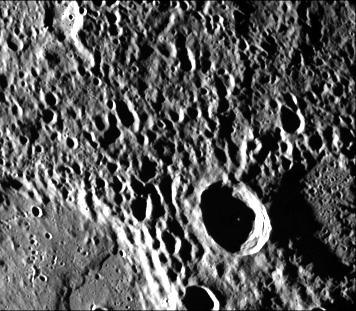
NASA Mariner 10 took this picture of the densely cratered surface of Mercury when the spacecraft was 18,200 kilometers 8085 miles from the planet on March 29, 1974.
Mercury Densely Cratered Surface
After passing Mercury the first time and making a trip around the Sun, NASA Mariner 10 again flew by Mercury on Sept. 21, 1974. This encounter brought the spacecraft in front of Mercury in the southern hemisphere.
Similarities to Lunar Highlands
S66-53205 (1966) --- Mercury Atlas (MA-8) Sigma 7 capsule on display at the Johnson Space Center. Photo credit: NASA
Sigma 7 capsule on display at the Johnson Space Center
A field of bright rays, created by ejecta from a crater, radiating to the north top from off camera lower right is seen in this view of Mercury taken Sept. 21, 1974 by NASA Mariner 10.
Field of Bright Rays
This image, from NASA Mariner 10 spacecraft which launched in 1974, shows several scarps, which appear to be confined to crater floors. The scarp in the crater at the upper left of the image has been diverted by the central peaks.
Scarps Confined to Crater Floors