With the Atlantic Ocean as a backdrop, an Atlas V launch vehicle, 19 stories tall, with a two-ton NASA Mars Reconnaissance Orbiter MRO on top, roars away from Launch Complex 41 at Cape Canaveral Air Force Station.
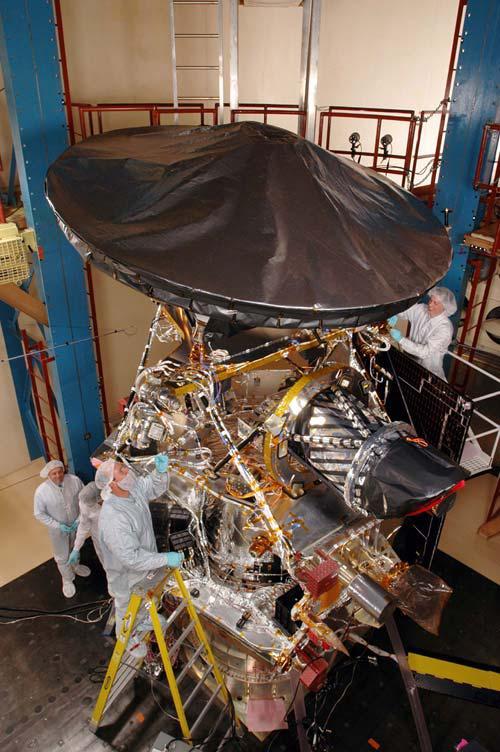
Workers at Lockheed Martin Space Systems, Denver, hoist a telescopic camera for installation onto NASA Mars Reconnaissance Orbiter spacecraft on Dec. 11, 2004.
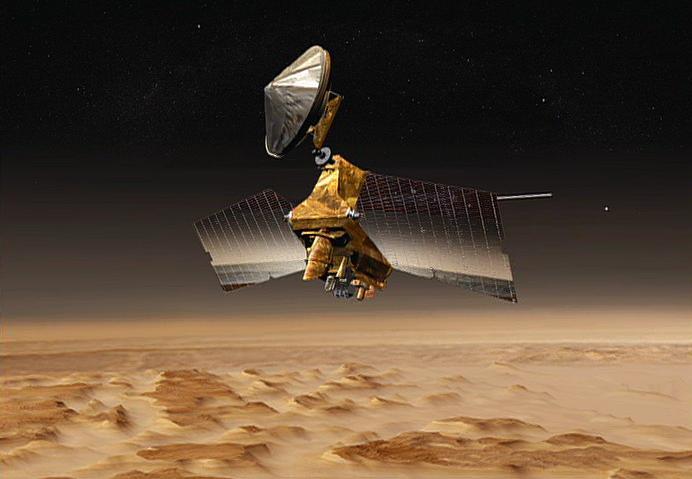
This artist's concept represents the "Follow the Water" theme of NASA's Mars Reconnaissance Orbiter mission. The orbiter's science instruments monitor the present water cycle in the Mars atmosphere and the associated deposition and sublimat…
Especially bright patches, bluish in enhanced color, are due to seasonal frost that is accumulating as this hemisphere approaches winter. This image of a sand dune field in a Southern highlands crater was acquired by NASA Mars Reconnaissanc…
This photo composite shows an aerial view of FedEx Field in Landover, Md., home of the Washington Redskins, superimposed on Mars Victoria Crater to give a sense of the crater scale.
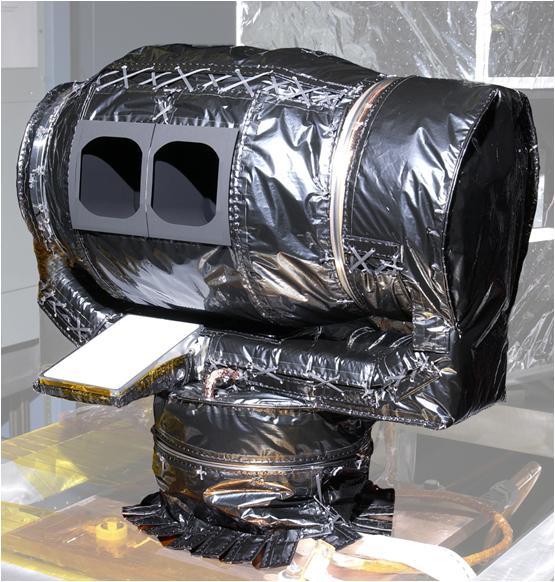
A telescopic camera called the High Resolution Imaging Science Experiment, or HiRISE, right was installed onto the main structure of NASA Mars Reconnaissance Orbiter left on Dec. 11, 2004 at Lockheed Martin Space Systems, Denver.
This image features the protective fairing that encapsulated NASA Mars Reconnaissance Orbiter atop an Atlas V rocket. The lively logo celebrates the intense science mission ahead of the orbiter.
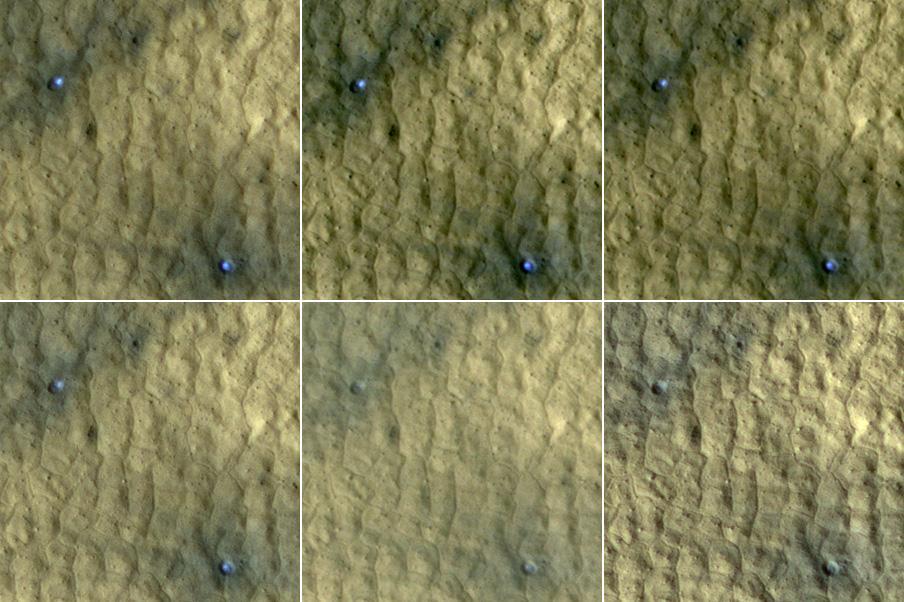
This series of images spanning a period of 15 weeks shows a pair of fresh craters taken by NASA Mars Reconnaissance Orbiter. Bright, bluish material apparent in the earliest images disappears by the later ones.
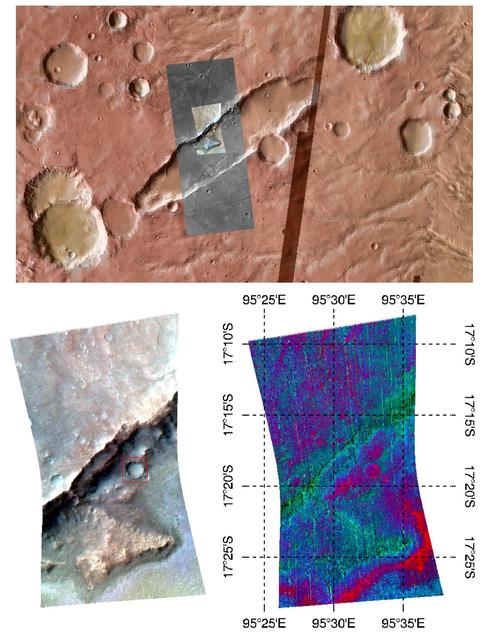
Oxia Planum is broad clay-bearing surface between Mawrth and Ares Vallis that has been proposed as a future landing site on Mars. This image is from NASA Mars Reconnaissance Orbiter.
This image shows black gold, that is: organic material, which could be a biomarker sign of past life, the holy grail of Mars exploration. This image is from NASA Mars Reconnaissance Orbiter.
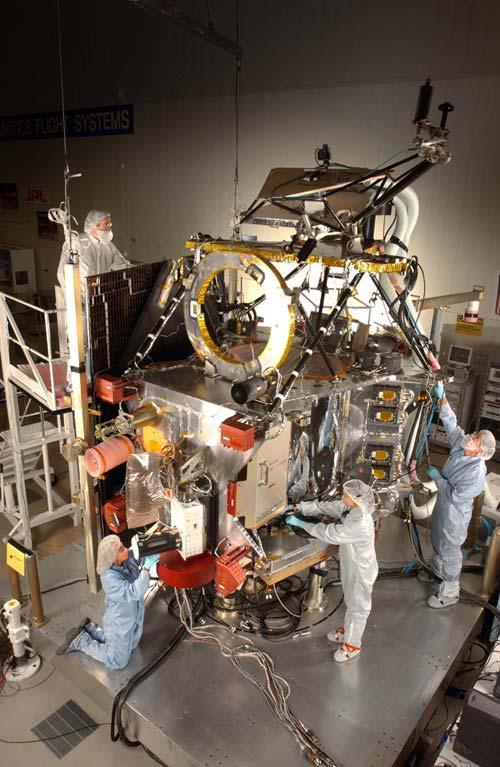
Lockheed Martin Space Systems engineer Terry Kampmann left and lead technician Jack Farmerie work on assembly and test of NASA Mars Reconnaissance Orbiter spacecraft bus in a cleanroom at the company Denver facility.
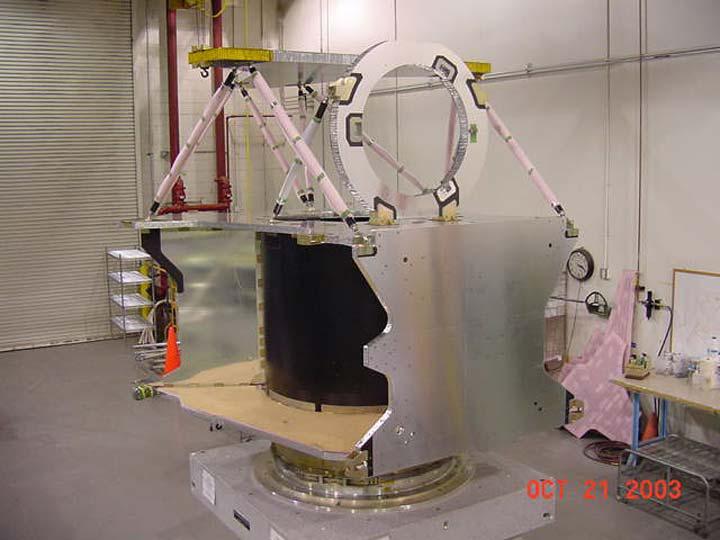
The structure of NASA Mars Reconnaissance Orbiter spacecraft is constructed from composite panels of carbon layers over aluminum honeycomb, lightweight yet strong.
A telescopic camera called the High Resolution Imaging Science Experiment, or HiRISE, was installed onto the main structure of NASA Mars Reconnaissance Orbiter on Dec. 11, 2004 at Lockheed Martin Space Systems, Denver, Colo. HiRISE is at th…
NASA Mars Reconnaissance Orbiter MRO launched at 7:43 a.m. EDT atop a Lockheed Martin Atlas V rocket from Launch Complex 41 at Cape Canaveral Air Force Station in Florida on Aug. 12, 2005.
Called draa, ripples, transverse aeolian ridges known as TARs, dunes, are all observed by NASA Mars Reconnaissance Orbiter in this Juventae Chasma image.
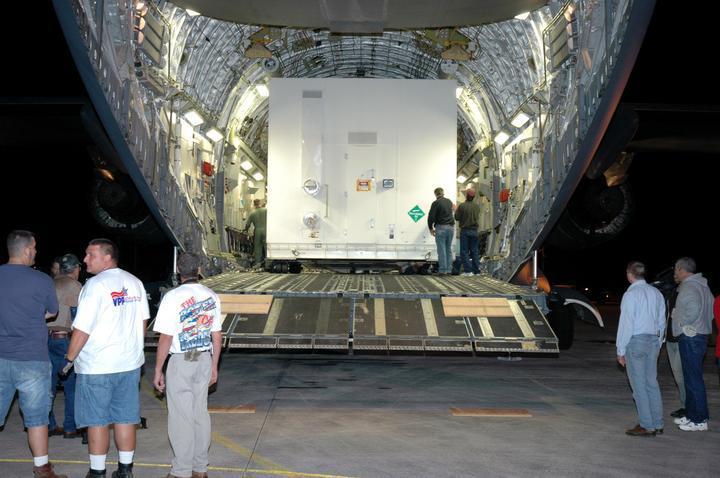
Lockheed Martin delivering the Atlas V rocket to Cape Canaveral in July of 2005. After going through a series of tests to ensure its readiness to send Mars Reconnaissance Orbiter to the red planet, lift-off occurred on August 12, 2005.
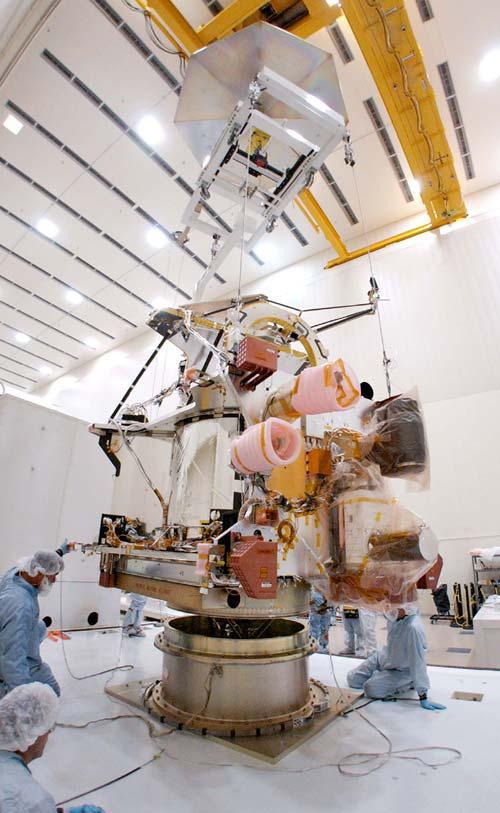
It no easy task getting NASA Mars Reconnaissance Orbiter ready for launch. Workers stabilize the crane holding one of the enormous billboard-sized solar panels temporarily removed from the spacecraft prior to rigorous testing.
The North Polar layered deposits provide a record of recent climate changes on Mars as seen by NASA Mars Reconnaissance Orbiter spacecraft. Color variations between layers are due to differences in composition of the dust.
The suggested area in this observation from NASA Mars Reconnaissance Orbiter is characterized by a group of cones, shield-like features, and round mounds. They are a few hundred meters to kilometers in diameter but their heights are unknown…
This observation from NASA Mars Reconnaissance Orbiter shows a set of landforms that appears to form a nested chevron pattern on a slope in Coloe Fossae. Interestingly, nearby surfaces on the same slope are all parallel.
In late October 2004, NASA Mars Reconnaissance Orbiter was moved from the High Bay 100,000-class clean room at Lockheed Martin Space Systems, Denver, to the facility Reverberant Acoustic Lab.
Workers at Lockheed Martin Space Systems, Denver, position a telescopic camera for installation onto NASA Mars Reconnaissance Orbiter spacecraft on Dec. 11, 2004.
Atlas V launch vehicle, 19 stories tall, with a two-ton NASA Mars Reconnaissance Orbiter MRO on top, lifts off the pad on Launch Complex 41 at Cape Canaveral Air Force Station in Florida on Aug. 12, 2005.
NASA Mars Reconnaissance Orbiter MRO launched at 7:43 a.m. EDT atop a Lockheed Martin Atlas V rocket from Launch Complex 41 at Cape Canaveral Air Force Station in Florida on Aug. 12, 2005.
The Mars Climate Sounder instrument, shown here prior to its installation onto NASA Mars Reconnaissance Orbiter for the mission 2006 launch, will get a similar-looking sibling at Mars in 2016.
This image shows a set of coalesced collapse pits in western Valles Marineris as seen by NASA Mars Reconnaissance Orbiter. Fine layers are exposed in the walls of the pits, and in some places those layers are displaced by faults.
Olympia Undae is a large field of sand dunes surrounding Mars North Polar ice cap. High latitude covers them with water and carbon dioxide frost in the winter so they are illuminated. NASA Mars Reconnaissance Orbiter views these best in sum…
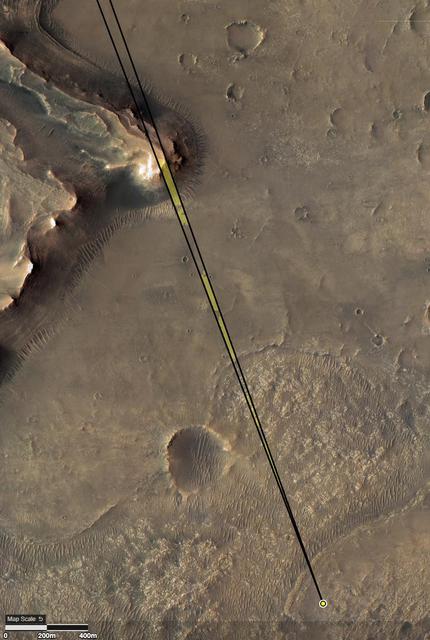
Provided by the High Resolution Imaging Experiment (HiRISE) aboard NASA's Mars Reconnaissance orbiter, this overhead image captures a portion of Mars' Jezero Crater. The yellow dot on lower right indicates the location of NASA's Perseveranc…
Shown here is an exceptionally long sinuous ridge, possibly an inverted fluvial feature, that cuts across newly mapped geologic units of the Medusae Fossae Formation, from NASA Mars Reconnaissance Orbiter.