Goddard rocket in launching tower at Roswell, New Mexico, March 21, 1940. Fuel was injected by pumps from the fueling platform at left. From 1930 to 1941, Dr. Goddard made substantial progress in the development of progressively larger rock…
Early Rockets
Bumper Wac liftoff at the Long Range Proving Ground located at Cape Canaveral, Florida. At White Sands, New Mexico, the German rocket team experimented with a two-stage rocket called Bumper Wac, which intended to provide data for upper atmo…
Early Rockets
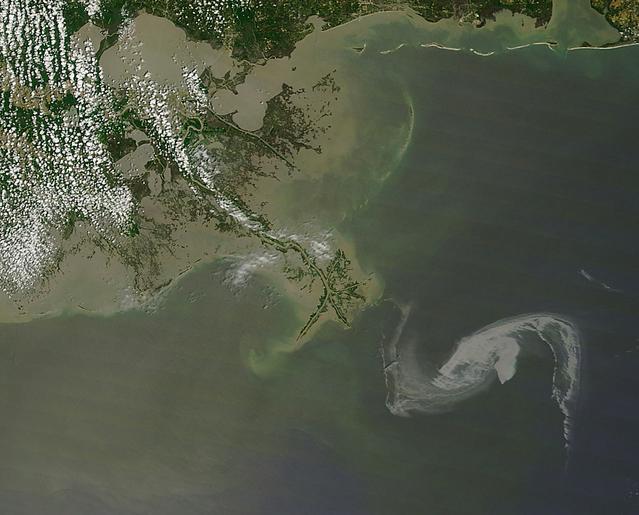
On April 20, 2010, an explosion at an oil well in the Gulf of Mexico resulted in a major oil spill. Since then, emergency response efforts have been underway to contain the growing oil slick before it reaches the southern coast of the Unite…
Oil Spill in the Gulf of Mexico
This thunderstorm along the Texas Gulf Coast (29.0N, 95.0W), USA is seen as the trailing edge of a large cloud mass formed along the leading edge of a spring frontal system stretching northwest to southeast across the Texas Gulf Coast. This…
Thunderstorm, Texas Gulf Coast, USA
This view shows the west coast of the United States and Mexico (32.5N, 118.0W) and gives an indication of the range of view from orbital altitude. The visual range of this particular scene is from Skammon's Lagoon on Baja to the northern ti…
West Coast, United States and Mexico
S70-51699 (24 Oct. 1970) --- The prime crew of the Apollo 14 lunar landing mission relaxes aboard the NASA motor vessel retriever, prior to participating in water egress training in the Gulf of Mexico. Left to right are astronauts Alan B. S…
Apollo 14 prime crew aboard NASA Motor Vessel Retriever during training
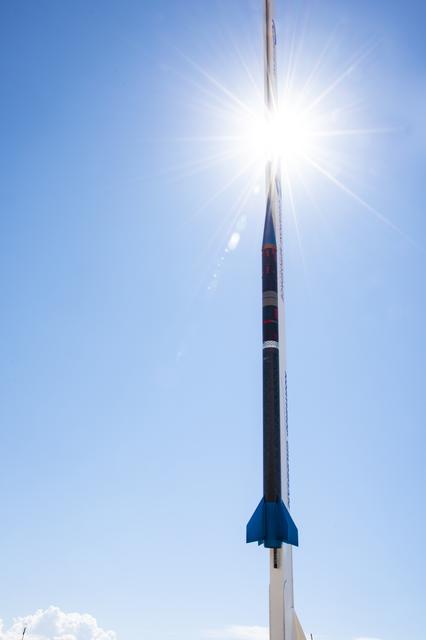
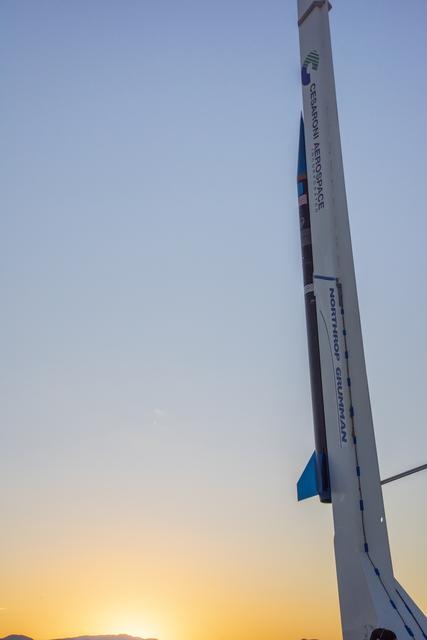
UP Aerospace SpaceLoft rocket launched into space Sept 12, 2018 from Spaceport America in New Mexico carrying three NASA technologies onboard to test in microgravity.
UP Aerospace Rocket Launch from NM with NASA Technologies Onboard
STS060-83-041 (3-11 Feb 1994) --- The large city of Monterrey, in northeastern Mexico, was founded at the edge between the Sierra Madre Oriental and the Rio Grande Embayment portion of the Gulf Coastal Plain.  This location is analogous to…
Monterrey, Mexico as seen from STS-60
UP Aerospace SpaceLoft rocket launched into space Sept 12, 2018 from Spaceport America in New Mexico carrying three NASA technologies onboard to test in microgravity.
UP Aerospace Rocket Launch from NM with NASA Technologies Onboard
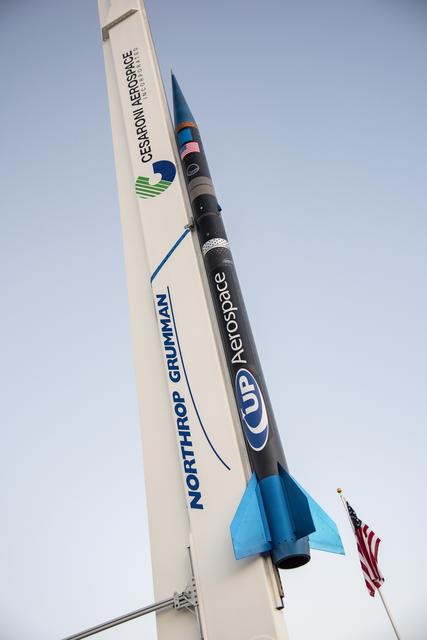
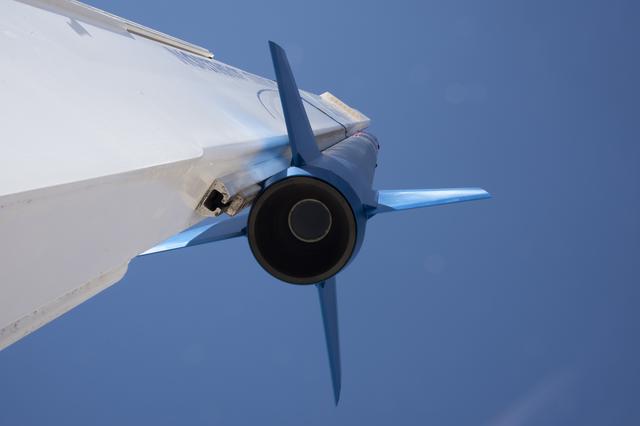
NASA's Flight Opportunities funds flight of space technology on UP Aerospace's rocket poised to launch at Spaceport America in New Mexico.
UP Aerospace Rocket Poised for Launch from NM to Carry NASA Tech
Boats belonging to the SpaceX recovery team are seen in the Gulf of Mexico after being deployed from the SpaceX recovery ship MEGAN as the recovery team prepares for the landing of the SpaceX Dragon spacecraft with NASA astronauts Matthew D…
NASA’s SpaceX Crew-8 Splashdown
NASA's Flight Opportunities funds flight of space technology on UP Aerospace's rocket poised to launch at Spaceport America in New Mexico.
UP Aerospace Rocket Poised for Launch from NM to Carry NASA Tech
NASA’s Flight Opportunities funds flight of space technology on UP Aerospace’s rocket poised to launch at Spaceport America in New Mexico.
UP Aerospace Rocket Poised for Launch from NM to Carry NASA Tech
NASA's Flight Opportunities funds flight of space technology on UP Aerospace's rocket poised to launch at Spaceport America in New Mexico.
UP Aerospace Rocket Poised for Launch from NM to Carry NASA Tech
AS07-07-1877 (17 Oct. 1968) --- Hurricane Gladys, Gulf of Mexico, as seen from the Apollo 7 spacecraft during its 91st revolution of the earth. Photographed from an altitude of 99 nautical miles, at ground elapsed time of 144 hours and 27 m…
Hurricane Gladys, Gulf of Mexico as seen from the Apollo 7 spacecraft
2010/119 - 04/29 at 16 :48 UTC Oil slick in the Gulf of Mexico   (Input Direct Broadcast data courtesy Direct Readout Lab, NASA/GSFC) Satellite: Terra  NASA/GSFC/Jeff Schmaltz/MODIS Land Rapid Response Team  To learn more about MODIS go to:…
Oil Spill in Gulf of Mexico April 29th View
AS07-05-1635 (13 Oct. 1968) --- Gulf of Mexico, coast of Yucatan, Mexico, as seen from the Apollo 7 spacecraft during its 33rd revolution of Earth. Note road leading to city of Merida which is under cloud cover. Photographed from an altitud…
Gulf of Mexico, coast of Yucatan, as seen from the Apollo 7 spacecraft
Evidence of a recent flash flood can be seen in the form of light brown sediment that flowed down gullies and mountain sides forming ponds of debris over agricultural areas in the broad valley near the town of Parras (26.5N, 102.5W). This p…
Flash Flood Trail near Parras, Coahuila, Mexico
This full-disk image from NOAA’s GOES-13 satellite was captured at 14:45 UTC (10:45 a.m. EDT) and shows Hurricane Patricia off the coast of Mexico on September 23, 2015.   At 8 a.m. EDT on October 23, 2015, the National Hurricane Center sai…
Hurricane Patricia
DRIFTER sensor devices were designed by the Applied Science and Technology Project Office as inexpensive tools that can be used for science projects in local schools. The devices transmit information about water temperature and conductivity…
Science project
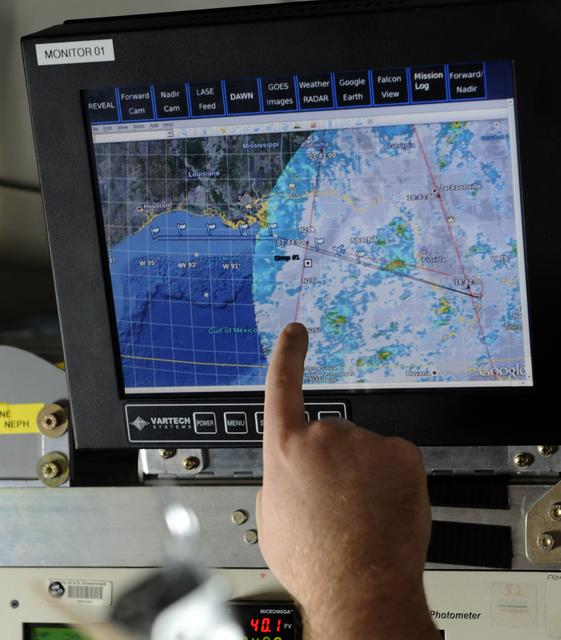
A researcher points out the trajectory of a weather pattern on a computer monitor during a flight aboard the NASA DC-8 aircraft, Tuesday, Aug. 17, 2010, over the Gulf of Mexico. Sceintists and researchers flew Tuesday to study weather as pa…
GRIP Experiment 2010
This is EXCITE’s moment of release. On August 31, 2024, the EXCITE (EXoplanet Climate Infrared TElescope) team conducted a test flight of their telescope from NASA’s Columbia Scientific Balloon Facility in Fort Sumner, New Mexico. This phot…
GSFC2024excite04
Michael Kavaya, of the NASA Langley Research Center, a Principal Investigator for the DAWN experiment, looks over data with Jeffrey Beyon during a flight of the NASA DC-8, Tuesday, Aug. 17, 2010, in the Gulf of Mexico. The DAWN experiment,…
GRIP Experiment 2010
S66-39713 (18 June 1966) --- Astronaut John W. Young, Gemini-10 command pilot, is hoisted up to a U.S. Coast Guard helicopter during water egress training in the Gulf of Mexico. A team of Manned Spaceflight Center (MSC) swimmers assists in…
Astronaut John Young hoisted aboard helicopter during water egress training
This is a single scene from a pair (frames 021 & 024) to study the effects of polarized light in Earth Observations. One scene was exposed with vertically polarized light, the other, horizontally. The subject in this study, is a lake behind…
Polarized Light Experiment, Presa Don Martin, Mexico
S66-39699 (18 June 1966) --- Astronauts John W. Young (in water, nose of spacecraft), Gemini-10 command pilot, and Michael Collins (sitting on spacecraft), pilot, use Static Article 6 spacecraft during water egress training in the Gulf of M…
Astronauts Young and Collins during water egress training
NASA’s Flight Opportunities funds flight of space technology on UP Aerospace’s rocket poised to launch at Spaceport America in New Mexico.
UP Aerospace Rocket Poised for Launch from NM to Carry NASA Tech
UP Aerospace SpaceLoft rocket launched into space Sept 12, 2018 from Spaceport America in New Mexico carrying three NASA technologies onboard to test in microgravity.
UP Aerospace Rocket Launch from NM with NASA Technologies Onboard
This color infrared view of Houston (29.5N, 95.0W) was taken with a dual camera mount. Compare this scene with STS048-78-034 for an analysis of the unique properties of each film type. Comparative tests such as this aids in determining the…
Color Infrared view of Houston, TX, USA
S66-29485 (9 April 1966) --- Astronaut Eugene A. Cernan, prime crew pilot of the National Aeronautics and Space Administration's Gemini-9 spaceflight, stands on deck of the NASA Motor Vessel Retriever after suiting up for water egress train…
Astronaut Eugene Cernan after suiting up for water egress training
Support teams raise the SpaceX Dragon Endeavour spacecraft aboard the recovery ship MEGAN shortly after it landed with NASA astronauts Matthew Dominick, Michael Barratt, and Jeanette Epps, and Roscosmos cosmonaut Alexander Grebenkin aboard…
NASA’s SpaceX Crew-8 Splashdown
Errol Korn, seated left, deploys a dropsonde experiment over the Gulf of Mexico during a flight aboard the NASA DC-8 as  Janel Thomas, a University of Maryland Baltimore County (UMBC) graduate student, and Bob Pasken, look on , Tuesday, Aug…
GRIP Experiment 2010
STS043-151-043 (8 August 1991) --- The Rio Grande extends across the center of this photograph from Falcon Reservoir to its bulging delta, joining the Gulf of Mexico. Sediment brought down by the river is spread northward and southward by a…
Falcon Reservoir, Brownsville, TX, USA
This image was taken by GOES East at 1445Z on October 23, 2015.    Credit: NASA/NOAA via <b><a href="www.nnvl.noaa.gov/" rel="nofollow"> NOAA Environmental Visualization Laboratory</a></b>  <b><a href="http://www.nasa.gov/audience/formedia/…
Historic Hurricane Patricia Bears Down on Mexico's Pacific Coast
2010/119 - 04/29 at 16 :48 UTC Oil slick in the Gulf of Mexico   To see a full view of this image go to: <a href="http://www.flickr.com/photos/gsfc/4563296541/">www.flickr.com/photos/gsfc/4563296541/</a>  (Input Direct Broadcast data courte…
Oil Spill in Gulf of Mexico April 29th View [detail]
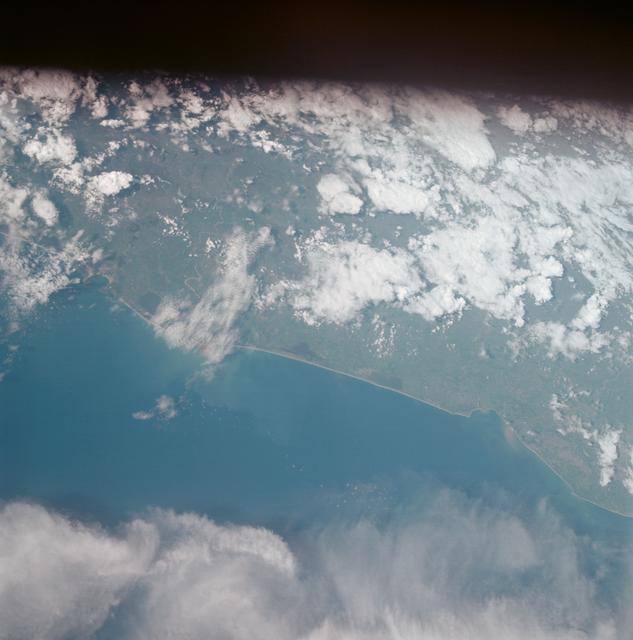
AS07-05-1652 (13 Oct. 1968) --- Pacific coast area of southwestern Mexico, State of Guerrero, from Acapulco to Tecoanapa, as seen from the Apollo 7 spacecraft during its 34th revolution of Earth. Photographed from an altitude of 125 nautica…
Pacific coast southwestern Mexico as seen from the Apollo 7 spacecraft
On Oct. 23 at 17:30 UTC (1:30 p.m. EDT) the MODIS instrument aboard NASA's Terra satellite saw Hurricane Patricia moving over Mexico.  Credit: NASA/GSFC/Jeff Schmaltz/MODIS Land Rapid Response Team  <b><a href="http://www.nasa.gov/audience/…
Hurricane Patricia over Mexico
Once tethered in place in Gulf Coast waters, a DRIFTER sensor device is able to transmit valuable information about water temperature and conductivity. The Applied Science and Technology Project Office at Stennis Space Center designed the D…
Science project
Cloud formations are seen through the window of NASA DC-8 aircraft during a flight, Tuesday, Aug. 17, 2010, over the Gulf of Mexico where researchers were studying weather patterns as part of trhe Genesis and Rapid Intensification Processes…
GRIP Experiment 2010
NASA's Flight Opportunities funds flight of space technology on UP Aerospace's rocket poised to launch at Spaceport America in New Mexico.
UP Aerospace Rocket Poised for Launch from NM to Carry NASA Tech
Support teams prepare to raise the SpaceX Dragon Endeavour spacecraft aboard the recovery ship MEGAN shortly after it landed with NASA astronauts Matthew Dominick, Michael Barratt, and Jeanette Epps, and Roscosmos cosmonaut Alexander Greben…
NASA’s SpaceX Crew-8 Splashdown
This is a single scene from a pair (frames 021 & 024) to study the effects of polarized light in Earth Observations. One scene was exposed with vertically polarized light, the other, horizontally. The subject in this study, is a lake behind…
Polarized Light Experiment, Presa Don Martin, Coahuila, Mexico
S66-54558 (14 Sept. 1966) --- Del Rio and Eagle Pass area of the Rio Grande Valley of Texas and Mexico as seen from the Gemini-11 spacecraft during its 29th revolution of Earth. Photo credit: NASA
Rio Grande Valley of Texas as seen from Gemini 11 spacecraft
STS003-10-613 (22-30 March 1982) --- A truly remarkable view of White Sands and the nearby Carrizozo Lava Beds in southeast NM (33.5N, 106.5W). White Sands, site of the WW II atomic bomb development and testing facility and later post war n…
White Sands, Carrizozo Lava Beds, NM
STS060-83-016 (3-11 Feb 1994) --- White Sands National Monument (Park) is easily recognized in the center of this near-vertical color photograph.  White Sands is the world's largest gypsum dune field.  It represents an alabaster sea that co…
White Sands, New Mexico as seen from STS-60
S68-54805 (5 Nov. 1968) --- Astronaut James A. McDivitt, commander of the Apollo 9 (Spacecraft 104/Lunar Module 3/Saturn 504) space mission, relaxes on the deck of the NASA Motor Vessel Retriever (MVR) prior to participating in water egress…
Astronaut James A. McDivitt on deck of ship prior to water egress training
51I-44-052 (2 Sept. 1985) --- An oblique view of Hurricane Elena, photographed with a 70mm camera by STS-51I crew members of the space shuttle Discovery on Sept. 2, 1985. Photo credit: NASA
Hurricane Elana, Gulf of Mexico
It takes around an hour to fill a 39-million-cubic-foot scientific balloon with helium. The EXCITE telescope is poised for launch as the day breaks on August 31st, 2024.
GSCF2024excite03