
Foton-M2 and Foton-M3 Mission description and summary of science results presented by Dr Richard Boyle The Foton-M3 spacecraft launched from Baikonur Cosmodrome (Kazakhstan) on Sept 14, 2007 and landed 12 days later approximately 130km sout…

Foton-M2 and Foton-M3 Mission description and summary of science results presented by Dr. Eduardo Almeida The Foton-M3 spacecraft launched from Baikonur Cosmodrome (Kazakhstan) on Sept 14, 2007 and landed 12 days later approximately 130km s…

The Twin Jet Nebula, or PN M2-9, is a striking example of a bipolar planetary nebula. Bipolar planetary nebulae are formed when the central object is not a single star, but a binary system, Studies have shown that the nebula’s size increase…

Flight Research Center and Dryden Flight Research Center engineer R. Dale Reed has long used free-flight models to test new concepts. This photo from 1963 shows two different models of the M2-F2 (one under the Mothership) and four Hyper III…
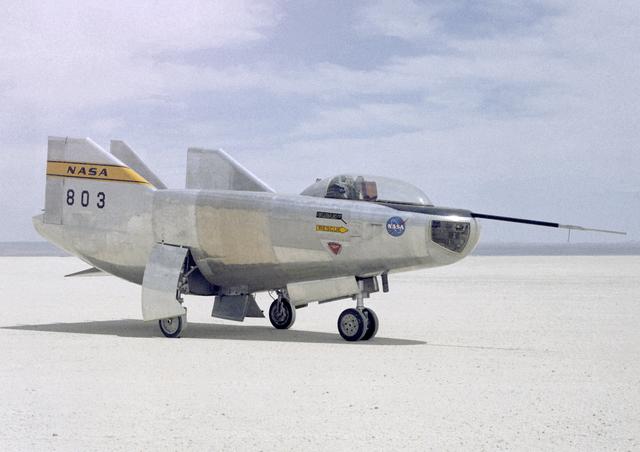
The M2-F3 Lifting Body is seen here on the lakebed next to the NASA Flight Research Center (FRC--later Dryden Flight Research Center), Edwards, California. The May 1967 crash of the M2-F2 had torn off the left fin and landing gear. It had a…

Often called the "Father of the Lifting Bodies," NASA aerospace engineer Dale Reed enjoys a moment in the cockpit of the restored wingless M2-F1 in 1997.

The HL-10 Lifting Body is seen here in powered flight shortly after launch from the B-52 mothership. When HL-10 powered flights began on October 23, 1968, the vehicle used the same basic XLR-11 rocket engine that powered the original X-1s.…

John Manke is shown here on the lakebed next to the HL-10, one of four different lifting-body vehicles he flew, including the X-24B, which he flew 16 times. His final total was 42 lifting-body flights.

A photo of model airplane builders James B. Newman and Robert L. McDonald preparing for a flight with models of the M2-F2 and a “Mothership”. In 1968 a test flight was made on the Rosamond dry lakebed, Rosamond, California. The original id…

The M2-F1 Lifting Body is seen here under tow by an unseen C-47 at the NASA Flight Research Center (later redesignated the Dryden Flight Research Center), Edwards, California. The low-cost vehicle was the first piloted lifting body to be te…

Air Force Major Peter Hoag stands in front of the HL-10 Lifting Body. Maj. Hoag joined the HL-10 program in 1969 and made his first glide flight on June 6, 1969. He made a total of 8 flights in the HL-10. They included the fastest lifting-b…

The M2-F3 Lifting Body is seen here on the lakebed next to the NASA Flight Research Center (later the Dryden Flight Research Center), Edwards, California. Redesigned and rebuilt from the M2-F2, the M2-F3 featured as its most visible change…

NASA Pilot Bruce Peterson in the cockpit of the restored M2-F1 Lifting Body.

The HL-10 was one of five heavyweight lifting-body designs flown at NASA's Flight Research Center (FRC--later Dryden Flight Research Center), Edwards, California, from July 1966 to November 1975 to study and validate the concept of safely m…

The wingless, lifting body aircraft sitting on Rogers Dry Lake at what is now NASA's Dryden Flight Research Center, Edwards, California, from left to right are the X-24A, M2-F3 and the HL-10. The lifting body aircraft studied the feasibilit…

The wingless, lifting body aircraft sitting on Rogers Dry Lake at what is now NASA's Dryden Flight Research Center, Edwards, California, from left to right are the X-24A, M2-F3 and the HL-10. The lifting body aircraft studied the feasibilit…

NASA Flight Research Pilot Milt Thompson, shown here on the lakebed with the M2-F1 lifting body, was an early backer of R. Dale Reed's lifting-body proposal. He urged Flight Research Center director Paul Bikle to approve the M2-F1's constru…

Bruce A. Peterson standing beside the M2-F2 lifting body on Rogers Dry Lake. Peterson became the NASA project pilot for the lifting body program after Milt Thompson retired from flying in late 1966. Peterson had flown the M2-F1, and made th…

The M2-F2 Lifting Body is seen here on the ramp at the NASA Dryden Flight Research Center. The success of Dryden's M2-F1 program led to NASA's development and construction of two heavyweight lifting bodies based on studies at NASA's Ames an…

This photo shows the left side cockpit instrumentation panel of the M2-F2 Lifting Body. The success of Dryden's M2-F1 program led to NASA's development and construction of two heavyweight lifting bodies based on studies at NASA's Ames and L…

ZACK JONES AND JIM LYDON OF MSFC’S ADVANCED MANUFACTURING TEAM, WITH MSFC’S M2 SELECTIVE LASER MELTING SYSTEM. THE M2 IS CURRENTLY DEDICATED TO ADVANCED COPPER MATERIAL DEVELOPMENT FOR THE LOW COST UPPER STAGE PROGRAM.

This photo shows the cockpit instrument panel of the M2-F3 Lifting Body.
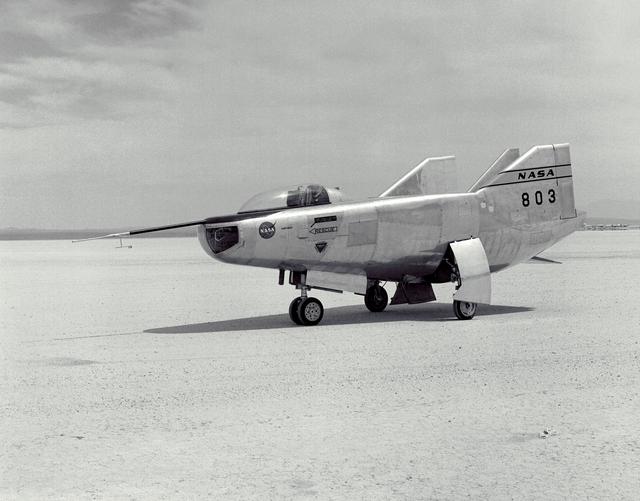
The M2-F3 Lifting Body is seen here on the lakebed at the NASA Flight Research Center (FRC--later the Dryden Flight Research Center), Edwards, California. After a three-year-long redesign and rebuilding effort, the M2-F3 was ready to fly. T…

NASA research pilot Bill Dana stands in front of the HL-10 Lifting Body following his first glide flight on April 25, 1969. Dana later retired as Chief Engineer at NASA's Dryden Flight Research Center, (called the NASA Flight Research Cente…

The HL-10, seen here parked on the ramp at NASA's Flight Research Center in 1966, had a radically different shape from that of the M2-F2/F3. While the M2s were flat on top and had rounded undersides (giving them a bathtub shape), the HL-10…

The HL-10, seen here parked on the ramp, was one of five lifting body designs flown at NASA's Dryden Flight Research Center, Edwards, California, from July 1966 to November 1975 to study and validate the concept of safely maneuvering and la…

The M2-F1 following a hard landing on Rogers Dry Lake in 1963. It hit the lakebed so hard the rolling gear completely separated.

The HL-10 Lifting Body is seen here in flight over Rogers Dry lakebed. Like the other lifting bodies, the HL-10 made a steep descent toward the lakebed, followed by a high-speed landing. This was due to the vehicle's low lift-over-drag rati…

NASA research pilot Milt Thompson sits in the M2-F2 "heavyweight" lifting body research vehicle before a 1966 test flight. The M2-F2 and the other lifting-body designs were all attached to a wing pylon on NASA’s B-52 mothership and carried…

The HL-10 Lifting Body completes its first research flight with a landing on Rogers Dry Lake. Due to control problems, pilot Bruce Peterson had to land at a higher speed than originally planned in order to keep the vehicle under control. Th…

Apollo Astronaut Fred Haise speaks to a crowd of NASA and U.S Air Force employees at the Edwards Air Force Base theater about his career with NASA and as a military pilot. Haise stands on stage with a photo of former astronauts Jim Lovell a…
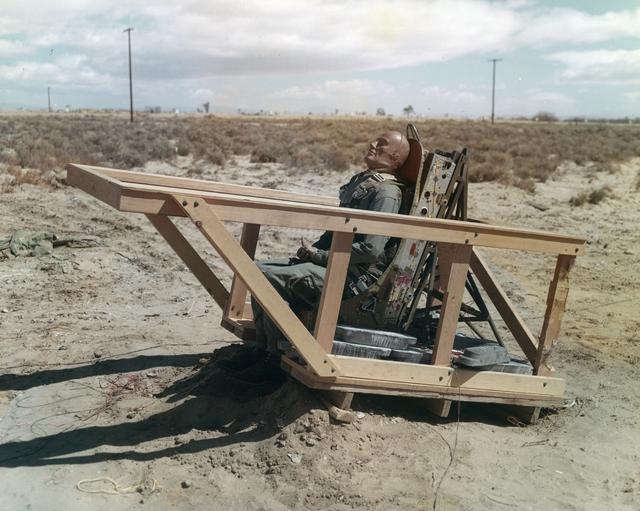
The M2-F1 was fitted with an ejection seat before the airtow flights began. The project selected the seat used in the T-37 as modified by the Weber Company to use a rocket rather than a ballistic charge for ejection. To test the ejection se…

This photo shows the cockpit configuration of the M2-F1 wingless lifting body. With a top speed of about 120 knots, the M2-F1 had a simple instrument panel. Besides the panel itself, the ribs of the wooden shell (left) and the control stick…

After initial ground-tow flights of the M2-F1 using the Pontiac as a tow vehicle, the way was clear to make air tows behind a C-47. The first air tow took place on 16 August 1963. Pilot Milt Thompson found that the M2-F1 flew well, with goo…

Foton-M2 and Foton-M3 Mission description and summary of science results presented by Mike Skidmore The Foton-M3 spacecraft launched from Baikonur Cosmodrome (Kazakhstan) on Sept 14, 2007 and landed 12 days later approximately 130km south o…

This photo shows the right side cockpit instrumentation panel of the M2-F2 Lifting Body. The success of Dryden's M2-F1 program led to NASA's development and construction of two heavyweight lifting bodies based on studies at NASA's Ames and…

QUINCY BEAN, JIM LYDON, AND ZACK JONES OF MSFC’S ADVANCED MANUFACTURING TEAM, WITH MSFC’S M2 SELECTIVE LASER MELTING SYSTEM. THE M2 IS CURRENTLY DEDICATED TO ADVANCED COPPER MATERIAL DEVELOPMENT FOR THE LOW COST UPPER STAGE PROGRAM.

The M2-F1 Lifting Body is seen here under tow, high above Rogers Dry Lake near the Flight Research Center (later redesignated the Dryden Flight Research Center), Edwards, California. R. Dale Reed effectively advocated the project with the s…

The HL-10 Lifting Body is seen here parked on Rogers Dry Lake, the unique location where it landed after research flights. This 1968 photo shows the vehicle after the fins were modified to remove instabilities encountered on the first fligh…

This photo shows the HL-10 in flight, turning to line up with lakebed runway 18. The pilot for this flight, the 29th of the HL-10 series, was Bill Dana. The HL-10 reached a peak altitude of 64,590 feet and a top speed of Mach 1.59 on this p…

As shown in this photo of the HL-10 flight simulator, the lifting-body pilots and engineers made use of early simulators for both training and the determination of a given vehicle's handling at various speeds, attitudes, and altitudes. This…
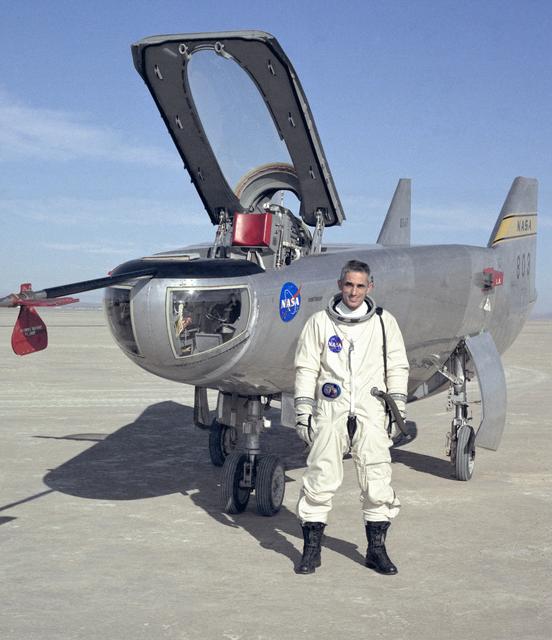
NASA research pilot John A. Manke is seen here in front of the M2-F3 Lifting Body. Manke was hired by NASA on May 25, 1962, as a flight research engineer. He was later assigned to the pilot's office and flew various support aircraft includi…

NASA research pilot Milt Thompson is helped into the cockpit of the M2-F2 lifting body research aircraft at NASA’s Flight Research Center (now the Dryden Flight Research Center). The M2-F2 is attached to a wing pylon under the wing of NASA’…

The HL-10 lifting body is seen here in flight over Rogers Dry Lake at Edwards AFB. After the vehicle's fins were modified following its first flight, the HL-10 proved to be the best handling of the heavy-weight lifting bodies flown at Edwar…

Dale Reed with a model of the M2-F1 in front of the actual lifting body. Reed used the model to show the potential of the lifting bodies. He first flew it into tall grass to test stability and trim, then hand-launched it from buildings for…

The Hyper III was a low-cost test vehicle for an advanced lifting-body shape. Like the earlier M2-F1, it was a "homebuilt" research aircraft, i.e., built at the Flight Research Center (FRC), later redesignated the Dryden Flight Research Cen…

After the grounding of the M2-F1 in 1966, it was kept in outside storage on the Dryden complex. After several years, its fabric and plywood structure was damaged by the sun and weather. Restoration of the vehicle began in February 1994 unde…

The wingless, lifting body aircraft sitting on Rogers Dry Lake at what is now NASA's Dryden Flight Research Center, Edwards, California, from left to right are the X-24A, M2-F3 and the HL-10. The lifting body aircraft studied the feasibilit…