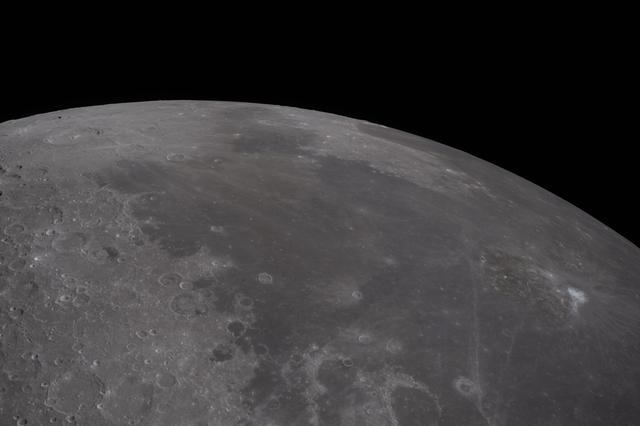
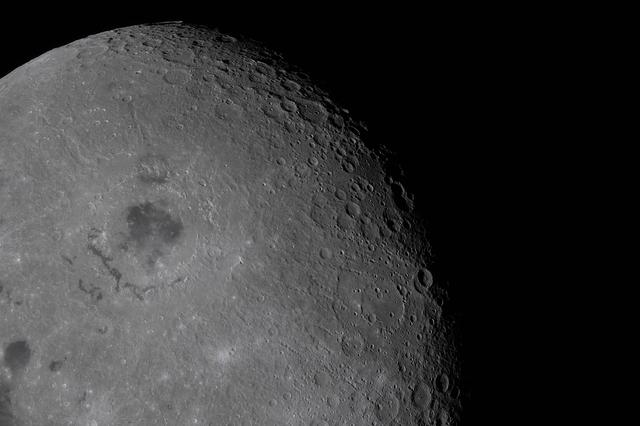
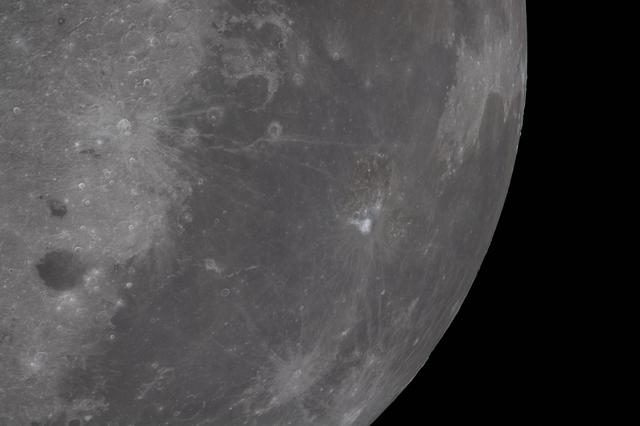
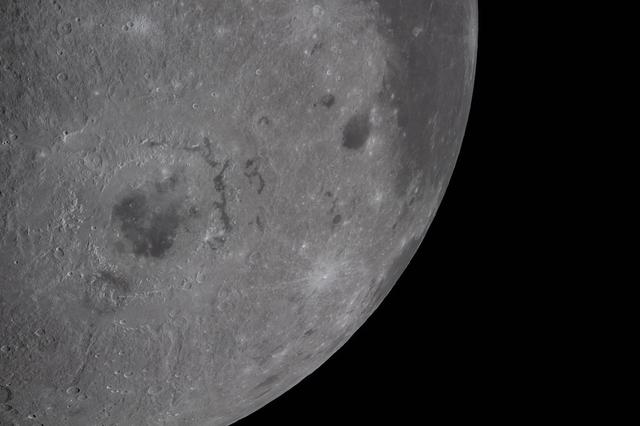
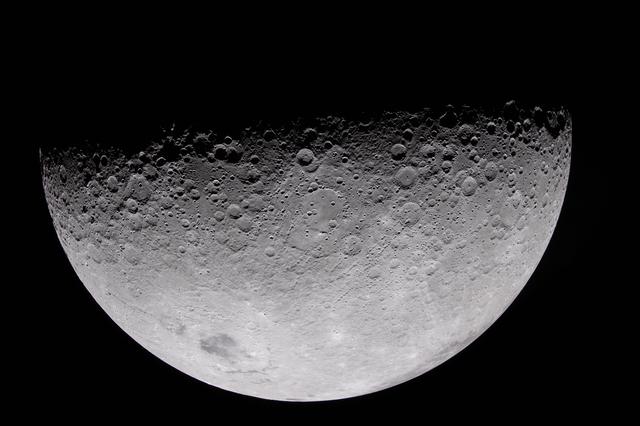
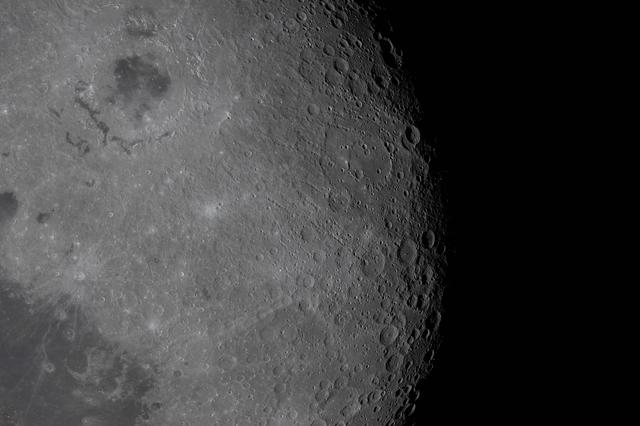
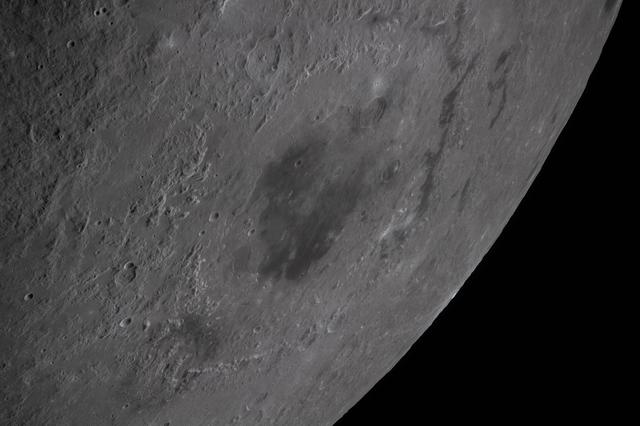
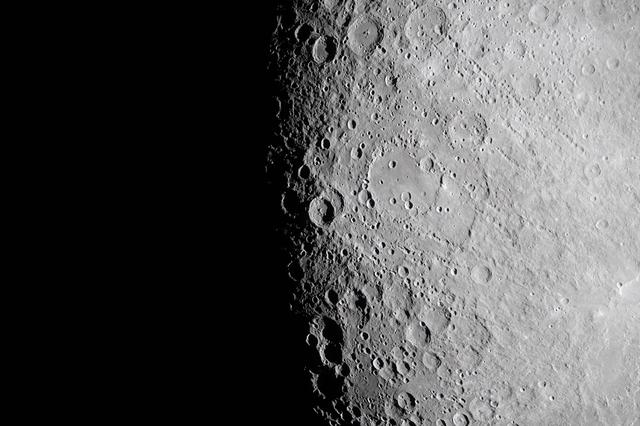
art002e012632 (April 6, 2026) - The Artemis II crew captures the Moon's curved limb during their journey around the far side of the Moon. 
Over the Moon, Bea
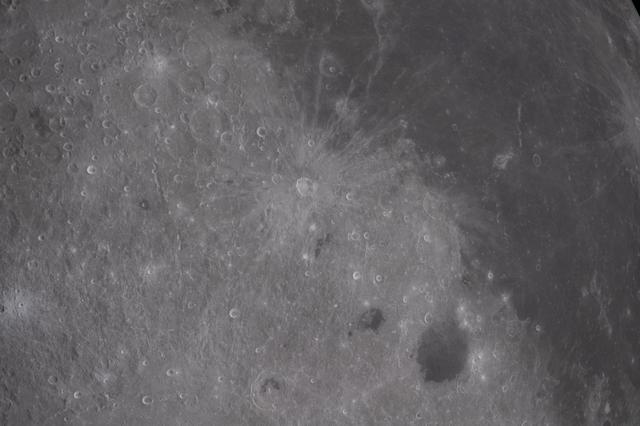
art002e012228 (April 6, 2026) – The Artemis II crew captured this view while observing volcanic terrain across the Moon’s near side-far side transition. The astronauts noted differences in color and brightness among volcanic regions, includ…
Volcanic Terrain Across the Moon -- art002e012228
art002e009594 (April 6, 2026) – The Artemis II crew captured this view of the Moon’s Orientale basin during the lunar flyby. The basin stands out as a broad, circular feature surrounded by rugged terrain. Near the Moon’s limb, sunlight stri…
Orientale Basin Along the Moon’s Limb -- art002e009594
art002e024520 (April 6, 2026) – The Artemis II crew captured this view, which includes the Aristarchus Plateau, during their lunar flyby. Dark volcanic terrain contrasts with the brighter, heavily cratered surrounding surface. The plateau c…
Volcanic Terrain of Aristarchus Plateau -- art002e024520
art002e019914 (April 6, 2026) – The Artemis II crew captured this close-up view of the Moon’s southwestern limb during lunar flyby observation operations. The view highlights variations in brightness across the lunar surface and features in…
Lunar Flyby Observation
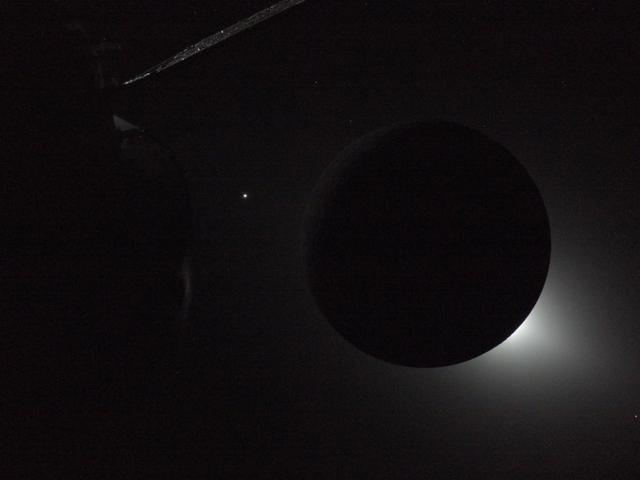
art002e016331 (April 7, 2026) – A vehicle camera mounted on NASA’s Orion spacecraft captured this view of sunset as the Sun slipped behind part of the spacecraft. The Sun’s bright glow outlines the spacecraft in silhouette, while the faint…
Lunar Flyby Observation - Eclipse
art002e010232 (April 6, 2026) – During the lunar flyby observation period, the Artemis II crew captures a detailed image of the Orientale basin, a 600-mile-wide impact crater marked by a dark patch of ancient lava that erupted through the M…
The Moon’s Great Scar
art002e021278 (April 6, 2026) – Echoing the iconic Earthrise photo captured by the Apollo 8 astronauts in 1968, during the lunar flyby, the Artemis II crew captured a shot of Earthset as they passed behind the Moon’s far side. It is one of…
A Breathtaking Earthset from Orion
art002e021283 (April 6, 2026) – The Earth appears to be peeking out over the horizon of the Moon,but pictured here is actually an Earthset. During an Earthset, the planet appears to sink below the lunar horizon. In this scene, a partially l…
Taking a Peek at Earth from the Far Side of the Moon
art002e016299 (April 6, 2026) - Earthrise captured from a camera mounted on one of the Orion spacecraft’s solar array wings at 7:22 p.m. ET during the Artemis II crew’s flyby of the Moon’s far side. Earth appears as a delicate sliver - with…
Earthrise Captured by Orion
Artemis science officer, Angela Garcia, left and lunar science team member, Kiarre Dumes discuss science operations in the Science Evaluation Room (SER) in Mission Control at NASA's Johnson Space Center in Houston. The SER supports lunar sc…
Artemis II lunar science team -- jsc2026e019981
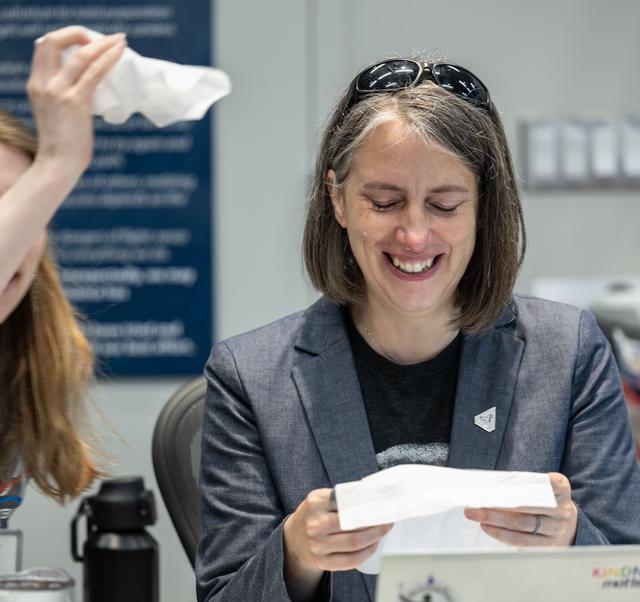
Artemis II deputy lunar science lead, Jacob Richardson, left, and Artemis II lunar science team members, Kiarre Dumes, react to the astronauts' verbal observations of the Moon during their flyby on April 6, 2026. Along with other lunar scie…
Artemis II lunar science team celebrates lunar flyby -- jsc2026e020764
Artemis II lunar science team members, from left, Debra Needham, Juliane Gross, and Ryan Watkins, react to the astronauts' verbal observations of the Moon during their flyby on April 6, 2026. The science team trained the astronauts in geolo…
Artemis II lunar science team members celebrate the lunar flyby -- jsc2026e020762
Artemis II deputy lunar science lead, Marie Henderson, reacts to the astronauts' verbal observations of the Moon during their flyby on April 6, 2026. Along with other lunar science team members, Ewing helped train the crew in geology both i…
Artemis II deputy lunar science lead, Marie Henderson -- jsc2026e020765
Jared Ralleta, Artemis II lunar science team member, reacts to the lunar flyby crew observations in the Science Evaluation Room (SER). Built specifically for Artemis missions with these science priorities in mind, the SER is equipped to sup…
Jared Ralleta, Artemis II lunar science team member -- jsc2026e021392
Artemis curation lead, Juliane Gross, reacts to the astronauts' verbal observations of the Moon during their flyby on April 6, 2026. Along with other members of the Artemis II lunar science team, Gross helped train the Artemis II crew in ge…
Artemis curation lead, Juliane Gross, reacts to the astronauts' verbal observations of the Moon -- jsc2026e020758
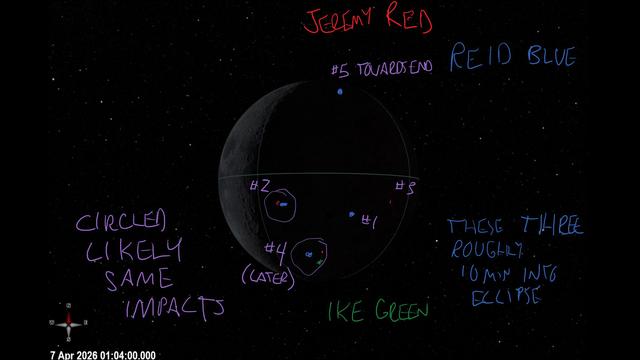
art002e016252 (April 7, 2026)  –A screenshot from an Artemis II crew member’s tablet shows handwritten annotations made during the lunar flyby on April 6, 2026, atop a visualization of the dark Moon eclipsing the Sun. Three crew members, wh…
Artemis II Crew Annotating Impact Flashes
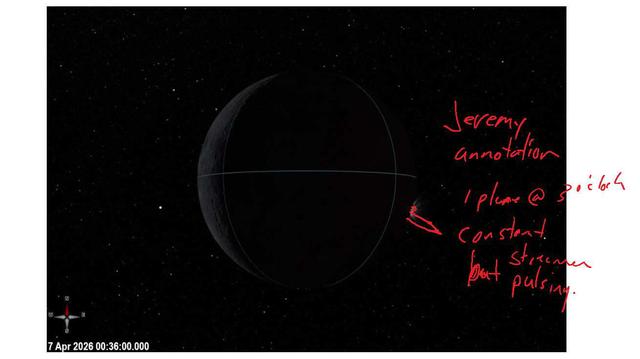
art002e009463 (April 7, 2026) – During the Artemis II lunar flyby, crew member Jeremy Hansen annotated this view to document a streamer that appeared to “pulsate” as the Sun moved behind the Moon. Hansen’s in-flight annotation marks the loc…
Artemis II Crew Annotating a “Pulsating” Streamer
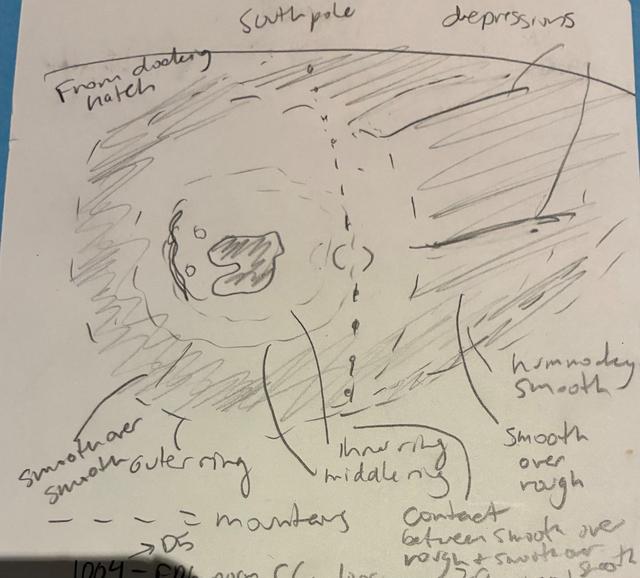
art002e050885 (April 6, 2026) – Artemis II crew member Christina Koch sketched the Orientale basin as observed through Orion’s docking hatch during the lunar flyby. Her in-flight annotation documents differences in texture across the basin…
Christina Koch Sketch of Orientale Basin During Artemis II
art002e010327 (April 6, 2026) – The Artemis II crew captured this view of Vavilov crater and the surrounding terrain during their lunar flyby. Brightly illuminated terrain contrasts with deep shadow along the upper edge of the Moon, where l…
Vavilov Crater Across the Lunar Landscape -- art002e010327
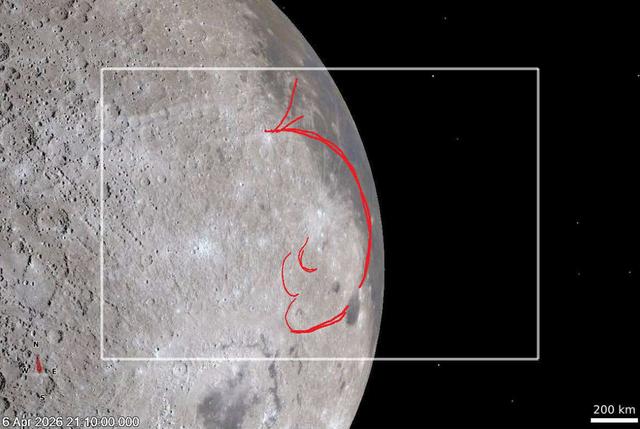
art002e009506 (April 6, 2026) – The Artemis II crew observed bright, curved features near the Moon’s limb during their lunar flyby. In an in-flight annotation, Artemis II commander Reid Wiseman marked the features in red to document their s…
Bright Features Along the Lunar Limb
art002e012216 (April 6, 2026) – The Artemis II crew captured this view across the transition between the Moon’s near side and far side during their lunar flyby. Bright, densely cratered terrain contrasts with darker volcanic plains, while l…
Across the Moon’s Near Side and Far Side -- art002e012216
art002e019570 (April 7, 2026) – On flight day seven, following their lunar flyby, the Artemis II crew captured this view of a delicate crescent Moon on their journey back to Earth. Along the terminator—the boundary between lunar day and nig…
Crescent Moon Ahead of Flyby
art002e021007 (April 6, 2026) – Earthset captured through the Orion spacecraft window at 6:37 p.m. EDT, April 6, 2026, during the Artemis II crew’s flyby of the Moon. A muted blue Earth with bright white clouds sets behind the cratered luna…
Earthset Views
art002e012090 (April 6, 2026) - In this view of the Moon, the Artemis II crew captured an intricate snapshot of the rings of the Orientale basin, one of the Moon’s youngest and best-preserved large impact craters on his first shift during t…
The Rings of the Orientale Basin
art002e015231 (April 6, 2026) – The Artemis II crew captures a faint view of a crescent Earth above the horizon on the Moon’s far side.
Crescent Earth Over Lunar Horizon
art002e016277 (April 6, 2026) - NASA’s Orion spacecraft captures the Moon and the Earth in one frame during the Artemis II crew’s deep space journey at 6:39 p.m. ET on the sixth day of the mission. The right side of NASA’s Orion spacecraft…
Orion, the Moon, Earth
Artemis II lunar science team members, from left, Ryan Ewing, Juliane Gross, and Debra Needham, discuss lunar geography ahead of the translunar injection burn that accelerated the Orion spacecraft to break free of Earth’s orbit and began th…
Artemis II lunar science team members discuss lunar geography -- jsc2026e019958
A view inside the Science Evaluation Room (SER) in Mission Control at NASA’s Johnson Space Center in Houston. The SER supports lunar science and planetary observations for the Artemis science officer in the mission’s main flight control roo…
A view inside the Science Evaluation Room (SER) in Mission Control -- jsc2026e019925
Artemis lunar science team members, from left, Alexandra Constantinou, and David Hollibaugh-Baker, work in the Science Mission Operations Room at NASA’s Johnson Space Center in Houston. They are analyzing imagery and audio recordings of lun…
Artemis lunar science team -- jsc2026e021167
Ernie Wright, Artemis II lunar science visualization lead, reacts to hearing the astronauts describe features of the Moon as they few by on April 6, 2026. To prepare the crew for this mission, the Artemis II lunar science team trained the a…
Ernie Wright, Artemis II lunar science visualization lead -- jsc2026e020757
Science evaluation room communicator, Kiarre Dumes, left, and deputy lunar science lead Marie Henderson work in the Science Evaluation Room (SER) during Artemis II. Built specifically for Artemis missions with these science priorities in mi…
Artemis lunar science team -- jsc2026e021358
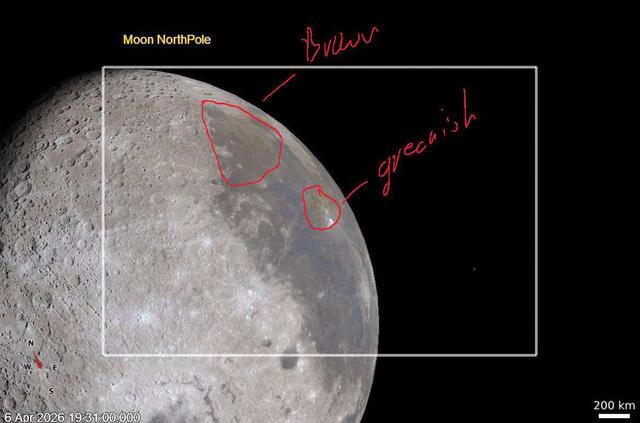
art002e009402 (April 7, 2025) A screenshot from an Artemis II crew member’s tablet from observations taken on April 6, 2026, with hand-written notes added atop a visualization of the Moon. On the right is the side we see from Earth — the ne…
Artemis II Crew Annotating Color Hues on the Moon
art002e009591 (April 6, 2026) – The Artemis II crew captured this view of Glushko crater and the surrounding terrain during their lunar flyby. Glushko’s bright surface and rays stand out against the surrounding terrain, while shadows along…
Glushko Crater Near the Lunar Limb -- art002e009591
art002e023314 (April 2, 2026) – The Artemis II crew captured this view of Earth from approximately 43,500 miles (70,000 kilometers) away. Sunlight illuminates a portion of the planet while much of Earth remains in shadow, creating a curved…
Earth Between Light and Shadow -- art002e023314
art002e010230 (April 6, 2026) – The Artemis II crew captured this angled view of the Moon’s Orientale basin during their lunar flyby. Darker material within the basin contrasts with the brighter surrounding terrain, while shadows and variat…
Orientale Basin from a New Angle -- art002e010230
art002e010032 (April 6, 2026) – The Artemis II crew captured this view near Hertzsprung and Vavilov craters along the lunar terminator, the boundary between the Moon’s illuminated and shadowed regions. The low Sun angle casts deep shadows a…
Craters Emerging from Shadow -- art002e010032
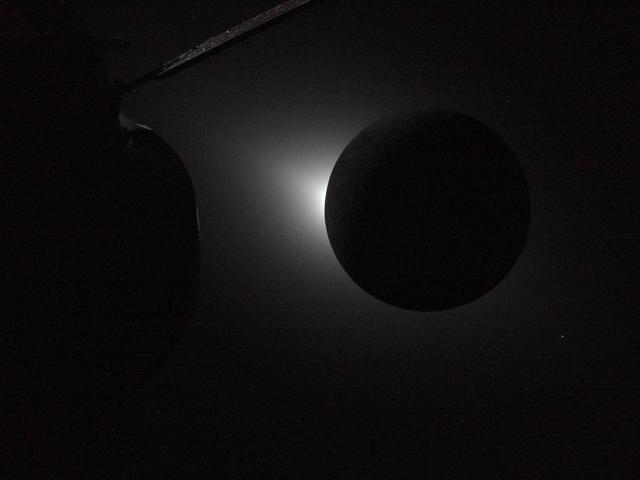
art002e016312 (April 7, 2026) – A vehicle camera mounted on NASA’s Orion spacecraft captured this view of lunar sunrise as the Sun emerged from behind the Moon. The Moon appears in silhouette as sunlight and the faint solar corona extend fr…
Lunar Sunrise from Orion
art002e020922 (April 6, 2026) – As the Artemis II crew came close to passing behind the Moon and experiencing a planned loss of signal, they captured this image of a crescent Earth. Seen from afar, it almost looks like a circular arc – exce…
Home in the Distance
art002e012028 (April 6, 2026) - The Artemis II crew captured a close-up snapshot of the near side of the Moon as NASA’s Orion spacecraft approached for the lunar flyby. The near side, characterized by the dark patches of ancient lava, is vi…
Ancient Lava on the Moon
art002e009282 (April 6, 2026) - A close-up view taken by the Artemis II crew of Vavilov Crater on the rim of the older and larger Hertzsprung basin. The right portion of the image shows the transition from smooth material within an inner ri…
Shadows Across Vavilov Crater
The Artemis II lunar science team gathers for a kickoff meeting before working on the lunar targeting plan for the crew's lunar flyby. The Lunar Targeting Plan is the Artemis II crew's Moon observing assignment, and is fine-tuned to the exa…
The Artemis II lunar science team -- jsc2026e019978
From left, Artemis II deputy lunar science lead, Jacob Richardson, science officer and lunar science lead, Kelsey Young, and deputy lunar science lead, Marie Henderson, discuss the team’s final preparations for the lunar flyby.  The team wo…
Artemis II lunar science team -- jsc2026e021488
Artemis II deputy lunar science lead, Marie Henderson, reacts to the astronauts' verbal observations of the Moon during their flyby on April 6, 2026. Along with other lunar science team members, Henderson helped train the astronauts in geol…
Artemis II deputy lunar science lead, Marie Henderson -- jsc2026e020759
Artemis II deputy lunar science lead Marie Henderson, shown standing on the left, and lunar science team members, from the right foreground, Ariel Deutsch, Maria Banks behind her, Ryan Watkins to her right, and Sara Schmidt in the checkered…
Artemis lunar science team celebrates during flyby -- jsc2026e020756
Artemis lunar science team member, Aaron Regberg, works in the Science Mission Operations Room, where scientists analyzed imagery and audio recordings of lunar observations captured by the Artemis II astronauts during their lunar flyby on A…
Artemis lunar science team member, Aaron Regberg -- jsc2026e021160
Artemis II lunar science team member, Ryan Ewing, reacts to the astronauts' verbal observations of the Moon during their flyby on April 6, 2026. Along with other lunar science team members, Ewing helped train the crew in geology both in the…
Artemis II lunar science team member, Ryan Ewing -- jsc2026e020766
Artemis curation lead, Juliane Gross, holds a lunar globe in the Science Evaluation Room (SER) in Mission Control at Johnson Space Center in Houston. The SER supports lunar science and planetary observations for the Artemis science officer…
Artemis curation lead, Juliane Gross -- jsc2026e019959