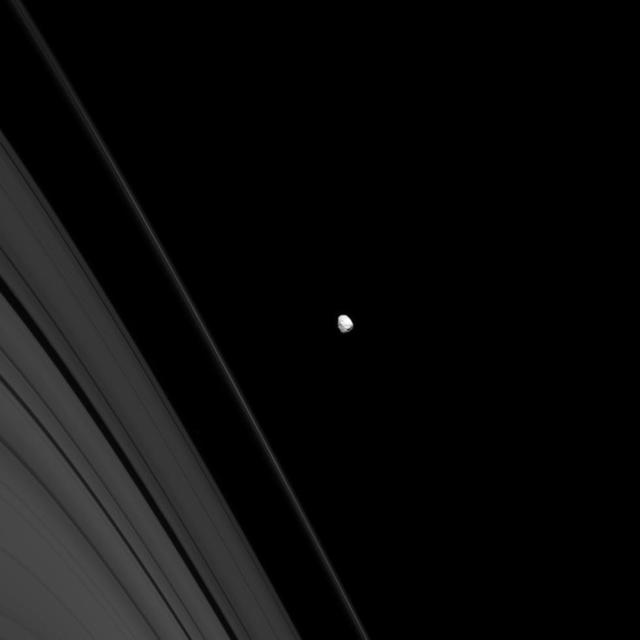
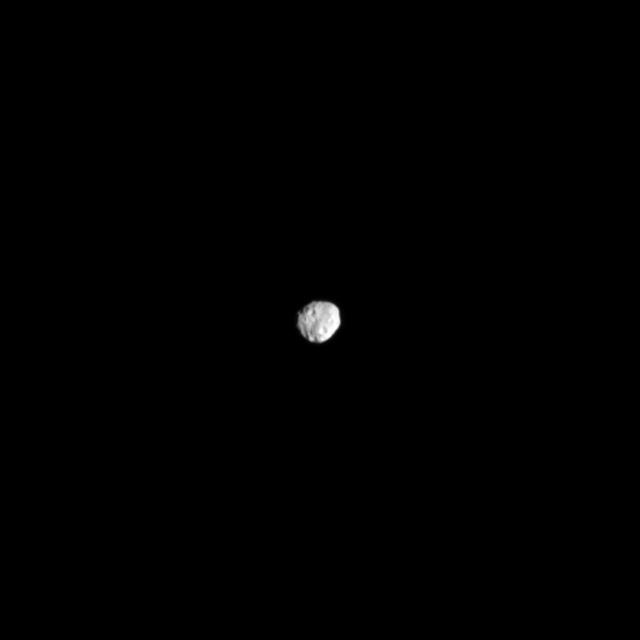
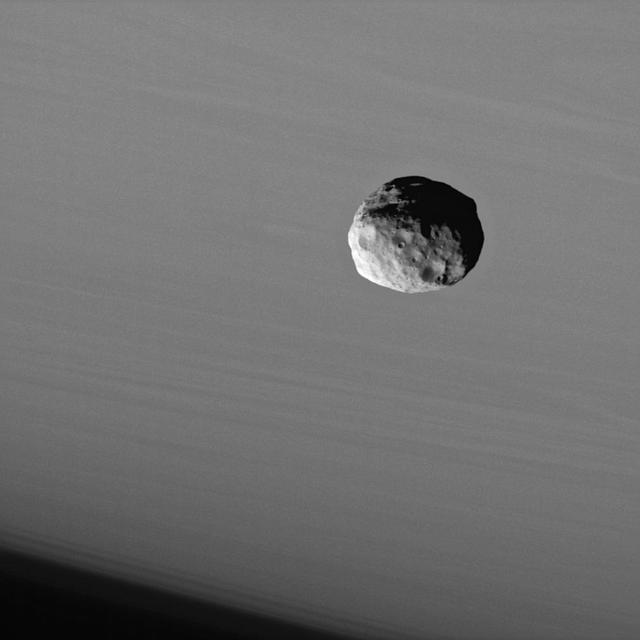
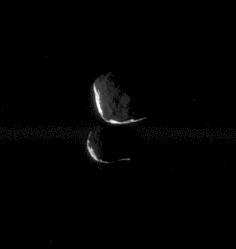
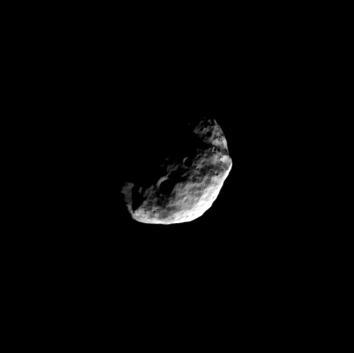
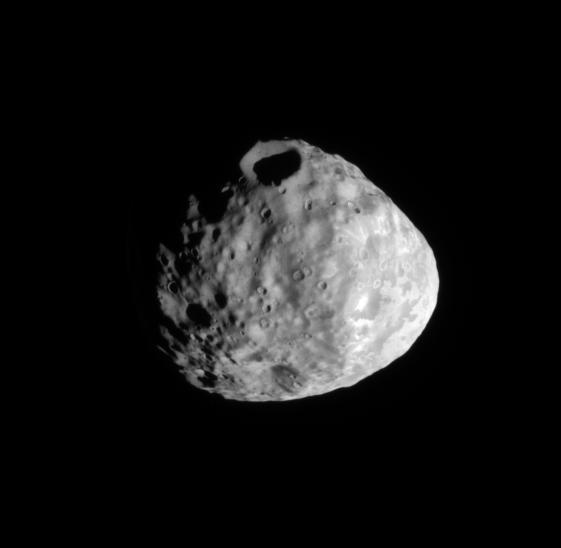
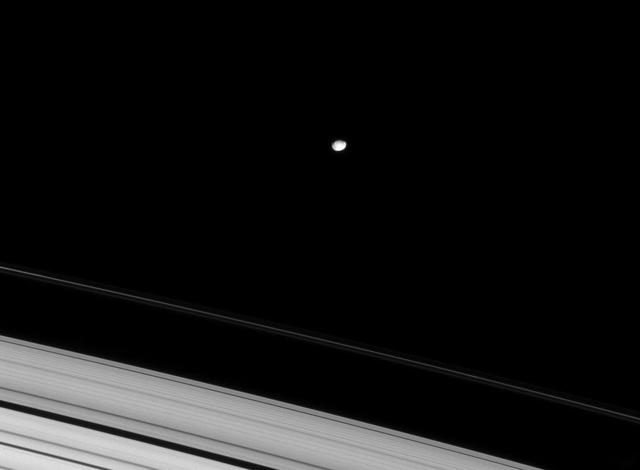
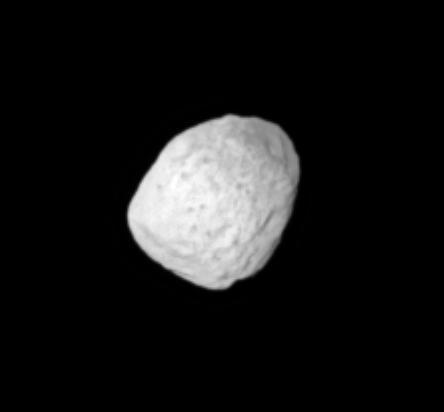
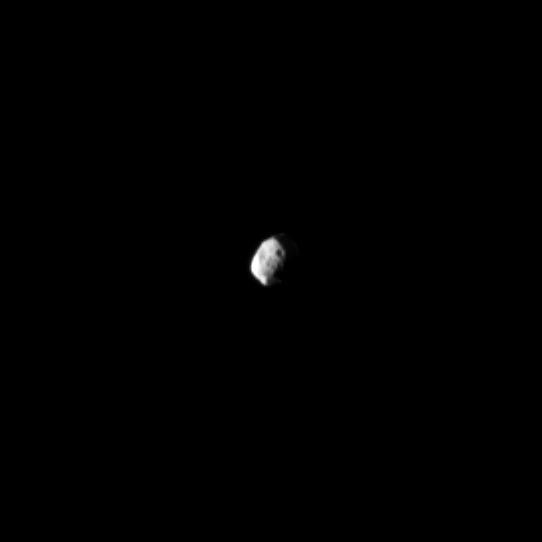
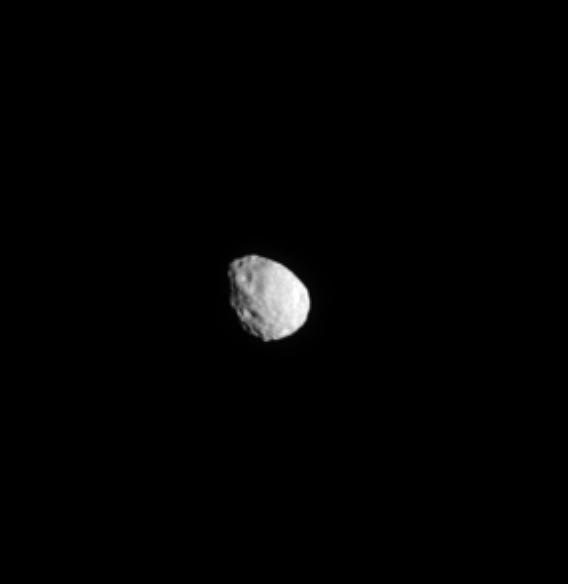
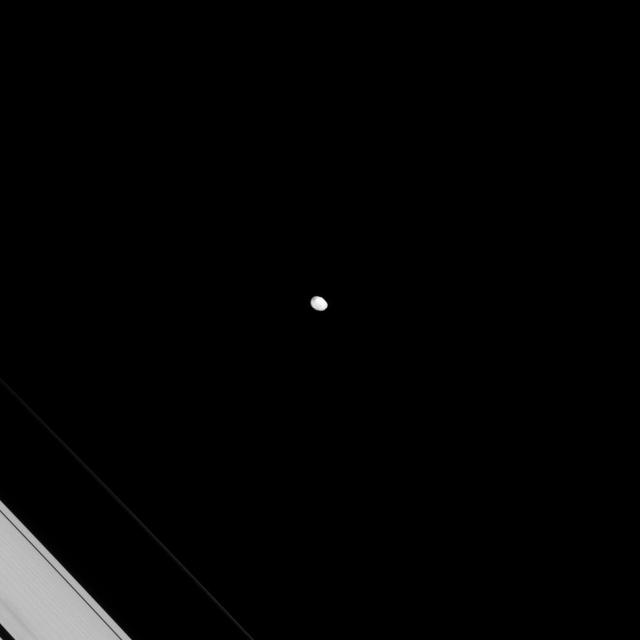
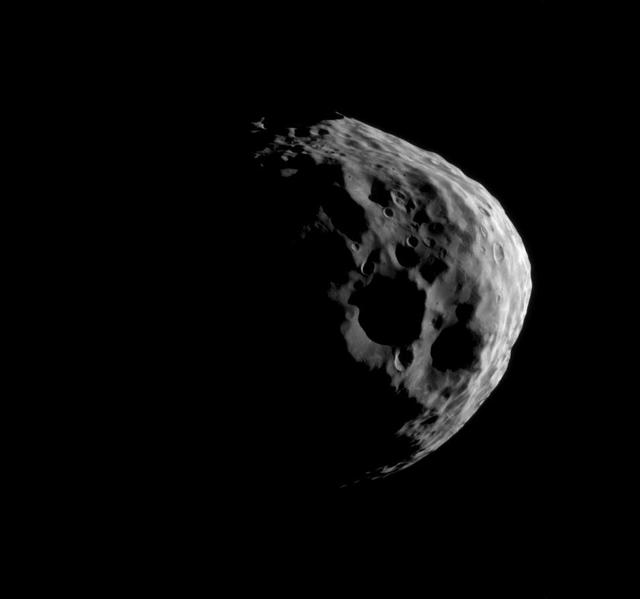
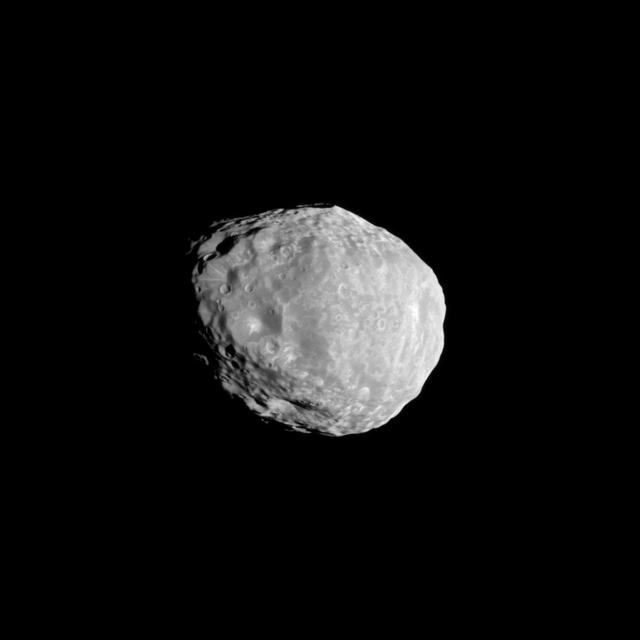
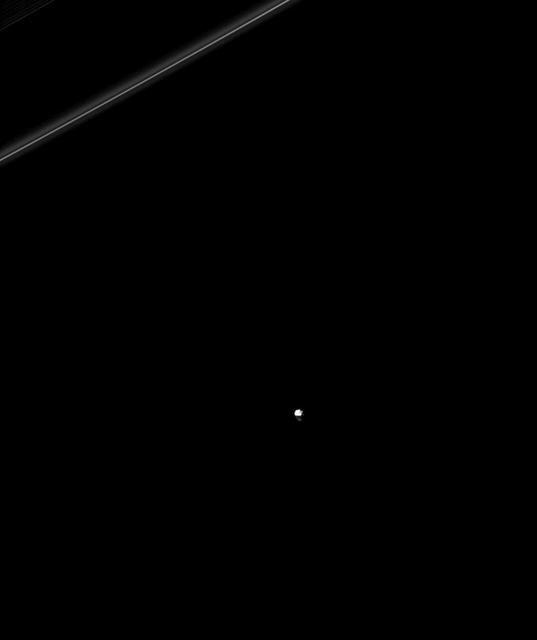
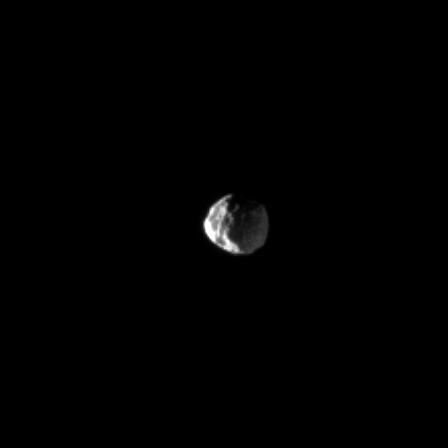
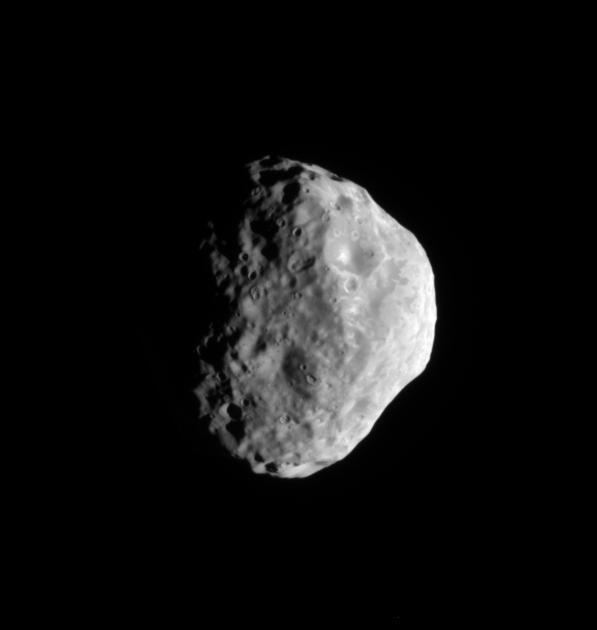
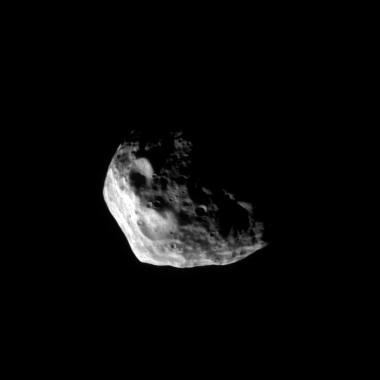
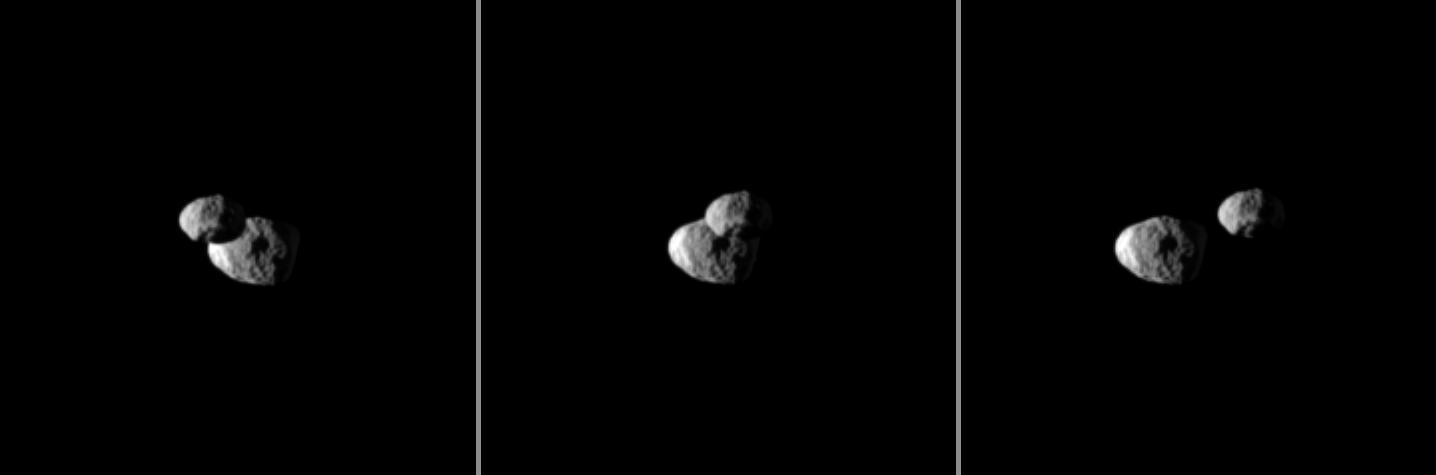
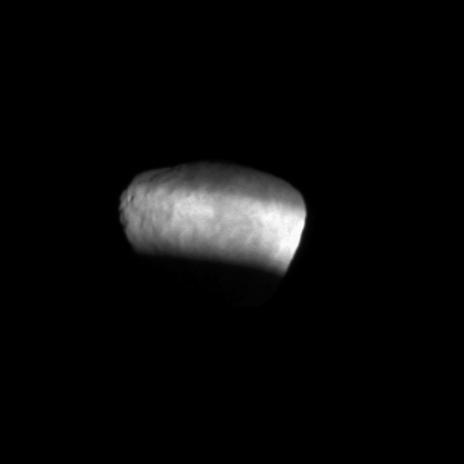
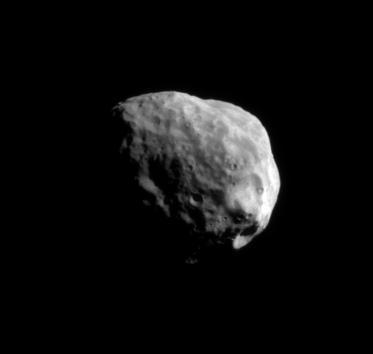
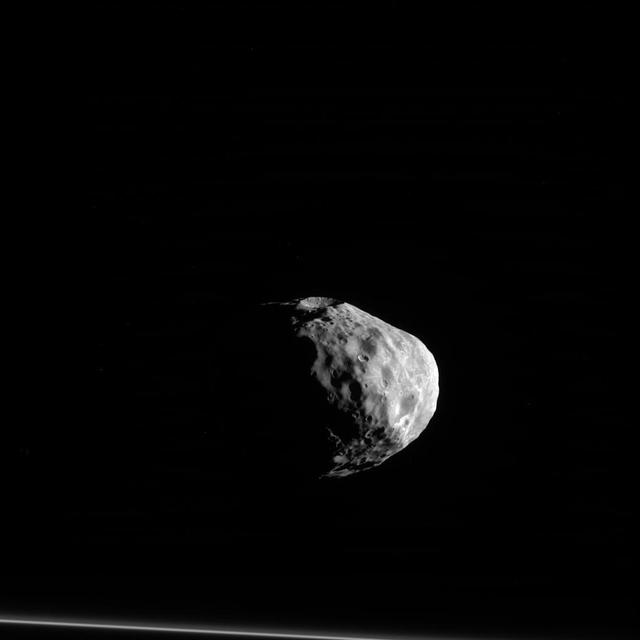
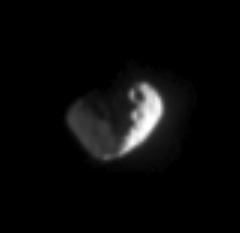
The Cassini spacecraft catches a glimpse of Janus, an irregularly shaped moon. Lacking sufficient gravity to pull itself into a round shape, Janus has had its lumpy primordial shape only slightly modified by impacts since its formation.
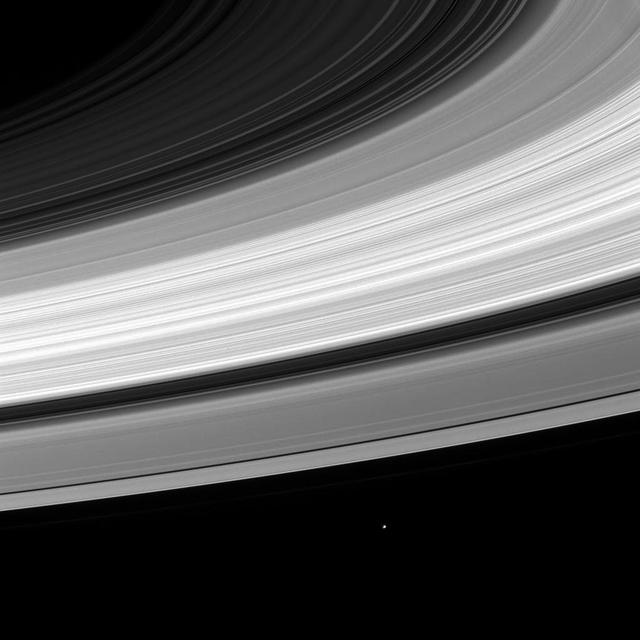
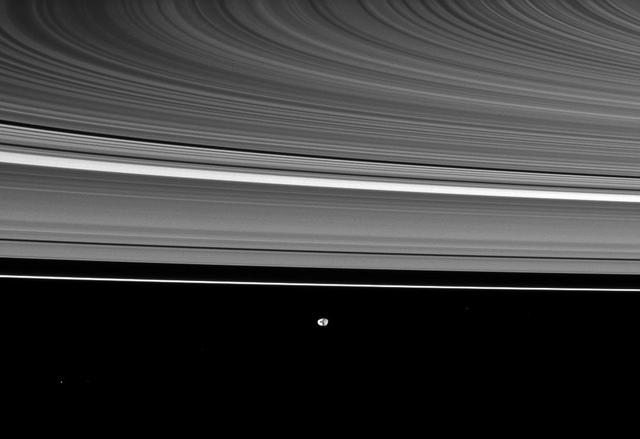
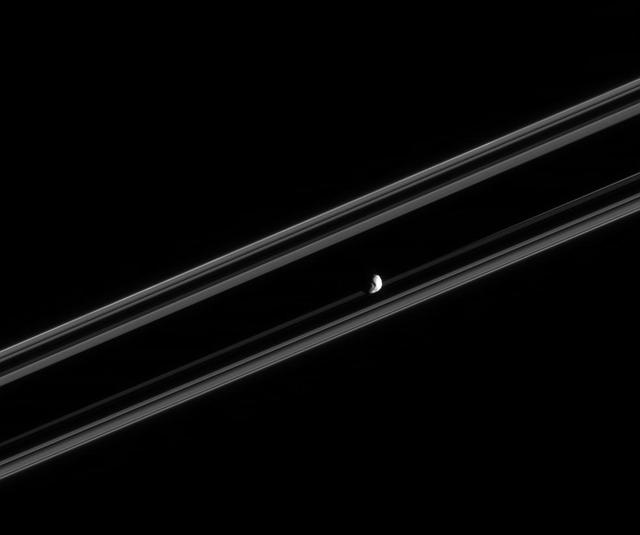
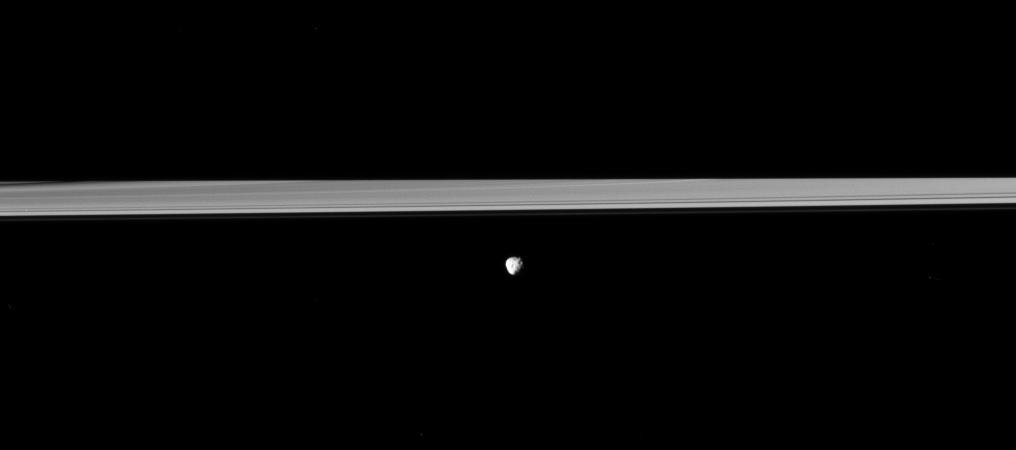
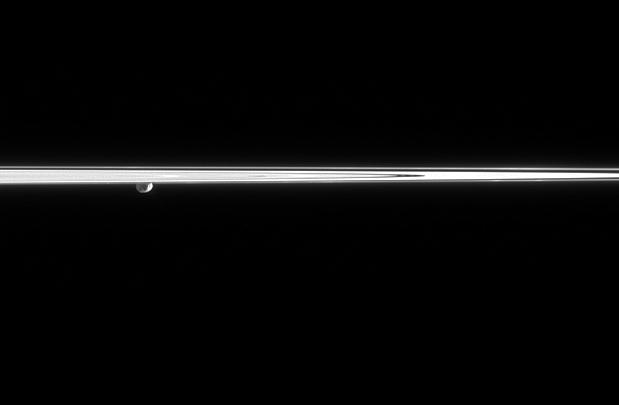
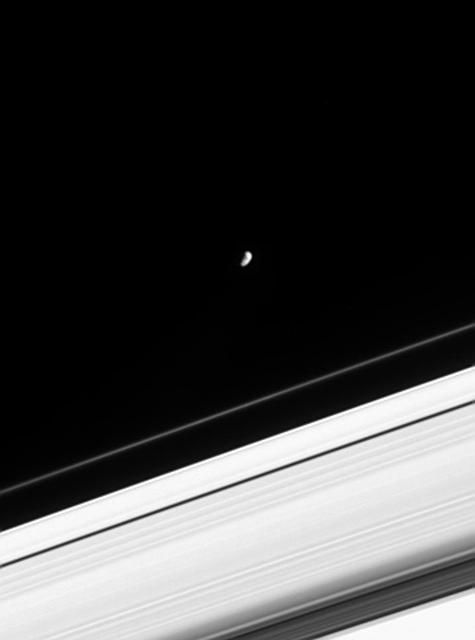
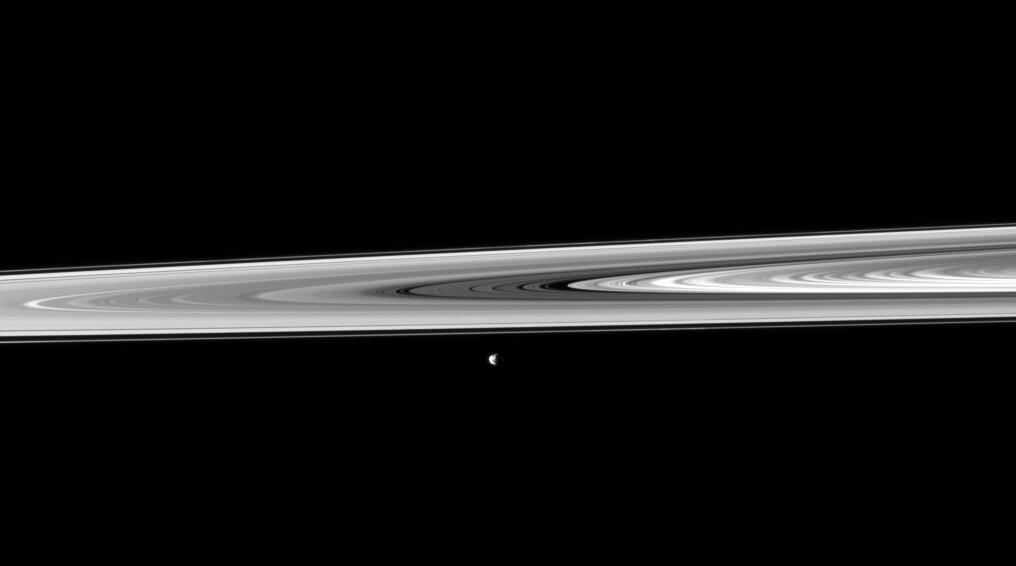
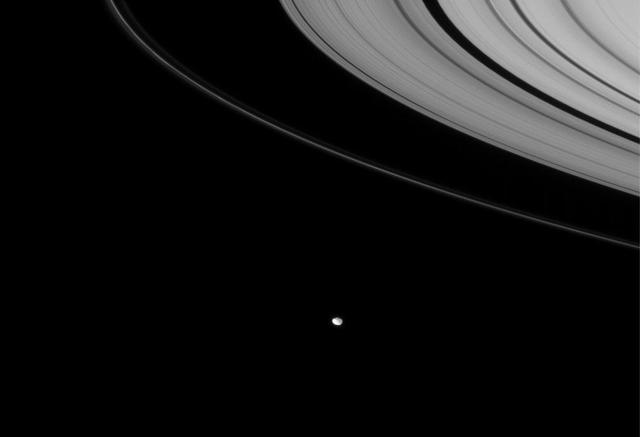
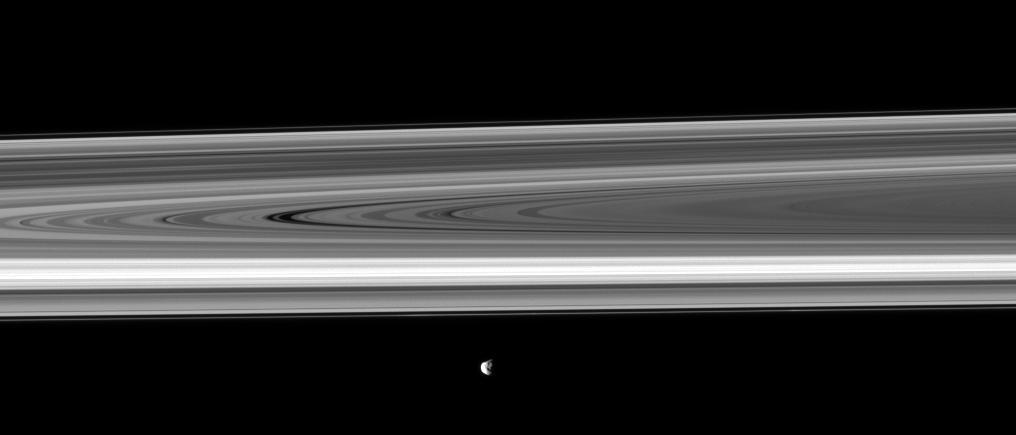
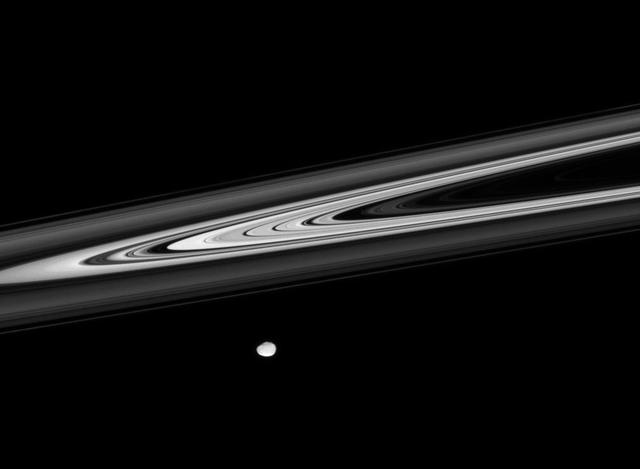
Saturn rings appear curved in this view from NASA Cassini spacecraft, which also shows the moon Janus in the distance. Janus is at the bottom of the image and is farther from the spacecraft than the rings are.
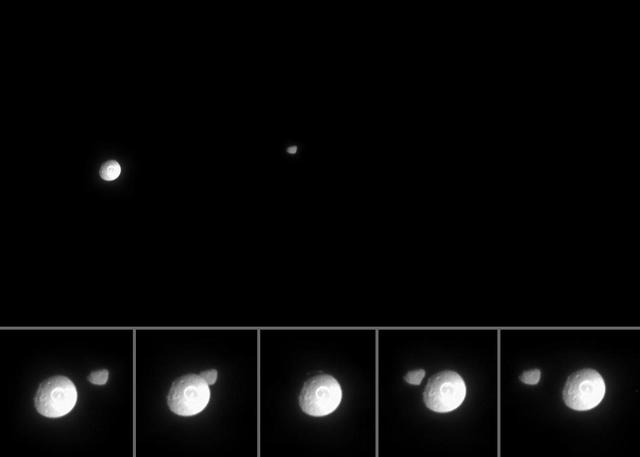
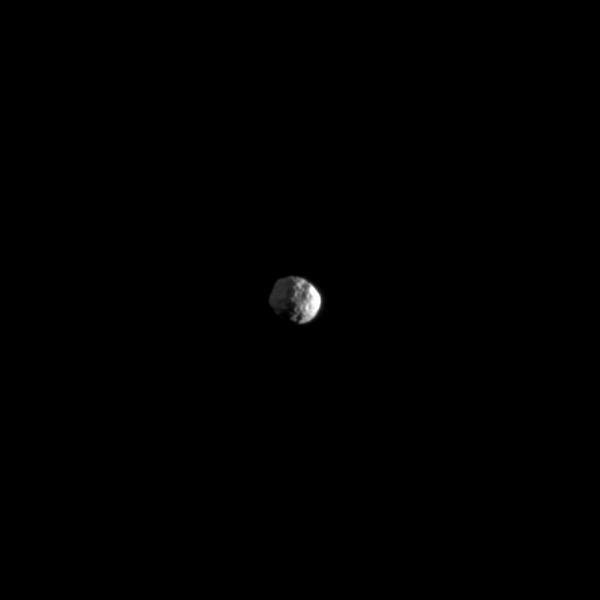
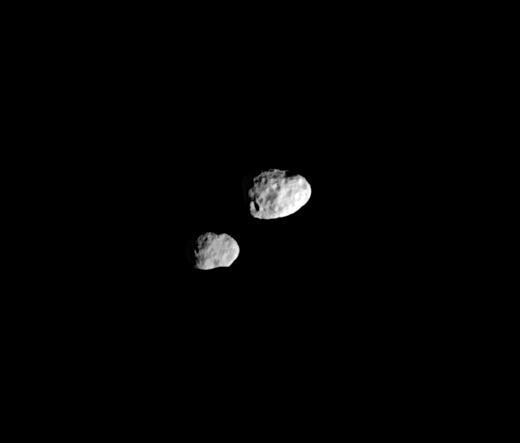
The irregularly shaped moon Janus keeps up its lonely orbit as seen by NASA Cassini spacecraft. Even though Janus shares its orbit with the moon Epimetheus, they never get very close to one another.
Saturn rings appear curved in this view from NASA Cassini spacecraft, which also shows the moon Janus in the distance. Janus is at the bottom of the image and is farther from the spacecraft than the rings are.
Saturn moon Janus orbits in front of the rings, which are partially darkened by the shadow of the planet in viwe from NASA Cassini spacecraft. Saturn shadow obscures about half the rings.
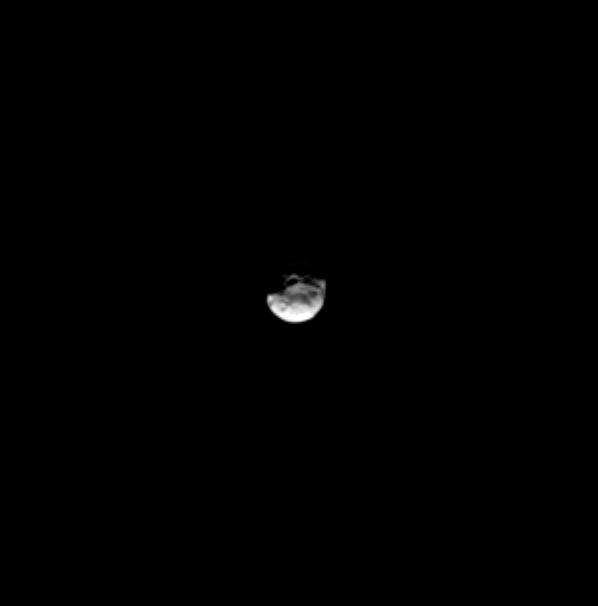
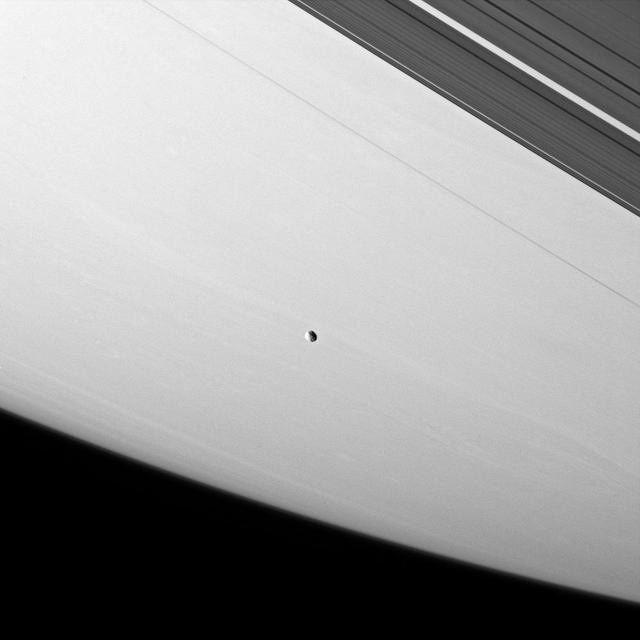
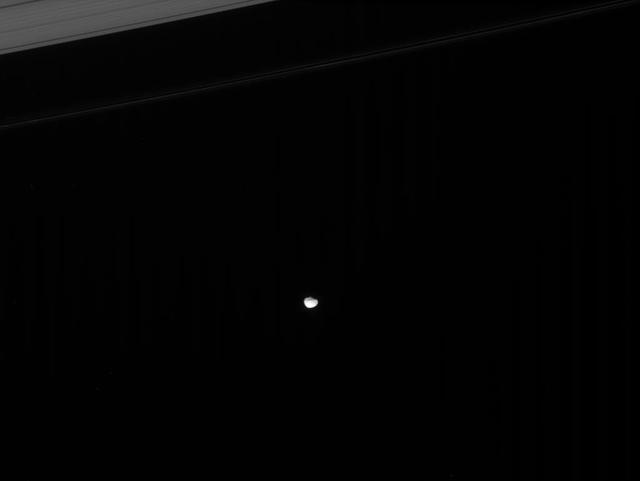
Janus peeks out from beneath the ringplane, partially lit here by reflected light from Saturn. A couple of craters can be seen on the moon surface. To the right, two faint clumps of material can be seen in the dynamic F ring
In their orbital ballet, Janus and Epimetheus swap positions every four years -- one moon moving closer to Saturn, the other moving farther away. The two recently changed positions
Sunlight passing through the Cassini Division between Saturn A and B rings sweeps across and illuminates the surface of the moon Janus in this image captured by NASA Cassini spacecraft. Go to the Photojournal to view the animation.
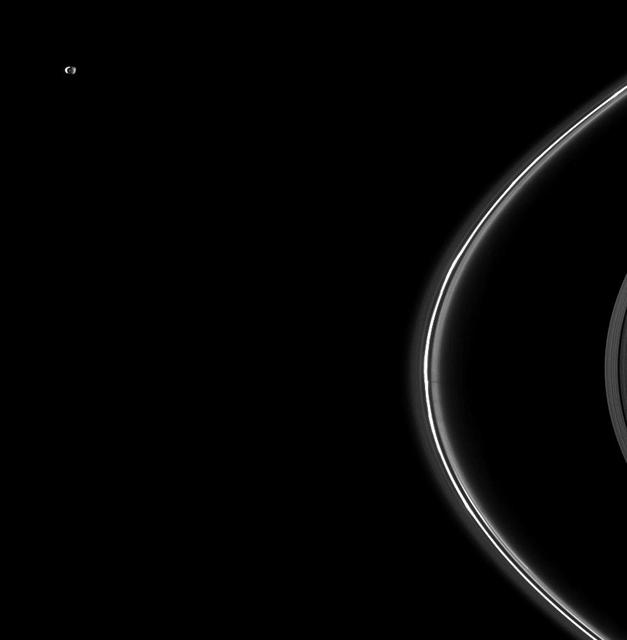
Janus (111 miles or 179 kilometers across) seems to almost stare off into the distance, contemplating deep, moonish thoughts as the F ring stands by at the bottom of this image. From this image, it is easy to distinguish Janus' shape from…
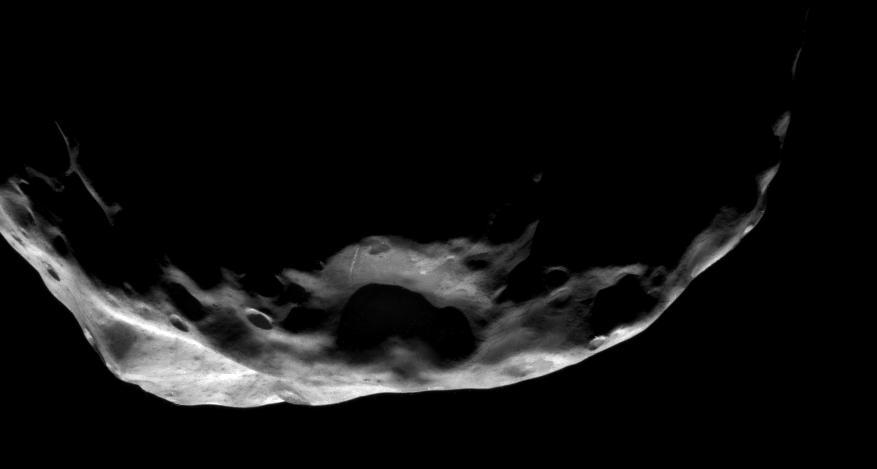
NASA Cassini spacecraft looks past the cratered south polar area of Saturn moon Rhea to spy the moon Dione and the planet rings in the distance. Dione wispy terrain can be seen on the trailing hemisphere of that moon.
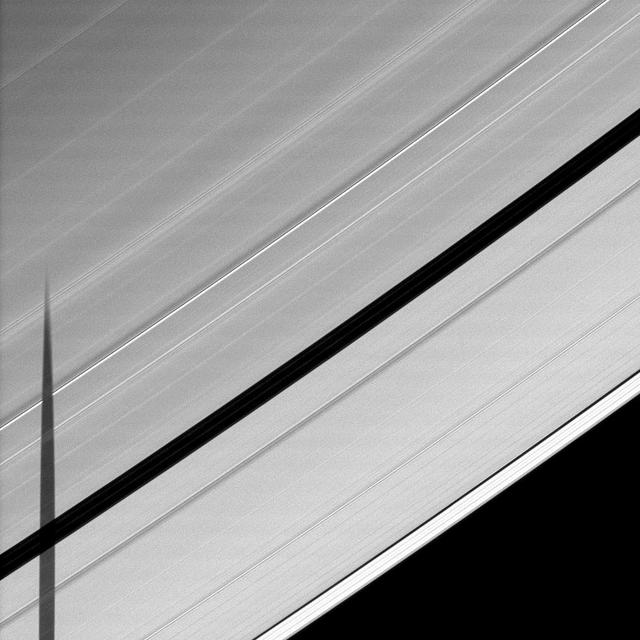
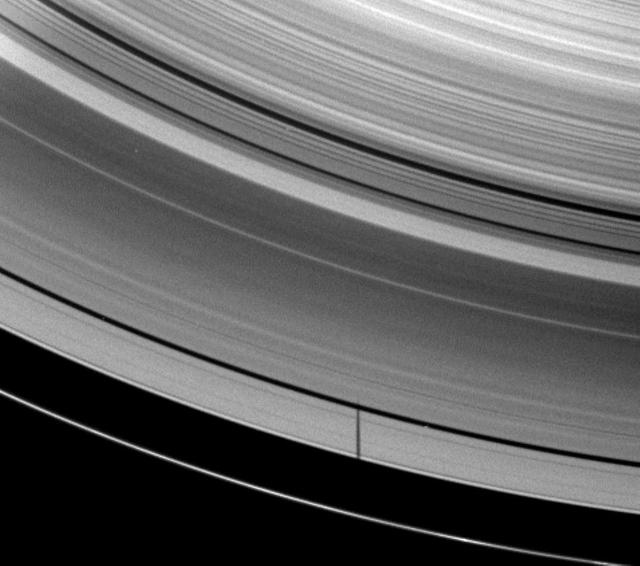
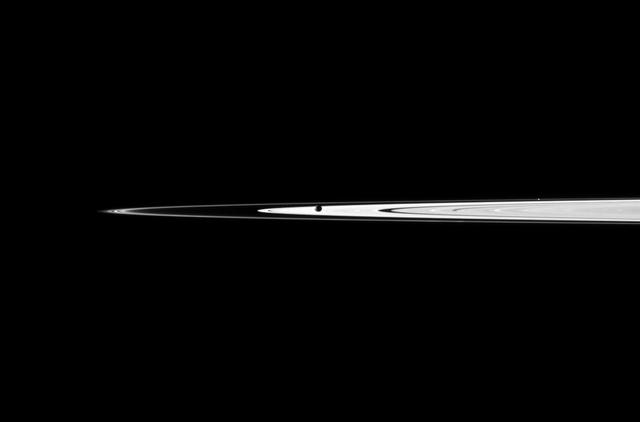
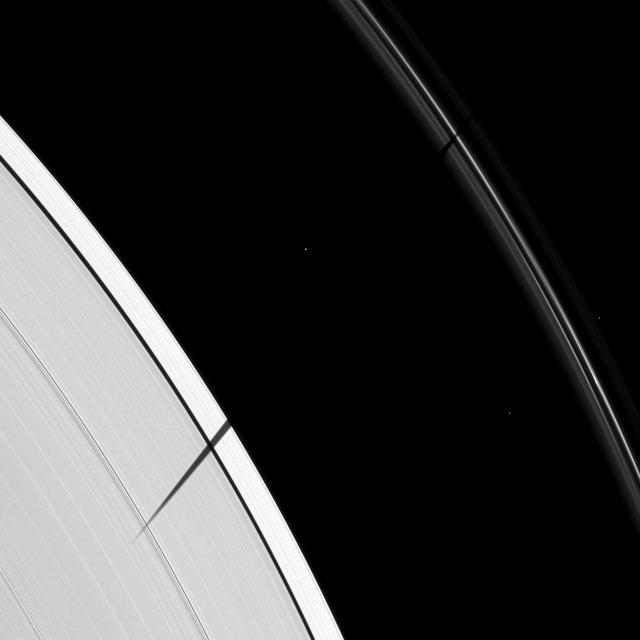
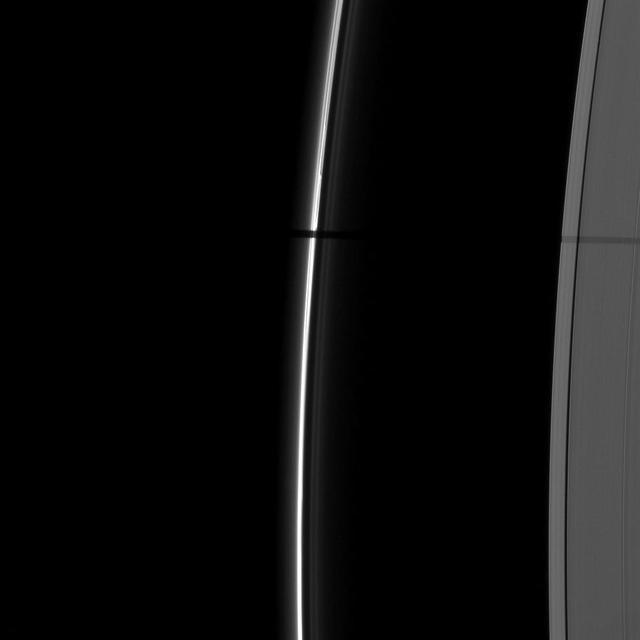
The shadow of the moon Janus crosses the Encke Gap as it strikes the plane of Saturn rings in this image taken as the planet approached its August 2009 equinox.