
This artist's concept shows what Deep Space Station-23, a new antenna dish at the Deep Space Network's complex in Goldstone, California, will look like when complete in several years. DSS-23 will communicate with NASA's deep space missions…

Late night in the desert: Goldstone 230-foot 70-meter antenna tracks spacecraft day and night. This photograph was taken on Jan. 11, 2012. The Goldstone Deep Space Communications Complex is located in the Mojave Desert in California, USA.

Workers in Goldstone, Calif., guide a new runner segment into the hydrostatic bearing assembly of a giant, 70-meter-wide 230-foot-wide antenna that is a critical part of NASA Deep Space Network.

An engineer at NASA Jet Propulsion Laboratory in Pasadena, Calif., checks the evenness of sole plates installed on the giant Mars
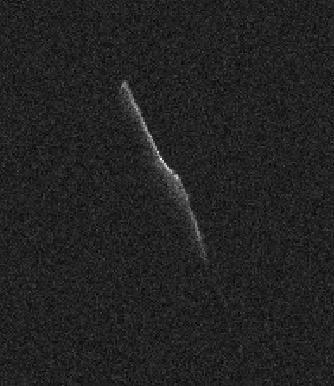
The elongated asteroid in this radar image, named 2003 SD220, will safely fly past Earth on Thursday, Dec. 24, 2015, at a distance of 6.8 million miles (11 million kilometers). The image was taken on Dec. 22 by scientists using NASA's 230-f…

The 230-foot 70-meter DSS-14 antenna at Goldstone, Ca. obtained these radar images of asteroid 2015 TB145 on Oct. 31, 2015. Asteroid 2015 TB145 is depicted in eight individual radar images collected on Oct. 31, 2015 between 5:55 a.m. PDT (…
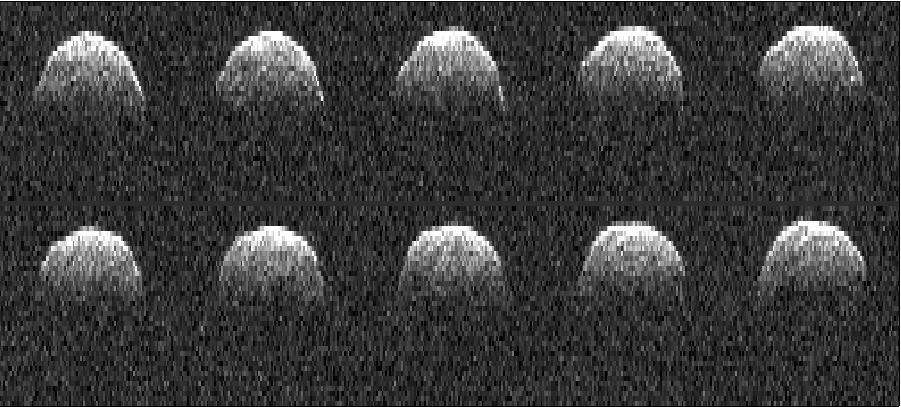
This radar image of asteroid 1999 RQ36 was obtained NASA Deep Space Network antenna in Goldstone, Calif. on Sept 23, 1999. NASA detects, tracks and characterizes asteroids and comets passing close to Earth using both ground- and space-based…

This composite of 30 images of asteroid 2014 JO25 was generated with radar data collected using NASA Goldstone Solar System Radar in California Mojave Desert. https://photojournal.jpl.nasa.gov/catalog/PIA21594
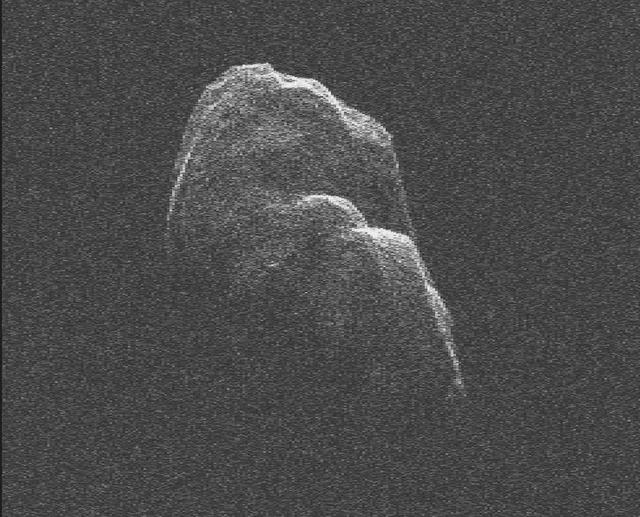
This image of asteroid Toutatis was generated with data collected using NASA Deep Space Network antenna at Goldstone, Calif., on Dec. 12 and 13, 2012 and indicates that it is an elongated, irregularly shaped object with ridges and perhaps c…
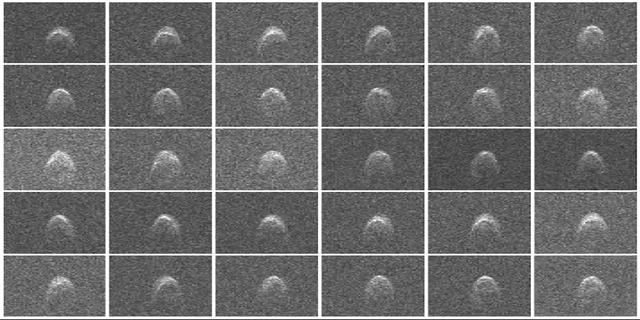
This collage of radar images of near-Earth asteroid 2005 WK4 was collected by NASA scientists using the 230-foot 70-meter Deep Space Network antenna at Goldstone, Calif., on Aug. 8, 2013.
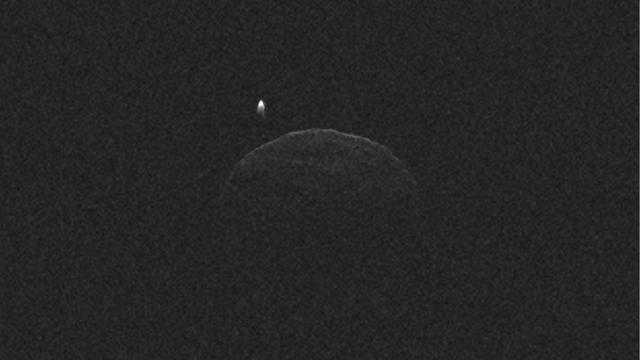
This radar imagery of asteroid 1998 QE2 and its moon was generated from data collected by NASA 230-foot-wide 70-meter Deep Space Network antenna at Goldstone, Calif., on June 1, 2013.
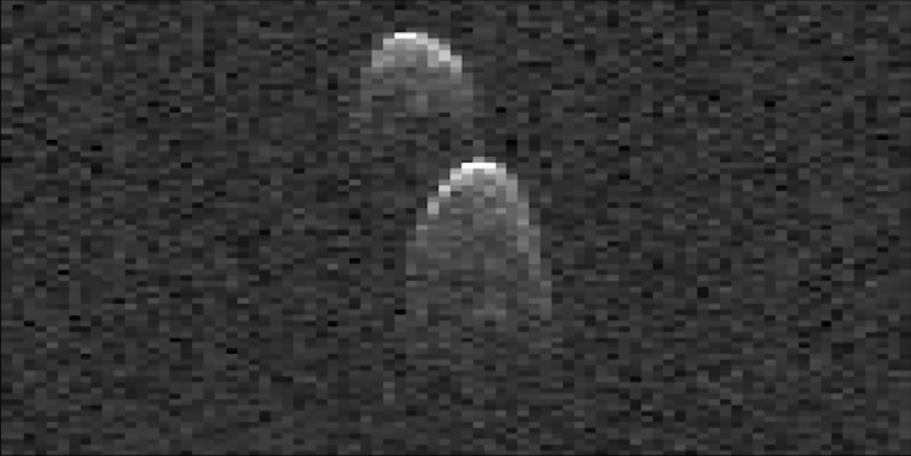
This frame from a movie made from radar images of asteroid 1999 JD6 was collected by NASA scientists on July 25, 2015. The images show the rotation of the asteroid, which made its closest approach on July 24 at 9:55 p.m. PDT (12:55 a.m. EDT…

The giant Mars antenna at NASA Deep Space Network Goldstone Deep Space Communications Complex replaced four elevation bearings as part of a major refurbishment.
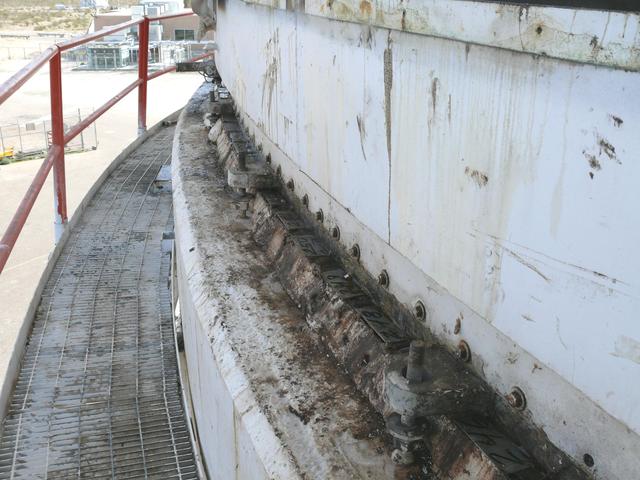
This image, taken on March 22, 2010, shows the condition of grout that was replaced in the giant Mars antenna at NASA Deep Space Network Goldstone, Calif. complex.

Beam Wave Guide antennas at Goldstone, known as the Beam Waveguide Cluster. They are located in an area at Goldstone called Apollo Valley. The Goldstone Deep Space Communications Complex is located in the Mojave Desert in California, USA.

Workers at NASA Deep Space Network complex in Goldstone, Calif., pour in a new epoxy grout as the giant Mars

This composite of 25 images of asteroid 2017 BQ6 was generated with radar data collected using NASA's Goldstone Solar System Radar in California's Mojave Desert. The images were gathered on Feb. 7, 2017, between 8:39 and 9:50 p.m. PST (11:3…
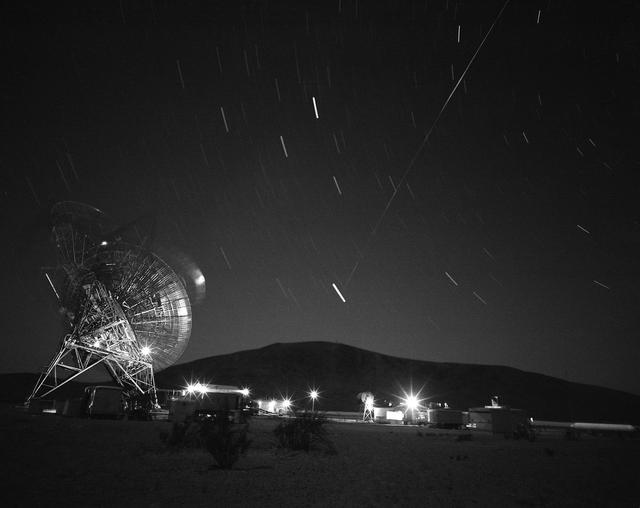
This archival image was released as part of a gallery comparing JPL’s past and present, commemorating the 80th anniversary of NASA’s Jet Propulsion Laboratory on Oct. 31, 2016. This photograph shows the first pass of Echo 1, NASA's fir…

Workers at NASA Deep Space Network Goldstone Deep Space Communications Complex prepare a support leg that would help raise a portion of the giant Mars antenna.
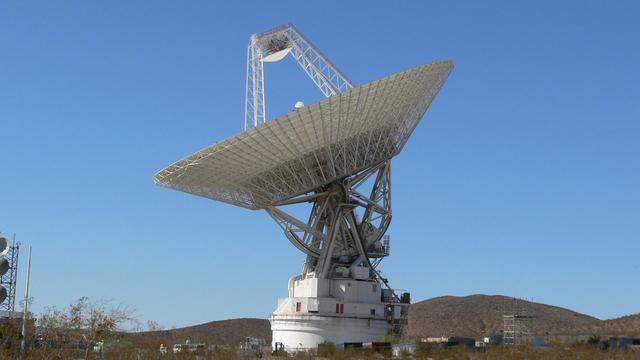
The giant, 70-meter-wide antenna at NASA Deep Space Network complex in Goldstone, Calif., tracks a spacecraft on Nov. 17, 2009. This antenna, officially known as Deep Space Station 14, is also nicknamed the Mars antenna.

Work began on March 11, 2010 to replace a set of elevation bearings on the giant Mars antenna at NASA Deep Space Network complex in Goldstone, Calif.
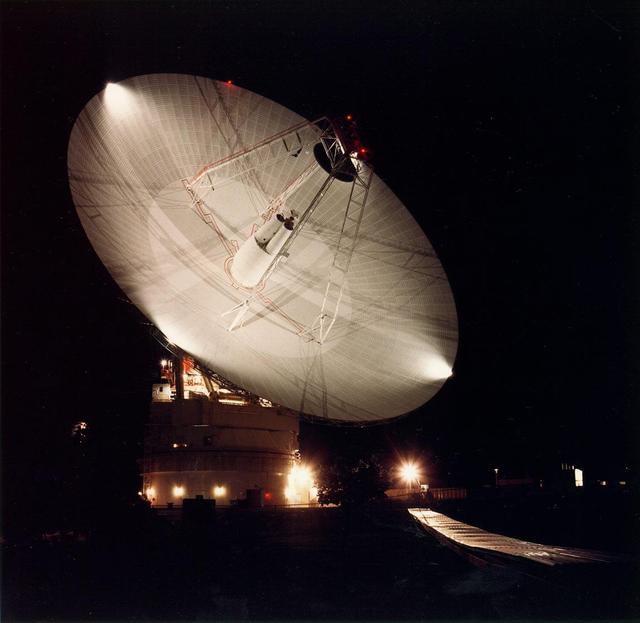
Night shot of the 70m antenna at Goldstone, California. The parabolic dish is 70m 230 ft. in diameter. The Goldstone Deep Space Communications Complex, located in the Mojave Desert in California, is one of three complexes which comprise NAS…
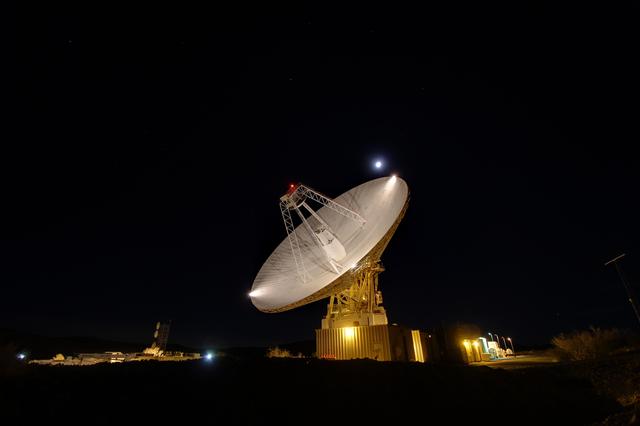
Goldstone 230-foot 70-m antenna tracks under a full moon. The Goldstone Deep Space Communications Complex is located in the Mojave Desert in California, USA.

Workers at NASA Deep Space Network Goldstone Deep Space Communications Complex put into place a set of support legs to help hold up a portion of the giant Mars antenna on May 4, 2010.
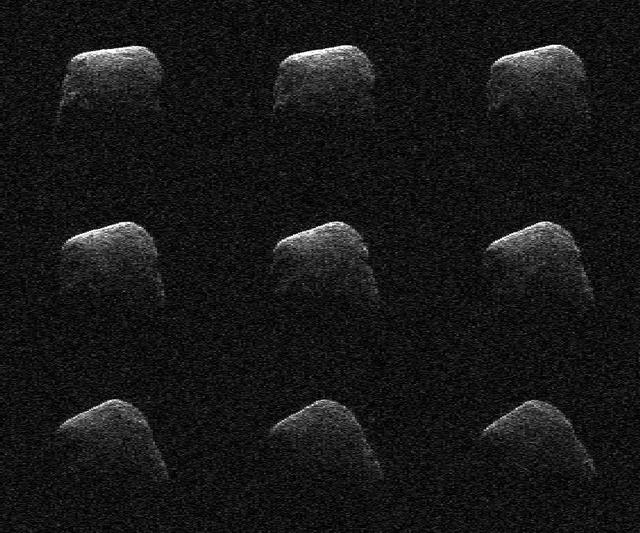
These radar images of comet P/2016 BA14 were taken on March 22, 2016, by scientists using an antenna of NASA Deep Space Network at Goldstone, CA. At the time, the comet was about 2.2 million miles 3.6 million kilometers from Earth.

A major refurbishment of the giant Mars antenna at NASA Deep Space Network Goldstone Deep Space Communications Complex in California Mojave Desert required workers to jack up millions of pounds of delicate scientific equipment.

As the sun sets on July 8, 2010, workers prepare to pour new epoxy grout for the hydrostatic bearing assembly of the giant Mars
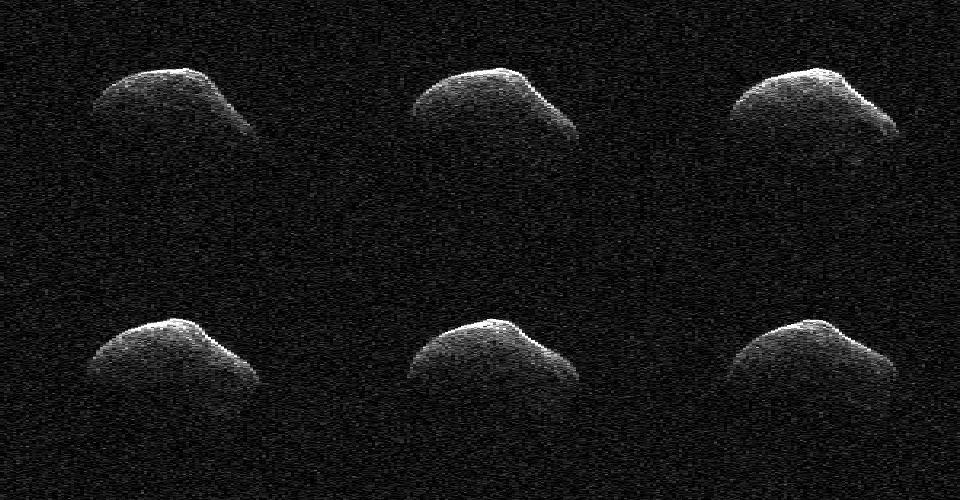
These radar images of comet P/2016 BA14 were taken on March 23, 2016, by scientists using an antenna of NASA Deep Space Network at Goldstone, California. At the time, the comet was about 2.2 million miles 3.6 million kilometers from Earth.

Under the unflinching summer sun, workers at NASA Deep Space Network complex in Goldstone, Calif., use a crane to lift a runner segment that is part of major surgery on a giant, 70-meter-wide antenna.
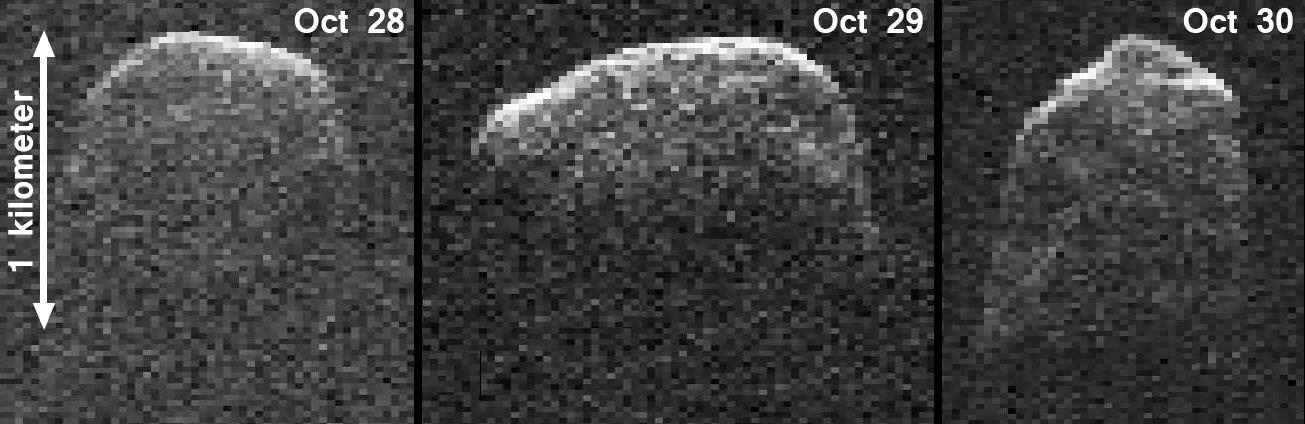
This composite image of asteroid 2007 PA8 was obtained using data taken by NASA 230-foot-wide 70-meter Deep Space Network antenna at Goldstone, Calif.

This radar image of asteroid 2005 YU55 was obtained NASA Deep Space Network antenna in Goldstone, Calif. on Nov. 7, 2011, when the space rock was at 3.6 lunar distances, which is about 860,000 miles, or 1.38 million kilometers, from Earth.

Asteroid 1998 WT24 left in December 2001, right on December 11, 2015 taken by NASA the 230-foot 70-meter DSS-14 antenna at Goldstone, California.

Antenna dishes at NASA's Deep Space Network complex in Goldstone, California, photographed on Feb. 11, 2020. https://photojournal.jpl.nasa.gov/catalog/PIA23214
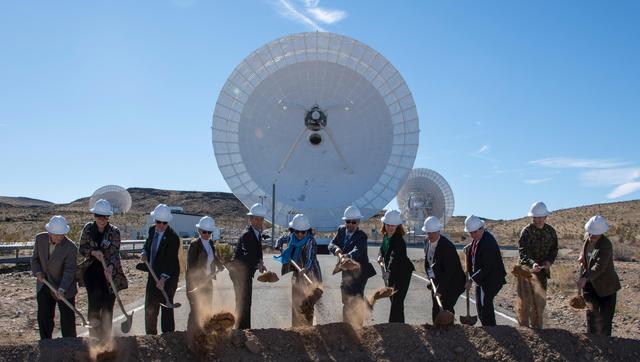
On Feb. 11, 2020, NASA, JPL, military and local officials broke ground in Goldstone, California, for a new antenna in the agency's Deep Space Network, which communicates with all its deep space missions. When completed in 2 ½ years, th…

A worker at NASA Deep Space Network Goldstone Deep Space Communications Complex radios to his colleagues that 12 jacks are ready to lift the upper section of the giant Mars antenna.

As part of a major refurbishment for the giant Mars antenna at NASA Deep Space Network Goldstone Deep Space Communications Complex, a stringer box is lowered into place.

This composite image depicts the moon rugged south polar region in two lights. The color image is the highest resolution topography map to date of the moon south pole.
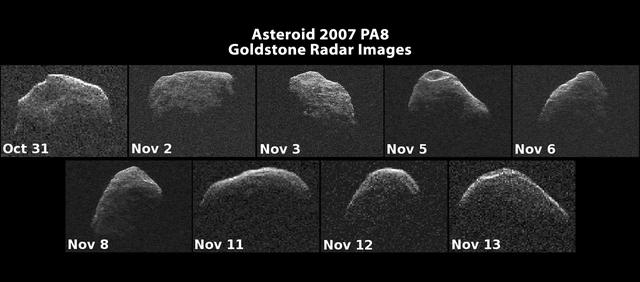
Images of asteroid 2007 PA8 have been generated with data collected by NASA Goldstone Solar System Radar. The images of 2007 PA8 reveal possible craters, boulders, an irregular, asymmetric shape, and very slow rotation.
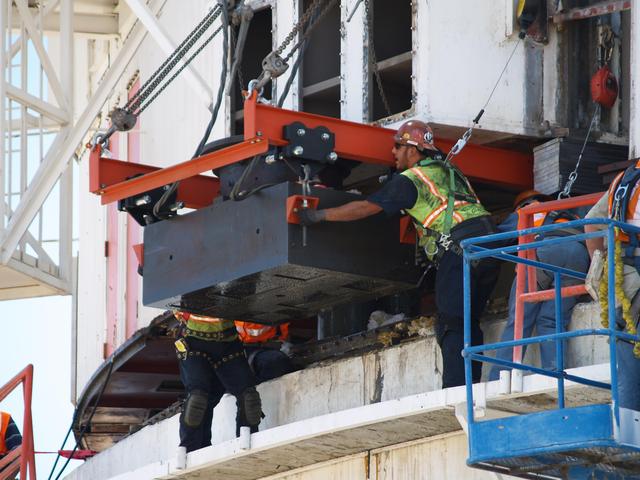
On May 3, 2010, workers at NASA Deep Space Network Goldstone Deep Space Communications Complex removed one of the large steel pads that help the giant Mars antenna rotate sideways.
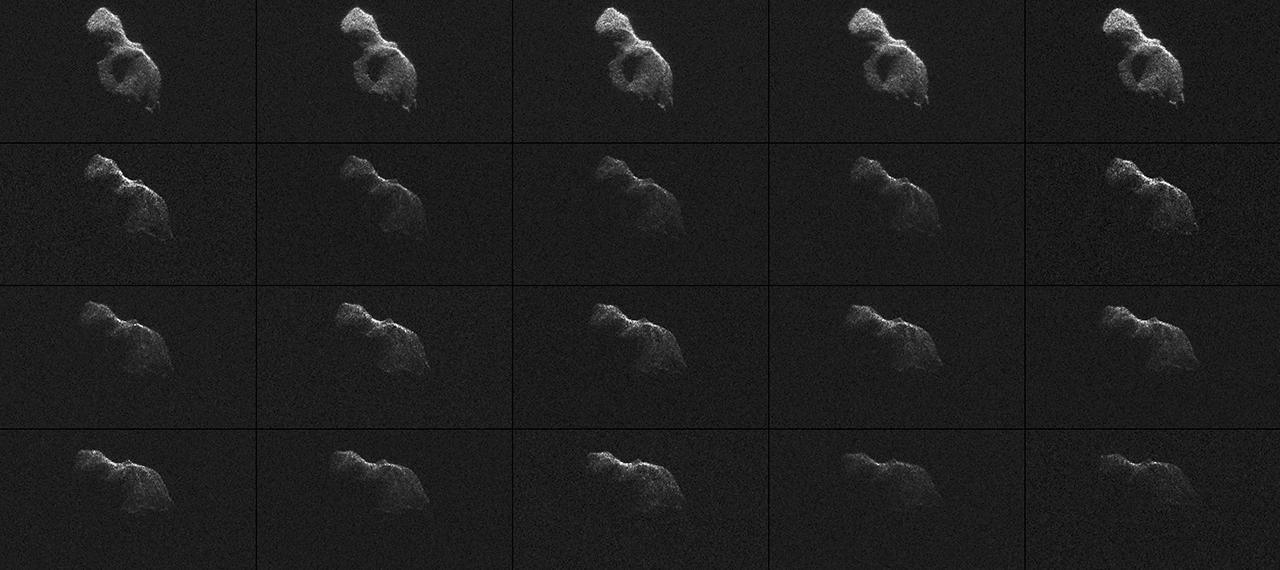
NASA scientists used Earth-based radar to produce these sharp views -- an image montage and a movie sequence -- of the asteroid designated 2014 HQ124 on June 8, 2014.
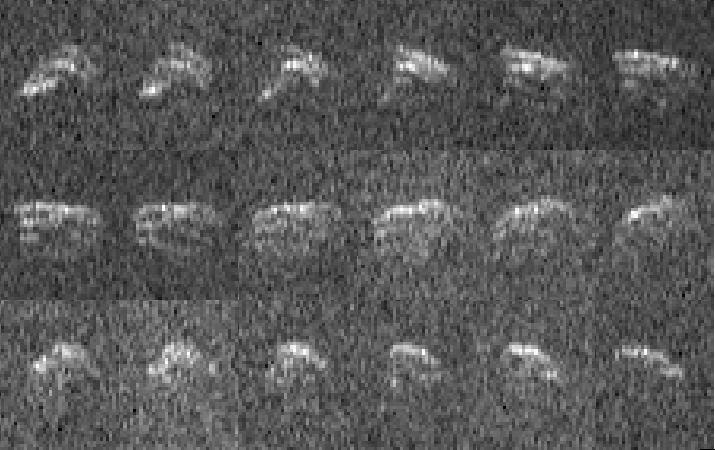
This sequence of radar images of asteroid 2013 ET was obtained on Mar. 10, 2013, by NASA scientists using the 230-foot 70-meter DSN antenna at Goldstone, CA, when the asteroid was about 693,000 mi 1.1 million km from Earth.
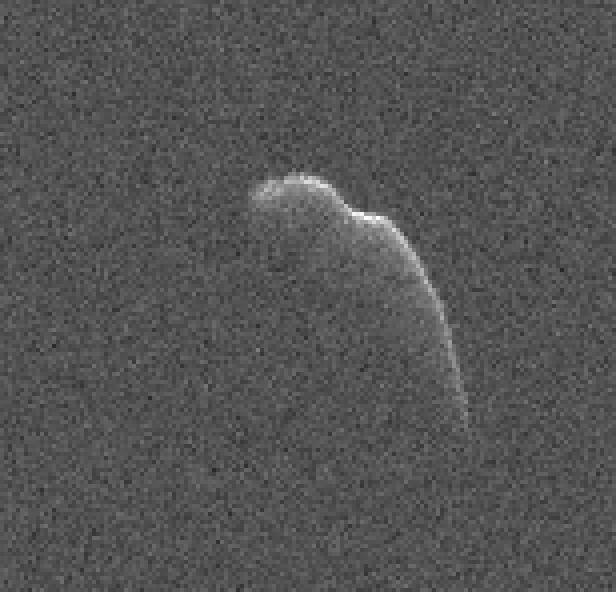
This image of an asteroid that is at least 3,600 feet (1,100 meters) long was taken on Dec. 17, 2015, by scientists using NASA's 230-foot (70-meter) DSS-14 antenna at Goldstone, California. This asteroid, named 2003 SD2020, will safely fly…
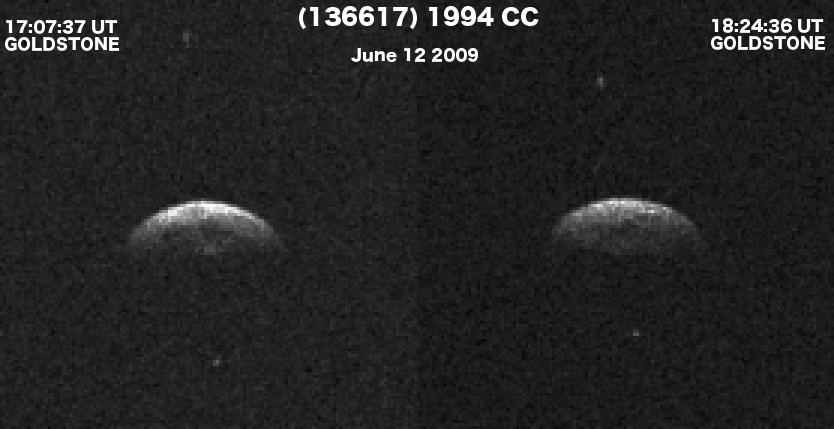
NASA Deep Space Network, Goldstone radar images show triple asteroid 1994 CC, which consists of a central object approximately 700 meters 2,300 feet in diameter and two smaller moons that orbit the central body. Animation available at the P…
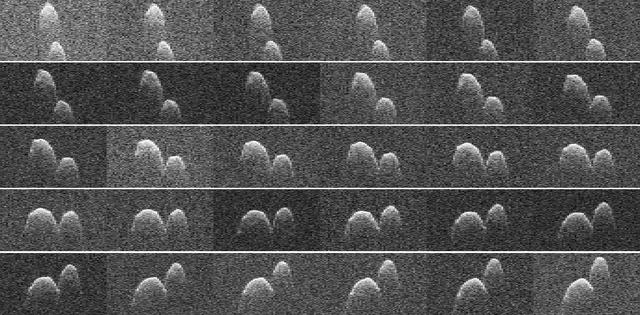
This collage of radar images of near-Earth asteroid 1999 JD6 was collected by NASA scientists on July 25, 2015. The images show the rotation of the asteroid, which made its closest approach on July 24 at 9:55 p.m. PDT (12:55 a.m. EDT on Jul…
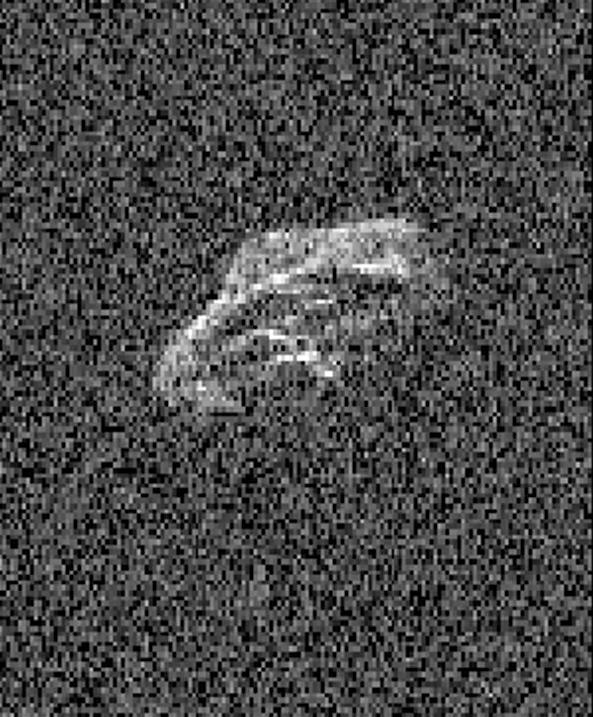
Scientists using two giant, Earth-based radio telescopes bounced radar signals off passing asteroid 2011 UW158 to create images for this animation showing the rocky body's fast rotation. The passing asteroid made its closest approach to Ea…

Goldstone 111.5-foot 34-meter Beam Waveguide tracks a spacecraft as it comes into view. The Goldstone Deep Space Communications Complex is located in the Mojave Desert in California, USA.

Workers at NASA Deep Space Network Goldstone Deep Space Communications Complex check on a set of jacks used to raise the upper part of the giant Mars antenna.
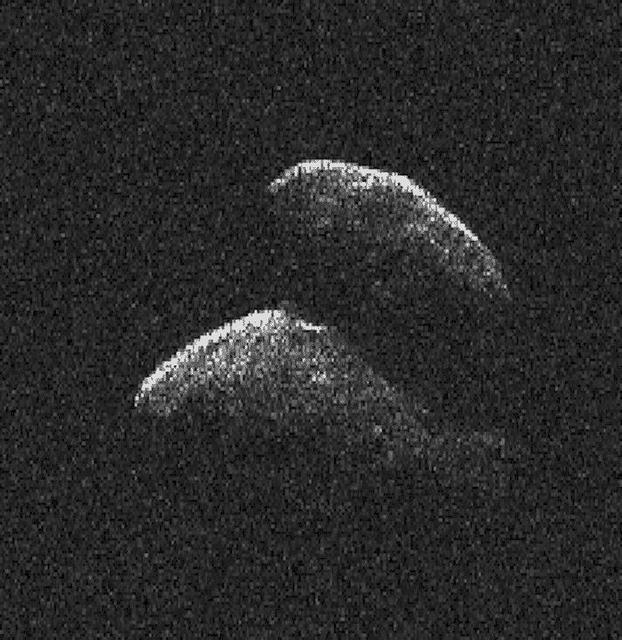
This frame from a movie of asteroid 2014 JO25 was generated using radar data collected by NASA 230-foot-wide 70-meter Deep Space Network antenna at Goldstone, California on April 19, 2017. When the observations began 2014 JO25 was 1.53 mi…