
VANDENBERG AIR FORCE BASE, Calif. – At Vandenberg Air Force Base in California, Orbital Sciences Corp. technician Mike Lerma checks the fit of the Taurus XL rocket's first and second stages in Building 1555. The Orbital Sciences Tauru…

VANDENBERG AIR FORCE BASE, Calif. – In Building 1555 at Vandenberg Air Force Base in California, Orbital Sciences Corp. technicians install the second petal to the aft end of the Taurus XL rocket's first stage motor. Three pedals will essen…

VANDENBERG AIR FORCE BASE, Calif. – The stage 0 motor, left, and the interstage associated with Stage 1 of the Taurus XL rocket are ready for more processing in the west high bay of Building 1555 at Vandenberg Air Force Base in California.…

VANDENBERG AIR FORCE BASE, Calif. – At Vandenberg Air Force Base in California, a technician performs a wide-band instrumentation system test on half of the fairing that will encapsulate NASA's Glory satellite during launch aboard a Taurus…

VANDENBERG AIR FORCE BASE, Calif. – At Vandenberg Air Force Base in California, work is under way to mate the first and second stages of the Taurus XL rocket in Orbital Sciences Corp.'s Building 1555. The Orbital Sciences Taurus XL rock…

VANDENBERG AIR FORCE BASE, Calif. – At Vandenberg Air Force Base in California, Orbital Sciences Corp. technician Mike Lerma guides the first and second stages of the Taurus XL rocket together in Building 1555. The Orbital Sciences Ta…

VANDENBERG AIR FORCE BASE, Calif. – At Vandenberg Air Force Base in California, the Stage 0 motor, foreground, soon will be installed to the interstage, background. The two segments, along with two other stages, will make up the four-stage…

Interior view along the south side of Dr. Robert Goddard’s shop at the Mescalero Ranch in New Mexico. Mr. H. Sachs is shown seated in the rear of the shop. <b><a href="http://www.nasa.gov/centers/goddard/home/index.html" rel="nofollow">N…

Dr. Robert Hutchings Goddard (1882-1945). Dr. Goddard has been recognized as the father of American rocketry and as one of the pioneers in the theoretical exploration of space. Robert Hutchings Goddard, born in Worcester, Massachusetts, on…

Robert H. Goddard with vacuum tube apparatus he built in 1916 to research rocket efficiency. Dr. Robert Hutchings Goddard is commonly referred to as the father of American rocketry. The same year he built the apparatus, Goddard wrote a stud…

Dr. Robert Goddard's tower for "static" test near the shop at Roswell, New Mexico, 1930. The observation shelter (left foreground) is visible. <b><a href="http://www.nasa.gov/centers/goddard/home/index.html" rel="nofollow">NASA…

New Mexico - This concrete dugout was consturcted 50 feet from Dr. Robert Goddard's launching tower, so that an observer could watch the launching of the rocket at close range. <b><a href="http://www.nasa.gov/centers/goddard/home/index.ht…

Dr. Robert Goddard's rocket ready for flight. Roswell, New Mexico. <b><a href="http://www.nasa.gov/centers/goddard/home/index.html" rel="nofollow">NASA Goddard Space Flight Center</a></b> enables NASA’s mission through four scientific en…

Dr. Robert Goddard and colleagues at Roswell, New Mexico. Successful test of May 19, 1937. Dr. Robert Goddard is holding the cap and pilot parachute, parts of the successful operation. <b><a href="http://www.nasa.gov/centers/goddard/hom…

Dr. Robert Hutchings Goddard (1882-1945). Dr. Goddard has been recognized as the father of American rocketry and as one of the pioneers in the theoretical exploration of space. Robert Hutchings Goddard, born in Worcester, Massachusetts, on…

CAPE CANAVERAL, Fla. -- Technicians in the Astrotech payload processing facility in Titusville, Fla., begin to unfurl solar array No. 1 with a magnetometer boom that will help power NASA's Juno spacecraft on a mission to Jupiter. Power-gene…

VANDENBERG AIR FORCE BASE, Calif. – At Vandenberg Air Force Base in California, the first and second stages of the Taurus XL rocket are being prepared for mating in Orbital Sciences Corp.'s Building 1555. The Orbital Sciences Taurus X…

VANDENBERG AIR FORCE BASE, Calif. – In Building 1555 at Vandenberg Air Force Base in California, a technician installs the aft-end blankets on the avionics assembly of a four-stage Taurus XL rocket. The rocket and NASA's Glory satellite are…

VANDENBERG AIR FORCE BASE, Calif. – At Vandenberg Air Force Base in California, Orbital Sciences Corp. technicians check the fit of the Taurus XL rocket's first and second stages in Building 1555. The Orbital Sciences Taurus XL rocket,…

VANDENBERG AIR FORCE BASE, Calif. -- At Vandenberg Air Force Base in California, the Pegasus XL rocket that will launch the Nuclear Spectroscopic Telescope Array (NuSTAR) to orbit is coming together in the west high bay of Building 1555.…

VANDENBERG AIR FORCE BASE, Calif. – In Orbital Sciences Corp. Building 1555 at Vandenberg Air Force Base in California, Orbital Sciences technicians continue to work on cabling on the aft end of the Taurus XL rocket's first stage motor. To…

Dr. Robert H. Goddard loading a 1918 version of the Bazooka of World War II. From 1930 to 1941, Dr. Goddard made substantial progress in the development of progressively larger rockets, which attained altitudes of 2400 meters, and refined h…

VANDENBERG AIR FORCE BASE, Calif. – In Orbital Sciences Corp. Building 1555 at Vandenberg Air Force Base in California, Orbital Sciences technicians continue to work on cabling on the aft end of the Taurus XL rocket's first stage motor. To…

Tail piece, with fixed movable air vanes, and vanes movable into the blast, of Dr. Robert Goddard's rocket, May 19, 1937. <b><a href="http://www.nasa.gov/centers/goddard/home/index.html" rel="nofollow">NASA Goddard Space Flight Center</a>…

Goddard with a rocket in his workshop at Roswell, NM. October 1935. <b><a href="http://www.nasa.gov/centers/goddard/home/index.html" rel="nofollow">NASA Goddard Space Flight Center</a></b> enables NASA’s mission through four scientific en…

Dr. Robert Goddard's rocket nose cone, parachute, and relase device, April 19, 1935. <b><a href="http://www.nasa.gov/centers/goddard/home/index.html" rel="nofollow">NASA Goddard Space Flight Center</a></b> enables NASA’s mission through f…

Dr. Robert Goddard with his apparatus for solar energy study at Clark University, Worcester, Mass. (1932-1934). Dr. Goddard's interest in the subject began much earlier. <b><a href="http://www.nasa.gov/centers/goddard/home/index.html" r…

1930--Dr. Robert Goddard built this 30 by 60 ft. workshop for rocket construction at the Mescalero Ranch, 3 miles northeast of Roswell, New Mexico. <b><a href="http://www.nasa.gov/centers/goddard/home/index.html" rel="nofollow">NASA Godda…
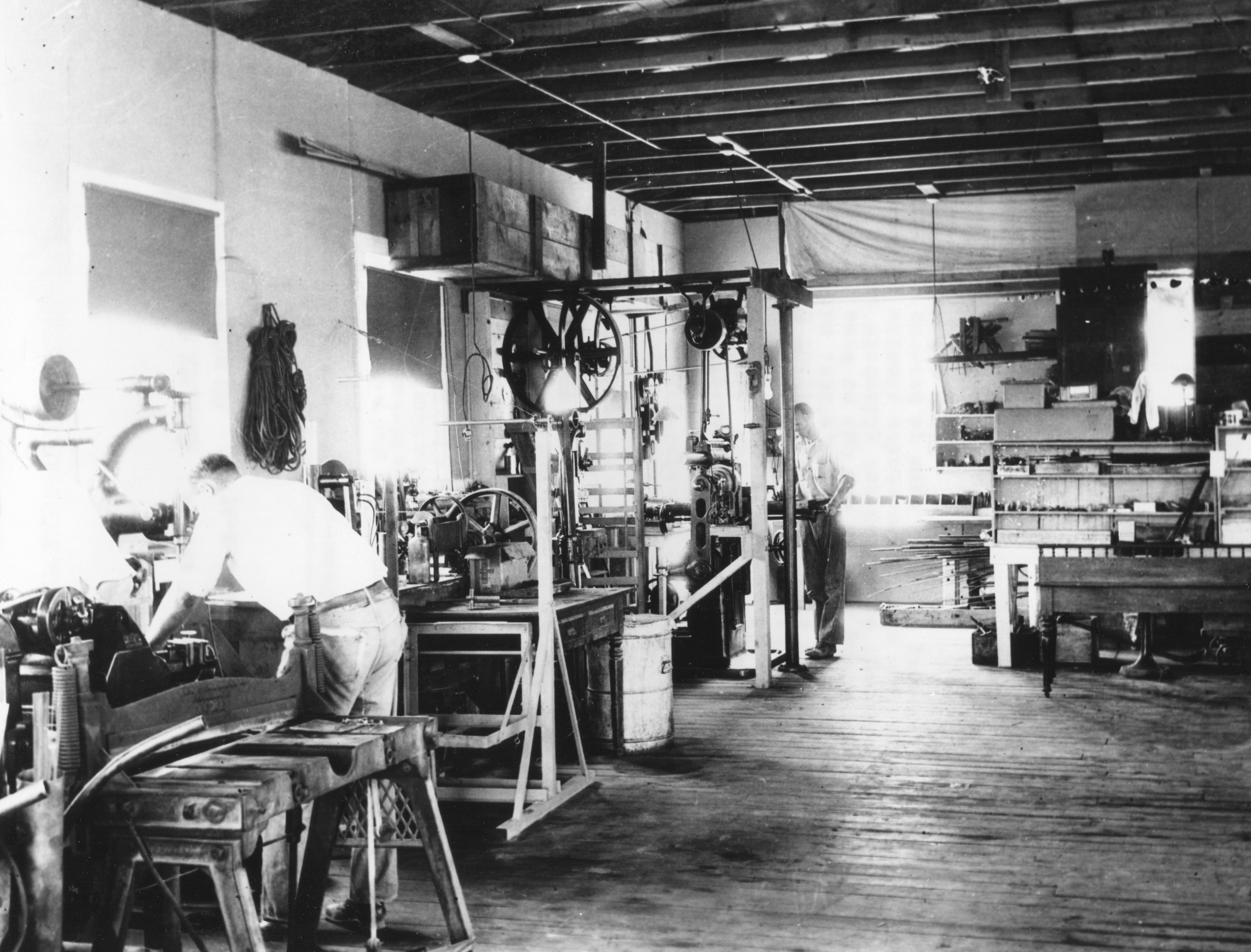
1930-1932--Interior view along the south side, looking west, of Dr. Robert Goddard's shop at the Mescalero Ranch in New Mexico. Mr. A. Kisk and Mr. C Mansur are the staff members shown. <b><a href="http://www.nasa.gov/centers/goddard/hom…

Dr. Robert Goddard's 22 foot rocket in it's launching tower, 1940, near Roswell, New Mexico. N.T. Ljungquist on the ground, A.W. Kisk working on rocket and C. Mansur at top of tower. <b><a href="http://www.nasa.gov/centers/goddard/home/i…

Dr. Robert Goddard's staff and vehicles (Ford truck, trailer, and Dodge touring car) ready to start on a day of repairing the launching tower, September 1934. <b><a href="http://www.nasa.gov/centers/goddard/home/index.html" rel="nofollow"…

Robert Goddard with a rocket in his workshop at Roswell, NM. October 1935. <b><a href="http://www.nasa.gov/centers/goddard/home/index.html" rel="nofollow">NASA Goddard Space Flight Center</a></b> enables NASA’s mission through four scien…

VANDENBERG AIR FORCE BASE, Calif. – In Building 1555 at Vandenberg Air Force Base in California, Orbital Sciences Corp. technicians connect the third stage of the Taurus XL rocket to the avionics of the temporary vehicle interface fixture.…

VANDENBERG AIR FORCE BASE, Calif. -- At Vandenberg Air Force Base in California, the first, second and third stages of the Pegasus XL rocket that will launch the Nuclear Spectroscopic Telescope Array (NuSTAR) to orbit are being processed in…

VANDENBERG AIR FORCE BASE, Calif. – In Orbital Sciences Corp. Building 1555 at Vandenberg Air Force Base in California, the first, second and third stages of the Taurus XL rocket are cabled up for a flight simulation. In front is the inters…

VANDENBERG AIR FORCE BASE, Calif. – The first, second and third stages of the Taurus XL rocket come together in the east high bay of Building 1555 at Vandenberg Air Force Base in California. The rocket and NASA's Glory satellite are being p…

VANDENBERG AIR FORCE BASE, Calif. – The first, second and third stages of the Taurus XL rocket come together in the east high bay of Building 1555 at Vandenberg Air Force Base in California. In the west high bay, left, is the stage 0 motor.…

VANDENBERG AIR FORCE BASE, Calif. -- At Vandenberg Air Force Base in California, the first, second and third stages of the Pegasus XL rocket that will launch the Nuclear Spectroscopic Telescope Array (NuSTAR) to orbit are being processed in…

VANDENBERG AIR FORCE BASE, Calif. – In Building 1555 at Vandenberg Air Force Base in California, Orbital Sciences Corp. technicians install the second petal to the aft end of the Taurus XL rocket's first stage motor. Three pedals will essen…

VANDENBERG AIR FORCE BASE, Calif. – At Vandenberg Air Force Base in California, the first and second stages of the Taurus XL rocket are being prepared for mating in Orbital Sciences Corp.'s Building 1555. The Orbital Sciences Taurus…

Standing in front of the rocket in the launch tower on September 23, 1935, are (left to right): Harry F. Guggenheim; Dr. Robert H. Goddard; and Col. Charles A. Lindbergh. Charles Lindbergh, an advocate for Goddard and his research, helped s…

Dr. Robert Hutchings Goddard (1882-1945). Dr. Goddard has been recognized as the father of American rocketry and as one of the pioneers in the theoretical exploration of space. Robert Hutchings Goddard, born in Worcester, Massachusetts, on…

New Mexico -- Dr. Robert Goddard's rocket is being setup for the test that took place on October 29, 1935. It was a good flight. The rocket rose 4,000 feet--time in seconds. <b><a href="http://www.nasa.gov/centers/goddard/home/index.htm…

Dr. Robert Goddard on the campus of Clark University, Worcester, Mass. mounting a srocket chamber for the 1915-1916 experiments. Dr. Goddard earned his doctorate at Clark and also taught physics there. <b><a href="http://www.nasa.gov/cen…

The family home and birthplace of Dr. Robert Goddard in Worcester, Mass. was called Maple Hill and situated at Gates Lane, now called Tollawanda Drive. <b><a href="http://www.nasa.gov/centers/goddard/home/index.html" rel="nofollow">NASA G…

Dr. Robert Goddard with batteries and relay at the launch tower, May 19, 1937. <b><a href="http://www.nasa.gov/centers/goddard/home/index.html" rel="nofollow">NASA Goddard Space Flight Center</a></b> enables NASA’s mission through four sc…

The Goddard Space Flight Center was named in honor of Dr. Robert Goddard, a pioneer in rocket development. Dr. Goddard received patents for a multi-stage rocket and liquid propellants in 1914 and published a paper describing how to reach ex…

1930—Preparations are made to unreal remote control wires. The shelter in distance is 1,000 feet from Dr. Robert Goddard’s rocket launching tower, 10 miles northwest of Roswell, New Mexico. The shelter at left is 55 feet from the tower, a…