
View from a Chase Plane; HS3 Science Flight 8 Wraps Up The chase plane accompanying NASA's Global Hawk No. 872 captured this picture on Sept. 19 after the Global Hawk completed science flight #8 where it gathered data from a weakening Tropi…
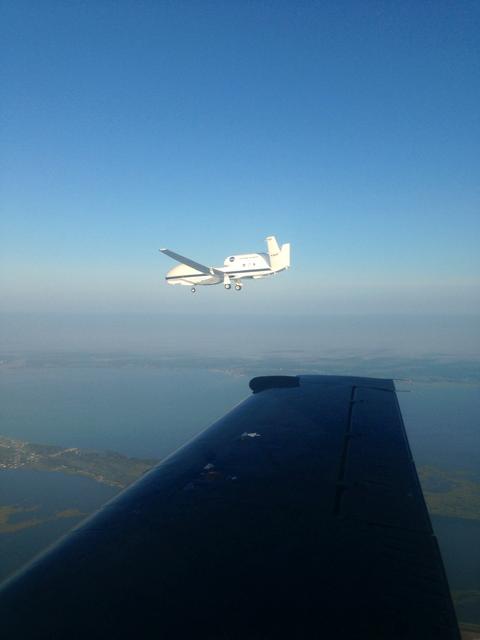
The NASA Wallops T-34 chase aircraft intercepted Global Hawk 872 on its descent to runway 28 at NASA's Wallops Flight Facility in Wallops Island, Va. This photo of the Global Hawk was taken from the chase plane after finishing its third sci…

The first of two NASA Global Hawk unmanned aerial vehicles supporting the Hurricane and Severe Storm Sentinel (HS3) mission landed at 7:39 a.m. today, Aug. 14, 2013, at NASA's Wallops Flight Facility, Wallops Island, Va. During August and S…

One of NASA's Global Hawk unmanned science aircraft displays its bulbous nose while parked on the ramp at NASA's Dryden Flight Research Center, Edwards, Calif.

One of NASA's two Global Hawk unmanned aircraft shows off its new blue-and-white livery shortly after being repainted in the Edwards Air Force Base paint hangar.

This Global Hawk unmanned aircraft is one of two that are used by NASA for Earth science missions and by Northrop Grumman for follow-on developmental testing.

The bulbous nose of one of NASA's two Global Hawk unmanned high-altitude aircraft houses communications and sensor payloads on Earth science missions.
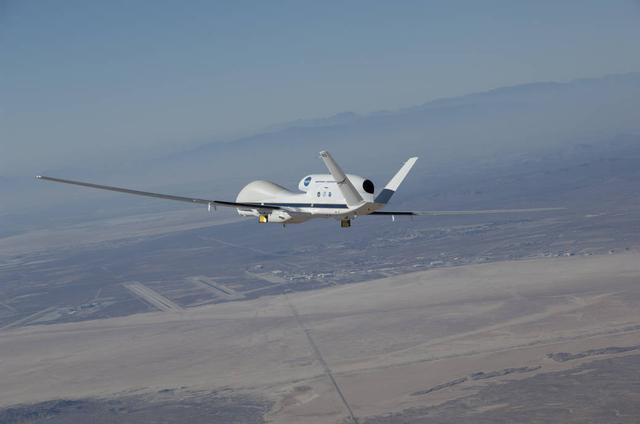
NASA's Global Hawk 872 soared over Rogers Dry Lake at Edwards Air Force Base, CA, during an instrument checkout flight for the 2014 ATTREX mission over the western Pacific Ocean. The aircraft carried 13 science instruments to measure moistu…
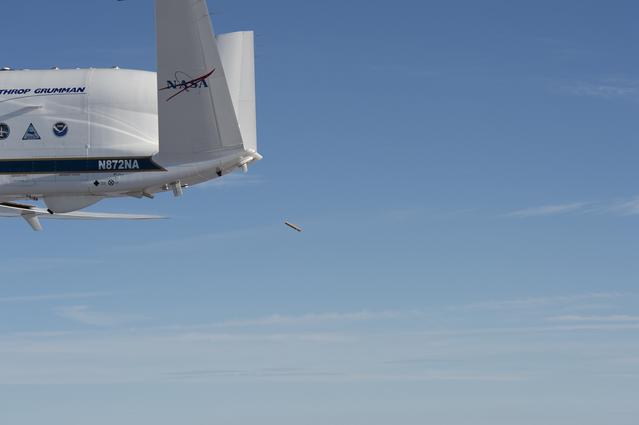
NASA’s Global Hawk aircraft deploys a dropsonde during a test flight over the Dryden Aeronautical Test Range in August 2015. The small, tube-shaped sensor will transmit data on temperature, humidity, and wind speed, which will be used to he…
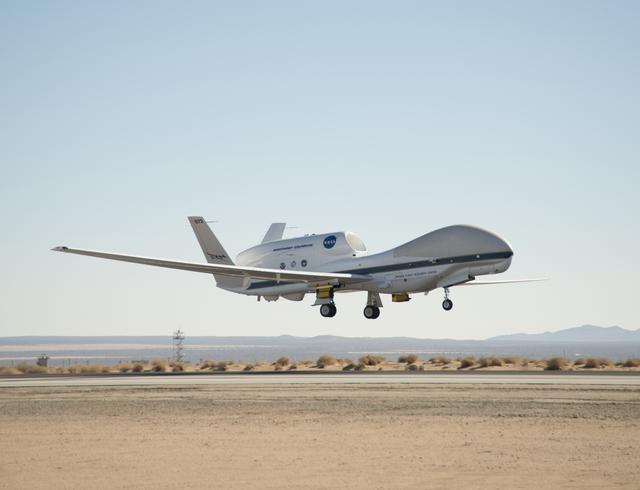
NASA's Global Hawk 872 lifted off the runway at Edwards Air Force Base during a checkout flight of instruments for the 2014 ATTREX mission over the western Pacific Ocean. Yellow and black pods housing the Hawkeye cloud particle probe instru…

The above-the-fuselage engine and V-tail distinguish one of NASA's two Global Hawk unmanned aircraft parked on the ramp at the Dryden Flight Research Center.

NASA's two Global Hawks, one sporting a NASA paint scheme, the other in its prior Air Force livery, are shown on the ramp at the Dryden Flight Research Center.

In its new white-and-blue NASA livery, an early development model of the Global Hawk unmanned aircraft rests on the ramp at the Dryden Flight Research Center.

One of NASA's two Global Hawk unmanned high-altitude aircraft shows off its blue-and-white livery in front of its hangar at NASA's Dryden Flight Research Center.

NASA’s Global Hawk aircraft was deployed to Florida from Armstrong Flight Research Center at Edwards, CA. on Oct. 6 to monitor and take scientific measurements of Hurricane Matthew. The unmanned Global Hawk will gather scientific data in s…

NASA image acquired October 23, 2009. At NASA’s Dryden Research Center in California, a group of engineers, scientists, and aviation technicians have set up camp in a noisy, chilly hangar on Edwards Air Force base. For the past two weeks,…
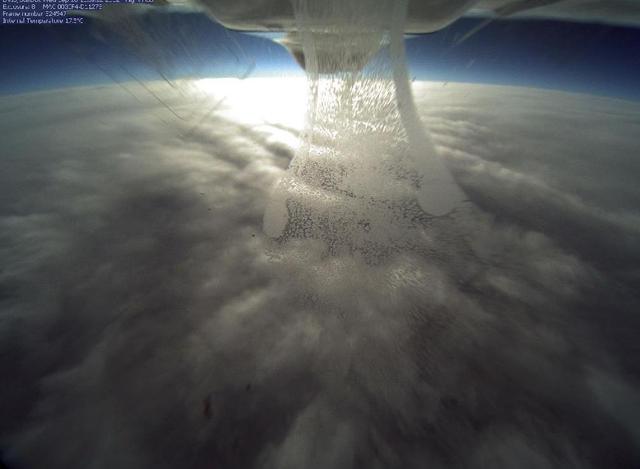
NASA's Global Hawk flew over Tropical Storm Nadine on Sept. 26, 2012 at 3 p.m. EDT and captured this photo from the camera located in the belly if the aircraft as it flew over the northern edge of the storm. Credit: NASA <b><a href="http:/…

The bulbous nose of one of NASA's Global Hawk unmanned aircraft sports a blue-and-white paint scheme after repainting in the Edwards Air Force Base paint shop.

A ground crewman maneuvers one of NASA's Global Hawk unmanned science aircraft into Hangar 4801 at NASA's Dryden Flight Research Center, Edwards, Calif.

A NASA remotely piloted Global Hawk aircraft completes a flight in February 2015 to support the National Oceanic and Atmospheric Administration’s El Niño Rapid Response field campaign. The mission, called the Sensing Hazards Operational Unm…
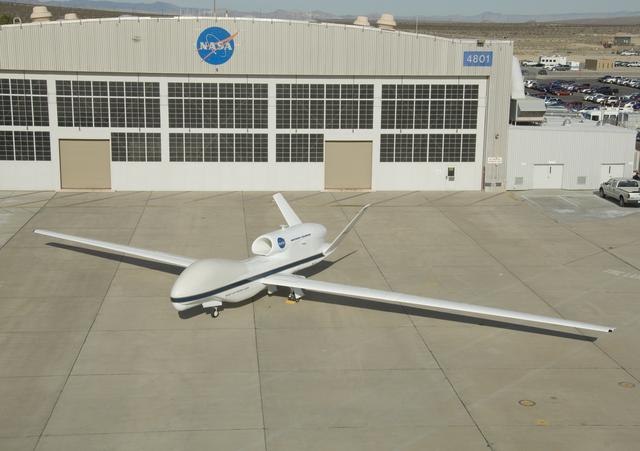
One of NASA's two Global Hawk high-altitude unmanned science aircraft displays its contours outside its hangar at NASA's Dryden Flight Research Center.

Dryden Flight Research Center - aircraft fleet on ramp